Checkpoint
vsDomane
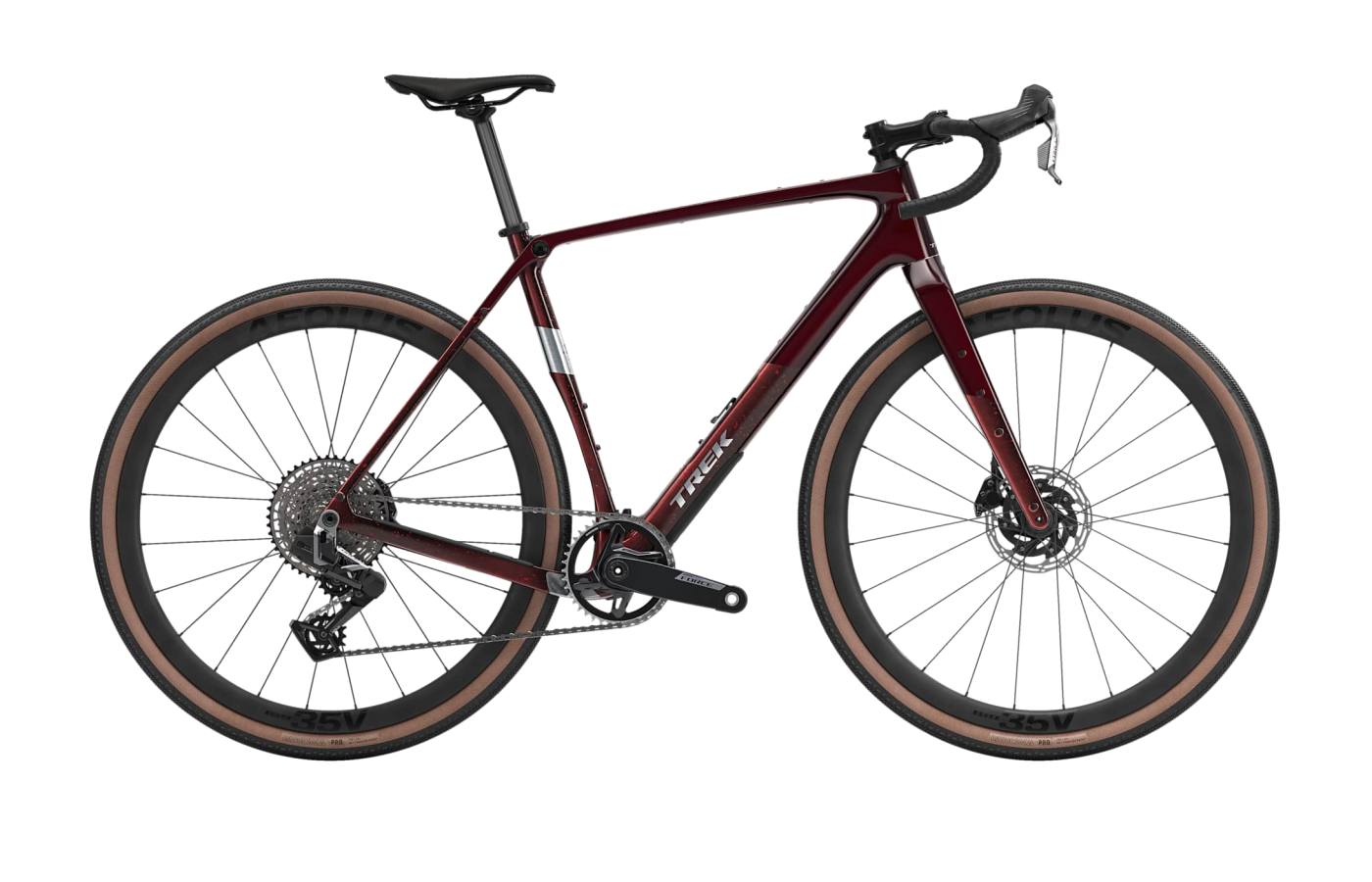
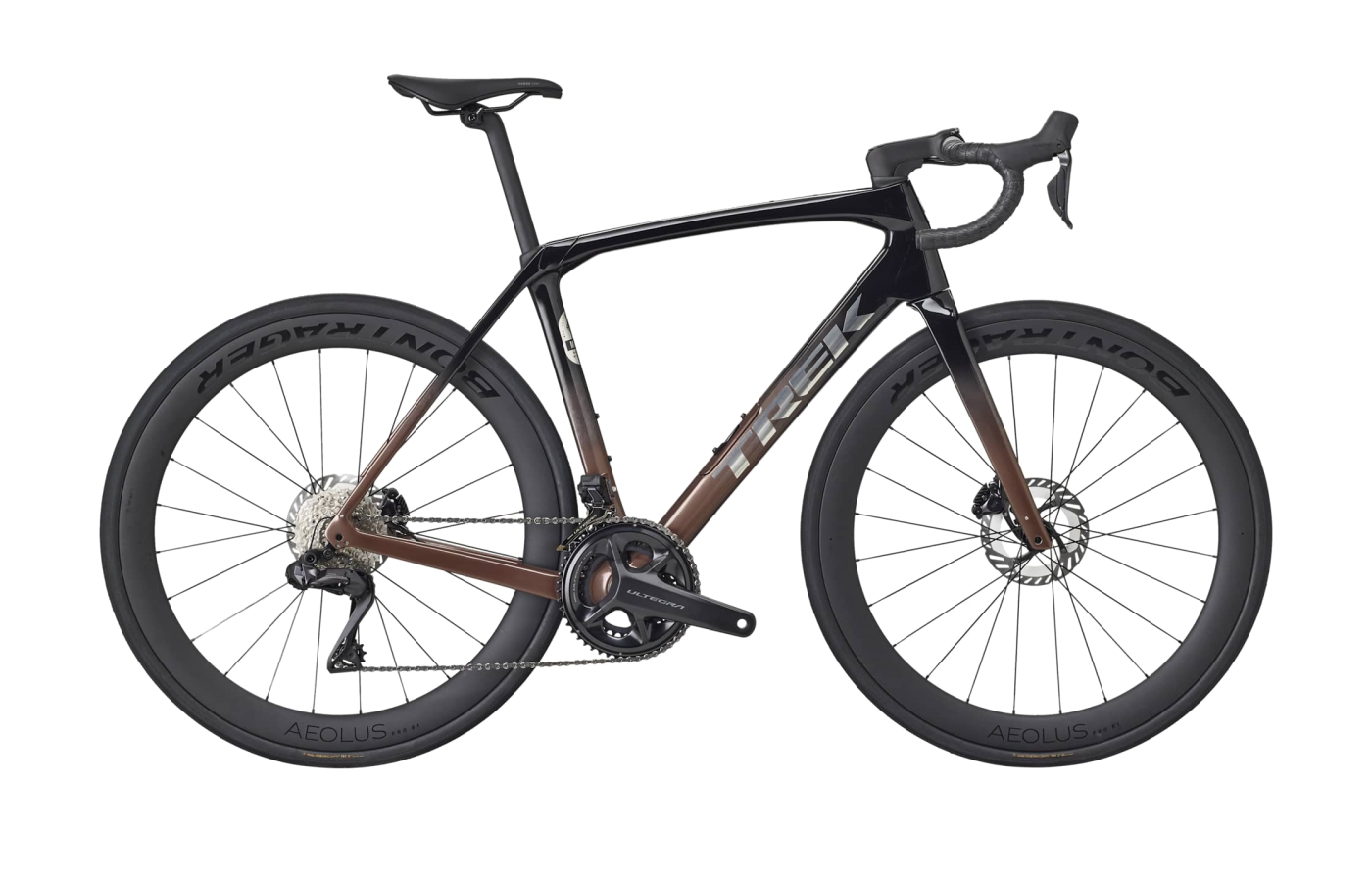
One brand, two very different bikes.
The Checkpoint is Trek's do-everything gravel rig with 50 mm tire clearance. The Domane is the endurance road benchmark with IsoSpeed and a low BB.
Checkpoint
- 50 mm tire clearance — biggest in this matchup by a wide margin, opening up real singletrack and bikepacking terrain.
- Endurance-tuned geometry — shorter reach and taller stack reduce hinging at the waist on multi-hour days.
- Aluminum ALR is the value benchmark — same Gravel Endurance geo, UDH, 50 mm clearance from $1,599.
- Heavier than the Domane at every comparable trim — the SL 7 AXS lands around 9.3 kg.
- 1x SRAM XPLR drivetrains across most builds — fine for gravel, less ideal if you ride a lot of pavement.
Domane
- Best-in-class endurance ride quality — rear IsoSpeed plus a low 80 mm BB drop make broken tarmac feel dream-like.
- Lighter at every tier — SL 7 Gen 4 is around 8.4 kg; the SLR 9 dips below 7.6 kg with proper tires.
- Wider build ladder — ten builds from $1,199 Claris alloy to $12,499 SRAM Red AXS, including a budget-of-the-year AL 2.
- Stock Bontrager R3 tires and Paradigm wheels are heavy enough that multiple reviewers called the bike 'sluggish' until upgraded.
- Documented seatpost-wedge slipping on early Gen 4 frames — fixed by Revision 4 hardware, but worth checking before you buy.
Editor’s analysis
Both bikes share a name on the family tree and a piece of suspension tech — but they answer two completely different questions about what your weekends look like.
On paper the overlap looks bigger than it is. Both the Trek Checkpoint and Trek Domane use Trek's IsoSpeed rear decoupler. Both run T47 threaded bottom brackets, downtube storage, and OCLV carbon on the SL/SLR builds. Both will happily eat broken pavement. Spend a few rides on each and the philosophies diverge fast.
The Trek Checkpoint Gen 3 is now squarely a gravel-endurance bike — Trek shifted the racing role to the new Checkmate and let the Checkpoint move slower and longer. Reach shortened by ~10 mm and stack rose ~11 mm vs Gen 2; tire clearance jumped to 50 mm; mounts multiplied across the frame for racks, fenders, and bikepacking bags. The fit-picked size S sits at 556 mm stack / 386 mm reach with a 71.4 deg head tube — upright, calm, built for fire roads and four-hour days.
The Trek Domane Gen 4 is the road-first sibling. Up to 38 mm tires officially (riders fit 40–43 mm), an 80 mm bottom bracket drop you can feel in long sweepers, and a fixed-tune rear IsoSpeed that Trek pulled to its softest setting and welded there. The compared size 50 runs 546 mm stack / 368 mm reach — also upright, but on a road geometry tuned for chip-seal centuries, not chunky climbs.
Put another way: the Trek Checkpoint is the bike you buy when 'gravel' means dirt roads, light singletrack, and overnighters with a frame bag. The Trek Domane is the bike you buy when 'gravel' is the 6 km of hard-pack between two stretches of pavement and you'd rather have an extra mph in the drops than another 18 mm of tire clearance.
Where the builds differ.
Comparing our editor's-pick builds side-by-side. Winners highlighted row-by-row — lower price and weight, and the better-spec component, each mark a point.
Build variants & pricing
Six Checkpoint builds from $1,599 to $6,499; ten Domane builds from $1,199 to $12,499. The carbon SL frames overlap most directly in the $3,500–$7,000 zone.
Prices are current US MSRP and may vary by region. The Checkpoint maxes out at SRAM Force AXS in 500 Series OCLV — Trek reserves 800 Series carbon and Red/Dura-Ace builds for the race-focused Checkmate and the Domane SLR. If you want a flagship Trek with top-tier carbon, the Domane SLR is the only path here.
How they fit, how they steer.
Compared at Checkpoint size S and Domane size 50 — the fit-picked frames for a 5'8" rider on each bike. The Checkpoint sits 10 mm taller in stack, 18 mm longer in reach, and runs a 71.4 deg head tube vs the Domane's 71.1 deg; both put you upright, but the Checkpoint stretches you out more.
Which size should I buy?
Sizes here use each manufacturer's labeling — the Checkpoint runs XS–XL, the Domane runs 47–62. Both ranges cover roughly 5'1" to 6'5" riders.
→These are starting points. Flexibility, riding style, and preferred position all shift the answer — if you’re between sizes, a professional fit beats a chart.
What the magazines said.
Published reviews from trusted cycling outlets. Click through for the full write-up.
Which one should you buy?
If your weekends end on dirt, get the Checkpoint. If they end on a 100 km loop of broken tarmac, get the Domane.
Checkpoint
If you want one bike for forest service roads, loaded overnighters, and the occasional under-bike on light singletrack, the Checkpoint is the right tool. The 50 mm clearance, integrated bag mounts, and IsoSpeed plus high-volume tires are designed for staying fresh on long, rough days.
Domane
If your version of adventure is 100 miles of broken pavement, hilly group rides, and the occasional dirt connector, the Domane is the more refined choice. Lighter, faster on the road, and stable enough at speed that long descents feel like the bike is reading your mind.
Questions buyers actually ask.
Short answers to the things we get emailed about most often.
01Which one should I buy if I do mostly road but want to ride some gravel?
The Trek Domane. It officially clears 38 mm tires, and reviewers have fit 40–43 mm in practice, which covers hard-pack dirt roads and most rail-trails. You give up some stability on rough or loose terrain compared to the Checkpoint, but you gain a meaningfully lighter, faster bike on the 70–80% of your riding that's actually pavement.
The Checkpoint only really pulls ahead once your routes regularly include chunky gravel, singletrack, or loaded bikepacking days.
02What's the maximum tire clearance on each?
Trek Checkpoint Gen 3: 50 mm officially, on both the SL carbon and ALR aluminum frames. That's enough for genuine singletrack tires.
Trek Domane Gen 4: 38 mm officially, with reviewers reporting 40–41 mm fits on the SLR. Plenty for hard-pack and light gravel, not enough for technical off-road.
That 12 mm gap is the single clearest line between these two platforms.
03Do both have IsoSpeed?
Yes, but they're tuned differently. The Domane Gen 4 uses a non-adjustable rear IsoSpeed decoupler — Trek removed the front IsoSpeed from this generation to save about 300 g, and locked the rear at the softest setting because that's what most riders preferred on the adjustable Gen 3.
The Checkpoint Gen 3 runs IsoSpeed on the SL carbon models only (the ALR aluminum builds skip it). Reviewers describe it as a subtle 'calming sensation' that takes the sting out of high-frequency washboard rather than a mechanical bounce.
04Which one is lighter?
The Domane, at every comparable trim. The carbon SL 7 Gen 4 lands around 8.4 kg; the flagship SLR 9 drops below 7.6 kg.
The Checkpoint SL 7 AXS Gen 3 is around 9.3 kg, with the aluminum ALR builds in the 9.9–10.4 kg range. You're paying for the wider tires, the burlier frame mounts, and a build kit oriented around durability and adventure rather than gram-counting.
05Are the carbon frames from the same OCLV grade?
No — and this matters if you're cross-shopping at the top of the range. The Checkpoint SL uses Trek's 500 Series OCLV carbon across all carbon builds. The Domane uses 500 Series on the SL builds and the higher 800 Series on the SLR builds.
If you want Trek's flagship 800 Series layup in a do-everything bike, the only path on the Checkpoint side is to step over to the race-focused Checkmate. The Checkpoint deliberately stays in the 500 Series tier.
06Are there known issues to look out for on either bike?
Yes, one significant one on the Domane. Multiple long-term reviews and owner reports flagged a creaking and slipping seatpost on early Gen 4 frames, traced to the IsoSpeed wedge. Trek issued revised hardware (Revision 2, then Revision 4) and recommends generous carbon paste. If you're buying used or new old stock, confirm the latest wedge revision is installed.
The Checkpoint Gen 3 has fewer flagged issues; one technical reviewer cautioned that mechanical-shift builds suffer from the through-the-headset cable routing, which can need expensive shop labor to service.
07Can I run a dropper post or short-travel suspension fork on the Checkpoint?
Yes on both, and Trek explicitly designed the Gen 3 frame for it. The Checkpoint SL and ALR both have internal dropper-post routing and are rated for short-travel gravel suspension forks. That makes it a more credible choice for under-biking on light singletrack than most gravel platforms in this price range.
The Domane is not designed for either — it's an endurance road bike at its core.
08Which has better resale and dealer support?
Both are equally strong here. Trek has one of the largest dealer networks in the US, and both bikes get the same lifetime frame warranty on OCLV carbon. Resale on Trek carbon frames tends to track close to Specialized — call it 30–40% depreciation over three years on the used market.
The ALR Checkpoint and AL Domane lose value faster, as alloy bikes typically do, but their lower entry prices mean the absolute dollar loss is much smaller.
Similar bikes
If your priorities don’t map cleanly onto either of these, one of these adjacent bikes probably fits better.
Diverge
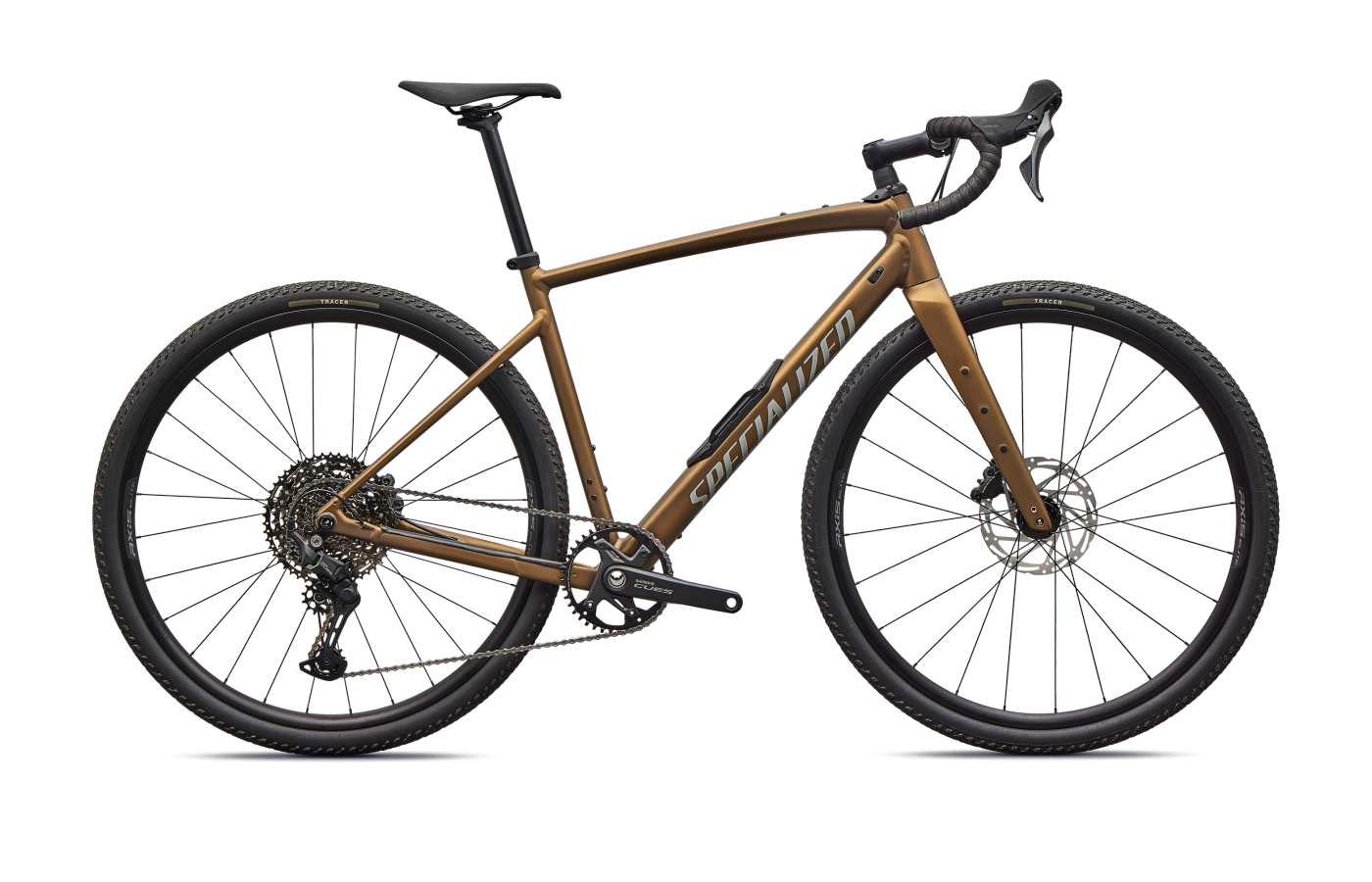
The direct cross-shop for the Checkpoint — Specialized's gravel platform, with Future Shock front-end damping in place of Trek's rear-only IsoSpeed. Better if you want active compliance under your hands rather than under your saddle.
Compare →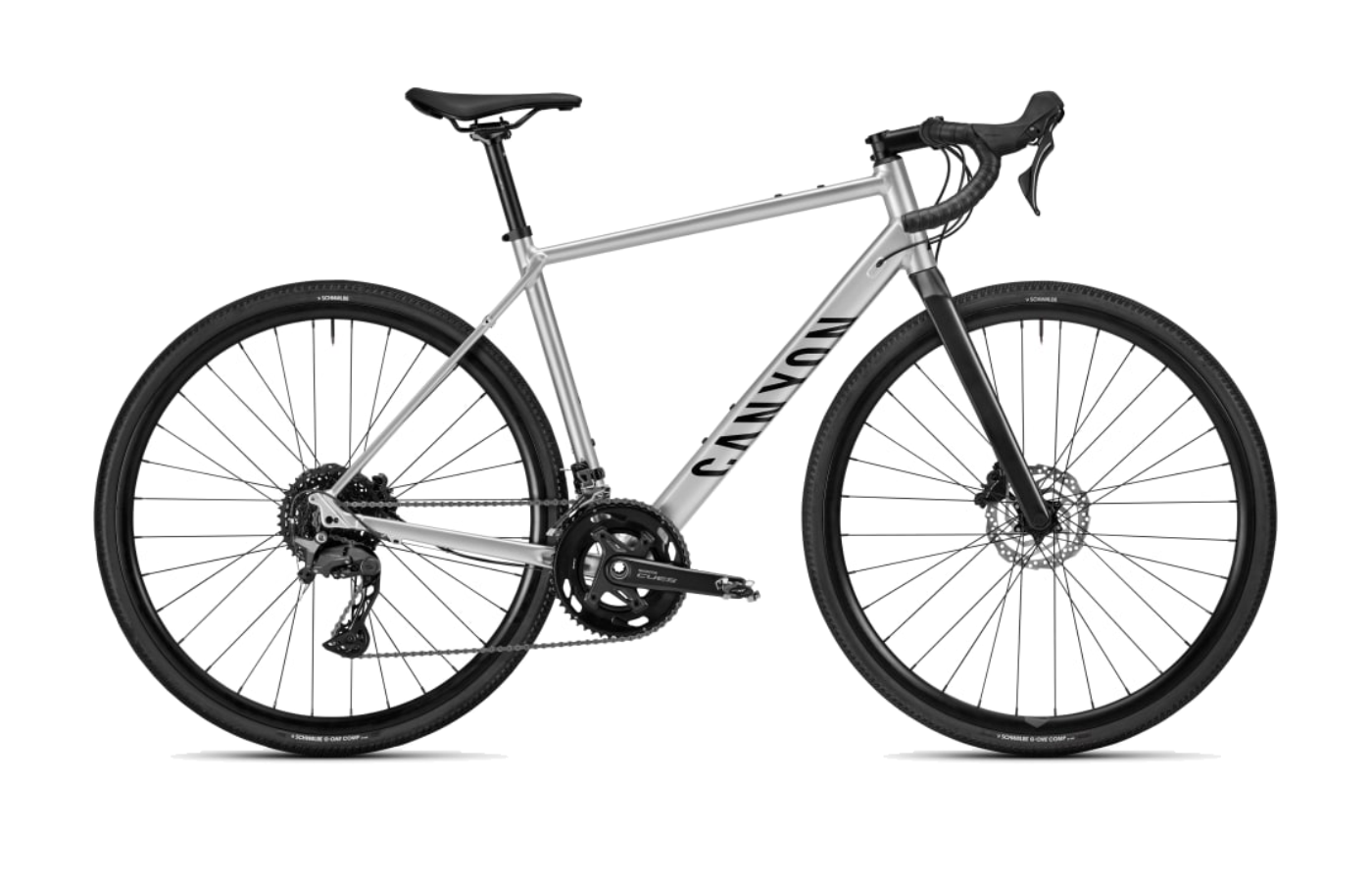
Endurace
Canyon's endurance road answer to the Domane — usually 20–30% cheaper at equivalent component spec, with the direct-to-consumer trade-off of no local dealer and no in-store demos.
Compare →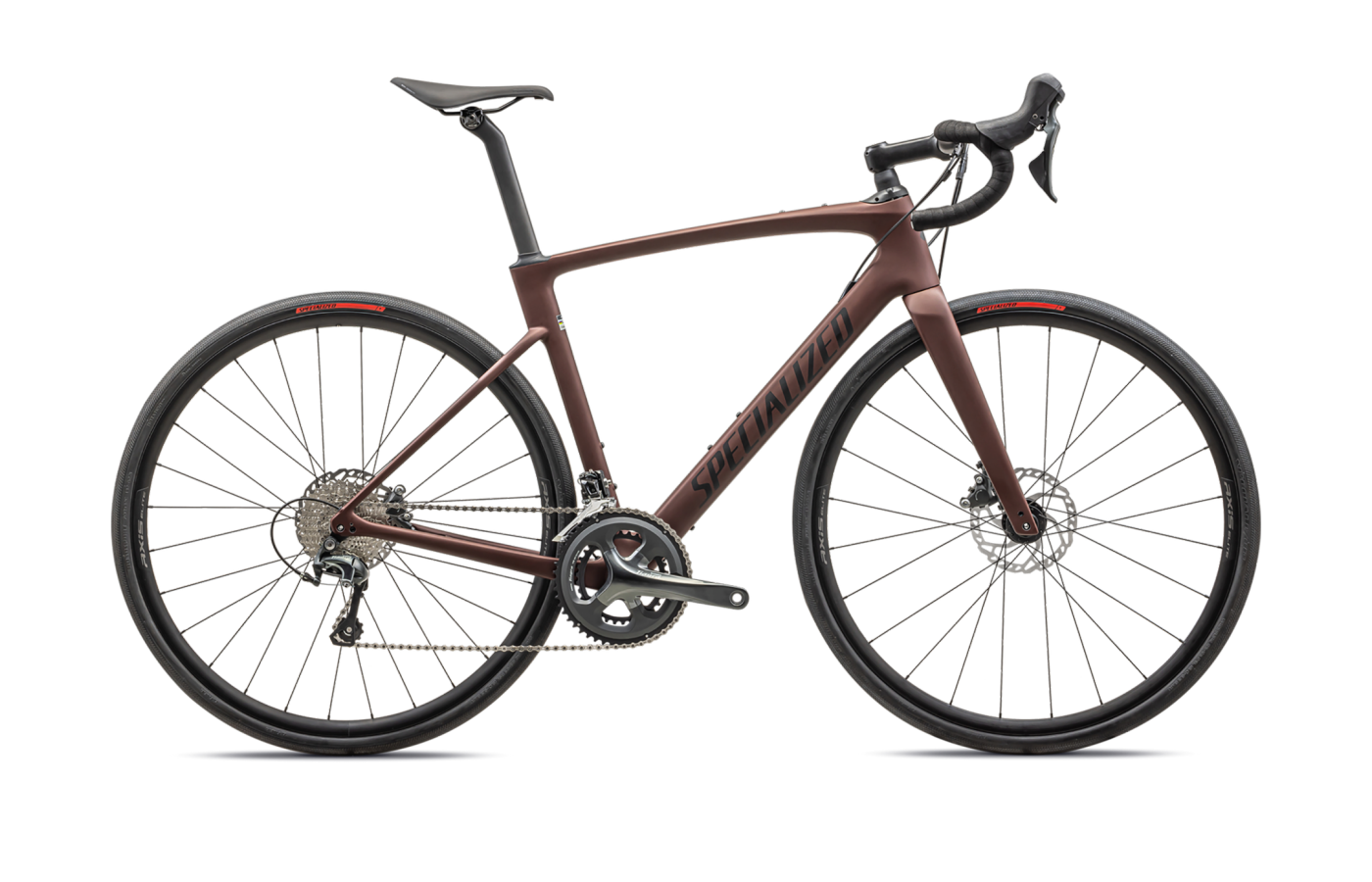
Roubaix
Specialized's endurance road bike with Future Shock front suspension — solves the front/rear compliance imbalance that some Domane reviewers flag, at the cost of more moving parts to maintain.
Compare →