Tarmac
vsFilante SLR
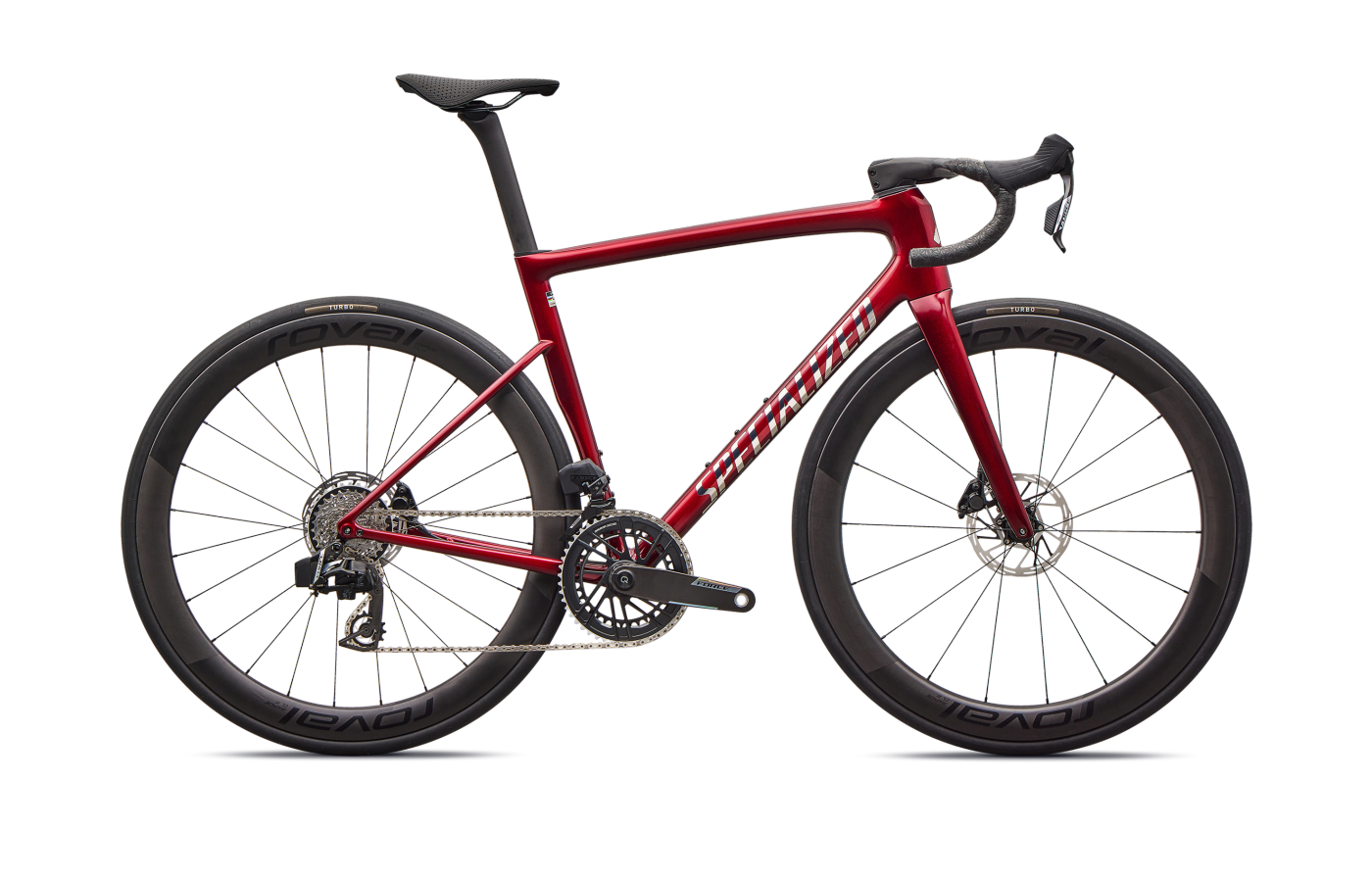
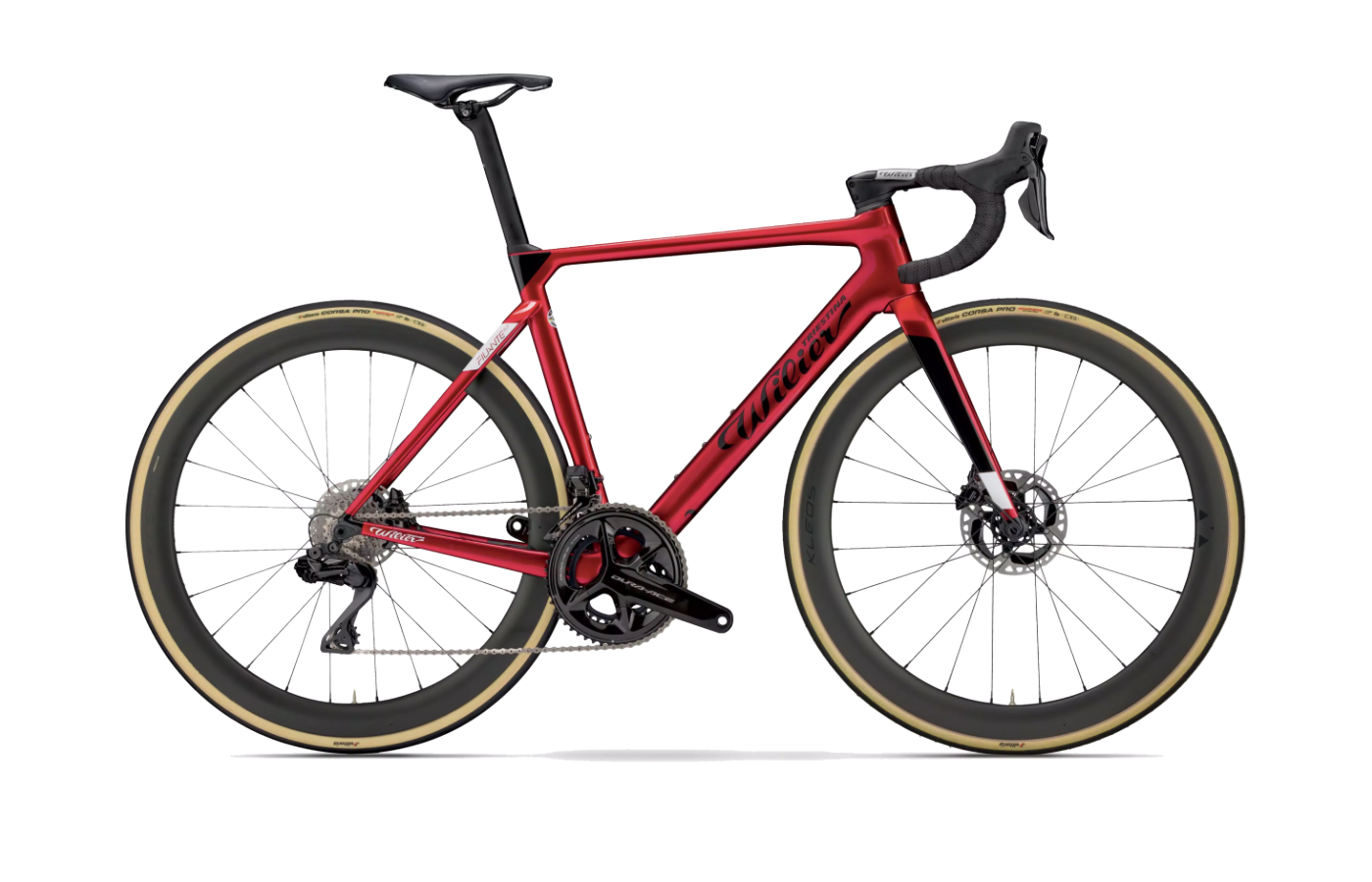
Whippy all-rounder, or grown-up aero specialist.
The Tarmac SL8 wants to win every race on the calendar. The Filante SLR ID2 wants to win the flat ones, slowly and on purpose.
Tarmac
- Wide build range — starts at $4,699 (SL8 Comp) and scales to $13,499; the Wilier doesn't go below $10,500.
- Lighter on the climbs — S-Works FACT 12r frame at 685 g (size 56) vs the Filante's 870 g claimed.
- Telepathic, flickable handling — short 410 mm chainstays and aggressive geometry reward an active rider in technical terrain.
- Stock 26 mm S-Works Turbo tires get nearly universally panned by reviewers — plan to upgrade.
- Roval one-piece cockpit on Pro/S-Works has no pre-purchase sizing — a stem swap is reportedly $600+.
Filante SLR
- High-speed composure — longer wheelbase and slacker head tube make it "deeply reassuring" at 50 km/h+, per Road.cc.
- Wider stock tires — ships with Vittoria Corsa Pro 28s on every build, with up to 34 mm clearance.
- Sophisticated frame damping — HUS MOD carbon with Liquid Crystal Polymer fibers actively kills road buzz.
- Price floor of $10,500 — no entry or mid-budget options exist.
- Aerokit bottles are fiddly to dock and reportedly rattle in their cages.
Editor’s analysis
Both bikes claim WorldTour pedigree — but one is trying to do everything, and the other is trying to do one thing really well.
Specialized retired the Venge to make the Tarmac SL8 their definitive aero-lightweight hybrid: a 685 g S-Works frame (FACT 12r) that nearly matches the Cervelo S5 in the wind tunnel — Specialized's published numbers put it at 209 W vs 205 W for the S5 at 45 km/h — but climbs like an Aethos. The Wilier Filante SLR ID2 is the opposite philosophy: an 860 g aero frame infused with Liquid Crystal Polymer to damp road buzz, lengthened-wheelbase geometry for high-speed stability, and an integrated Aerokit bottle system that Wilier claims contributes to a 4.5% drag reduction with rider on board.
The character difference shows up immediately in handling. Reviewers describe the Tarmac SL8 as "telepathic" and "flickable" — a bike that begs for accelerations and rewards an active rider. The Filante SLR is consistently called "grown-up," "planted," and "deeply reassuring" by Road.cc; Cycling News pegged it at "confident and fast without being too lively." The Wilier's 990 mm wheelbase (size M) runs 12 mm longer than the Tarmac's at size 54, with a 1° slacker head tube — geometry that's deliberately tuned to settle in above 40 km/h, not dart through tight crit corners.
Aero-versus-aero, the Tarmac surprisingly holds its own. Specialized's testing puts the SL8 within 4 W of the Cervelo S5 at 45 km/h, and Cycling News' independent wind tunnel work placed the Filante third among top-tier aero bikes — saving 24.5 W against an alloy baseline, with a notably flat drag curve across yaw angles (its real edge in crosswinds). Climbing, the Tarmac wins on weight: a Pro build comes in around 7.25 kg vs roughly 7.3 kg for the Filante in size L with SRAM Red. Not a huge gap, but the Tarmac's stiffer-feeling bottom bracket and slightly more upright climbing posture make it the more eager dance partner on a gradient.
Put another way: the Tarmac is the bike for the racer who wants one frame for crits, climbs, and Sunday centuries. The Filante is the bike for the powerful rider who lives in the drops on rolling terrain and values a sailing, composed ride over snap. Also: the Filante is roughly $3,000 more expensive at the entry tier, and Wilier doesn't sell anything below $10,500 — so the budget-conscious answer here writes itself.
Where the builds differ.
Comparing our editor's-pick builds side-by-side. Winners highlighted row-by-row — lower price and weight, and the better-spec component, each mark a point.
Build variants & pricing
The Tarmac spans $4,699 to $13,499. The Filante SLR starts at $10,500 — there is no budget option.
Prices are current US MSRP; international pricing varies. We've matched both editor's picks at SRAM Force AXS to keep the spec table apples-to-apples, but note the price gap: $8,499 vs $11,500. Wilier's premium reflects the Italian heritage tax and the absence of any sub-$10k tier.
How they fit, how they steer.
Tarmac size 54 vs Filante size M — fit-picked for the same reference rider. The Filante runs 6 mm lower stack with 4 mm more reach, a 0.5° slacker head tube, and a 12 mm longer wheelbase. Translation: more aggressive aero tuck, more stable at speed.
Which size should I buy?
Size recommendations driven by stack, reach, and effective top tube. The Tarmac's range extends further at the small end (44 cm); the Filante starts at XS.
→These are starting points. Flexibility, riding style, and preferred position all shift the answer — if you’re between sizes, a professional fit beats a chart.
What the magazines said.
Published reviews from trusted cycling outlets. Click through for the full write-up.
Which one should you buy?
If you want one bike for everything, get the Tarmac. If you live above 40 km/h on rolling terrain and value composure over snap, get the Filante.
Tarmac
If you want one bike for crits, weekend climbs, and an occasional aero day on the flats — this remains the benchmark. Lighter, cheaper, and with the broadest build range in the segment, it bends to whatever kind of riding you do.
Filante SLR
If most of your riding is fast, flat, or rolling, and you'd rather feel planted at 50 km/h than flickable at 25 — the Filante's longer wheelbase and LCP-damped frame deliver a uniquely composed kind of speed. Italian craft is included in the price.
Questions buyers actually ask.
Short answers to the things we get emailed about most often.
01Which is faster on flat roads?
Closer than you'd expect. The Tarmac SL8 is independently measured at around 209 W to hold 45 km/h, vs roughly 205 W for the Cervelo S5 and 208 W for the Canyon Aeroad — putting it within ~4 W of dedicated aero bikes despite being a hybrid. The Filante SLR ID2 placed third in Cycling News' wind tunnel work among top-tier aero bikes, saving 24.5 W vs an alloy baseline.
The Filante's bigger advantage is at yaw — its drag curve stays notably flat in crosswinds, where the Tarmac's nose gives up some efficiency. On a still, flat road, the gap is small. In wind, the Filante pulls ahead.
02Which climbs better?
The Tarmac SL8, by enough to feel. The S-Works FACT 12r frame is 685 g (size 56) vs Wilier's claimed 870 g for the Filante — about 185 g of frame delta. In comparable Force AXS Pro trim, the SL8 weighs around 7.25 kg vs roughly 7.3 kg for the Filante. The bigger factor is the Tarmac's stiffer-feeling bottom bracket and more upright posture, both of which make it more eager out of the saddle.
The Filante is no slouch on a climb — reviewers call it "surprisingly strong" for an aero bike — but it doesn't beg for accelerations the way the Tarmac does.
03What's the maximum tire clearance?
Tarmac SL8: 32 mm officially. Most riders comfortably run 28–30 mm tubeless.
Filante SLR ID2: 30 mm by Wilier's spec, though the brand's marketing for the new generation cites up to 34 mm. The bike ships with Vittoria Corsa Pro 28s on every build.
Neither is a gravel bike. For genuine rough roads, look at a Roubaix or Wilier's own Rave SLR.
04Why is the Filante so much more expensive?
Two reasons. First, Wilier doesn't sell a budget tier — the cheapest Filante is $10,500 (Ultegra Di2), while the Tarmac starts at $4,699 for the SL8 Comp and $6,999 for the Expert with Force AXS. Second, the Wilier carries what reviewers openly call an "Italian heritage tax": more bespoke component integration via sister-company Miche (CNC-machined thru-axles, center-lock rings, even the bottom bracket), CeramicSpeed bearings standard on the wheels, and the proprietary Aerokit bottle system.
If you're optimizing watts-per-dollar, the Tarmac wins this comparison decisively.
05Is the Aerokit bottle system worth it?
Aerodynamically, yes — Wilier and Cyclist Magazine both peg the Aerokit at roughly 3–4 W saved at race speeds, and Cycling News' wind tunnel data showed the Filante actually performing better with a rider than in bike-only tests, likely due to the bottles smoothing airflow between the legs.
Practically, it's a known weak spot. Reviewers from Granfondo and Escape Collective note the bottles can't stand upright on a table, are fiddly to dock back into the cages mid-ride, have narrow openings (hard to fill with powder), and reportedly rattle. The cages will accept standard round bottles but "awkwardly," per Escape Collective.
06How serviceable are the integrated cockpits?
Both lock you into the brand's ecosystem. The Tarmac's Roval Rapide one-piece is fully internal — a stem swap means buying a new unit (around $450–600) and a partial brake bleed. Critically, there's no pre-purchase customization, which Cycling News' Josh Croxton called out as a frustration for riders whose ideal fit isn't on offer.
The Filante's F Bar ID2 is similarly proprietary, currently offered in only six size configurations. Road.cc specifically flagged that XL Filante buyers are limited to a 110 mm stem with 39/42 cm bars — for a $12k+ bike, reviewers expected more flexibility.
If adjustability matters, the Tarmac SL8 Expert ($6,999) ships with a two-piece bar and stem and is the most fit-friendly option in this comparison.
07Do both come with power meters?
Tarmac SL8: Yes, on every build. The Pro and Expert ship with SRAM Force E1 power meters, the S-Works gets Quarq or 4iiii dual-sided units depending on groupset. Reviewers consistently flag this as a real value-add — Specialized doesn't make you pay extra.
Filante SLR ID2: Mostly yes. The flagship SRAM Red AXS E1 build ($15,500) includes SRAM's integrated power meter; lower builds vary by groupset spec. Verify before buying — Wilier's mid-range builds have been less consistent here than Specialized's.
08Which holds its resale value better?
Specialized has a deeper used market — S-Works Tarmac frames are heavily traded on platforms like The Pro's Closet and depreciate roughly 30–40% over three years. Wilier Filante frames are rarer and trade in smaller volumes; when they do sell, they tend to hold value slightly better thanks to the lower production runs and Italian-brand cachet, but the limited buyer pool can also mean longer sale times.
In both cases, the integrated cockpit is the resale wildcard — buyers need a fit that matches what's installed, since swapping is expensive.
Similar bikes
If your priorities don’t map cleanly onto either of these, one of these adjacent bikes probably fits better.
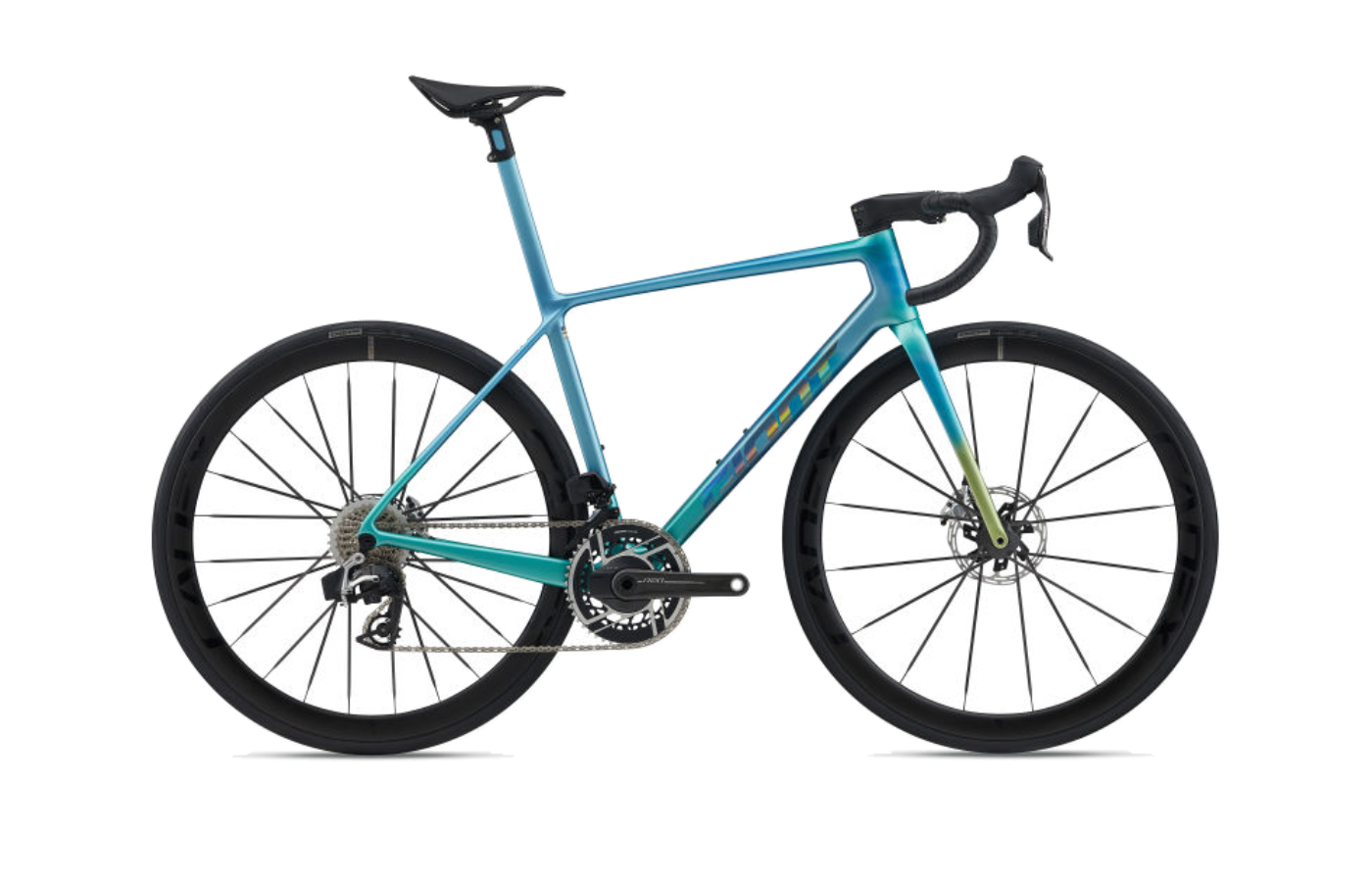
TCR Advanced SL
The traditionalist's pick — a pure climbing race bike with classic round tubes, no integrated cockpit, and arguably the best stiffness-to-weight in the segment. If the Tarmac feels too aero-fussy and the Filante feels too composed, the TCR splits the difference and usually undercuts both on price.
Compare →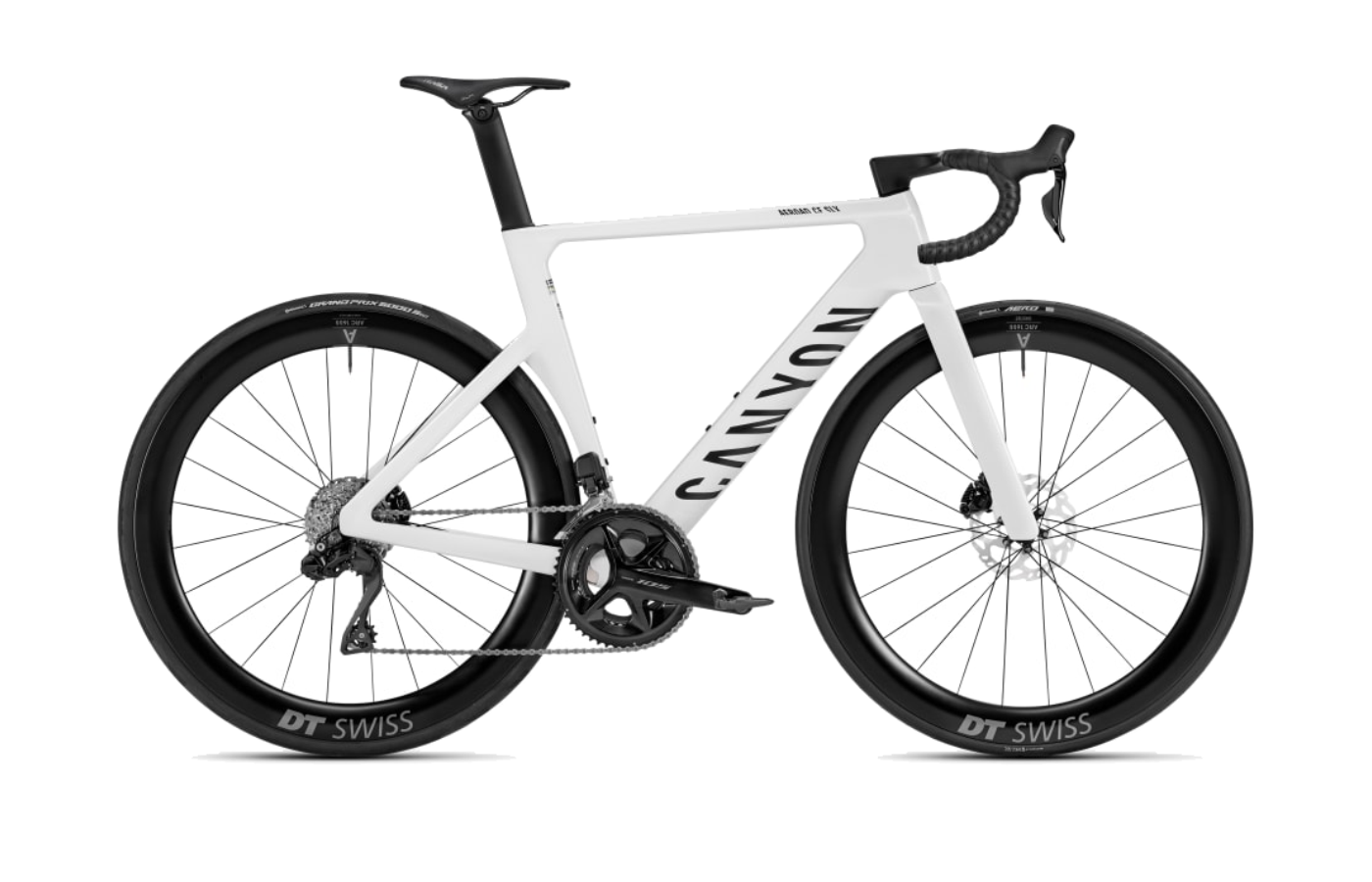
Aeroad
Often tested as more aerodynamic than the Tarmac and meaningfully cheaper than the Filante — the direct-to-consumer catch is no demo, no local dealer. Best if you already know your fit cold.
Compare →
Madone
Trek's aero flagship with the IsoFlow decoupler — claims drag numbers in the same league as the Filante but with the most genuinely comfortable rear end of any aero bike on the market.
Compare →