Tarmac
vsMadone
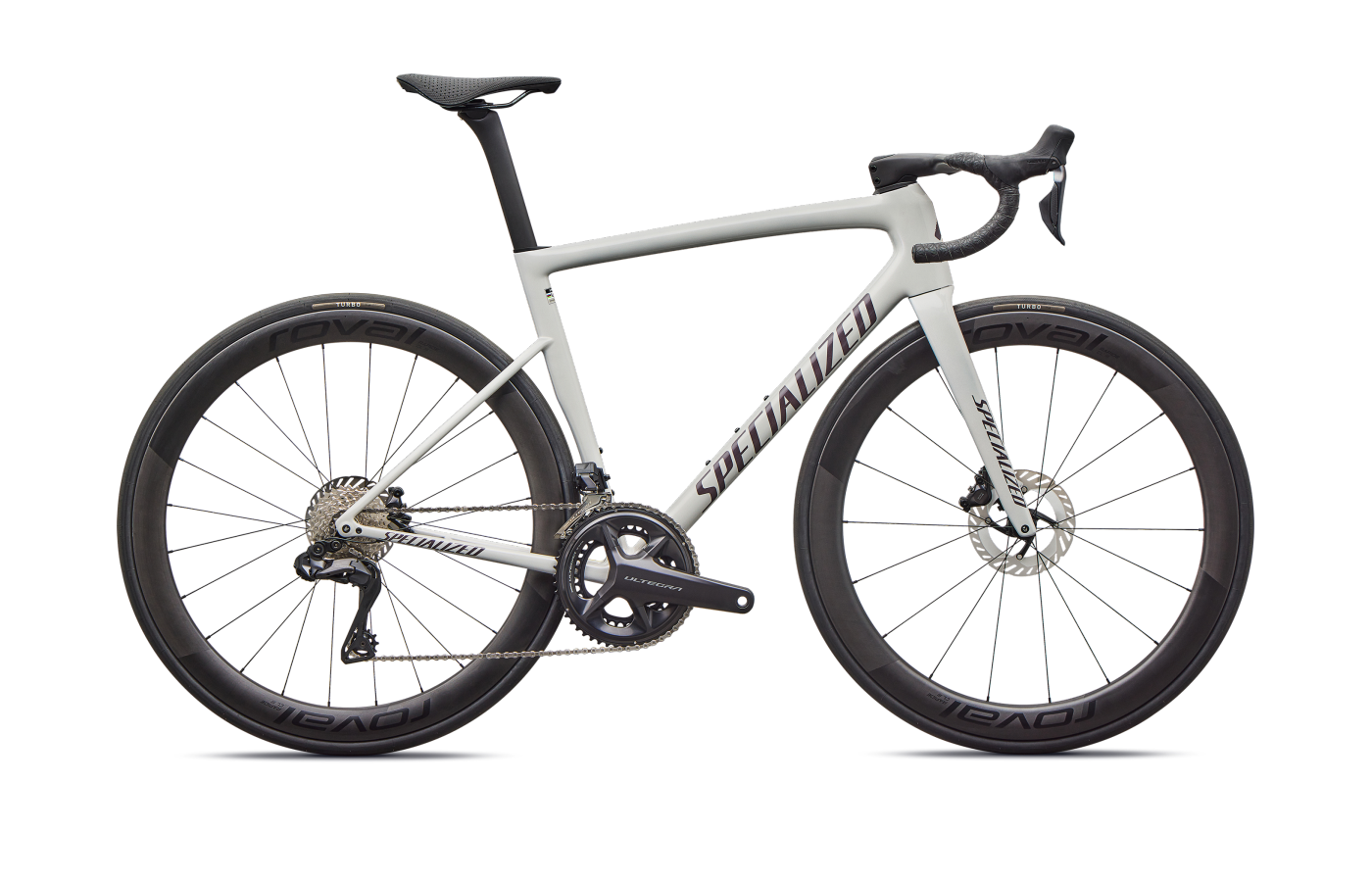
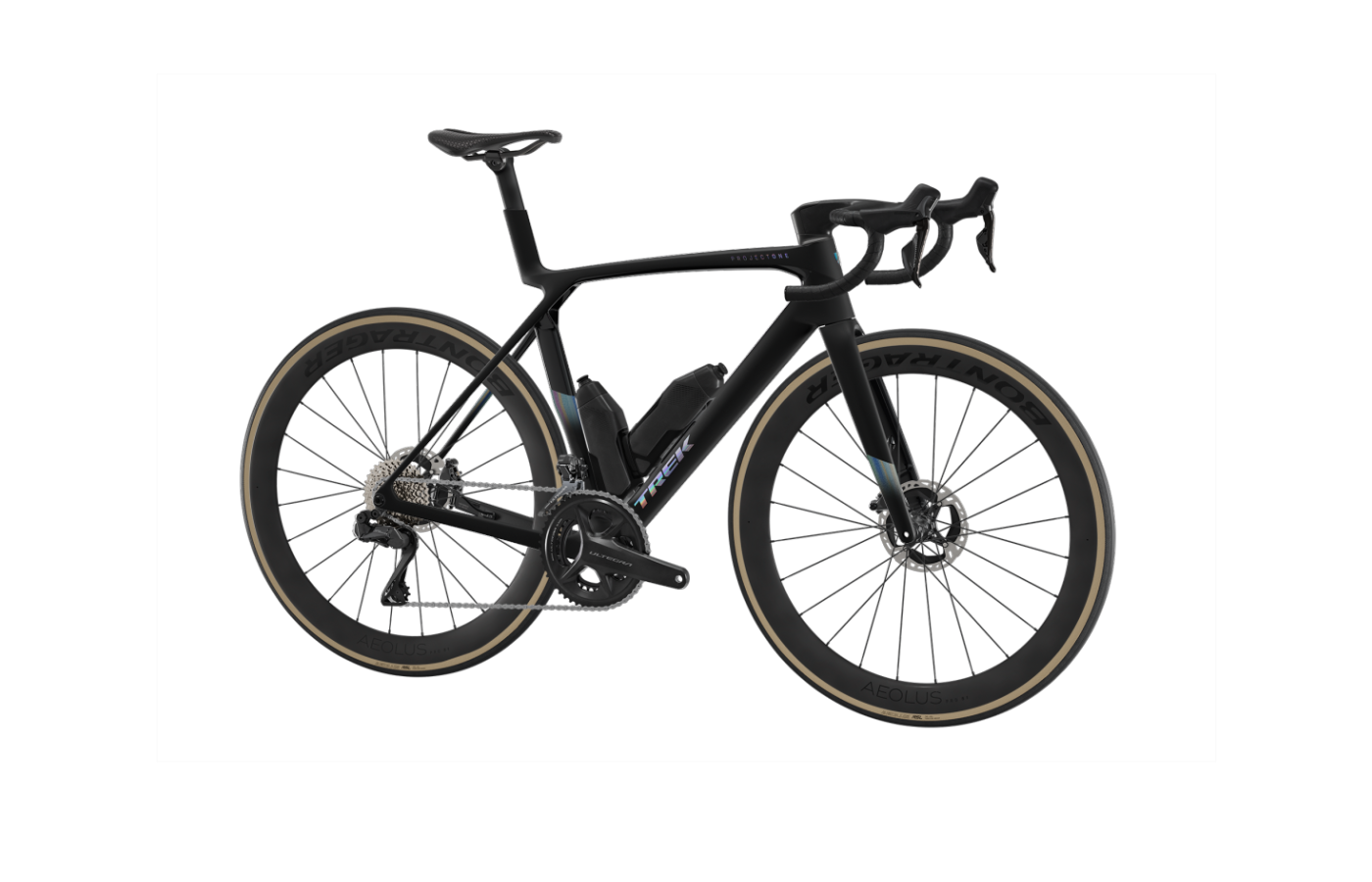
Two aero all-rounders, two flavors of fast.
The Tarmac SL8 is the whippy, lightweight race bike that also happens to be aero. The Madone Gen 8 is the aero bike that finally decided to climb.
Tarmac
- Lightest in class — claimed 685 g frame on S-Works; mid-tier FACT 10r undercuts Madone SL's 500 Series carbon by a noticeable margin.
- Sharper, more agile handling — telepathic steering that rewards technical criterium riding and fast line corrections.
- Proven WorldTour pedigree — the Tarmac lineage has won across classics, GC, and bunch sprints for years.
- Stock 26 mm S-Works Turbo tires are universally panned — plan on swapping to 28–30 mm before your first real ride.
- Integrated Roval Rapide cockpit on the S-Works and Pro is expensive to re-size after purchase.
Madone
- Best-in-class rear compliance — IsoFlow delivers a claimed 80% jump in vertical compliance; reviewers say long rides feel like an endurance bike.
- Rock-solid high-speed stability — tracks like a muscle car through fast descents and crosswinds.
- UDH + T47 + lifetime frame warranty — the most future-proof and service-friendly package in the segment.
- Integrated Aero RSL cockpit is stiff — some testers report hand numbness on rides past 80 miles.
- SL (500 Series OCLV) frames are meaningfully heavier than the SLR — the "climbs like an Emonda" story really only applies to the SLR tier.
Editor’s analysis
Both brands killed off their dedicated climbing bikes to build this comparison — so the question isn't lightweight vs. aero anymore, it's which flavor of one-bike-does-everything fits your riding.
A few years ago, this matchup would have been a Tarmac-vs-Madone weight-vs-aero split. That era is over. Specialized folded Aethos and Venge DNA into the Tarmac SL8, and Trek retired the Emonda entirely and merged its lightness into the Madone Gen 8. Both are now 32 mm-clearance aero race bikes that claim to climb with a pure climber — and both sit in the same $3.5k–$13k ballpark. The differences are real, but they're narrower than the marketing suggests.
The Specialized Tarmac wins on sheer frame math. The S-Works SL8 claims 685 g in size 56; the Madone SLR SLR lands around 765–796 g. That gap shows up on steep ramps — reviewers consistently describe the Tarmac as "punchy" and "dancing uphill," with telepathic steering response on technical descents. Its FACT 10r mid-tier carbon is also noticeably lighter than Trek's comparable 500 Series OCLV, which makes the mid-range Tarmac builds more competitive on the scale than the equivalently-priced Madone SLs.
The Trek Madone wins on the ride experience. The IsoFlow seat tube delivers a claimed 80% jump in vertical compliance over the Gen 7, and reviewers almost universally call it the most comfortable aero race bike on the market — one that feels "planted," tracks like a muscle car on descents, and eats pavement chatter better than any rival in the segment. The catch: the integrated Aero RSL cockpit is "stiff as a brick," so some of that compliance gets handed back to your hands on long rides. And the mid-tier SL frames use heavier 500 Series carbon, so the "climbs like an Emonda" pitch really only applies to the SLR tier.
Geometry at matched sizes (54 vs M) is startlingly close — identical 384 mm reach, within 2 mm on stack, matched 410 mm chainstays. The character difference is subtle: the Tarmac is 0.1° steeper at the head tube and 3 mm shorter at the wheelbase, which is enough to give it the sharper, more "flickable" feel reviewers consistently describe, while the Madone's marginally longer wheelbase and IsoFlow deliver that "permanent tailwind" stability. Put simply: Tarmac for the criterium and the KOM hunter, Madone for the long solo effort and the fast descent.
Where the builds differ.
Comparing our editor's-pick builds side-by-side. Winners highlighted row-by-row — lower price and weight, and the better-spec component, each mark a point.
Build variants & pricing
Both platforms span roughly $3.5k–$13k. Specialized is lightest at every tier; Trek's SL range is heavier but more comfortable at the same price.
Prices are current US MSRP. The Madone's SLR tier (900 Series OCLV) is Trek's lightweight frame; the SL tier (500 Series OCLV) is noticeably heavier — factor that into any cross-brand price comparison at the $5k–$8k range.
How they fit, how they steer.
Tarmac 54 and Madone M put a 5'8" rider in nearly identical positions — 384 mm reach on both, 2 mm of stack separating them, matched 410 mm chainstays. The Madone's 3 mm longer wheelbase and 0.1° slacker head tube are the quiet source of its more planted feel.
Which size should I buy?
Size recommendations based on stack, reach, and effective top tube. The Madone's T-shirt sizing (XS–XL) is coarser than the Tarmac's 7-size range, so in-between riders should pay closer attention to the Madone fit.
→These are starting points. Flexibility, riding style, and preferred position all shift the answer — if you’re between sizes, a professional fit beats a chart.
What the magazines said.
Published reviews from trusted cycling outlets. Click through for the full write-up.
Which one should you buy?
If you live for climbs, crits, and KOM hunts, get the Tarmac. If you spend your long days in the drops and want the smoothest aero bike on the road, get the Madone.
Tarmac
If you want the lightest frame in the segment, the sharpest handling, and a bike that begs you to attack every ramp, the Specialized Tarmac is still the benchmark. Its aero numbers are nearly as good as the Madone's, and its mid-tier FACT 10r carbon punches above its price.
Madone
If your rides are long, fast, and flat-to-rolling — and you want an aero bike that doesn't beat you up — the Trek Madone is the most comfortable race bike you can buy. IsoFlow is a real advantage over rough pavement, and the handling is rock-solid at speed.
Questions buyers actually ask.
Short answers to the things we get emailed about most often.
01Which is faster on flat roads?
The two are closer than the marketing suggests. The Madone Gen 8 bakes the "Full System Foil" concept — frame, wheels, and proprietary RSL Aero bottles all treated as a single shape — into a package Trek claims is 77 seconds per hour faster than the old Emonda.
The Tarmac SL8 isn't far behind. External wind-tunnel testing cited in reviews puts it at 209 W at 45 km/h versus roughly 205 W for the segment's fastest aero bikes — Specialized's own claim is that the SL8 is faster than the discontinued Venge. In real-world riding at 30–35 km/h, the gap between these two is small enough that wheel choice and tire pressure matter more than frame aero.
02Which climbs better?
The Tarmac SL8, but by less than you'd think. The S-Works SL8 frame claims 685 g in size 56; the Madone SLR is roughly 765–796 g. On a complete bike, that's a 300–400 g advantage before build differences — meaningful on a 30-minute climb, less meaningful on a 5-minute ramp.
The gap widens at the mid-tier. Tarmac's FACT 10r carbon is only about 100 g heavier than the S-Works frame, while Madone's 500 Series OCLV (on SL models) is a noticeably larger step down from the SLR's 900 Series. If climbing weight matters and you're shopping under $8k, the Tarmac is the clearer pick.
03Which is more comfortable?
The Madone Gen 8, clearly — at the rear. IsoFlow's 80% claimed jump in vertical compliance over the Gen 7 is the single biggest ride-feel difference between these two bikes. Reviewers who've ridden both describe the Madone as feeling like an endurance bike at the saddle.
The caveat: the Madone's integrated Aero RSL cockpit is stiff. Long-ride hand numbness has been reported. The Tarmac's rear isn't as plush but its front end is more balanced, so on rides past 80 miles the overall comfort gap narrows. Tire choice dominates either way — both platforms are transformed by 28–30 mm tubeless rubber at sub-75 PSI.
04What's the maximum tire clearance?
Both officially clear 32 mm. Real-world reports on the Madone suggest riders have fit 35 mm and even 38 mm all-road tires with some trimming, though that's off-spec. Neither is a gravel bike — for anything rougher than chip-seal, look at a Roubaix or Domane.
05How serviceable are the cockpits?
Both flagships run one-piece integrated cockpits that make stem/bar changes expensive. The Tarmac SL8 Pro and S-Works use the Roval Rapide cockpit; re-sizing means buying a new unit and, for hose changes, a partial tear-down.
The Madone SLR uses the Aero RSL integrated bar/stem with the same friction. The Madone SL tier switches to a conventional two-piece Trek RCS Pro stem + Bontrager bar, which is meaningfully easier to adjust or upgrade — one of the underrated reasons to buy the SL over the SLR if fit is uncertain.
06Are both compatible with mechanical shifting?
The Tarmac SL8 is wireless/electronic-only. The Madone Gen 8 SL frames support either electronic or mechanical routing — the SLR frames are electronic-only. If you want mechanical 105 or Campagnolo cable-shift, the Madone SL is your only option between these two.
07What about the Madone's Universal Derailleur Hanger (UDH)?
This is a quiet win for Trek. The Madone Gen 8 uses UDH, which means a broken hanger is a $20 trip to any bike shop rather than a proprietary-part wait. It also future-proofs the frame for SRAM's direct-mount Transmission drivetrains. The Tarmac still uses a Specialized-proprietary hanger — not a dealbreaker, but worth knowing if you've ever been stranded by a bent hanger on a ride.
08Which has the better warranty?
Both carry a lifetime frame warranty to the original owner. Trek's dealer network and warranty execution are widely considered best-in-class in reviewer accounts — multiple testers describe Trek replacing cracked frames across generations without friction. Specialized's warranty is also strong but is executed through dealers with more variance in experience.
Similar bikes
If your priorities don’t map cleanly onto either of these, one of these adjacent bikes probably fits better.
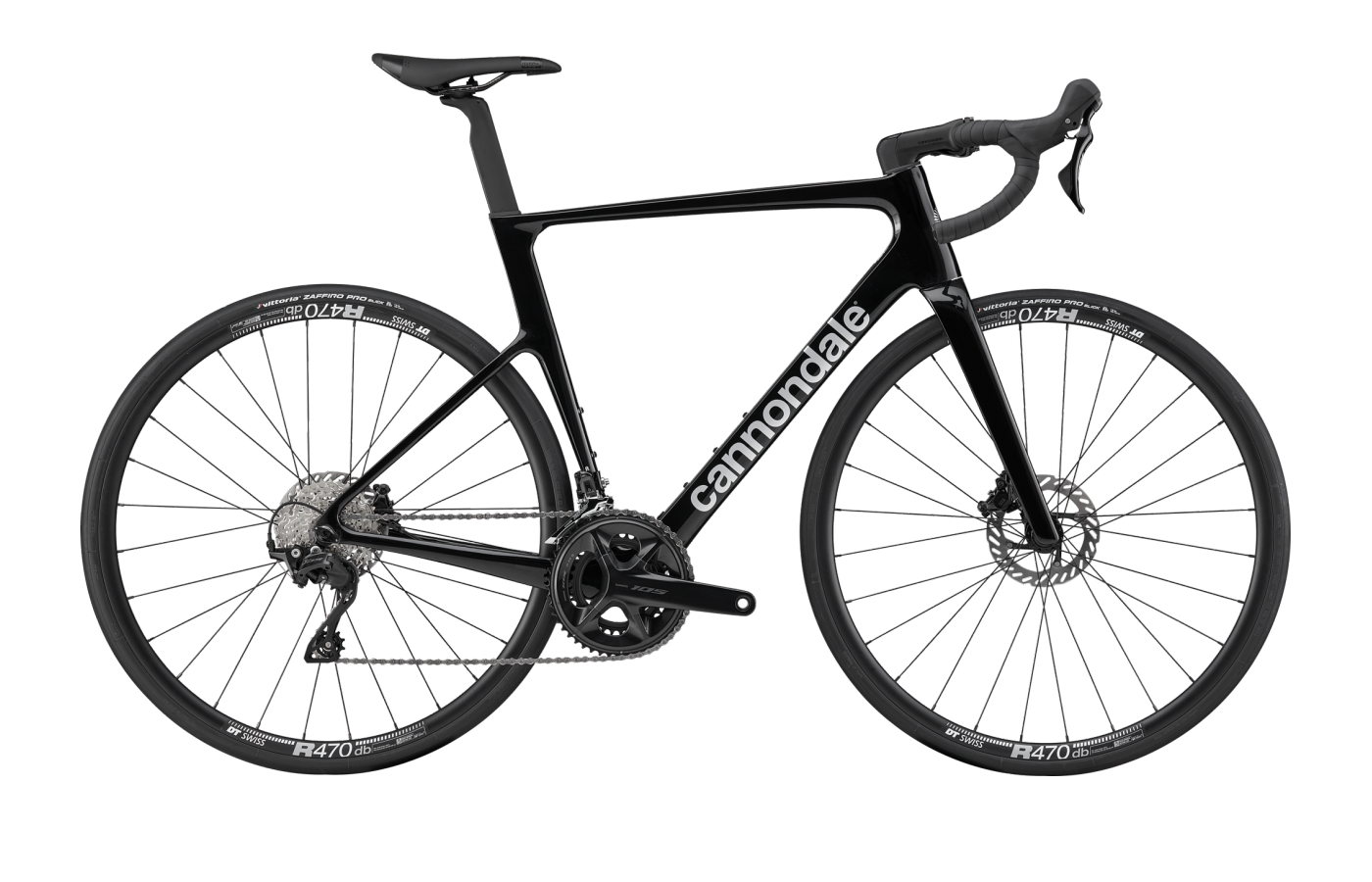
SuperSix EVO
The Cannondale SuperSix EVO is the third rail in the aero-all-rounder conversation — a more understated, handling-neutral take that splits the difference between the Tarmac's sharpness and the Madone's planted feel.
Compare →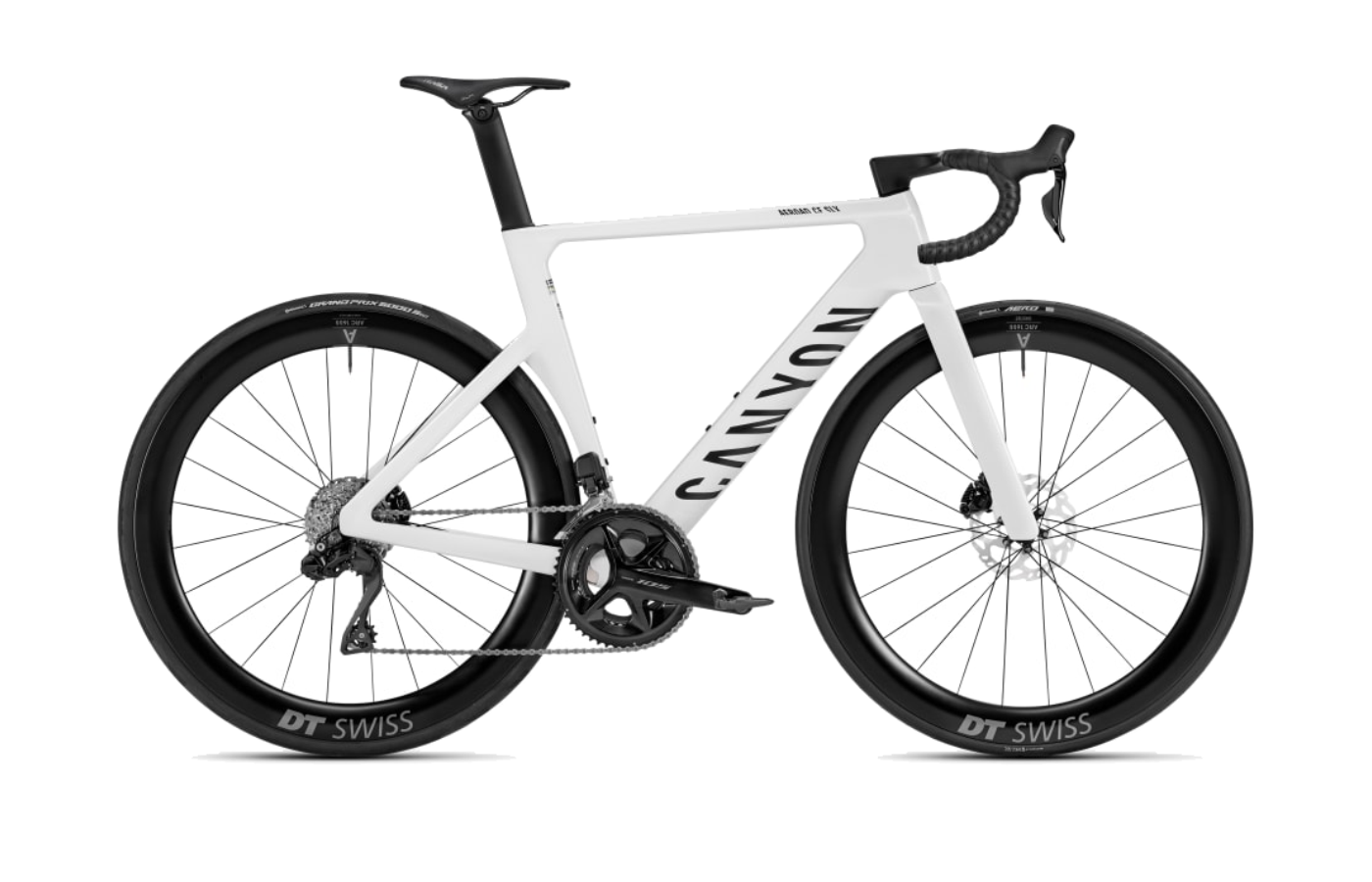
Aeroad
If pure aero numbers outrank frame weight on your priority list, the Canyon Aeroad delivers more slippery tube shapes at a meaningfully lower direct-to-consumer price.
Compare →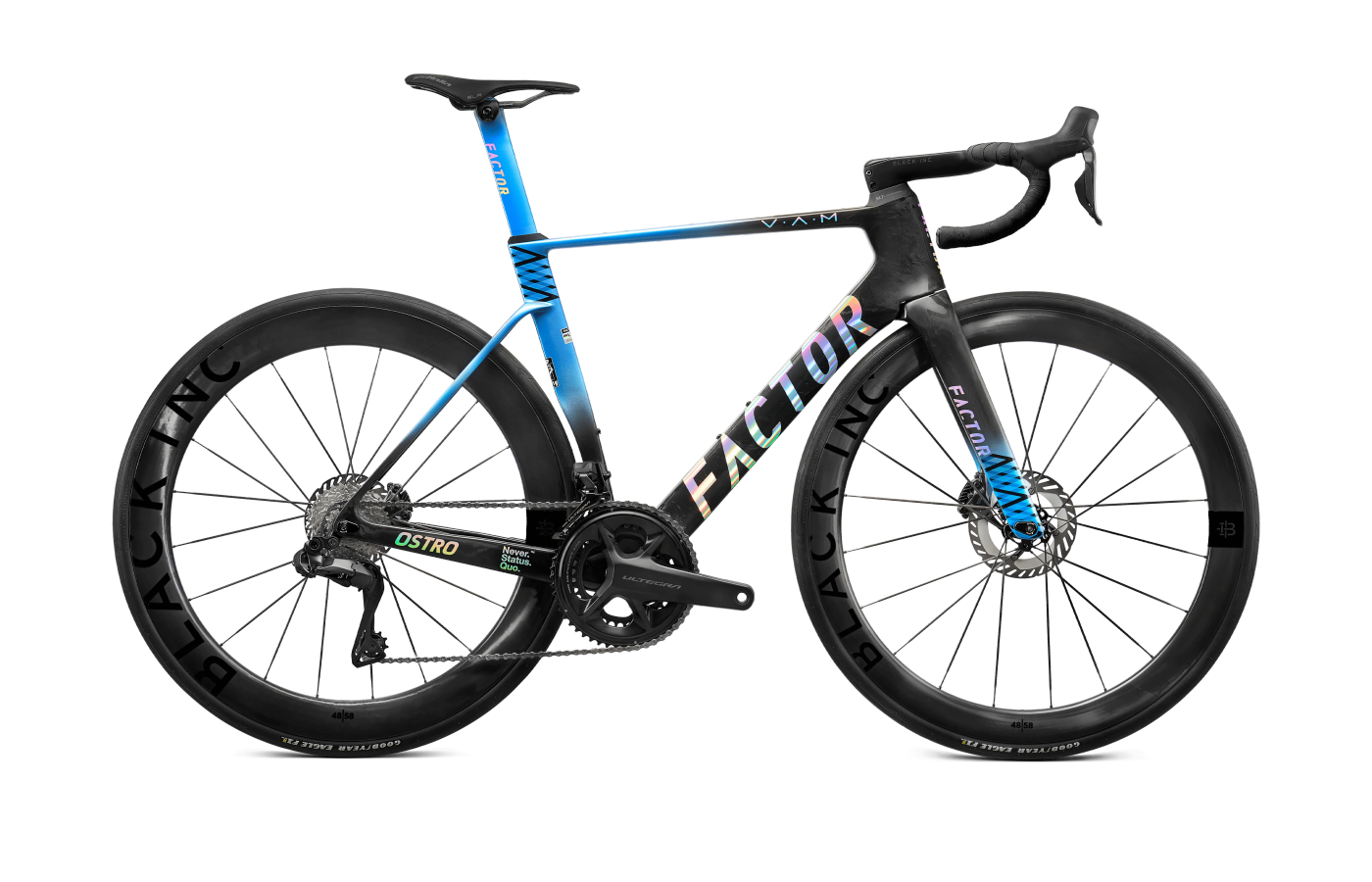
Ostro VAM
The Factor Ostro VAM matches the Tarmac for agility and low weight with a more aggressive, modern aesthetic — a boutique alternative for riders who want the big-brand performance without the big-brand badge.
Compare →