Status 170
vsStumpjumper
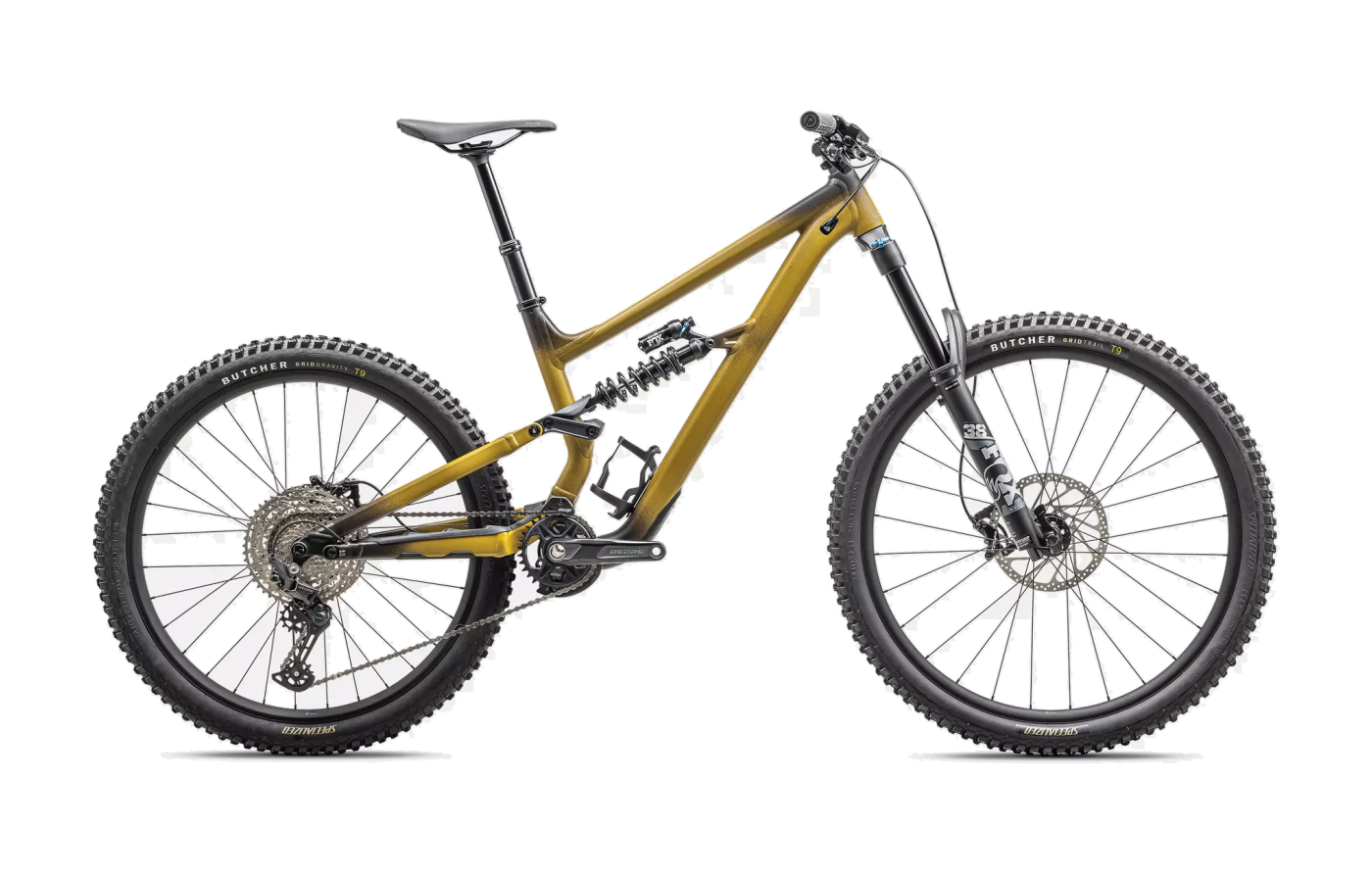
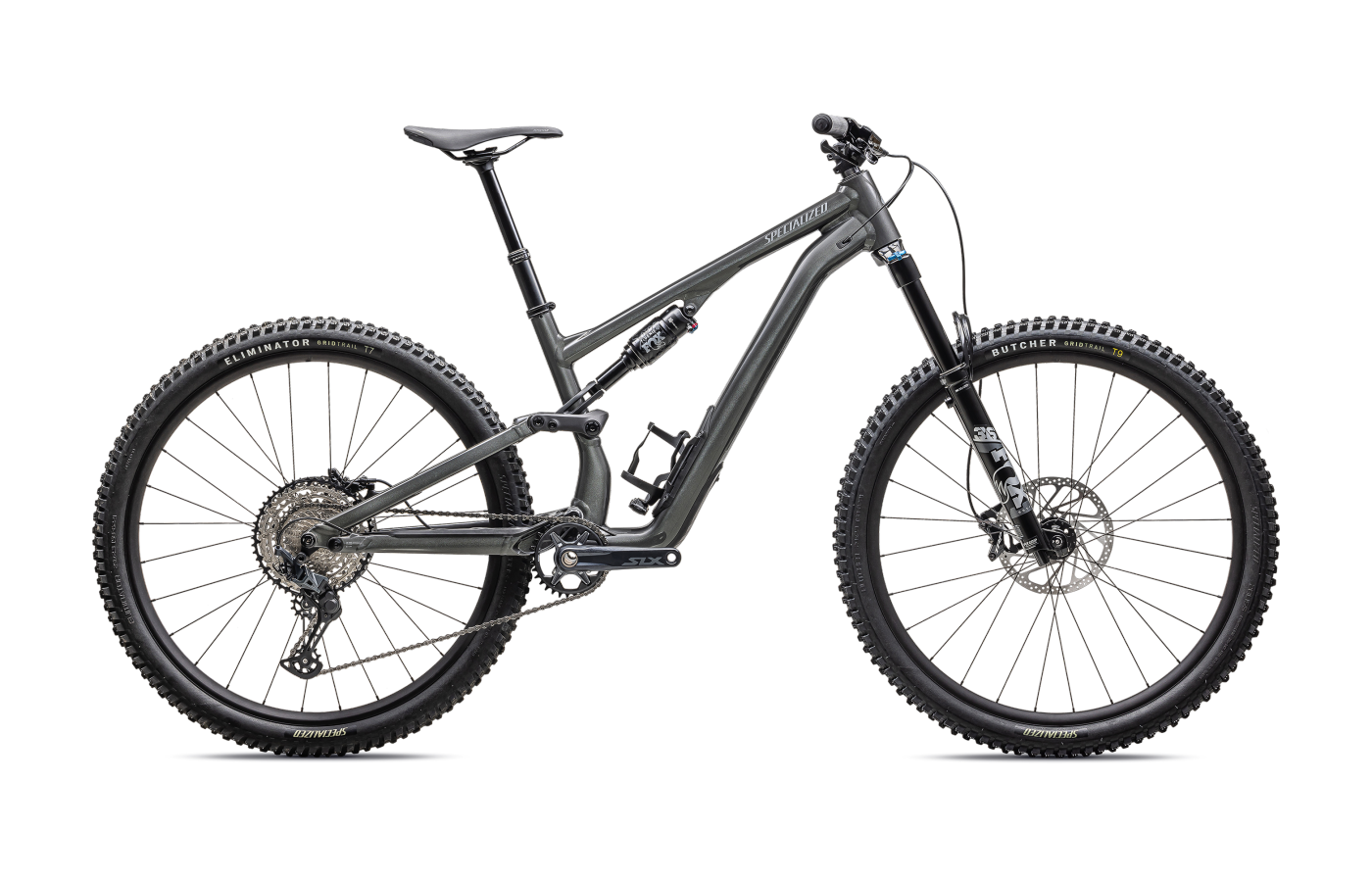
Park bruiser meets do-it-all trail bike.
The Status 170 is a 180/170 mm freeride sledgehammer in alloy. The Stumpjumper 15 is a 150/145 mm trail platform spanning $3k alloy to $12k carbon.
Status 170
- Cheapest way into 170 mm of rear travel — $2,499 for the standard build, $4,499 with a dual-crown BoXXer.
- Bombproof M5 alloy frame with a 25-year frame warranty — built to be thrashed and put away dirty.
- Surprisingly playful for the weight — mullet wheels and 432 mm chainstays make it pop and pivot once gravity is involved.
- Sluggish on flat or mellow trails — at 17+ kg it needs gradient to come alive.
- Entry-level fork damping (RockShox BoXXer Base, Fox 38 Rhythm) is the consensus weak link on rough, high-speed hits.
Stumpjumper
- Genuine quiver-killer — climbs technical terrain like a shorter-travel bike, descends like a longer one.
- GENIE shock — supple coil-like initial stroke for traction, hard end-stroke ramp to prevent bottom-outs on bike-park-sized hits.
- Lineup spans $3k to $12k — alloy entry, mid-tier carbon Pro, and full S-Works flagship all on the same chassis.
- Carbon frames are wireless-only — no mechanical drivetrain compatibility, locking you into SRAM Transmission.
- Stock Fox 36 fork often needs volume spacers or lower pressures to balance the GENIE's plushness.
Editor’s analysis
This isn't really a versus — it's a which job are you hiring the bike for. One is a chairlift specialist with no interest in your climb. The other is the bike that does every climb so it can earn the descent.
On paper the gap is obvious. The Status 170 runs 180 mm up front (on the DH builds), 170 mm out back, a 63.5-degree head angle, and an alloy-only chassis that tips the scales at roughly 17.2 kg. The Stumpjumper 15 is a 150/145 mm trail bike with a 64.5-degree head angle, six size points (S1–S6), and a lineup that climbs from a $2,999 alloy entry to an $11,999 S-Works carbon flagship. Different travel, different head angles, different price ceilings — and very different ride briefs.
Reviewers describe the Status 170 the same way every time: "party bike," "sluggish-to-playful," "holiday bike for Alpine tourists." It feels cumbersome on flat ground and wakes up only when gravity is doing the work. The mullet wheels and short-for-the-class 432 mm chainstays make it surprisingly easy to throw around once the trail tips down. The frame is described as "bombproof" and carries a 25-year warranty — built for the rider who wants to thrash and put the bike away dirty.
The Stumpjumper 15 is the opposite kind of tool. The proprietary Fox GENIE rear shock — a dual-chamber air spring — gives a coil-like first 70% of stroke for traction, then ramps hard at the end to prevent harsh bottom-outs. Combined with the 76.5–77° seat tube angle, it climbs technical terrain better than most 145 mm trail bikes have any right to and still soaks up bike-park-sized hits on the way down. Specialized claims 57% more rear traction; reviewers consistently back it up.
Put another way: the Status 170 is the bike you buy when you already own a trail bike and want a second one for park days. The Stumpjumper 15 is the bike you buy when you only own one bike. They overlap on the descent — and almost nowhere else.
Where the builds differ.
Comparing our editor's-pick builds side-by-side. Winners highlighted row-by-row — lower price and weight, and the better-spec component, each mark a point.
Build variants & pricing
Status 170 keeps it simple — four alloy builds, $2,499 to $4,499. Stumpjumper 15 covers nine builds and $9,000 of range, alloy through S-Works carbon.
Editor's-pick comparison shown above is the alloy-vs-alloy pairing closest in spec — Shimano-shifted, Rhythm-fork, TRP-braked. Step up to a carbon Stumpjumper Pro ($7,999) and the platform gap widens dramatically; the Status has no carbon option.
How they fit, how they steer.
Both bikes use Specialized's S-Sizing. The fit-picked sizes (Status S2, Stumpjumper S3) put a similar reach under the rider — 445 mm vs 450 mm — but the Status sits 2 mm shorter in stack and a full degree slacker in head angle (63.5° vs 64.5°).
Which size should I buy?
S-Sizing is reach-driven rather than seat-tube-driven, so the same rider often lands one size apart across two of these bikes.
→These are starting points. Flexibility, riding style, and preferred position all shift the answer — if you’re between sizes, a professional fit beats a chart.
What the magazines said.
Published reviews from trusted cycling outlets. Click through for the full write-up.
Which one should you buy?
If you ride lifts and want one bike to abuse, get the Status. If you ride mostly under your own power and want one bike to do everything, get the Stumpjumper.
Status 170
If your idea of a great Saturday is fifteen lift laps with the same crew, casing jumps and not caring, this is the platform. The 170 mm of rear travel and 63.5° head angle let you point and send. The alloy frame and 25-year warranty mean you can keep doing it for a decade.
Stumpjumper
If you want one bike for technical climbs, big-mile epics, jump lines, and the occasional bike-park lap, this is the benchmark. The GENIE shock makes 145 mm feel like more on the descent and like less on the climb. Pick the carbon Pro if budget allows.
Questions buyers actually ask.
Short answers to the things we get emailed about most often.
01Which one should I buy if I only own one mountain bike?
The Stumpjumper 15, almost without exception. Reviewers consistently call it a "true do-it-all bike" — it climbs technical terrain well thanks to the 76.5–77° seat tube angle and the GENIE shock's supple initial stroke, and it descends harder than its 145 mm of rear travel suggests.
The Status 170 is explicitly designed as a second bike — a park rat or freeride machine. At 17+ kg with 170 mm of rear travel, it's a chore to pedal anywhere flat, and the gravity-only 7-speed cassette on the DH builds removes any pretense of all-day usability.
02How much travel does each one have?
Status 170: 170 mm rear travel. The single-crown builds ("2 170" and "2 170 ZERO") run 170 mm forks; the "2 170 DH" builds run a 180 mm dual-crown RockShox BoXXer.
Stumpjumper 15: 145 mm rear travel paired with a 150 mm fork (140 mm on the smallest S1 size). Despite the shorter numbers, the GENIE shock's progressive end-stroke means reviewers report "never being able to hit full travel" even on bike-park-sized drops.
03What are the head tube angles?
The Status 170 runs a 63.5° head tube angle across all sizes — squarely in freeride/DH territory. A flip chip lets you swing it to 64° if you want a touch quicker steering.
The Stumpjumper 15 runs 64.5° across sizes, with adjustable headset cups that let you slacken or steepen by roughly a degree in either direction. The full degree of difference (63.5° vs 64.5°) plus the 30 mm more travel up front explains most of the character gap on steep, fast terrain.
04Why does the Stumpjumper come in carbon and the Status doesn't?
Specialized positions the Status as the "anti-status symbol" — the M5 alloy frame is the point. It's intentionally rugged, intentionally affordable, intentionally a bike you don't have to baby. There is no carbon Status option, and reviewers don't expect one.
The Stumpjumper 15 comes in both M5 alloy and FACT 11m carbon. The S-Works carbon build weighs 13.56 kg vs roughly 16.17 kg for the alloy Comp — about 2.6 kg of difference, most of which you feel on long climbs.
05Is the GENIE shock a problem for long-term ownership?
It's the most-debated feature on the Stumpjumper 15. The GENIE is a Specialized–Fox proprietary dual-chamber air spring; reviewers report it works flawlessly and that most servicing uses standard Fox internals plus one extra seal.
The concern is future parts availability. Specialized has a history of proprietary shock systems (Brain, Autosag) that became obsolete. If long-term serviceability matters more to you than the GENIE's bottom-out performance, the Status 170's standard Fox DHX coil shock or the alloy Stumpjumper's standard 210x55 mm size are both swappable for any aftermarket equivalent.
06Which one has better brakes out of the box?
Depends on the build. The top Status 170 DH ships with SRAM Maven Bronze 4-piston brakes, which reviewers across the board call the best stoppers in the category — "phenomenal" power, excellent heat management.
The top Stumpjumper 15 S-Works also runs Maven brakes. The mid-tier and entry alloy builds on both bikes (including our editor's picks) ship with TRP Trail EVO 4-piston brakes — adequate stopping power, less famous than Mavens, but solid.
07What size do they recommend for a 5'8" rider?
Specialized's S-Sizing is reach-driven rather than seat-tube-driven, so the same rider often lands one size apart across two of their bikes.
For a 173 cm (5'8") rider, the fit math points to Status 170 in S2 (445 mm reach, 625 mm stack) and Stumpjumper 15 in S3 (450 mm reach, 627 mm stack). Despite the different size labels, the reach is essentially identical.
08What's the warranty situation on each?
Both bikes come with lifetime frame warranty to the original owner against manufacturing defects, plus lifetime pivot bearing replacement on the Stumpjumper 15.
The Status 170's M5 alloy chassis additionally carries a 25-year frame warranty flagged in international reviews — exceptionally long for the freeride category, and a strong signal that Specialized expects this frame to outlast the components bolted to it.
Similar bikes
If your priorities don’t map cleanly onto either of these, one of these adjacent bikes probably fits better.
Capra
If the Status appeals but you want sharper damping and a carbon frame option, this is the YT play — more refined suspension, less weight, similar gravity-bias.
Compare →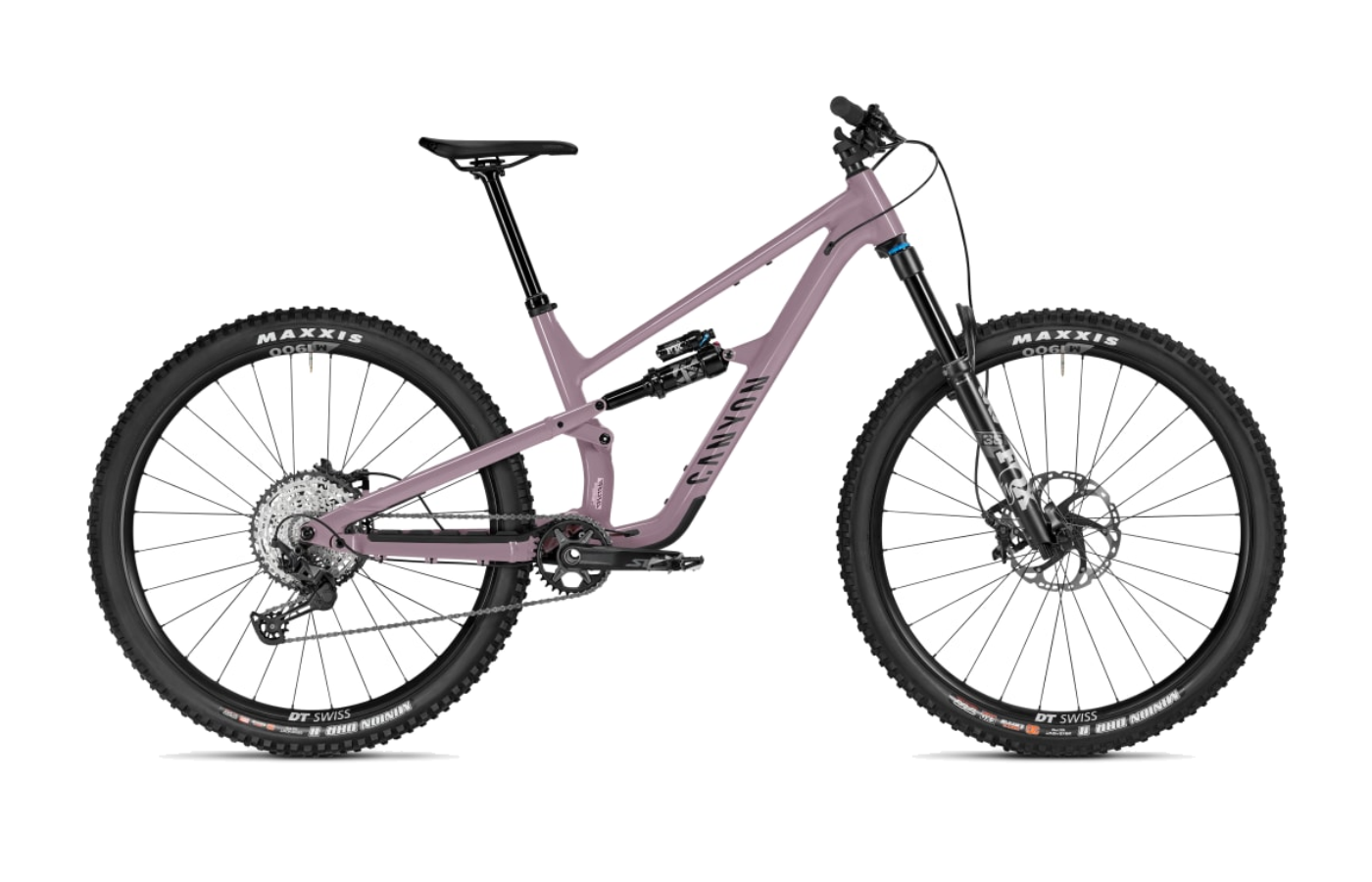
Spectral
Direct rival to the Stumpjumper 15 — same trail-bike brief, often at a lower direct-to-consumer price. The catch is no local dealer for setup or warranty work.
Compare →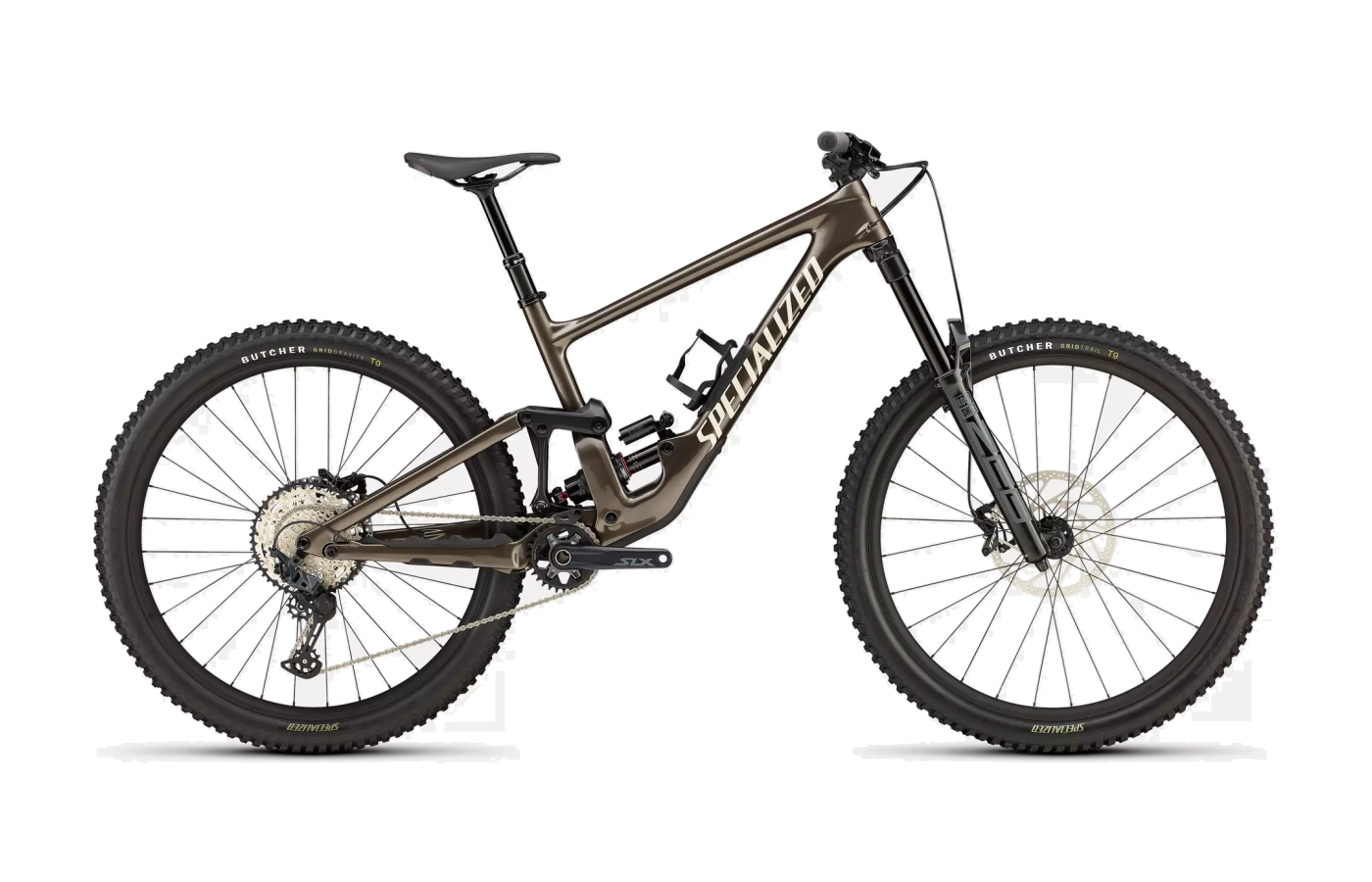
Enduro
If the Status feels too budget-tier and the Stumpy feels too short-travel, the Specialized Enduro is the heavy-duty middle ground — more refined suspension layout for maximum smash.
Compare →