Epic
vsEpic World Cup
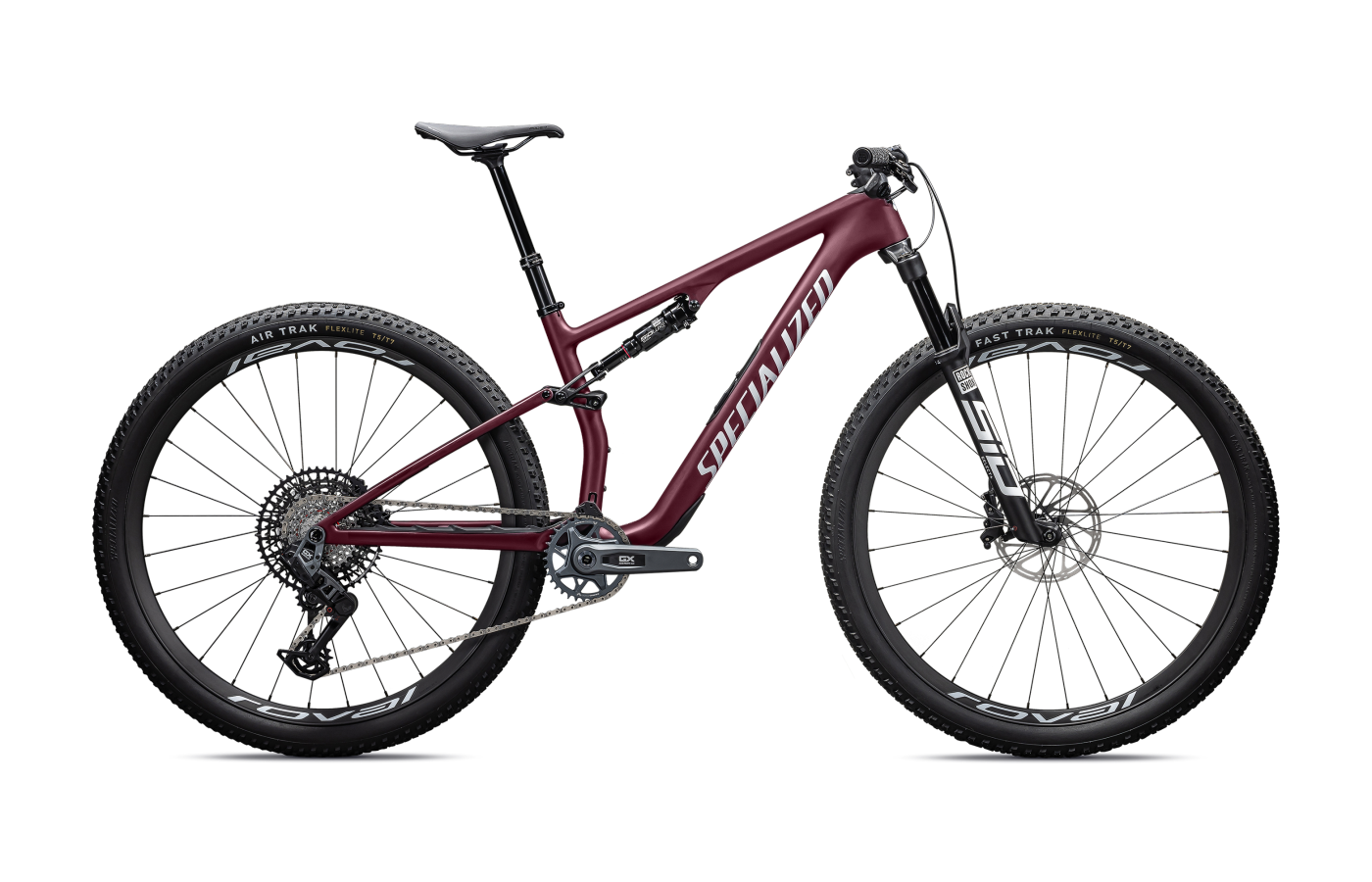
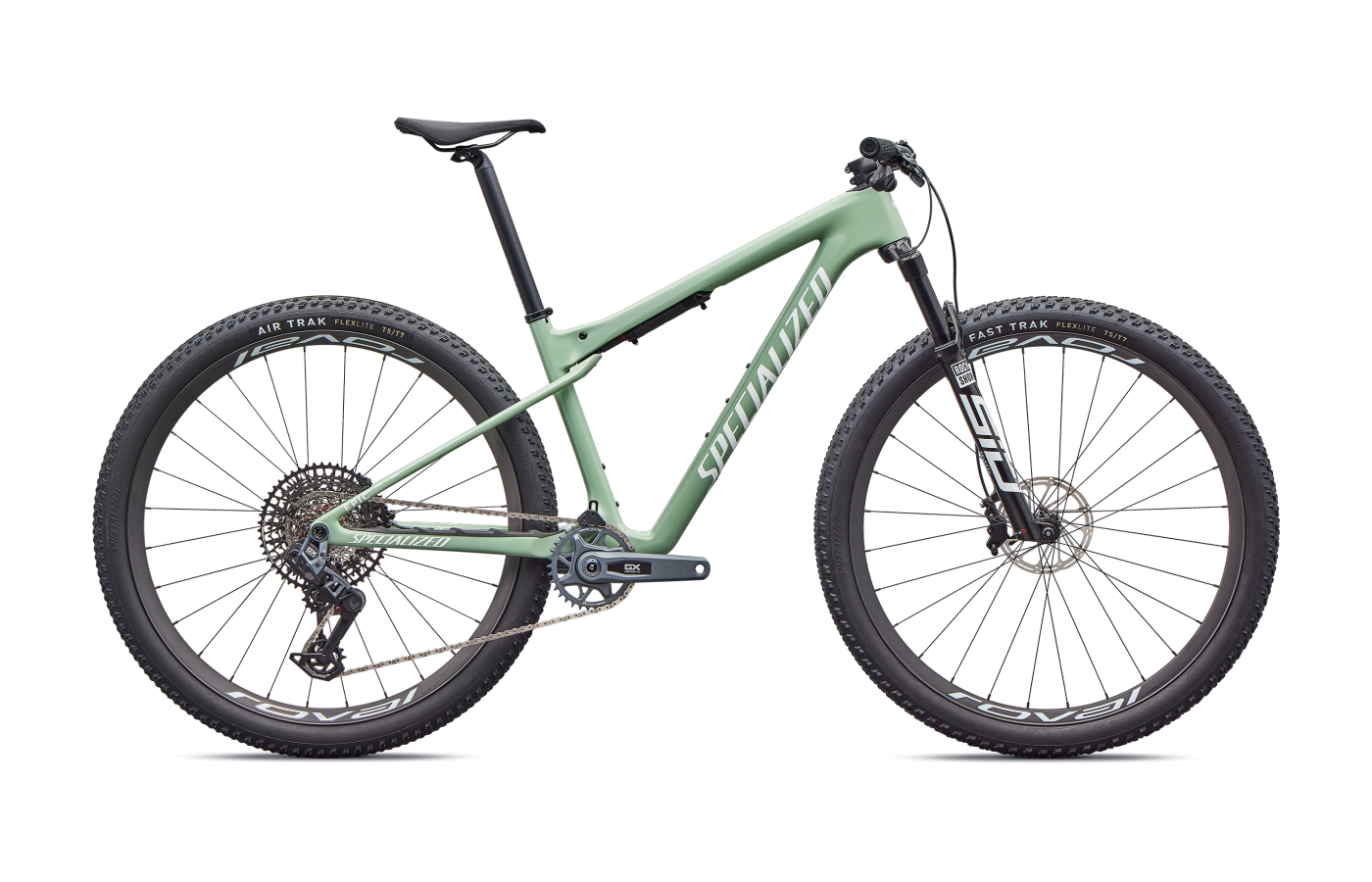
Same family, two race plans.
The Epic 8 is a 120 mm trail-blurring XC bike. The Epic World Cup is a 75 mm hardtail-killer with a shock buried in the top tube.
Epic
- 120 mm of capable travel — pairs the "Magic Middle" shock tune with a 65.9° head angle to descend like a trail bike.
- Wide build range — from a $4,499 GX-mech Comp to a $14,999 S-Works Flight Attendant; eight builds total.
- Frame versatility — SWAT 4.0 storage, threaded BSA BB, dropper post on every build, and shared frame with the trail-leaning Epic EVO.
- GX Expert weighs 11.15 kg — about 0.7 kg over the equivalent World Cup.
- Slack head angle and 120 mm of travel can feel like overkill on a smooth, fast XC course.
Epic World Cup
- Hardtail-class efficiency — the WCID shock at 0% sag rides locked-out, then breaks open under big hits with no remote needed.
- Lighter at every tier — GX Expert at 10.47 kg, S-Works at 9.25 kg; roughly 700 g under the matching Epic 8.
- Cleanest cockpit in XC — no shock-lockout cable, hidden shock; the bike looks (and pedals) like a hardtail.
- No dropper post on any stock build — plan on adding one (~$300–700).
- 75 mm of rear travel and a firm initial stroke punish technical descents and long days in the saddle.
Editor’s analysis
Specialized built two answers to the same question — what should a modern XC race bike actually be? — and then sold both.
On paper they share a lineage and a paint palette. In the geometry chart and on the trail they diverge hard. The Epic 8 runs 120 mm of travel front and rear, a 65.9-degree head angle, and a 1,179 mm wheelbase at size M. The Epic World Cup keeps the Epic name and the FACT carbon, but cuts the rear travel to 75 mm, steepens the head angle to 66.5, and shortens the wheelbase to 1,150 mm. One is built to descend with composure; the other is built to leave a hardtail behind on the climb to the first feed zone.
The Epic 8 is the modern XC archetype — a downcountry-leaning rig with a slack front end, a low BB, and the custom-tuned RockShox SIDLuxe "Magic Middle" shock that pedals firm until something punches it open. Reviewers (PinkBike, Flow, BikeRadar) describe it as a "featherweight trail bike" that happens to weigh under 11.5 kg in mid-tier trim. The 65.9-degree head angle was unthinkable on an XC bike five years ago; on the Epic 8 it just makes the bike calmer at speed.
The Epic World Cup goes the other direction. Its proprietary RockShox SIDLuxe WCID shock is buried under the top tube, runs 0–10% sag, and uses adjustable "Gulp" settings on the negative spring instead of a remote lockout. Set it to "No Gulp" and the bike rides like a hardtail with an emergency parachute — full power transfer until you slam something hard enough to pop the threshold. There is no on-the-fly adjustment. There is no dropper post, even on the S-Works.
Put crudely: the Epic 8 is the bike if you race XC on courses with descents that look like enduro stages. The Epic World Cup is the bike if your podium course is a 90-minute short-track circuit, a Leadville-style fire-road grinder, or a NICA loop where the climbs decide the race and the rest is gravel.
Where the builds differ.
Comparing our editor's-pick builds side-by-side. Winners highlighted row-by-row — lower price and weight, and the better-spec component, each mark a point.
Build variants & pricing
Eight Epic 8 builds (~$4.5k–$15k) vs. three Epic World Cup builds (~$6.7k–$12k). The Epic 8 reaches further down-market.
Prices are current US MSRP. Editor's picks are tier-matched at SRAM GX Eagle AXS — both Experts use the FACT 11m frame, Roval Control SL V carbon wheels, and the same drivetrain, isolating the platform difference instead of the spec difference.
How they fit, how they steer.
Both at size M — the fit-picked frame for a 5'8" rider on each. The Epic 8 stretches 10 mm longer in reach, slacks the head angle 0.6°, and adds 5 mm of chainstay and 29 mm of wheelbase. The World Cup is a tighter, sharper machine.
Which size should I buy?
Sizing recommendations based on stack, reach, and effective top tube. The Epic 8 offers an XS option; the World Cup starts at S.
→These are starting points. Flexibility, riding style, and preferred position all shift the answer — if you’re between sizes, a professional fit beats a chart.
What the magazines said.
Published reviews from trusted cycling outlets. Click through for the full write-up.
Which one should you buy?
If your race courses have real descents, get the Epic 8. If they don't, the Epic World Cup is faster up the climb and lighter on the lift.
Epic
If your race calendar includes UCI-spec courses, marathon events with technical singletrack, or weekends where the bike doubles as a trail rig — this is the Epic to buy. The 120 mm of travel and slack front end add capability without giving up the race-day pedaling feel.
Epic World Cup
If you're racing 90-minute XCO laps, NICA, or Leadville-style efforts where the climbs decide the day and the descents are smooth, the World Cup's hardtail-grade efficiency and 700-gram weight savings pay off every lap. Bring your own dropper.
Questions buyers actually ask.
Short answers to the things we get emailed about most often.
01What's the actual difference in suspension?
The Epic 8 runs 120 mm front and 120 mm rear with a conventional RockShox SID / SIDLuxe pairing tuned with Specialized's "Magic Middle" mode — a digressive compression setting that pedals firm and pops open under impact. There's a remote (TwistLoc) on most builds and an electronic Flight Attendant suite on the S-Works.
The Epic World Cup runs 110 mm up front and just 75 mm in back, using a proprietary RockShox-Specialized SIDLuxe WCID shock buried in the top tube. Instead of a lockout lever, it uses a tunable negative-air-spring "Gulp" setting, run between 0% and 10% sag. There is no on-the-fly adjustment — you set the firmness with a shock pump before the ride.
02Which one is faster on a climb?
On smooth, sustained climbs the Epic World Cup wins — multiple reviewers (BikeRadar, Flow, Escape Collective) called it the fastest-pedaling full-suspension XC bike they've ridden. The 75 mm WCID shock at 0% sag is essentially a hardtail, and the GX-tier Expert weighs 10.47 kg vs. 11.15 kg for the Epic 8 GX Expert — about 700 g less to drag uphill.
On technical climbs the gap closes or flips. Reviewers noted the Epic 8's 120 mm of active travel and supportive Magic Middle tune deliver "considerably more traction and comfort" on rooty or rocky climbs, where the World Cup's firm stroke can cause the rear to skip and lose grip.
03Which one descends better?
The Epic 8, by a wide margin. A 65.9° head angle (vs. 66.5° on the World Cup), 120 mm of rear travel (vs. 75 mm), and 35 mm-stanchion SID fork at 120 mm (vs. SID SL at 110 mm) give it a full descent advantage.
It's not just travel — every stock Epic 8 ships with a dropper post, while no World Cup build does. On any descent that matters, you're either dropping a few hundred dollars on an aftermarket dropper for the WC or perched high in the saddle hoping for the best.
04Why no dropper post on the Epic World Cup?
Specialized's stated reasoning is weight savings and rider preference at the elite race level. In practice, almost every reviewer flagged it as a misstep — Escape Collective wrote "it's BYO dropper for the Epic WC," Enduro MTB went further and said riders should upgrade "as soon as you can."
Budget another $300–700 for a quality lightweight dropper if you plan to ride the World Cup on anything more technical than a fire road.
05Is the World Cup actually faster than a hardtail?
On most modern XCO courses — yes, narrowly. The 75 mm of real travel keeps the rear wheel tracking on impacts that would unweight a hardtail, and Specialized claims (and reviewers confirm) the WCID shock holds the bike high in its travel for hardtail-grade pedaling response.
On a pure smooth-grind climb, a top-tier hardtail still has a small efficiency edge. The World Cup's argument is that you give up almost nothing on the climb and gain a lot back on the descent and over rough chatter.
06Are the frames or geometries shared?
No. They look similar in the Specialized lineup but they're different frames with different rear-suspension layouts, different shocks, and different geometry. At size M: the Epic 8 has 450 mm reach, 65.9° head angle, 435 mm chainstays, 1,179 mm wheelbase. The World Cup has 440 mm reach, 66.5° head angle, 430 mm chainstays, 1,150 mm wheelbase.
The Epic 8 frame is shared with the Epic EVO (130 mm fork, knobbier tires, trail-leaning build). The World Cup frame is its own thing.
07Which one should I buy if I can only have one bike?
The Epic 8. It's the more versatile platform by every measure — more travel, slacker geometry, dropper post stock, more build choices, and a frame that doubles as the Epic EVO trail bike if you ever change your mind. Reviewers consistently described it as the single most capable XC race bike Specialized has ever built.
The World Cup is a specialist — buy it as a second bike or when you know your courses are smooth and your priority is the stopwatch.
08What about long-term reliability?
Both frames use a threaded BSA bottom bracket — a win for serviceability over press-fit. Both run SRAM Transmission drivetrains on the GX-and-up builds, which reviewers consistently rate as the most durable AXS hardware SRAM makes (Bicycling reported a derailleur surviving a direct rock strike with no shifting impact).
The biggest reliability concern on the World Cup is the headset-routed cables — Escape Collective and Bicycling both reported grit accumulating on the upper headset bearing, predicting annual bearing replacement for riders in wet or dusty conditions. The Epic 8's lower-tier (FACT 11m) frames use head-tube ports instead, which are easier to service.
Similar bikes
If your priorities don’t map cleanly onto either of these, one of these adjacent bikes probably fits better.
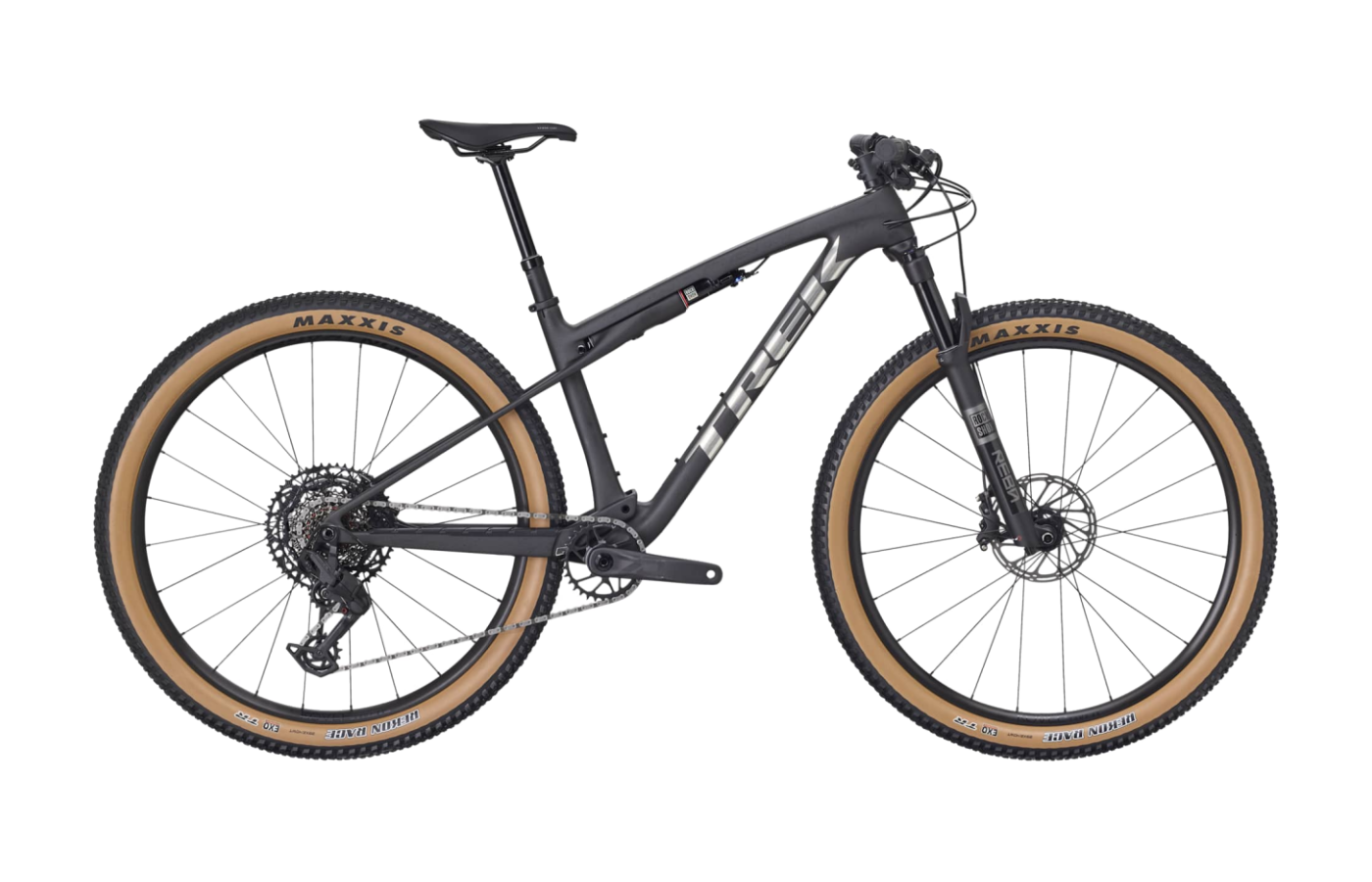
Supercaliber
The most direct rival to the Epic World Cup — Trek's Supercaliber buries an IsoStrut shock above the top tube to bridge the same hardtail-FS gap, with slightly more rear travel and a more conventional sag-based setup.
Compare →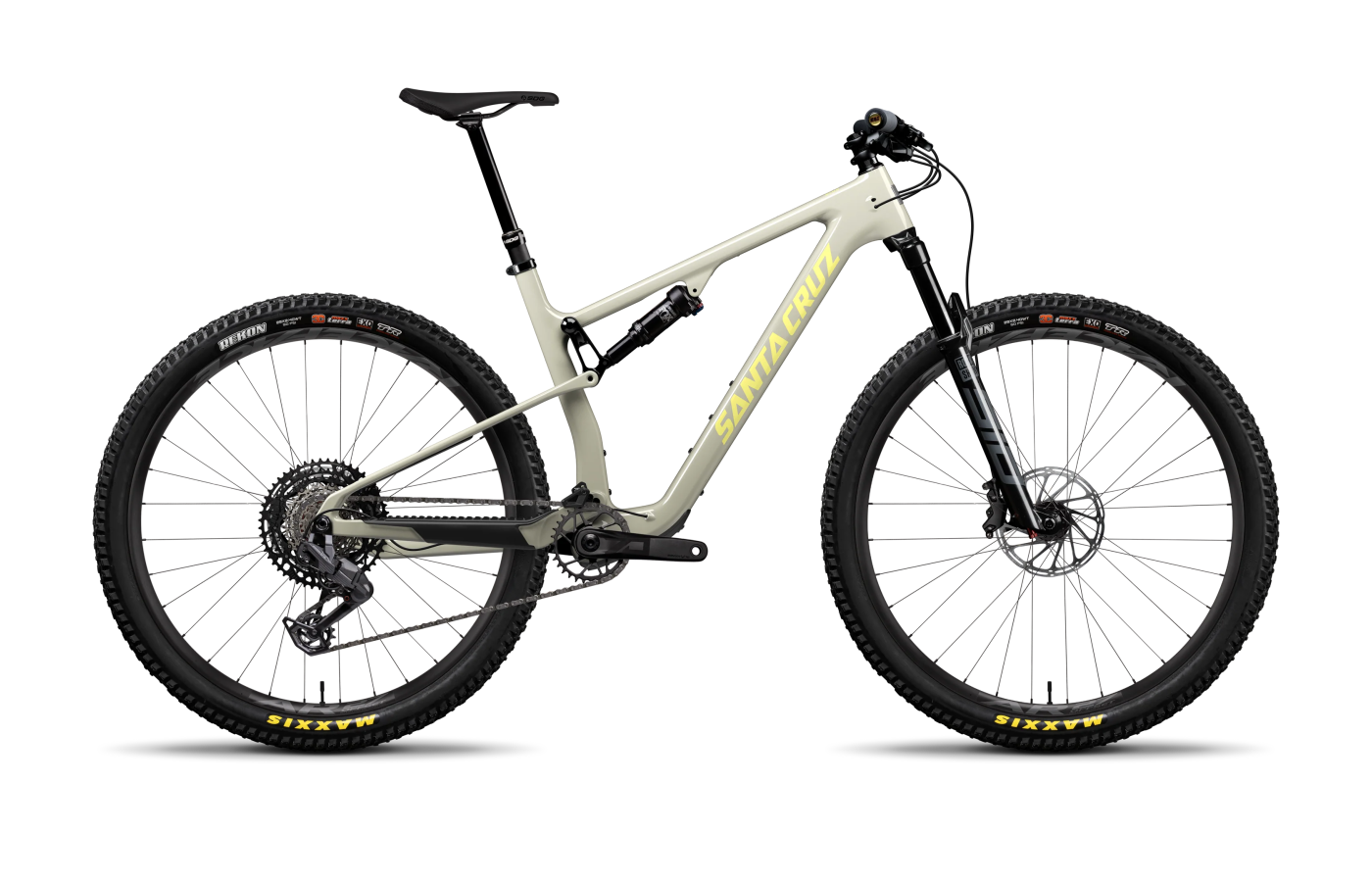
Blur
Santa Cruz's take on the Epic 8's downcountry-leaning XC platform — 115/120 mm of conventional VPP travel, no proprietary electronics, no Flight Attendant tax. The simpler choice if you want trail-bike capability without the Specialized tech stack.
Compare →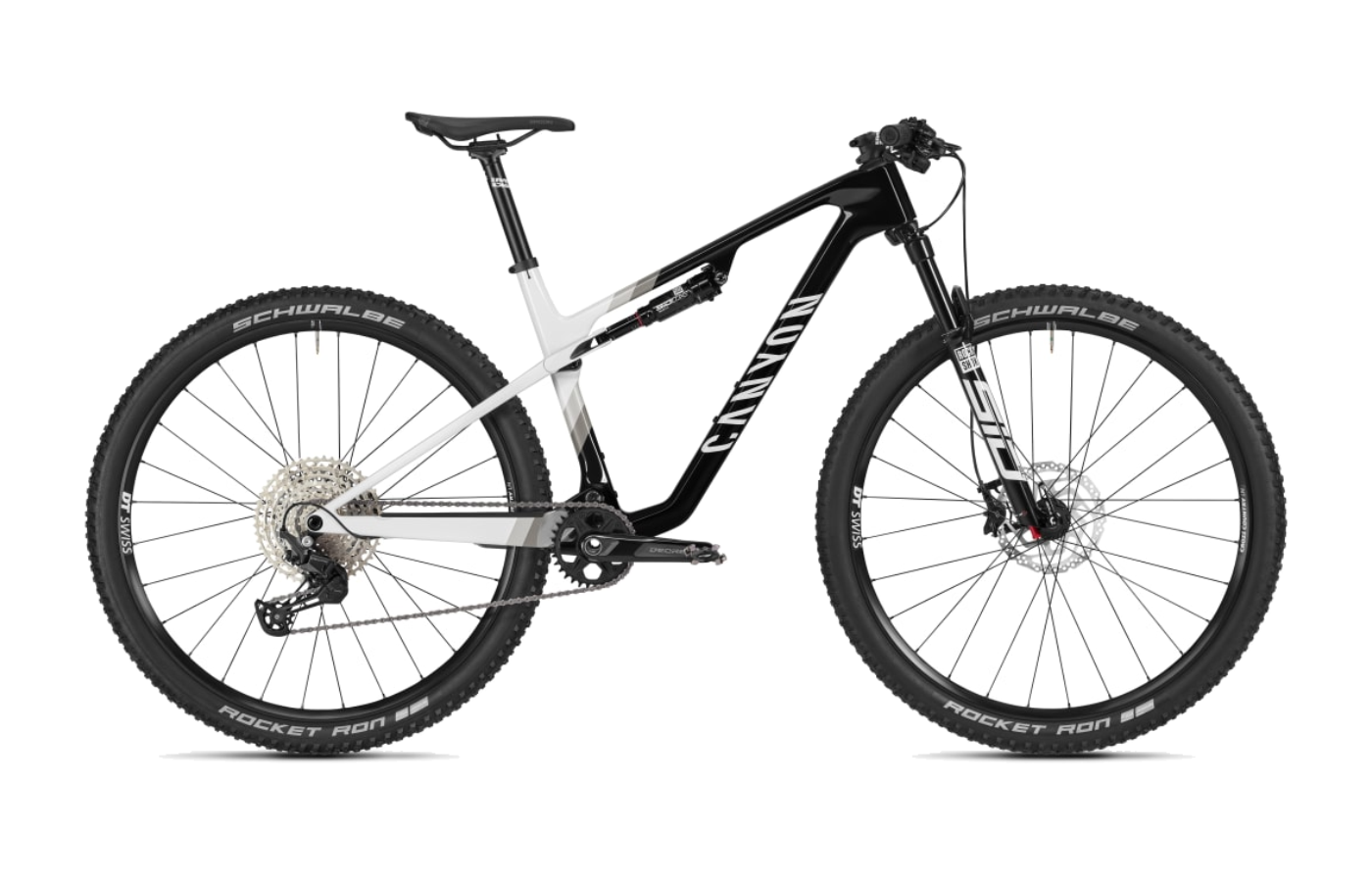
Lux World Cup
Canyon's value-focused purebred racer — direct-to-consumer pricing on a dual-remote-lockout XC bike for riders who want manual control over their suspension instead of automated valves or proprietary spring tuning.
Compare →