Crux
vsDiverge
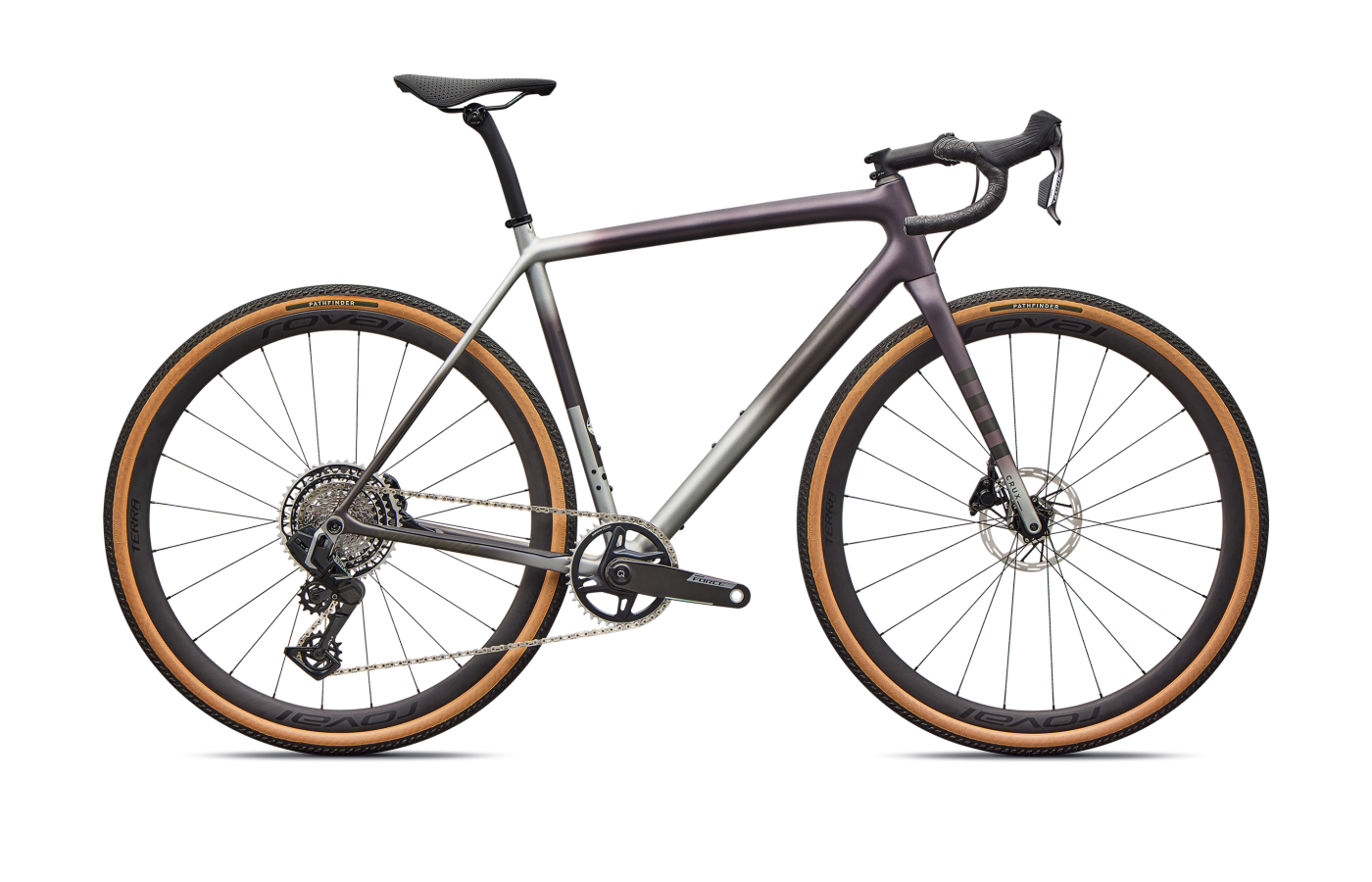
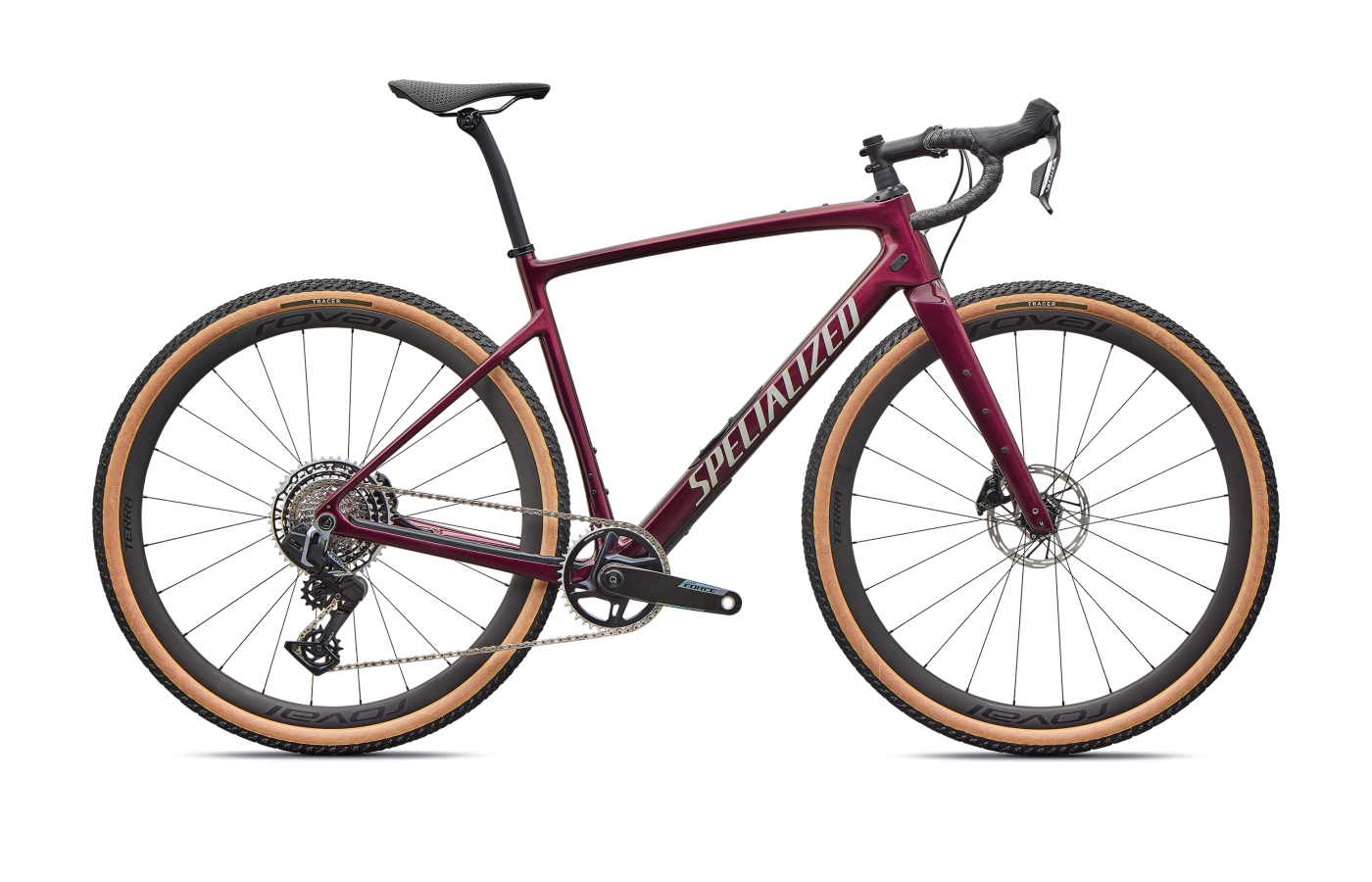
Same brand, opposite ends of the gravel spectrum.
The Crux is a featherweight cyclocross-bred racer. The Diverge 4 is a stable, suspended, storage-equipped adventure platform.
Crux
- Exceptionally light — 7.64 kg on the Pro build, 6.94 kg on S-Works. Climbs 'like a mountain goat' (Cycling News).
- Low-maintenance standards — threaded BSA bottom bracket, two-piece cockpit, round 27.2 mm seatpost. No proprietary headaches.
- Race-ready handling — sharper 72° HTA and tight 1033 mm wheelbase reward an engaged rider on twisty courses.
- No suspension, no SWAT storage, almost no mounts — it's a race bike, not an adventure platform.
- Stiff front end can feel 'nervous' or harsh on rough singletrack and long rocky descents.
Diverge
- 20 mm Future Shock — front-end suspension that 'absolutely saved me' on fast descents (Velo). Reduces shoulder and hand fatigue measurably.
- Massive 50 mm tire clearance — officially clears 50 mm gravel tires or 2.2" MTB rubber. Future-proofs the bike for rougher terrain.
- SWAT downtube storage — integrated, rattle-free internal storage replaces a saddlebag. Even the alloy builds get it.
- Stock 45 mm Tracer tires plus 85 mm BB drop cause frequent pedal strikes; most reviewers swap to 50 mm immediately.
- Roughly 750 g heavier than the equivalent Crux build — the Future Shock and storage hardware aren't free.
Editor’s analysis
This isn't a budget-vs-flagship fight — it's minimalism vs. integration, and Specialized sells both on purpose.
Specialized makes two carbon gravel platforms because they answer two completely different questions. The Crux is what happens when you ask, 'what if our lightest road bike had 47 mm tire clearance?' — round tubes, an exposed 27.2 mm seatpost, a threaded BB, no integration, an S-Works frame at a claimed 725 g. The Diverge 4 is what happens when you ask, 'what if a gravel bike got everything it needs to disappear into the backcountry?' — a 20 mm-travel Future Shock under the stem, SWAT downtube storage, 50 mm tire clearance, and geometry borrowed from modern trail bikes.
On paper that shows up everywhere. The Crux runs a 72° head tube angle, 1033 mm wheelbase, and a 72 mm bottom-bracket drop — sharp, eager, the kind of bike Velo described as 'almost a hair nervous' next to the Diverge. The Diverge slackens to 71°, stretches the wheelbase to 1041 mm, drops the BB to 85 mm, and runs 430 mm chainstays — five longer than the Crux. It's the difference between a bike that flicks and a bike that plants.
Weight tells the same story. The Crux Pro at $7,999 hits 7.64 kg in size 56; the Diverge 4 Pro at the same $7,999 with the same SRAM Force AXS XPLR drivetrain comes in at 8.39 kg — 750 g heavier, basically all of it Future Shock hardware, SWAT door, and the stouter frame around them. On a 30-minute climb that's roughly 10 seconds for a 70 kg rider. On a four-hour rocky descent it's more like 'arrived at camp able to use your hands.'
Put another way: the Crux is the bike you buy when 'gravel' means a fast 80-mile loop on hardpack with one cyclocross race per season. The Diverge is the bike you buy when 'gravel' means jeep roads, washboard, bikepacking weekends, and terrain that would have been called mountain biking a decade ago.
Where the builds differ.
Comparing our editor's-pick builds side-by-side. Winners highlighted row-by-row — lower price and weight, and the better-spec component, each mark a point.
Build variants & pricing
The Crux spans $2,799 (alloy DSW Comp) to $11,999 (S-Works); the Diverge runs $2,099 to $10,499. Editor's picks are matched at $7,999 with identical Force AXS XPLR drivetrains.
Prices are current US MSRP. The two picked builds are deliberately spec-twinned — same drivetrain, same wheelset family, same year — so the comparison table isolates the platform difference (Crux carbon + minimalist vs. Diverge carbon + Future Shock + SWAT) rather than a component-tier mismatch.
How they fit, how they steer.
Both at size 54 — the fit-picked size for a 5'8" rider. The Diverge sits 32 mm taller (592 vs 560 mm stack), runs a 0.5° slacker head angle, and stretches the chainstays 5 mm — every number points to a more upright, more stable platform.
Which size should I buy?
Size recommendations are based on stack, reach, and effective top tube. Both platforms share the same six size labels (49–61), but the Diverge runs noticeably taller stack at every size.
→These are starting points. Flexibility, riding style, and preferred position all shift the answer — if you’re between sizes, a professional fit beats a chart.
What the magazines said.
Published reviews from trusted cycling outlets. Click through for the full write-up.
Which one should you buy?
If your gravel is fast and mostly smooth and you race, get the Crux. If your gravel is chunky, multi-day, or all-day, get the Diverge.
Crux
If you race cyclocross, chase fast group rides on hardpack, or want a single sub-8 kg drop-bar bike that swaps tires for road and gravel duty, this is still the benchmark. It rewards skill and punishes laziness — exactly what a race bike should do.
Diverge
If your weekends look more like backcountry exploration than crit racing — chunky jeep roads, washboard descents, occasional bikepacking nights, terrain where your hands usually go numb — the Future Shock and SWAT storage stop being marketing and start being necessities.
Questions buyers actually ask.
Short answers to the things we get emailed about most often.
01Which is faster on smooth gravel?
The Specialized Crux, by a meaningful margin. The Pro build is about 750 g lighter than the equivalent Diverge 4 Pro and runs a sharper, lower riding position. Cycling News called it 'an absolute rocket over smoother gravel surfaces' and 'the most road-capable gravel bike' they'd tested.
Once the surface gets chunky, that gap closes — the Diverge's stability and Future Shock let you carry more speed without getting beaten up.
02What's the maximum tire clearance?
Crux: 47 mm officially (or 2.1" on 650b wheels).
Diverge 4: 50 mm officially with 7 mm of mud clearance, or 2.2" mountain bike tires with the ISO-standard 4 mm clearance.
The Diverge's extra clearance isn't just a number — it changes what kind of trails the bike can credibly handle, and most reviewers strongly recommend swapping the stock 45 mm Tracers for 50 mm rubber to get the geometry working as intended.
03Does the Future Shock actually do anything?
Yes — when it's working. The Future Shock 3.0 system gives 20 mm of vertical travel at the stem, isolating your hands from high-frequency chatter. Bike Rumor called it 'nothing short of brilliant' on roots and broken pavement; Velo's reviewer said it 'absolutely saved me' on a fast rough descent.
There are three tiers: 3.1 (alloy builds, undamped), 3.2 (Expert and Comp Carbon, damped but not adjustable), and 3.3 (Pro and Pro LTD, on-the-fly lockout). Several reviewers feel 3.3 should be standard at the Expert price point.
04How big is the weight difference in real terms?
At the editor's-pick tier — Crux Pro vs Diverge 4 Pro, both $7,999, both Force AXS XPLR — the Crux is 7.64 kg vs 8.39 kg for the Diverge in size 56. That's roughly 750 g, or about 1% of a 75 kg rider's system weight.
On a 30-minute climb that's about 10 seconds for an average rider. Noticeable on repeated efforts and gravel races, mostly invisible on a casual all-day ride.
05Why do reviewers complain about pedal strikes on the Diverge?
The Diverge 4 has a low 85 mm bottom-bracket drop — designed for a low center of gravity once you fit wider tires. But the bikes ship with 45 mm Tracer tires and 172.5 mm cranks on the 54/56 sizes, and that combination puts the pedals close enough to the ground that even mellow trails produce strikes.
BikeRadar's reviewer reported 'clipping pedals on even pretty mellow trails,' and Cycling Weekly's tester broke a Garmin Rally power pedal because of repeated strikes. The fix is wider tires (50 mm or 2.2") — which is what the frame was actually designed for. The Crux's 72 mm BB drop sidesteps the problem entirely.
06Can I run a 2x drivetrain on either?
Crux: electronic 2x only — there's no cable routing for a mechanical front derailleur. All current builds ship 1x.
Diverge 4: same constraint. Every current Diverge 4 build is 1x, with electronic 2x supported on the carbon frames if you want to convert later.
For either bike, if you specifically want a 2x mechanical groupset, you're outside the current lineup.
07Are the frames compatible with bikepacking and racks?
Diverge 4: yes — designed for it. Mounts on the fork, top tube, downtube, and provisions for racks and fenders (some require additional parts). The internal SWAT storage adds usable capacity without external bags.
Crux: mostly no. Specialized's Aethos-derived minimalism means a third bottle cage mount and not much else. No fender mounts, no rack mounts, no SWAT door. Strap-on bag solutions only.
08Which one should I buy if I'm only buying one bike?
Honest answer: the Diverge 4 for most riders. The Future Shock and 50 mm clearance let it credibly handle terrain the Crux can't, and a tire swap turns it into a perfectly fast pavement bike. It's the more versatile platform.
Buy the Crux if you already own a road bike and want a dedicated drop-bar dirt racer, or if you race cyclocross. Its sharper handling, lower weight, and minimalist standards reward riders who know what they want — and don't need their gravel bike to also haul camping gear.
Similar bikes
If your priorities don’t map cleanly onto either of these, one of these adjacent bikes probably fits better.
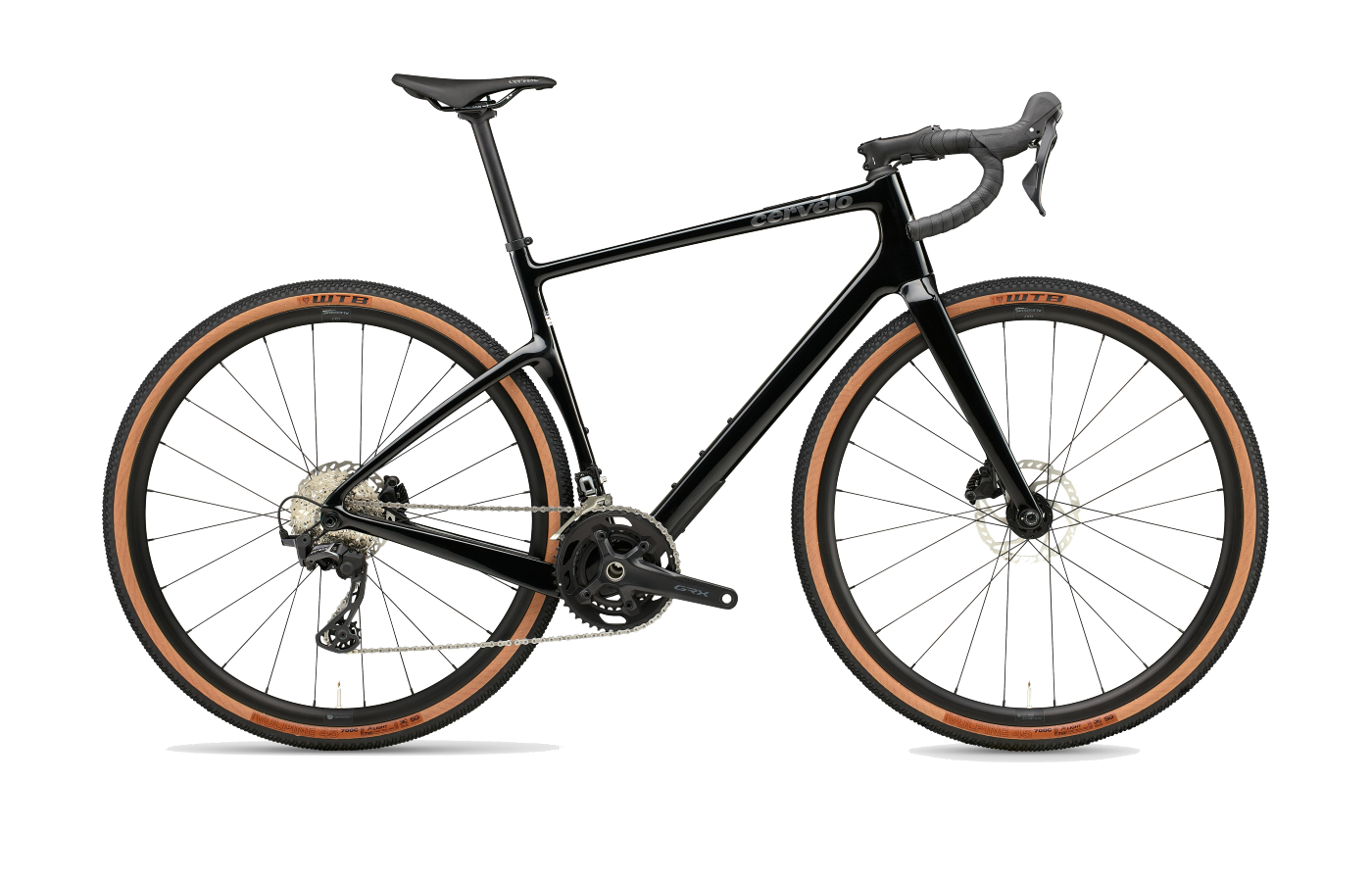
Aspero
A direct rival to the Crux that trades a few grams of weight for aero tube shapes — the pick for racers who spend more time on flat, windy gravel than on punchy climbs.
Compare →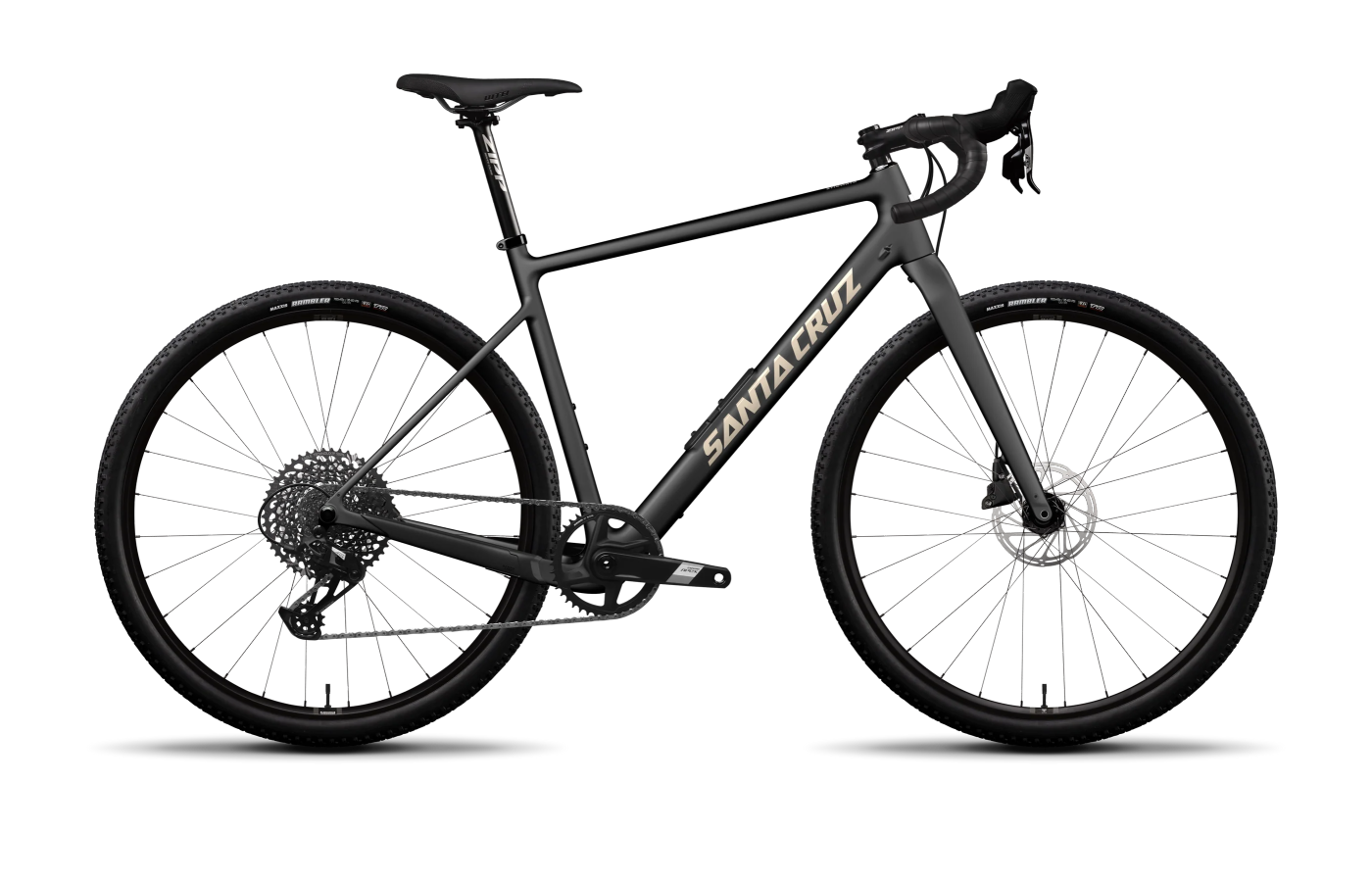
Stigmata
Sits between these two: race-bike weight, but with progressive geometry that handles technical descents better than the Crux without going full Future-Shock-and-SWAT like the Diverge.
Compare →Grizl
A direct-to-consumer alternative to the Diverge with similar mounting, similar tire clearance, and a noticeably lower price — the catch is no dealer network and no demos.
Compare →