Chisel
vsEpic
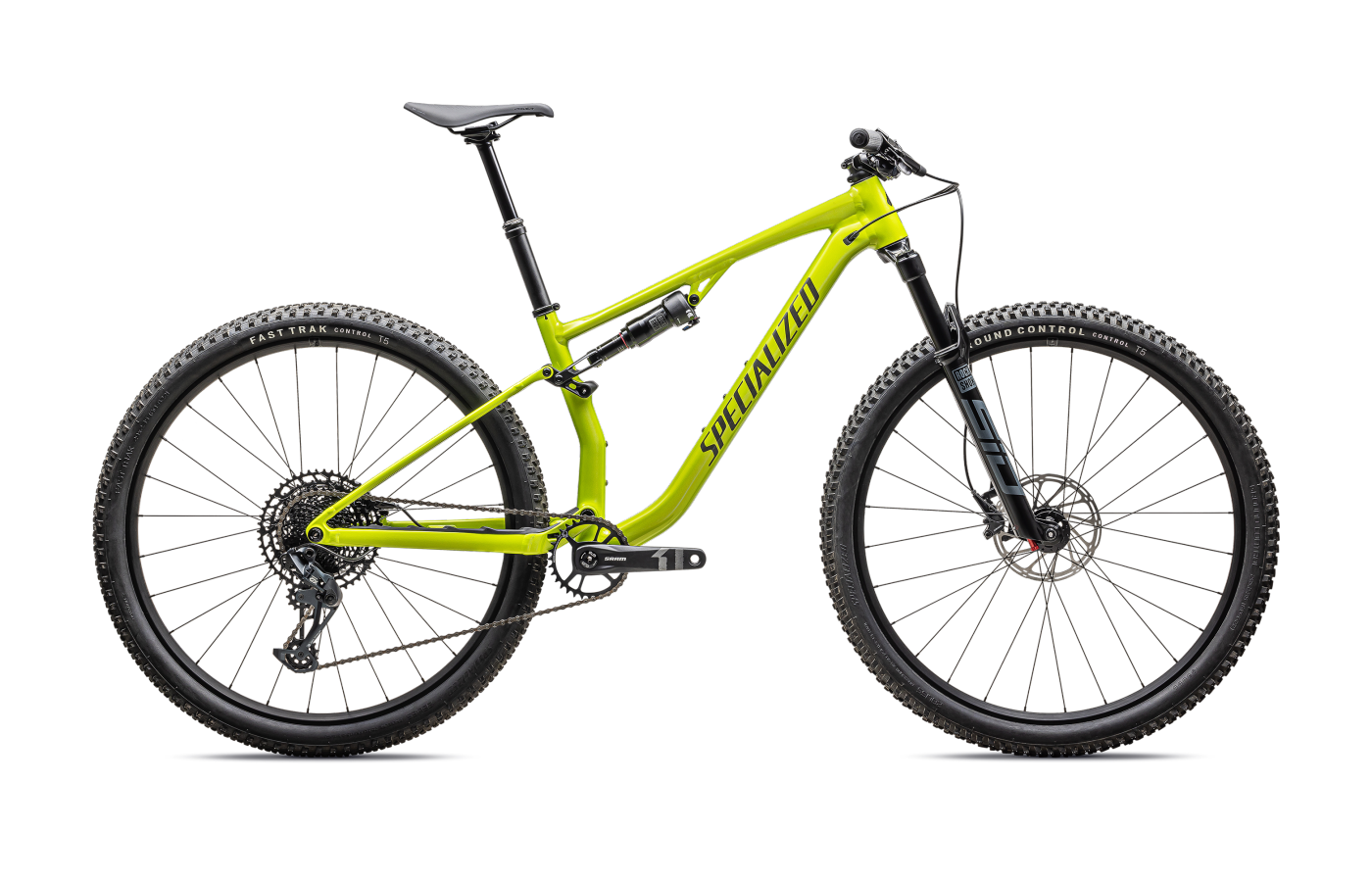
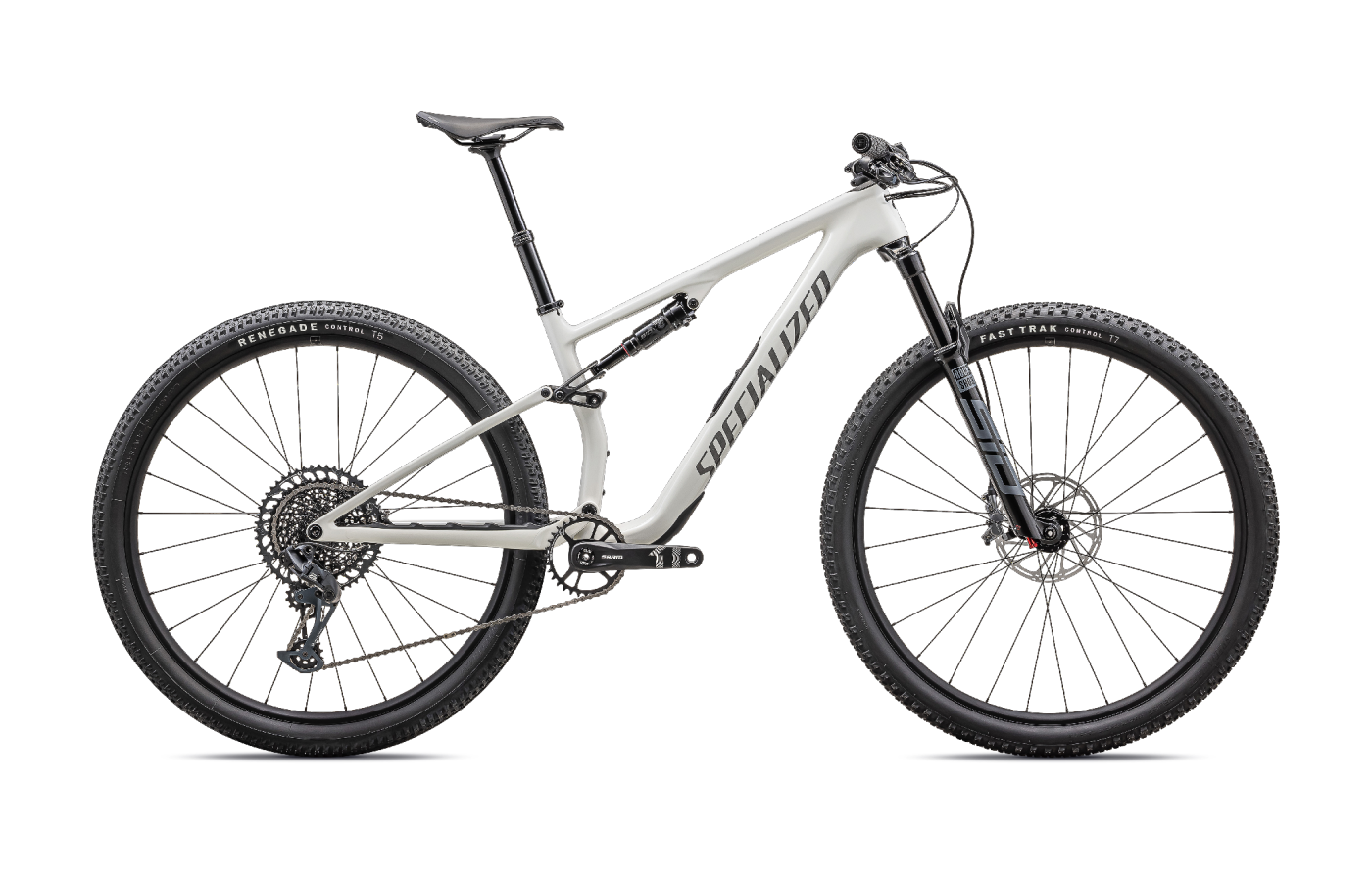
Same geometry DNA, different materials.
The Epic 8 is the carbon flagship that wins World Cups. The Chisel borrows the blueprint and builds it in alloy for half the money.
Chisel
- Alloy price, carbon-adjacent feel — $3,499 Comp undercuts the cheapest Epic 8 by $1,000 and still runs a RockShox SID fork.
- Simpler maintenance — external cable routing and threaded BSA BB keep service cheap and DIY-friendly.
- Frame is genuinely light for alloy — 2,720 g size M frame, per Specialized, is only ~500 g heavier than the Epic's carbon chassis.
- 10 mm less rear travel than the Epic 8 (110 mm vs 120 mm) and firmer, cheaper dampers on base builds.
- Heavy stock wheelset and Shimano HG-style freehubs limit future drivetrain upgrades.
Epic
- Magic Middle shock tune — custom digressive RockShox SIDLuxe gives a firm pedaling platform that pops open only on real impacts.
- Slacker, lower, longer — 65.9° HTA and a 333 mm BB yield what testers call "outrageous" high-speed stability for an XC bike.
- SWAT 4.0 internal storage — rattle-free downtube compartment and an integrated steering stop are real quality-of-life wins.
- Price floor of $4,499 is more than double the Chisel's, and S-Works stretches to $14,999.
- S-Works uses headset-routed cables — clean cockpit, but brake-hose-off-for-bearing-service maintenance.
Editor’s analysis
The Chisel isn't a watered-down Epic — it's a different argument about what a modern XC bike should be.
Both bikes share the silhouette: kinked seat tube, single-pivot flex-stay rear end, 29" wheels, threaded BSA bottom bracket. Both come out of Morgan Hill with a 75.5-degree seat tube angle and short 435–437 mm chainstays. Where they diverge is the material — and everything that follows from it. The Epic 8 is FACT 11m or 12m carbon, 120 mm front and rear, and carries a $4,499 price floor that climbs to $14,999 for the S-Works. The Chisel uses Specialized's D'Aluisio Smartweld alloy, runs 110 mm of rear travel against a 120 mm or 130 mm fork, and starts at $1,899.
Ride character tracks those numbers. The Specialized Epic 8 is the "calculating killer" — reviewers universally call out the Magic Middle shock tune that pops the suspension firm under pedaling and blows off instantly on impacts. It's a bike that magnifies watts, stays glued to slick roots, and lets you recover on descents rather than just survive them. A 65.9-degree head angle in the low setting and a low 323–333 mm bottom bracket produce what testers call "outrageous" stability at speed. This is a World Cup weapon that happens to also work as a trail bike.
The Specialized Chisel plays a different game. 67-degree head angle (66.5° in the low flip-chip setting), taller 606 mm stack at size M, 110 mm of firm, supportive rear travel — it's geometrically more conservative and physically more demanding. Reviewers call it a "momentum machine" and a "hot hatch" — lithe, poppy, and accurate, but unwilling to smooth over rough terrain on its own. You have to pick the line. In exchange, you get a frame that's only ~500 g heavier than the Epic's carbon, a simpler maintenance profile (no headset-routed cables), and money left over for a wheel upgrade that transforms it.
The Epic 8 is the bike you buy when you want the fastest, most composed XC platform on the market and have the budget to match. The Chisel is the bike you buy when you want 90% of that ride feel without the carbon tax — and you're okay doing a little more of the work yourself.
Where the builds differ.
Comparing our editor's-pick builds side-by-side. Winners highlighted row-by-row — lower price and weight, and the better-spec component, each mark a point.
Build variants & pricing
The Chisel spans $1,899 to $3,599; the Epic 8 starts at $4,499 and runs to $14,999. The ranges don't overlap.
Editor's picks here are tier-matched on drivetrain (SRAM GX Eagle mechanical) and fork platform (RockShox SID 120mm). The Chisel platform doesn't offer a wireless AXS Transmission build at any price; if you want wireless shifting, you're moving to the Epic 8 Expert ($6,499+) or higher. Prices are current US MSRP.
How they fit, how they steer.
Both at size M — the fit-picked size for a 5'8" rider on each bike. The Epic sits 8 mm lower in stack with 5 mm more reach, a 1.1-degree slacker head tube, 4 mm more trail, and 2 mm shorter chainstays. Same seat angle, similar wheelbase, very different descending manners.
Which size should I buy?
Size ranges line up nearly identically — XS through XL on both — with comparable reach and stack at each size.
→These are starting points. Flexibility, riding style, and preferred position all shift the answer — if you’re between sizes, a professional fit beats a chart.
What the magazines said.
Published reviews from trusted cycling outlets. Click through for the full write-up.
Which one should you buy?
If you want the fastest composed XC bike money can buy, get the Epic 8. If you want 90% of that bike for half the price and don't mind working for it, get the Chisel.
Chisel
If you want modern XC geometry, Smartweld alloy durability, and a bike you can actually afford to crash — this is the one. Perfect for NICA racers, bikepackers, and anyone who'd rather spend the savings on wheels than on a carbon tax.
Epic
If you race, chase Strava KOMs, or want the benchmark short-travel platform with factory-tuned suspension and size-specific carbon layup — the Epic 8 is the bike to beat. The S-Works tier adds Flight Attendant for those with the budget to match.
Questions buyers actually ask.
Short answers to the things we get emailed about most often.
01How much travel does each bike have?
The Chisel runs 110 mm of rear travel with a 120 mm fork on standard Comp builds, or a 130 mm Fox 34 on the Comp EVO.
The Epic 8 runs 120 mm front and rear across the entire lineup. That extra 10 mm at the rear is the single biggest on-trail difference — it's what lets reviewers describe the Epic as "clinging to slick roots" where the Chisel "skips over the top."
02How much lighter is the Epic 8 than the Chisel?
Frame-only, about 500 g. Specialized claims 2,720 g for a size M Chisel frame with shock, compared to roughly 2,200 g for the FACT 11m Epic 8 frame.
At the complete-bike level the gap is bigger because Epic builds lean on carbon wheels. A Chisel Comp EVO weighs 13.5 kg (29 lb 13 oz) in size M; an Epic 8 Expert is 11.2 kg (24 lb 10 oz) in the same size. That's a 2.3 kg (~5 lb) delta — most of it in wheels and drivetrain, not the frame.
03Is the Chisel geometry actually the same as the Epic 8?
Close, not identical. At size M, the Chisel runs a 67° head tube angle (66.5° in the low flip-chip setting), 445 mm reach, 606 mm stack, and 437 mm chainstays. The Epic 8 is 65.9° HTA (fixed), 450 mm reach, 598 mm stack, and 435 mm chainstays.
The Epic is longer, lower, and 1.1 degrees slacker — a real difference on fast descents. The Chisel sits taller and a touch steeper, which makes it feel more willing to be flicked into tight uphill switchbacks.
04Can I race XC on a Chisel?
Yes — and reviewers are unanimous that you can. The frame weight, geometry, and pedaling platform are legitimately race-ready. The Chisel Comp with the RockShox SID is routinely described as a "convincing facsimile" of the Epic 8.
The catch is the parts spec. Stock wheels are heavy and use Shimano HG freehubs (blocking SRAM cassette upgrades), and the base Chisel/Hardtail builds use entry-level NX/SX drivetrains. Budget $800–$1,500 for a wheel swap and you'll have a bike that holds its own on an XCO course.
05What's the tire clearance on each?
Both frames clear up to roughly 2.4" tires on 29" wheels (about 60 mm). Stock builds run 2.35" Fast Trak/Ground Control on the Chisel and 2.35" Fast Trak/Renegade on the Epic 8. The Chisel Comp EVO ships with meatier 2.4" Purgatory T9 front / Ground Control T7 rear rubber for more descending grip.
06Why is the Chisel so much cheaper?
Two reasons. First, alloy frames are cheaper to manufacture than carbon even with Specialized's Smartweld tech — the frame-only price for a Chisel is roughly half that of an Epic 8 frameset.
Second, Specialized spec'd the Chisel with cost in mind: Shimano HG freehubs instead of SRAM XD, alloy wheels instead of Roval Control carbon, mechanical GX instead of wireless AXS, and RockShox Recon or Rush-damper SID dampers on lower builds instead of the Epic's Select+/Ultimate spec. These are real component-tier downgrades — but they also keep the total price $1,000–$11,000 below the Epic range.
07Does the Chisel have SWAT storage?
No. The Chisel's frame doesn't include the SWAT 4.0 downtube compartment found on every Epic 8. That's a real trade-off if you're used to stashing tools and a tube inside your downtube — on the Chisel you're back to a hip pack or a saddle pack.
The upside: the Chisel's downtube has three bottle-cage boss positions, and the large front triangle is purpose-friendly to bikepacking frame bags in a way the Epic's SWAT-compartment downtube isn't.
08Which should I pick if I'm tough on bikes?
The Chisel. Aluminum shrugs off rock strikes and scrapes in a way that carbon can't. Bicycling made this point explicitly — for riders who are "tough on frames," the Chisel's Smartweld alloy is a durability advantage.
The Epic isn't fragile — modern carbon is impressively tough, and Specialized backs all its frames with a lifetime warranty — but a deep rock-strike gouge that's cosmetic on the Chisel is a warranty claim on the Epic.
Similar bikes
If your priorities don’t map cleanly onto either of these, one of these adjacent bikes probably fits better.
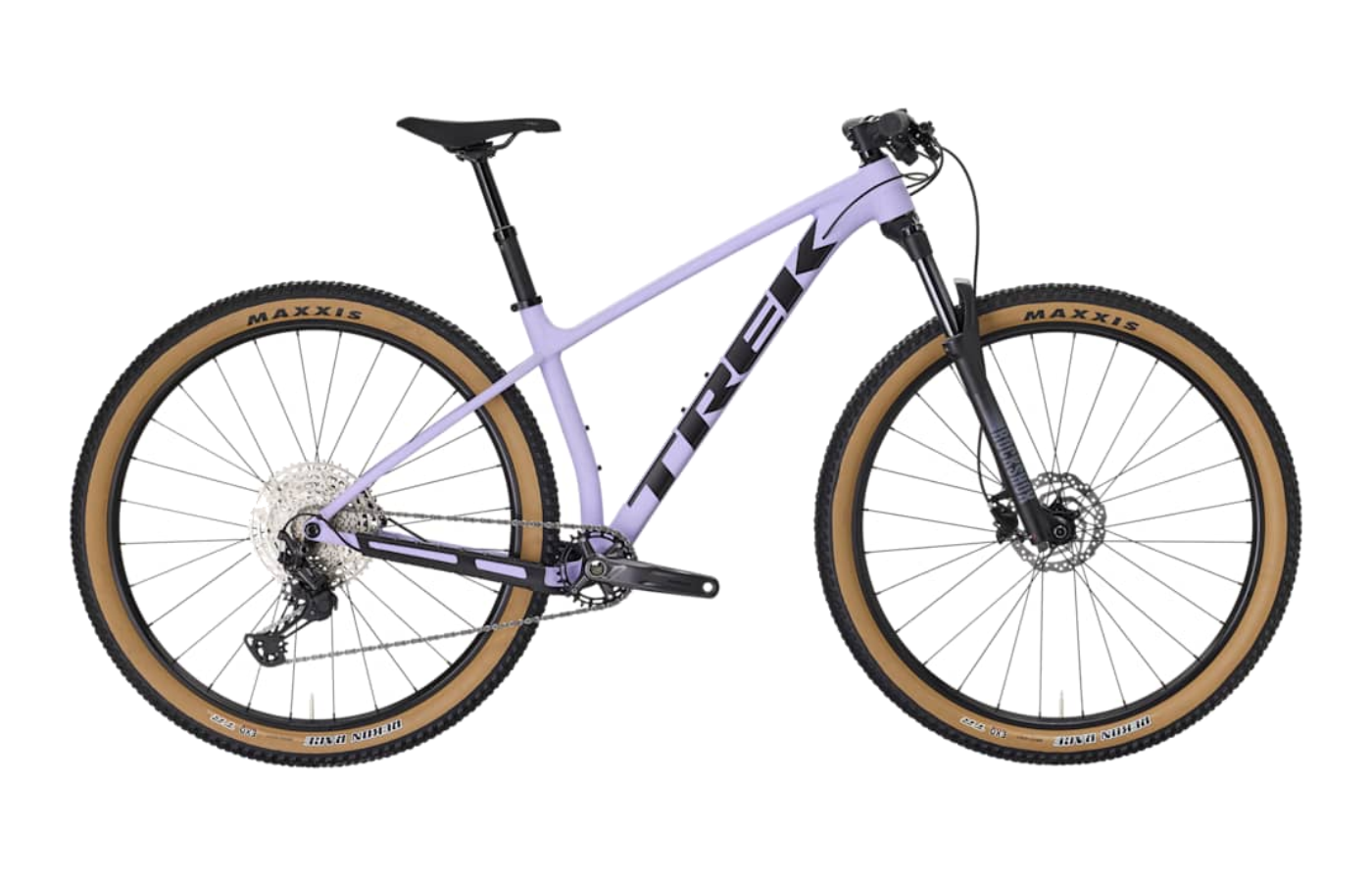
Procaliber
Trek's alloy XC hardtail with the IsoSpeed-adjacent IsoBow decoupler — lighter than the Chisel and more efficient on smooth terrain, but you trade the rear-wheel traction of full suspension for it.
Compare →DV9
A carbon hardtail that splits the Chisel/Epic price gap and brings real carbon snap — lively, simple, and happy on the singletrack the Chisel was built for.
Compare →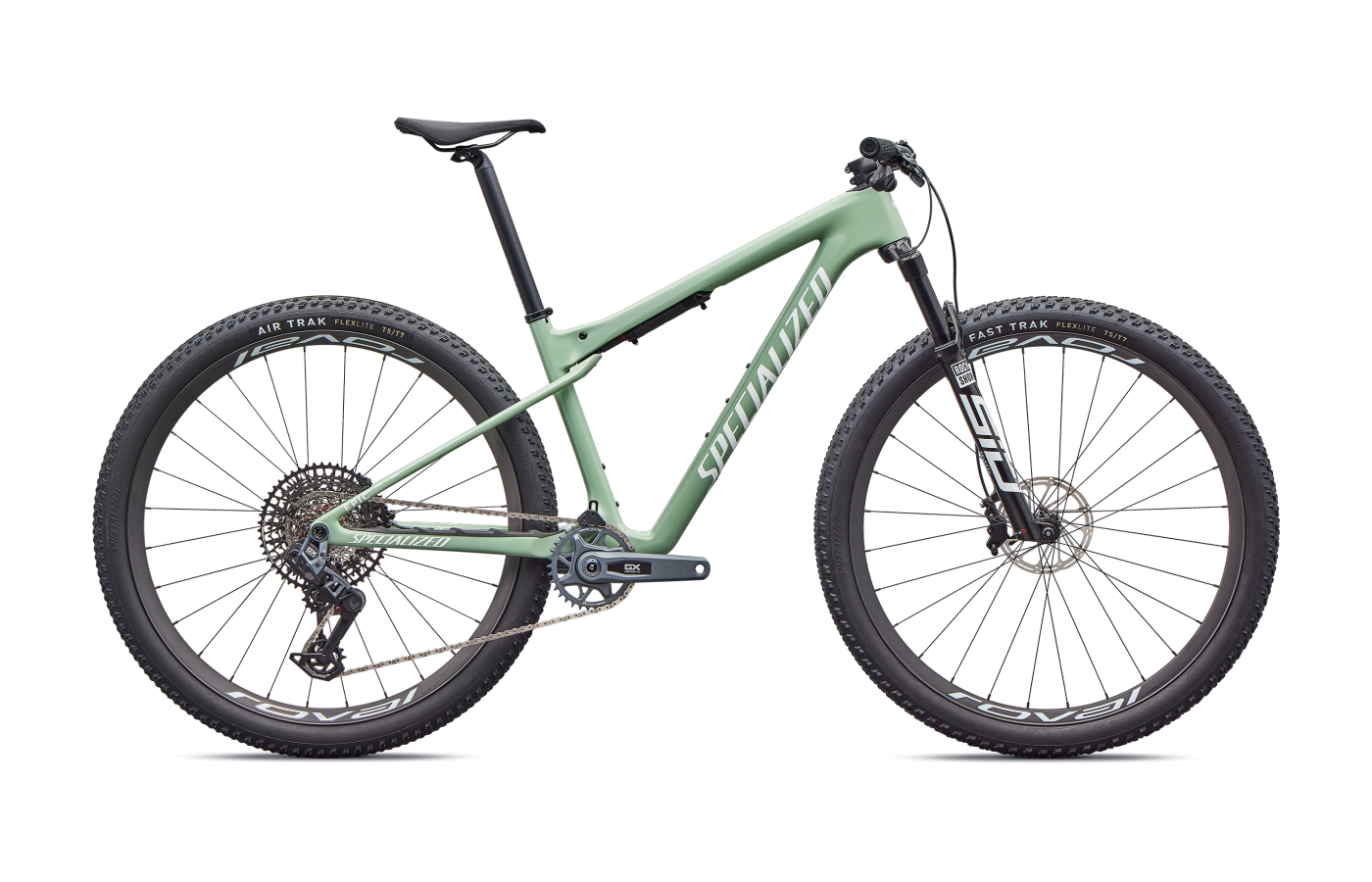
Epic World Cup
Specialized's 75mm-rear-travel pure-race weapon — if the Epic 8 still feels too trail-oriented, the World Cup is the firmer, hardtail-adjacent option with the same carbon flagship chops.
Compare →