Allez
vsTarmac
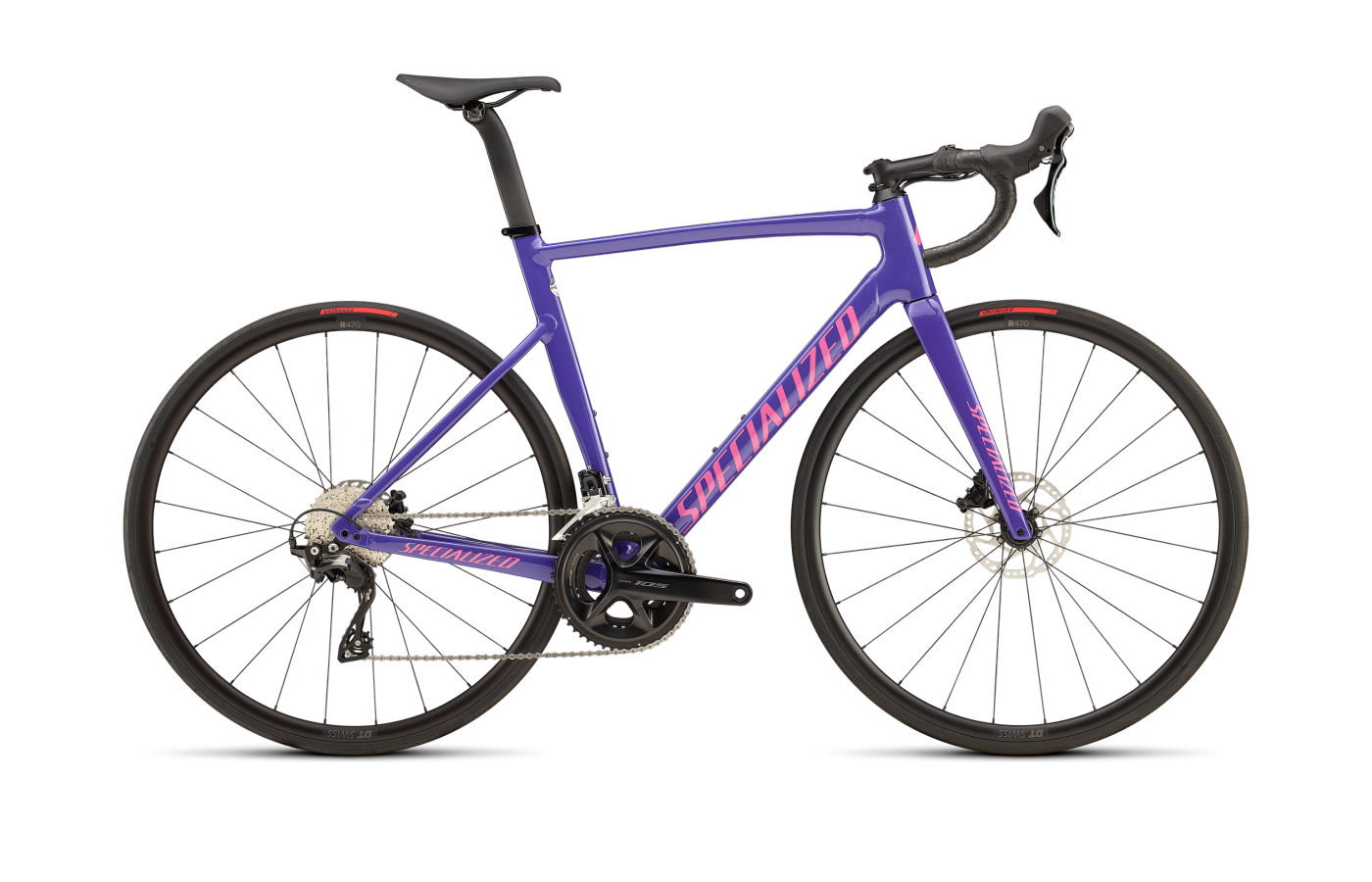
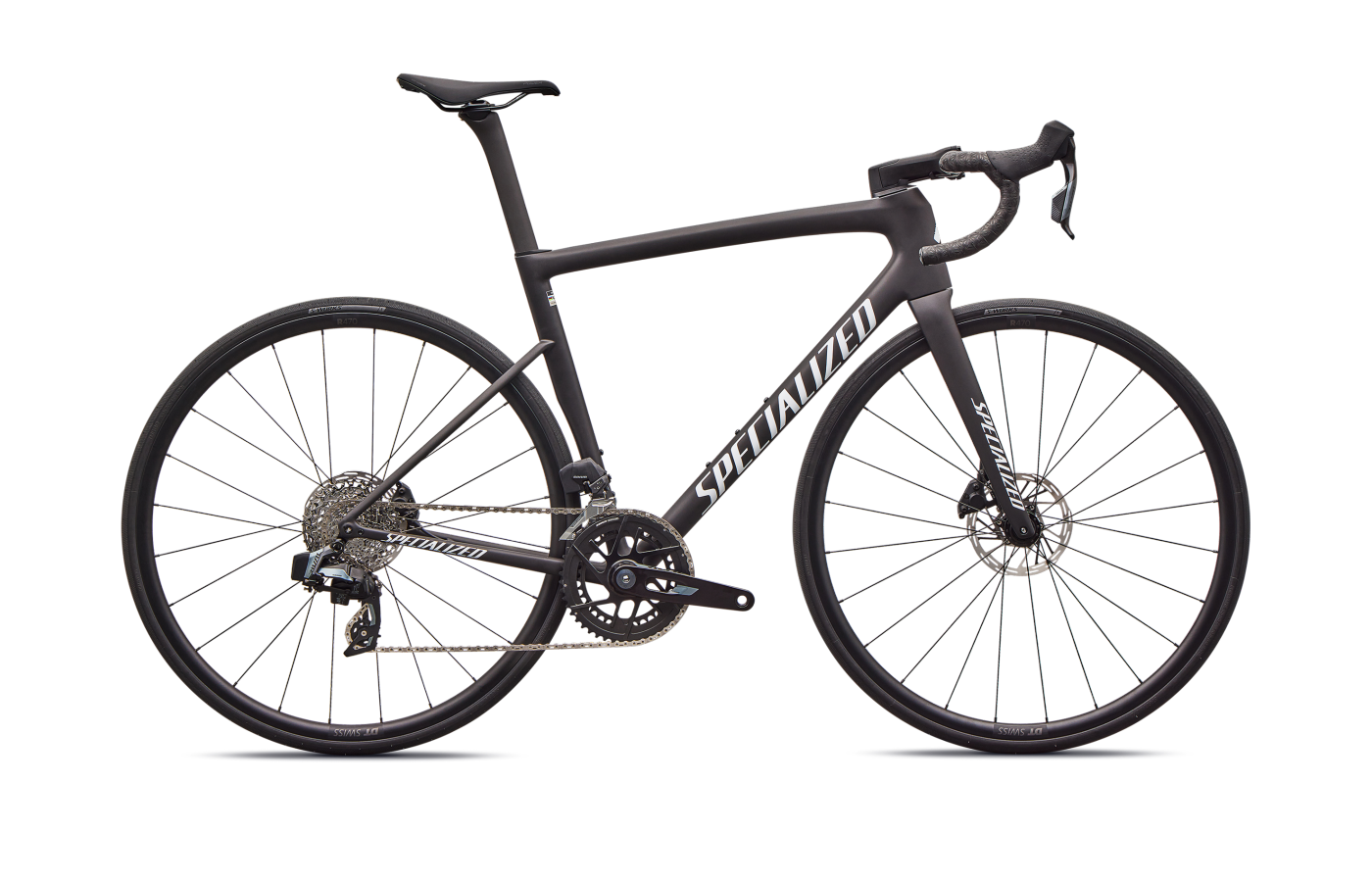
Same brand, different worlds.
The Allez is the do-it-all alloy commuter-racer that starts at $1,199. The Tarmac SL8 is the WorldTour weapon that ends near $13,500.
Allez
- Cheap entry point — $1,199 for a Claris build, $2,599 for the racier Sprint Comp with mechanical 105.
- Genuinely versatile — 35 mm tire clearance, full-fender and rack mounts, threaded BSA bottom bracket.
- Easy to own — two-piece alloy cockpit, external front-end cable routing, standard 27.2 mm seatpost. Maintenance is cheap.
- Heavier — 8.7–10 kg depending on build, vs ~7.3 kg for a mid-tier Tarmac.
- Stock Axis wheels and Roadsport tires are reliable but "dead-feeling" — most reviewers' first upgrade.
Tarmac
- Genuinely race-ready — FACT carbon, 685 g claimed S-Works frame, 16.6 sec faster over 40 km than the SL7 per Specialized's own numbers.
- Telepathic handling — 73-degree HTA, 410 mm chainstays, 978 mm wheelbase at size 54. Sharp without being twitchy.
- Comfortable for a race bike — Aethos-inspired tube shapes give a claimed 6% compliance boost over the SL7 through the saddle.
- Price floor of $4,699 — nearly 2× the priciest Allez, and that's the entry-tier Rival AXS build.
- Integrated Roval cockpits on Pro and S-Works are sleek but expensive to re-fit (~$450–$600 plus labor).
Editor’s analysis
This isn't really a fight — it's a question of what kind of cyclist you are today, and what kind you want to become.
On paper, both bikes wear the Specialized badge and both are built around drop bars and disc brakes — and that's roughly where the overlap stops. The Allez is an alloy E5-frame endurance road bike priced from $1,199 to $2,599, designed around fender mounts, rack mounts, and 35 mm tire clearance. The Tarmac SL8 is a FACT carbon race platform priced from $4,699 to $13,499, with 32 mm tire clearance and integrated cockpits. The cheapest Tarmac is nearly twice the most expensive Allez.
The geometries reflect this gap clearly. At a size-54 Allez vs a size-54 Tarmac — the fit-picked frames for a 5'8" rider — the Allez sits 25 mm taller in stack (569 vs 544 mm) and 14 mm shorter in reach (370 vs 384 mm). It runs a slacker 72-degree head tube angle, a longer 61 mm trail, and chainstays that are 15 mm longer at 425 mm. Translation: the Allez puts you upright, slows the steering, and lengthens the wheelbase for stability. The Tarmac drops you, sharpens the steering, and shortens the rear end for response.
Spend time in the reviews and the same split keeps showing up. The Allez wins praise for being "easy to live with," "flattering" through corners, and capable enough for light gravel — but reviewers across Road.cc, BikeRadar, and Escape Collective also flag the stock Axis wheels and Roadsport tires as the part that "dulls the ride." The Tarmac SL8 gets called "electric," "telepathic," and "dancing uphill," with Specialized claiming a 6% comfort boost over the SL7 and an aero gain of 16.6 seconds over 40 km at 45 km/h. Different jobs, both well done.
Put another way: the Allez is the bike you buy when you need one bike for commuting, winter training, and your first century. The Tarmac SL8 is the bike you buy when you already own a commuter — and now you want to win the Tuesday-night ride.
Where the builds differ.
Comparing our editor's-pick builds side-by-side. Winners highlighted row-by-row — lower price and weight, and the better-spec component, each mark a point.
Build variants & pricing
The Allez spans $1,199 to $2,599 across six builds; the Tarmac SL8 spans $4,699 to $13,499 across twelve. There is no overlap.
Tier parity isn't possible here — the Allez tops out at mechanical 105 while the cheapest Tarmac SL8 ships with electronic Rival AXS. We've matched each platform's most race-leaning entry point: the Allez Sprint Comp ($2,599) and the SL8 Comp ($4,699). Expect a real-world price gap of ~$2,100 between equivalents.
How they fit, how they steer.
The Allez is fit-picked at 52 and the Tarmac at 54 for a 5'8" rider — different sizing conventions land at the same effective fit. At those sizes the Allez sits 8 mm taller in stack (552 vs 544 mm) with 20 mm less reach (364 vs 384 mm), 15 mm longer chainstays, and a markedly slacker 71-degree head tube angle.
Which size should I buy?
Both ranges are broad, but the Allez extends further at the small end (size 44 down to a 519 mm stack) than the Tarmac does.
→These are starting points. Flexibility, riding style, and preferred position all shift the answer — if you’re between sizes, a professional fit beats a chart.
What the magazines said.
Published reviews from trusted cycling outlets. Click through for the full write-up.
Which one should you buy?
If you want one bike that commutes, tours, and races on the weekend, get the Allez. If you want a dedicated race bike that's also genuinely comfortable, get the Tarmac SL8.
Allez
If your one road bike has to handle a winter commute with fenders, a summer century on patchy tarmac, and the occasional spirited group ride, the Allez does all three for less than the Tarmac's least-expensive build. Plan to upgrade the wheels and tires within a year.
Tarmac
If you already have a commuter and you want a bike that's genuinely fast — sharp on descents, eager on climbs, electric out of corners — this is the benchmark. Even the Comp tier punches well above what the price tag suggests.
Questions buyers actually ask.
Short answers to the things we get emailed about most often.
01Why is there such a huge price gap between these two bikes?
They're aimed at completely different riders. The Allez uses an E5 aluminum frame, mechanical or entry-electronic groupsets, and alloy wheels — its top build is $2,599. The Tarmac SL8 uses a FACT carbon frame (12r on S-Works, 10r on Pro and Expert), electronic groupsets across the entire range, and carbon wheels on most builds — its cheapest build is $4,699 and its priciest is $13,499.
There is no shared tier. The closest race-leaning entry point on each side — Allez Sprint Comp vs SL8 Comp — still leaves a ~$2,100 gap, and the Tarmac is the one with electronic shifting.
02Which one climbs better?
The Tarmac SL8, by a wide margin. The mid-tier SL8 Pro and Expert builds come in around 7.25–7.77 kg; an Allez Sport is around 9.04 kg and the cheapest builds push 10 kg. That's roughly 2 kg of system weight difference — about 3% of a 70 kg rider's total mass, which translates to noticeable seconds on any sustained climb.
The Tarmac also has a stiffer bottom bracket and a more aggressive position, both of which help out-of-saddle attacks. The Allez's frame itself is praised as "sprightly" once you upgrade the heavy stock wheels — but it will never be a climber the way the Tarmac is.
03What's the maximum tire clearance on each?
Allez: 35 mm officially (32 mm with full-length mudguards). It ships with 30 mm Specialized Roadsport tires on most builds and is genuinely capable on light gravel and bad pavement.
Tarmac SL8: 32 mm officially. It ships with 26 mm S-Works Turbo tires on most builds — almost universally criticized in reviews as too narrow, with most testers swapping to 28–30 mm tubeless rubber as a first move.
If tire volume matters to you — for unpaved shortcuts or rough roads — the Allez wins outright.
04Can the Allez actually be raced?
The Sprint Comp variant ($2,599, the build we picked here) is the racy one — it uses Specialized's Smartweld Sprint frame technology, mechanical 105 12-speed, and skinnier 26 mm tires stock. It's been raced at club and amateur levels for years.
That said, the Allez's geometry is endurance-leaning: a slacker head angle, longer wheelbase, and taller stack than the Tarmac. For crits or any racing where rider position matters, the Tarmac's more aggressive geometry gives it a real advantage. The Allez is raceable; the Tarmac is built to race.
05How serviceable are the cockpits?
The Allez uses a traditional two-piece setup — alloy stem and alloy Shallow Drop bar, 31.8 mm clamp. Changing stem length is a $50 part swap that any shop can do in 15 minutes. Cables route externally at the front, then internally through the downtube.
The Tarmac SL8 Comp and Expert also use a two-piece front end — Tarmac integrated stem with a separate alloy bar — so most fit changes stay reasonable. The Pro and S-Works Tarmacs use the Roval Rapide one-piece cockpit, which looks great but locks in your bar width and stem length. Replacing it post-purchase runs ~$450 for the part plus shop time.
06Which is better for a first road bike?
The Allez, almost without exception. The relaxed geometry is more forgiving for new riders, the price floor is dramatically lower, and the practical features (fender and rack mounts, threaded BSA bottom bracket, standard parts) make ownership cheap and stress-free. Reviewers consistently call it "flattering" and "easy to live with."
The Tarmac SL8 is overkill for a first road bike — its aggressive position takes time to adapt to, and an entry-level rider will not feel its aero or weight benefits for the first few seasons of riding.
07What about the Allez Sprint?
Important distinction: the Allez Sprint is a separate model with the Smartweld Sprint frame and the Tarmac SL7's race geometry — it's the bridge bike between the standard Allez and the Tarmac. The build we picked here, the Allez Sprint Comp, sits at the top of the standard Allez generation but uses the racier frame technology.
If you want the aggressive Tarmac-style geometry but in alloy at half the price, the dedicated Allez Sprint generation is worth a separate look.
08Do both bikes come with a lifetime frame warranty?
Yes. Specialized backs both the Allez and the Tarmac SL8 with a lifetime frame warranty to the original owner against manufacturing defects. Both also qualify for Specialized's crash-replacement program, which offers discounted pricing on a new frame if the original is damaged in a crash.
Dealer support and parts availability are identical — both bikes go through Specialized's traditional dealer network rather than direct-to-consumer.
Similar bikes
If your priorities don’t map cleanly onto either of these, one of these adjacent bikes probably fits better.
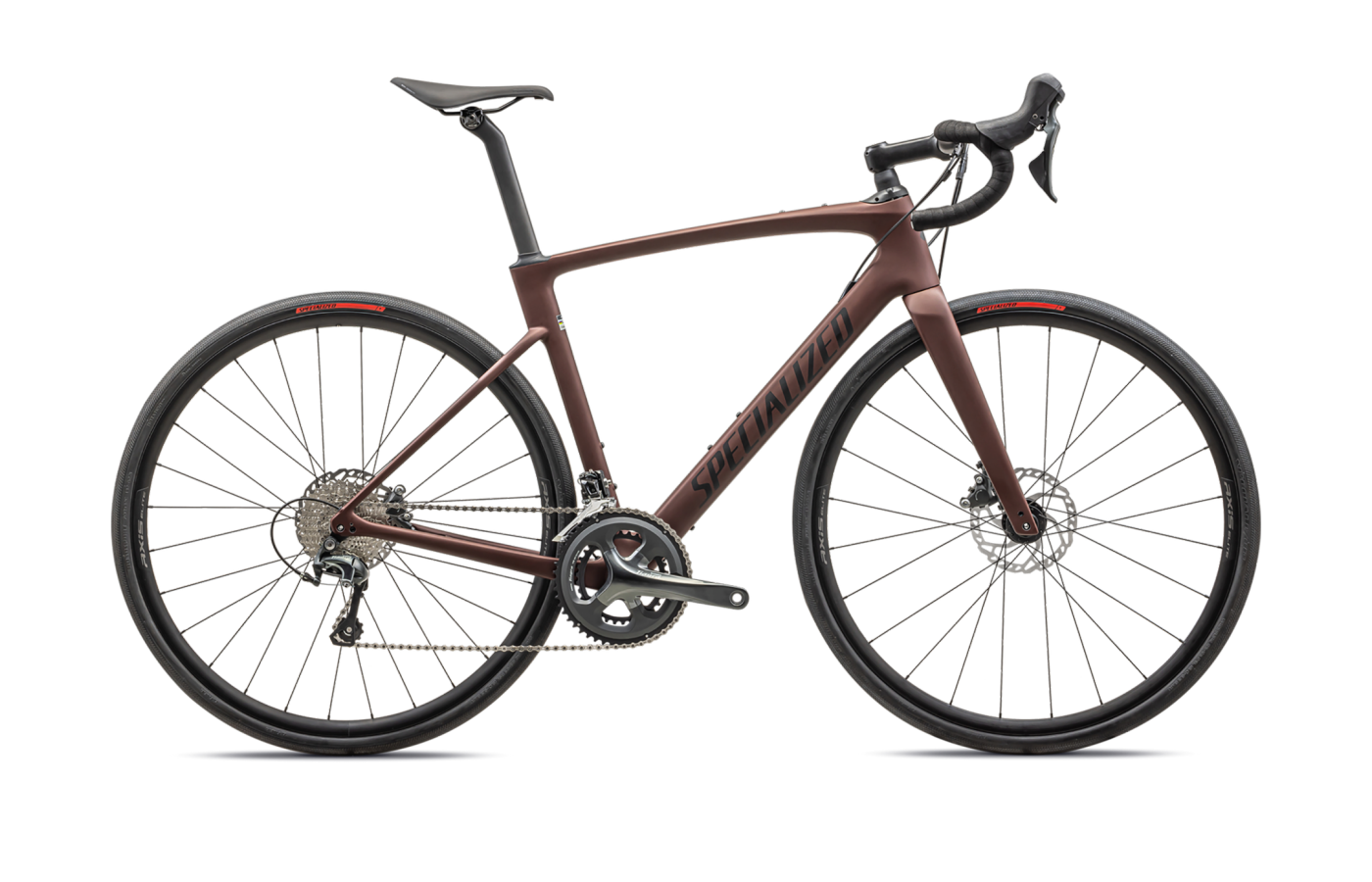
Roubaix
Specialized Roubaix — the carbon-fiber sibling to the Allez's endurance positioning, with the added Future Shock head-tube suspension. If you like the Allez's posture but want carbon comfort and more high-mileage compliance, this is the obvious step up.
Compare →Allez Sprint
Specialized Allez Sprint — the genuine bridge between these two bikes. Aggressive Tarmac-style race geometry, but in Specialized's Smartweld alloy frame at well under half the price of an SL8.
Compare →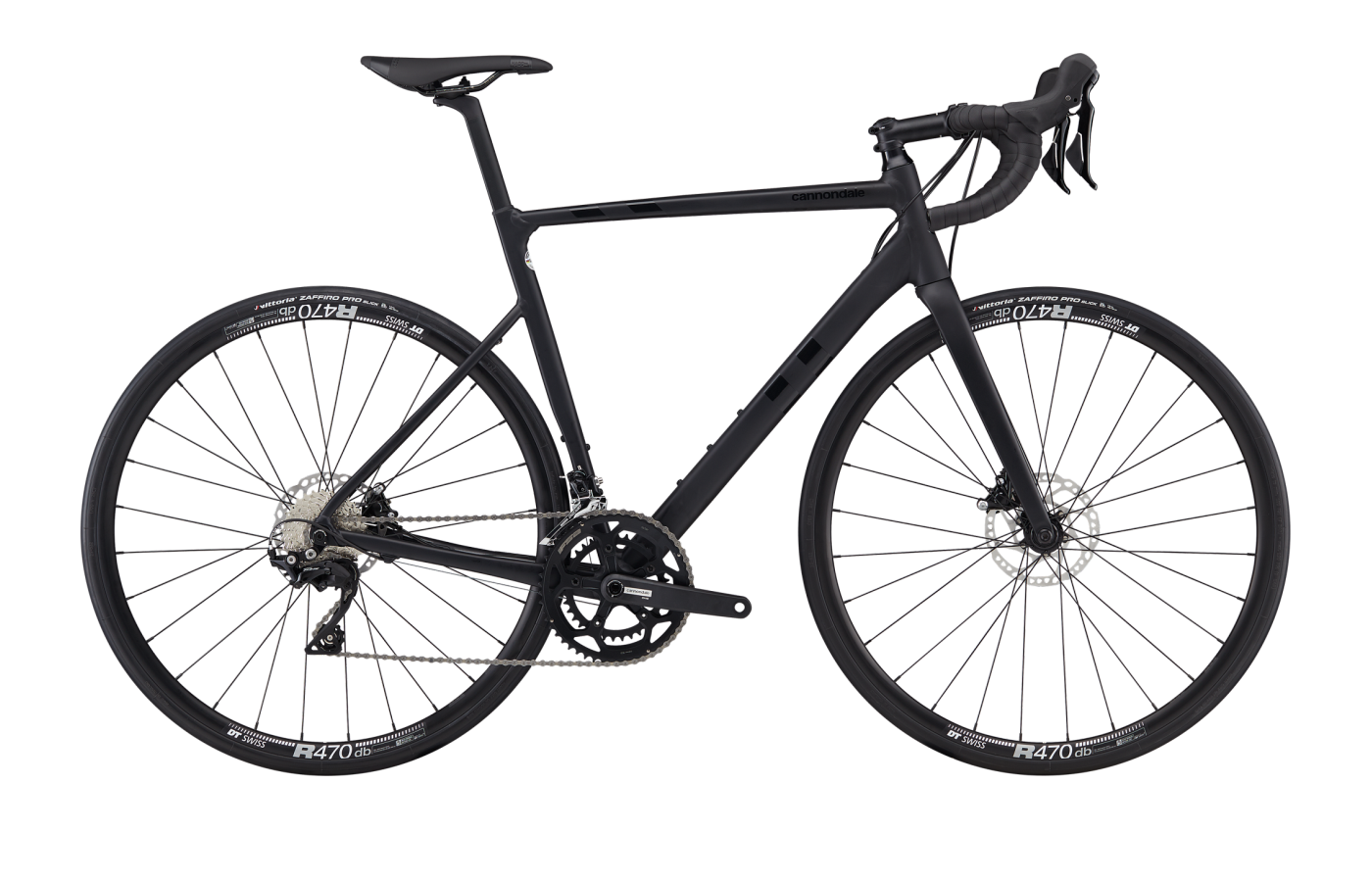
CAAD13
Cannondale CAAD13 — widely considered the benchmark alloy race bike. Carries Tarmac-adjacent geometry and racy intent at Allez-adjacent pricing, and answers the "why not just buy the Allez Sprint" question with a different brand's take on the same idea.
Compare →