Aethos
vsCrux
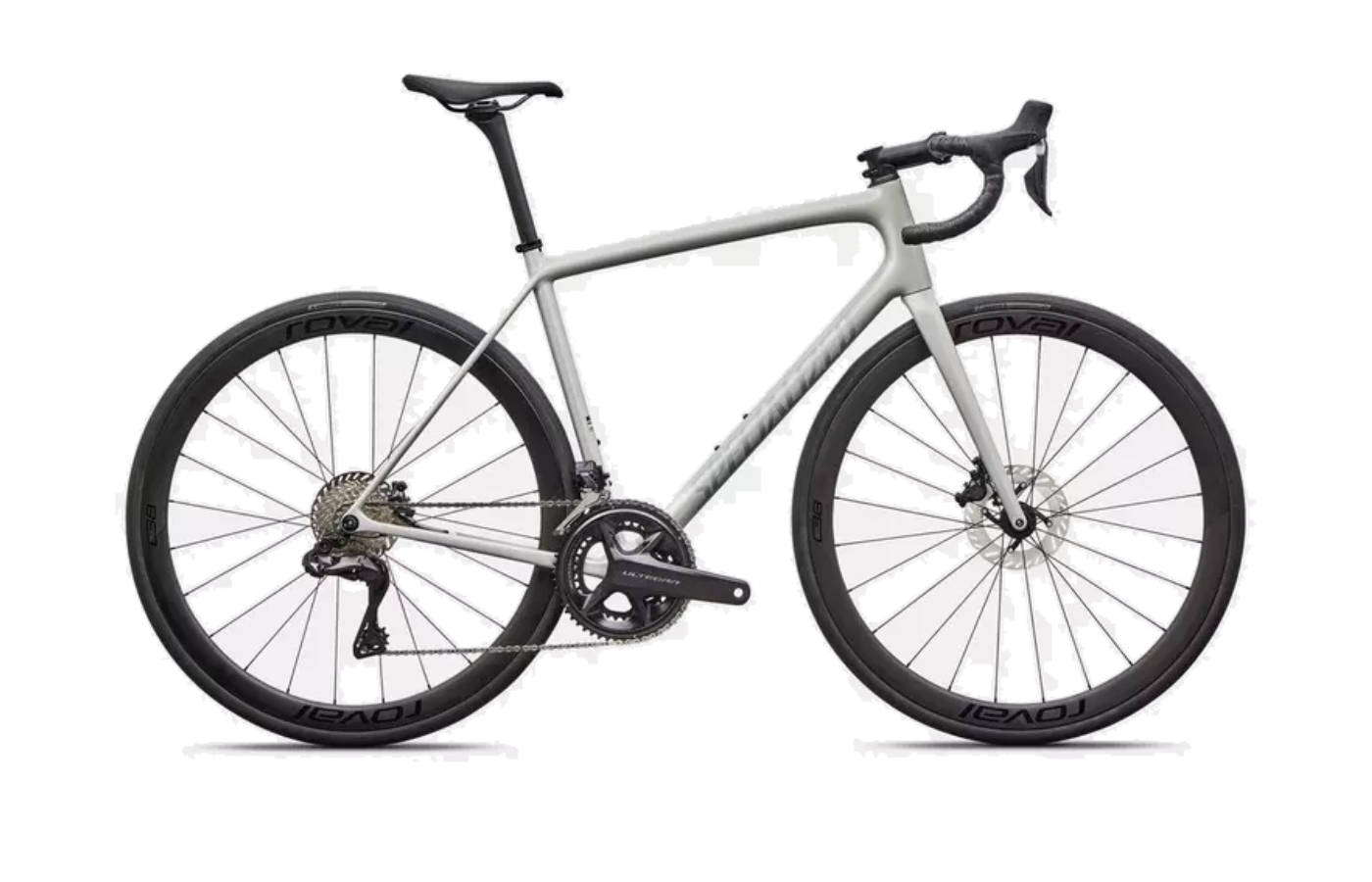
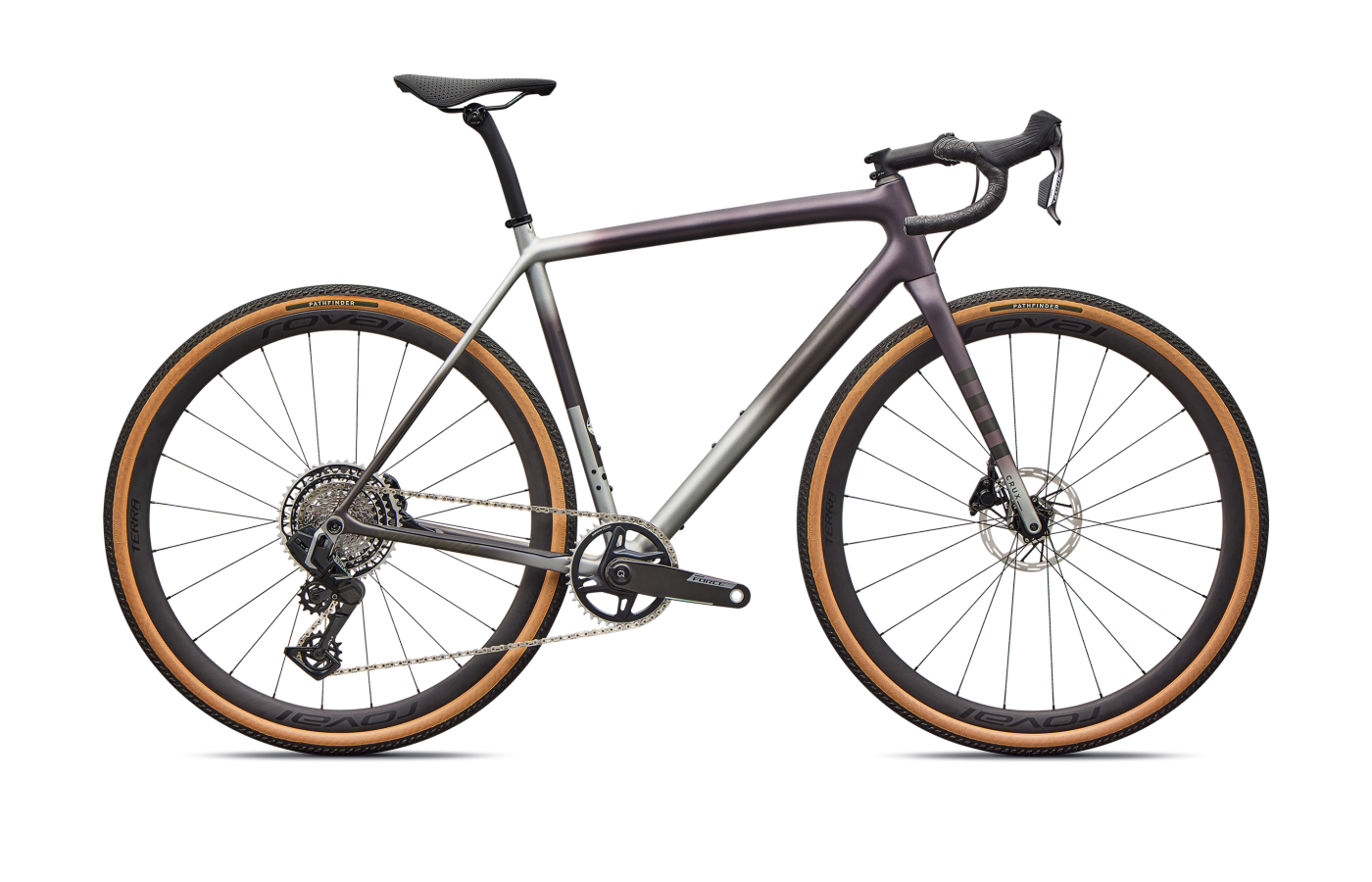
One skeleton, two finishing schools.
The Aethos 2 is the climber's road bike — round tubes, integrated cockpit, 35 mm clearance. The Crux is the same ultralight philosophy with a 47 mm gravel front-end bolted on.
Aethos
- Lightest disc frame in its class at 595 g for the S-Works — no production climbing bike is meaningfully lighter.
- Updated all-day geometry — a ~15 mm taller stack and longer wheelbase calm the first-gen's high-speed twitchiness.
- Integrated cockpit done right — 13 sizes of the Alpinist Cockpit II and a standard 1-1/8" steerer that accepts third-party bars.
- Ships with 28 mm tires despite 35 mm clearance — you'll want wider rubber on day one.
- No aero shaping anywhere; it gives back time to dedicated aero bikes on flat, exposed roads.
Crux
- Lightest gravel frame on the market — 725 g S-Works, 825 g for the FACT 10r; lighter than many flagship road frames.
- 47 mm tire clearance (or 650b x 2.1") gives genuine all-terrain capability the Aethos can't match.
- Refreshingly non-proprietary — threaded BSA bottom bracket, round 27.2 mm seatpost, two-piece bar/stem; trivial to maintain or upgrade.
- Stiff frame and minimal compliance — reviewers report hand fatigue on rough, extended terrain.
- No fender, rack, or bikepacking mounts beyond a third bottle cage; not a touring or loaded-adventure bike.
Editor’s analysis
Specialized engineered the Crux out of the original Aethos blueprint — the question isn't which is faster, it's whether you'd rather race the road or the dirt.
Both frames came out of the same design brief: round tubes, no aero pretensions, ultra-efficient carbon layup. The S-Works Aethos frame weighs a claimed 595 g; the S-Works Crux comes in at 725 g — and that 130 g is mostly the burlier dropouts, longer chainstays, and gravel-tuned fork crown the Crux needs to stay composed off pavement. Reviewers across Velo, Cycling News, and Cyclist explicitly call the Crux 'an Aethos for the dirt.'
The Specialized Aethos is the climber's tool. It's lighter at every build tier (the Pro lands at 6.71 kg complete), shipping with shallow Roval Alpinist wheels and an integrated Alpinist Cockpit II that Specialized claims damps vibration 28% better than the previous bar. Tire clearance steps up to 35 mm in this generation — useful on chip-seal, but the bike still ships with 28 mm tires that almost every reviewer (Cycling News, Road.cc, Granfondo) says you'll want to swap immediately.
The Specialized Crux takes that same minimalist DNA into gravel without compromising weight. A 47 mm tire clearance, a 425 mm chainstay (15 mm longer than the Aethos), and a slacker 71.5° head tube give it composure on dirt that a road frame can't fake. The trade-off is the rough end: the frame is famously stiff, and reviewers from BikeRadar to Cycling Weekly note hand fatigue on extended chunky terrain — it dances over gravel rather than plowing through it.
The honest framing: if your weekly riding is mostly tarmac with occasional chip-seal and the goal is climbing mountains in style, the Aethos is purpose-built for that and the Crux would be a heavier, less aero proxy. If you split between fast road days and dirt — or you race cyclocross and want one bike — the Crux genuinely doubles as both, which is the rare sales pitch that holds up in practice.
Where the builds differ.
Comparing our editor's-pick builds side-by-side. Winners highlighted row-by-row — lower price and weight, and the better-spec component, each mark a point.
Build variants & pricing
Both lineups span a wide price range. The Crux opens at $2,799 with an alloy DSW frame; the Aethos is carbon-only and starts at $6,599.
Editor's picks here are the FACT 10r Pro builds on each side — both SRAM Force tier, both ~$8k, frames cut from the same carbon grade. The cleanest apples-to-apples on offer.
How they fit, how they steer.
Both shown at size 54 — the fit-picked size for a 5'8" rider on each bike. Stack and reach are nearly identical (1 mm and 4 mm apart), but the Crux runs a 1-degree slacker head tube, 12 mm more trail, 15 mm longer chainstays, and a 31 mm longer wheelbase — every gravel-stability lever pulled at once.
Which size should I buy?
Size recommendations based on stack, reach, and effective top tube. Both run the same six-size grid (49–61); use the picker to compare your fit on each.
→These are starting points. Flexibility, riding style, and preferred position all shift the answer — if you’re between sizes, a professional fit beats a chart.
What the magazines said.
Published reviews from trusted cycling outlets. Click through for the full write-up.
Which one should you buy?
If you ride mostly tarmac and chase elevation, get the Aethos. If you want one bike for road and gravel — or you race cross — get the Crux.
Aethos
If your favorite rides end at the top of a long climb and you'd rather save grams than chase watts, the Aethos is the most refined tool for the job. The new geometry calms the descents; the integrated cockpit cleans up the look without locking you into a proprietary steerer.
Crux
If you want the lightness and snap of an Aethos but you also ride dirt — fire roads, gravel races, the occasional cyclocross — the Crux gives you both with a tire swap. The trade is a stiffer ride on rough surfaces and no concessions to touring or bikepacking.
Questions buyers actually ask.
Short answers to the things we get emailed about most often.
01How different are the two frames, really?
Specialized engineered the Crux on the back of the Aethos design study — same round-tube philosophy, same emphasis on layup over aero shaping, same threaded BSA bottom bracket. The S-Works Aethos frame weighs a claimed 595 g; the S-Works Crux frame weighs 725 g. The 130 g difference goes to longer chainstays, beefier dropouts, and the structural reinforcement needed to handle gravel hits.
Multiple reviewers (Cycling News, Velo) describe the Crux as 'an Aethos for the dirt.' That's not marketing — it's structurally true.
02Which one weighs less complete?
The Aethos at every comparable build tier. The editor's-pick Aethos 2 Pro (SRAM Force AXS) ships at 6.71 kg; the Crux Pro (SRAM Force XPLR) ships at 7.64 kg — about 930 g apart. Most of the gap is the wheels and tires (the Crux runs deeper, wider Terra rims with 40 mm gravel rubber) plus the gravel-spec drivetrain.
For a 70 kg rider plus bike, that's roughly 1.2% of system weight — noticeable on a long climb, marginal on the flats.
03Can the Crux really replace a road bike?
On smoother surfaces, yes — and Specialized leans into this. With a 28–32 mm road tire swapped onto the Roval Terra wheels, the Crux rides like a slightly heavier, slightly more stable Aethos. Reviewers across Cycling News, Velo, and others confirm it 'keeps up with the roadies' on club rides without much penalty.
Where the gap shows up: the Crux is geometrically slacker (71.5° vs 72.5° head tube at size 54) and has 12 mm more trail. It's not as quick-steering on tight road descents, but it's not a meaningful disadvantage outside of crit racing.
04What tire clearance does each bike actually fit?
Aethos 2: 35 mm officially. A genuine improvement over the first-gen and enough for light all-road duty if you swap the stock 28 mm tires for 30–32 mm rubber.
Crux: 47 mm with 700c wheels, or 2.1" with 650b. That's full gravel-race territory and enough for moderate singletrack.
The Aethos can't pretend to be the Crux. The Crux can run road tires and approximate the Aethos.
05How do the geometries compare for a 5'8" rider on size 54?
Stack and reach are surprisingly close: Aethos 559 / 384 mm, Crux 560 / 388 mm. So the cockpit fits very similarly.
Where they diverge is the steering and stability geometry. The Aethos has a 72.5° head tube angle, 55 mm trail, 410 mm chainstays, 992 mm wheelbase. The Crux runs a 71.5° head tube, 67 mm trail, 425 mm chainstays, 1023 mm wheelbase — every number tilted toward gravel composure. Same rider position, different handling character.
06Why is the Crux so much cheaper to start ($2,799 vs $6,599)?
The Crux lineup includes an alloy frame (the DSW Comp at $2,799, built around Specialized's E5 hydroformed aluminum) and a Shimano GRX-equipped carbon Comp at $3,999. The Aethos has no alloy option — every build uses either FACT 12r or 10r carbon.
That reflects each platform's audience. The Crux is a gravel race frame Specialized sells widely; the Aethos is a premium climbing tool aimed at the carbon-and-Di2 buyer.
07Is the Aethos 2 better than the original?
For most riders, yes. Specialized added internal cable routing (cleaner look, easier travel-case packing), bumped tire clearance from 32 mm to 35 mm, raised the stack by ~15 mm and lengthened the wheelbase by 7 mm to calm the first-gen's high-speed nervousness, and added UDH compatibility.
Frame weight went up by 10 g (585 → 595 g for the painted S-Works) — a tiny price for the routing and geometry updates. Reviewers from Velo, Cycling News, and Granfondo all called the trade-off worth it.
08Which holds up better long-term?
Both share the same maintenance-friendly design language: threaded BSA bottom brackets, round 27.2 mm seatposts, UDH derailleur hangers. Reviewers universally praise the lack of proprietary parts on the Crux; the Aethos's integrated cockpit is the one exception, and even that uses a standard 1-1/8" steerer so third-party bars fit.
Reports of frame issues are rare on either. One Crux Expert review mentioned an isolated headset and spoke issue, but it's not a pattern.
Similar bikes
If your priorities don’t map cleanly onto either of these, one of these adjacent bikes probably fits better.
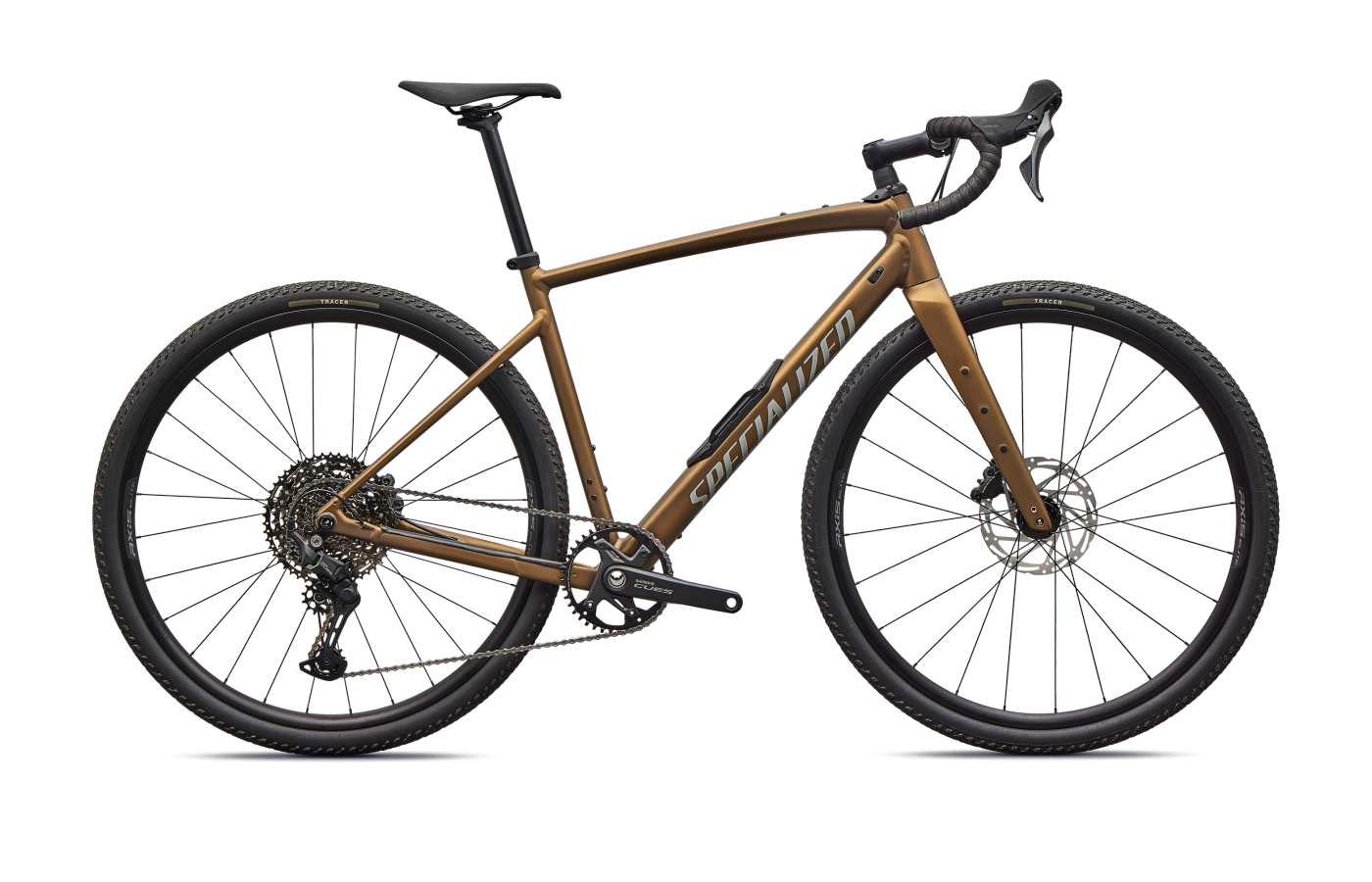
Diverge
If the Crux feels too stiff for the rough stuff, the Specialized Diverge adds Future Shock front-end damping plus mounts for racks, fenders, and bikepacking bags. Heavier, but built for actual all-day adventure.
Compare →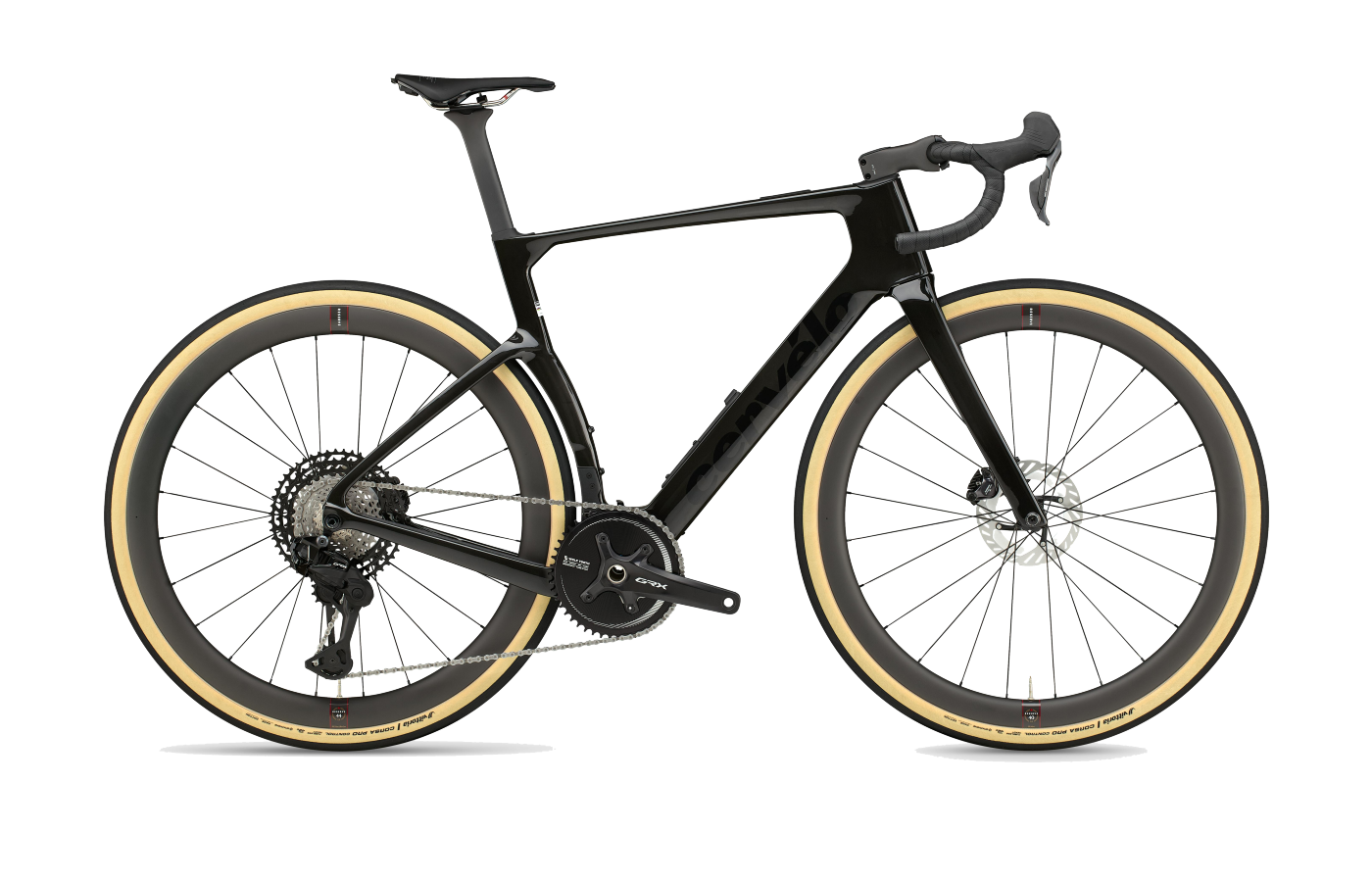
Aspero-5
An aero-tuned gravel race bike that's more planted at speed than the Crux's flickable cyclocross feel. Better choice if your gravel days are long, fast, and mostly straight-line.
Compare →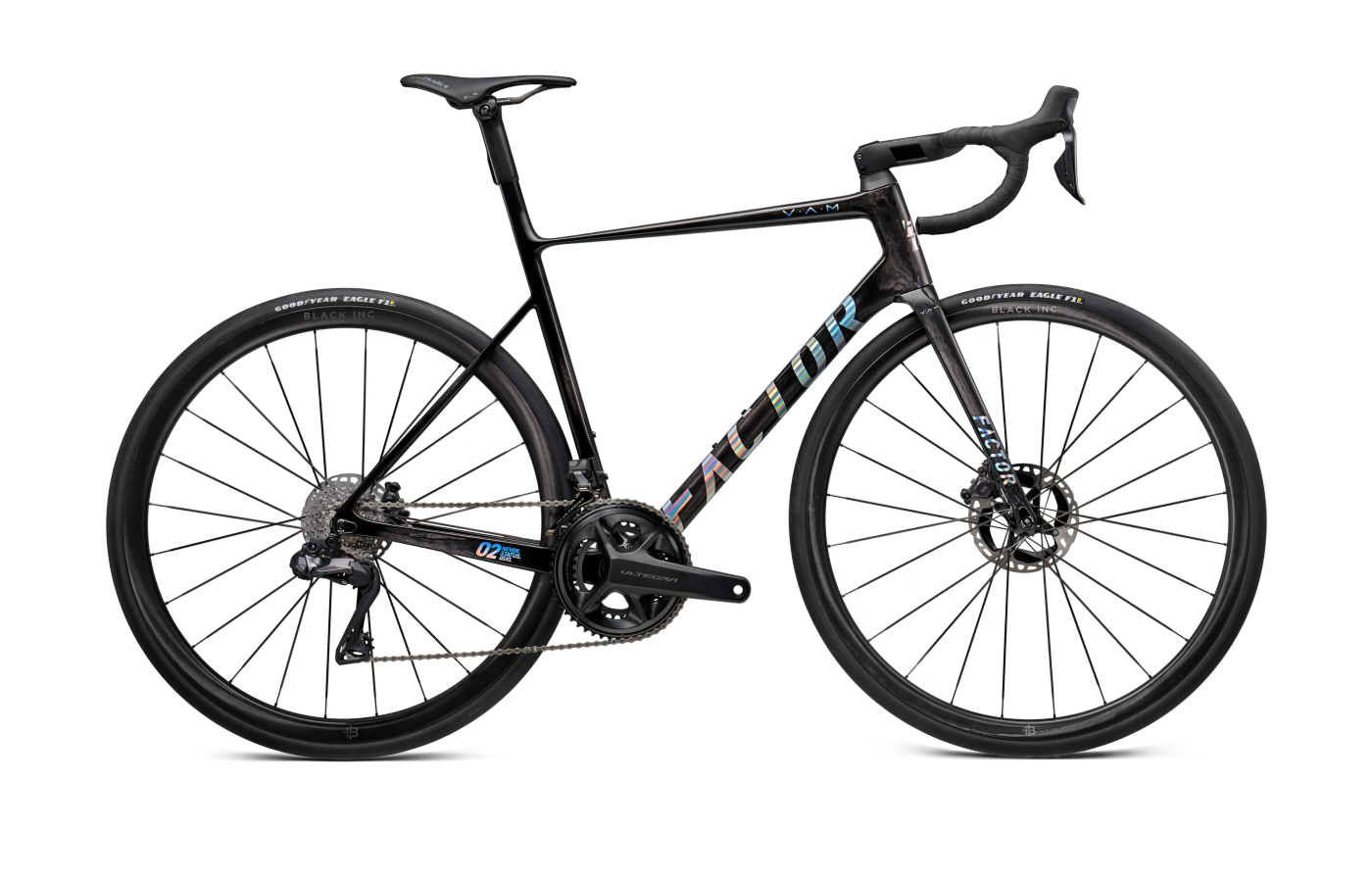
O2 VAM
Factor's direct shot at the Aethos crown — equally featherweight, more aggressive geometry, and a more committed race posture. Pick this if the new Aethos feels too tall up front.
Compare →