Stigmata
vsSzepter
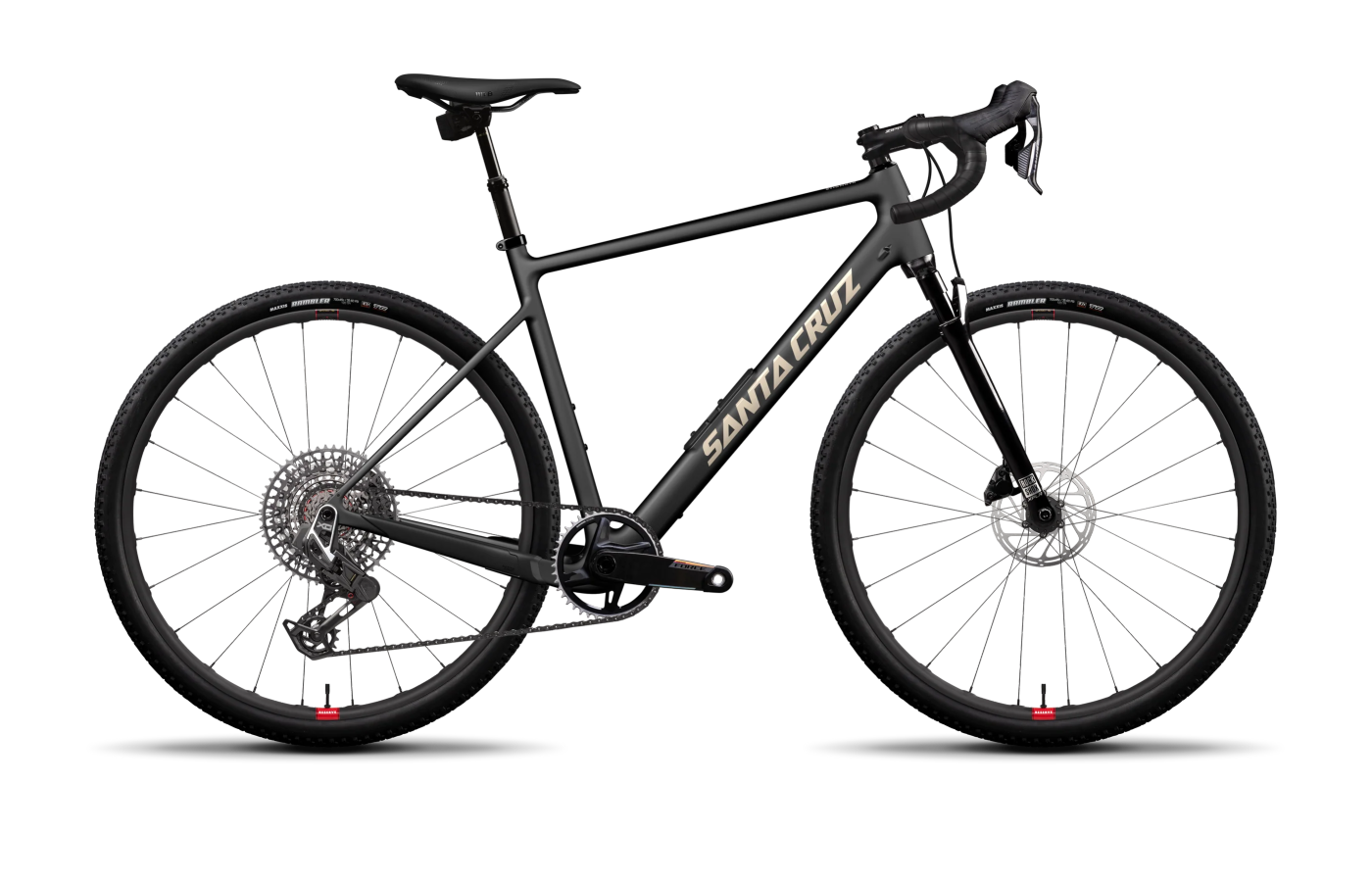
Two suspension-corrected gravel bikes — one boutique, one direct-to-consumer.
The Stigmata is the long-and-slack carbon frame Santa Cruz built to outlast trends. The Szepter delivers the same Rudy fork and Force AXS for $3,000 less.
Stigmata
- Carbon wheels included — Reserve 25|GR with lifetime warranty on Force RSV builds, where the Szepter Core 4 sticks with alloy.
- Mechanic-friendly standards — external routing, BSA threaded BB, 27.2 mm round post, UDH. Service is cheap and DIY-able.
- 50 mm tire clearance vs 45 mm on the Szepter — meaningfully more room when the route turns chunky.
- Force-level builds cost $3,000 more than YT's equivalent, with no entry-level option below $4,149.
- Heavier than the Szepter at this build level (10.43 kg vs 9.9 kg) — the Reserve hubs and Rudy fork add up.
Szepter
- Force AXS for $4,499 — wireless shifting, Rudy Ultimate fork, and an XPLR dropper at the price most brands charge for Rival mechanical.
- ASTM Class 3 certified — officially rated for small jumps and rough trails. Few gravel bikes carry that rating.
- 180 mm front rotor stock — mountain-bike stopping power on a drop-bar build, where most gravel bikes ship 160 mm.
- Alloy WTB Proterra Light wheels are the consensus weak link — the carbon-frame, AXS-drivetrain pairing deserves better hoops.
- 5 mm narrower tire clearance (45 mm) and a 5-year frame warranty (vs lifetime on the Stigmata).
Editor’s analysis
Both bikes solved the same problem — gravel got rougher, so make a drop-bar bike that handles like a hardtail. Then they billed for it very differently.
The Santa Cruz Stigmata and YT Szepter sit at the off-road extreme of the gravel category. Both run a 40 mm RockShox Rudy XPLR fork, both wear a 70 mm stem on a slack head tube, and both were tested at Unbound 200. They share the same operating thesis: a slack front end, a steep seat tube, and a short stem turn a gravel bike into a credible singletrack tool.
The headline difference is price. A Force AXS Stigmata with the Rudy fork costs $7,549. A Force AXS Szepter Core 4 with the same fork costs $4,499 — a $3,050 gap. YT's direct-to-consumer model funds wireless shifting, an XPLR dropper, and 180 mm front rotors at a price Santa Cruz can't touch. The Stigmata claws back ground on Reserve 25|GR carbon wheels (lifetime warranty) where the Szepter ships WTB Proterra Light alloys that nearly every reviewer flagged as the bike's weak link.
Geometry is closer than the badges suggest. Both run a 69.3-69.5° head angle, both put the rider on a 70 mm stem, both keep chainstays inside 425 mm. The Szepter sits 4 mm taller in the stack and 6 mm shorter in the reach at the small size — meaningfully more upright. The Stigmata's bottom bracket sits lower (76 mm drop vs 62 mm), planting the rider deeper into the chassis where the Szepter rides higher and clears obstacles better.
Frame philosophy splits them too. The Stigmata is built around livability — external cable routing, a 68 mm threaded BSA bottom bracket, a 27.2 mm round seatpost, UDH, an in-frame Glovebox, and lifetime frame warranty. Reviewers called it the most home-mechanic-friendly carbon gravel bike they'd seen. The Szepter is ASTM Class 3 certified for jumps and small drops, with a beefy Headbox at the head tube and a 5-year frame warranty. Stigmata is the buy-it-once bike. Szepter is the most-bike-per-dollar bike.
Where the builds differ.
Comparing our editor's-pick builds side-by-side. Winners highlighted row-by-row — lower price and weight, and the better-spec component, each mark a point.
Build variants & pricing
Stigmata spans $4,149 to $7,549, all in CC carbon. Szepter spans $1,749 to $4,499 — three builds, all carbon, all with the 40 mm Rudy fork.
The editor's pick on each side is the Force AXS build with the Rudy Ultimate XPLR fork — apples-to-apples on drivetrain and suspension. Wheel spec diverges: Reserve carbon on the Stigmata, WTB Proterra Light alloy on the Szepter. Prices are current US MSRP.
How they fit, how they steer.
Stigmata SM and Szepter S — the fit-picked size for a 5'8" rider on each. The Szepter sits 4 mm taller in the stack and 6 mm shorter in the reach, putting the rider more upright. Head angles are within 0.2° of each other; chainstays differ by 2 mm.
Which size should I buy?
Size recommendations based on stack, reach, and effective top tube. The Stigmata's range (XS-XXL) extends one size smaller than the Szepter's (S-XXL).
→These are starting points. Flexibility, riding style, and preferred position all shift the answer — if you’re between sizes, a professional fit beats a chart.
What the magazines said.
Published reviews from trusted cycling outlets. Click through for the full write-up.
Which one should you buy?
If you want the buy-it-once frame with lifetime warranty and effortless service, get the Stigmata. If you want Force AXS and a Rudy fork for $3,000 less, get the Szepter.
Stigmata
If you're keeping a gravel bike for a decade and don't want to fight integrated cables every time you change a stem, the Stigmata's standards-first philosophy pays off every season. Add a lifetime warranty on the frame and Reserve wheels, and the price gap becomes amortized maintenance you don't pay later.
Szepter
If you came to gravel from mountain biking and want the most descent-ready spec sheet at the lowest price, the Szepter is unmatched. ASTM 3, 180 mm front rotor, AXS dropper, Force XPLR — a parts list other brands sell for $7k. The alloy wheels are the obvious upgrade path.
Questions buyers actually ask.
Short answers to the things we get emailed about most often.
01Which is the better off-road bike?
Both are aimed at the same kind of rider — the one who treats gravel as an excuse for singletrack. They share a 40 mm RockShox Rudy XPLR fork, a slack head angle (~69.4°), and a 70 mm stem. The Szepter edges ahead on hardware: ASTM Class 3 certification (rated for small jumps), a 180 mm front rotor stock, and a SRAM Reverb AXS XPLR dropper on the Core 4 build. The Stigmata counters with 50 mm tire clearance (vs 45 mm) and a lower bottom bracket (76 mm drop vs 62 mm) for more planted high-speed cornering.
Pick by terrain: rough, jumpy, line-choosey trails reward the Szepter. Long, fast, technical descents reward the Stigmata.
02Why is the Stigmata $3,000 more for the same drivetrain?
The honest answer is the distribution model. YT sells direct-to-consumer with no dealer margin, which is how the Szepter Core 4 lands at $4,499 with Force XPLR eTap AXS, a Rudy Ultimate fork, and a wireless dropper. Santa Cruz runs through dealers, which adds margin to every build.
You're not getting nothing for the difference. The Stigmata's Force RSV Rudy build adds Reserve 25|GR carbon wheels (lifetime warranty), a Glovebox in-frame storage compartment, and Santa Cruz's lifetime frame warranty (vs 5 years on the Szepter). Whether that's worth $3,000 depends on how long you plan to keep the bike.
03What's the maximum tire clearance?
Stigmata 4: 50 mm officially, in 1x setups. The frame is suspension-corrected for a 40 mm travel fork.
Szepter: 45 mm officially. The frame ships with 42 mm WTB Resolute tires across all builds.
For most gravel terrain, both are well past what you actually need. The 50 mm Stigmata clearance only matters if you're running 2.0"+ mountain-bike-adjacent rubber on rough terrain.
04How does the suspension work on each?
Both use the same fork: a 40 mm RockShox Rudy XPLR. On the Stigmata Force RSV Rudy and the Szepter Core 4, it's the Ultimate trim with the Charger Race Day damper and a lockout. The frames are both suspension-corrected (designed around the fork's 430 mm axle-to-crown), so geometry stays correct whether you run rigid or sprung.
Reviewers were near-unanimous that the 40 mm of travel "far exceeds what its travel promises" — it kills high-frequency washboard chatter and lets you brake later into corners. Lock it out for long pavement climbs.
05Which is easier to maintain at home?
The Stigmata, decisively. Santa Cruz went out of its way to keep the Stigmata mechanic-friendly: external cable routing (no headset bearings to bleed), a 68 mm BSA threaded bottom bracket (no pressfit creak), a standard 27.2 mm round seatpost, and a Universal Derailleur Hanger. Stems and bars swap without bleeding brakes.
The Szepter also avoids fully integrated routing — cables run externally past the headset — but uses a SRAM DUB pressfit (PF86) bottom bracket, which can creak with age. Both bikes are easier to live with than most modern aero-integrated gravel frames.
06Is the Szepter actually as well-built as the Stigmata?
Yes, with caveats. The Szepter frame is ASTM Class 3 certified — officially rated for small jumps and rough trails, which is rare in the gravel category. The "Headbox" reinforced head tube junction was specifically engineered to handle the leverage of the Rudy fork. Long-term reviewers reported no frame issues after six months of hard riding.
The Stigmata uses Santa Cruz's top-tier CC carbon (the only carbon grade offered on the model), comes with a lifetime frame warranty, and has a stout chainstay junction designed for hard, heavy use. The Szepter's warranty is 5 years. Both frames are overbuilt relative to typical gravel-race carbon.
07Which climbs better?
Roughly even, with a slight edge to the Szepter at the editor's-pick build level — it's about 530 g lighter (9.9 kg vs 10.43 kg for the Stigmata Force RSV Rudy). Both run a steep effective seat tube angle (74° on the Stigmata, 74.3° on the Szepter at the small size) that places the rider forward over the bottom bracket, which reviewers praised for traction on steep technical climbs.
The Stigmata claws back some of the gap with a stiffer chassis — Dave Rome called it "plenty giddy if you get stampy" out of the saddle. Neither is a sub-8 kg climbing bike; if grams matter most, look at the Specialized Crux.
08Are these comparable to a mountain bike on singletrack?
Closer than any traditional gravel bike, but no. Both share progressive geometry with hardtails — slack head angles, short stems, stable wheelbases — and both will descend technical singletrack at speeds that embarrass riders on twitchy gravel-race bikes. Reviewers regularly compared them to drop-bar XC hardtails.
That said, you still have drop bars, 45 mm tires (Szepter) or up to 50 mm (Stigmata), and rigid rear triangles. Line choice matters in rock gardens. For jumpy, technical trails where you'd want a real suspension fork or rear travel, a hardtail or short-travel full-suspension bike still wins. These are gravel bikes that punch up — not mountain bikes that punch down.
Similar bikes
If your priorities don’t map cleanly onto either of these, one of these adjacent bikes probably fits better.
Grizl
Same direct-to-consumer value pitch as the YT, with optional suspension on the Trail builds and a more conventional aesthetic. Better choice if you want similar capability with serious bikepacking mounts.
Compare →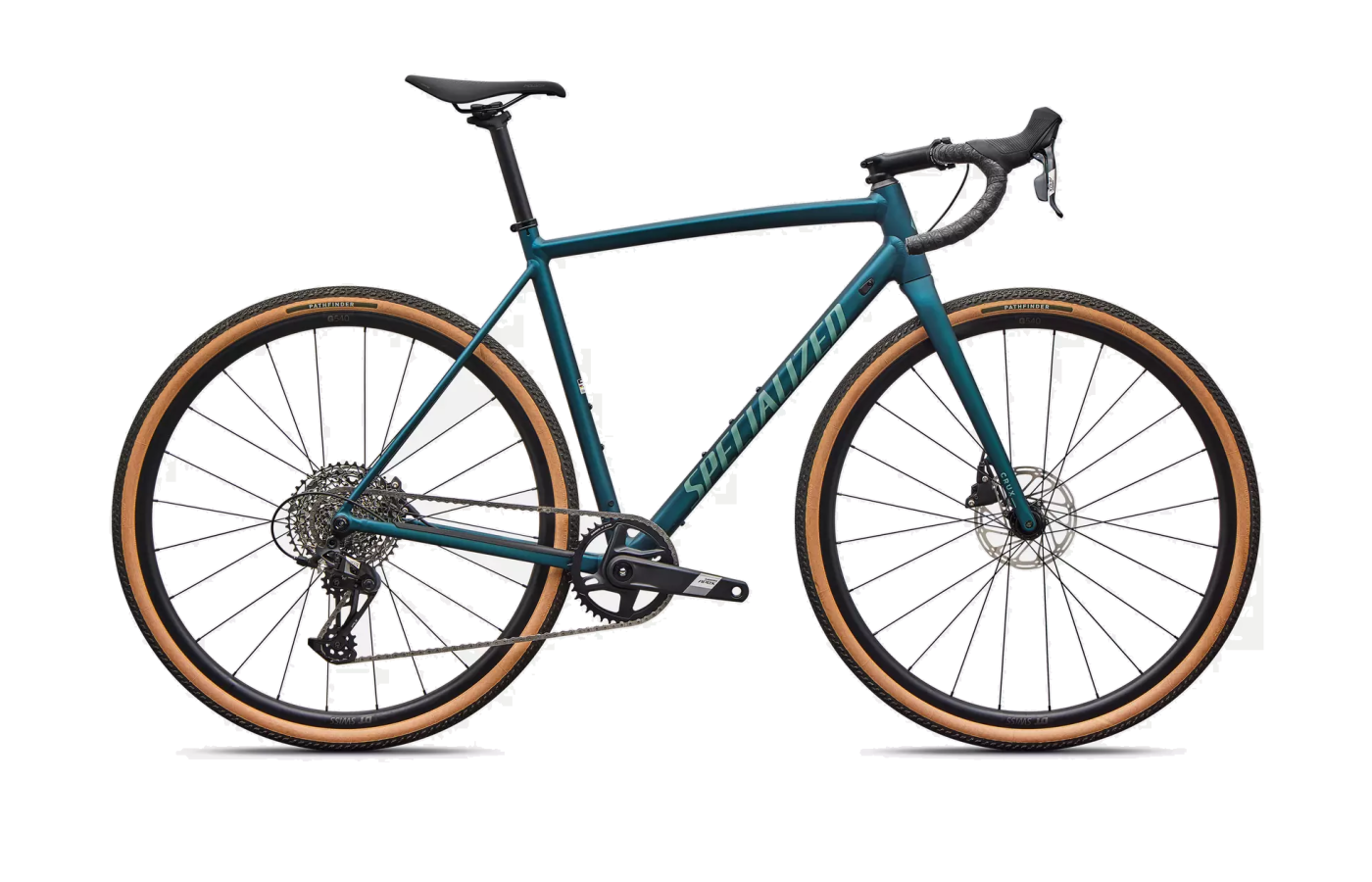
Crux
The weight-weenie counterpoint — Specialized's race-focused gravel frame is significantly lighter than either of these. Pick it if you'd rather climb and sprint than "underbike" technical trails.
Compare →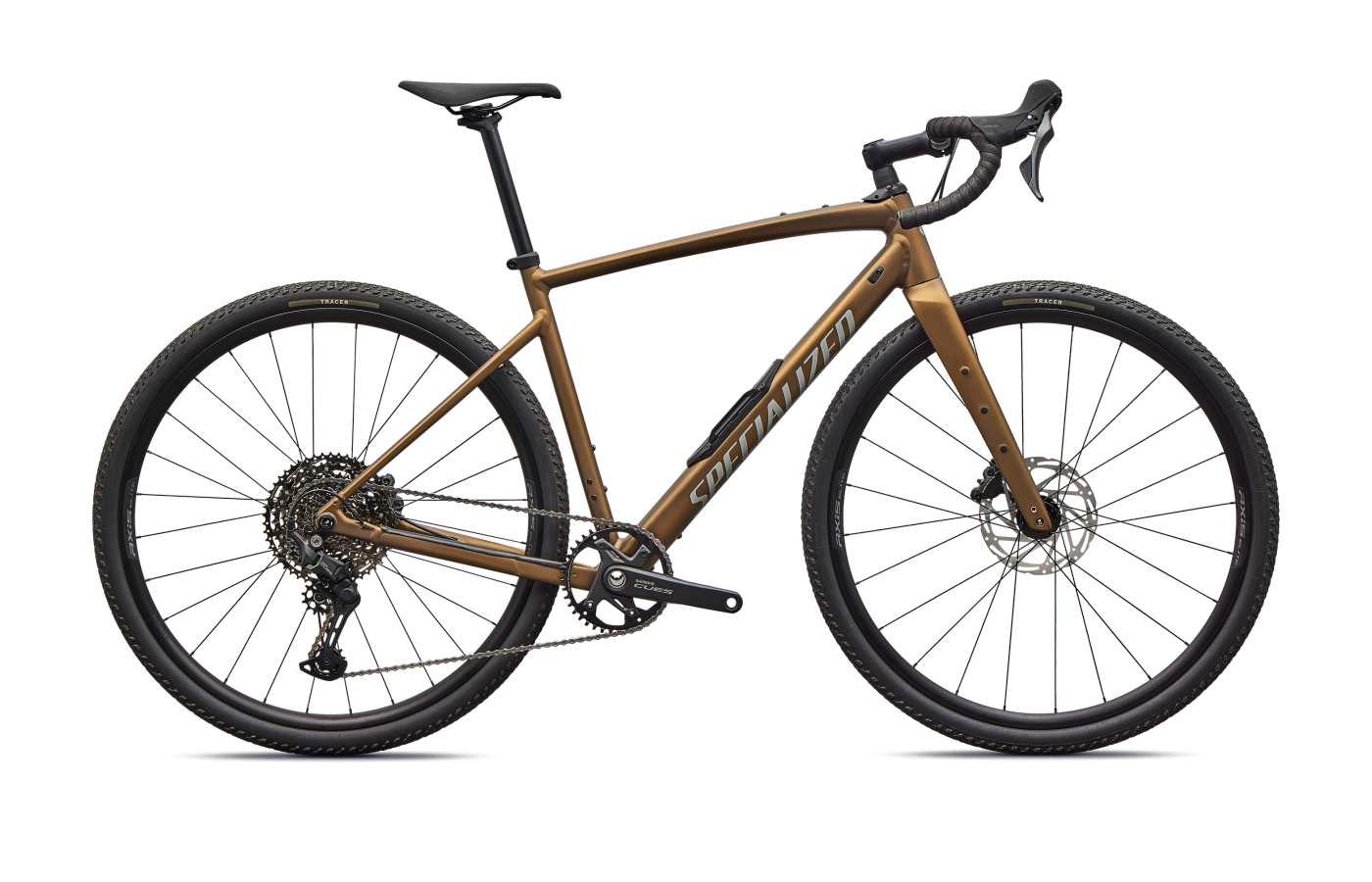
Diverge
Specialized's FutureShock 2.0 head tube damper offers a different take on front-end compliance — no fork weight, no service interval. Better suited to riders who still want road-leaning speed with chatter taken off the top.
Compare →