Megatower
vsTallboy
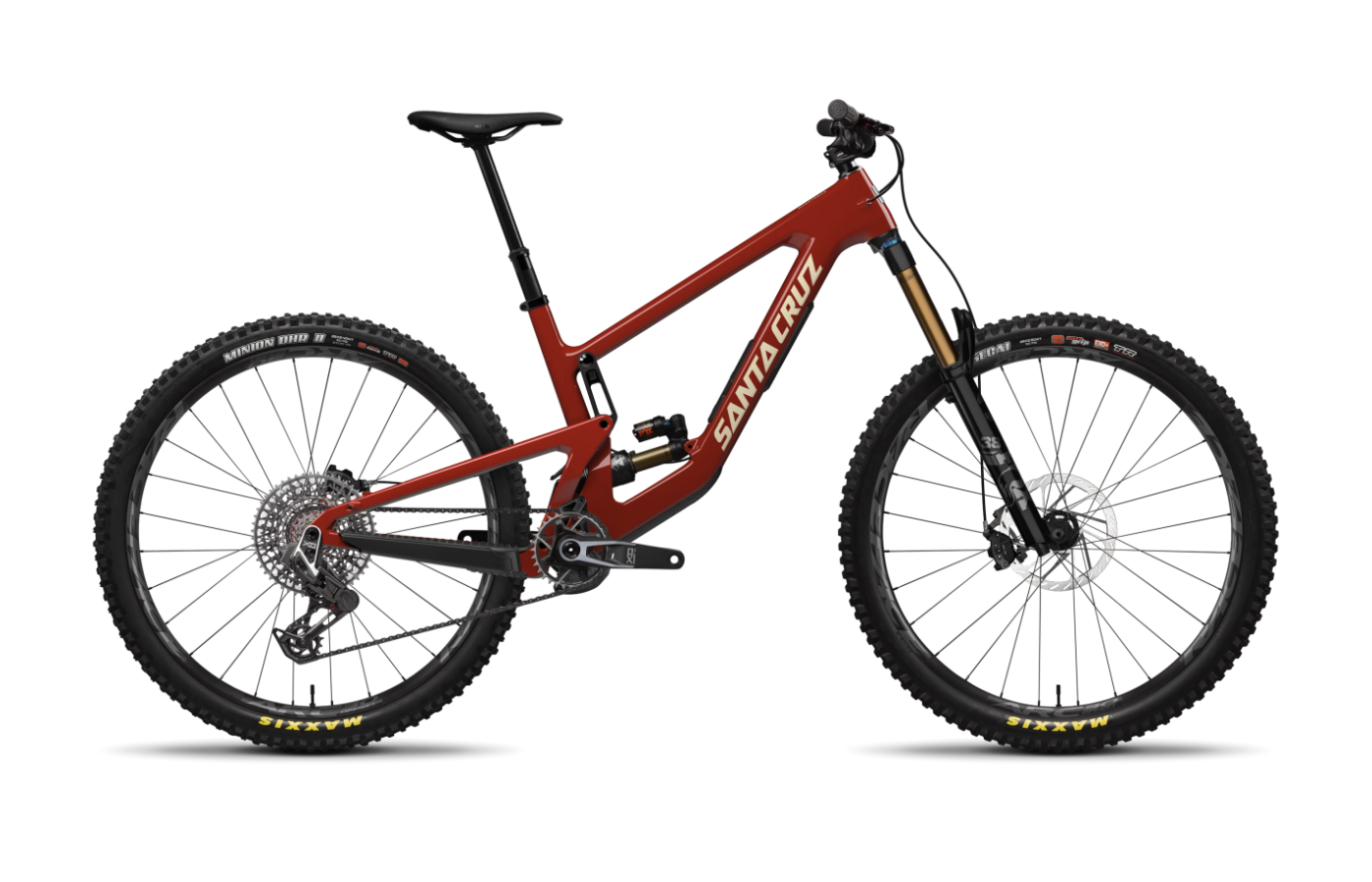
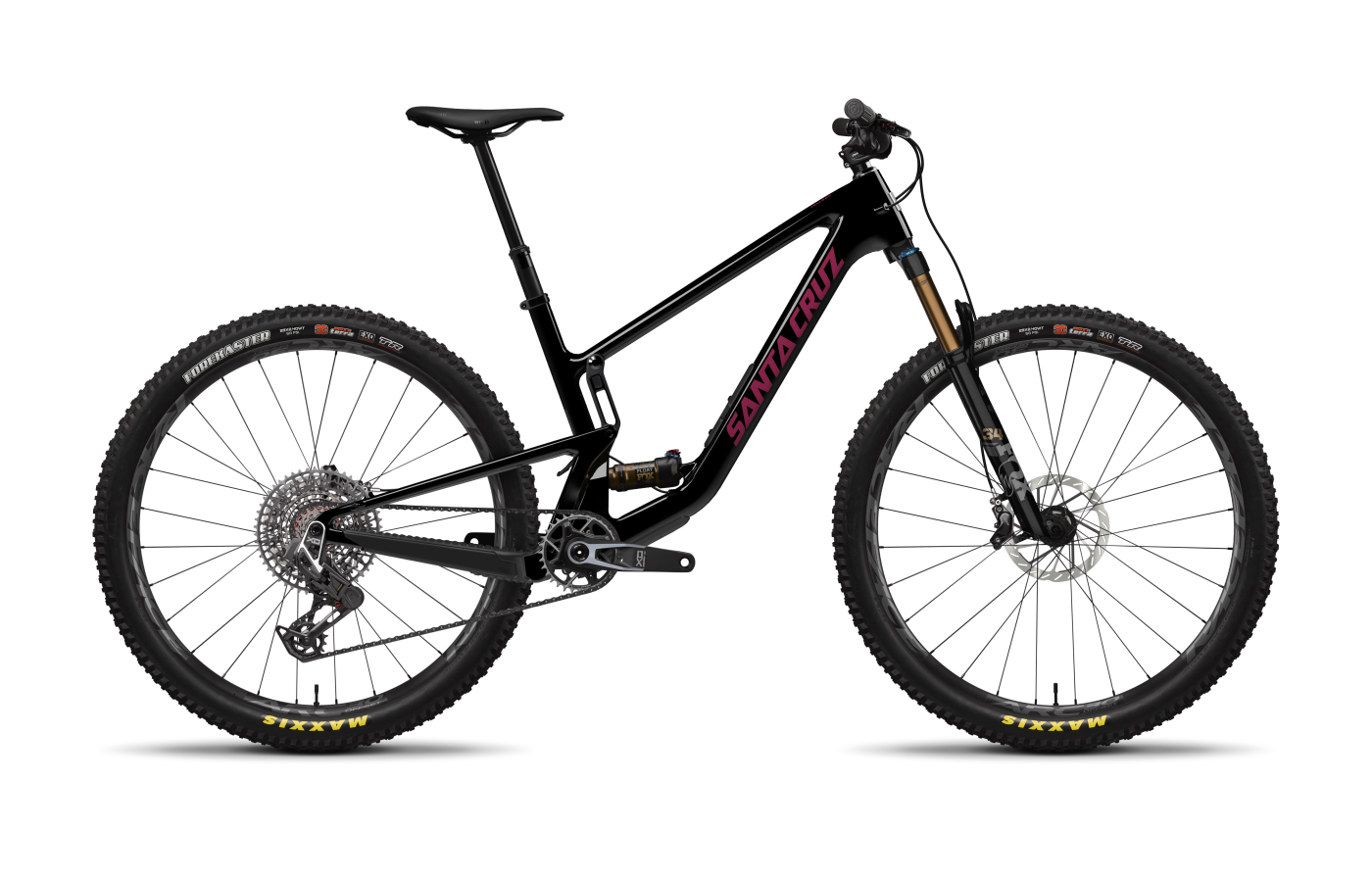
Same family, two very different bikes.
The Megatower is a 170 mm enduro sled built to flatten chunder. The Tallboy is a 120 mm trail bike that descends like it has more travel.
Megatower
- Mini-DH composure — 170/165 mm of travel and a 63.8-degree HTA make double-blacks feel routine.
- Centered geometry with size-specific chainstays (437 mm on M) keeps the rider planted between the wheels.
- Lifetime frame, bearing and Reserve wheel warranty — Santa Cruz's long-haul ownership story is genuinely best-in-class.
- Asks for speed before it rewards you — feels muted on flatter, slower trails.
- No alloy frame option; the cheapest build is still $6,099.
Tallboy
- Punches above its travel — a 65.7-degree HTA and 130 mm fork give 120 mm of rear travel real descending bite.
- Snappy, ride-high VPP — pedals efficiently and slingshots out of berms and rollers.
- Six sizes from XS to XXL with size-tuned chainstays and layup, fitting riders the Megatower lineup can't.
- 120 mm rear travel runs out of room on big square-edge hits — your legs do the rest.
- Stock SRAM Level brakes and Forekaster tires are widely flagged as the first parts to upgrade.
Editor’s analysis
Same brand, same VPP linkage, same Glovebox storage — but one is built for the climb back up, and one is built to make the climb worth it.
On paper, the gap couldn't be wider. The Santa Cruz Megatower runs 170 mm front and 165 mm rear, with a 63.8-degree head tube angle and a 1236 mm wheelbase in size M. The Santa Cruz Tallboy runs 130 mm front and 120 mm rear, with a 65.7-degree head tube angle and a 1199 mm wheelbase. That's nearly 50 mm of travel and almost 2 degrees of head angle separating two bikes that share a paint booth.
The Megatower is what reviewers call a "mini-DH bike." In Blister's testing it weighed 34.6 lb in size L; ours comes in at 35.21 lb for the X0 AXS build. The combination of slack geometry, a long wheelbase, and the revised lower-leverage VPP curve makes it feel "in the bike" — a centered, planted, cloud-with-wheels demeanor that reviewers say "flattens the trail" once you're moving. The downside is the same as it's always been: it asks for speed before it gives anything back. Below ~15 mph it can feel muted and sluggish, and the 63.8-degree front end wants you to actively lean it into corners.
The Santa Cruz Tallboy plays a different game. At 29.84 lb in the X0 AXS trim, with a 130 mm fork and a relatively slack-for-XC 65.7-degree head angle, it's been called the "downhiller's XC bike" since the V4 — and the V5 leans further into that identity. It pedals with a snappy, ride-high VPP feel, has size-specific chainstays (433 mm on the M), and slingshots through berms in a way the Megatower simply can't match. It's not a flyweight — it's stout, sometimes called "steroidally hench" by MBR — but it's a 120 mm bike that genuinely encourages full-send lines on terrain you wouldn't try on a Blur.
Put another way: the Megatower is the bike you reach for when the trail is the reason. The Tallboy is the bike you reach for when the ride is the reason — when you're going to spend more time pedaling than dropping in, but want a bike that doesn't flinch when the trail turns sideways.
Where the builds differ.
Comparing our editor's-pick builds side-by-side. Winners highlighted row-by-row — lower price and weight, and the better-spec component, each mark a point.
Build variants & pricing
Both range from one mid-tier carbon build up to flagship X0 AXS RSV trim. The Tallboy starts $1,300 cheaper and adds two lower rungs the Megatower doesn't have.
Prices are current US MSRP. Neither model is offered in aluminum — the Megatower starts at $6,099 (90 build), while the Tallboy stretches down to $4,799 with a Pike Base fork and SRAM NX. If the budget end matters, the Tallboy is the only choice in this matchup.
How they fit, how they steer.
Both compared at size M, the fit-picked size for a 5'8" rider on each bike. The Megatower runs 6 mm taller in the stack, an identical 455 mm reach, a 1.9-degree slacker head tube angle, and a 37 mm longer wheelbase — that's the long-and-low enduro stance vs. the Tallboy's tighter, more upright trail-bike posture.
Which size should I buy?
Size recommendations based on stack, reach, and effective top tube. The Tallboy adds an XS at the small end; both share an XXL at the top.
→These are starting points. Flexibility, riding style, and preferred position all shift the answer — if you’re between sizes, a professional fit beats a chart.
What the magazines said.
Published reviews from trusted cycling outlets. Click through for the full write-up.
Which one should you buy?
If the climb is the price you pay for the descent, get the Megatower. If the ride is the point and the descent is a bonus, get the Tallboy.
Megatower
If your home trails involve shuttle laps, lift access, or 3,000-foot descents on the kind of terrain that breaks lesser bikes, the Megatower is built for exactly that. It's the responsible-maniac tool that flattens chunder and asks for more.
Tallboy
If you ride 20-mile loops with mixed climbing and want a bike that pedals snappily uphill but still encourages you to send the optional jump line, the Tallboy is the better tool. It's a 120 mm bike that rides like a 140 mm bike with the legs of a 100 mm one.
Questions buyers actually ask.
Short answers to the things we get emailed about most often.
01How much travel does each bike have?
Megatower: 170 mm fork, 165 mm rear travel — full enduro territory.
Tallboy: 130 mm fork, 120 mm rear travel — short-travel trail. The Megatower has roughly 45 mm more rear travel and 40 mm more up front — that's the single biggest difference between the two.
02Which one climbs better?
The Tallboy, by a clear margin. At 29.84 lb (X0 AXS) vs. 35.21 lb on the matched Megatower build, it's about 5.4 lb lighter, and the steeper 65.7-degree head tube angle keeps the front wheel from wandering on technical pitches. Reviewers consistently describe it as "snappy" and "punchy" on the climbs.
The Megatower isn't a slug — its 77.4-degree seat tube angle (size M) keeps you centered, and the VPP linkage gives "gobs of traction" on technical climbs — but you're still hauling a 35-pound enduro bike up the hill.
03How aggressive can I get on the Tallboy?
More than the travel suggests, less than a Megatower. Reviewers across PinkBike, Bike Perfect, and The Loam Wolf consistently describe the Tallboy V5 as the "downhiller's XC bike" — meaning it'll handle black-diamond terrain that would scare a typical 120 mm bike. The 65.7-degree HTA, 130 mm fork, and stout chassis make it confident on real descents.
But 120 mm of rear travel is still 120 mm. On square-edge hits at speed it asks your legs to fill in, and longer rough descents will tire you out faster than a bigger bike. Many reviewers immediately upgrade the stock SRAM Level brakes for that reason.
04Should I size up or down between these two?
Use the same size on both. Reach is identical at every shared size — 430/430 mm in S, 455/455 mm in M, 475/475 mm in L, 495/495 mm in XL, 520/520 mm in XXL. Where they differ is stack (the Megatower sits 6–14 mm taller depending on size) and wheelbase (the Megatower is 28–43 mm longer per size).
The practical effect: on the same nominal size, the Megatower feels more upright and more planted; the Tallboy feels lower and more flickable. Pick by intent, not by sizing chart.
05What's the tire clearance on each?
Both models have a maximum tire clearance of 63.5 mm (2.5 inches) per Santa Cruz's published spec — they share the same back end clearance number, despite the Megatower being a 170 mm enduro bike and the Tallboy a 120 mm trail bike. In practice the Megatower ships with Maxxis Assegai 2.5 / Minion DHR II 2.4, while the Tallboy ships with the much faster-rolling Maxxis Forekaster 2.4.
06Are the components really worth the Santa Cruz price?
On a parts-per-dollar basis, no — and Santa Cruz makes no secret of it. The entry-level Megatower 90 build at $6,099 and the Tallboy R at $4,799 spec component groups (SRAM 90 / NX, basic dampers) that you'd find on cheaper bikes from YT or Canyon. Reviewers consistently flag this.
What you're paying for is the frame engineering (size-specific layup and chainstays, threaded BB, grease ports), the lifetime frame and bearing warranty, and the lifetime warranty on Reserve wheels (RSV builds). For a rider planning to keep the bike five-plus years, the math gets more reasonable. The mid-tier X0 AXS builds — the editor's picks here — are widely cited as the best value in each lineup.
07Why would I choose the Megatower over the Hightower?
If you've considered both, you're not alone — the Hightower is the in-house middle ground at 145 mm rear / 150 mm front. Choose the Megatower over the Hightower when your descents are long enough, steep enough, or chunky enough that 145 mm leaves you wanting more support and stability at speed. If your typical day involves lift laps, EWS-style terrain, or sustained 3,000-foot descents, you'll feel the Megatower's extra travel and slacker geometry working for you.
If most of your riding is mixed trail with one or two big descents per ride, the Hightower is probably the smarter pick.
08Can I run a coil shock on either?
Both frames are designed around air shocks (Fox Float X / Float X2 stock) and the kinematics — particularly on the Tallboy V5 — are tuned to be less progressive than previous generations. That means a coil works mechanically on the Megatower (and is a popular swap among heavier or harder-riding owners), but the Tallboy's flatter leverage curve and 120 mm of travel make a coil less practical — most owners stick with air for the bottom-out support.
Similar bikes
If your priorities don’t map cleanly onto either of these, one of these adjacent bikes probably fits better.
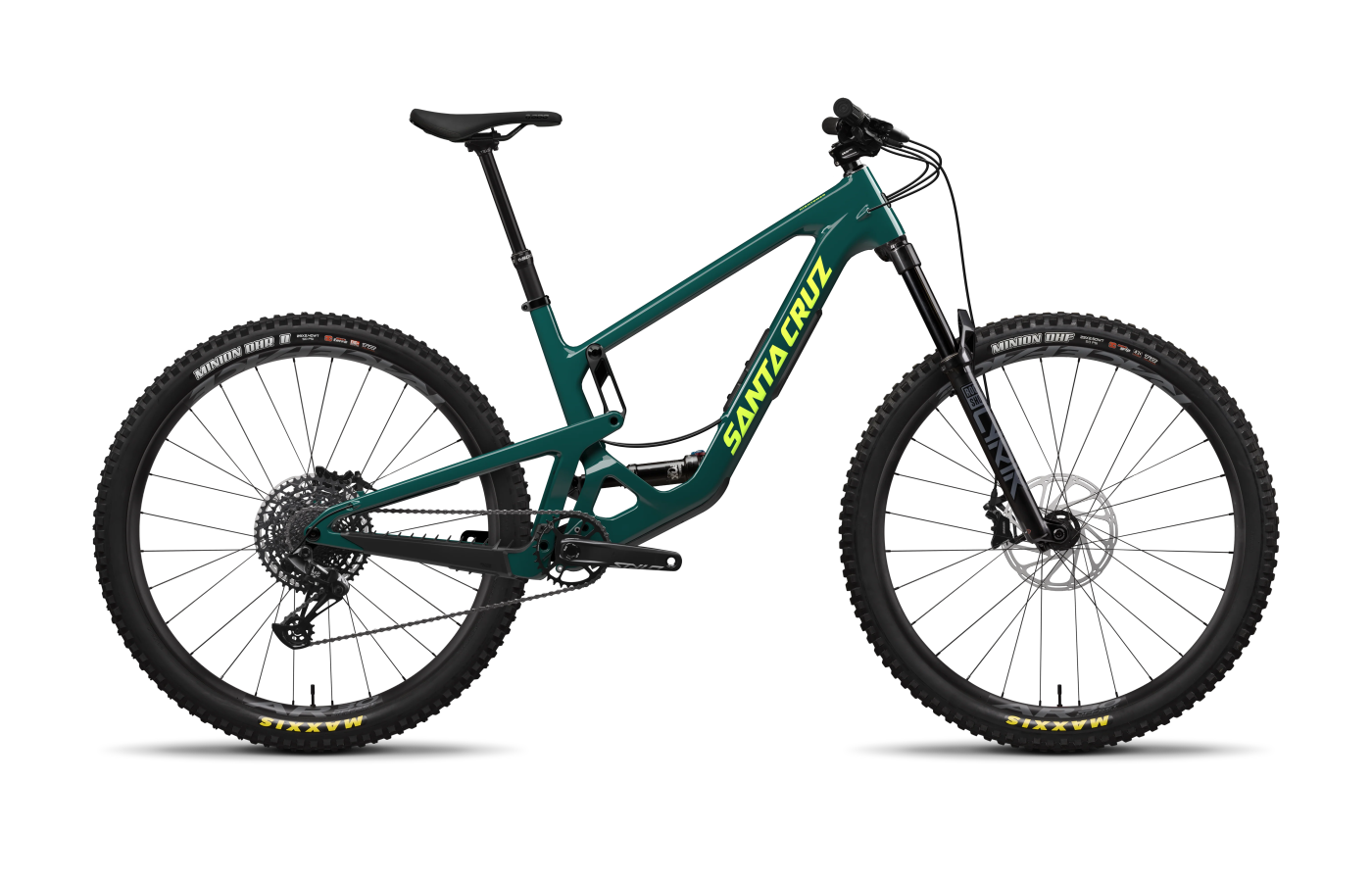
Hightower
The middle ground in Santa Cruz's own lineup — 145 mm rear / 150 mm front. If you can't decide between the Megatower and Tallboy, the Hightower probably already answers your question.
Compare →Spire
Transition's direct rival to the Megatower with even more aggressive geometry — picks the enduro lane and sharpens it further. Worth a look if you're shopping the Megatower for race-day chunder.
Compare →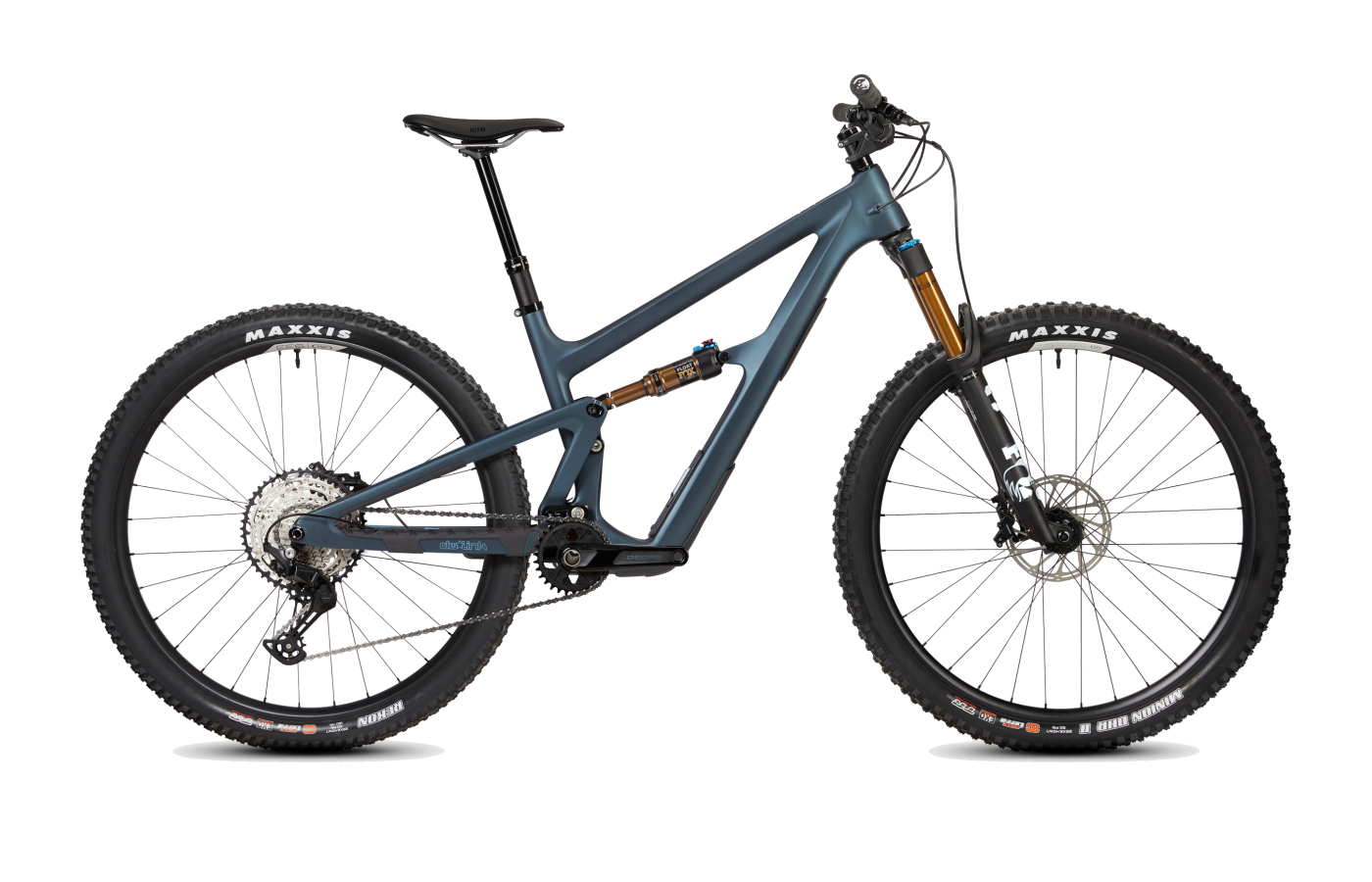
Ripley
Ibis's snappier alternative to the Tallboy — more pure-XC pedaling efficiency, less interest in descending double-blacks. The right call if you'd rather climb faster than drop harder.
Compare →