Blur
vsEpic
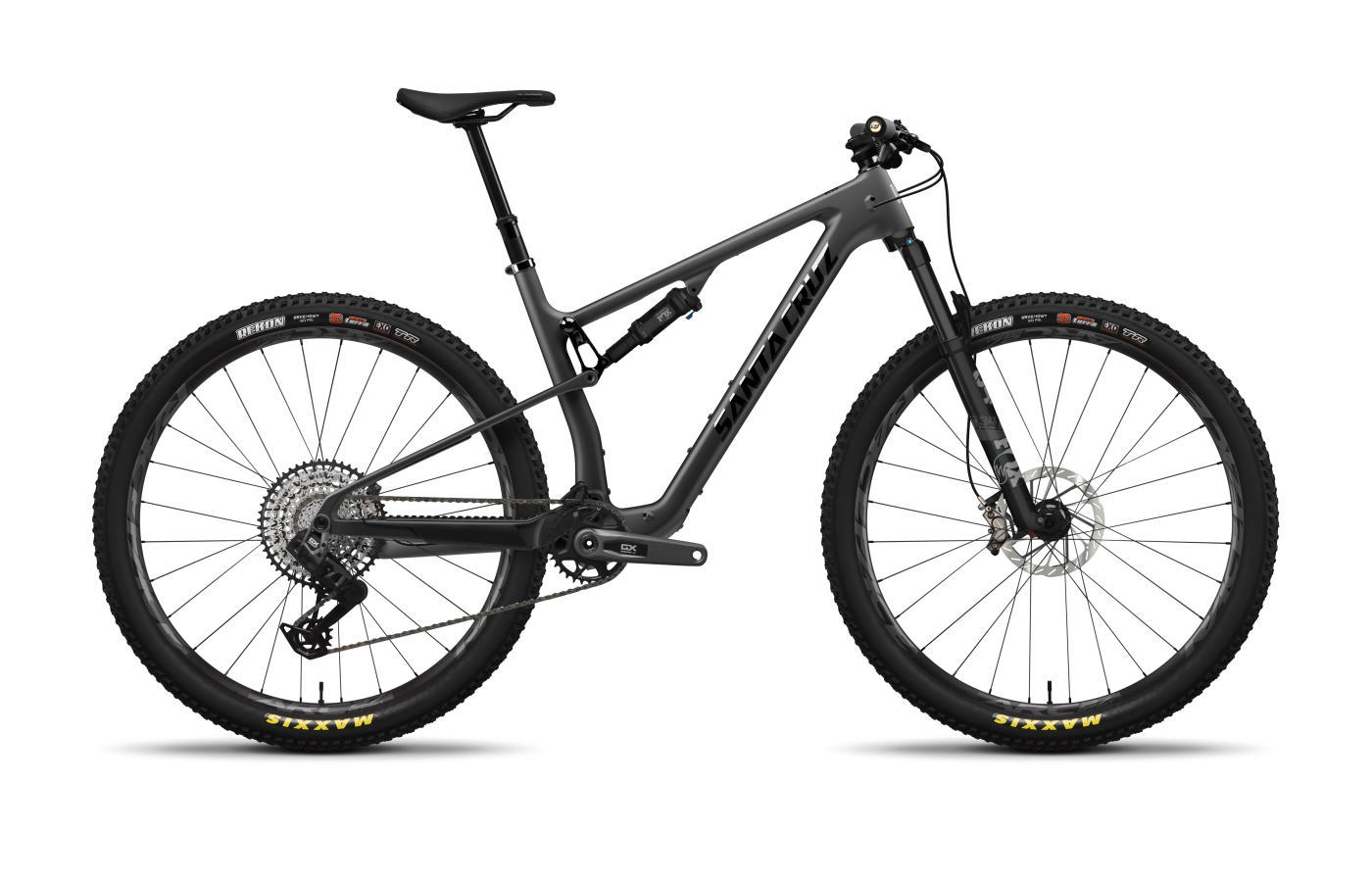
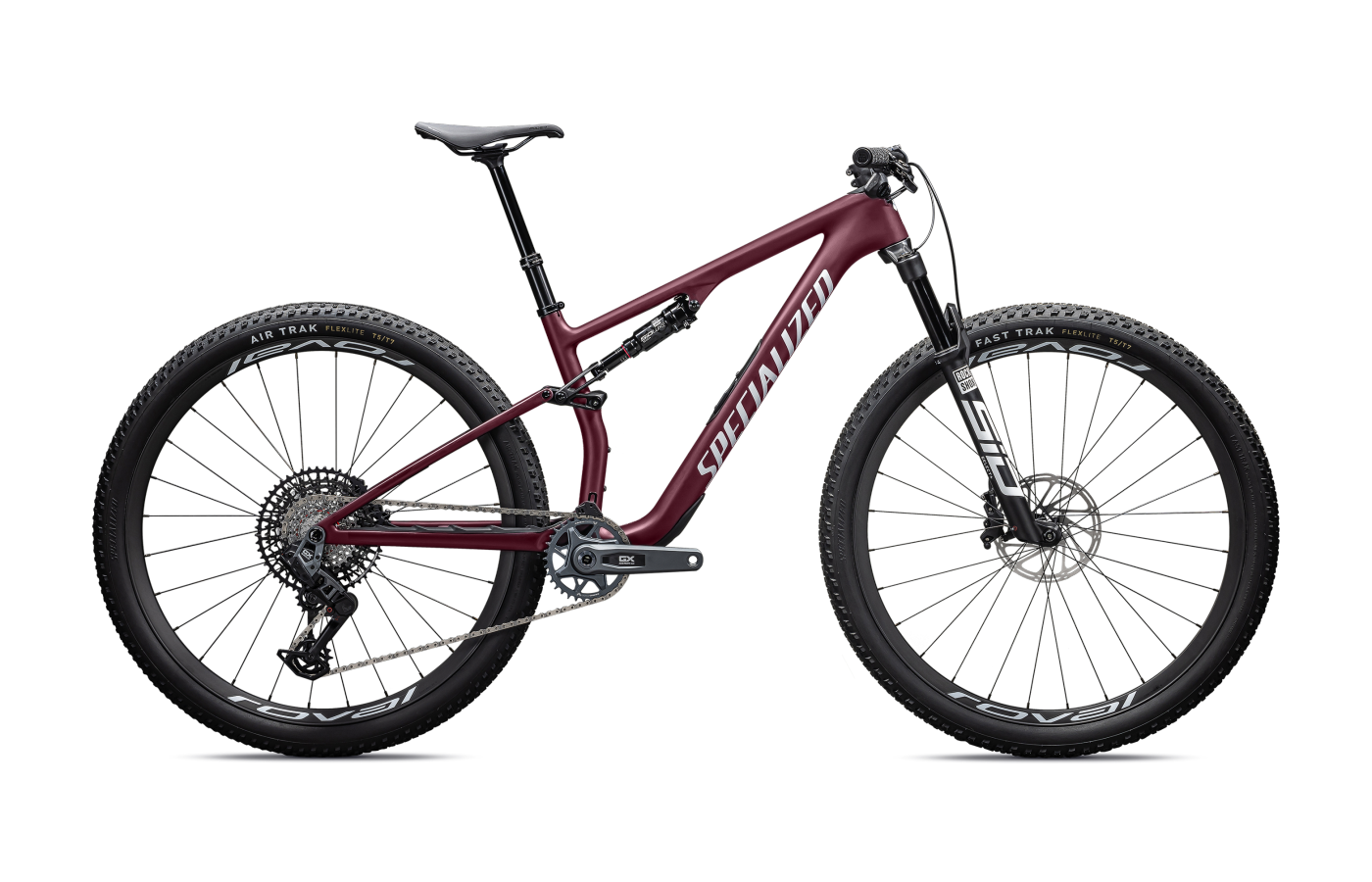
Two takes on what fast looks like.
The Blur is a 115 mm flex-stay XC bike built around traction. The Epic 8 is a 120 mm digitized racer built around stability.
Blur
- Class-leading traction — low anti-squat keeps the rear wheel glued through rooty technical climbs.
- Lifetime frame, bearing, and Reserve wheel warranty — the most generous long-term support in XC.
- Size-specific chainstays (431–438 mm) keep front-rear balance consistent across the size run.
- Active suspension means real pedal bob on smooth surfaces unless the lockout is engaged.
- The stock Fox Transfer SL dropper drew consistent criticism across long-term reviews.
Epic
- Radical XC geometry — a 65.9-degree head angle and 120 mm travel that descends like a trail bike.
- Magic Middle shock tune — a digressive platform that resists pedal input but pops open on impact.
- SWAT downtube storage across the entire range, plus a threaded BSA bottom bracket.
- Static 435 mm chainstays across all sizes can feel slightly out of balance on the XL.
- S-Works Flight Attendant adds up to nine batteries to manage — not a set-and-forget system.
Editor’s analysis
Both run 29" wheels, around 120 mm of travel, and a sub-25-pound build kit — but they answer the same question with opposite philosophies.
The Santa Cruz Blur is the simpler bike on paper and the more nuanced one in practice. Santa Cruz scrapped their decades-old VPP system for a flex-stay single pivot, dropped 289 g of frame weight, and tuned the kinematics for low anti-squat — meaning the rear wheel stays planted under load instead of fighting the chain. Reviewers across PinkBike, Bike Perfect, and Singletrackworld kept using the same word: traction. The trade-off is real pedal bob on smooth fire roads if you don't reach for the lockout.
The Specialized Epic 8 is the more radical platform. Specialized killed the iconic Brain inertia valve, pushed travel to 120 mm front and rear, and slackened the head angle to 65.9 degrees in the low flip-chip setting — numbers that sat on enduro bikes a decade ago. The custom "Magic Middle" SIDLuxe tune gives a digressive platform that resists rider input but blows open on impact. Reviewers called the result "slalom-like" in corners and "outrageously stable" at speed, with one calling it a "wolf in wolf's clothing."
The geometry tells the story. On a size M, the Specialized Epic sits 12 mm longer in reach (450 vs 438 mm) and slacker by 1.2 degrees at the head tube. The Epic's wheelbase is 22 mm longer. The Blur is the agile, technical-climbing tool; the Epic is the high-speed steamroller that happens to weigh in the low-23-pound range in the right trim. Neither is wrong — they're aimed at different XC riders.
Put another way: the Santa Cruz Blur is what you buy when most of your race minutes are spent climbing tight, rooty singletrack and you want grip that other bikes give up. The Specialized Epic is what you buy when the descents are getting rowdier every season and you want the suspension and geometry to keep up.
Where the builds differ.
Comparing our editor's-pick builds side-by-side. Winners highlighted row-by-row — lower price and weight, and the better-spec component, each mark a point.
Build variants & pricing
Both platforms span roughly $4,500 to $13,500 — but Santa Cruz holds you to carbon-only at every tier, while Specialized goes the same range without an alloy option either.
Prices are current US MSRP. Neither brand offers an alloy frame in this generation. The Blur's GX AXS Trail and the Epic 8 Expert (GX AXS) sit within $250 of each other at the GX-AXS-tier sweet spot, which is where most non-podium racers land.
How they fit, how they steer.
Both at size M — the fit-picked size for a 5'8" rider on each. The Epic's reach is 12 mm longer (450 vs 438 mm), the head tube is 1.2 degrees slacker (65.9 vs 67.1), and the wheelbase runs 22 mm longer. The Blur is the shorter, sharper-steering bike; the Epic is the more stable, descent-biased one.
Which size should I buy?
Size recommendations based on stack, reach, and effective top tube. Both ranges overlap closely in M and L; the Epic extends one size smaller (XS) for shorter riders.
→These are starting points. Flexibility, riding style, and preferred position all shift the answer — if you’re between sizes, a professional fit beats a chart.
What the magazines said.
Published reviews from trusted cycling outlets. Click through for the full write-up.
Which one should you buy?
If you race marathon and live on technical climbs, get the Blur. If you want an XC bike that descends like a trail bike, get the Epic 8.
Blur
If your XC is tight, rooty, and lasts six hours, the Blur's traction-first kinematics will keep you connected to the ground when stiffer bikes spin out. It rewards riders who value grip and comfort over raw pedaling rigidity.
Epic
If you race contemporary XC courses with real descents and rock gardens — or you want one bike that can do a Friday short-track and Saturday trail ride — the Epic 8's geometry and Magic Middle tune turn descents from survival into offense.
Questions buyers actually ask.
Short answers to the things we get emailed about most often.
01Which one climbs better?
It depends on the climb. On smooth, sustained fire-road climbs, the Specialized Epic 8 is firmer and more efficient — its kinematics push anti-squat to roughly 100% at sag, and the Magic Middle shock setting gives a near-hardtail feel without needing a lockout.
On technical, rooty climbs the Santa Cruz Blur is reportedly faster. Reviewers including PinkBike's Henry Quinney called it the fastest singletrack climber in field testing, because the active rear end keeps the tire glued where stiffer bikes lose grip and spin out.
02How much travel does each have?
Blur: 115 mm rear / 120 mm front in the TR/Trail configurations (which include both editor's-pick builds and most of the range). The XC-specific builds run 100 mm rear / 120 mm front.
Epic 8: 120 mm rear / 120 mm front across the entire range. There's no shorter-travel variant — for that, Specialized splits off the Epic World Cup as a separate model with 75 mm rear travel.
03Which has a more progressive geometry?
The Specialized Epic 8, by a wide margin for the XC category. Its head tube angle is 65.9 degrees in the low flip-chip setting — slacker than many trail bikes from a few years ago. Reach on a size M is 450 mm.
The Santa Cruz Blur sits at 67.1 degrees (TR) or 68.3 degrees (XC) with a 438 mm reach on size M. It's the more traditional XC shape: shorter, steeper, more agile in tight terrain but less composed at high descending speeds.
04What about chainstay length?
The Blur uses size-specific chainstays — 431 mm on Small, 433 on Medium, 436 on Large, 438 on XL. The intent is to keep front-rear balance consistent across the size run.
The Epic 8 uses a static 435 mm chainstay on every size from XS to XL. Riders on smaller frames find it perfectly balanced; some XL testers noted it can feel slightly tail-light against the 500 mm reach.
05Are there alloy frame options?
No, on either bike. The Blur is carbon-only (Santa Cruz's C and CC layups), and the Epic 8 is carbon-only (Specialized's FACT 11m and S-Works FACT 12m). Neither brand has put an alloy frame on the most recent generation, which is why the entry prices sit above $4,500 on both sides.
06How is the dropper post situation?
The Blur's spec of the Fox Transfer SL drew consistent criticism from long-term reviewers — Singletrackworld and BikeRadar both flagged lateral play and a binary up/down behavior that doesn't suit racing. Many owners replace it with an infinitely adjustable post like a BikeYoke Divine or AXS Reverb.
The Epic 8 ships its mid-range builds with the X-Fusion Manic or similar infinite-travel droppers — generally less polarizing in long-term reviews.
07What's the warranty story?
Santa Cruz offers a lifetime frame warranty, lifetime pivot bearing replacement, and a lifetime warranty on Reserve carbon wheels — all to the original owner. This is the most generous warranty package in the XC segment and a recurring justification for the Blur's price floor.
Specialized offers a lifetime frame warranty to the original owner and a lifetime warranty on Roval Control SL wheels. Both brands offer crash-replacement frame pricing on top.
08Which is the better value at the mid-tier?
Reviewers generally point to the Specialized Epic 8 Expert ($7,199) as the platform sweet spot — it carries the Magic Middle shock tune, Roval Control SL V carbon wheels, and a wireless GX AXS drivetrain that very nearly mirrors the S-Works experience for half the price.
The Santa Cruz Blur GX AXS Trail ($6,949) sits in the same range with the same drivetrain tier and a FOX 34SC Performance Elite fork, but ships with alloy DT Swiss 370 wheels rather than carbon. The Blur's value lean is on the warranty, not the spec sheet.
Similar bikes
If your priorities don’t map cleanly onto either of these, one of these adjacent bikes probably fits better.
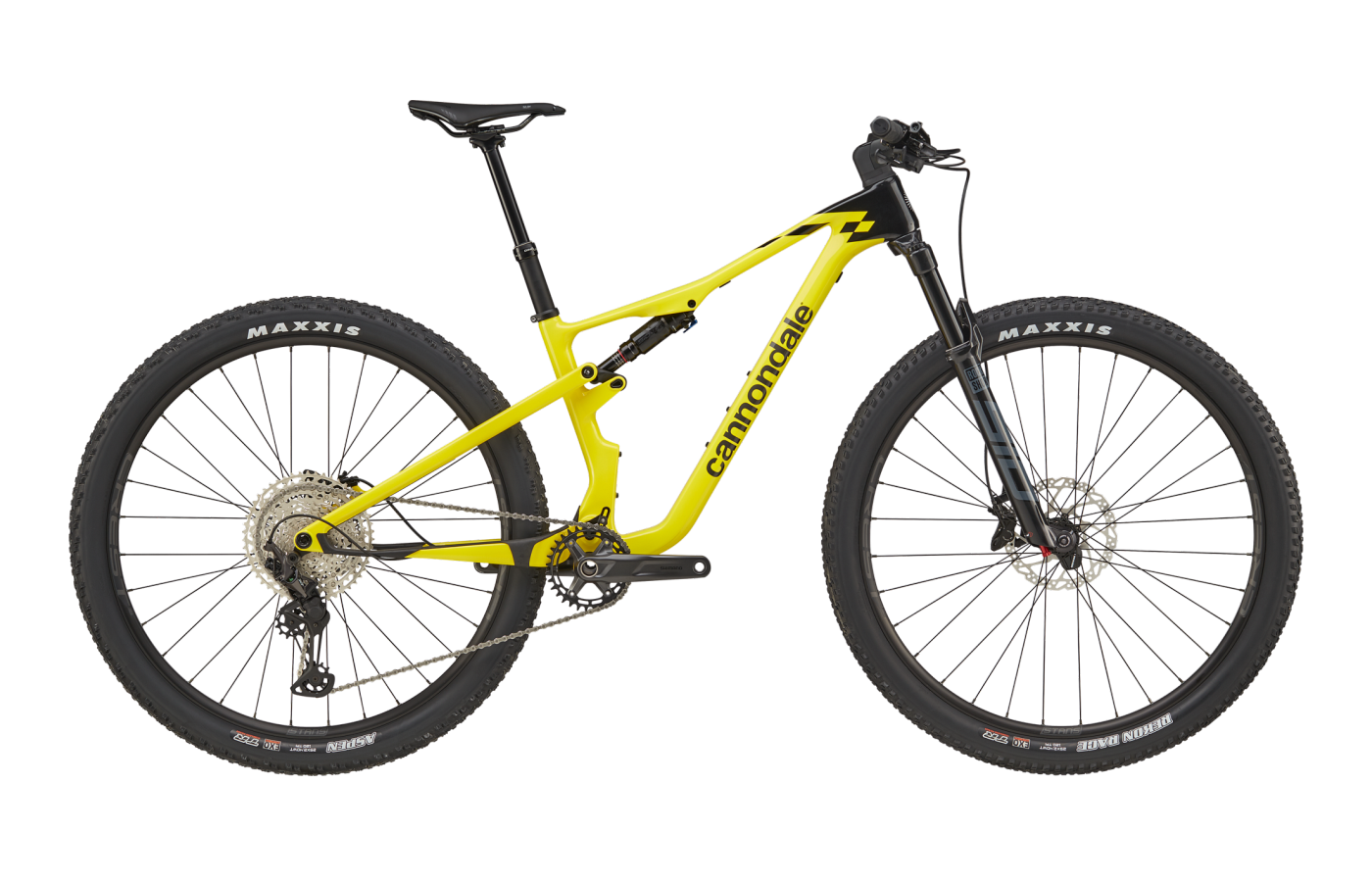
Scalpel
Cannondale's flex-stay XC racer with the Lefty fork — the standout choice if you want a single-crown stiffness profile that's hard to match with a traditional dual-crown setup, and a frame design closer in spirit to the Blur.
Compare →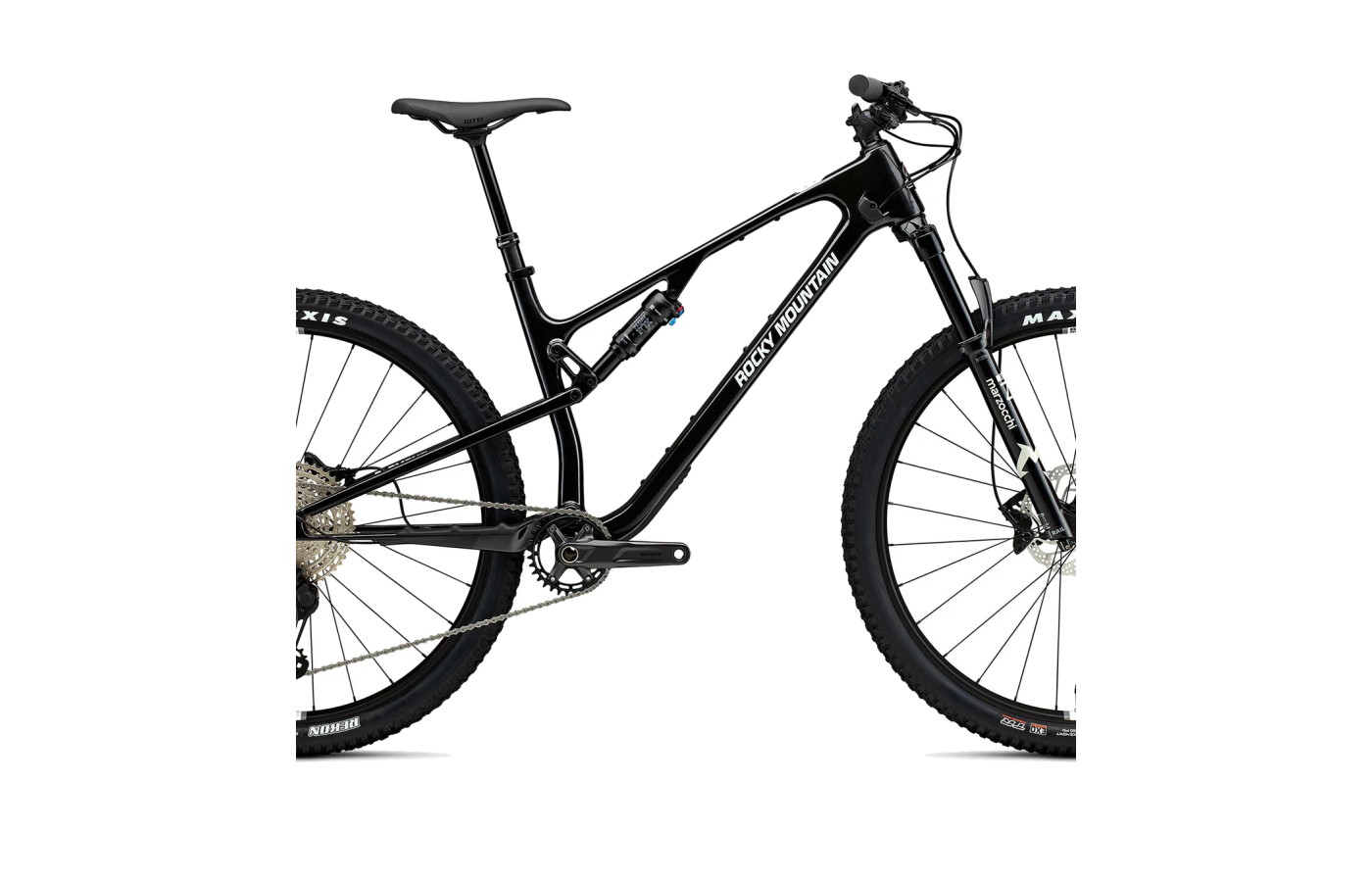
Element
Rocky Mountain's downcountry benchmark with a flip-chip and a more aggressive descent character. If the Epic's geometry sells you but you want even more capability through chunder, the Element pushes further in that direction.
Compare →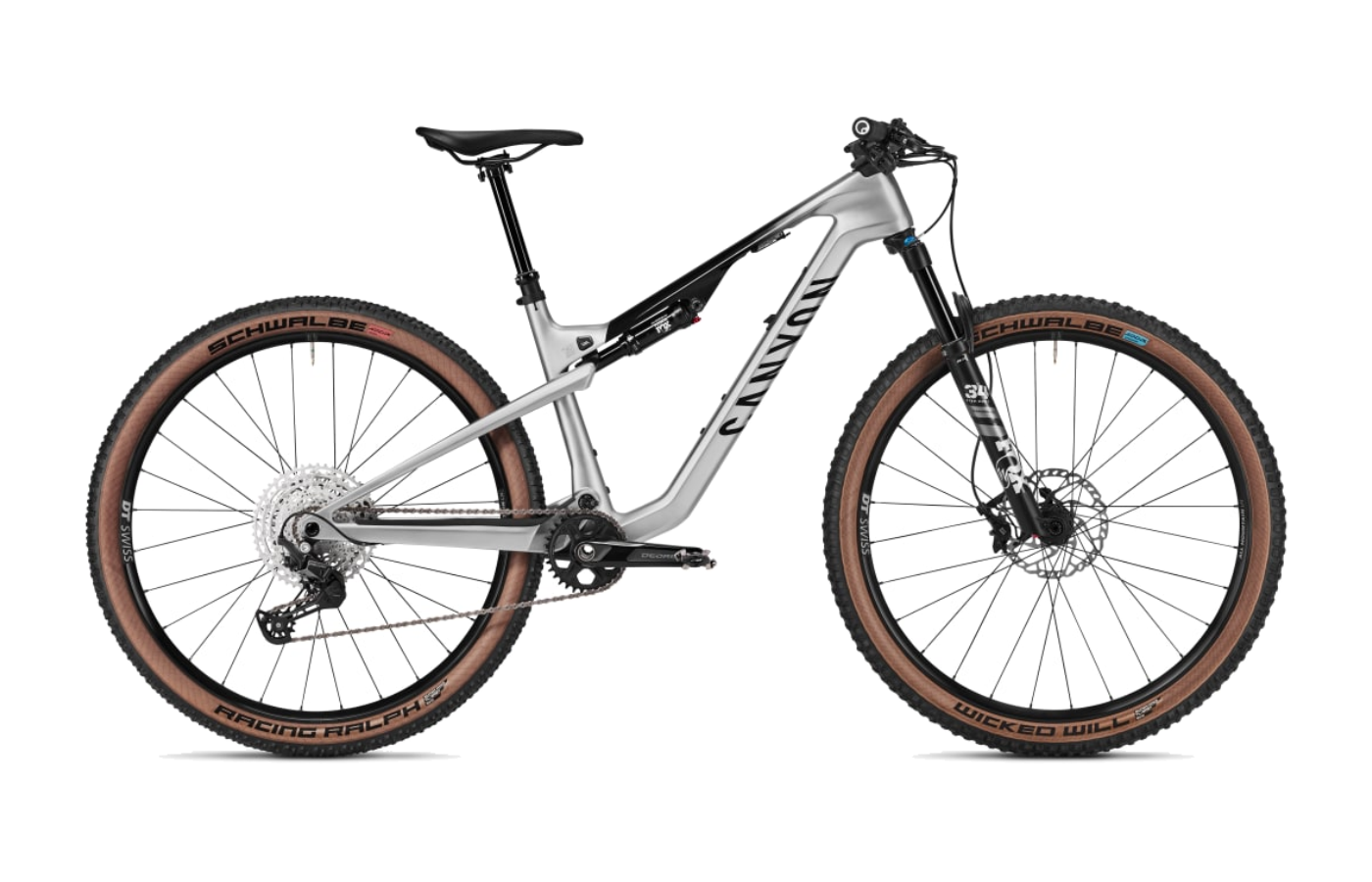
Lux Trail
Canyon's direct-to-consumer answer with 120 mm of travel and a marathon focus close to the Blur's. Significantly cheaper than either of these — the catch is no dealer network and no demos before you commit.
Compare →