Rangefinder
vsRockhopper
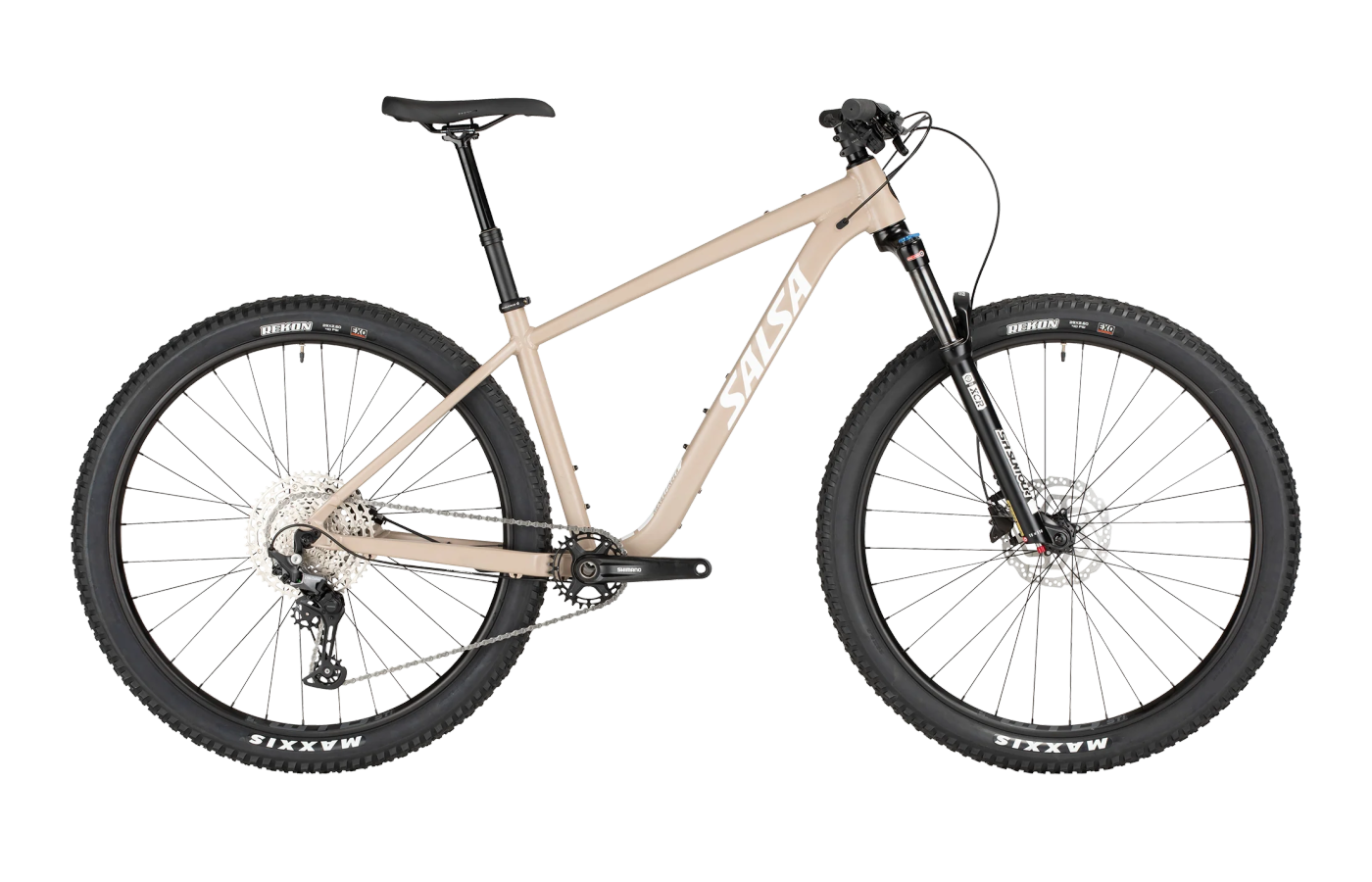
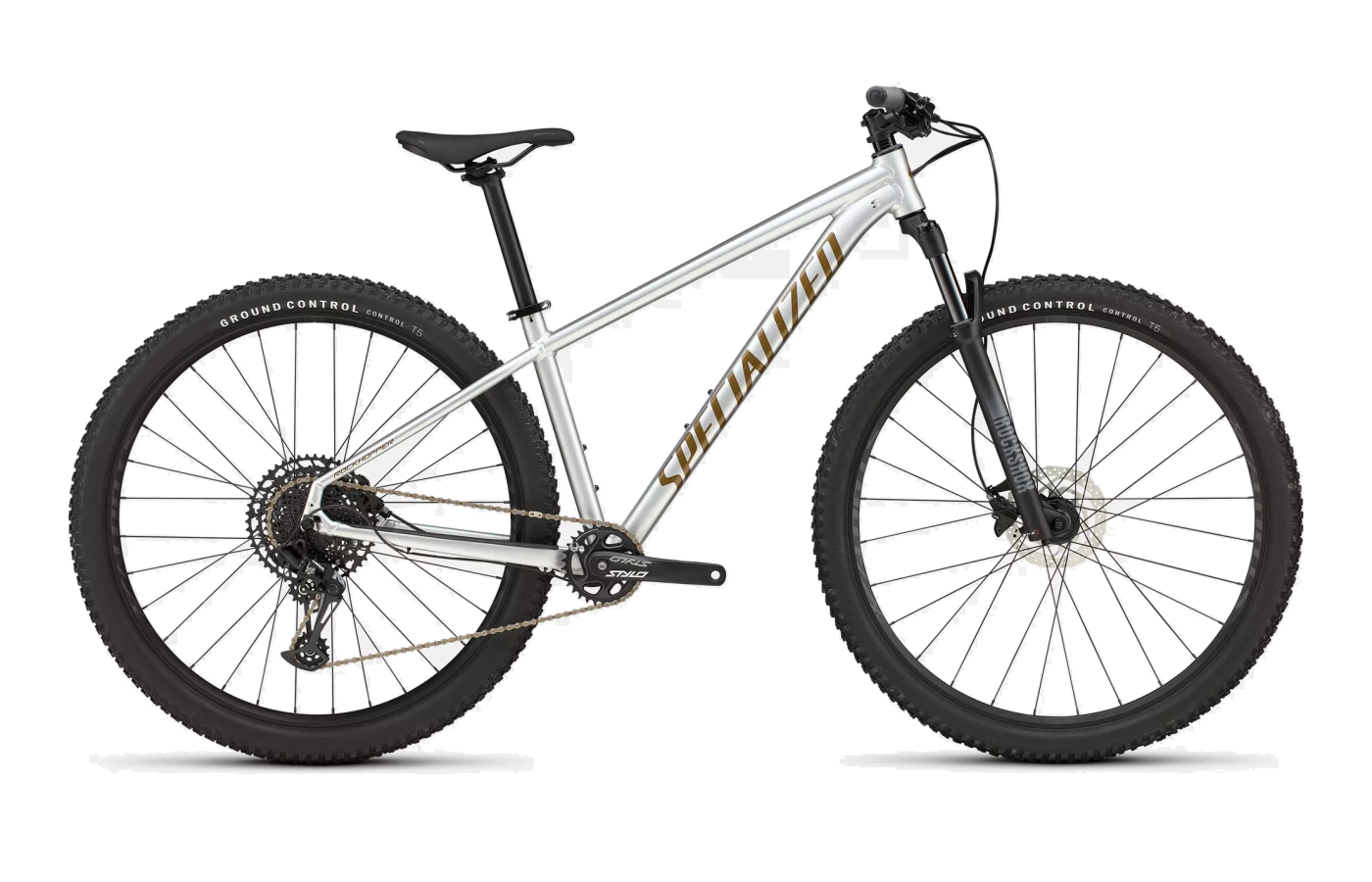
Two budget hardtails, two missions.
The Rangefinder is the bikepacking-ready trail explorer. The Rockhopper is the lightweight XC mile-muncher.
Rangefinder
- 120 mm air fork on top builds — SR Suntour XCR34 Air with lockout and rebound; meaningfully more capable than Rockhopper's 100 mm.
- Massive tire clearance (up to 71 mm / 2.8" plus on 27.5+ builds) opens up real adventure terrain.
- Fully adventure-ready frame — rack mounts, top tube bag mount, multiple bottle and utility mounts.
- Heavier (~32 lb size Medium) — climbs and accelerations feel sluggish next to the Rockhopper.
- Wire-bead Maxxis Rekon tires aren't tubeless-compatible; budget for an upgrade.
Rockhopper
- Lightweight for the price — 28 lb 14 oz in MD on the Expert build; one of the lightest sub-$1,500 hardtails on the market.
- 12-speed 1x drivetrain on top trims — SRAM SX Eagle on the Expert means a wide gear range and zero front-shifting drama.
- Tubeless-ready wheels out of the box on the Expert and Comp — the Rangefinder makes you buy new tires for that.
- Straight head tube and QR axles severely limit fork and wheel upgrades — no Boost path forward.
- Only 80–100 mm of fork travel — runs out of composure on technical or steep descents.
Editor’s analysis
Both bikes start under $700, but they're aimed at opposite ends of the same beginner — the rider who wants to load up and roam, or the rider who wants to spin laps and chase speed.
On paper, the Salsa Rangefinder and Specialized Rockhopper share the same DNA: a 6061-T6 aluminum hardtail with an SR Suntour fork, modest drivetrain, and a price ceiling that tops out around $1,300–$1,600. But study the numbers and the design briefs diverge fast. The Salsa Rangefinder runs 120 mm of front travel across every build in the lineup. The Specialized Rockhopper runs 80–100 mm depending on frame size — a true XC fork window, not a trail one.
The Salsa Rangefinder is the more capable trail bike of the two and the more capable adventure rig. A 68.5-degree head tube angle, a 444 mm reach in size Medium, generous tire clearance up to 71 mm (room for 2.8" plus tires on the 27.5+ models), and mounting points on the down tube, top tube, and rear rack. Reviewers consistently call it "adventure-ready" — bottle cages, top tube bag, racks, the works. The catch is weight: ~32 lb for a Medium, well above the Rockhopper's 28–29 lb in similar trim.
The Specialized Rockhopper is the lighter, faster, more efficient bike — and the more limited one. The Expert tips the scale at 28 lb 14 oz in size MD with a 12-speed SX Eagle drivetrain, a 100 mm RockShox Judy air fork, and tubeless-ready Ground Control tires. Bicycling magazine called it "the new king of cheap mountain bikes." But there's a structural ceiling: a straight 1-1/8" head tube and 9 mm quick-release axles (135 mm rear, 100 mm front) lock you out of modern Boost forks and wheelsets. As Bike Perfect put it, this is a "one-off splurge" — it doesn't grow with you.
Put another way: the Specialized Rockhopper is the bike you buy to ride fast on green and blue trails, then probably replace in two years. The Salsa Rangefinder is the bike you buy to bikepack the divide, commute through winter, and still ride on Sunday — heavier, slower, but built to do more for longer.
Where the builds differ.
Comparing our editor's-pick builds side-by-side. Winners highlighted row-by-row — lower price and weight, and the better-spec component, each mark a point.
Build variants & pricing
The Rangefinder lineup runs $649–$1,599 across ten builds; the Rockhopper runs $649–$1,299 across nine. Both bottom out at $649 with basic coil forks.
Prices are current US MSRP. Both lineups offer multiple wheel sizes — the Rangefinder splits 27.5+ vs 29", the Rockhopper auto-picks 27.5" vs 29" by frame size. The Rangefinder's top builds include a dropper post; most Rockhopper trims do not.
How they fit, how they steer.
The Rangefinder Medium runs a notably longer 444.4 mm reach against the Rockhopper L-29's 425 mm — a 19 mm gap. Both share a ~68.5-degree head tube angle, but the Rangefinder sits 4 mm shorter on stack and runs a slightly steeper seat tube angle (74.6° vs 73.5°).
Which size should I buy?
Size recommendations based on stack, reach, and effective top tube. Note the Rockhopper splits sizes by wheel diameter — the same nominal size in 27.5" runs shorter than the 29er.
→These are starting points. Flexibility, riding style, and preferred position all shift the answer — if you’re between sizes, a professional fit beats a chart.
What the magazines said.
Published reviews from trusted cycling outlets. Click through for the full write-up.
Which one should you buy?
If you'll bikepack, commute, and ride moderate trails on one bike, get the Rangefinder. If you mostly ride flowy XC and want speed and efficiency, get the Rockhopper.
Rangefinder
If you want a single bike that bikepacks the weekend route, commutes Monday, and rides moderate singletrack on Wednesday — this is it. The 120 mm fork, fat-tire clearance, and rack mounts open up terrain the Rockhopper can't reach.
Rockhopper
If you ride mostly green and blue trails, value light weight and quick climbing over technical capability, and want a 12-speed wide-range drivetrain at this price — the Rockhopper Expert is hard to beat. Just know the platform won't accept Boost upgrades down the road.
Questions buyers actually ask.
Short answers to the things we get emailed about most often.
01Which is better for bikepacking?
The Salsa Rangefinder, easily. Salsa designed the frame around adventure riding — you get two bottle cage mounts inside the front triangle, a top tube bag mount, additional utility mounts under the down tube, and rear rack mounts. Reviewers consistently call it an "adventure-ready" platform.
The Specialized Rockhopper has "stealth rack mounts" on the frame but lacks the broader cargo network. It's a fine commuter; it's not designed for multi-day loaded trips.
02Which climbs better?
The Specialized Rockhopper. The Expert build comes in at 28 lb 14 oz in size MD versus roughly 32 lb 4 oz for the Salsa Rangefinder Deore 12 29 in Medium — a ~3.5 lb gap. On a sustained climb, that's noticeable.
The Rockhopper's geometry also reinforces climbing: BikeRadar measured a steeper-than-quoted 74.5-degree effective seat tube angle on the Elite, putting the rider in a strong, forward pedaling position. Both bikes run wide-range 12-speed cassettes on their top trims — the gearing isn't the limiter, the bike weight is.
03Which has more suspension travel?
The Salsa Rangefinder, across the entire lineup. Every Rangefinder build runs 120 mm of front travel.
The Specialized Rockhopper varies by frame size from 80 mm to 100 mm — Specialized's "RxTune" approach scales travel and damping to rider weight via frame size. That's a thoughtful XC choice, but it caps the bike's downhill composure. Multiple reviewers noted the Rockhopper's fork "bounces away from serious trail riding" on repeated big hits.
04What's the maximum tire clearance?
Salsa Rangefinder: ~71 mm clearance — designed to accept 2.8" Maxxis Rekon plus-tires on the 27.5+ builds, or 2.6" tires on the 29" builds. Plenty of room for true mixed-terrain duty.
Specialized Rockhopper: ~60 mm clearance — fits the stock 2.35" Ground Control tires on either 27.5" or 29" wheels with limited room beyond. Plus-tire territory is off the table.
05Can I upgrade either bike's fork later?
Yes on the Rangefinder. It uses a tapered 1.8-to-1.5-inch head tube and Boost (15x110 mm) front spacing — the modern standard. Any current air fork drops in.
No on the Rockhopper. The frame uses a straight 1-1/8" head tube and a 100 mm QR front axle. Almost no current high-quality forks support those standards. Bike Perfect and Off.road.cc both flagged this as a hard ceiling on the platform — it's the single biggest reason to think of the Rockhopper as a stock-and-keep bike, not an upgrade-as-you-grow one.
06Are the wheels tubeless-ready?
Rockhopper: the Expert and Comp builds ship with tubeless-ready Specialized hookless alloy rims and 2BR Ground Control tires — you only need sealant and valves to convert.
Rangefinder: the WTB ST i30 / i40 rims are tubeless-ready, but the stock Maxxis Rekon tires are wire-bead and explicitly not tubeless compatible. Going tubeless on the Rangefinder means buying new tires (~$80–100 a pair).
07Which has a dropper post?
The Salsa Rangefinder ships with a dropper post on its higher trims, including the Deore 12 29 and Deore 11 29 builds.
Most Rockhopper trims do not include a dropper, though the frame has internal routing for one — you'll add it aftermarket (~$150–250). For trail riding, a dropper is a meaningful capability gain.
08Which is better for a complete beginner who just wants to ride green trails?
Honestly, either works. The Rockhopper Sport ($849) and Rangefinder Advent X 29 ($649) both hit the same use case at different price points. The Rangefinder is cheaper and more versatile for non-trail use; the Rockhopper is lighter and feels quicker on smooth singletrack.
If the trails near you are smooth and rolling, lean Rockhopper. If they're rougher, you ride mixed surfaces, or you might want to bikepack later, lean Rangefinder.
Similar bikes
If your priorities don’t map cleanly onto either of these, one of these adjacent bikes probably fits better.
Roscoe
If you like the Rangefinder's trail-leaning ambitions but want to push further into aggressive riding, the Trek Roscoe brings slacker geometry, more travel, and plus-tire clearance in a beefier package.
Compare →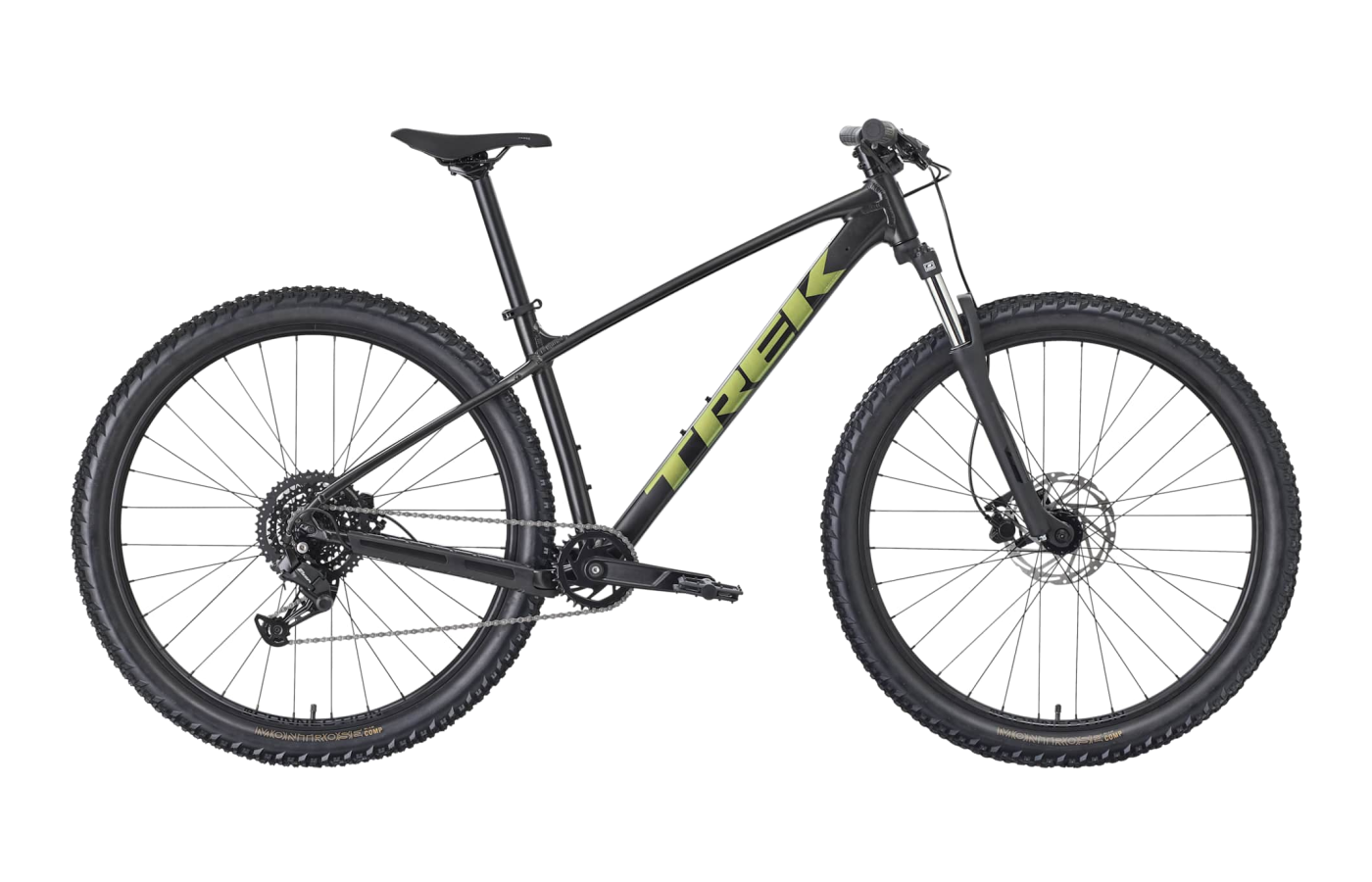
Marlin
The most direct Rockhopper alternative — Trek's Marlin hits the same sub-$1,500 XC bracket with similar weight and a comparable spec ladder, but with a tapered head tube that leaves the upgrade door open.
Compare →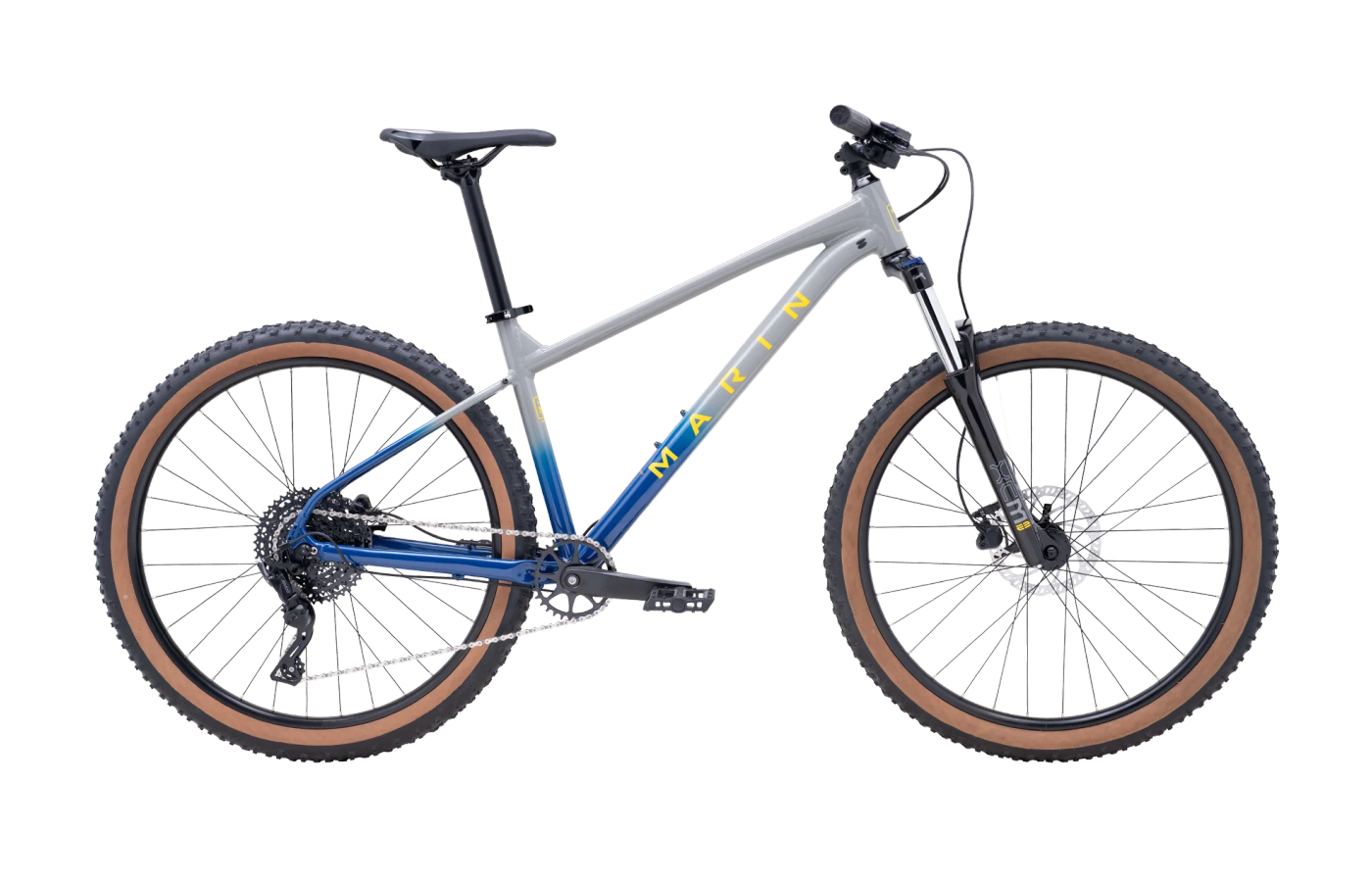
Bobcat Trail
Marin's Bobcat Trail leans more trail-oriented than either of these — slacker geometry and more progressive components for the rider who'll actually push into chunky terrain.
Compare →