Element
vsTallboy
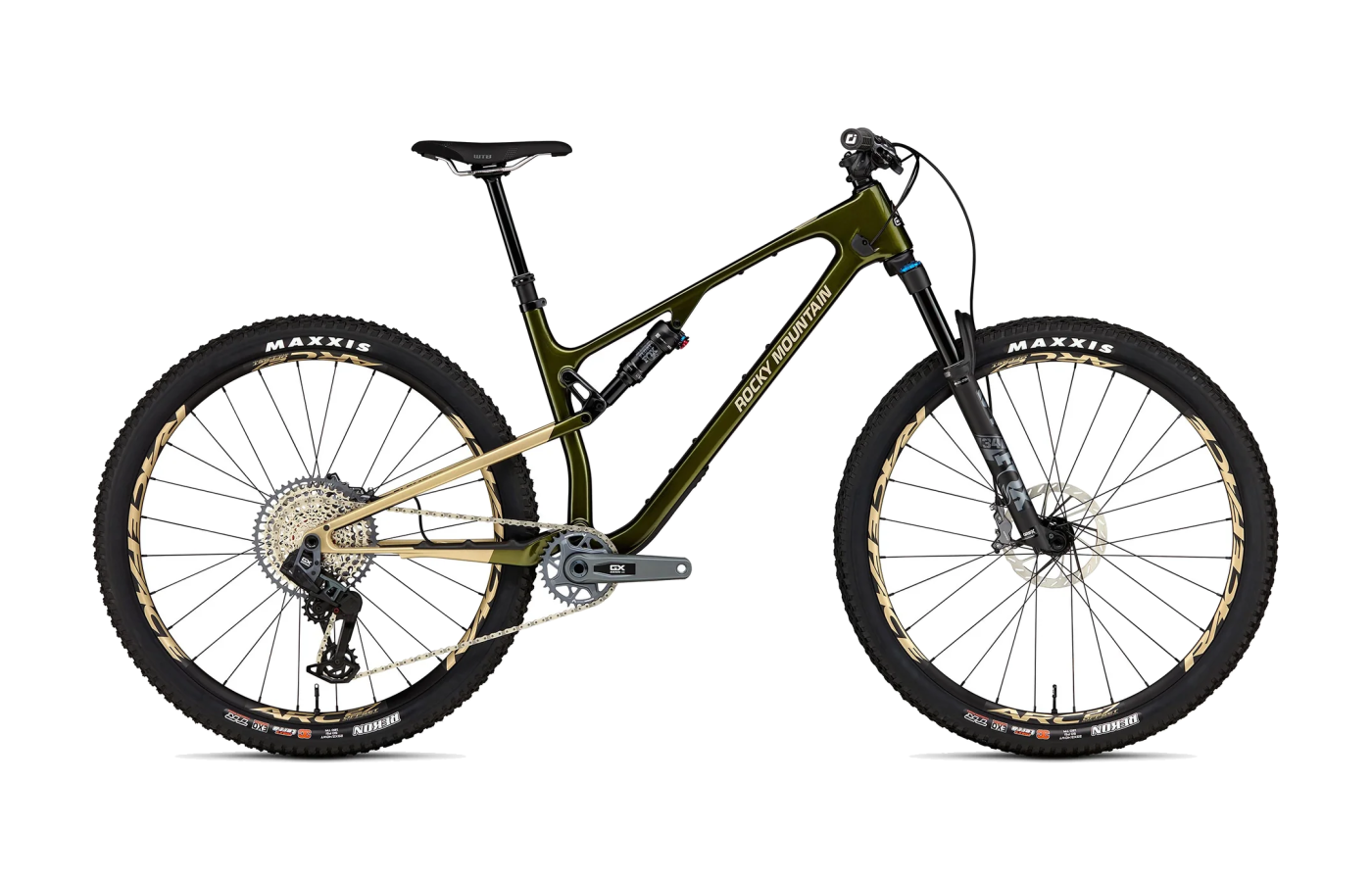
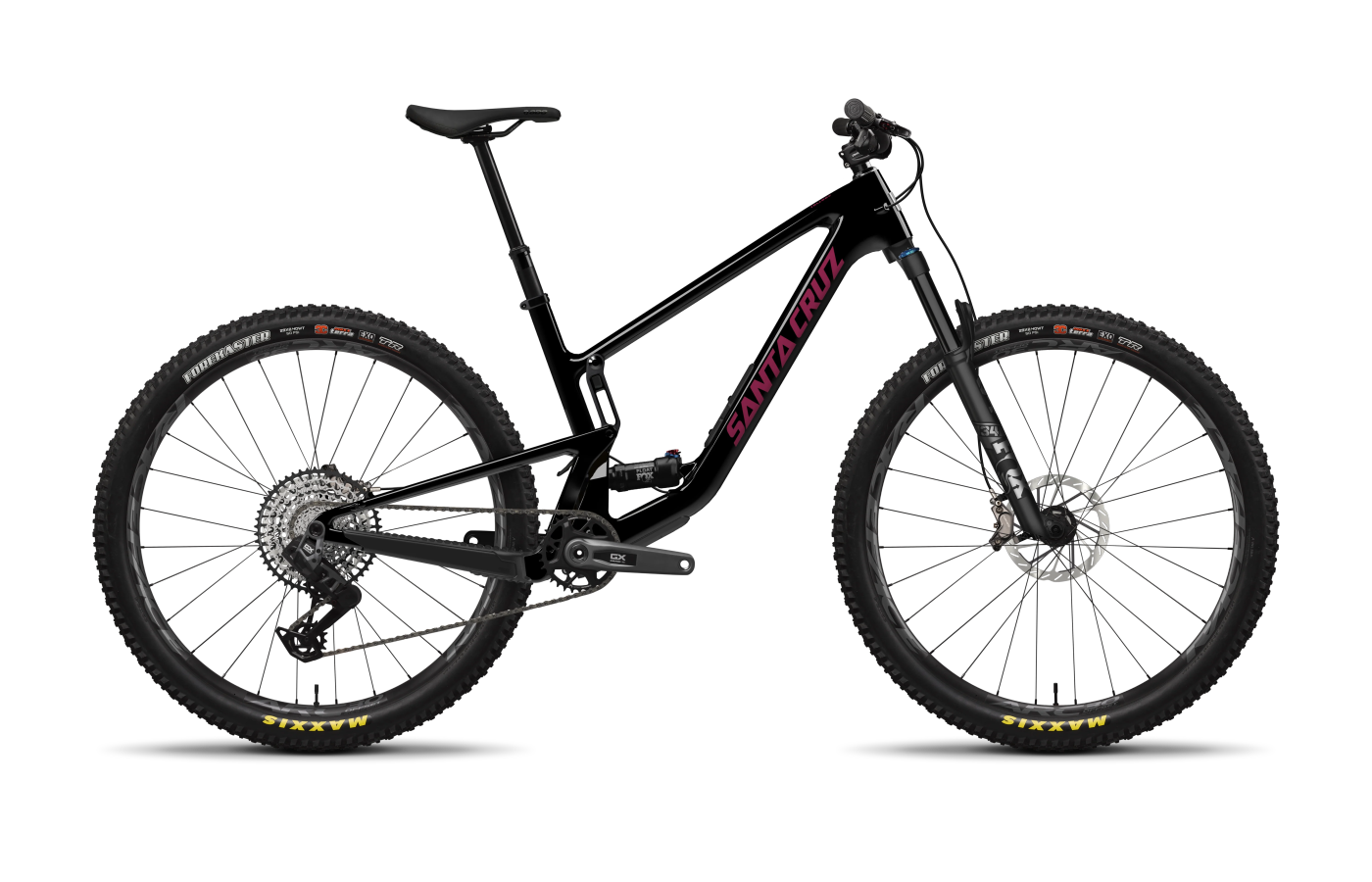
Two downcountry bikes, two attitudes.
The Element is the lightweight XC racer that grew into a trail bike. The Tallboy is the trail bike that shrank into XC clothing.
Element
- Lighter chassis — the new flex-stay rear end drops ~350 g from the previous Element frame, and the Carbon 70 build comes in around 26.8 lb claimed.
- RIDE-4 adjustable geometry lets you swing the head angle from 65.0° to 65.8° and tune shock progression per setting — useful for switching between trail-day and big-mountain trips.
- Cleaner climbing feel — stiffer rear triangle and the steep 76.5° seat tube put your weight directly over the cranks for chunky technical climbs.
- Press-fit bottom bracket is a known long-term creak risk and a recurring 'con' across reviews.
- No alloy frame option, and Rocky Mountain entered bankruptcy protection in late 2024 — long-term parts and warranty support carry some uncertainty.
Tallboy
- Stiffer, more planted descending feel — the chassis Santa Cruz calls 'size-specific tuned' lets the Tallboy charge terrain a 120 mm bike normally avoids.
- Glovebox downtube storage and a threaded BSA bottom bracket make day-to-day living-with-the-bike easier than the Element.
- Lifetime warranty on the frame and Reserve wheels plus free bearing replacements for life — a real margin against the high sticker price.
- Heavier than the Element across the lineup — the GX AXS build is roughly 3.4 lb up on the Element Carbon 70 by claimed weight.
- SRAM Level brakes ship on most builds and are nearly universally panned as under-gunned for the bike's descending intent.
Editor’s analysis
Same travel, same wheel size, same intent on paper — and yet the Element wants to climb and the Tallboy wants to descend.
Both bikes run 120 mm rear, 130 mm front, both spin 29" wheels, both sit in the 'downcountry' bracket the industry invented to avoid arguing about whether a 26-pound XC bike with a slack head angle is 'really' XC. From there the design briefs split. Rocky Mountain went lighter and stiffer — the new Smoothlink SL flex-stay rear end shaved ~350 g from the frame and is now carbon-only. Santa Cruz went the other direction with the Tallboy V5: same 120 mm out back, but they call it 'the downhiller's XC bike' and back the marketing up with a frame multiple reviewers call 'steroidally hench.'
On the trail the Element rewards an active rider. Reviewers from Bike-test to NSMB use words like 'snappy,' 'nimble,' 'craves speed even on flat trails,' and 'punches well above its weight class.' The 65-degree head angle (in the neutral RIDE-4 chip setting) is genuinely slack, but the bike still feels eager — closer to a sharp XC bike with descending manners than a trail bike on a diet. The price you pay is margin for error: when the trail gets steep and chunky, multiple reviewers note you have to slow down and ride it deliberately.
The Tallboy delivers the opposite trade. It's heavier (the GX AXS build comes in at 30.21 lb claimed vs the Element Carbon 70 at roughly 26.8 lb), the chassis is stiffer, and the suspension rides higher in its stroke after Santa Cruz lowered the leverage ratio for V5. Reviewers describe it as 'planted,' 'composed,' 'a short-travel Hightower,' and praise its willingness to be sent into terrain a 120 mm bike has no business handling. The trade is real climbing weight and a frame that one MBR reviewer called 'relentlessly rigid' on long, chunky descents — meaning you provide the suspension your legs.
Put another way: the Element is what you buy if your favorite ride is a six-hour epic with one nasty descent. The Tallboy is what you buy if your favorite ride is a shuttle lap dressed up as a 'pedal day.' Both will do the other job competently. Neither is the sharpest tool for it.
Where the builds differ.
Comparing our editor's-pick builds side-by-side. Winners highlighted row-by-row — lower price and weight, and the better-spec component, each mark a point.
Build variants & pricing
Both lineups span ~$5k–$11.5k, all carbon. Editor's picks here are the GX AXS Transmission builds on each side — same drivetrain tier, near-identical price, both on Fox Performance Elite suspension.
Prices are current US MSRP. Rocky Mountain entered bankruptcy protection in late 2024 — current builds are still shipping but long-term parts and warranty visibility is reduced. Santa Cruz's lifetime frame, Reserve wheel, and bearing warranties remain in force.
How they fit, how they steer.
Compared at MD on the Element and M on the Tallboy — the fit-picked sizes for a 5'8" rider on each bike. The Element's slacker 65° head angle and 1208 mm wheelbase (vs the Tallboy's 65.7° / 1199 mm) make it the more relaxed, stable platform; the Tallboy's 5 mm more reach and 3 mm shorter chainstays push you into a sharper, more forward stance.
Which size should I buy?
Sizing recommendations based on stack, reach, and effective top tube. The Tallboy offers two sizes the Element doesn't (XS and XXL) — broader range at the extremes.
→These are starting points. Flexibility, riding style, and preferred position all shift the answer — if you’re between sizes, a professional fit beats a chart.
What the magazines said.
Published reviews from trusted cycling outlets. Click through for the full write-up.
Which one should you buy?
If you climb to descend and care about XC pace, get the Element. If you descend to climb and want a 120 mm bike that punches up to short-travel-trail duties, get the Tallboy.
Element
If you ride long days, race the occasional XC marathon, and want a bike that climbs like a bike half a category lighter — the Element is sharper. The RIDE-4 geometry chip lets you slacken it out for bigger trips without buying a second bike.
Tallboy
If your home trails reward a sturdy chassis on the way down and you'd rather have margin on descents than 3 lb on the climbs — the Tallboy is the more confident tool. Pair it with bigger brakes and meatier tires and it eats blue-to-black terrain.
Questions buyers actually ask.
Short answers to the things we get emailed about most often.
01Which is the better climber?
The Rocky Mountain Element, by a clear margin. The Carbon 70 build is claimed at roughly 26.8 lb vs the Tallboy GX AXS at 30.21 lb — about 3.4 lb that you feel on every long climb. The Element's flex-stay rear end is also stiffer side-to-side, so out-of-saddle efforts go more directly into forward motion.
The Tallboy isn't slow uphill — its 76.7° seat tube angle and active VPP suspension give it real technical climbing chops — but if your weekly miles are climb-heavy and you care about times, the Element pulls ahead.
02Which is the better descender?
The Santa Cruz Tallboy, almost unanimously across reviews. Its chassis is stiffer, the V5 suspension was tuned to ride higher in its stroke for support when you push it, and the 65.7° head angle plus the in-the-bike low bottom bracket inspire confidence at speed.
The Element is no slouch — slack at 65° and composed for an XC-leaning bike — but the consensus from NSMB, Singletracks, and Pinkbike is that when terrain gets steep and chunky the margin for error shrinks faster on the Element than on the Tallboy.
03How much travel do they actually have?
Both run 120 mm rear / 130 mm fork. The numbers are identical; the feel is not. The Element's tune is firmer and snappier for pedaling efficiency. The Tallboy V5's revised VPP kinematics give a less progressive curve that feels 'bottomless' on bigger hits — it's why reviewers say it punches above its travel class on descents.
04What's the geometry difference at the compared size?
At the fit-picked sizes (Element MD, Tallboy M), the Element is 622 mm stack / 450 mm reach / 65° HTA / 436 mm chainstay / 1208 mm wheelbase. The Tallboy is 619 mm stack / 455 mm reach / 65.7° HTA / 433 mm chainstay / 1199 mm wheelbase.
In practice: the Tallboy puts you 5 mm further forward on a slightly steeper front end, the Element gives you a slacker head angle and a longer wheelbase for stability. Note that the Element's RIDE-4 chip can swing the head angle from 65.0° up to 65.8°, depending on setting.
05Are the brakes really that bad on the Tallboy?
The SRAM Level brakes are the most consistent complaint across Tallboy reviews — Bike Perfect, The Loam Wolf, and MBR all flag them as under-gunned for the bike's descending capability. Most reviewers swap to SRAM Code (or equivalent four-piston) brakes with 200 mm rotors as a near-immediate upgrade.
The Element's stock SRAM Level Bronze brakes on the Carbon 70 get similar criticism for fade on long descents. Plan to upgrade brakes on either bike if you ride sustained vertical.
06What about the Rocky Mountain bankruptcy?
Rocky Mountain entered creditor protection in late 2024 and is restructuring. Bikes are still shipping and dealers continue to sell them, but multiple reviewers (NSMB, Singletracks) have flagged uncertainty around long-term parts availability and warranty support.
If long-term backstop matters to you, the Tallboy's lifetime frame warranty, lifetime Reserve wheel warranty, and free bearing-replacement program from Santa Cruz are a meaningful tilt in its favor right now.
07Which has better long-term durability?
On the frame, the Element's redesign specifically addressed the previous generation's seat-stay pivot bearing failures by upgrading to dual-row bearings pressed into bonded alloy sleeves rather than directly into carbon — a real fix. But it still uses a press-fit BB, which multiple reviewers flag as a long-term creak risk.
The Tallboy uses a threaded BSA bottom bracket and includes grease ports on the lower VPP linkage for easy field service. Combined with Santa Cruz's free-bearings-for-life program, the Tallboy is the easier bike to live with mechanically over five-plus years.
08Can I race XC on either of these?
The Element, comfortably. It's at the heavier, slacker end of what's competitive at a marathon stage race or amateur XC, but with reasonable tires it pedals fast enough to start at the front.
The Tallboy, only with caveats. At ~30 lb with stock tires it's not built for short-track XC — the closest reviewer datapoint is Singletracks' Sam James racing his personal Tallboy at the BC Bike Race, which is a multi-day technical stage race much closer to the Tallboy's wheelhouse than a 90-minute lap race. Pick the right race format and it'll work.
Similar bikes
If your priorities don’t map cleanly onto either of these, one of these adjacent bikes probably fits better.
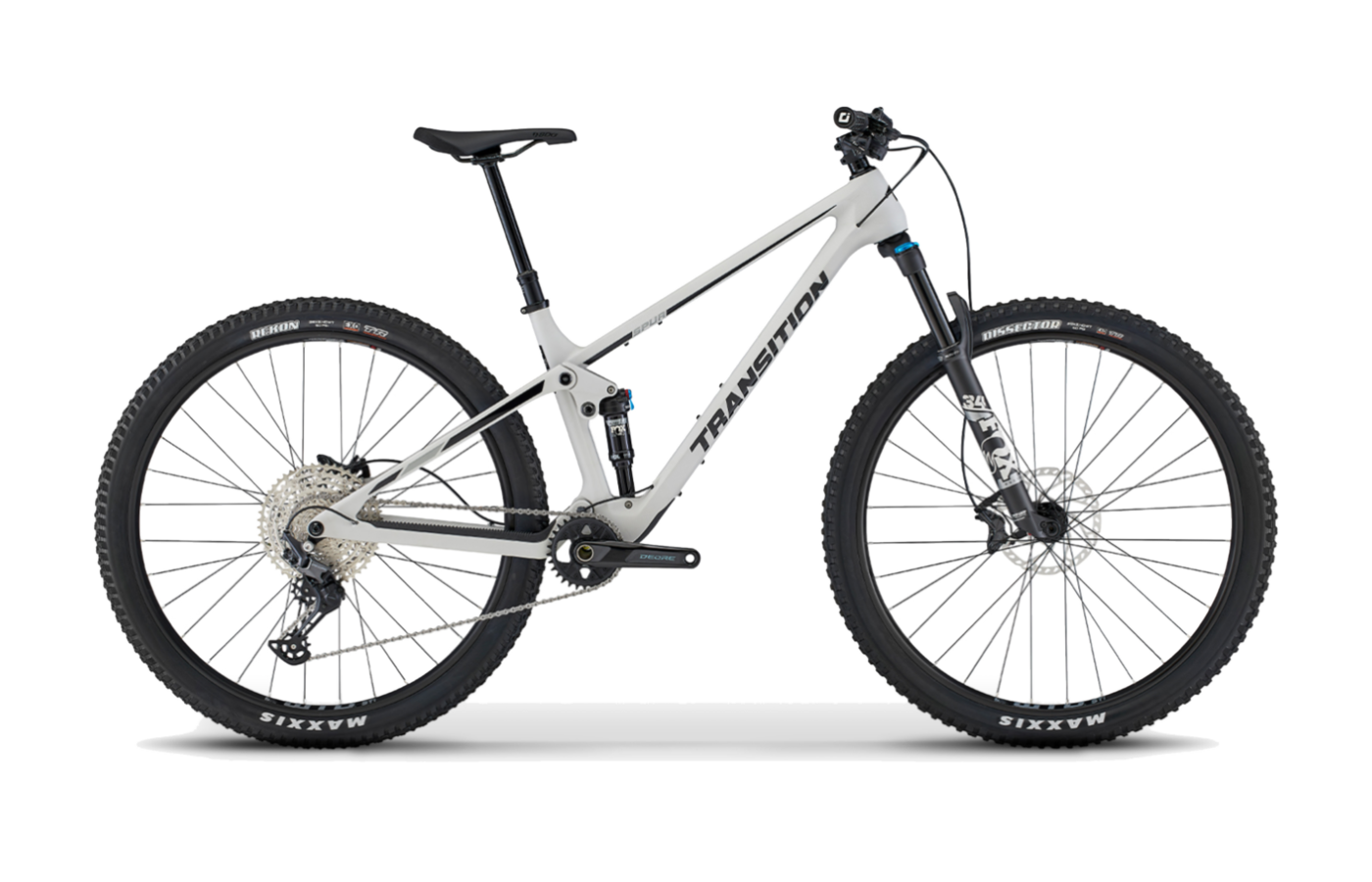
Spur
The Transition Spur is the lightweight short-travel trail bike that gets cross-shopped against the Element more than anything else — exceptional climber, playful descender, and one of the few competitors with a similar 'sharp XC, real trail manners' brief.
Compare →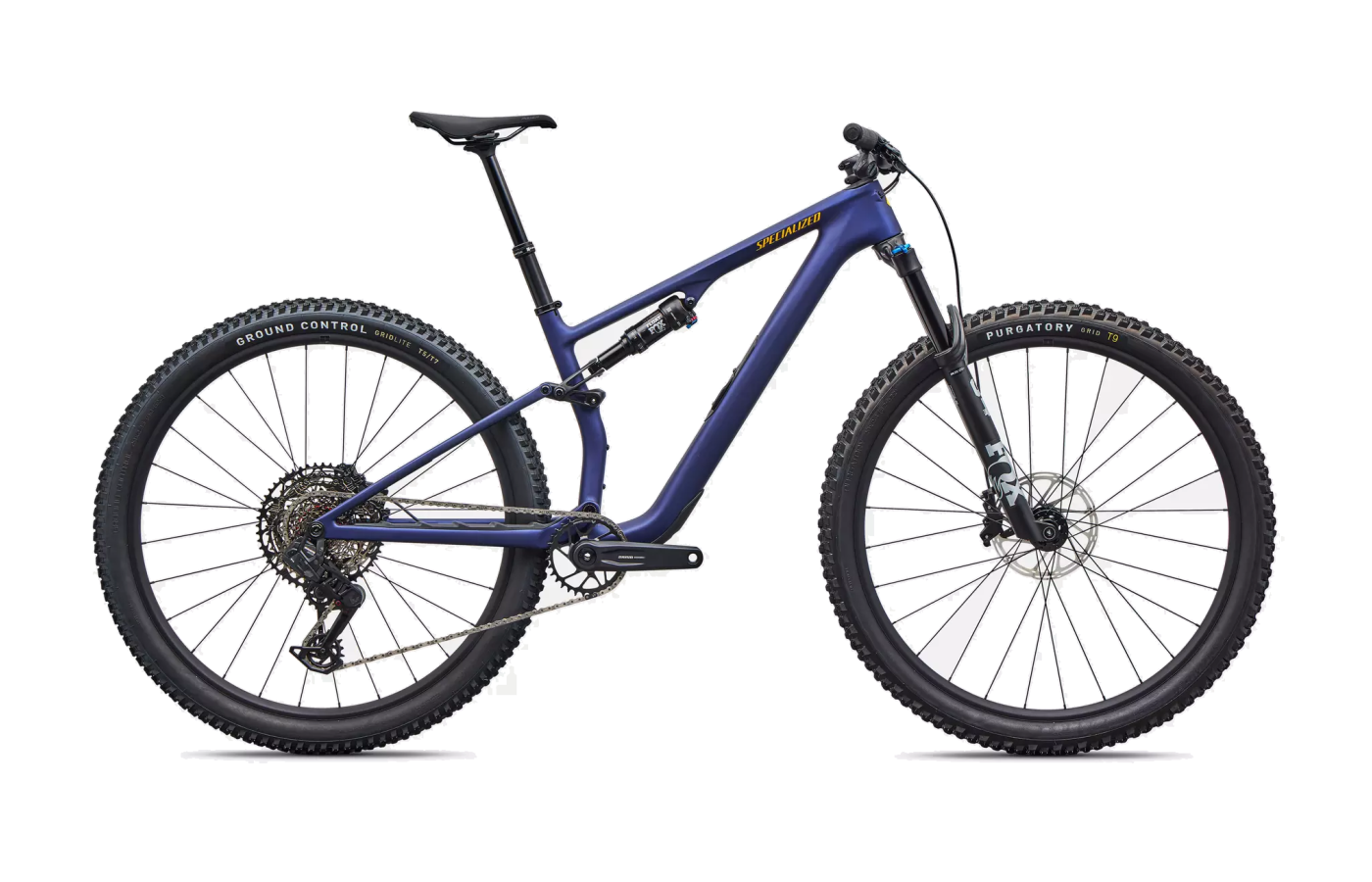
Epic Evo
The Specialized Epic Evo is the most racing-leaning bike in this group — Specialized's downcountry interpretation of their World Cup XC platform, with a Brain shock, lighter frame, and a clear bias toward going fast uphill.
Compare →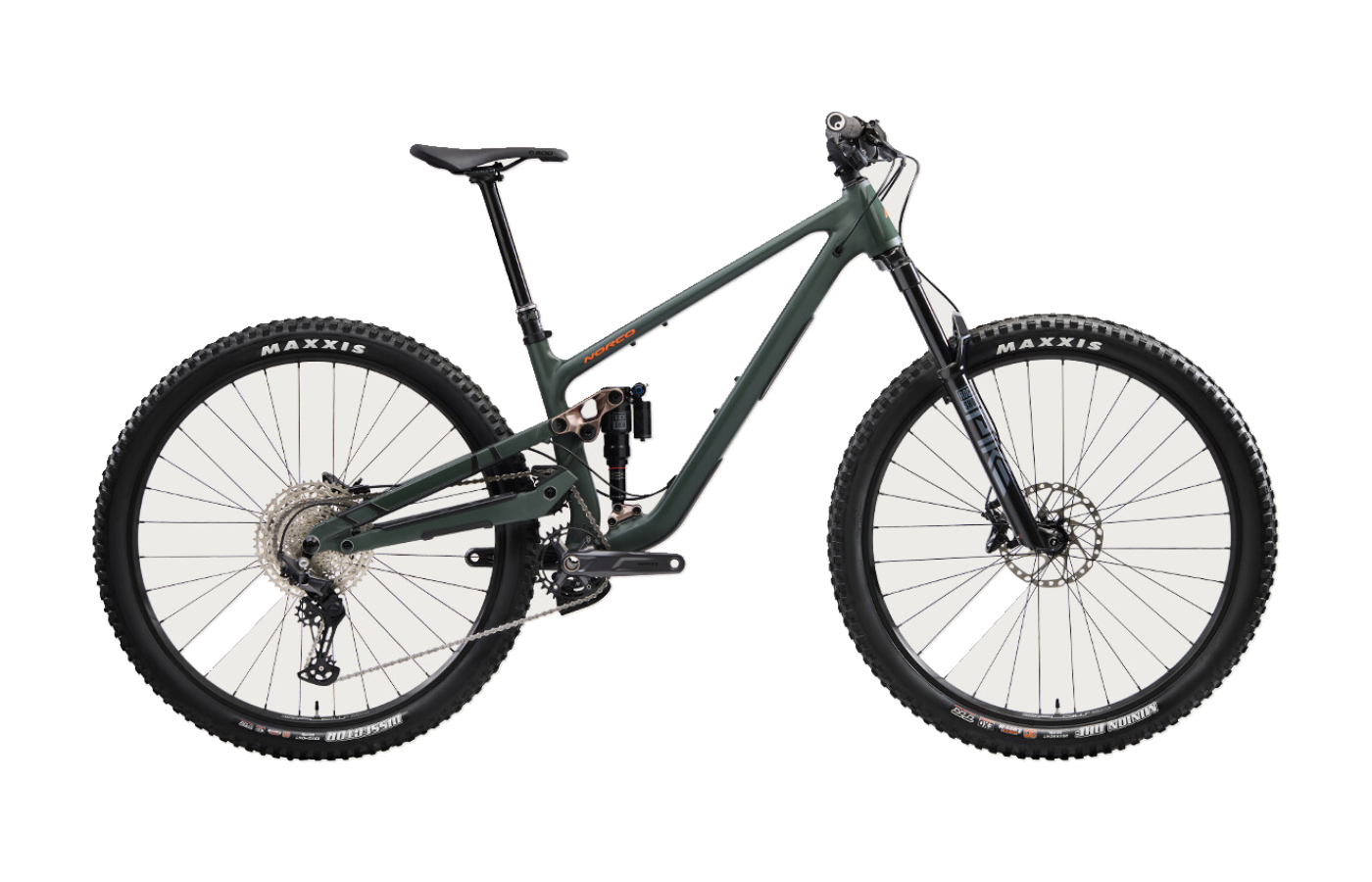
Optic
The Norco Optic is the closest analogue to the Tallboy's 'downhiller's XC' ethos — aggressive geometry, send-anything chassis, 125 mm rear travel — and one of the few short-travel bikes that genuinely encourages riding above its category.
Compare →