Altitude
vsElement
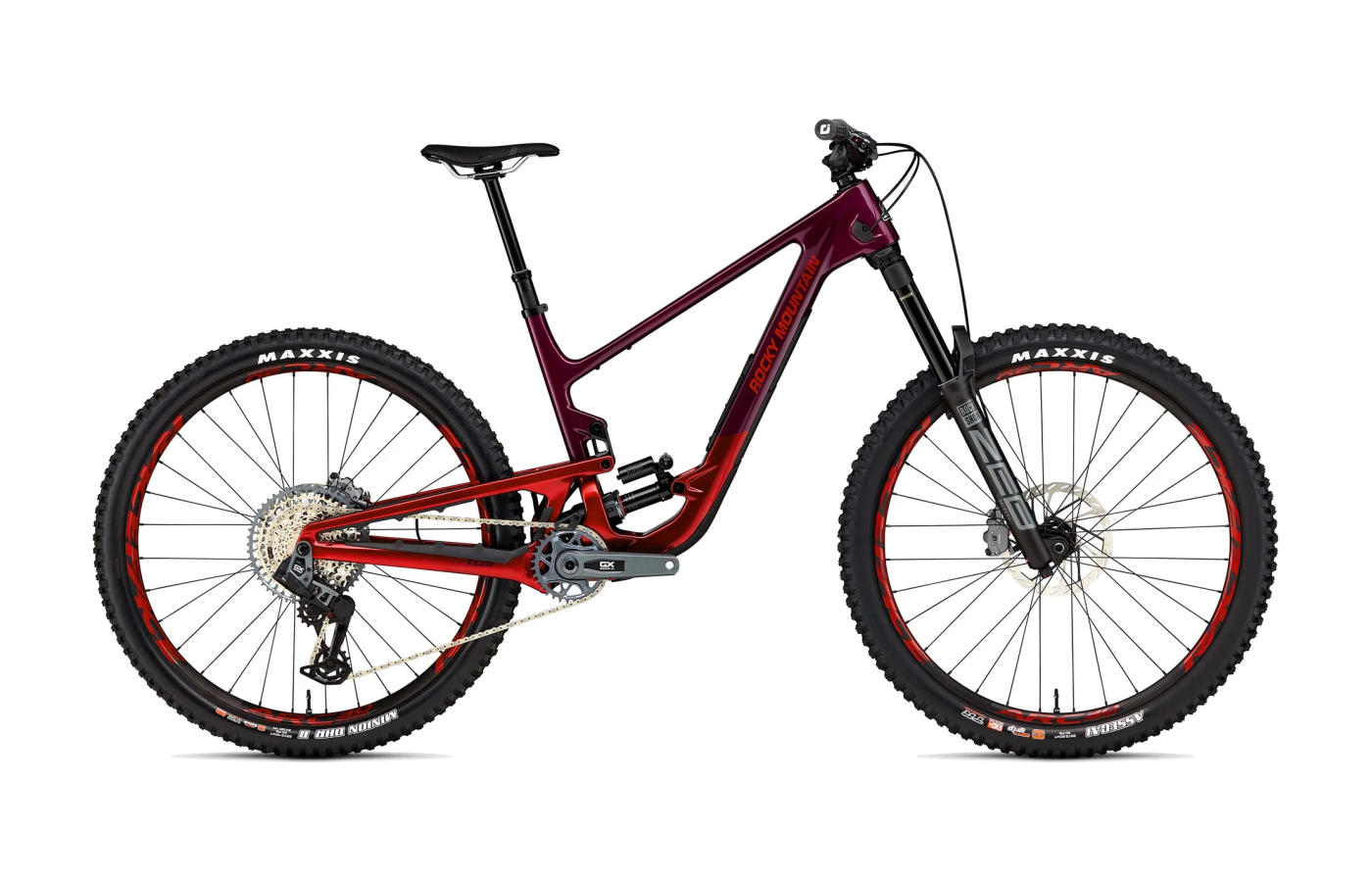
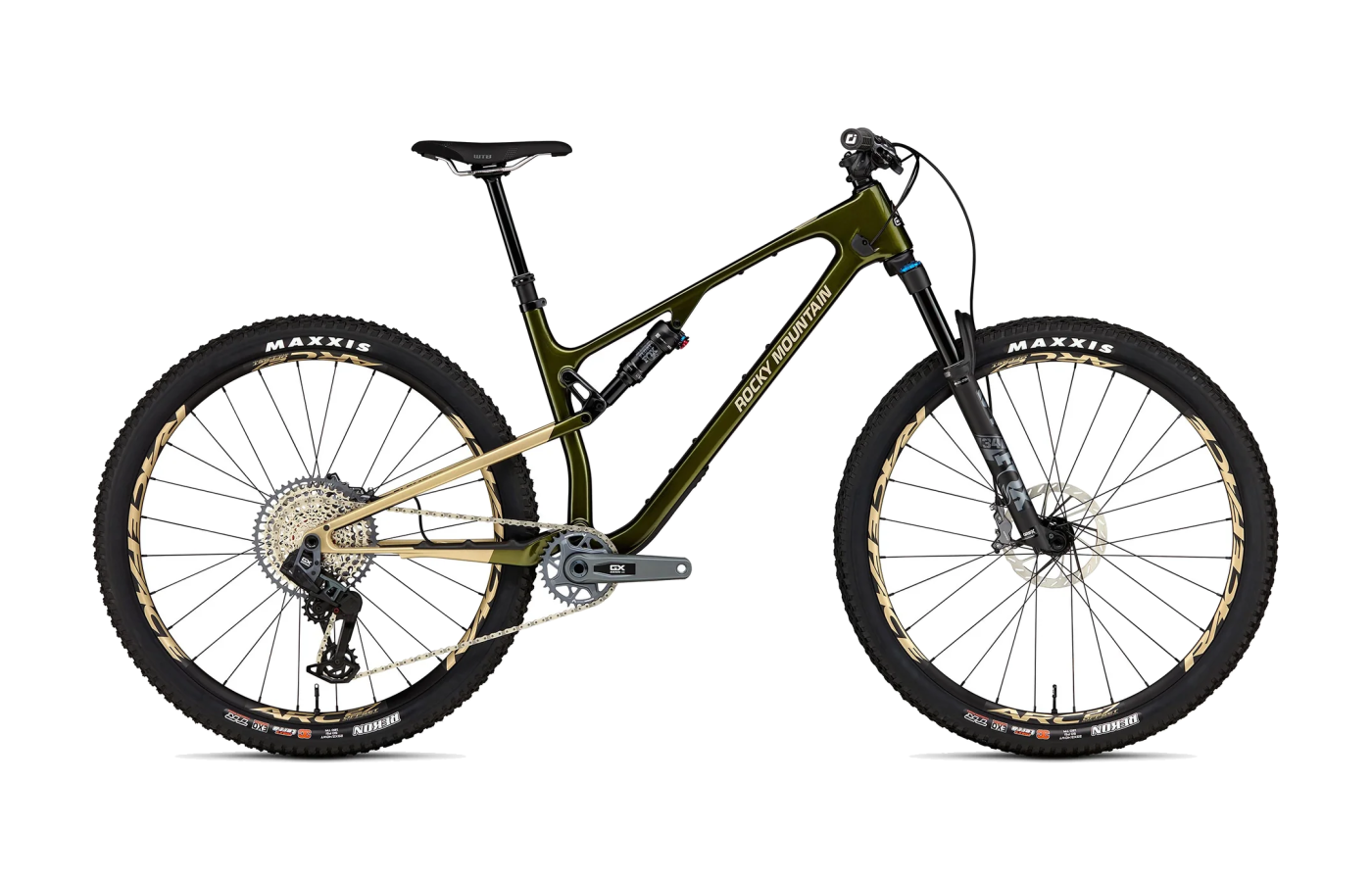
One maple leaf, two very different bikes.
The Altitude is Rocky's enduro race weapon — 160 mm of plow. The Element is its downcountry whippet — 120 mm of pedal-everything.
Altitude
- Magic-eraser stability — the low-slung LC2R suspension and 1243 mm medium wheelbase make rough lines feel routine.
- Race-ready out of the box — Maxxis Assegai/DHR II in EXO+/DD with CushCore Trail inserts pre-installed on most carbon builds.
- Deeply tunable — Ride-4 chip plus reach-adjust headset cups give 24 usable geometry combinations.
- Slow at low speed — the long wheelbase and slack head angle demand input through tight switchbacks.
- Recurring complaints about main-pivot bolt loosening and dropper rattle on early production units.
Element
- Snappy, lively pedaler — around 11.9 kg in flagship trim, with a flex-stay rear that pushes power directly into the trail.
- Steep seat tube, climbs anywhere — 76.5-degree STA and active small-bump compliance keep the rear wheel hooked on technical ascents.
- Real bottle and accessory mounts — two on the downtube plus a top-tube tool mount, sized per frame.
- Carbon-only — no alloy entry point, so the price floor is $4,499.
- Stock spec is undergunned for aggressive descending — Maxxis Rekons and SRAM Level brakes are both common upgrade targets.
Editor’s analysis
Two bikes from the same Vancouver workshop, same Ride-4 chip, same maple leaf — and almost nothing else in common.
The Rocky Mountain Altitude and Rocky Mountain Element both wear the Smoothwall carbon and the Ride-4 adjustable geometry, but the resemblance ends at the badge. The Altitude runs 160 mm rear / 170 mm front travel on the new low-slung LC2R dual-link platform. The Element runs 120 mm rear / 130 mm front on a Smoothlink SL flex-stay frame that sheds roughly 350 g over its predecessor. One was built to win EDR stages; the other was built to climb all day and still hold a line on the way down.
Geometry tells the same story before you ride either. At size medium, the Altitude is 62.9 degrees at the head tube, 1243 mm wheelbase, 440 mm chainstays. The Element is 65 degrees, 1208 mm wheelbase, 436 mm chainstays. Reach is identical at 450 mm — same cockpit, very different intentions. The Altitude has 8 mm more stack, a slacker seat tube (77 vs 76.5), and a notably lower-slung shock layout that reviewers consistently call out as the source of its planted, magic-eraser feel at speed.
On the trail, the split is clean. The Altitude is, in Pinkbike's phrasing, a 'go-fast bike' — slack, long, heavy enough to ignore chatter, and demanding speed to come alive. Reviewers agree it's 'too much bike for intermediate blue trails' and prefers wider radius corners. The Element is the opposite animal: 'nimble acceleration,' 'corner shredder,' a bike that 'craves speed even on flat trails.' It punches above its travel on descents, but the margin for error narrows fast when things get steep and chunky.
Put another way: the Altitude is the bike you buy when the climb is the toll and the descent is the point. The Element is the bike you buy when the whole loop matters — and you'd rather drop a few seconds on the rough stuff than carry an extra five pounds up every fire road.
Where the builds differ.
Comparing our editor's-pick builds side-by-side. Winners highlighted row-by-row — lower price and weight, and the better-spec component, each mark a point.
Build variants & pricing
Altitude spans $3,999 alloy to $5,799 carbon. Element is carbon-only, $4,499 to $9,599 — a much higher ceiling.
Prices are current US MSRP. The Altitude offers the only sub-$4,500 way into either platform via the Alloy 30; the Element has no alloy option at all. Both top-tier picks here are the Carbon 70 — same drivetrain tier (GX Eagle Transmission), same wheel hub, different intent.
How they fit, how they steer.
Both at size medium. Reach is identical at 450 mm, but the Altitude sits 8 mm taller, 2.1 degrees slacker at the head tube, and 35 mm longer at the wheelbase — a fundamentally different bike under the same cockpit.
Which size should I buy?
Sizing recommendations are based on stack, reach, and effective top tube. Both bikes use the same S/M/L/XL convention, and the medium fits very similarly in the cockpit despite the very different chassis.
→These are starting points. Flexibility, riding style, and preferred position all shift the answer — if you’re between sizes, a professional fit beats a chart.
What the magazines said.
Published reviews from trusted cycling outlets. Click through for the full write-up.
Which one should you buy?
If you live for the descent and treat the climb as a transfer stage, get the Altitude. If you want one bike to climb, pedal, and still hold its own pointed downhill, get the Element.
Altitude
If your weekends are bike park laps, EDR stages, or chasing your strongest friends down steep, technical descents — this is the Rocky lineup's purest gravity tool. Slack, planted, and willing to be ridden well above your skill level.
Element
If you climb as much as you descend and want a bike that pedals like an XC race rig but holds composure when the trail turns rowdy — this is the modern downcountry benchmark. Light, lively, and surprisingly capable for 120 mm.
Questions buyers actually ask.
Short answers to the things we get emailed about most often.
01How much travel does each bike have?
Rocky Mountain Altitude: 160 mm rear, 170 mm front. Built around the new LC2R (Low Centre Counter Rotating) dual-link platform with the shock tucked low in the frame.
Rocky Mountain Element: 120 mm rear, 130 mm front (the C99 trims the fork to 120 mm to match). Smoothlink SL flex-stay rear end — no chainstay pivot, just engineered carbon flex.
That 40 mm gap up front and rear is the entire story. The Altitude is enduro; the Element is downcountry.
02Which one climbs better?
The Element, comfortably. It's roughly 4–5 kg lighter as built, with a more efficient 65-degree head angle, a stiffer rear triangle (the flex-stays add lateral stiffness while saving ~350 g), and reviewers consistently describe it as 'snappy' and a 'rocketship' on the way up.
The Altitude isn't bad — its 77-degree seat tube and active LC2R suspension give it 'endless traction' on technical climbs — but at ~35 lb with CushCore inserts and DoubleDown rear tires, it's a bike you grind up rather than dance up. Reviewers flatly call it 'not an energetic climber.'
03Which one descends better?
The Altitude, by a wide margin. Its 62.9-degree head angle (size medium), 1243 mm wheelbase, and low-CG suspension layout produce what reviewers repeatedly call a 'magic eraser' feel — the bike makes terrain disappear at speed and rewards aggressive line choice.
The Element punches above its 120 mm travel on descents thanks to its slack-for-XC 65-degree head angle and generous reach, but reviewers agree the 'margin for error is small.' On steep, chunky terrain it asks for a precise rider; the Altitude lets you point and shoot.
04What about geometry adjustment?
Both bikes use Rocky's Ride-4 flip chip at the rocker link, giving four geometry positions that change head angle, seat angle, and bottom bracket height. Reviewers found 'significant changes to both geometry and suspension' between settings.
The Altitude adds a +/- 5 mm reach-adjust headset cup, expanding the tunability further. NSMB called the 24 possible combinations on the Altitude 'all within the usable range.' The Element does not offer the reach-adjust headset, but Ride-4 alone covers most riders' preferences.
05Can I run a mullet (mixed-wheel) setup?
Altitude: yes — sizes M, L, and XL are designed for either full 29" or 29"/27.5" mullet. Size S ships only as full 27.5". Reviewers report the mullet swap makes the back end 'snappier and more playful' but trades some high-speed stability.
Element: no — the Element is 29" only on sizes S–XL (XS is 27.5").
06What are the known issues to watch for?
On the Altitude, two recurring complaints across multiple reviewers: (1) a main-pivot bolt that can loosen on early production units (Rocky's fix is Loctite at 25 Nm; the bike ships with the special tool needed), and (2) noise from internal cable rattle and the Fox Transfer dropper. Both are addressable.
On the Element, the press-fit bottom bracket is a long-term creaking risk per several reviewers, and the SRAM Level Bronze brakes draw consistent criticism for mushy bite point and fade on extended descents. The previous-gen seat-stay bearing failures were specifically engineered out for 2025 with dual-row bearings in alloy sleeves.
07Why is there no alloy Element?
The new Smoothlink SL flex-stay rear end requires the engineered compliance of a carbon layup — you can't replicate that flex pattern reliably in aluminum. So the 2025 Element is carbon-only, with a $4,499 entry point on the Carbon 30.
The Altitude keeps both options: alloy from $3,999 (Alloy 30) up through carbon at $5,799 (Carbon 70). If budget is the deciding factor and you want a Rocky enduro bike, the Altitude is the only path under $4,500.
08Which holds long-term value better?
Both come with Rocky Mountain's 5-year transferable frame warranty, which reviewers consistently call out as a strong long-term ownership signal. The Altitude's race-ready spec (CushCore inserts, DoubleDown casing, high-end suspension stock) means less immediate upgrade outlay; the Element's spec invites more aftermarket work to reach its potential.
One external caveat: Rocky Mountain entered bankruptcy protection and restructuring in 2024–25. NSMB and Singletracks have flagged questions about long-term parts availability and warranty support. Worth factoring in.
Similar bikes
If your priorities don’t map cleanly onto either of these, one of these adjacent bikes probably fits better.
Instinct
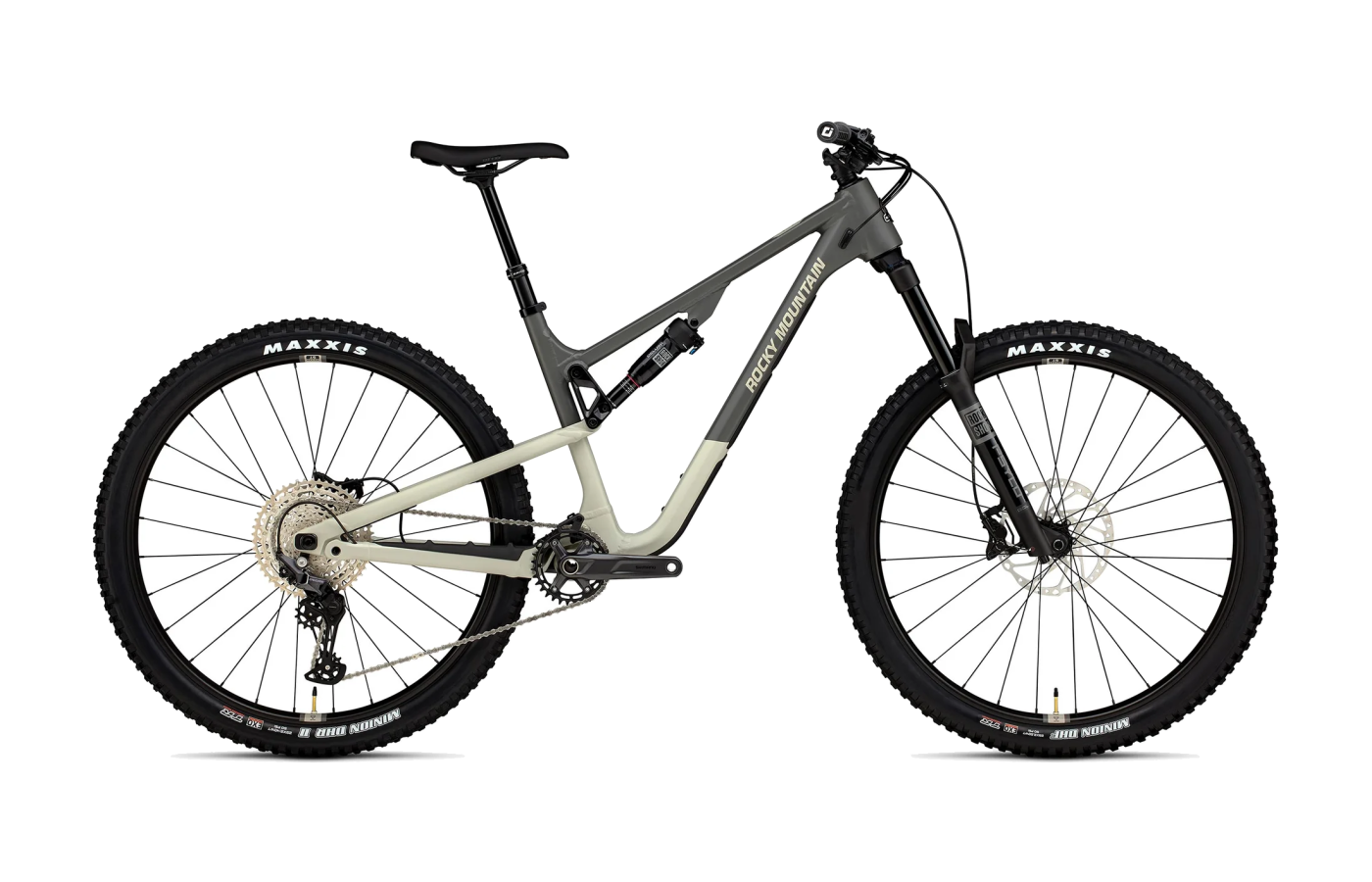
Rocky's own middle-ground answer — the Instinct sits between the Altitude and Element with 140 mm of travel and a true do-everything trail bike brief. If you can't decide between the other two, this is what Rocky thinks you should buy.
Compare →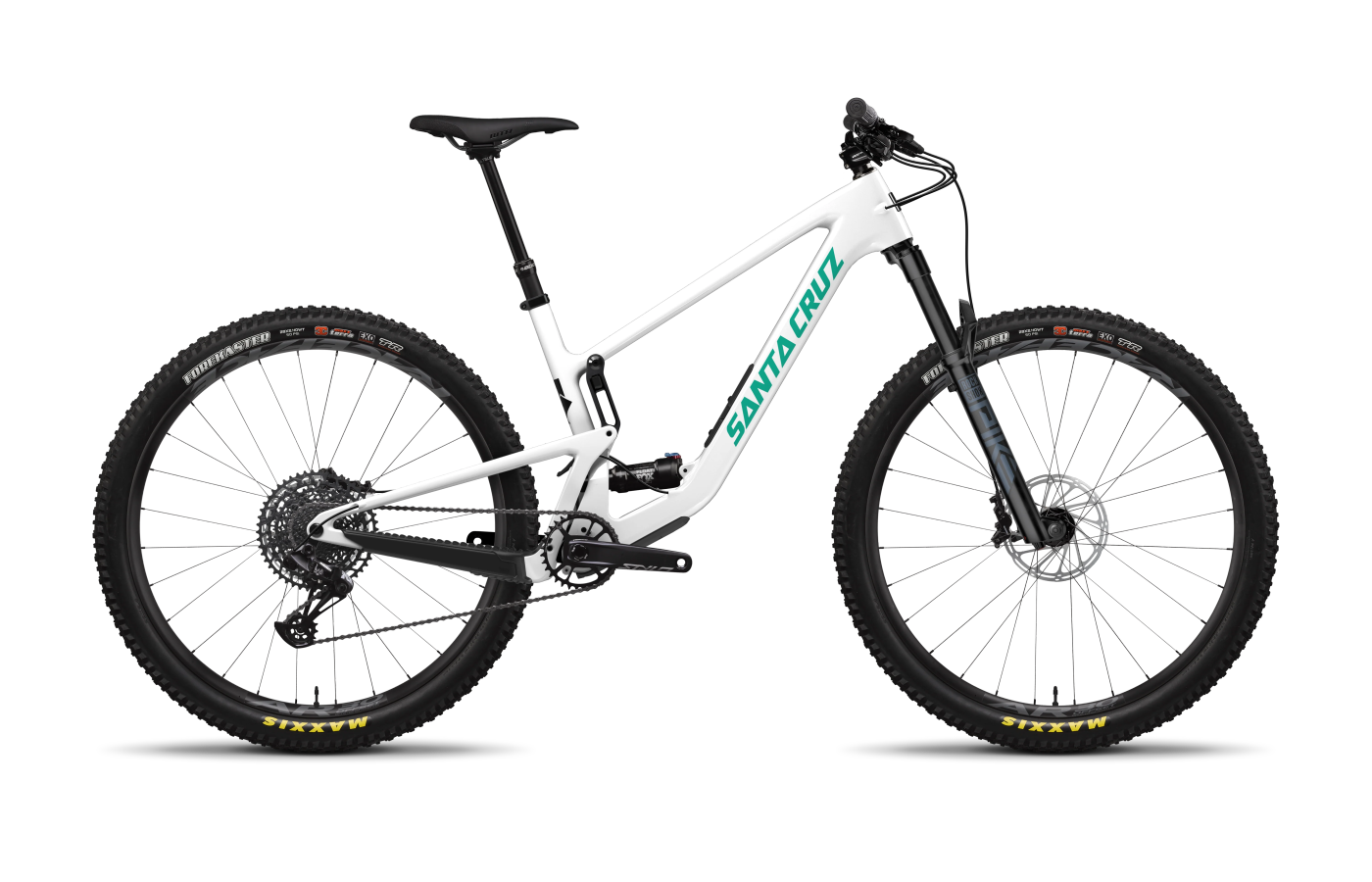
Tallboy
Santa Cruz's downcountry darling — same 120-ish mm travel bracket as the Element, but with a VPP suspension feel that's slightly more playful and a brand premium baked into the price tag.
Compare →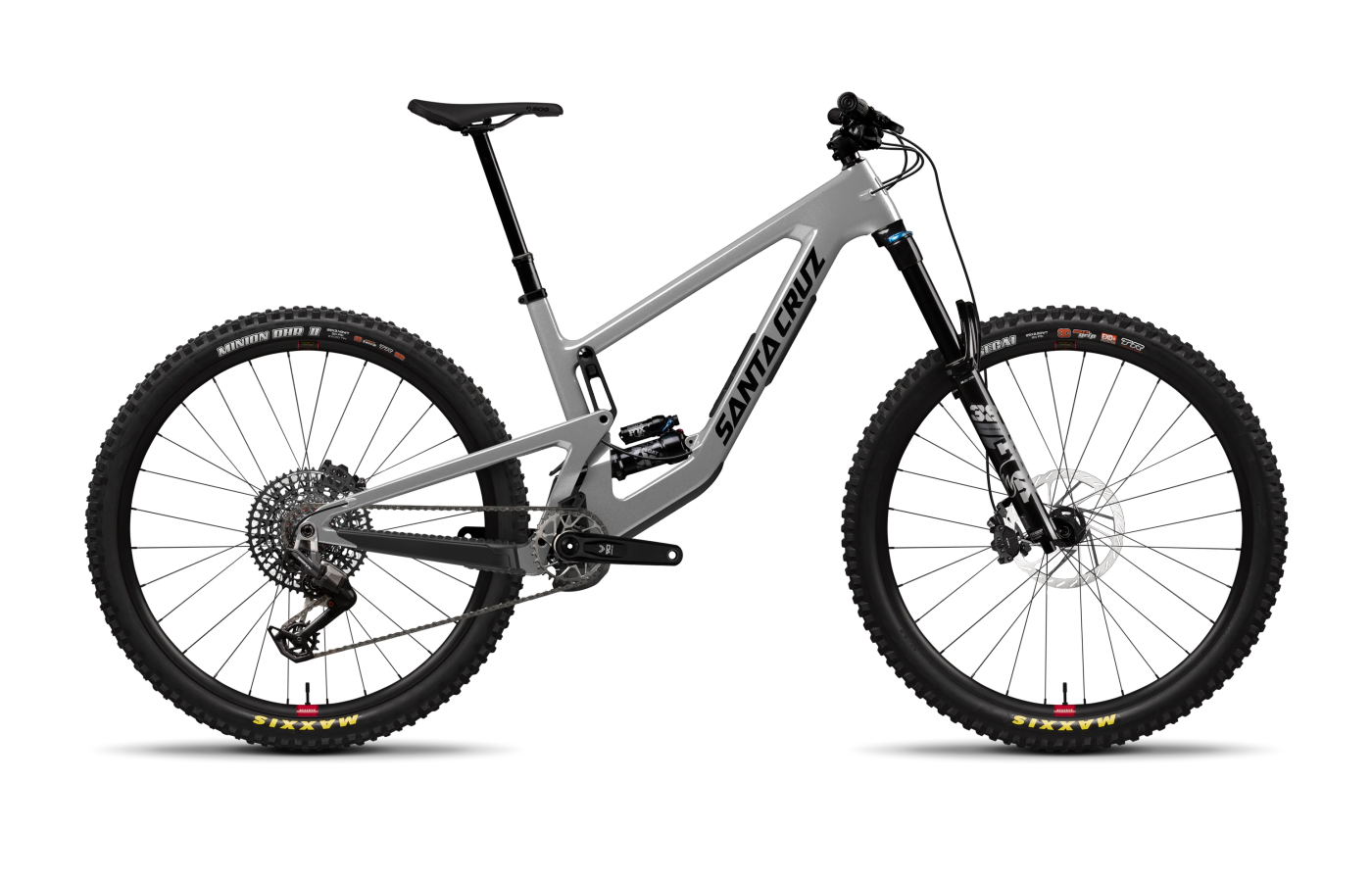
Megatower
Santa Cruz's enduro flagship — 165 mm rear travel, slack and long, the most direct competitor to the Altitude. Reviewers note the new Altitude actually feels a step burlier than the Megatower, which says something.
Compare →