Rascal
vsTallboy
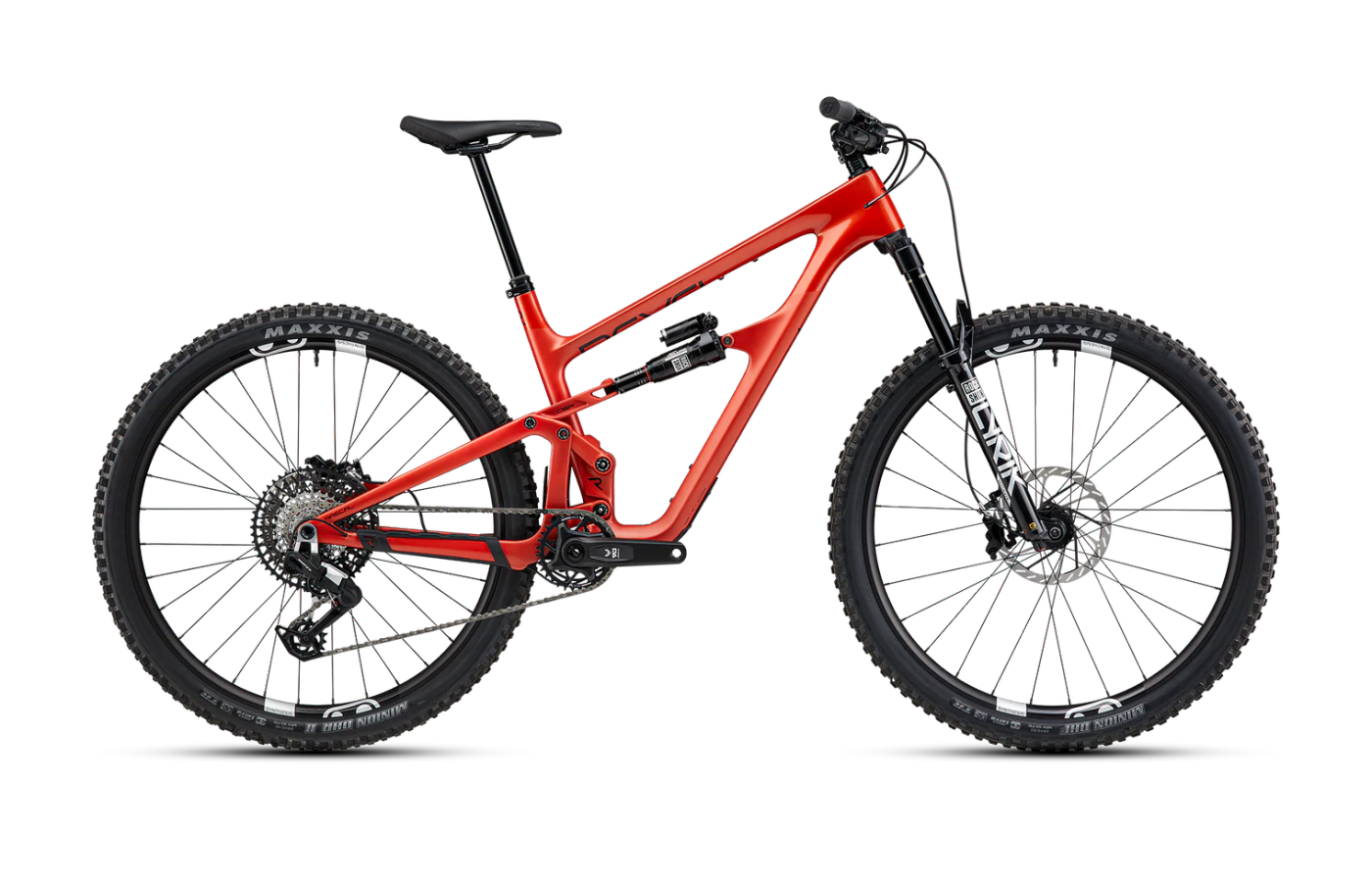
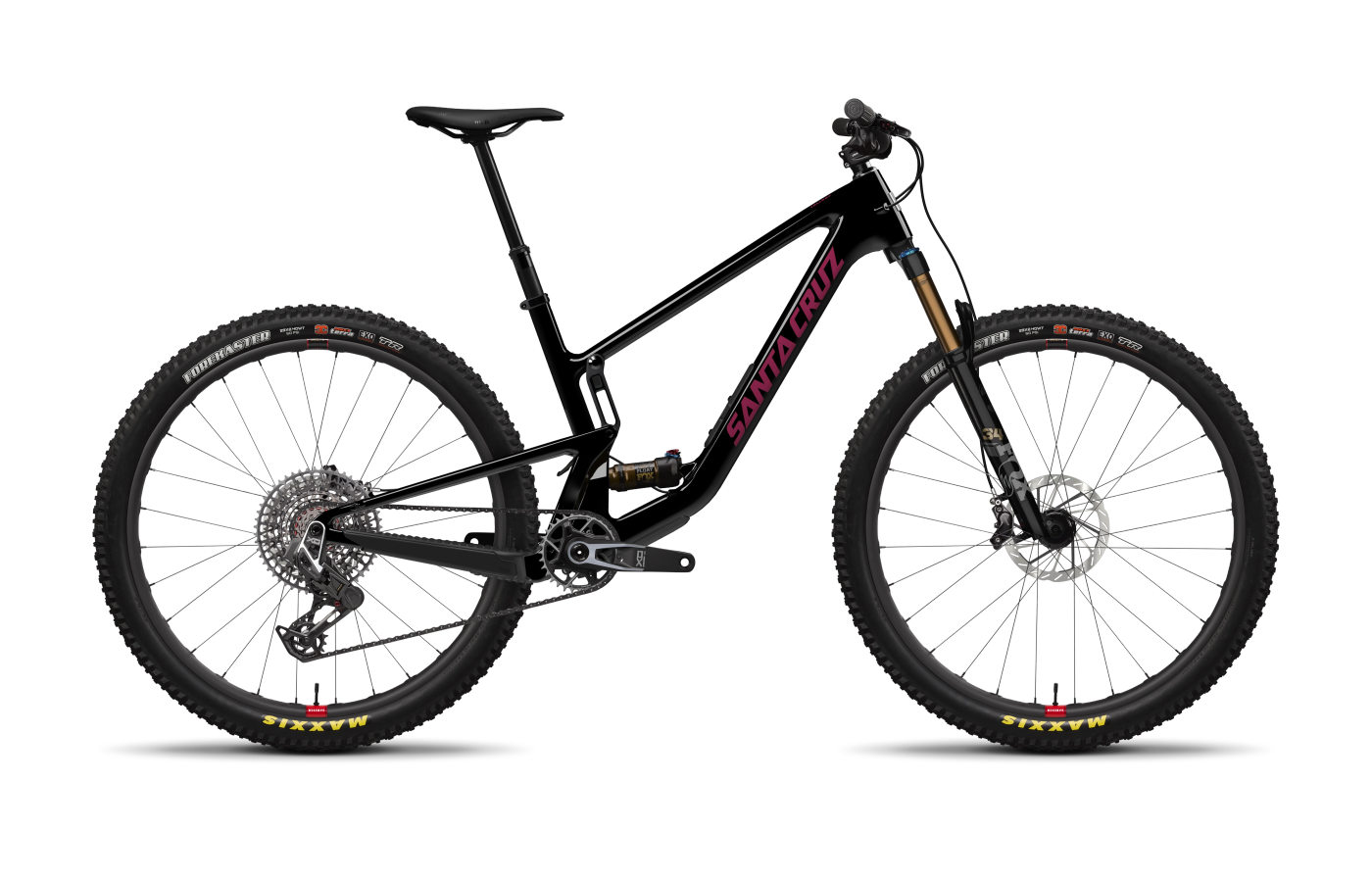
Two short-travel trail bikes, two ways to read a trail.
The Rascal V2 is a lively, pedal-efficient trail whippet on CBF suspension. The Tallboy V5 is the downhiller's XC bike — a planted 120 mm chassis tuned to be ridden hard.
Rascal
- CBF suspension pedals locked-out-firm without a climb switch — reviewers routinely leave it open all ride.
- Livelier ride — 130 mm rear and a 140 mm Lyrik feel more capable than the numbers suggest, with a poppy mid-stroke built for pumping.
- Tier-matched build for less — the X0 Transmission build lands at $5,199 with DT Swiss XMC 1501 carbon wheels.
- Revel has ceased operations — warranty and proprietary-part support are uncertain.
- Twitchy at speed on steep, chunky terrain; the 40 mm stock stem and 65.5-degree HTA reward precision over brute force.
Tallboy
- Planted for a 120 mm bike — the stout chassis and low bottom bracket inspire full-send confidence well above its travel class.
- Size-specific chainstays — 430 mm on the smallest frames up to 443 mm on XXL, so the handling stays balanced across the size range.
- Lifetime frame + bearings + Reserve-wheel warranty — the strongest long-term support in the category.
- SRAM Level brakes show up on most builds and are the near-universal gripe — plan on a Code/200 mm rotor upgrade.
- Relentlessly stiff frame; some reviewers found it tiring on long, rough descents.
Editor’s analysis
Both bikes sit on the same page of the catalog — short-travel 29ers, carbon frames, mid-five-figure builds — and then ride nothing alike.
On paper the travel numbers are a rounding error: 130 mm rear / 140 mm fork on the Revel Rascal, 120 / 130 on the Santa Cruz Tallboy. Head angles within 0.2 degrees of each other. Chainstays within 3 mm. Both run 29" wheels, both carbon front and rear. The character gap shows up the moment you put weight on the pedals.
The Revel Rascal is built around Canfield's CBF dual-link, and reviewers return to the same phrase: "I'd be hard-pressed to come up with a reason to touch the climb switch." Anti-squat starts around 140% and stays high through the stroke, so the bike pedals like a rigid when you're standing and soaks up roots when you're seated. It's a trail whippet — sharp, poppy, rewards an active rider who pumps terrain. Point it at fast, chunky descents and it gets twitchy; the 65.5-degree head angle and short 436 mm chainstays want input, not ballast.
The Santa Cruz Tallboy goes the other way. Santa Cruz dropped the VPP's leverage ratio for V5 and pulled anti-squat back, so the bike rides deeper into its stroke and feels "bottomless" for a 120 mm platform. The tagline — "the downhiller's XC bike" — is marketing, but it's earned. Reviewers describe it as "steroidally hench" and "planted," a bike you can full-send into terrain a short-travel number has no business in. The catch: the frame is aggressively stiff, and the stock SRAM Level brakes get called out in nearly every review as under-gunned for what the geometry invites.
One wrinkle worth naming: Revel ceased operations in 2025. The Rascal is still one of the best-riding short-travel bikes on the market, but warranty support and proprietary spares (carbon links, frame hardware) are now an open question. Santa Cruz's lifetime frame, bearings, and Reserve-wheel warranty is, conversely, the strongest in the industry. That's not a ride-feel factor — it's a long-term-ownership factor, and it's real.
Where the builds differ.
Comparing our editor's-pick builds side-by-side. Winners highlighted row-by-row — lower price and weight, and the better-spec component, each mark a point.
Build variants & pricing
The Rascal's lineup caps at $5,199; the Tallboy's climbs to $11,399 and spans twice the range.
The editor's-pick pairing is tier-matched on drivetrain (SRAM X0 T-Type) and carbon wheels, but there's a real ~$4,000 price gap — Revel's whole range lives under $5,200, while the equivalent Tallboy build sits at $9,249. If raw parts-per-dollar is the deciding factor, the Rascal wins by a wide margin.
How they fit, how they steer.
Both compared at their medium for a 5'8" rider. The Tallboy sits 9 mm taller in the stack with a 0.2° steeper head angle, 0.7° steeper seat angle, and 3 mm shorter chainstays — a more upright, forward-biased climbing position. The Rascal's lower front end and 10 mm longer rear travel bias it toward an active, forward-riding stance.
Which size should I buy?
Size recommendations based on stack, reach, and effective top tube. The Tallboy runs one size label smaller but lines up closely on real numbers — don't assume size labels map one-to-one.
→These are starting points. Flexibility, riding style, and preferred position all shift the answer — if you’re between sizes, a professional fit beats a chart.
What the magazines said.
Published reviews from trusted cycling outlets. Click through for the full write-up.
Which one should you buy?
If you want the liveliest possible short-travel bike and don't mind the brand risk, get the Rascal. If you want a short-travel chassis you can ride like a trail bike and keep for a decade, get the Tallboy.
Rascal
If your trails are rolling, flowy, or tight-and-techy, and you want a bike that rewards pumping, popping, and active line choice — the Rascal V2 is the pick. CBF suspension pedals like nothing else in the class, and the Lyrik/Super Deluxe spec gives you more front-end capability than the 130 mm rear suggests. Buy with eyes open on the Revel-operations situation.
Tallboy
If you want one bike that can line up at a marathon XC start line on Saturday and session your local enduro loops on Sunday — and stay in your stable for five-plus years of warranty coverage — the Tallboy V5 is the safer, stouter choice. Plan on a brake upgrade, then send it.
Questions buyers actually ask.
Short answers to the things we get emailed about most often.
01Which climbs more efficiently?
The Revel Rascal, by most accounts. CBF dual-link anti-squat starts around 140% and stays above 100% through most of the travel, so the bike pedals firm with the climb switch open — multiple reviewers report never touching it. The Santa Cruz Tallboy climbs well too, and its steeper 76.7° seat tube angle (vs. 76° on the Rascal medium) keeps you better positioned on steep grades, but Santa Cruz intentionally pulled anti-squat back on V5 to improve small-bump sensitivity. Net result: Rascal pedals firmer, Tallboy puts you in a better climbing position. On rolling, non-technical climbs they're close.
02Which is more capable descending?
The Tallboy V5, for most riders on most terrain. The frame is stiffer, the leverage curve is more forgiving on big hits, and Santa Cruz explicitly tunes the geometry for full-send descending — hence the "downhiller's XC bike" tagline. The Rascal V2 is livelier but asks for more precision; reviewers consistently note it gets twitchy on fast, chunky sections and rewards line choice over plowing.
Caveat: neither is a mini-enduro bike. Past 120–130 mm of rear travel, both remind you what they were built for.
03What's the travel — and does 10 mm really matter?
Rascal V2: 130 mm rear / 140 mm fork (RockShox Lyrik Ultimate stock on the editor's pick).
Tallboy V5: 120 mm rear / 130 mm fork (Fox 34 Float Factory on the X0 AXS RSV).
On paper, 10 mm of rear travel and 10 mm of fork sounds trivial — and on smooth flow it is. But the Rascal's Lyrik has 35 mm stanchions versus the Tallboy's Fox 34, which matters more than the travel number at high speed. Reviewers of both bikes note the Rascal's fork feels notably more planted when things get rough.
04Why is the Revel so much cheaper?
Revel's entire range caps at $5,199 — there's no flagship $10k+ build. The editor's-pick pairing here (Rascal X0 Transmission vs. Tallboy X0 AXS RSV) is tier-matched on drivetrain and carbon wheels, but the Rascal comes in at $5,199 and the Tallboy at $9,249.
Part of that is Santa Cruz's brand premium. Part is Reserve vs. DT Swiss XMC wheel pricing. And a meaningful part is the liquidation dynamic — with Revel having ceased operations, remaining Rascal inventory is in run-out pricing. The long-term trade-off is warranty and parts support, which Santa Cruz wins decisively.
05Is the Revel Rascal still worth buying if the company is gone?
It depends on how you buy bikes. If you're a rider who sells the bike in two or three years and moves on, the Rascal is an excellent value play — the frame and CBF suspension are class-leading, and discounted remaining inventory makes the math even better.
If you plan to keep this bike for 5+ years and lean hard on warranty and replacement-bearing support, the Tallboy's lifetime coverage is a meaningful hedge. Proprietary Rascal parts — carbon links, specific frame hardware — will get harder to source over time.
06What about brakes? I keep seeing complaints on the Tallboy.
The SRAM Level brakes that ship on most Tallboy builds (including the editor's-pick X0 AXS RSV) are the single most consistent criticism across reviews. They're XC-grade calipers on a bike tuned to descend like a trail bike, and multiple reviewers recommend an immediate swap to SRAM Code (4-piston) with 200 mm rotors.
The Rascal's X0 Transmission build ships with heavier-duty 4-piston stoppers better matched to the bike's descending intent — no upgrade needed out of the box. Factor the ~$300–500 brake upgrade into your Tallboy math if you ride aggressively.
07How do the geometries actually compare at the size I'd ride?
At the fit-picked size for a 5'8" rider (Rascal Medium, Tallboy m):
- Reach: Rascal 451 mm, Tallboy 455 mm — essentially identical.
- Stack: Tallboy 619 mm vs. Rascal 610 mm — the Tallboy runs 9 mm taller in the front end.
- Head angle: Rascal 65.5°, Tallboy 65.7° — both aggressive-trail.
- Seat tube angle: Tallboy 76.7° vs. Rascal 76° — the Tallboy puts you meaningfully more forward for climbing.
- Chainstays: Tallboy 433 mm vs. Rascal 436 mm, and the Tallboy scales its chainstay by size while the Rascal holds 436 mm across every frame size.
The Rascal is slightly lower and longer in the rear; the Tallboy is slightly more upright and better-centered for climbing.
08Is downtube storage a real consideration?
The Tallboy V5 has Santa Cruz's Glovebox — a latched downtube compartment with two tool wallets included. Several long-term reviewers note it can develop a creak under load (particularly with a full bottle mounted to the door) and it's not fully waterproof, but as a feature it's genuinely useful for longer rides.
The Rascal V2 has no in-frame storage. Reviewers noted the omission but broadly accepted it — Revel prioritized suspension kinematics and frame stiffness over "whiz-bang novelties." If you ride with a pack or a top-tube bag, it's a non-issue.
Similar bikes
If your priorities don’t map cleanly onto either of these, one of these adjacent bikes probably fits better.
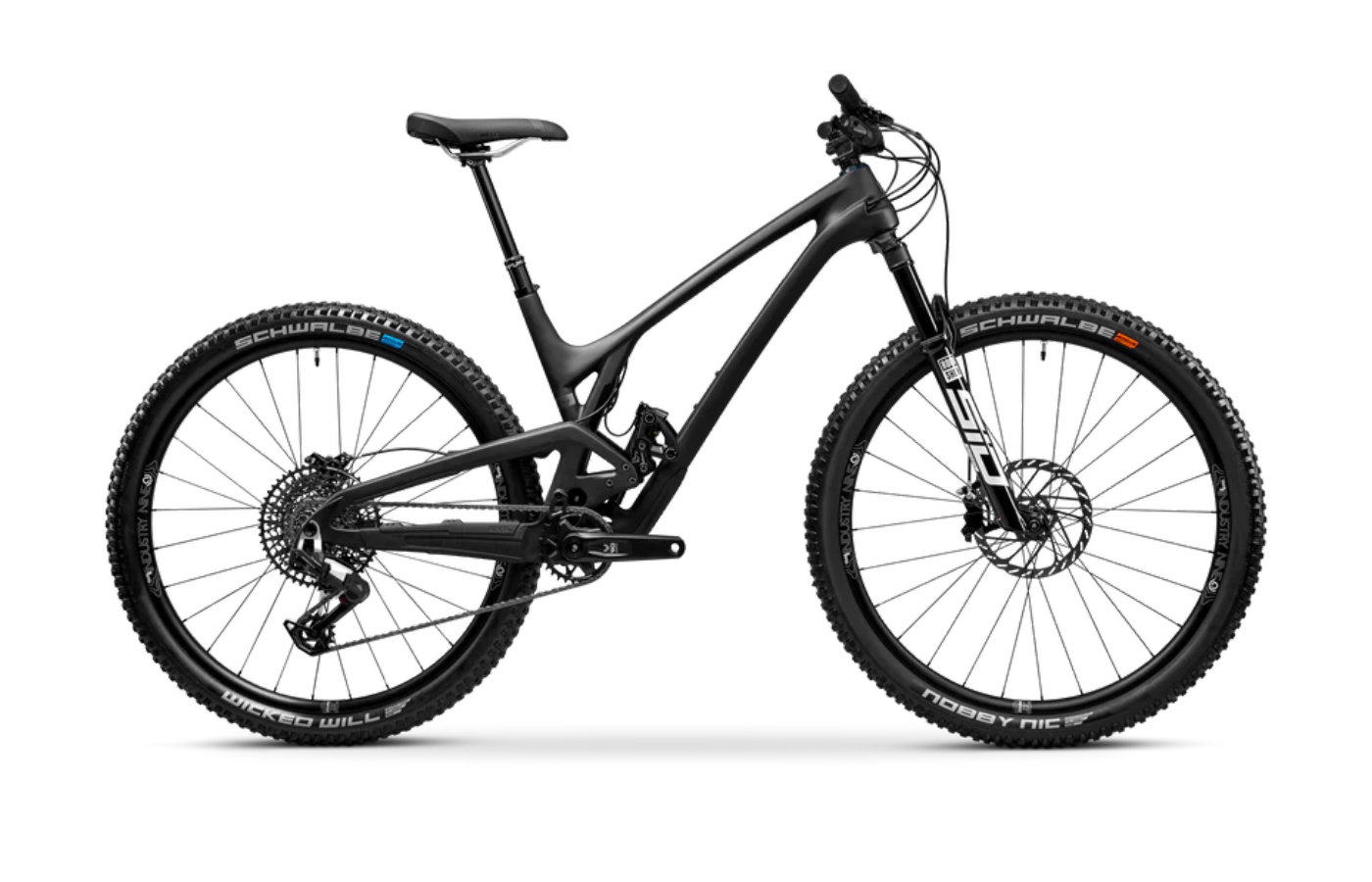
Following
If the Rascal's CBF suspension is the main draw, the Evil Following shares the exact same Canfield dual-link kinematics in a slightly more progressive, hard-charging package. Similar pedaling feel, a touch more descending composure.
Compare →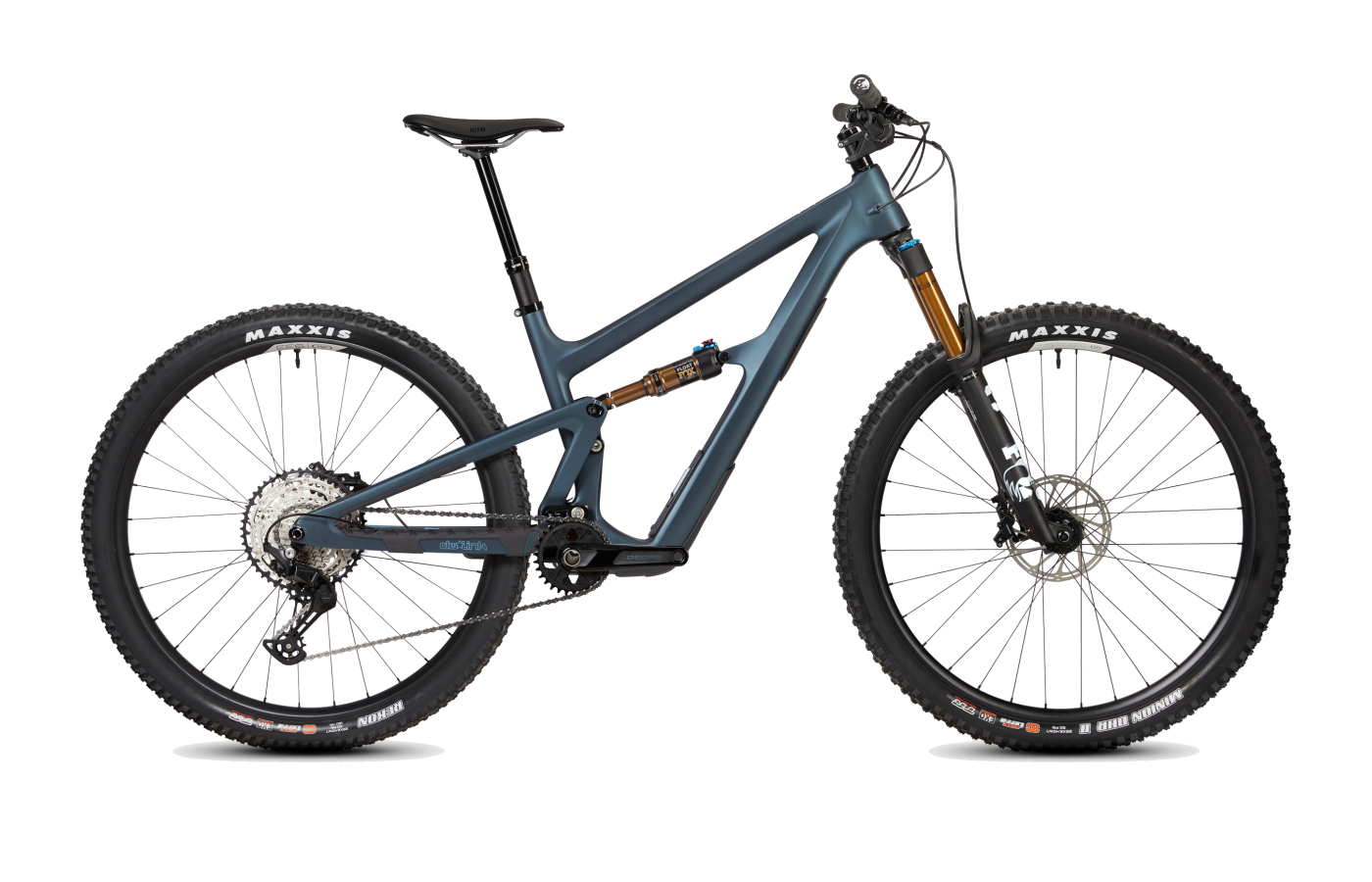
Ripley
The Ibis Ripley is the long-running DW-Link alternative in this class — lively, efficient, and with a more established service network than either the Revel or the Santa Cruz if dealer support matters to you.
Compare →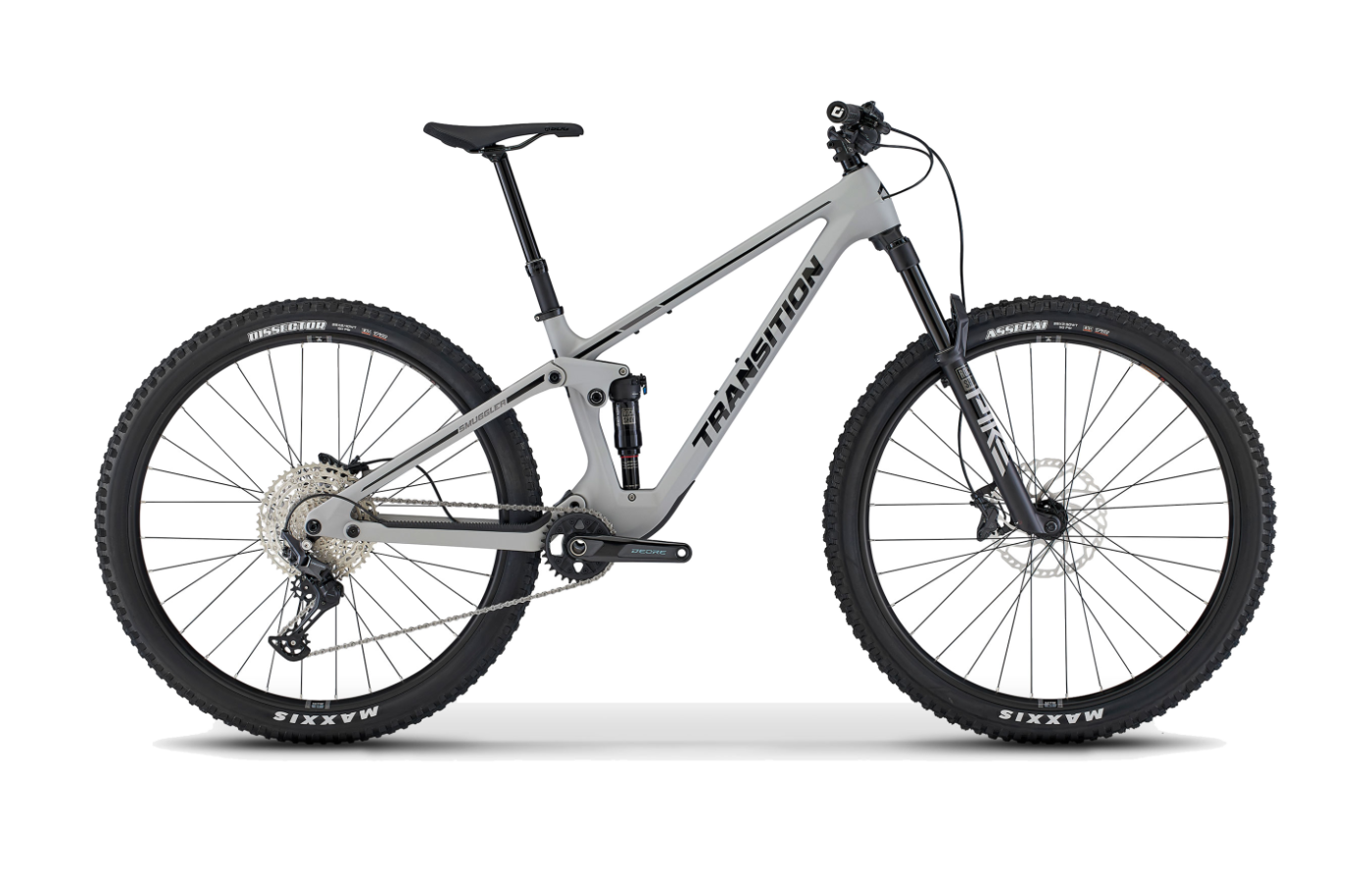
Smuggler
The Transition Smuggler pushes this category toward mini-enduro — slacker geometry, hardier spec, and a willingness to be ridden harder than the Tallboy or Rascal were designed for.
Compare →