Spindrift
vsSpire
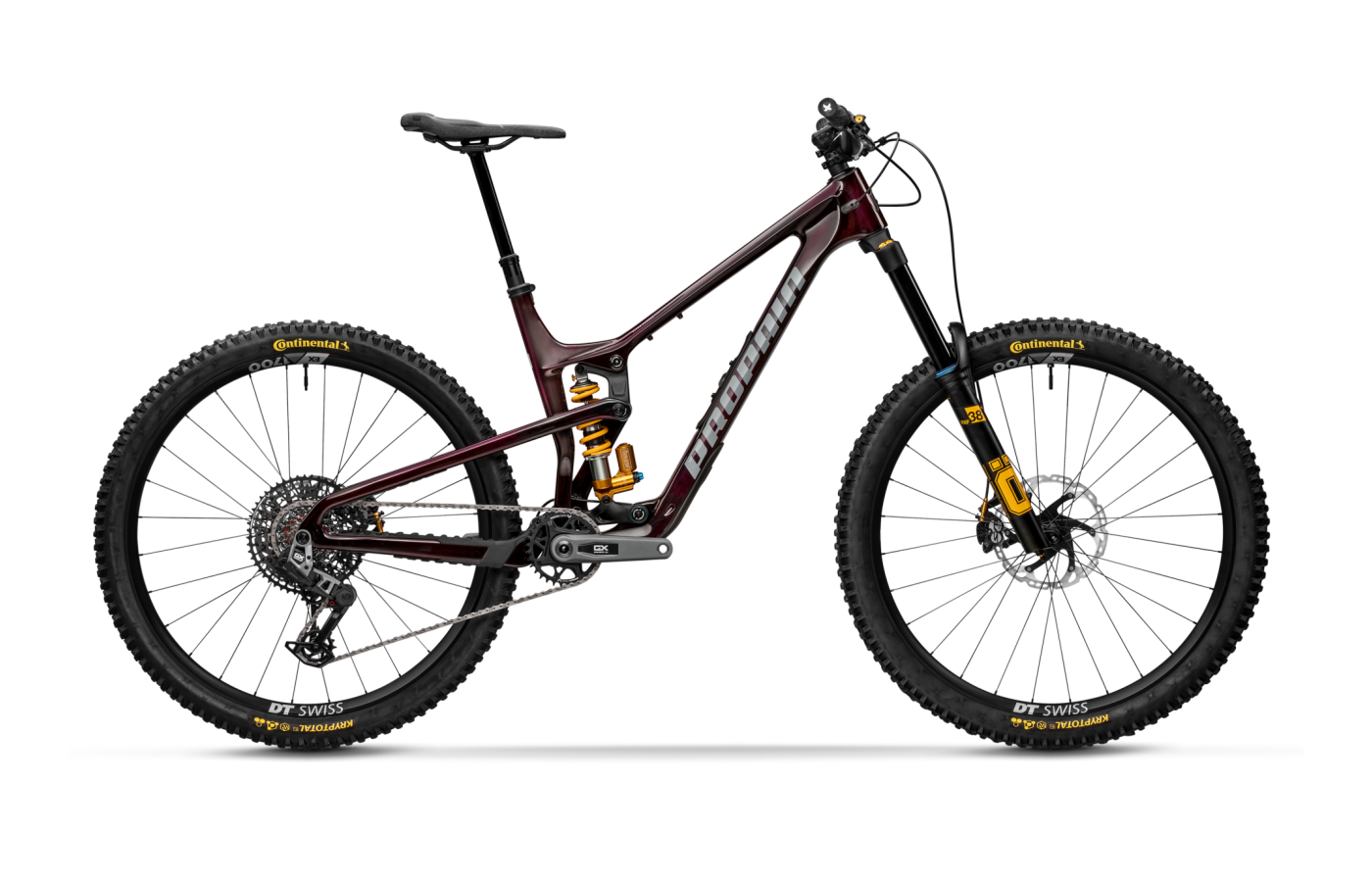
Two long-travel 29ers, two flavors of bruiser.
The Propain Spindrift is a 180 mm freeride/super-enduro shapeshifter sold direct. The Transition Spire is a 170 mm enduro sled with downhill-bike geometry.
Spindrift
- Pedals like a trail bike — testers routinely skip the climb switch on a 180 mm rig thanks to high anti-squat.
- Build-to-order configurator — pick fork travel, shock, dropper length and drivetrain at no upcharge.
- Poppy and playful for the travel — PRO10's mid-stroke support rewards pumping and jumping rather than just plowing.
- Tall seat tubes and limited dropper insertion can constrain post choice for shorter riders.
- Firm initial stroke means rear-wheel traction lags softer-feeling competitors in low-speed tech.
Spire
- DH-bike stability at speed — a 63° HTA and 1,257 mm wheelbase at MD make the Spire feel calm where lesser bikes get nervous.
- Size-specific chainstays (446 mm S–LG, 452 mm XL–XXL) keep the front-to-rear balance honest for taller riders.
- Short seat tubes, room for big droppers — stock OneUp posts up to 210 mm fit cleanly across the range.
- Frame transmits more chatter through square-edge hits than high-pivot rivals.
- Long, slack geometry feels boring or wandery on mellower trails — it really wants speed.
Editor’s analysis
Same big-mountain mission, two very different temperaments — one is taut and poppy, the other is long and planted.
On the spec sheet they look like cousins: 29-inch wheels, slack head angles, steep seat tubes, 170–180 mm of travel front and rear. Both are pitched as bikes that climb under their own power and then send the kind of descent you'd otherwise need a shuttle for. Spend any time with the geometry charts and the meta-reviews, though, and the personalities pull apart hard.
The Propain Spindrift runs 10 mm more travel on each end (180/180 vs the Spire's 170/170) but rides smaller than that suggests. Reviewers across Pinkbike, MBR and Enduro MTB call out the PRO10 suspension's high anti-squat — it pedals like a 150 mm trail bike, rarely needs a climb switch, and stays poppy off jumps. The trade-off, repeatedly noted, is a firm initial stroke and rear-wheel traction that isn't quite as glued as softer-feeling rivals.
The Transition Spire is the longer, slacker, more committed tool. A 63° head angle (62.5° in the low setting), a 1,257 mm wheelbase at MD vs the Spindrift's 1,254 mm at M, and size-specific 446–452 mm chainstays add up to a bike testers compare to a World Cup DH rig at speed. GiddyUp suspension is more supple off the top than PRO10, but the frame is famously communicative — Vital and BikeRadar both flag a degree of harshness through repetitive square-edge hits.
Put plainly: the Propain Spindrift is the bike you buy when you want one rig that climbs surprisingly well, descends like a freeride bike, and pops off everything between. The Transition Spire is the bike you buy when most of your descents are steep and chunky enough that you'd happily trade a little liveliness for a bigger margin of error at speed.
Where the builds differ.
Comparing our editor's-pick builds side-by-side. Winners highlighted row-by-row — lower price and weight, and the better-spec component, each mark a point.
Build variants & pricing
Propain spans $3,699–$8,769 across four direct-to-consumer builds; Transition spans $4,199–$7,699 across three dealer builds. Both top out around the same number — the Propain's floor is lower.
Prices are current US MSRP. Propain's configurator lets you swap most components at no upcharge, so two builds at the same name can be specced quite differently. Transition is dealer-only and the carbon frame is exclusive to the top Eagle 90 build.
How they fit, how they steer.
Compared at Size M (Propain) and MD (Transition) — the fit-picked frames for a 5'8" rider on each bike. Reach is identical at 460 mm; the Spire sits 8 mm lower in stack with a half-degree slacker head angle and a 1 mm longer chainstay — it's the longer, more planted chassis at this size.
Which size should I buy?
Size recommendations based on stack, reach, and effective top tube. The Spindrift offers four sizes (S–XL); the Spire spans five (SM–XXL) and adds size-specific rear-center on the larger frames.
→These are starting points. Flexibility, riding style, and preferred position all shift the answer — if you’re between sizes, a professional fit beats a chart.
What the magazines said.
Published reviews from trusted cycling outlets. Click through for the full write-up.
Which one should you buy?
If you want one bike that pedals well and descends like a freeride rig, get the Spindrift. If most of your riding is steep, fast and chunky, get the Spire.
Spindrift
If your weekends mix big self-shuttled climbs with bike-park-grade descents — and you'd rather configure the bike yourself than accept whatever the dealer stocks — the Spindrift is the more versatile tool. The PRO10 platform makes 180 mm feel surprisingly efficient on the way up, and the build-to-order menu lets you tune the spec to your terrain.
Spire
If you live for steep, fall-line descents and double-black bike-park laps, the Spire's longer wheelbase and slacker front end give you a bigger margin of error at speed. It climbs better than its geometry suggests, but the real reason to buy it is what happens when the trail tilts down hard.
Questions buyers actually ask.
Short answers to the things we get emailed about most often.
01Which has more travel?
The Propain Spindrift, by 10 mm at each end — 180 mm front and rear vs the Spire's 170/170. In practice the difference is smaller than it sounds: the Spindrift's high-anti-squat PRO10 platform pedals more efficiently than the extra travel suggests, while the Spire's GiddyUp linkage is plusher off the top despite the shorter stroke.
02Which climbs better?
The Propain Spindrift, narrowly. Pinkbike, MBR and Enduro MTB all noted that PRO10's anti-squat is high enough that the climb switch goes largely unused even on 180 mm of travel. Reviewers measured the Spindrift Swedish Gold around 16.1 kg (35.5 lb) in size L.
The Spire is no slouch — its steep ~78–79° effective seat tube angle keeps the rider neutral on steep climbs — but the alloy builds in particular weigh 35–37 lb and feel portly on long fire-road grinds.
03Which is more stable at speed?
The Transition Spire. At the fit-picked sizes, the Spire's 63° head tube angle is half a degree slacker than the Spindrift's 63.5°, and the wheelbase is 3 mm longer (1,257 mm vs 1,254 mm at MD/M). On the larger XL and XXL frames the Spire also adopts size-specific 452 mm chainstays, which the Spindrift's fixed 445 mm rear doesn't match.
Multiple testers compared the Spire's high-speed composure to a World Cup DH bike. The Spindrift is plenty stable, but reviewers describe it as the more eager, poppier bike of the two.
04Can I get either with a dual-crown fork?
Only the Propain Spindrift offers a factory dual-crown option, and it's specifically the alloy Park frame — not the carbon. If you want the carbon Spindrift you're committed to a single crown.
The Transition Spire frame is rated dual-crown compatible and reviewers have run it that way, but Transition doesn't sell a complete bike configured with one — you'd be sourcing the fork yourself.
05How serviceable are the suspension linkages?
Both frames use threaded bottom brackets, UDH derailleur hangers, and double-sealed bearings — the basics are right.
The Spindrift is praised for quiet, well-protected linkages and the option of either headset routing or traditional internal frame ports (the AL keeps frame ports only). MBR did note that the rear shock sits in a tightly packaged location that makes dial access fiddly.
The Spire uses external rear-brake routing — easy to swap brakes at home — but Pinkbike's long-term test reported the stay bearings developing play after a year, and multiple reviewers flagged the alloy linkage bolts as soft and prone to stripping if you're rough with a torque wrench.
06Which has the better dropper post setup?
The Spire. Its short seat tube (430 mm at MD) leaves room for long droppers, and most builds ship with OneUp posts up to 210 mm.
The Spindrift's taller seat tube and limited insertion depth is a recurring complaint across Pinkbike, MBR and owner reviews, particularly for shorter riders or anyone who prefers a slammed saddle on steep terrain. Rémy Métailler — who consulted on the Spindrift 5 redesign — specifically pushed for deeper insertion than the Spindrift 4 allowed, but reviewers still flag it as a constraint.
07How do the warranties and support compare?
Both brands offer a lifetime frame warranty to the original owner.
Transition is sold through dealers, which makes warranty and service straightforward in most US markets. NSMB and Pinkbike praised the brand's customer support and parts availability.
Propain is direct-to-consumer. Canadian and US owners interviewed in the Pinkbike comments and NSMB review both reported responsive support from Propain's North American office — including proactive replacement of a damaged rear triangle — but you won't have a local shop handling the claim.
08Which is better value?
Depends on how you buy. Propain's direct-to-consumer pricing and configurator make the Swedish Gold ($6,199 with Öhlins RXF 38, TTX 22 coil and GX Transmission) one of the strongest mid-tier specs on the market — multiple reviewers called it the sweet spot of the entire lineup.
Transition's Carbon Eagle 90 at $7,699 puts a carbon frame, RockShox Vivid Ultimate shock, ZEB Ultimate fork, Maven Silver brakes and DT Swiss EX 1700 wheels in front of you for less than most boutique-brand carbon enduro bikes. Both bikes punch above their price; the Spindrift wins on customization, the Spire wins on out-of-the-box spec for the carbon tier.
Similar bikes
If your priorities don’t map cleanly onto either of these, one of these adjacent bikes probably fits better.
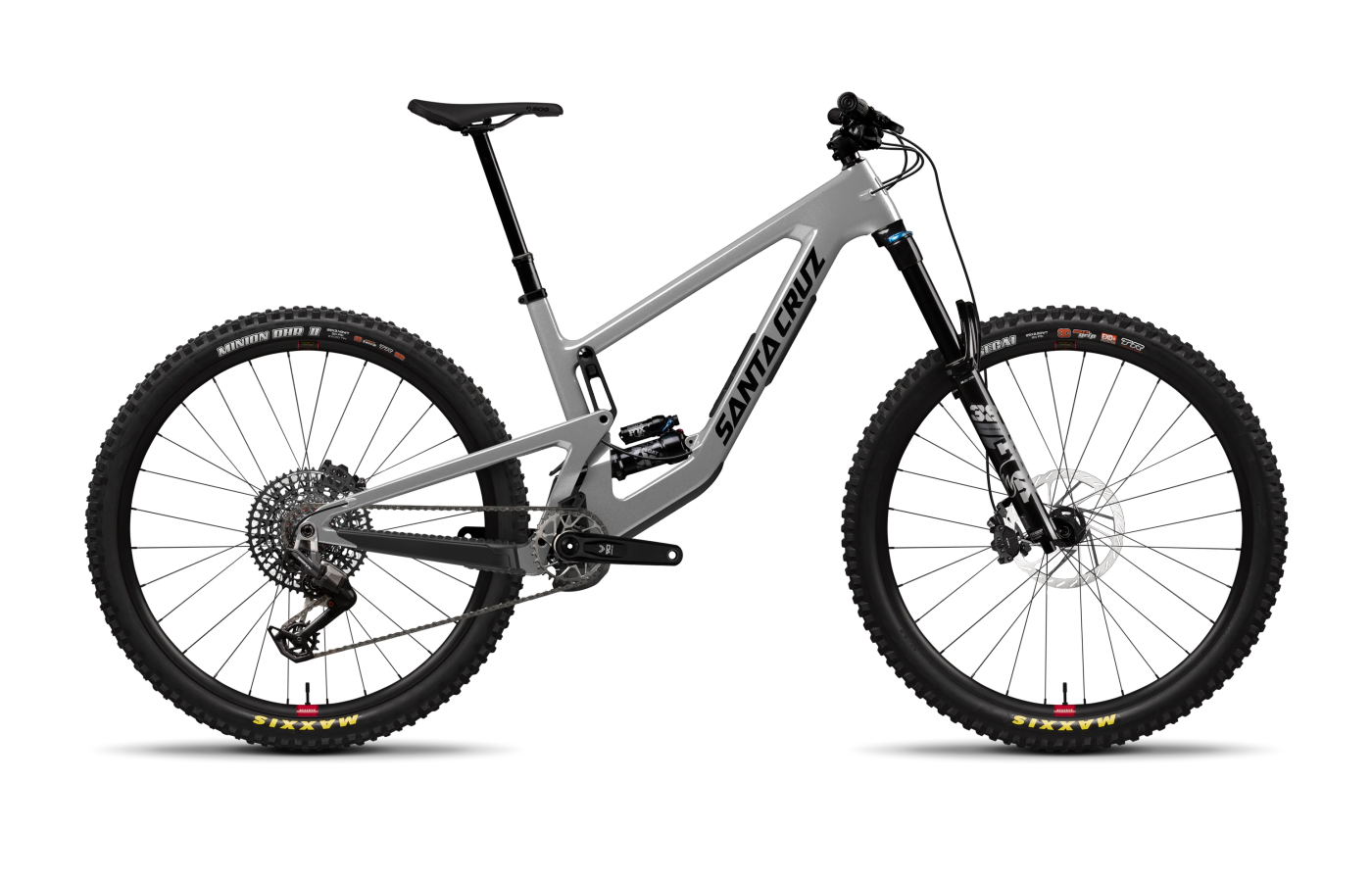
Megatower
The Megatower is the most direct comparison to the Spire — long, planted, calm at speed. If you want the Spire's stability with Santa Cruz's resale and dealer network, this is it.
Compare →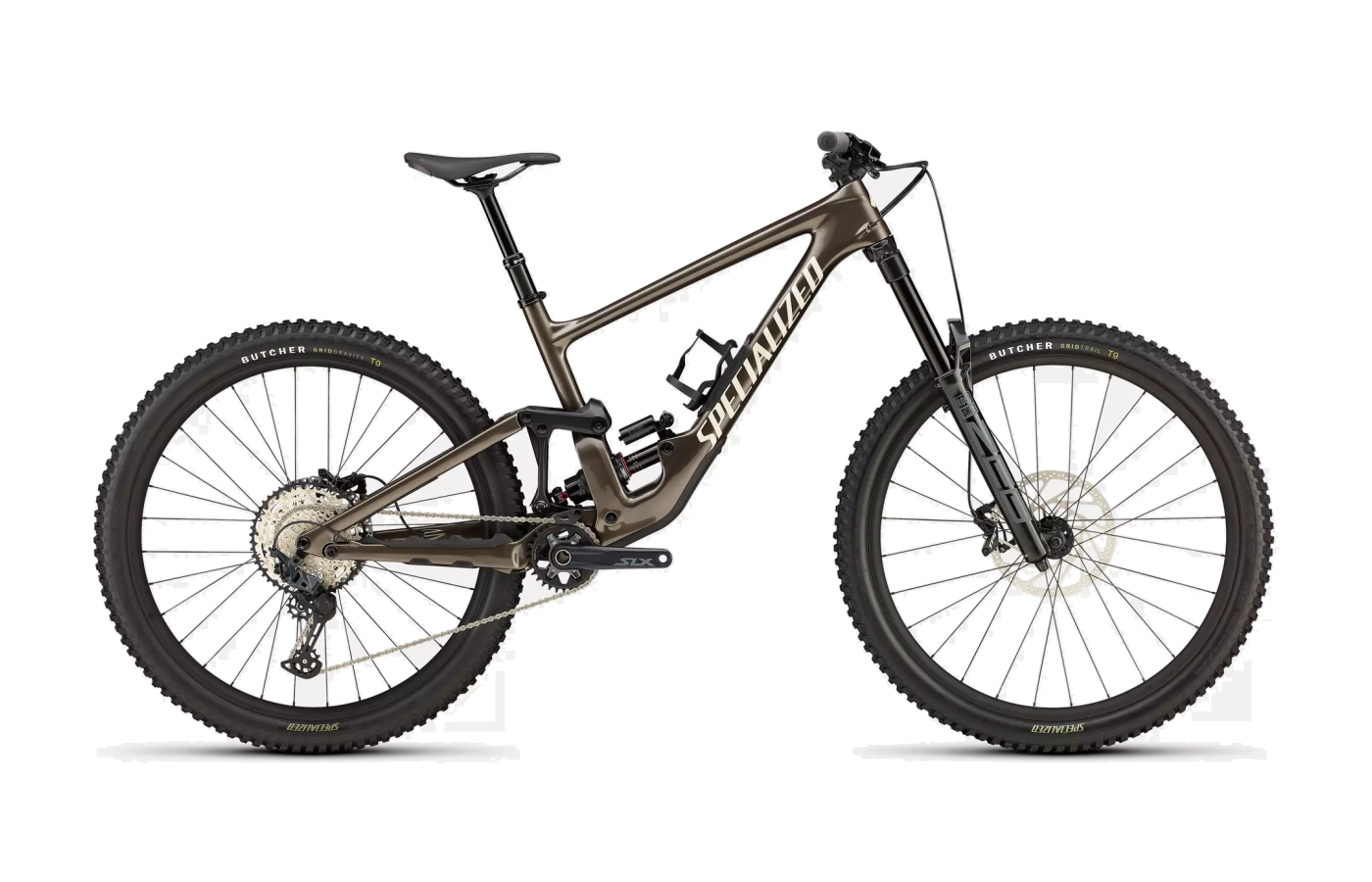
Enduro
Specialized's 170 mm Horst-link ripper splits the difference between Spindrift pep and Spire stability. A genuinely race-ready enduro platform with strong dealer support.
Compare →Capra
YT's long-travel 29er hits the Spindrift's direct-to-consumer playbook at an even sharper price. Aggressive geometry, factory-grade suspension, and you'll see the savings the moment you check out.
Compare →