Spindrift
vsEnduro
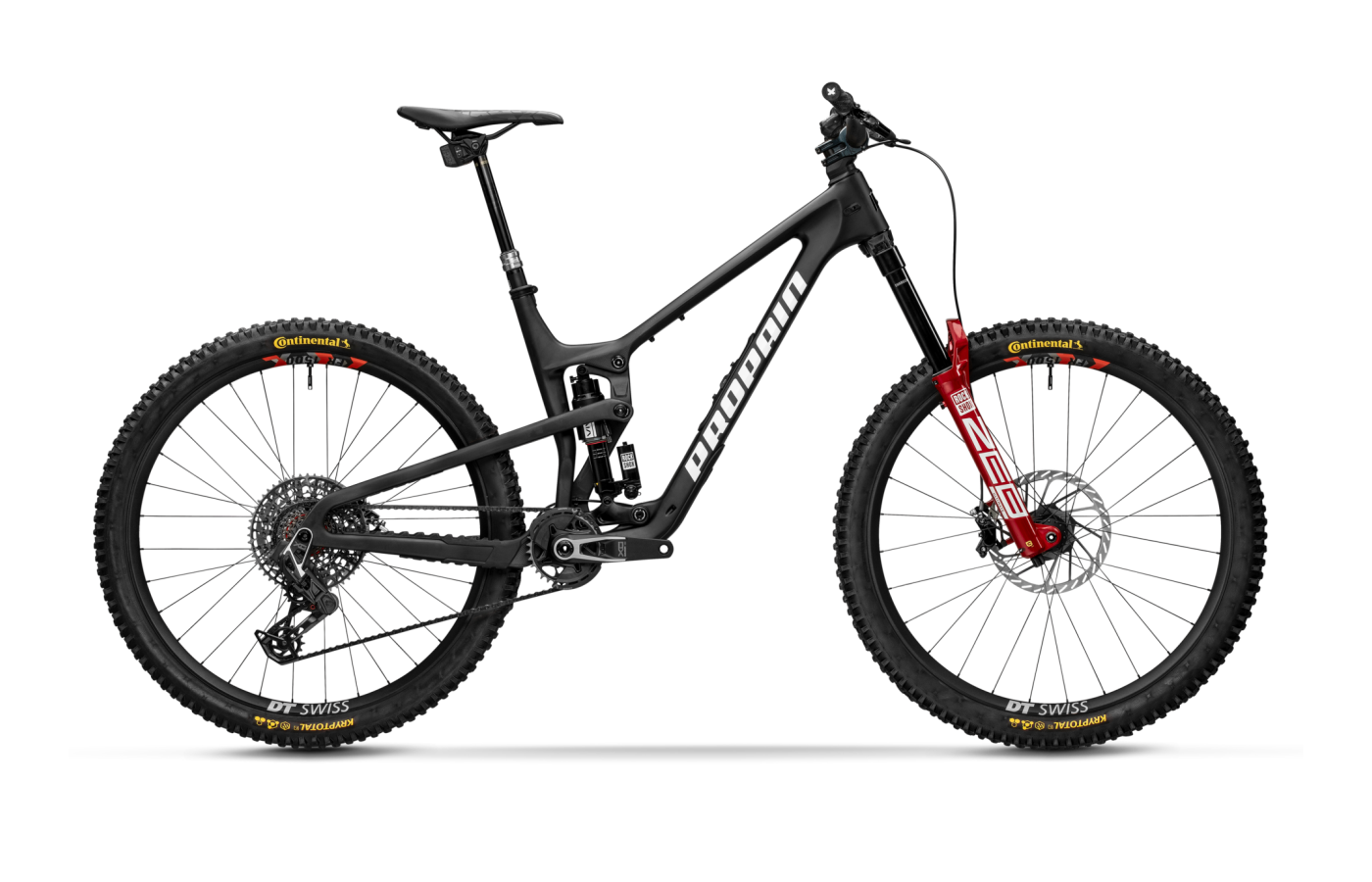
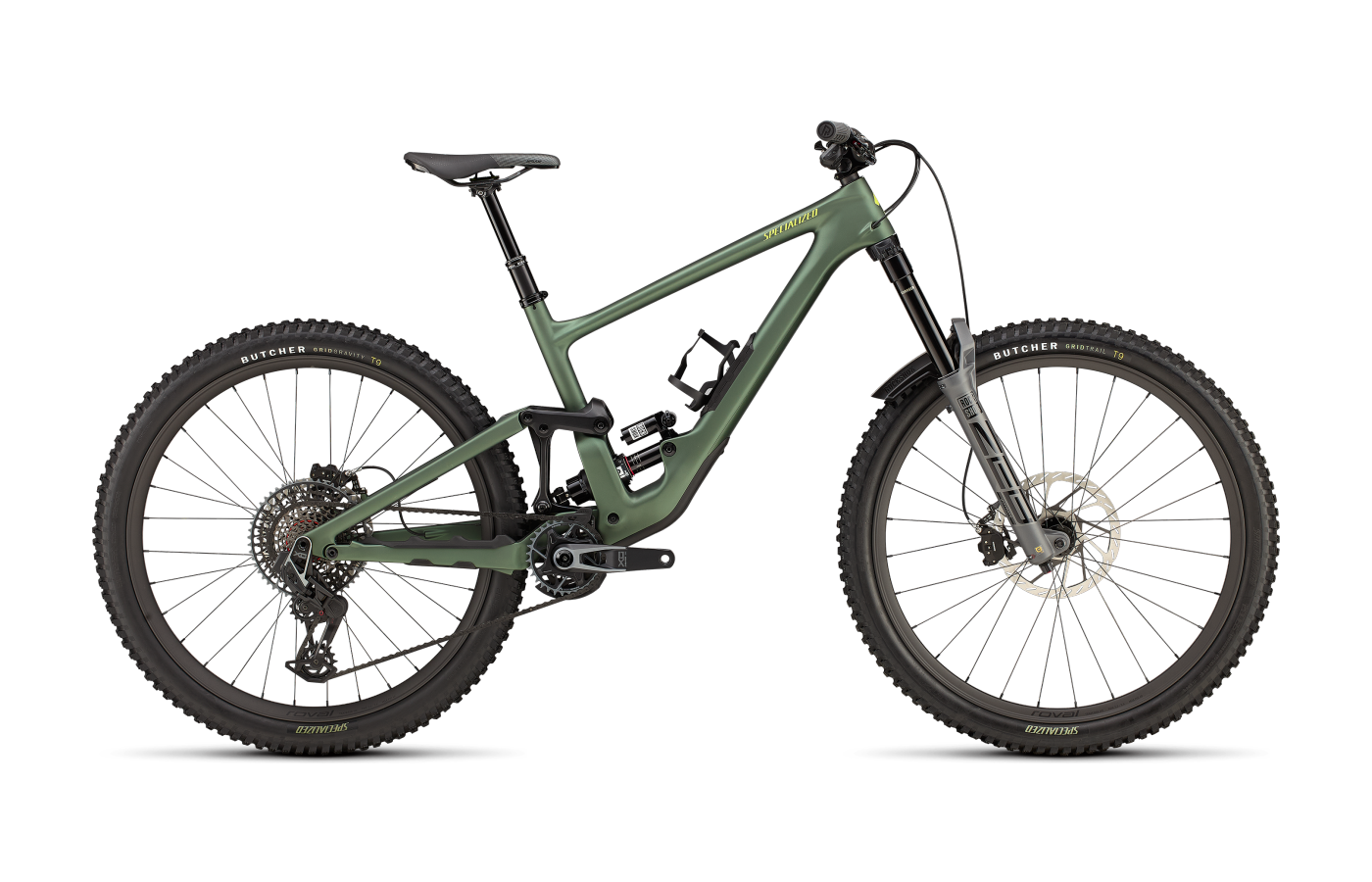
Two long-travel weapons, two missions.
The Spindrift is a 180 mm freeride shapeshifter you spec yourself. The Enduro is a Demo-derived race tool aimed straight at the bottom of the hill.
Spindrift
- Configurator-driven spec — pick fork, shock, brakes, and dropper length at MSRP, no bundling tax.
- Climbs better than 180 mm has any right to — a 78 degree seat tube and high anti-squat make the climb switch nearly redundant.
- Cat 5 frame rating with downtube storage, threaded BB, UDH, and a TPU rock guard built in.
- Direct-to-consumer model means no test rides and limited dealer support outside Europe.
- Pro10 platform feels 'taut' — small-bump compliance trails plusher rear ends in this segment.
Enduro
- Demo-derived rear end — rearward axle path turns square hits into momentum the way DH bikes do.
- SWAT downtube storage with a hidden steerer-tube multi-tool — genuinely day-ride-without-a-pack practical.
- Backed by a global dealer network — in-person fit, demo days, and warranty service through any Specialized shop.
- Two builds only, both in the upper price tier — nothing under $5k.
- Stock Butcher GRID TRAIL front tire is widely flagged as undertired for the bike's capability.
Editor’s analysis
One bike was built to be configured. The other was built to win an EWS stage — and the difference is felt every time the trail tilts down.
On paper, both bikes sit at the upper edge of pedal-able travel: the Propain Spindrift runs 180 mm front and rear; the Specialized Enduro runs 170/170. Both are unapologetically gravity-biased, both ride on platforms developed alongside the brand's downhill program (Spindrift via Rémy Métailler, Enduro via the Demo). But the design briefs diverge from there — and so does the buying experience.
The Propain is a direct-to-consumer bike with a configurator that turns an upcharge-free spec sheet into the main feature. You pick the fork, shock, dropper length, wheelset, brakes — each at the menu price, no marked-up bundles. Reviewers praise its PRO10 suspension as 'taut' and 'efficient,' with a pedaling platform supportive enough that several testers admitted they 'never once used the climb switch.' That makes it a 180 mm bike that pedals like much less.
The Specialized Enduro is the opposite philosophy: a 4-size, 2-build, dealer-sold race weapon. The rear suspension is lifted nearly verbatim from the Demo, with a rearward axle path that lets the rear wheel get out of the way of square-edged hits. Anti-squat went up 40% over the prior generation, but the bike's reason for being is the descent — Pinkbike called it 'basically a DH bike without a dual crown,' and reviewers across the board reset their braking points on familiar trails after riding it.
Geometry tells the same story in the numbers. The Spindrift M sits at a 63.5 degree head angle with a 78 degree seat tube and a 460 mm reach. The Enduro S2 — the fit-picked size for the same 5'8" rider — runs a steeper 64.3 degree head angle, a slacker 76 degree seat tube, and a shorter 437 mm reach with a tighter 1217 mm wheelbase. Different sizing systems, different priorities: the Spindrift wants you upright and comfortable on long climbs to access gnarly terrain; the Enduro wants you low, planted, and pointed downhill.
Where the builds differ.
Comparing our editor's-pick builds side-by-side. Winners highlighted row-by-row — lower price and weight, and the better-spec component, each mark a point.
Build variants & pricing
The Spindrift's configurator spans $3,699 to $8,769 across four price points. The Enduro lineup is just two builds — $4,999 Comp and $8,499 Pro.
Editor's picks are tier-matched at SRAM X0 Eagle Transmission with RockShox Ultimate suspension front and rear — Propain Ultimate ($7,029) vs Specialized Pro ($8,499). The ~$1,500 gap mostly reflects Propain's direct-to-consumer pricing versus Specialized's dealer model.
How they fit, how they steer.
Propain runs a more conventional S/M/L/XL grid; Specialized's S-sizing decouples reach from seat tube. At the fit-picked sizes, the Spindrift M has 23 mm more reach and a slacker (63.5 vs 64.3) head angle; the Enduro S2's S-sizing gives it the shortest seat tube of any 170 mm bike here.
Which size should I buy?
Both ranges overlap cleanly in the middle. Propain's traditional sizing rewards riders who want stack-and-reach to scale together; Specialized's S-sizing lets you size up for stability without forcing a longer seat tube on you.
→These are starting points. Flexibility, riding style, and preferred position all shift the answer — if you’re between sizes, a professional fit beats a chart.
What the magazines said.
Published reviews from trusted cycling outlets. Click through for the full write-up.
Which one should you buy?
If you want a long-travel bike that pedals up real climbs and lets you spec every part yourself, get the Spindrift. If you want a Demo-derived race bike from a shop you can walk into, get the Enduro.
Spindrift
If you pedal up to bike-park-grade descents and want one bike that can handle Whistler laps, big-mountain enduro, and the occasional self-shuttled freeride day, the Spindrift is the more flexible tool. The configurator is the killer feature — you build the bike you actually want, not the one a product manager bundled.
Enduro
If your riding is mostly steep, fast, and rough — and you want a bike whose suspension was literally adapted from a World Cup DH platform — the Enduro is the sharper tool for that job. The integrated SWAT storage and dealer support are real-world wins; the limited build kit is the price.
Questions buyers actually ask.
Short answers to the things we get emailed about most often.
01How much travel does each bike actually have?
Propain Spindrift 5: 180 mm rear, 180 mm fork (the configurator also allows 190 mm forks and dual-crown options on the alloy Park variant).
Specialized Enduro: 170 mm rear, 170 mm fork, 29-inch wheels only.
The 10 mm difference is real but smaller than the philosophical gap — the Spindrift is sold as a freeride/super-enduro hybrid, the Enduro as a race-focused enduro bike.
02Which one climbs better?
Both climb surprisingly well for their travel, but the Spindrift edges it. Its 78 degree effective seat tube angle (vs 76 degrees on the Enduro) puts you more upright and over the bottom bracket, and Propain's PRO10 kinematics produce enough anti-squat that multiple reviewers reported never using the climb switch.
The Enduro's 40-percent anti-squat increase over the prior generation makes it a dramatically better climber than the old model, but several reviewers noted the actual seat tube angle slackens at full extension for taller riders, leading to a more stretched climbing position. On steep, technical climbs the Spindrift's geometry has a real edge.
03Which one descends harder?
The Specialized Enduro has the sharper descending DNA. Its rear suspension is adapted from the Demo downhill bike — specifically a more rearward axle path that lets the rear wheel get out of the way of square-edged hits, carrying momentum through chunder. Pinkbike called it 'basically a DH bike without a dual crown,' and multiple reviewers had to reset braking points on familiar trails.
The Spindrift is no slouch — its PRO10 system delivers a 'bottomless feel' on big compressions and reviewers describe it as 'a shapeshifter' — but its character is more poppy and lively than the Enduro's plow-through-everything stability.
04How does the buying experience differ?
Propain is direct-to-consumer (DTC) out of Germany. You configure the bike on their website — fork, shock, brakes, dropper length, wheelset, drivetrain — and it ships to you. There's no dealer markup, but also no test ride and limited service support if something breaks. North American buyers reported strong remote-warranty service from Propain's NA office.
Specialized sells through a global dealer network. You can demo, get fitted, and bring the bike to any Specialized shop for warranty work. The trade-off is the dealer-model price premium and a much narrower build menu — two complete bikes, no configurator.
05What about the lower-priced builds?
The Spindrift Base starts at $3,699 (carbon frame, configurable spec). The Spindrift Swedish Gold at $6,199 is repeatedly singled out by reviewers as the value sweet spot — Öhlins RXF 38 fork, TTX 22 coil shock, GX Eagle Transmission, DT Swiss EX 1700 wheels.
The Enduro Comp at $4,999 is the only sub-$8k option from Specialized, running Shimano SLX mechanical, a RockShox Zeb Select fork, and Specialized alloy wheels. It's the same FACT 11m carbon frame as the Pro — the budget really shows in the parts hanging off it, not the chassis.
06Are there any known reliability issues?
Spindrift: the most commonly cited issues are with OEM Fox suspension (top-out knock on the DHX2 shock, harsh feel on some Fox 38 forks) and Magura MT7 brakes (rubbing, lever wobble). Propain's configurator lets you spec around both — pick RockShox or Öhlins suspension and SRAM brakes if those reports concern you. The Ultimate build (our editor's pick) does exactly that.
Enduro: earlier 2020-2021 frames had a documented headset cracking issue that Specialized addressed under warranty and claims to have fixed for 2022+ frames. The stock Butcher GRID TRAIL front tire is widely flagged as too light for the bike's intended use.
07What sizes do they come in, and how do they fit?
The Spindrift comes in S, M, L, and XL — traditional sizing where seat tube and reach scale together. M has 460 mm of reach and a 425 mm seat tube.
The Enduro uses Specialized's S-sizing in S2 through S5 — reach scales but seat tube stays short across the range, so a single rider can choose stability (size up) or maneuverability (size down) without being forced into a too-tall seat tube. S2 has 437 mm reach with a relatively short seat tube; S3 jumps to 464 mm.
For a 5'8" rider, the fit algorithm picks Spindrift M and Enduro S2 — the closest fit on each platform.
08Which holds its value better?
Specialized as a brand has stronger US used-market liquidity — wider dealer footprint, more buyers familiar with the model line. Specialized Enduro carbon frames generally trade quickly on platforms like Pinkbike Buy/Sell.
Propain resale is thinner in North America simply because the install base is smaller and most North American buyers are unfamiliar with the configurator system. That's improving as the brand expands its NA presence, but if quick resale matters to you, the Specialized has the easier exit.
Similar bikes
If your priorities don’t map cleanly onto either of these, one of these adjacent bikes probably fits better.
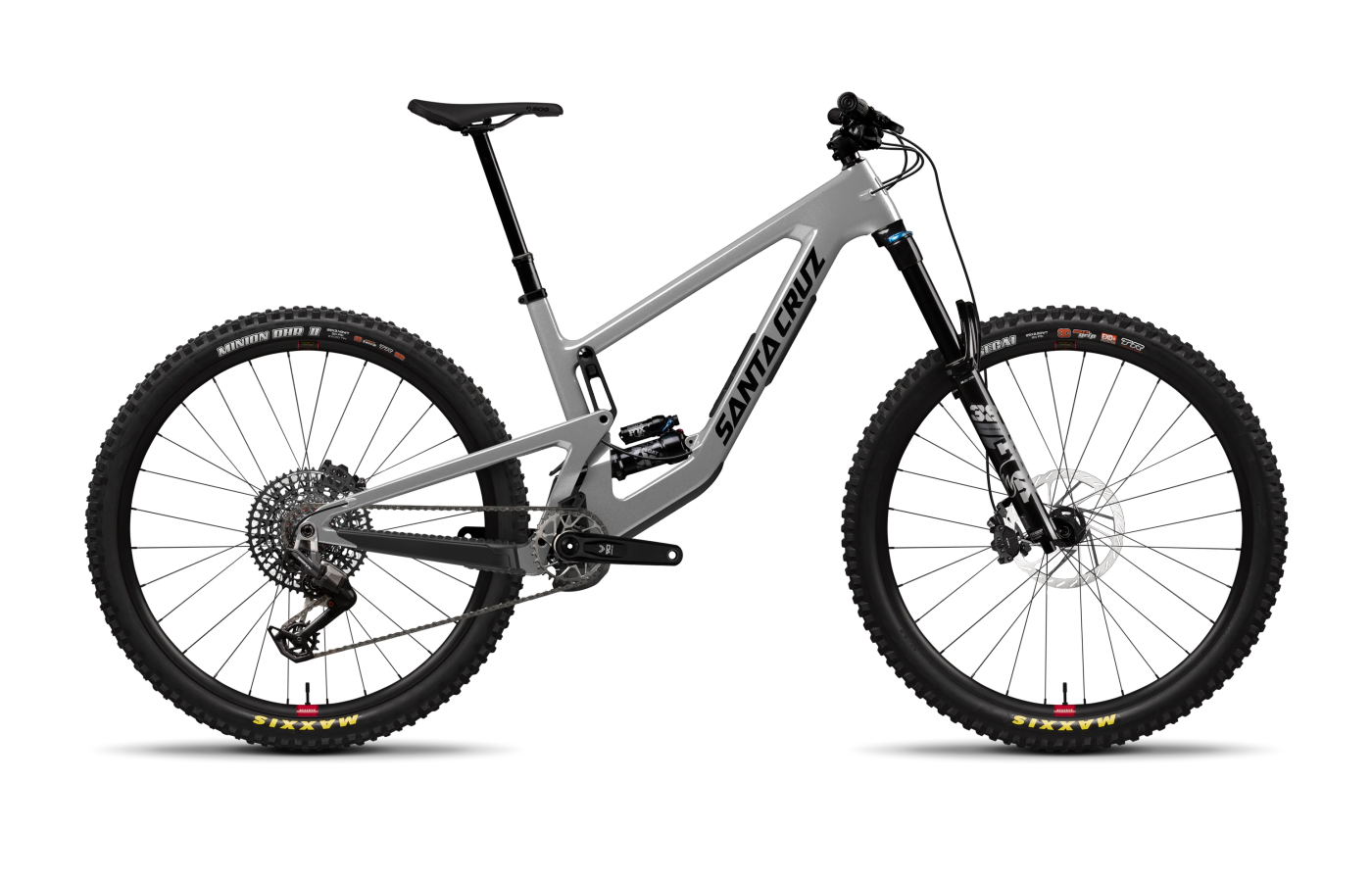
Megatower
The Santa Cruz Megatower is the most direct cross-shop with the Enduro — a 165/170 mm 29er with VPP suspension, dealer-sold, similarly racy in intent. Pick it if you want the Enduro's planted feel from a brand with a longer enduro pedigree.
Compare →Spire
The Transition Spire is the closest in mission to the Spindrift — a 170/170 mm super-enduro with aggressive geometry, sold both DTC and through dealers. Smaller brand, distinctive ride feel, strong cult following.
Compare →Capra
The YT Capra is the budget end of this conversation — direct-to-consumer like the Spindrift but at noticeably lower price points for comparable spec tiers. Capable freeride/enduro chassis if your budget tops out below the Ultimate or Pro.
Compare →