Spindrift
vsNomad
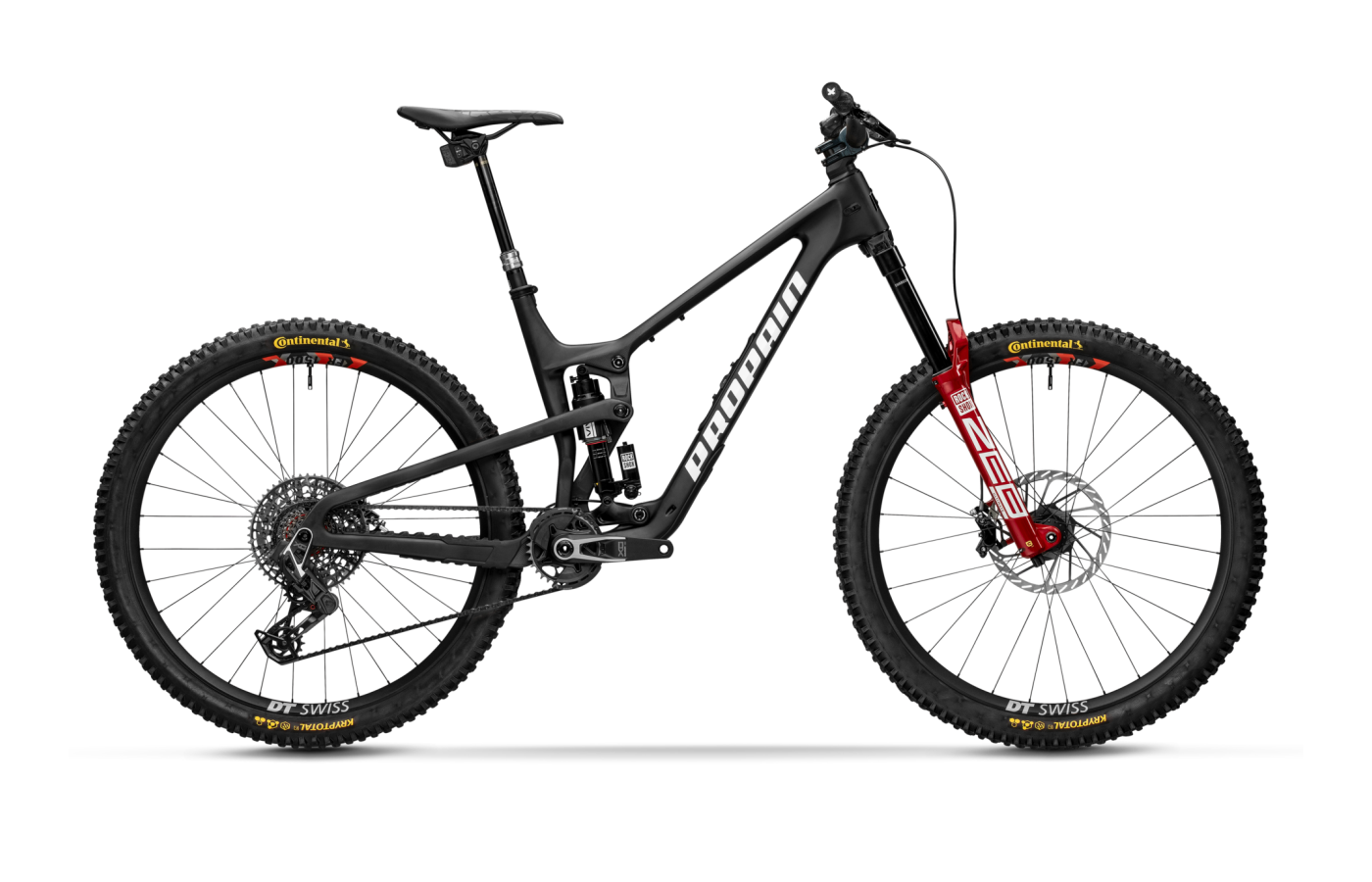
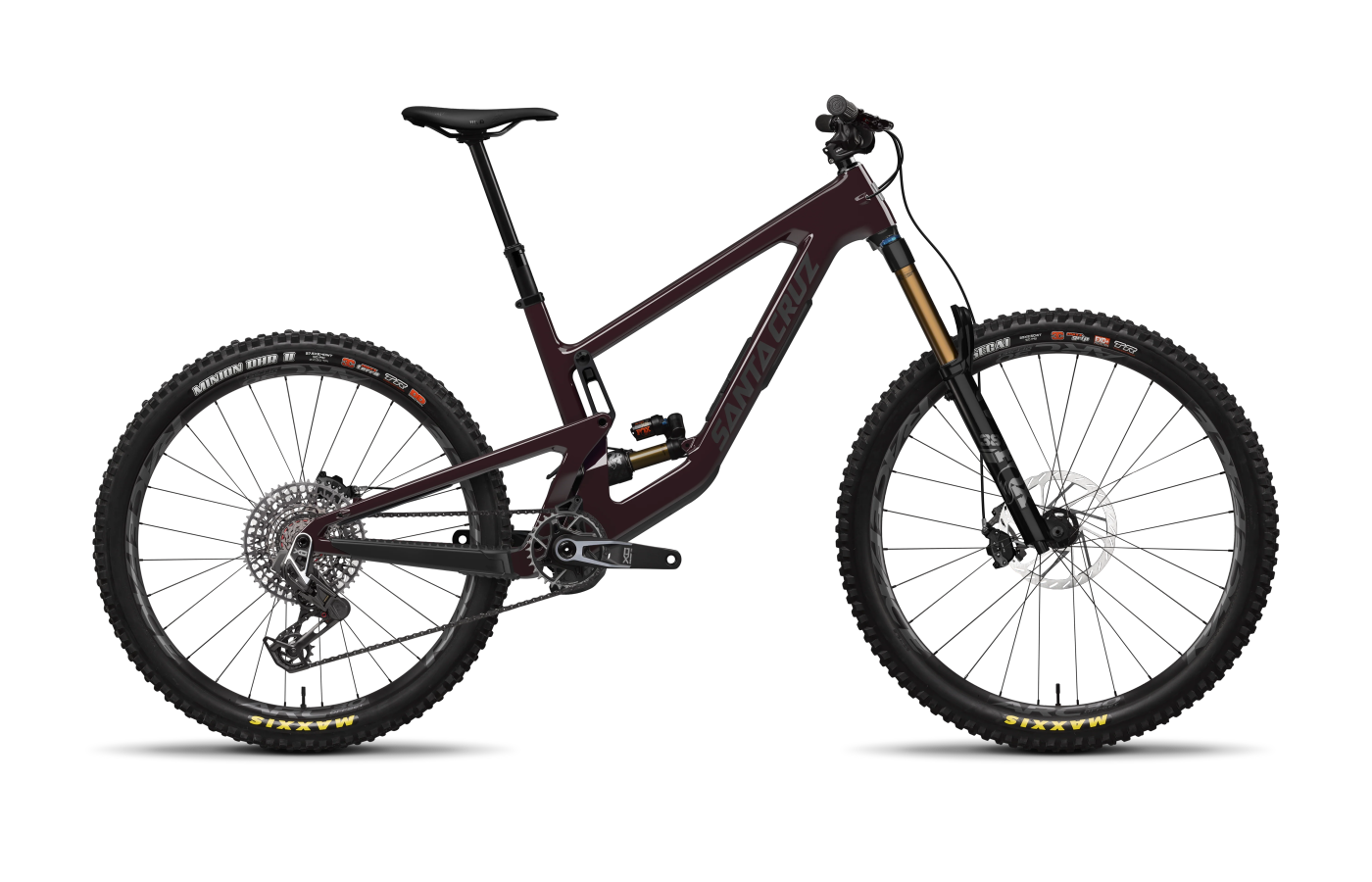
Two long-travel bruisers, two different briefs.
The Spindrift is 180 mm of direct-to-consumer freeride, built to be customized. The Nomad is 170 mm of refined, mullet-only enduro, built to be ridden.
Spindrift
- Full configurator — pick your fork, shock, spring, dropper length, drivetrain, and tires without upcharge.
- 180 mm that climbs — Pro10 anti-squat is high enough that reviewers "never once used the climb switch."
- Bigger travel, bigger ceiling — 180/180 and a dual-crown-ready alloy option covers full park and Rampage-adjacent terrain.
- Tall seat tubes and limited dropper insertion on the CF frame — short riders and long-dropper fans struggle to fit a 200 mm post.
- Fixed 445 mm chainstays across all sizes, which can feel unbalanced at the size extremes.
Nomad
- Peerless cornering — the mullet + size-specific 440-450 mm chainstays produce what Vital called "shifter-kart-like" handling.
- Size-specific engineering — carbon layup, chainstays, and seat angle all tuned per frame size, not just sticker-sized.
- Lifetime everything — lifetime frame warranty plus free lifetime bearing replacement keeps long-term cost down.
- Fixed build kits — no configurator, and reviewers flagged EXO+ tires and the 175 mm Reverb on L frames as undersized for the bike's intent.
- 343 mm bottom bracket in the low setting — frequent pedal strikes in technical terrain are a documented complaint.
Editor’s analysis
Both live for chunky, steep, gravity-fed trails — but one wants to be spec'd to your exact build sheet, and the other wants to be ridden exactly as it shipped.
On paper the Propain Spindrift and Santa Cruz Nomad look like direct rivals: long-travel carbon enduro/freeride bikes with coil-friendly kinematics, 63-point-something head angles, and a 180 mm dual-crown upgrade path if you really want one. Ride them back to back and the gap opens fast. The Propain Spindrift runs 180 mm front and rear with a 63.5-degree head tube angle and a fixed 445 mm chainstay across all four sizes. The Santa Cruz Nomad V6 runs 170 mm front and rear, a 63.8-degree head tube angle, a mandatory mixed-wheel setup, and size-specific chainstays (440 mm on M, up to 450 mm on XXL).
The Propain Spindrift is the more customizable bike by a long shot. Propain's build-to-order configurator lets you pick forks, shocks, coil spring rates, dropper lengths, and drivetrains without the usual markup — the Swedish Gold at $6,199 gets you Ohlins RXF 38 and TTX 22 coil and is the enthusiast sweet spot. It also pedals harder than a 180 mm bike has any right to. Reviewers across Pinkbike, MBR, and Enduro MTB describe a Pro10 suspension with high anti-squat (around 116% at sag) that barely bobs and rarely needs the climb switch.
The Santa Cruz Nomad is the more refined object. VPP with lowered anti-squat (~130% at sag per Blister), size-specific carbon layups, size-specific chainstays, a lifetime frame warranty and free lifetime bearing replacements. It doesn't pedal as crisply as the Spindrift — reviewers called it "not a spry climber" — but descending, it's a different class. Vital MTB called its cornering "shifter-kart-like"; Blister called it the best-handling mullet bike they've tested.
Put another way: the Propain Spindrift is the bike you buy when you want to spec every component yourself, pedal to the top of a freeride zone, and hit the biggest feature on the menu. The Santa Cruz Nomad is the bike you buy when you'd rather let the factory decide, and just ride it harder.
Where the builds differ.
Comparing our editor's-pick builds side-by-side. Winners highlighted row-by-row — lower price and weight, and the better-spec component, each mark a point.
Build variants & pricing
The Spindrift starts at $3,699 and tops out at $8,769 across four configurable tiers. The Nomad starts at $5,149 and tops out at $9,749 across five fixed kits.
Prices are current US MSRP. Propain is direct-to-consumer only in most markets; Santa Cruz sells through a dealer network. The Propain base price includes an alloy frame with no dropper — useful to know before comparing entry-level numbers directly.
How they fit, how they steer.
Both at size M — the fit-picked size for a 5'8" rider on each bike. The Spindrift runs 5 mm longer in reach (460 vs 455), a third of a degree slacker in the head tube (63.5 vs 63.8), and a half-degree steeper at the seat (78 vs 77.4). Chainstays: 445 mm on the Spindrift vs 440 mm on the Nomad — a 5 mm difference that favors the Nomad's quickness in tight corners.
Which size should I buy?
Size recommendations derived from stack, reach, and effective top tube. The Nomad offers an XXL that the Spindrift doesn't — riders over 6'3" should note.
→These are starting points. Flexibility, riding style, and preferred position all shift the answer — if you’re between sizes, a professional fit beats a chart.
What the magazines said.
Published reviews from trusted cycling outlets. Click through for the full write-up.
Which one should you buy?
If you want to spec every bolt and pedal a 180 mm bike to the top, get the Spindrift. If you want the most refined mullet enduro bike on the market and a lifetime warranty, get the Nomad.
Spindrift
If you want to pick your own fork, shock, spring rate, and dropper without paying retail markups — and you ride terrain that genuinely justifies 180 mm — the Spindrift is the most tailorable long-travel bike on the market. Pedaling efficiency is the bonus.
Nomad
If you live for steep, chunky, corner-heavy descents and want size-specific engineering plus a lifetime warranty behind the frame, the Nomad is the most refined mixed-wheel 170 mm bike on the market. You pay the boutique tax, but the cornering alone makes the case.
Questions buyers actually ask.
Short answers to the things we get emailed about most often.
01Which is better for the bike park?
Both are at home there, but with different flavors. The Propain Spindrift has more travel (180 mm vs 170 mm), accepts a dual-crown fork on the AL Park variant, and is built around a Category 5 frame rating — the most park-ready spec you can buy without going full DH.
The Santa Cruz Nomad is 10 mm shorter in travel but its mullet geometry and longer size-specific chainstays (440 mm on M) make it unusually quick through tight park lines. Reviewers repeatedly called it the best-handling mullet bike they'd ridden.
For big features and long flow lines, the Spindrift has more margin. For technical, corner-heavy park laps, the Nomad is sharper.
02Which one climbs better?
The Propain Spindrift, pretty clearly. Pinkbike's reviewer said they "never once used the climb switch," and MBR called the pedaling "exceptionally efficient for a 180 mm bike." The Pro10 suspension runs high anti-squat (around 116% at sag) and the 78-degree seat tube angle puts you in a powerful, upright position.
The Nomad V6 is a competent climber but reviewers were clear it's "not a spry climber" — NSMB's words. The lowered anti-squat (around 130% at sag) favors traction over pure efficiency, and at 33-35 lb with sticky tires, it demands more effort per vertical foot.
For long earn-your-turns days, the Spindrift is the easier pedal.
03Can I run a coil shock on both?
Yes — both are coil-friendly. The Propain Spindrift lets you pick a coil at checkout on most builds (the Swedish Gold ships with an Ohlins TTX 22 coil, the Factory with a Fox DHX2 Coil SLS). That's one of the key advantages of the configurator.
The Nomad V6 has coil-shock builds in the lineup (typically paired with Maxxis DoubleDown tires, which reviewers prefer for the intended use). The lower leverage rate on the V6 is explicitly designed to work well with either air or coil — Pinkbike, MBR, and Blister all noted the coil better suits the bike's character for pumping jump lines and aggressive park riding.
04How do the geometries compare at the M size?
Close on the topline numbers, different in the details. Spindrift Size M: 460 mm reach, 627 mm stack, 63.5-degree head tube angle, 445 mm chainstay, 1254 mm wheelbase, 78-degree seat tube angle.
Nomad size m: 455 mm reach, 625 mm stack, 63.8-degree head tube angle, 440 mm chainstay, 1239 mm wheelbase, 77.4-degree seat tube angle.
The Spindrift is marginally longer and slacker with a steeper seat tube — more stretched-out, more stable at speed, more upright on climbs. The Nomad is tighter and slightly more upright in the head tube, which pairs with the mullet rear wheel to produce its trademark quick cornering.
05Why does the Spindrift have a fixed 445 mm chainstay across all sizes?
It's a deliberate choice by Propain — the 445 mm figure is consistent on S, M, L, and XL on the CF Spindrift (the AL Park variant uses 435 mm). The upside is a known quantity for riders who are dialing fit. The downside, as reviewers including NSMB noted, is that XL riders can feel slightly front-weighted while S riders can feel the rear is a lot of bike behind them.
The Nomad V6 goes the other direction: 439 mm on S, 440 mm on M, 444 mm on L, 446 mm on XL, 451 mm on XXL. The idea is to keep weight distribution consistent across the size range. Reviewers from Blister and BikeRadar specifically called this "the secret sauce" of how the bike handles.
06Which has better long-term support?
Santa Cruz has the industry's gold-standard package: lifetime frame warranty, free lifetime bearing replacements, and a dealer network that can service the bike. Every single review we read called this out as a meaningful offset to the boutique price.
Propain is direct-to-consumer, which changes the math. One long-term Canadian owner's account (documented in the NSMB review comments) described Propain's North American office replacing a rear triangle for minor shipping damage and following up a year later — good support exists, but it's mail-order, not dealer-based. If you value a local shop relationship, Santa Cruz has the edge. If you value the initial savings and configuration flexibility, Propain earns it back.
07What are the known durability issues on each?
On the Spindrift, the specific complaints are OEM components, not the frame: reviewers flagged Fox DHX2 topout knock, Fox 38 stiction out of the box, and Magura MT7 lever wobble. The Cat 5 frame itself has been exceptionally reliable.
On the Nomad V6, the known items are the Fox Float X2's rebound damping going inconsistent (Pinkbike had to rebuild theirs) and occasional upper shock-hardware play (Vital MTB reported this). The frame, again, is not the concern — Santa Cruz's C and CC layups have proven extremely durable across long-term tests.
Neither bike has a critical flaw. Both reward regular linkage and shock maintenance.
08Which one should I get if I can only have one gravity bike?
If your trails genuinely justify 180 mm — true freeride zones, big features, dual-crown-appropriate terrain — the Spindrift gives you more ceiling, plus the flexibility to spec it exactly as you want.
If your trails are classic enduro — steep, tight, corner-heavy, with pedaling in both directions — the Nomad V6 will feel sharper, more refined, and more fun on 90% of days. Its biggest weakness (weight and climbing) is also its most forgivable one on gravity terrain.
Similar bikes
If your priorities don’t map cleanly onto either of these, one of these adjacent bikes probably fits better.
Capra
The other direct-to-consumer pick — YT's long-travel freeride bike at a similar price-to-spec ratio as the Propain, with a more playful, park-forward character. Best if you like the DTC model but want a lineup with more aluminum options.
Compare →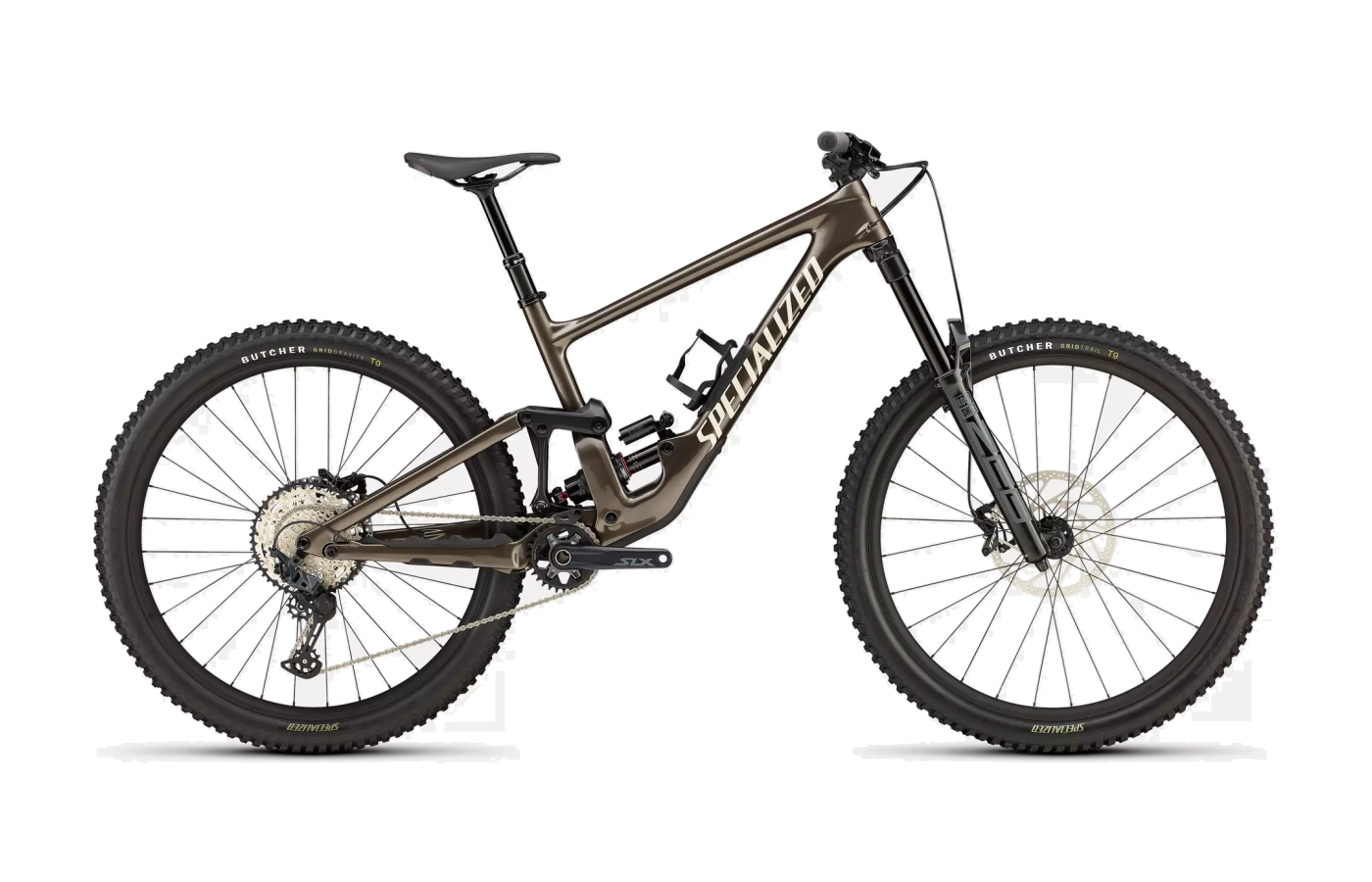
Enduro
The Specialized Enduro is the dealer-supported benchmark in the long-travel category. Similar travel numbers to the Nomad, full 29er, and broader build range — the safe pick if you want proven performance plus a Specialized dealer nearby.
Compare →Spire
The Transition Spire is a 170 mm 29er (mullet-capable) that's earned a reputation for composure in rough, steep terrain with a more playful feel than most big bikes. A strong third option if neither the Nomad's mullet mandate nor the Propain's configurator appeal.
Compare →