Shadowcat
vsSB135
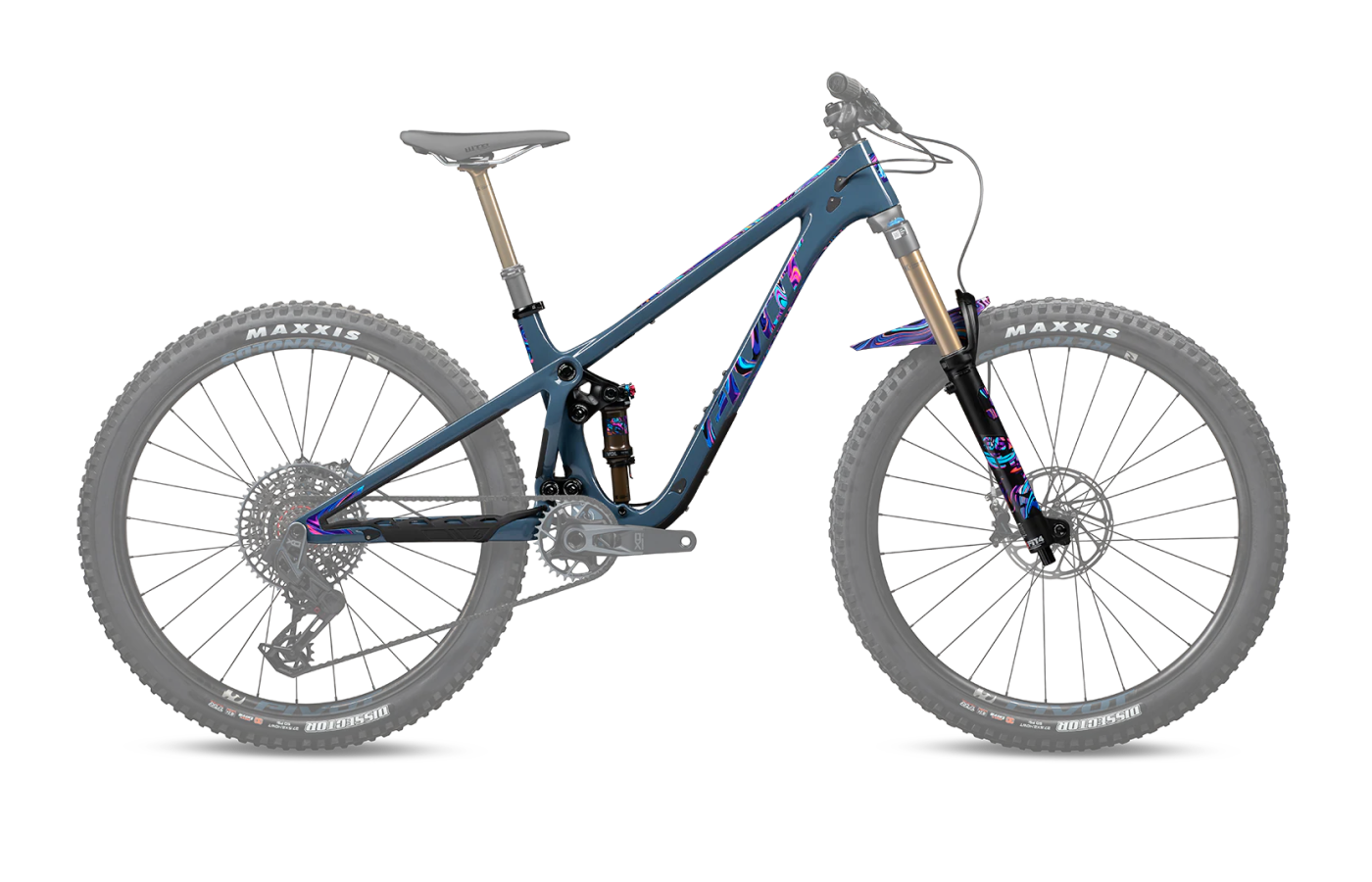
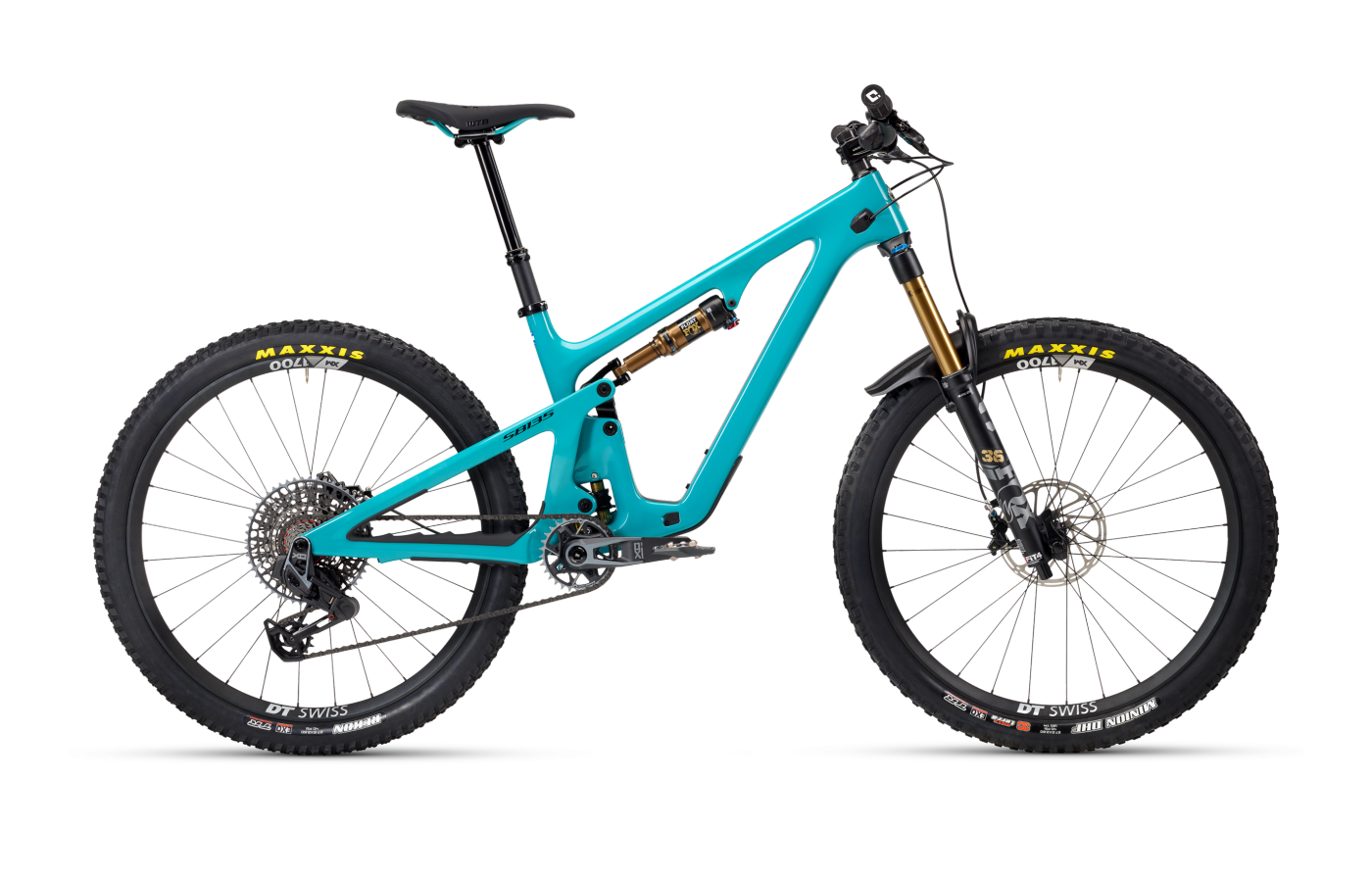
Two 27.5 holdouts, two takes on fun.
The Pivot Shadowcat is the lightweight, DW-Link climber that pops. The Yeti SB135 is the Switch Infinity jib machine that corners.
Shadowcat
- Exceptionally light for a 140/160 mm trail bike — top builds land under 28 lb with carbon wheels.
- DW-Link pedaling — reviewers routinely ignore the climb switch; technical climbing is a standout.
- Wider price ladder — starts at $3,999 with the Brunch Ride, climbing to $11,999 for Team XTR Di2.
- Fox DPS rear shock and FIT4-damped 36 trade tunability and bottom-out support for weight — aggressive riders often upgrade.
- Less composed than the Yeti in genuinely chunky, high-speed terrain; rewards an active, line-picking style.
SB135
- Switch Infinity travel feels deeper than 135 mm — reviewers describe it as "bottomless" on repeated hits.
- Size-specific engineering — XS and S get dedicated front triangles and 429–437 mm chainstays tuned per size.
- Corner speed — MBA and BikeRadar both single out the SB135 as one of the most committed cornering trail bikes on the market.
- Switch Infinity link needs a 20-hour service interval in wet climates; neglect it and bearings suffer.
- Lineup tops out at SRAM X0 AXS — no XTR or XX tier if you want the very top build.
Editor’s analysis
Small wheels, big smiles — but what kind of small-wheel trail bike you want still comes down to a very real fork in the road.
In a segment where almost everyone has migrated to 29ers, the Pivot Shadowcat and the Yeti SB135 are two of the last full 27.5-inch mid-travel trail bikes a major brand will still sell you. They share a wheel size, a price band above $6k, Fox 36 forks, DT Swiss XM1700 wheels on their editor's-pick builds, and a stated mission: more agility, more engagement, more riding-as-play. But the way each one gets there is genuinely different.
The Pivot Shadowcat is the lighter, more efficient one. 140 mm of DW-Link rear travel paired with a 160 mm fork, a 65.8 HTA, and 430 mm chainstays across every size, wrapped in a carbon frame that Pivot claims is only 45 g heavier than their Mach 4 SL XC race bike. Reviewers describe it as "wildly efficient" under power, "snappy" out of corners, and so good at technical climbing that Mountain Bike Action joked they could have called it the Mountain Goat. The price of admission is an active riding style — at high speed in chunky terrain, the Shadowcat wants you to pick lines, not plow them.
The Yeti SB135 takes the same 27.5 thesis and pushes it toward descending. 135 mm of Switch Infinity rear travel behind a 150 mm fork, a slacker 65.4 HTA, a steeper 77 effective seat angle, and crucially, size-specific chainstays (429–437 mm) and entirely different front triangles for XS and S. Reviewers call the suspension "bottomless" for its travel number — it "flutters over chatter but provides significant support for big hits" (BikeRadar) — and the cornering "unapologetic" (MBA). The trade is maintenance: Yeti recommends a 20-hour service interval on the Switch Infinity link in wet conditions.
Put another way: the Shadowcat is the 27.5 trail bike for the rider who climbs as much as they descend and wants the lightest, poppiest tool that still keeps up on the way down. The SB135 is the 27.5 trail bike for the rider whose rides are mostly pointed downhill and who cares more about corner speed than grams on the scale.
Where the builds differ.
Comparing our editor's-pick builds side-by-side. Winners highlighted row-by-row — lower price and weight, and the better-spec component, each mark a point.
Build variants & pricing
Both editor's picks run SRAM X0 AXS Transmission and DT Swiss XM1700 wheels — a rare apples-to-apples match. The Pivot costs ~$2,700 more for a lighter frame and higher-end fork damper options.
Prices are current US MSRP. The Shadowcat ladder starts cheaper ($3,999 Brunch Ride) and climbs higher ($11,999 Team XTR Di2); the SB135 line is narrower ($4,200–$6,300) and tops out at X0 AXS.
How they fit, how they steer.
The Shadowcat SM has a 605 stack / 430 reach with 430 mm chainstays and a 65.8 HTA. The SB135 M sits 8 mm lower in stack, 30 mm longer in reach, with a 1 mm longer chainstay and a half-degree slacker head angle — a longer, lower, slacker profile at the same fit score.
Which size should I buy?
Size recommendations are driven by reach, stack, and effective top tube across each brand's range. Pivot's sizing runs XS–LG; Yeti's XS–XL — the extra XL on the Yeti helps the tallest riders.
→These are starting points. Flexibility, riding style, and preferred position all shift the answer — if you’re between sizes, a professional fit beats a chart.
What the magazines said.
Published reviews from trusted cycling outlets. Click through for the full write-up.
Which one should you buy?
If you want the lightest, most efficient 27.5 trail bike and climb as much as you descend, get the Shadowcat. If you want the poppiest, most corner-committed 27.5 trail bike and point mostly downhill, get the SB135.
Shadowcat
If your rides are long, your climbs are technical, and you want a 140 mm trail bike that pedals like a short-travel XC bike but still descends well, the Shadowcat is the most efficient way to own a full 27.5 trail platform today. Lighter, faster uphill, more forgiving of weak moments on the pedals.
SB135
If you ride sculpted flow and jump lines more than big ascents, and you want a bike that treats every berm and root as an opportunity to generate speed, the SB135 is the sharper tool. Its Switch Infinity feel and size-specific geometry are purpose-built for cornering and popping, not for gram-chasing.
Questions buyers actually ask.
Short answers to the things we get emailed about most often.
01Which climbs better?
The Pivot Shadowcat, clearly. Its DW-Link suspension pedals with almost no bob even in the open position, and the frame is exceptionally light — Pivot claims only 45 g more than their Mach 4 SL XC race bike. Mountain Bike Action went as far as to suggest the bike "scales technical climbs so well they could have easily called it the Mountain Goat."
The SB135 is no slouch on climbs — reviewers call it "thoughtless and fun" on punchy ascents, and the 77-degree effective seat angle keeps you planted — but the extra weight and more active Switch Infinity feel mean it's a notch less efficient on long, sustained climbs.
02Which descends better?
The Yeti SB135, on most trails. A slacker 65.4 HTA (vs 65.8), the "bottomless" Switch Infinity feel, size-specific chainstays (429–437 mm) tuned per frame size, and, on the editor's-pick T3, burlier 2.6" Minion DHF / Rekon tires all add up to a more composed, cornering-first descender.
The Shadowcat is fully capable downhill, but its lighter Fox Float DPS rear shock and FIT4-damped 36 fork trade bottom-out support and tunability for weight. Several reviewers swapped to coil shocks or hotter tires to push the Shadowcat harder.
03How much travel does each bike have?
Shadowcat: 140 mm rear / 160 mm front across every build.
SB135: 135 mm rear / 150 mm front on the standard builds reviewed here. Yeti also historically offered a "Lunch Ride" spec with a 160 mm fork and burlier parts — the current 2023–present T-series configs in this comparison ship with the 150 mm Fox Factory 36.
Both platforms run a Fox 36 chassis; the Pivot's is 10 mm longer, which offsets its slightly steeper head angle.
04Why pick a 27.5 trail bike in 2025?
Agility, corner speed, and fit for smaller riders. Both of these bikes exist because their designers believe 27.5" wheels still have a place — they accelerate harder, turn tighter, and fit short riders better than 29ers.
The trade-off is rollover: 27.5 wheels "hang up" in deep holes and root nests more easily than 29ers. If most of your riding is square-edge chunk at high speed, a 29er platform (Yeti SB140, Pivot Switchblade) will be easier. If your trails are flowy, tight, or sculpted, the 27.5 format rewards you.
05How hard is the Yeti Switch Infinity link to maintain?
Not hard, but it's not set-and-forget. Yeti recommends a 20-hour service interval in wet or "slimy" conditions and 75–100 hours in dry climates. In practice, that's a grease-gun top-up via integrated ports — 15 minutes at home if you stay on top of it.
The failure mode when neglected is real, though. Long-term reviewers in wet climates (notably the Pacific Northwest) have reported needing full Switch Unit replacements after a single winter. If you live somewhere muddy, budget the maintenance time; if you don't, the link is durable and the Turq-series frames come with a lifetime warranty.
06What's the weight difference?
The Shadowcat is meaningfully lighter. Complete Shadowcat builds come in in the sub-29 lb range — Blister weighed a Team XTR at 28.8 lb, and Pivot claims the size medium frame alone is about 5 lb.
The SB135 sits in the 31.5–33 lb band depending on build. On a 140/160 mm trail bike, that's a real 3–4 lb delta you'll feel on sustained climbs — and it's the single clearest reason to pick the Pivot if your rides involve a lot of pedaling up.
07Which fits smaller riders better?
Both do better than most — this is part of the appeal of the 27.5" format — but Yeti goes further. The SB135 XS and S frames aren't just shrunken versions of the Large: they have entirely different front triangles, linkages, and swingarms, plus size-specific chainstays (429 mm on XS, 431.8 mm on S/M, up to 436.9 mm on XL).
The Shadowcat uses a fixed 430 mm chainstay across every size. That's a great rear-center for agility, but less size-tailored. Both sit short riders low and give them usable standover; for a 5'4" rider with strong geometry preferences, the SB135 edges it.
08What warranty do they come with?
Pivot offers a 10-year frame warranty to the original owner, plus crash-replacement pricing. Yeti offers a lifetime frame warranty, including on the Switch Infinity link, on Turq-series frames. Both brands are well-regarded for standing behind their frames — neither one is the risky choice here.
Similar bikes
If your priorities don’t map cleanly onto either of these, one of these adjacent bikes probably fits better.
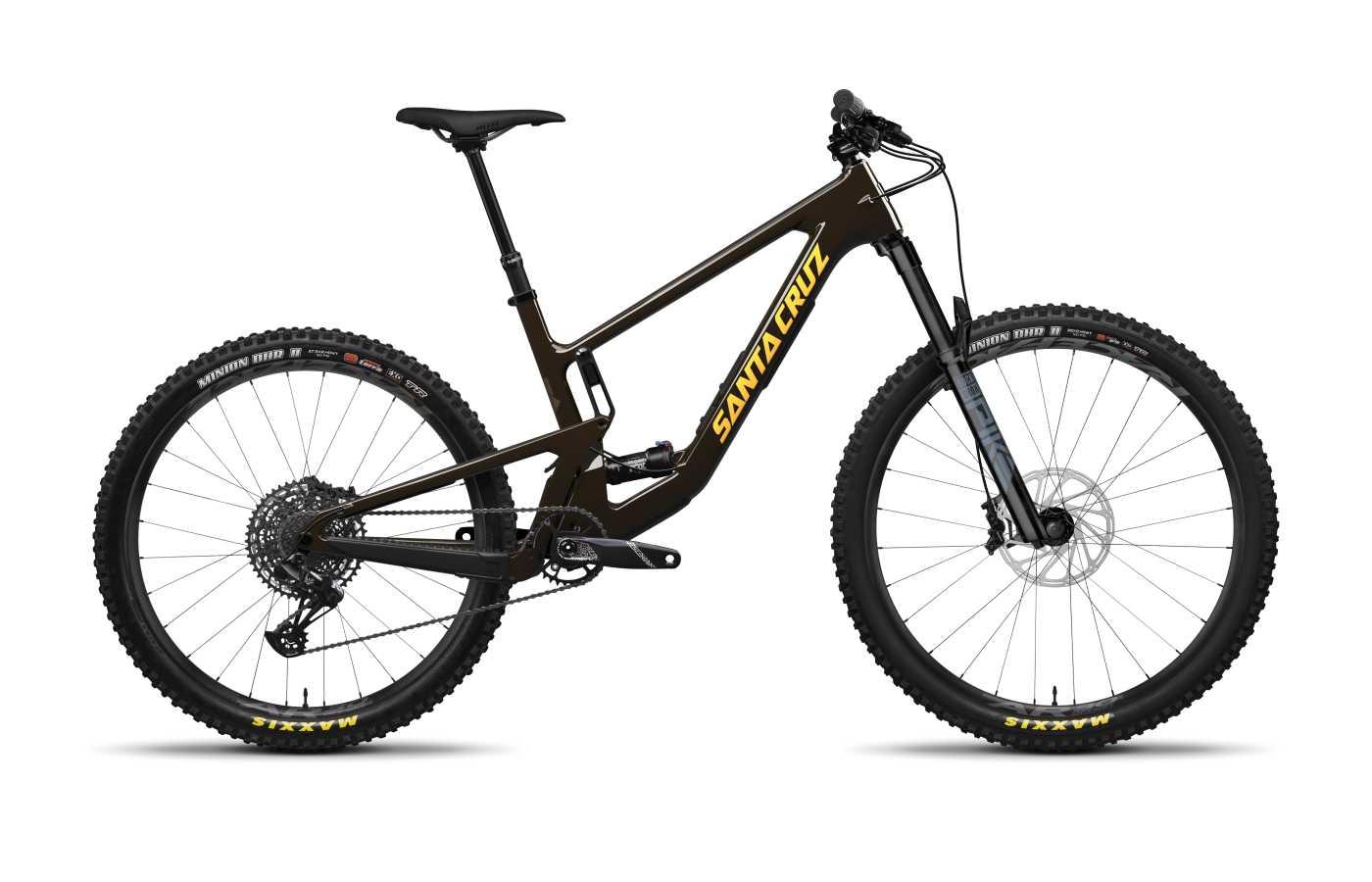
5010
The Santa Cruz 5010 is the other obvious pick in this sliver of the market — a poppy, mid-travel 27.5 (or mullet, depending on generation) trail bike whose VPP suspension splits the difference between DW-Link efficiency and Switch Infinity plushness.
Compare →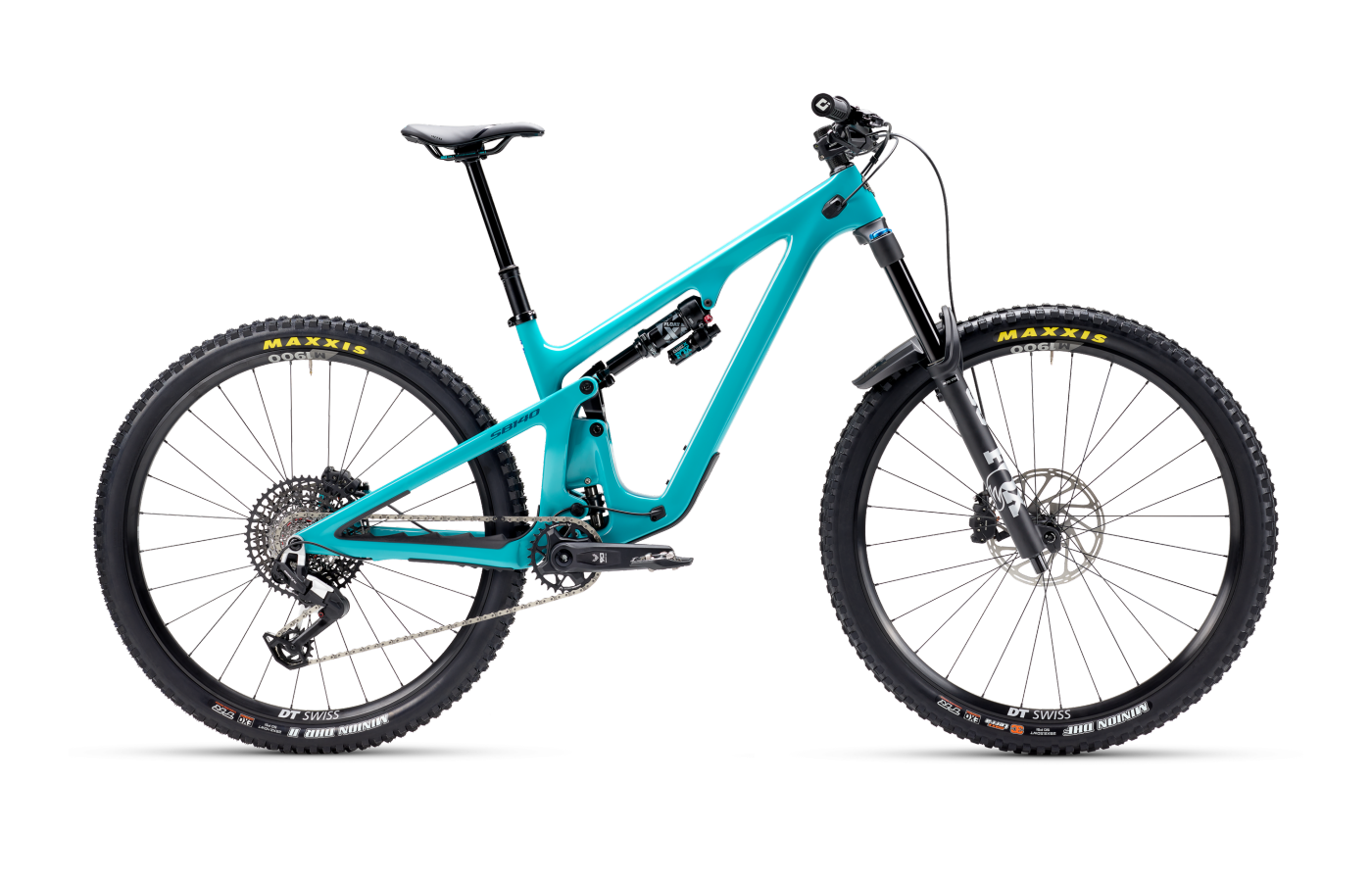
SB140
The Yeti SB140 is the SB135's 29er sibling — same Switch Infinity platform and similar travel, but with the rollover and straight-line composure of bigger wheels. Pick it if you like the Yeti feel but ride more chunk than flow.
Compare →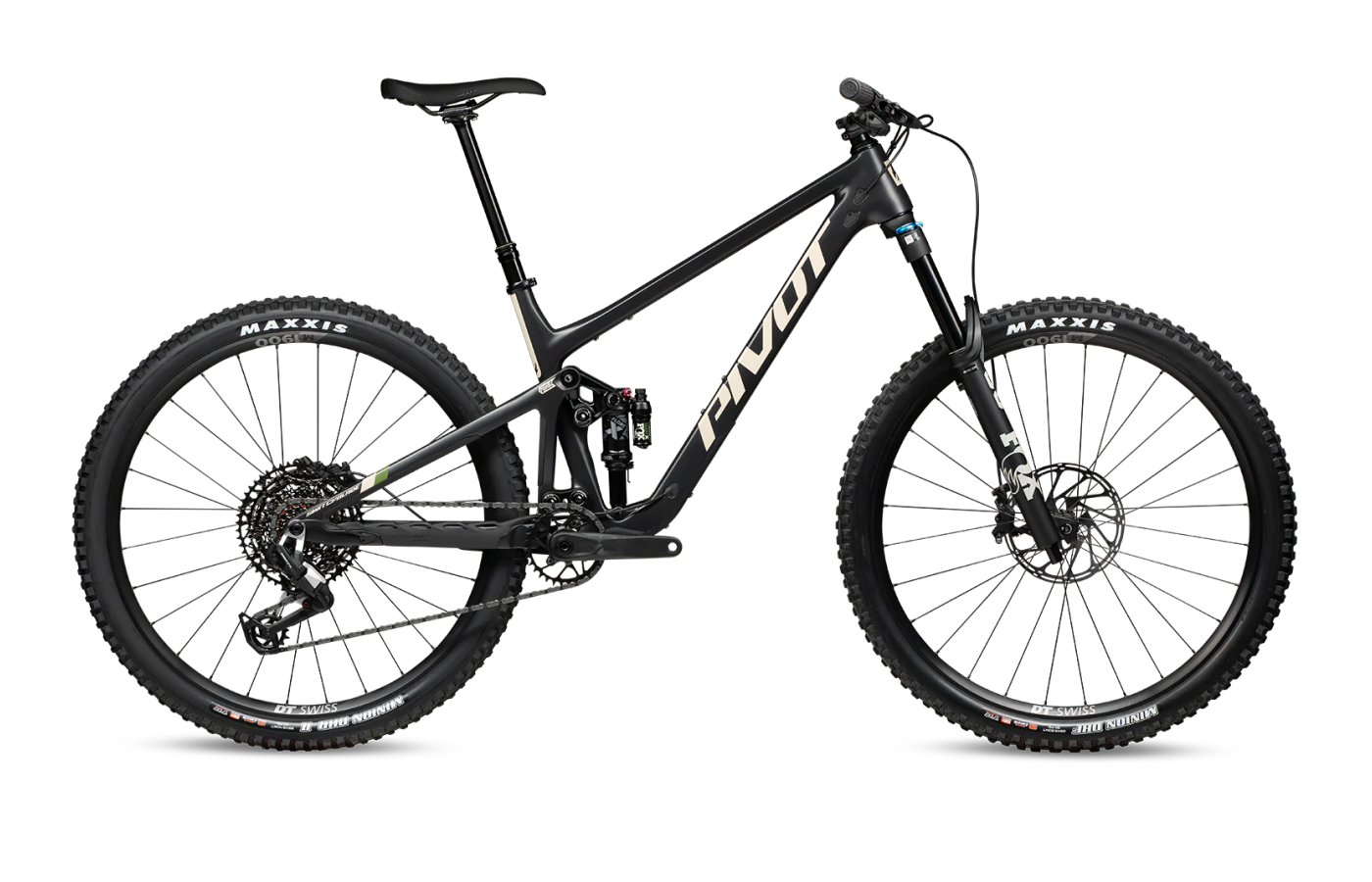
Switchblade
The Pivot Switchblade is the Shadowcat's 29" cousin — same Hollow Core carbon chops and DW-Link pedaling, but on bigger wheels with longer rear travel for higher-speed stability.
Compare →