Dogma X
vsDomane
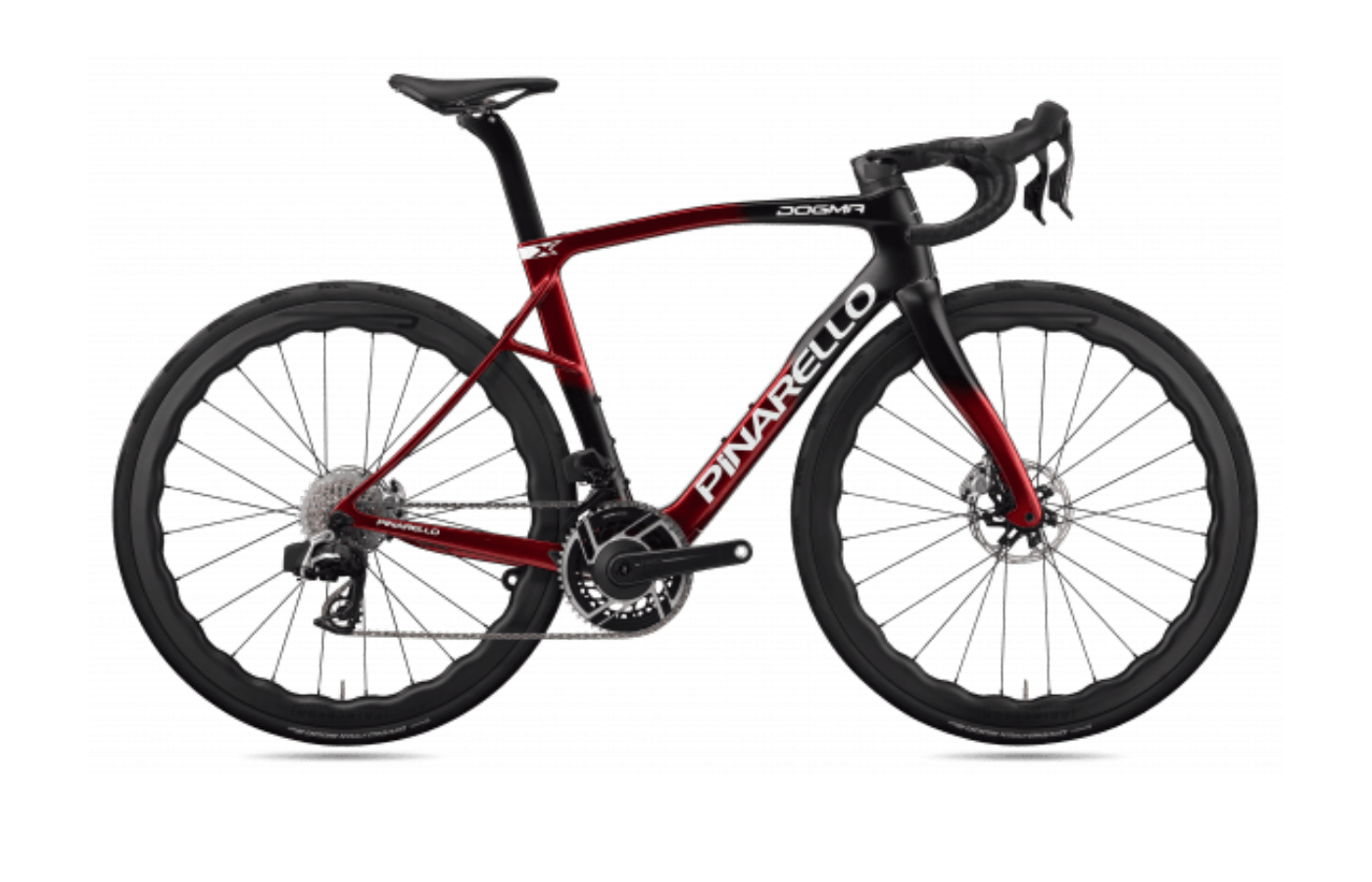
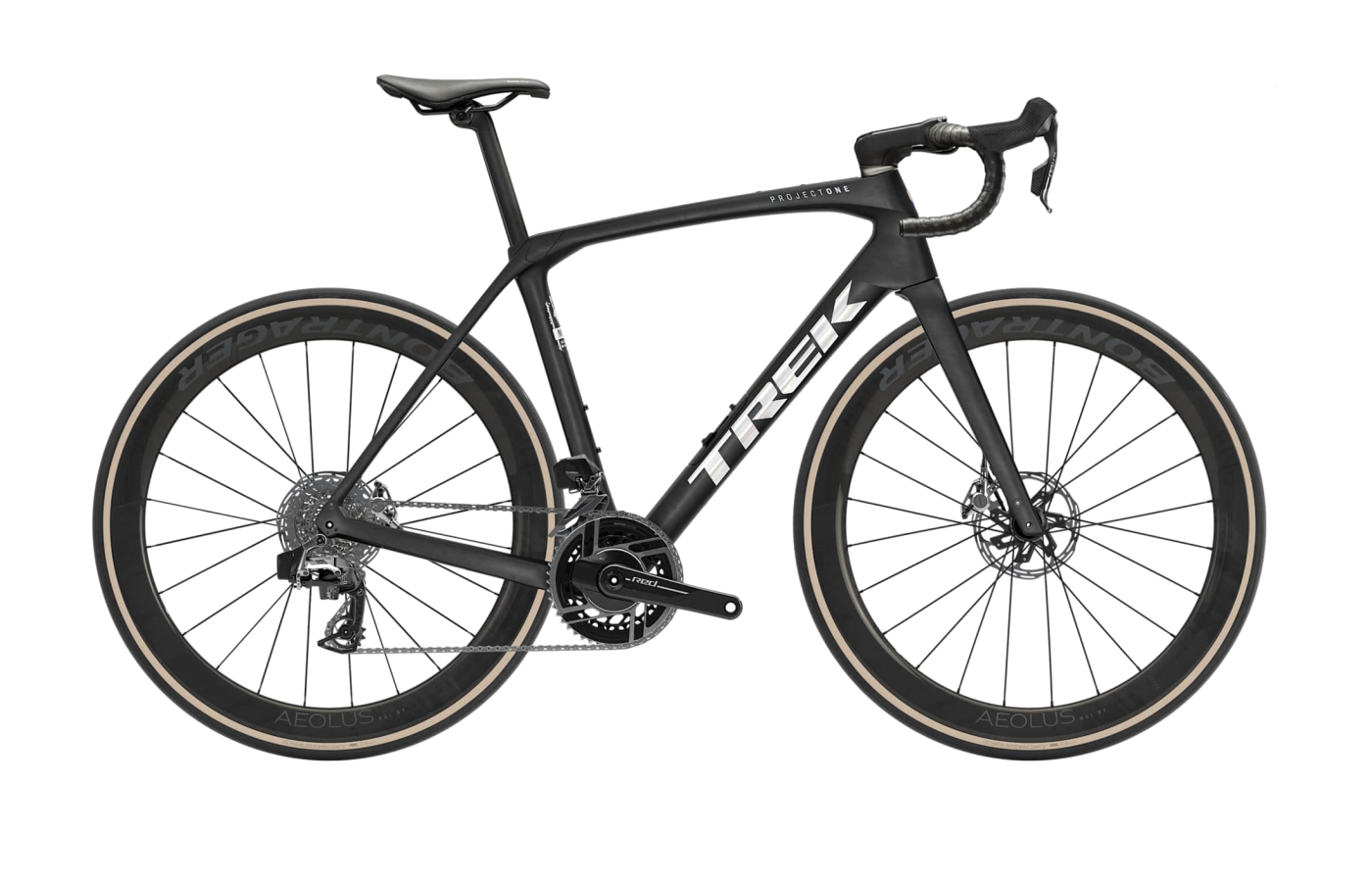
Two endurance flagships, two completely different ladders.
The Dogma X is a $15,500 boutique single — pick a groupset, that's the menu. The Domane goes from $1,199 alloy to $12,499 SLR, same frame DNA up and down the carbon range.
Dogma X
- Top-shelf spec across the board — T1100 1K carbon, Princeton GRIT 4540 wheels, 35 mm Pirelli P ZEROs, Dura-Ace or Red AXS standard.
- Rock-solid descender — ~997 mm wheelbase and 422 mm chainstays make it "impeccable" through fast sweepers and hairpins, per multiple reviewers.
- Italian boutique cachet — My Way custom configurator, hand-finished paint, 35 mm tire clearance on a Dogma badge.
- Two builds, one price — $15,500 entry, no mid-tier or alloy on offer.
- Stiff Most integrated cockpit transmits more road buzz than the compliant rear deserves.
Domane
- Massive build range — $1,199 Claris alloy through $12,499 Red AXS carbon, ten builds, same endurance DNA.
- Genuinely versatile — 38 mm tire clearance (40+ mm in practice), internal downtube storage, fender mounts, T47 threaded BB.
- Plush rear end — Gen 4's non-adjustable IsoSpeed is tuned to the old softest setting; reviewers call it "astonishingly comfortable" on broken tarmac.
- Recurring slipping/creaking seatpost issue on the IsoSpeed wedge — Trek has issued multiple revised parts.
- Stock Bontrager R3/Kwaremont tires are widely panned as slow; most reviewers swap them immediately.
Editor’s analysis
Both bikes promise the same thing — a Dogma F or Madone you can ride all day — but they answer the question of who gets to buy in in opposite ways.
On the surface this looks like a fair fight. The Pinarello Dogma X and the Trek Domane Gen 4 both pitch the same idea: a slightly detuned race bike that lasts the long ride. Both lean on rear-triangle compliance tricks (X-Stays vs. IsoSpeed), both clear modern endurance rubber (35 mm vs. 38 mm), both are pulled from the brand's WorldTour DNA. Spec the top builds and they even sit close on the scale — the Domane SLR 9 lands around 7.34 kg, the Dogma X around 7.46 kg.
Then look at the price ladder and the comparison falls apart. Pinarello sells the Dogma X in exactly two builds, both $15,500 — Dura-Ace Di2 or SRAM Red eTap AXS. There is no $6k Ultegra Dogma X. There is no aluminum Dogma X. If you can't write a $15,500 check (or buy the $6,950 frameset), this bike is not for you. The Domane spans $1,199 to $12,499 across ten builds, with Shimano 105, Ultegra Di2, Dura-Ace, Tiagra, Claris, and SRAM Force AXS / Red AXS all in the lineup.
Ride character splits along similar lines. The Dogma X is the rarer machine — Toray T1100 1K throughout, integrated MOST Talon cockpit, 35 mm Pirelli P ZERO Race rubber stock, and reviewers consistently calling it stable-at-speed and "sharp on hairpins." The trade-off most testers flag is a stiffer front end: the Most cockpit transmits buzz the X-Stays don't filter. The Domane's headline is the IsoSpeed decoupler — universally praised on the rear, gone from the front in Gen 4 — paired with a 75–80 mm bottom bracket drop that makes it feel planted on rough roads and light gravel in a way the Pinarello doesn't try for.
Put it this way: the Pinarello Dogma X is the bike you buy when the badge and the build list are both the point. The Trek Domane is the bike you buy when you want the same category of ride — endurance comfort with race DNA — and you'd like to keep $4k–$14k in your bank account. Both are excellent. They're not really competing for the same buyer.
Where the builds differ.
Comparing our editor's-pick builds side-by-side. Winners highlighted row-by-row — lower price and weight, and the better-spec component, each mark a point.
Build variants & pricing
The Pinarello lineup is two builds, both $15,500. The Trek lineup is ten builds spanning $1,199 to $12,499.
Pricing is current US MSRP. Pinarello does not offer the Dogma X below Dura-Ace / Red — the cheapest way in is the $6,950 frameset for a custom build. If a sub-$10k complete bike matters, the Domane is the only side of this comparison that has one.
How they fit, how they steer.
Compared at Pinarello size 500 and Trek size 50 — the fit-picked frames for each. The Domane sits 13 mm lower in stack and 11 mm shorter in reach, runs a 0.4 degree slacker head tube, and has a steeper 74.6 degree seat tube. Wheelbase and chainstays come out within a millimeter of each other.
Which size should I buy?
Pinarello uses numeric sizes from 425 to 600 (eleven options); Trek runs 47 to 62 (eight). Both ranges overlap in the middle — the Dogma X extends both smaller and larger than the Domane Gen 4.
→These are starting points. Flexibility, riding style, and preferred position all shift the answer — if you’re between sizes, a professional fit beats a chart.
What the magazines said.
Published reviews from trusted cycling outlets. Click through for the full write-up.
Which one should you buy?
If you want one endurance bike and the badge matters, get the Dogma X. If you want the same category of ride at half the money — or any access at all under $15k — get the Domane.
Dogma X
If you've already decided you want a Dogma — and you want it in a less punishing geometry than the F — the X is the only bike that does that job. Top-tier spec is mandatory because nothing else is on the menu.
Domane
If you want endurance comfort, real all-road versatility, and a price you can actually justify, the Domane is the answer at almost any budget. Wider clearance, internal storage, and a build for nearly every wallet — at the cost of some Trek-tax pricing at the SLR end.
Questions buyers actually ask.
Short answers to the things we get emailed about most often.
01How does the price gap actually break down?
The Dogma X is $15,500 in either build — Dura-Ace Di2 or SRAM Red eTap AXS, both with Princeton GRIT 4540 carbon wheels and the MOST Talon integrated cockpit. There is no Ultegra option, no 105 option, no alloy option. A frameset alone is $6,950.
The Domane Gen 4 runs from $1,199 (AL 2, Claris) to $12,499 (SLR 9 AXS, SRAM RED AXS). Comparable Red AXS trim runs you $3,000 less than the Pinarello — and in Ultegra Di2 (SLR 7 Gen 4 at $8,499 or SL 7 Gen 4 at $6,799) you're under half the Dogma X's price for a similar ride concept.
02Which one is more comfortable on broken tarmac?
Both rate exceptionally well, but they get there differently.
The Domane's rear IsoSpeed decoupler is the standout — Trek tuned the non-adjustable Gen 4 version to match the softest setting of the old adjustable system, and reviewers consistently describe it as "astonishingly comfortable" on potholes and chip seal. The front end, with the IsoSpeed removed in Gen 4, leans on the 32 mm Bontrager Kwaremonts for compliance.
The Dogma X uses the X-Stays rear triangle and 35 mm tire clearance — most test bikes ship with 32 mm Pirelli P ZEROs. Multiple reviewers call out that the Most integrated cockpit is stiffer than the rear deserves, creating a slight front-rear imbalance. Plush rear, firmer hands.
03What's the maximum tire clearance?
Pinarello Dogma X: 35 mm officially. Most reviewers tested with 32 mm Pirelli P ZERO Race TLR.
Trek Domane Gen 4: 38 mm officially, with multiple reviewers fitting 40 mm or even 43 mm rubber successfully. Stock tires are 32 mm Bontrager Kwaremonts.
The Domane's extra clearance makes it the more credible light-gravel bike of the two — the bottom bracket drop (75–80 mm) and slacker geometry support that use case in a way the Pinarello doesn't really try for.
04Are there reliability issues to know about?
The Domane Gen 4 has a documented seatpost slipping/creaking issue tied to the IsoSpeed wedge — multiple long-term reviewers and owners report it, particularly riders over 80 kg. Trek has shipped revised wedge hardware (Revisions 2 and 4) to address it, but availability has been spotty. Worth confirming with a dealer that your bike has the latest revision.
The Dogma X has a notably clean reliability record across the major reviews — Cycling News reported "zero issues, no niggles, no creaks" across two test bikes. Pinarello's Italian threaded BB also avoids the press-fit creaks that plague some carbon endurance bikes.
05Which one descends better?
Both descend well, but the Dogma X edges it for outright high-speed composure. The 997 mm wheelbase, 422 mm chainstays, and slightly slacker head angle in the middle sizes give it a "train on the tracks" feel through fast sweepers — Cycling Weekly explicitly called out wanting to "descend a long, hairpin-strewn alpine pass on it."
The Domane is also a confident descender, with reviewers praising its "rock-solid" stability and that low 75–80 mm bottom bracket drop. It's a touch more planted, a touch less sharp than the Pinarello — the Dogma X's geometry is described as the steeper, more responsive of the two, despite its endurance positioning.
06Can I service the integrated cockpits at home?
Neither is friendly. Both run cables fully internal through the headset, which means brake bleeds, stem swaps, or bar-width changes typically require partial disassembly.
The Pinarello's MOST Talon Ultra Light is a one-piece unit — to change reach or width, you buy a new bar/stem combo. T20 Torx bolts and proprietary spacers add complexity.
The Domane uses a two-piece Trek RCS Pro stem and Bontrager Aero Pro bar with Di2 routing — friendlier for stem-length changes since it isn't fully one-piece. But Velo flagged the upper headset bearing as "woefully exposed" with no secondary seal, meaning sweat and road spray reach the bearing, requiring more frequent service than a conventional setup.
07Which one climbs better?
Closer than the spec sheets suggest. The Domane SLR 9 is actually the lighter bike here — about 7.34 kg in size 56 versus the Dogma X's claimed 7.46 kg in size M. On paper, the Trek should climb better.
In practice, reviewers describe the Dogma X as feeling efficient when seated ("no issues translating pedal strokes into forward momentum," per Pez) but a touch "loose" out of the saddle for hard sprinters. Cycling Weekly recorded a Strava PB on a long, poorly-surfaced climb because the Pinarello's compliance let them keep cleaner power. The Domane is rated "capable" and "settle into a rhythm" rather than explosive — and stock Bontrager R3/Kwaremont tires meaningfully hurt its acceleration until upgraded.
08Is the Pinarello worth $3k more than the equivalent Trek?
Honest answer: it depends entirely on what you're paying for.
For objective performance — comfort, speed, drivetrain, wheels — the Domane SLR 9 AXS at $12,499 is genuinely competitive with the Dogma X SRAM Red AXS at $15,500. Same drivetrain tier, similar weight, similar comfort outcomes via different mechanisms.
What the $3k buys you on the Pinarello is the brand and the build experience: the Dogma badge, the Italian heritage, Princeton wheels rather than Bontrager, the My Way custom configurator. Reviewers consistently flag the Dogma X's value at 5/10 — the bike is great, the price is a luxury premium. If brand cachet is part of the purchase, that premium is the point. If it isn't, the Trek wins every spreadsheet.
Similar bikes
If your priorities don’t map cleanly onto either of these, one of these adjacent bikes probably fits better.
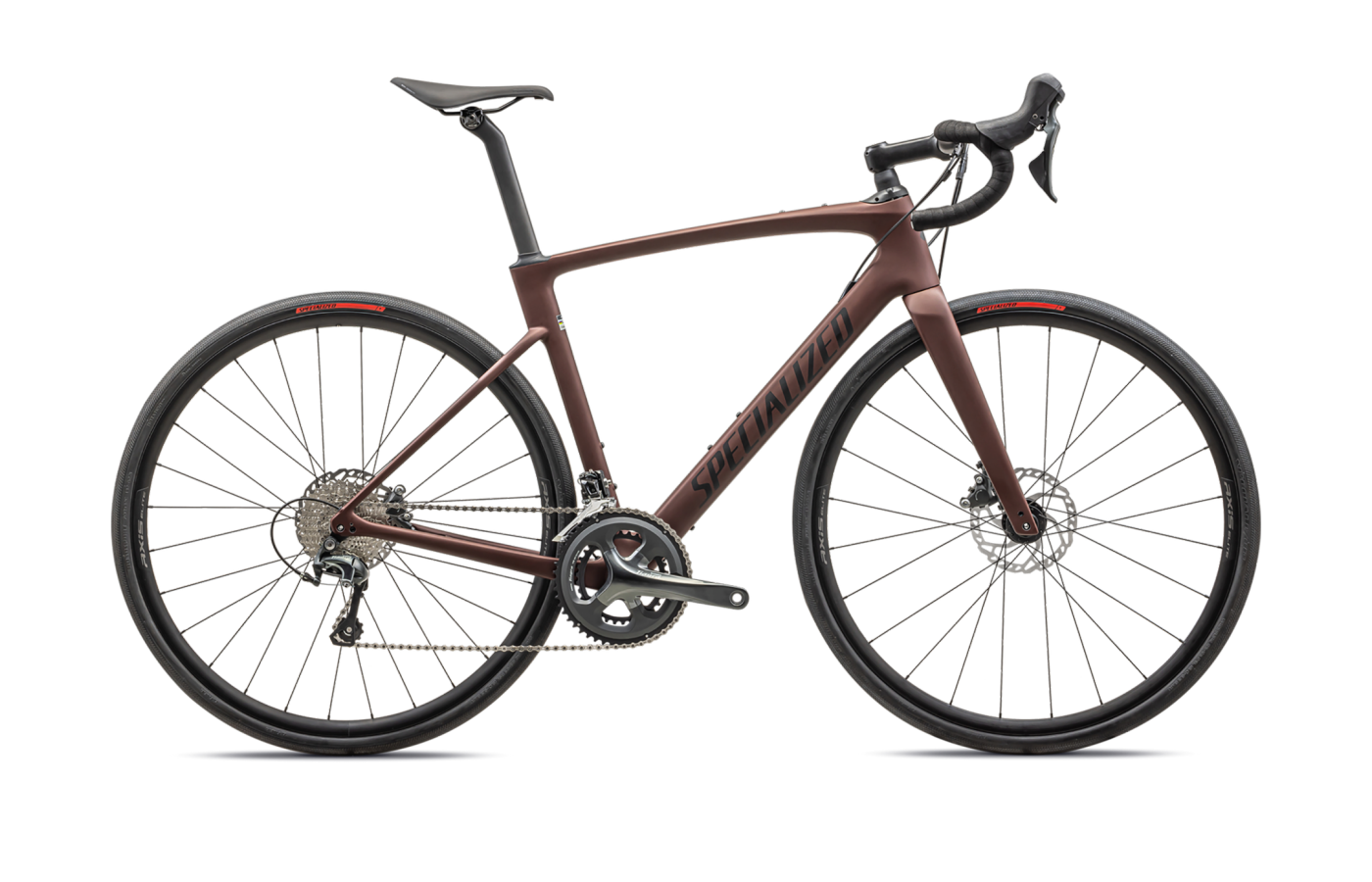
Roubaix
The benchmark American endurance rival — Specialized's Future Shock head-tube cartridge gives the Roubaix something neither of these has: real, active front-end suspension. If the Domane's missing front IsoSpeed bothers you, the Specialized Roubaix is where to look.
Compare →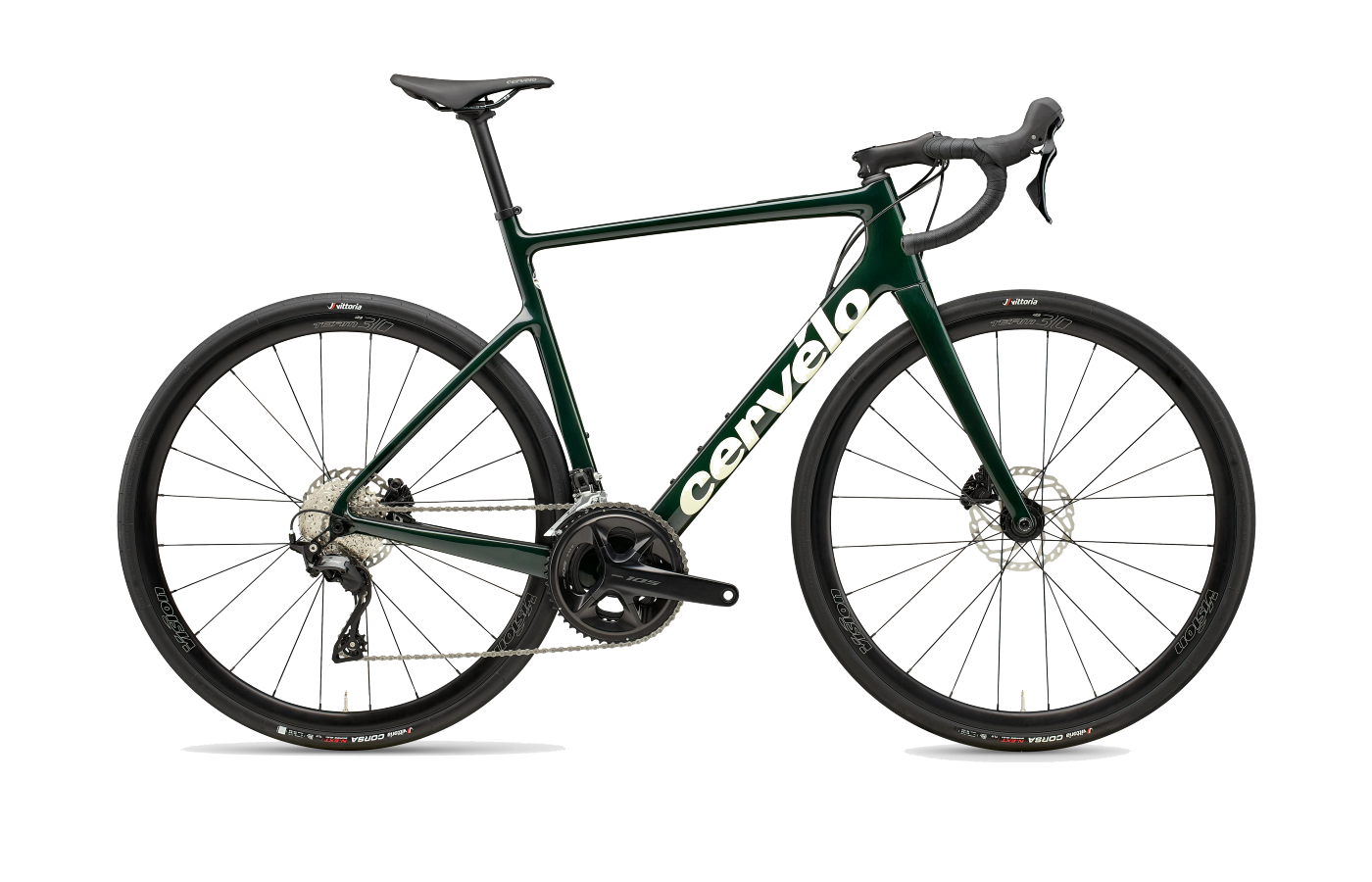
Caledonia
Cervélo's all-road answer — sharper and more aero-leaning than either of these, with similar tire clearance and a notably racier feel. The Cervelo Caledonia is the pick if you want endurance geometry but not endurance pace.
Compare →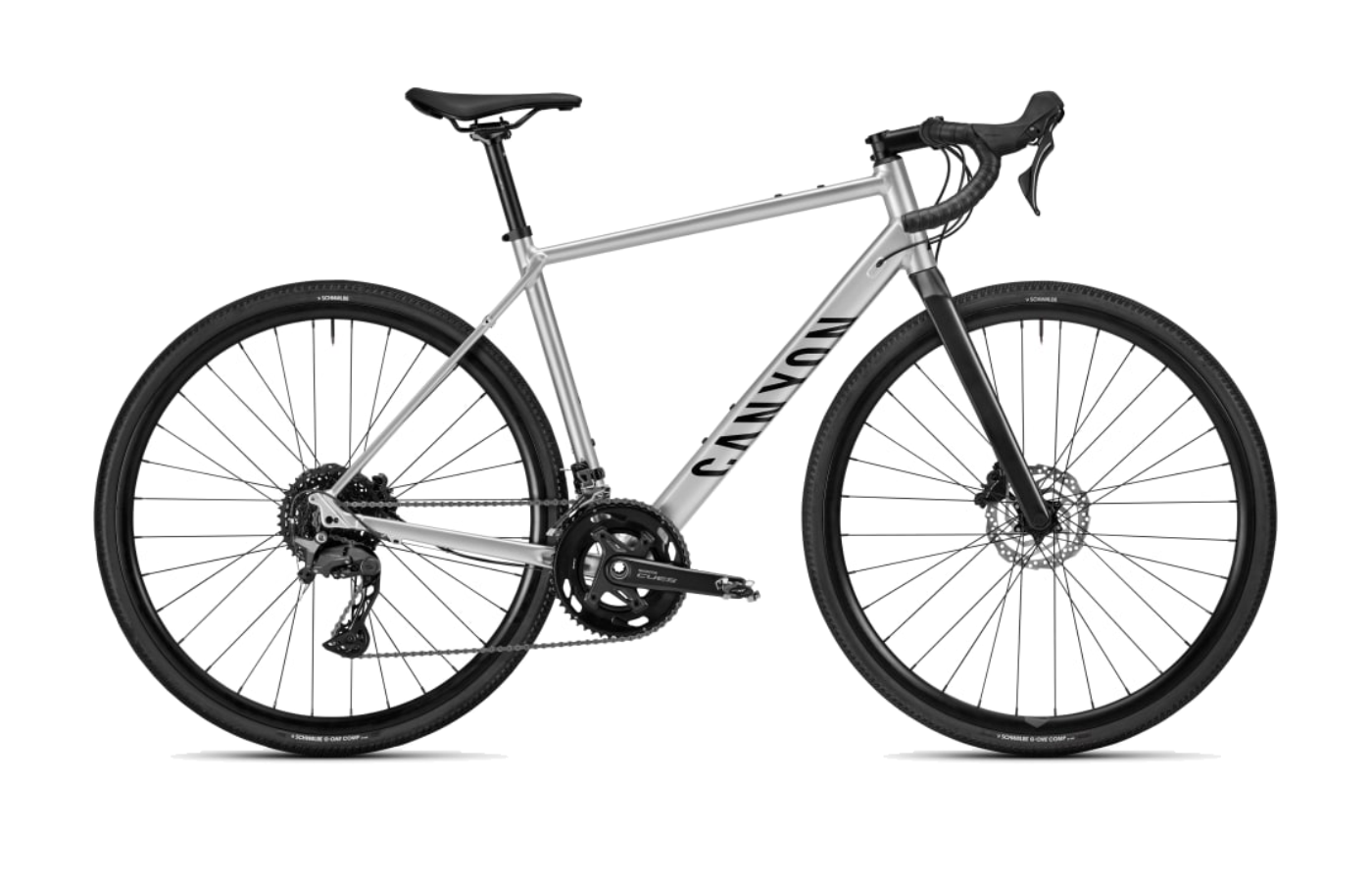
Endurace
Direct-to-consumer pricing on a genuinely competitive endurance frame. The Canyon Endurace gets you most of the Domane's category at meaningfully less money — the catch is no local dealer for the seatpost-creak situation those bikes occasionally produce.
Compare →