Sight
vsAltitude
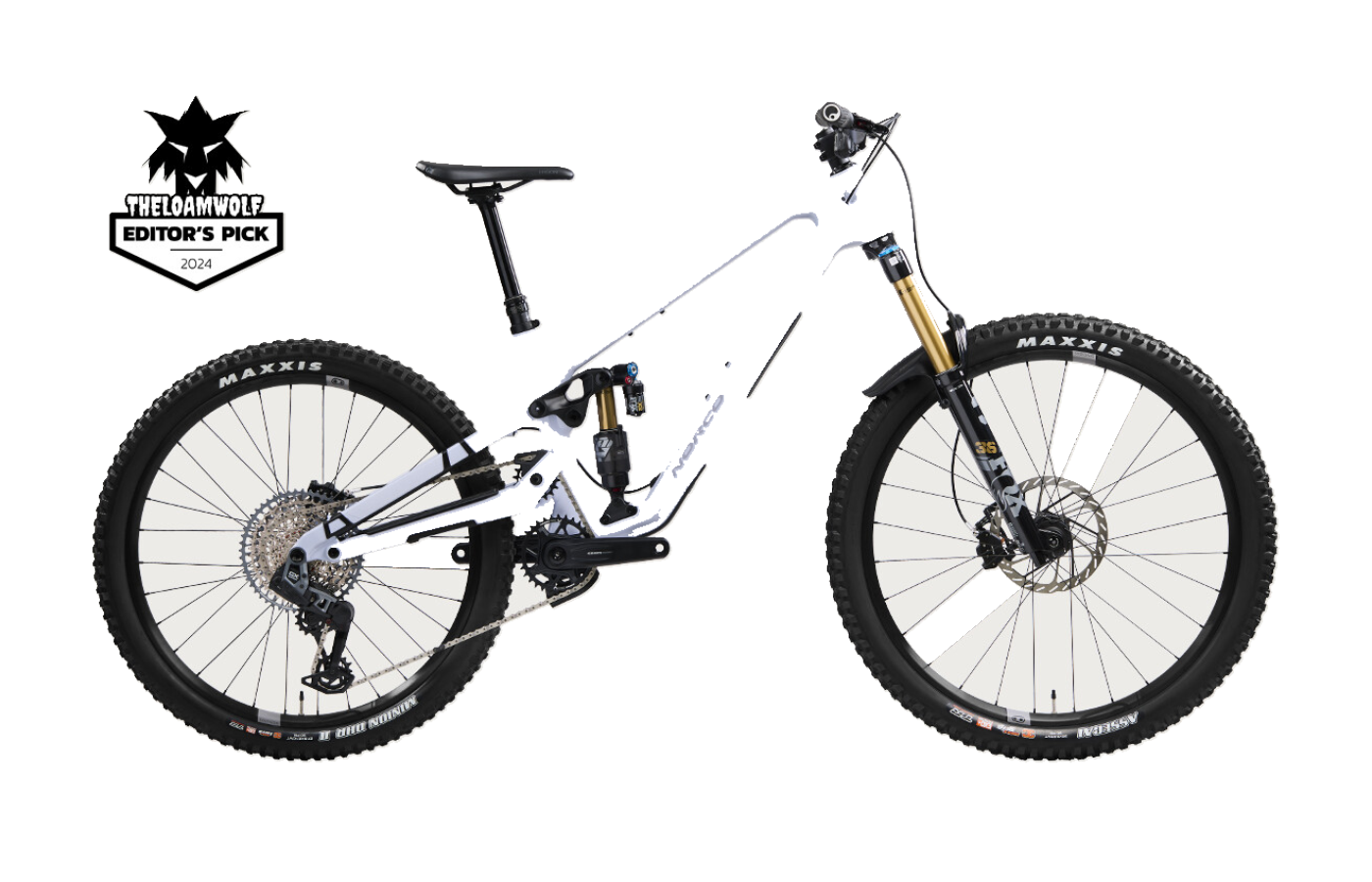
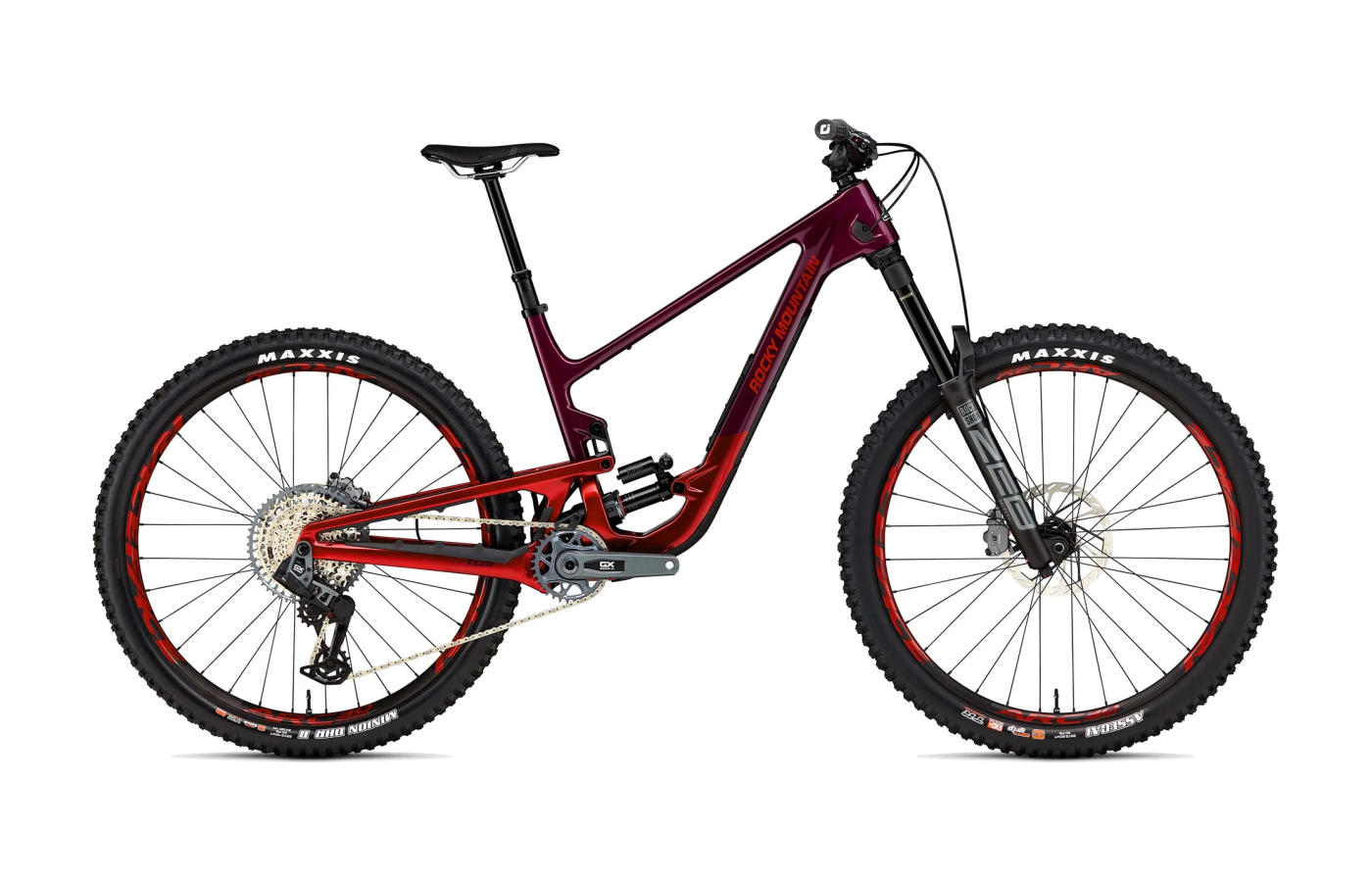
Two Canadian all-mountain bikes, two suspension philosophies.
The Norco Sight goes high-pivot for a quiet, momentum-hoarding 150 mm trail-enduro. The Rocky Mountain Altitude is a 160 mm low-shock dual-link enduro race bike that lives for the descent.
Sight
- Quietest bike in the segment — fully ported routing, capped bearings, and a near-silent 18T idler that reviewers literally forgot was there.
- High-pivot bump compliance with playful manners — rearward axle path eats square edges, but the kinematics still let you pop and pump.
- More tire room — 61 mm clearance at the chainstays leaves headroom for full 2.4" rubber and mud margins.
- Long 1219 mm wheelbase at S2 makes tight low-speed switchbacks more of a handful.
- Builds the C1 spec around a Fox 36 — burly enough for trail/all-mountain, less so for full enduro race duty than a 38.
Altitude
- Extreme high-speed composure — 62.9° HTA, low-slung LC2R shock placement, and 440 mm chainstays produce a "planted" feel reviewers describe as a magic eraser.
- Race-ready out of the box — CushCore Trail inserts and DD-casing rear tire come stock on the C70, saving riders a few hundred dollars in race-prep.
- Genuine geometry adjustability — RIDE-4 flip chip and ±5 mm reach-adjust headset cups give 24 usable setting combinations.
- Reviewers consistently flag a loosening main pivot bolt on early units — needs Loctite, 25 Nm, and a special tool that ships with the bike.
- Race Face AR 30 alloy rims earn "quite soft" critiques from heavier riders despite the CushCore safety net.
Editor’s analysis
Same Canadian heritage, same descent-first attitude — but one is a do-everything high-pivot all-mountain bike, the other a purpose-built enduro race weapon.
On paper the Norco Sight and Rocky Mountain Altitude land in the same neighborhood: aggressive Canadian mid- to long-travel bikes, both available in mullet, both with carbon and alloy frames, both squarely targeting the all-mountain-to-light-enduro buyer. Spend an afternoon reading the geometry tables and the picture sharpens — these bikes are tuned for two different jobs.
The Sight is the all-rounder. 150 mm rear, 160 mm fork, a 64-degree head angle, and a brand-new high-pivot Virtual Pivot Suspension HP layout that lets the rear wheel move rearward over square edges. Reviewers describe a bike that's "amazingly silent," carries momentum like nothing else, and — surprisingly for a high-pivot — still pops and jibs on mellower trail. It rides bigger than its travel suggests but climbs with the kind of dynamic anti-squat that only kicks in when you're in an easy gear, so seated efforts feel composed rather than dead.
The Altitude is the specialist. 160 mm rear, 170 mm fork, a 62.9-degree head angle in the neutral chip, and the new LC2R dual-link with the shock and links tucked low above the BB. That low center of gravity is what reviewers keep coming back to — "planted," "magic eraser," "makes terrain disappear." It's measurably slacker than the Sight, runs longer 440 mm chainstays in size MD versus the Sight's 430 mm, and is openly described as "too much bike for intermediate blue trails." Climbs are surprisingly composed thanks to the active suspension and 77-degree seat tube, but the Altitude makes no compromises in service of going up.
Put another way: if your weekly menu is technical singletrack, occasional bike-park laps, and the odd enduro race, the Norco Sight is the more versatile pick. If the descent is the entire point — shuttles, lift access, EWS-style stages — the Rocky Mountain Altitude has a higher ceiling and the geometry to back it up.
Where the builds differ.
Comparing our editor's-pick builds side-by-side. Winners highlighted row-by-row — lower price and weight, and the better-spec component, each mark a point.
Build variants & pricing
Both ranges span carbon and alloy. The Sight stretches further in both directions — cheaper at the bottom, pricier at the top.
Prices are current US MSRP. The Norco Sight starts at $2,799 (A3 alloy, Deore) and tops at $6,299 (C2 mechanical Eagle 90); the Rocky Mountain Altitude runs $3,999 (Alloy 30, Deore) to $5,799 (Carbon 70). Above that, Rocky Mountain offers higher Carbon 90/99 trims not currently in our DB.
How they fit, how they steer.
Sight at S2 (29), Altitude at MD — fit-picked for a 5'8" rider on each bike. The Altitude is 1.1° slacker (62.9° vs 64°), runs 10 mm longer chainstays (440 vs 430), and adds 24 mm of wheelbase (1243 vs 1219). The Sight has a slightly steeper seat tube (77.25° vs 77°) and a fractionally lower stack.
Which size should I buy?
Norco uses size-numbered S1–S5 with both 29 and mullet variants per size; Rocky Mountain uses S/M/L/XL with mullet available on M and up. The Altitude's reach-adjust headset cups (±5 mm) give some on-the-fly fit tuning the Sight doesn't offer.
→These are starting points. Flexibility, riding style, and preferred position all shift the answer — if you’re between sizes, a professional fit beats a chart.
What the magazines said.
Published reviews from trusted cycling outlets. Click through for the full write-up.
Which one should you buy?
If you want one bike for technical singletrack, the occasional bike-park lap, and a quiet ride home, get the Sight. If your weekend is shuttles and steep stages and you're chasing seconds, get the Altitude.
Sight
If most of your riding is technical natural singletrack with the occasional enduro race or bike-park weekend, the Sight's high-pivot composure plus its surprising playfulness covers more ground than the Altitude. Quiet, wide tire room, and a build range that starts at $2,799 — it's the easier bike to live with day to day.
Altitude
If your week is structured around shuttle laps, lift access, or EWS-style stages, the Altitude's slacker head angle, longer rear center, and low-CG LC2R suspension are the sharper tool. Reviewers describe terrain "disappearing" — the trade is more rider input on tight, low-speed climbs.
Questions buyers actually ask.
Short answers to the things we get emailed about most often.
01Which is faster on technical descents?
The Rocky Mountain Altitude, at speed. It's slacker (62.9° vs 64° HTA), longer in the back (440 mm chainstay vs 430 mm), and the LC2R suspension's low shock placement gives it a planted, locked-in feel that reviewers consistently describe as a "magic eraser" through chunky terrain.
The Sight isn't far behind on rough sections — its high-pivot rearward axle path is genuinely smooth on square edges — but it's more agile than planted, and the shorter chainstay gives it a snappier feel that doesn't translate as directly into raw straight-line speed.
02Which climbs better?
Both are honest about their priorities — neither is a lightweight XC climber. The Sight's high-pivot kinematics are gear-dependent: anti-squat increases in easier gears, so seated technical climbs feel composed rather than bobby. Reviewers note the long 1219 mm S2 wheelbase makes tight switchbacks awkward, but the steep 77.25° seat tube keeps you centered.
The Altitude has a 77° seat tube and is openly described as a gravity bike that climbs surprisingly well — "endless traction" on loose, rooty steep stuff — but its longer 1243 mm wheelbase and slacker front are work on tight switchbacks. With either bike, the climb switch comes in handy on smooth fire roads.
03How much travel does each bike have?
Norco Sight: 150 mm rear / 160 mm fork. The Gen-5 moved to a 28% progression rate (up from 18%) and a 205×60 mm shock, which is a more common size than the previous spec.
Rocky Mountain Altitude: 160 mm rear / 170 mm fork. The LC2R platform delivers about 36% total progression and uses a 230×60 mm shock on MD/LG/XL, with a smaller 210×55 mm shock on size SM.
04Mullet or full 29er?
Both are available either way. Norco offers every size in either 29 or MX configurations and has tuned the geometry so the kinematics stay consistent across wheel choice — reviewers generally favor the mullet as the "winning combo."
Rocky Mountain ships size SM exclusively as 27.5", and MD–XL as 29" front with the option for a 27.5" rear. Reviewers note the mullet rear makes the back end snappier and "more playful" without giving up much front-wheel rollover.
05Which has more tire clearance?
The Sight measures 61 mm of chainstay clearance, which leaves real headroom for a true 2.4" rear tire plus mud margin. Both bikes ship stock with a 2.4" Maxxis Minion DHR II in the rear.
We don't have a measured clearance figure for the Altitude, but its stock 2.4" DHR II with a CushCore insert fits without issue — Rocky Mountain doesn't publish a hard maximum.
06What about geometry adjustment?
The Altitude wins this one decisively. Its RIDE-4 flip chip moves the head angle through 63°/63.4°/63.8° (with steeper variants in the high positions) and tweaks BB drop simultaneously. On top of that, ±5 mm reach-adjust headset cups let you fine-tune front-end length without a new bar/stem. Reviewers note all 24 setting combinations are within the usable range.
The Sight uses Norco's RideAligned setup software for tuning suspension and tire pressure to your weight and the day's conditions, but the frame itself doesn't offer a flip chip or a reach-adjust headset — what you see in the geometry table is what you get.
07Which is better stock — the Norco C1 or the Rocky Mountain Carbon 70?
Both run SRAM GX Eagle AXS Transmission wireless drivetrains on carbon frames — the platforms are matched at the same tier. Where they diverge:
Norco C1 ($6,149): Fox 36 Factory fork (160 mm) + Fox Float X2 Factory rear, Crank Brothers Synthesis Alloy Enduro wheels, OneUp 800 mm carbon bar. Claimed 15.9 kg / 35.1 lb at S3.
Rocky Mountain Carbon 70 ($5,799): RockShox ZEB Select+ fork (170 mm) + RockShox Vivid Select+ rear, Race Face ARC 30 wheels with CushCore Trail inserts pre-installed, Race Face Turbine 780 mm bar.
The Altitude C70 is $350 cheaper, gets a burlier fork (38 mm stanchions vs 36), and ships ready to race with the inserts. The Sight C1 trades that for a more trail-oriented Fox 36 setup, lighter wheels, and 20 mm more bar width.
08What's each brand's warranty?
Norco offers a lifetime frame warranty to the original owner against manufacturing defects.
Rocky Mountain offers a 5-year transferable frame warranty — Blister specifically called out the transferability as a buyer-friendly detail when shopping used.
Similar bikes
If your priorities don’t map cleanly onto either of these, one of these adjacent bikes probably fits better.
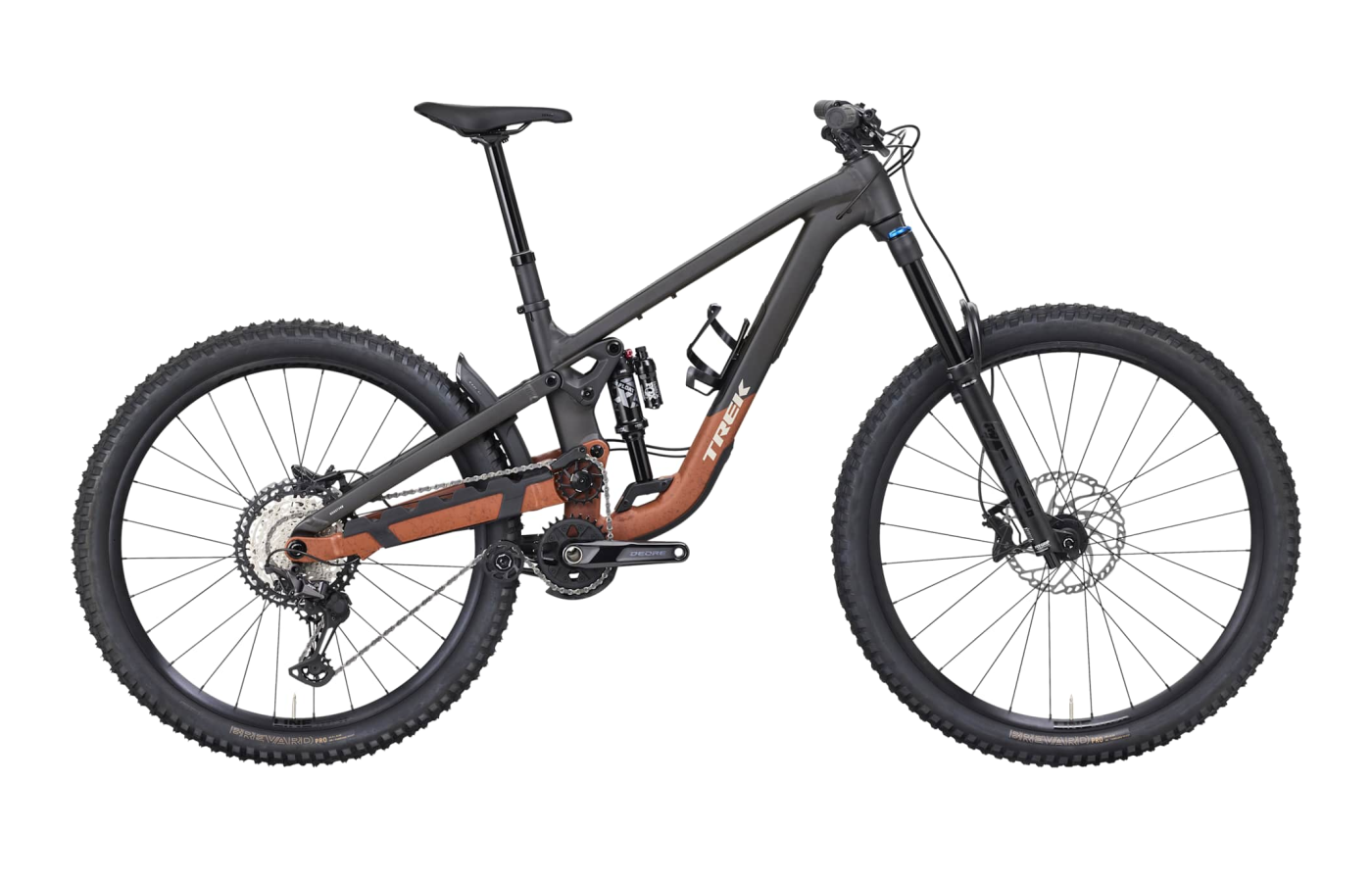
Slash
Trek's long-travel enduro pick — also high-pivot like the Sight, also designed to plow. If you like the rearward-axle-path feel but want a more openly enduro-race-focused chassis than the Sight, the Slash is a natural cross-shop.
Compare →Spire
Transition's big-travel enduro plant. Slack, long, and openly biased to the descent — closer in mission to the Altitude than the Sight, but with Transition's signature playful-yet-planted suspension feel rather than the Altitude's low-CG composure.
Compare →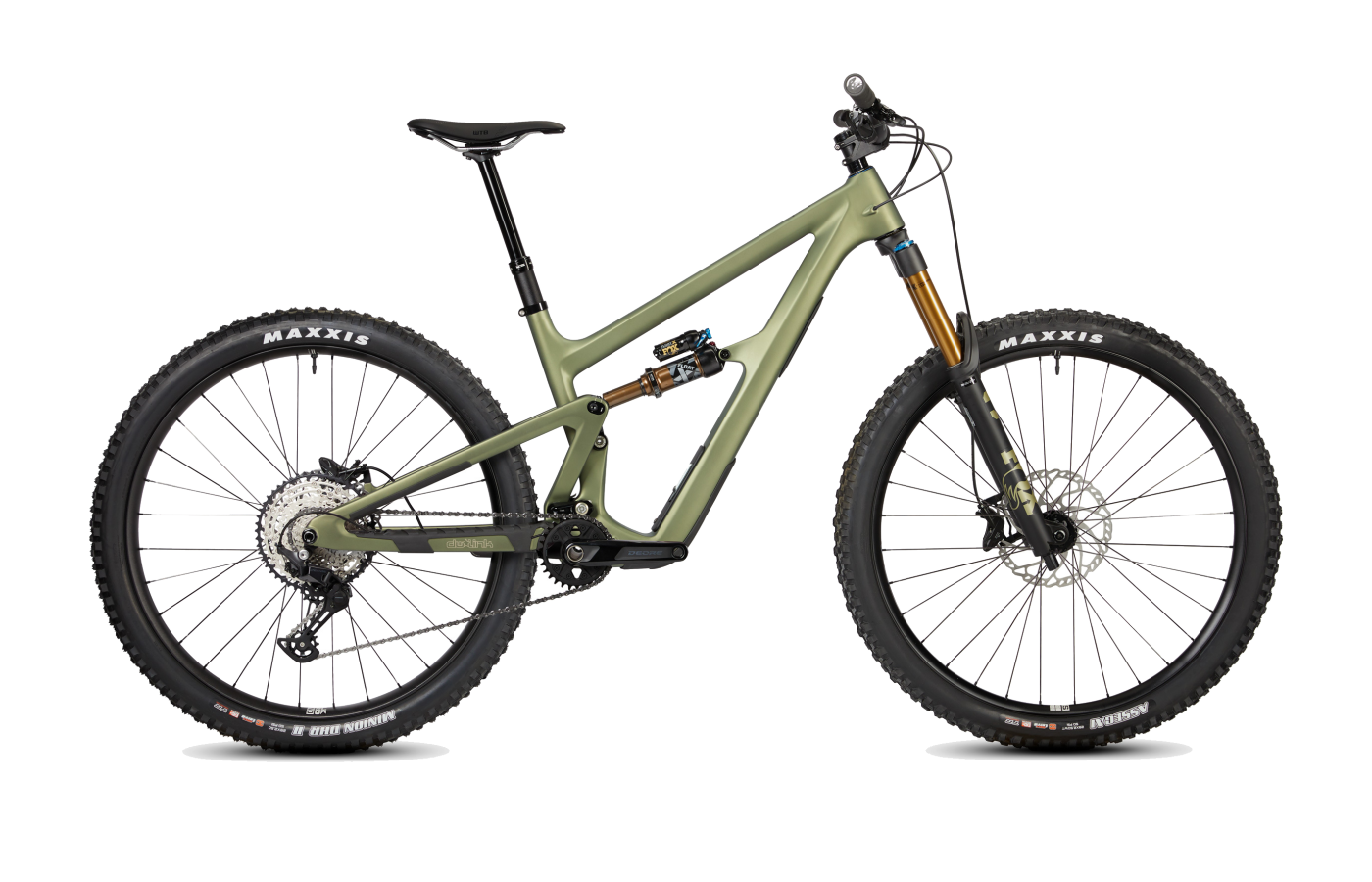
Ripmo
Ibis's all-mountain do-everything play with DW-Link suspension. If both the Sight and Altitude feel like too much bike for your trails, the Ripmo dials it back toward climbing efficiency and snappier handling without giving up real descending capability.
Compare →