Fluid FS
vsStumpjumper
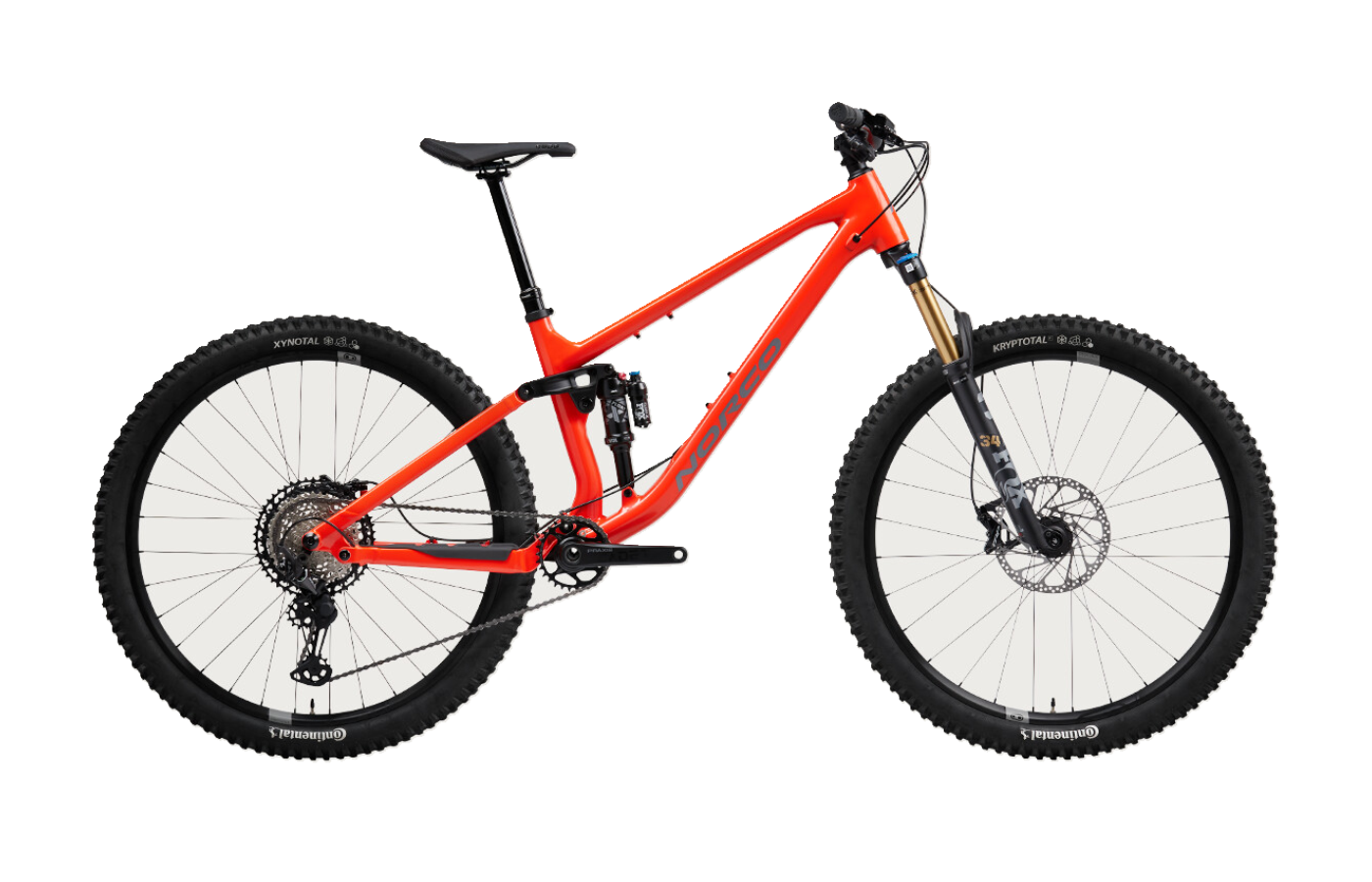
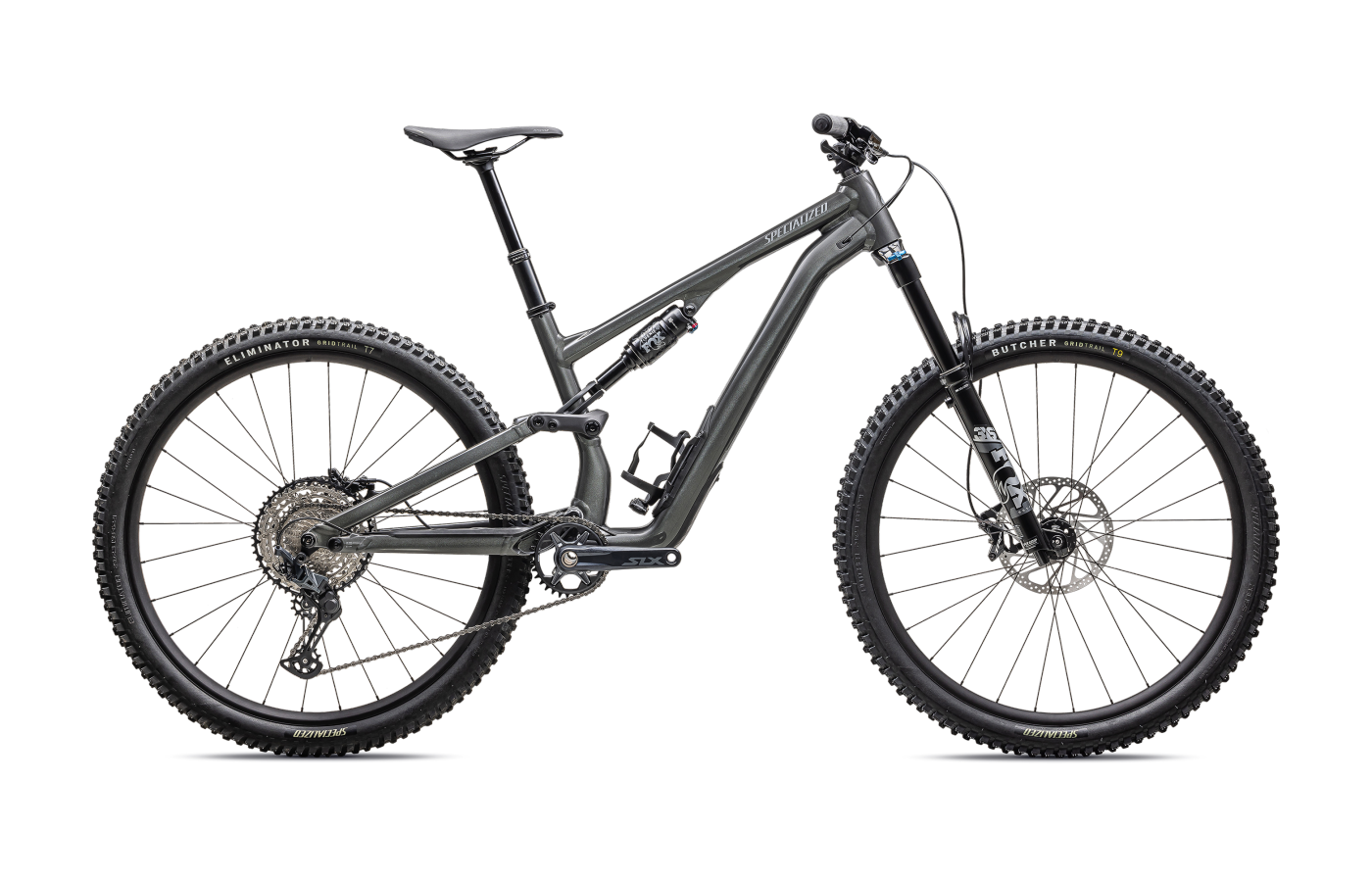
Value-alloy workhorse meets the adjustable trail benchmark.
The Fluid FS is alloy-only and tops out under $4k. The Stumpjumper 15 spans $3k to $12k, with a proprietary shock and a carbon-or-alloy menu to match.
Fluid FS
- Lowest price of entry — complete builds from $1,799, with a 4-piston brake, 140 mm fork, and dropper included even at the bottom of the range.
- Size-specific geometry — Ride Aligned tailors chainstay length and seat tube angle per size, a feature borrowed from much pricier platforms.
- Custom-tuned rear shocks across the lineup — even lower-tier builds get dampers co-tuned to the frame's kinematics.
- Alloy-only — no carbon option if weight matters.
- Stock tires (Continental Kryptotal/Xynotal Trail) are consistently flagged as too thin for aggressive riders.
Stumpjumper
- GENIE rear shock — a dual-chamber air spring that runs ultra-supple off the top and aggressively ramps up in the last 30% of travel, tunable with add-in bands.
- Adjustable geometry — headset cups and a flip-chip let you move the head angle and bottom-bracket height to match terrain.
- More travel and a slacker head angle — 145/150 mm and 64.5° pushes the platform toward enduro territory when you need it.
- Price floor is $2,999 and the desirable carbon builds start closer to $5k.
- Carbon builds are wireless-only — no mechanical shifting; proprietary GENIE shock raises long-term serviceability questions.
Editor’s analysis
Two 130–145 mm trail 29ers — one that keeps the price floor low and the platform pure, one that hands you every adjustment knob in the catalog.
The Norco Fluid FS and the Specialized Stumpjumper 15 share the same job description — modern 29er trail bike, Horst-link rear end, slack-ish head angle, one-bike-quiver ambitions — but they answer to very different audiences. The Fluid is alloy-only, built from $1,799 to $3,899, and its entire identity is wringing grown-up ride quality out of a 6061 frame with custom-tuned shocks. The Stumpjumper 15 runs $2,999 to $11,999, swaps in a FACT 11m carbon chassis on every build above the base, and centers the platform around Fox's co-developed GENIE dual-chamber shock.
On paper the Stumpjumper is the more aggressive machine. It carries 145 mm out back and 150 mm up front against the Fluid's 130/140, sits at a 64.5-degree head angle versus 65, drops the bottom bracket lower, and on bigger sizes stretches the chainstay to 445 mm. Specialized calls it a single platform to replace both the previous Stumpjumper and Stumpjumper EVO, and the numbers bear that out — it will flex into near-enduro territory with a flip-chip and headset-cup swap.
The Fluid FS picks a simpler lane and commits. Norco's Ride Aligned system gives every frame size its own chainstay length and seat tube angle — a detail that's usually reserved for bikes twice the price — and reviewers hammer on how centered and balanced the bike feels across the S-to-XXL range. The rear end is less plush than the Stumpjumper's GENIE, but testers consistently describe it as having more support mid-stroke and a poppier, more playful character. Translation: the Fluid earns its speed; the Stumpjumper buys it.
Put another way — the Fluid FS is the bike for the rider who wants to pay $3,400 for a trail bike that out-rides its price tag, accepts an alloy frame, and doesn't need a proprietary shock. The Stumpjumper 15 is the bike for the rider who wants a single chassis that can adjust from mild trail to bike-park-ready, is willing to pay carbon prices to get the best of it, and appreciates that the frame will take a 160 mm fork and a mullet link when they want more.
Where the builds differ.
Comparing our editor's-pick builds side-by-side. Winners highlighted row-by-row — lower price and weight, and the better-spec component, each mark a point.
Build variants & pricing
The Fluid FS lineup is alloy top-to-bottom, $1,799 to $3,899. The Stumpjumper 15 lineup stretches from a $2,999 alloy to an $11,999 S-Works LTD, with carbon from $4,999 up.
Editor's picks are matched for frame material (alloy on both sides) and mechanical Shimano drivetrains rather than drivetrain tier. Norco's top A1 Shimano build runs XT; the closest-priced Stumpjumper alloy is the 15 Comp Alloy with SLX — one tier down. Expect the drivetrain gap to show up in shifter feel and cassette weight, not in raw function.
How they fit, how they steer.
Reach is identical at 450 mm; stack within 1 mm. The Stumpjumper S3 sits 0.5° slacker at the head tube, runs 5 mm longer chainstays, and steepens the seat tube by 0.7° — a more downhill-oriented stance for the same cockpit length.
Which size should I buy?
Size picker is keyed off stack, reach, and effective top tube. Norco uses S/M/L/XL/XXL; Specialized uses S1–S6 — overlapping at M ↔ S3 for this rider.
→These are starting points. Flexibility, riding style, and preferred position all shift the answer — if you’re between sizes, a professional fit beats a chart.
What the magazines said.
Published reviews from trusted cycling outlets. Click through for the full write-up.
Which one should you buy?
If you want the most trail bike per dollar in an alloy package, get the Fluid FS. If you want the adjustable one-quiver trail-to-enduro platform and will pay carbon prices to unlock it, get the Stumpjumper 15.
Fluid FS
If you want modern trail-bike geometry, a custom-tuned shock, and a size-specific chassis without paying carbon-frame prices — this is the benchmark under $4k. Especially strong as a first full-suspension bike you won't outgrow in two seasons.
Stumpjumper
If you want a single bike that can mild-mannered-trail or bike-park-ripper with a shock-band swap and a flip-chip, and you value the GENIE's bottom-out composure on big hits — the Stumpjumper 15 is the most adaptable trail platform shipping today.
Questions buyers actually ask.
Short answers to the things we get emailed about most often.
01Which climbs better?
Both climb well, but differently. The Fluid FS has a 76.3°–77.3° size-specific seat tube angle and an active Horst-link rear that reviewers call a "traction monster" on rough climbs — at the cost of a noticeable amount of pedal bob on smooth fire roads, where the climb switch earns its keep. The Stumpjumper 15 sits at 76.5°–78° (size-specific), adds Specialized's claimed 57% traction gain through the GENIE's initial supple stroke, and runs ~105–108% anti-squat at sag — so it pedals taut on smooth ground.
The real tiebreaker is weight. A $3,400 Fluid FS A1 Shimano comes in at roughly 15.9 kg (35 lb) in Large. A $4,999 Stumpjumper 15 Comp is 14.87 kg; the $3,999 15 Comp Alloy is 16.17 kg (35.6 lb). Matched alloy-to-alloy, the Stumpjumper is slightly heavier.
02Which descends better?
The Stumpjumper 15, on paper and in most testing. It runs 145 mm rear / 150 mm fork versus the Fluid's 130/140, a slacker 64.5° head angle versus 65°, and carries the GENIE shock's aggressive end-stroke ramp — reviewers repeatedly note they couldn't bottom it out even on ugly hucks.
That said, the Fluid FS's reputation on descents is the single thing that made it Vital MTB's Bike of the Year. Reviewers say it "rides like a small enduro bike despite 130 mm of travel," with a 1205 mm wheelbase (size M) and a poppy, playful mid-stroke that rewards an active rider. For most trail riders, the Fluid is already more bike than they'll use. The Stumpjumper has the higher ceiling.
03Does the Fluid FS come in carbon?
No — not this generation. Norco offered carbon C1/C2 builds of the previous Fluid FS, but the current lineup is aluminum-only, spanning the A1 down to the A4. If you want a carbon Norco trail bike, you're looking at the Optic or the Sight.
For the Stumpjumper 15, the opposite is true: carbon FACT 11m is the default on everything $4,999 and up. The three alloy builds (15 Alloy $5,499, 15 Comp Alloy $3,999, 15 Alloy $2,999) keep the M5 aluminum frame and trade down on components.
04What's the travel and head angle difference?
Fluid FS: 130 mm rear / 140 mm fork, 65° head tube angle across all sizes.
Stumpjumper 15: 145 mm rear / 150 mm fork (S1 runs 140 mm), 64.5° head tube angle on every size — and the headset cups are swappable to change it.
The Stumpjumper also accepts a 160 mm fork and a mullet-link conversion if you want to push it further toward enduro duty.
05Is the GENIE shock a dealbreaker?
For most riders, no. The GENIE is a dual-chamber Fox Float — mostly standard internals plus one additional seal. Specialized says any shop that services Fox can service it. Frame-wise, the Stumpjumper 15 accepts a standard 210x55 mm shock, so you can swap to any aftermarket unit if you lose faith in the proprietary design.
That said, Specialized has an uneven track record with proprietary systems (Brain, Autosag) and commenters on both Pinkbike and BikeRadar have raised long-term availability concerns. It's a real consideration, not a theoretical one.
06Are the stock tires any good?
Both bikes ship with tires that most reviewers recommend upgrading for aggressive riding.
Fluid FS ships with Continental Kryptotal Trail front / Xynotal Trail rear (2.4"). Multiple reviewers flagged the Trail casing as "thin" and prone to punctures for heavier or harder-charging riders.
Stumpjumper 15 runs the Specialized Butcher GRID TRAIL front / Eliminator GRID TRAIL rear. Same story — praised for grip and rolling speed, but the casing is under-protected for bike-park-speed riding. The S-Works LTD bumps the rear to the heavier GRID GRAVITY casing, which helps.
07Which has more frame features?
The Stumpjumper 15 wins on integrated features. It ships with SWAT 4.0 downtube storage (universally praised), adjustable headset cups, a flip-chip, UDH compatibility, and lifetime frame + pivot-bearing warranty.
The Fluid FS has a threaded bottom bracket, UDH + Hangerless Interface compatibility, ISCG tabs, internal cable routing with bolt-in ports, size-specific droppers up to 200 mm on L/XL/XXL, and a 5-year frame warranty. No downtube storage.
08What about warranty and long-term ownership?
Specialized offers a lifetime frame warranty to the original owner, plus lifetime pivot-bearing replacement — one of the strongest in the industry.
Norco offers a 5-year limited frame warranty to the registered original owner. Reviewers who hit durability issues (pivot hardware, Bear Pawls hubs, forks) reported responsive and effective warranty service. Norco's US dealer network is smaller than Specialized's, which matters if you want a shop to handle service directly.
Similar bikes
If your priorities don’t map cleanly onto either of these, one of these adjacent bikes probably fits better.

Fuel EX
The Trek Fuel EX is the direct analog to the Stumpjumper 15 — mid-travel trail 29er with a flip-chip and broad adjustability. IsoStrut rear is the talking-point, and the build range stretches wide from alloy to SLR carbon.
Compare →
Ripmo AF
The Ibis Ripmo AF is the Fluid FS's closest peer — aggressive-geometry aluminum trail bike with DW-link suspension that punches well above its $3k–4k price bracket. More descending bias than the Fluid.
Compare →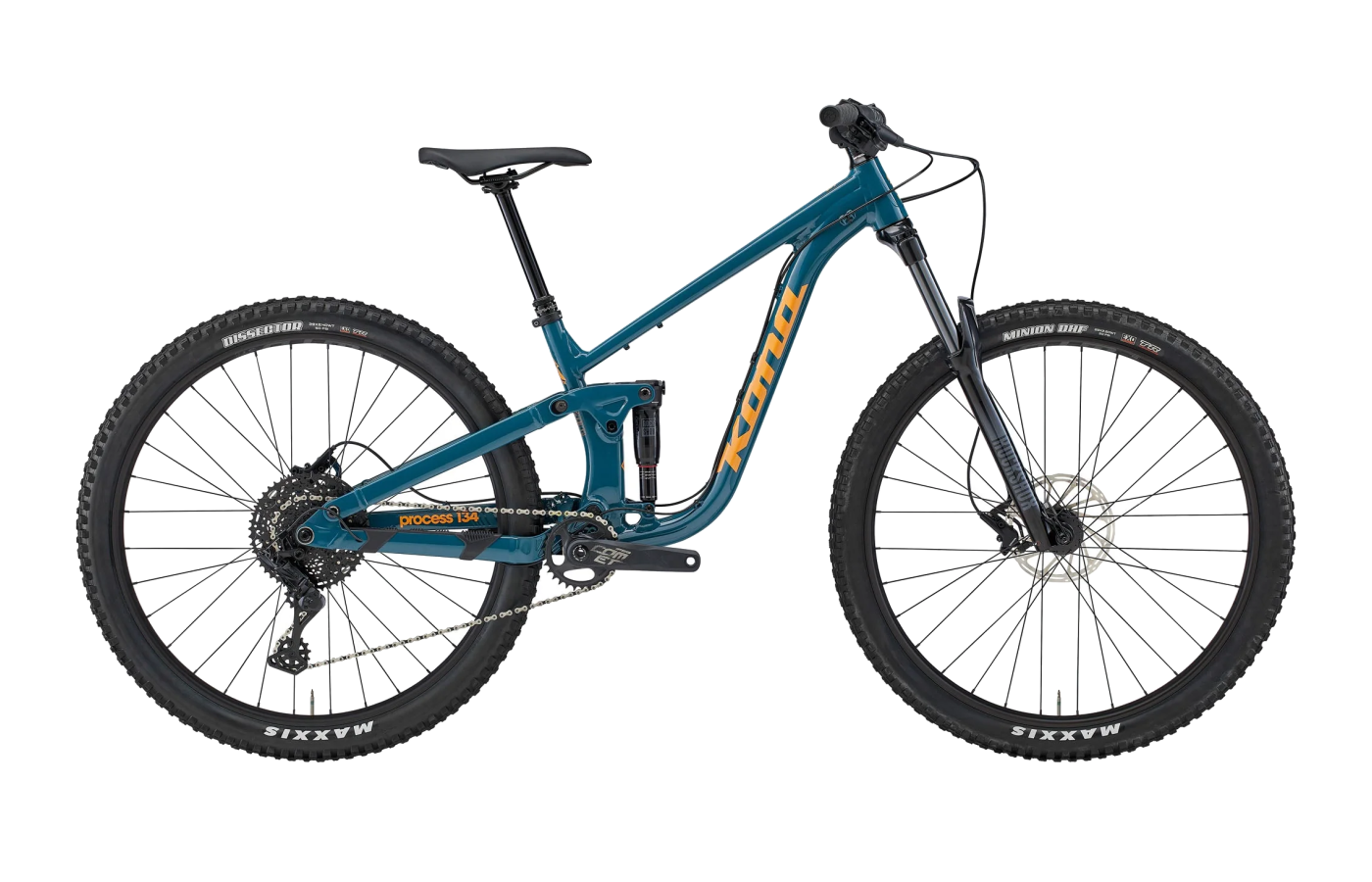
Process 134
The Kona Process 134 shares the Fluid's playful, mid-travel-Horst-link personality with a louder, more jumpy character. Aggressive geometry in an alloy package, priced competitively.
Compare →