Podium
vsEpic
Hardtail purity vs. full-suspension capability.
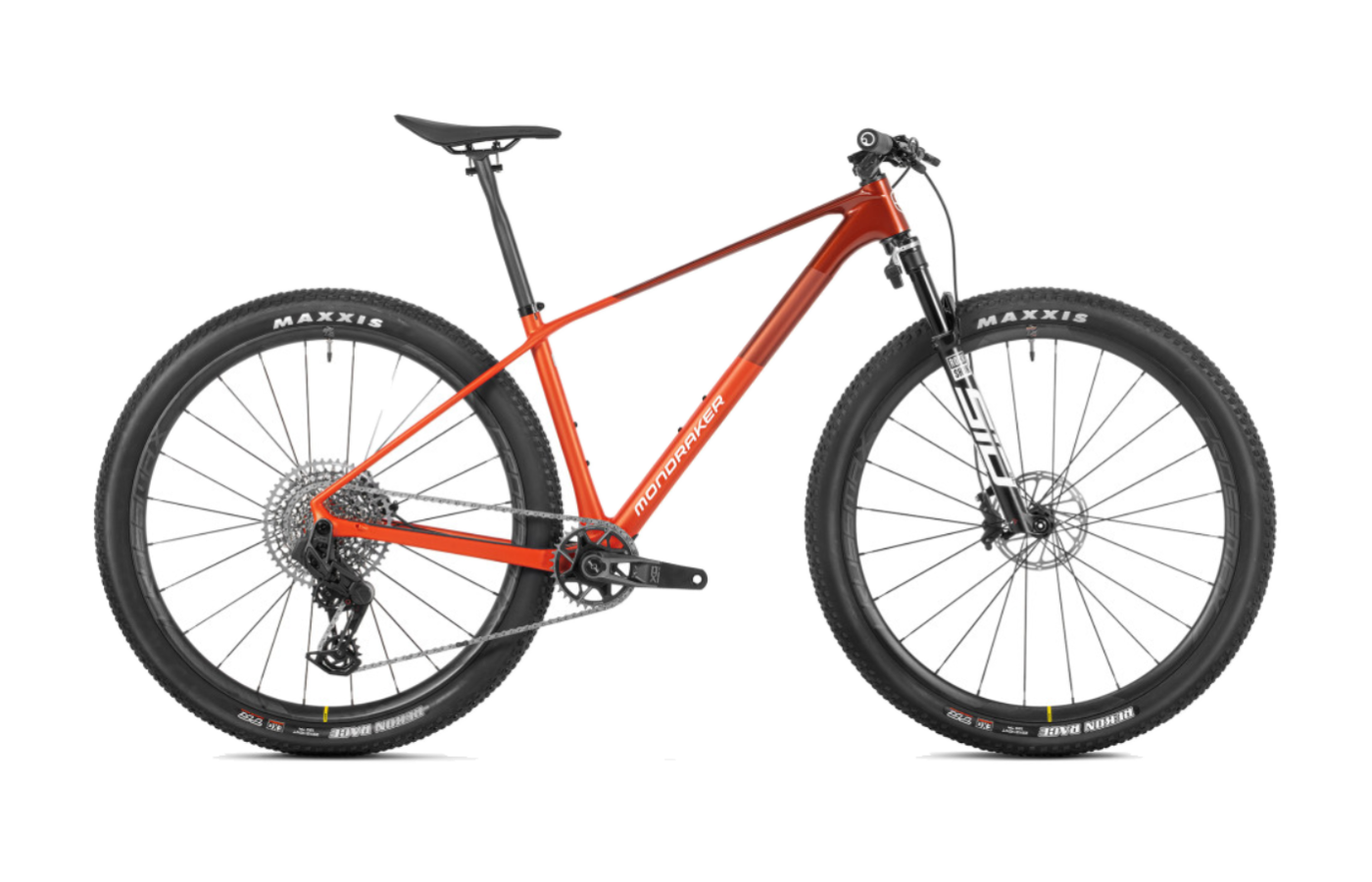
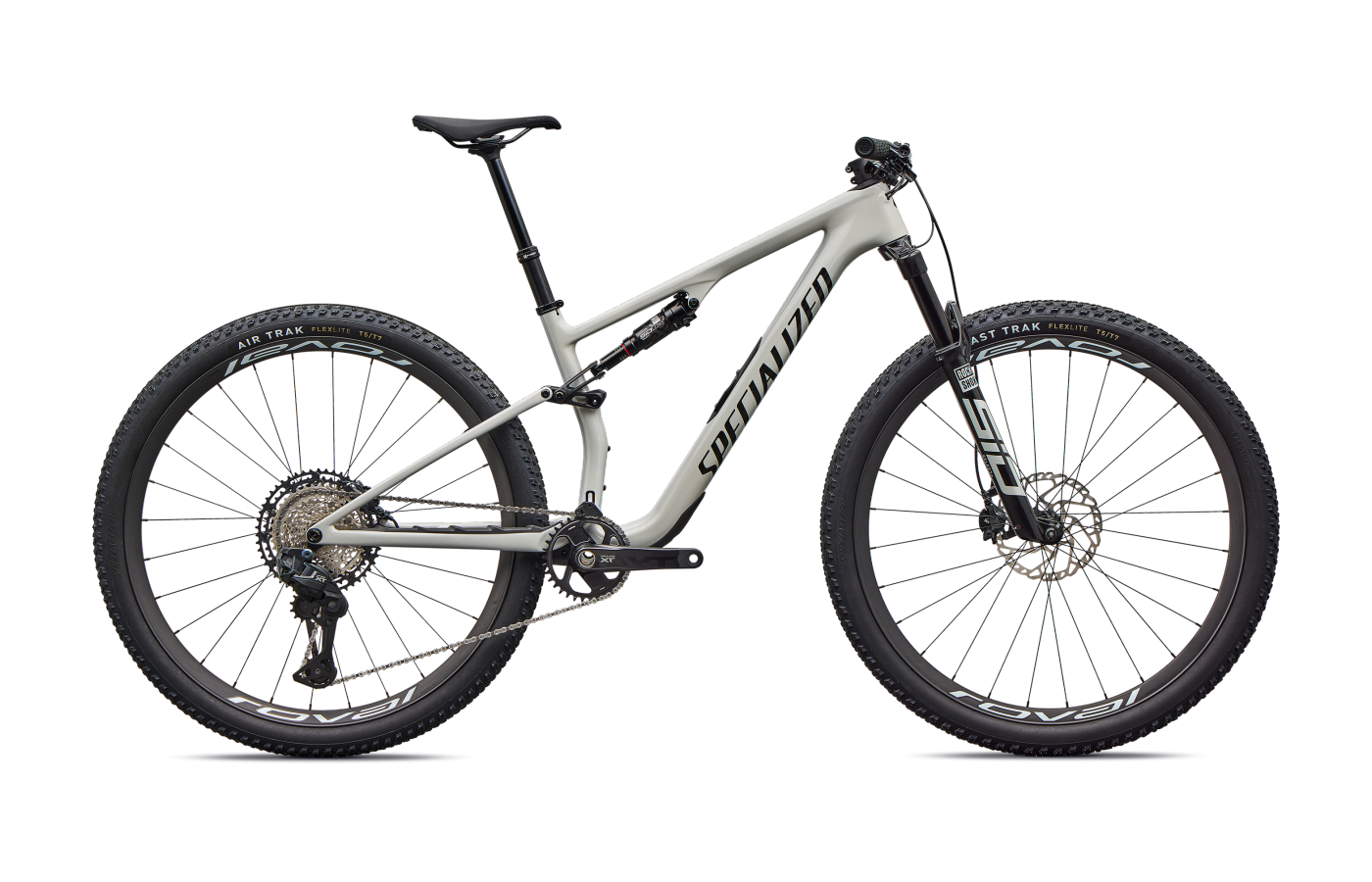
The Mondraker Podium is a sub-9 kg carbon race hardtail. The Specialized Epic 8 is a 120 mm full-suspension XC bike that descends like a downcountry rig.
Podium
- Featherweight frame — sub-800 g claimed in size M, complete RR SL build at 8.1 kg.
- Pure pedaling efficiency — no rear shock, no bob, no lockout to remember on climbs.
- 25-year frame warranty — well beyond industry standard, signals long-term confidence.
- 100 mm front-only travel limits descending capability on rough terrain.
- Hardtail rear end transmits more chatter on long, rough days — fatigue compounds.
Epic
- 120 mm of travel front and rear — transforms what an XC bike can descend without sacrificing climb efficiency.
- 65.9-degree head angle — 'outrageously stable' at speed, more like a downcountry trail bike than a traditional XC race rig.
- SWAT downtube storage and threaded BB — practical features carried across the entire build range.
- Heavier than the Podium by ~1.2–2 kg depending on build — climbs feel less effortless.
- Suspension adds maintenance and (on S-Works) battery management overhead.
Editor’s analysis
This is a fight between two definitions of the modern XC bike — featherweight purity on one side, technological breadth on the other.
On paper they share a category — 29ers, race-pedigree carbon, sub-25-pound weights — but the Mondraker Podium and Specialized Epic 8 are built on opposite philosophies. The Podium is a hardtail with a 100 mm fork and nothing else: 775-gram claimed frame, no rear shock, no extra pivots, no electronics. Mondraker's pitch is that nothing translates pedal stroke into forward motion as efficiently as a stiff carbon hardtail. The Epic 8 throws all of that out and adds 120 mm of rear travel, a custom 'Magic Middle' shock tune, and on the S-Works model an electronic Flight Attendant suspension brain.
The geometry tells the same story. The Mondraker Podium sits at a 68.5-degree head tube angle with a 444 mm reach in size M — slack for a hardtail, but conservative next to the Epic. The Specialized Epic 8 runs a radical 65.9-degree head angle and a 450 mm reach, with a 1,179 mm wheelbase that is 51 mm longer than the Podium. Reviewers consistently describe the Epic as 'outrageously stable' on descents and 'slalom-like' through corners. The Podium's geometry is praised as 'calm,' but it remains a race hardtail — at the upper limit of speed on rough ground, it will demand more from your line choice and your forearms.
Where the Podium pulls ahead is climbing and pure efficiency. The lightest tested complete bike is the RR SL at 8.1 kg — roughly 2 kg under the Epic 8 S-Works at 10.0 kg. There is no rear-suspension bob to manage and no shock-mode lever to flick. Reviewers said it 'made me fly as if on wings' on climbs. The Epic counters with a 20% reduction in pedal bob versus the previous EVO and a steep 75.5-degree seat tube angle that keeps you over the bottom bracket on technical climbs, but a hardtail still wins the watts-into-forward-motion math.
Put simply: the Podium is the bike for the rider who measures success in vertical meters and doesn't mind getting beaten up on the way back down. The Epic 8 is the bike for the rider who wants to race the modern, gnarly, descent-heavy XC course — or wants one bike that can race XC on Saturday and ride trail on Sunday.
Where the builds differ.
Comparing our editor's-pick builds side-by-side. Winners highlighted row-by-row — lower price and weight, and the better-spec component, each mark a point.
Build variants & pricing
Both lineups span $4k-$15k. The Podium tops out at $10,499 (no rear shock to pay for); the Epic 8 stretches further on the strength of its Flight Attendant flagship.
Editor's picks shown are the Podium RR (SRAM X0 AXS T-Type) and Epic 8 Expert with Shimano XT Di2 — both one-down electronic drivetrains at ~$7-8k, the closest tier-and-price match between the two lineups.
How they fit, how they steer.
Both at size M. The Specialized Epic is significantly longer and slacker — 6 mm more reach, 2.6 degrees slacker head angle, 51 mm longer wheelbase. The Mondraker Podium is the more compact, race-quick hardtail.
Which size should I buy?
Sizing recommendations are based on stack, reach, and effective top tube. Both ranges overlap closely in the middle, though the Epic 8 extends one size smaller (XS) at the bottom end.
→These are starting points. Flexibility, riding style, and preferred position all shift the answer — if you’re between sizes, a professional fit beats a chart.
What the magazines said.
Published reviews from trusted cycling outlets. Click through for the full write-up.
Which one should you buy?
If you race for podiums and live for climbs, get the Podium. If you want to descend modern XC tracks with confidence — or want one bike for both XC and trail days — get the Epic 8.
Podium
If you want the lightest, most efficient pedaling tool for marathon races, sub-3-hour XCO efforts, or relentless climbing — and you have the skills to ride a hardtail fast on technical descents — the Mondraker Podium is the sharper instrument. Add a 25-year frame warranty and the math gets even better.
Epic
If your XC course has descents that scare you on a hardtail, or you want one bike that races on race day and rides trail the rest of the week, the Specialized Epic 8 is the more versatile pick. The Magic Middle shock tune lets you climb without thinking and descend without fear.
Questions buyers actually ask.
Short answers to the things we get emailed about most often.
01Which is faster on a typical XC race course?
It depends on the course. On smoother, climb-heavy marathon routes, the Mondraker Podium is hard to beat — at roughly 1-2 kg lighter than equivalent Epic 8 builds, the watts-to-weight math favors it on long sustained climbs.
On the modern descent-heavy World Cup-style track with rock gardens and sustained chunder, the Specialized Epic 8 typically wins. Reviewers describe the Epic as a 'PR-destroying multiplier' — its 120 mm of travel and 65.9-degree head angle let you carry more speed through technical sections than a hardtail rider can match.
If you race a mix, the Epic is the safer all-rounder.
02How much weight difference is there between the two?
Significant. The Mondraker Podium RR SL has been tested at 8.1 kg complete, and even the mid-tier Podium R weighs 9.3 kg.
The Specialized Epic 8 S-Works comes in at 10.0 kg, the Epic 8 Pro at 10.82 kg, and the Epic 8 Expert at roughly 11.15 kg.
At equivalent ~$7-8k builds, expect about a 2 kg gap in favor of the Podium. That's roughly 3% of total system weight for a 70 kg rider — meaningful on a 30-minute climb, less so on a flat course.
03Can the Podium handle technical descents like the Epic 8?
Not at the same level. Reviewers consistently note that while the Podium's Forward Geometry calms the bike down for a hardtail — the 68.5-degree head angle is slack for the category — 'competitors ride better in the downhills' on rougher terrain.
The Specialized Epic 8 is in a different class here. With 120 mm of rear travel, a 65.9-degree head angle, and a 1,179 mm wheelbase in size M, it has been described as 'a featherweight trail bike' that can be 'buried into corners' with confidence.
If your local trails feature sustained rocky descents, the Epic 8 will let you go faster and stay fresher.
04Why pick the Podium RR and Epic 8 Expert as the editor's picks?
These are the closest apples-to-apples builds between the two lineups. The Podium RR ($7,999) runs SRAM X0 AXS T-Type Transmission — wireless, one tier below the flagship XX SL. The Epic 8 Expert at $7,199 runs Shimano XT Di2, the equivalent one-down electronic Shimano MTB tier.
Both use the platform's mid-grade carbon frame (not the absolute flagship layup), both ship with quality carbon wheels, and both sit in the price band where most serious XC buyers actually shop. Comparing flagships would mostly highlight battery counts and bling; the Expert/RR comparison shows what each platform delivers at the buyer's actual budget.
05Is there a Specialized hardtail equivalent?
Yes — the Specialized Epic Hardtail (now sold as the Epic World Cup with 75 mm of rear travel, or the Epic Hardtail with no rear suspension at all) is the direct hardtail competitor. The Chisel is the alloy entry-level hardtail.
For a true Podium rival inside Specialized's lineup, the Epic Hardtail S-Works is the closest match — sub-900 g frame, 100 mm fork, race-focused geometry. Compared to the Mondraker, expect similar weight, slightly steeper geometry, and a more conservative reach figure.
06What about suspension maintenance — is the Epic 8 a lot more upkeep?
Modestly more, yes. The Epic 8's RockShox SID/SIDLuxe shock and fork need a lower-leg service every 50 hours and a full damper service annually — call it 1-2 hours of shop time and ~$150-$250 per year.
The Mondraker Podium has only the front fork to service, and no rear shock to bleed, refresh, or replace bushings on. Over a 5-year ownership window, expect a few hundred dollars and a few hours saved.
On the S-Works Epic 8 specifically, the Flight Attendant system adds battery charging — minor in absolute terms but a daily-use difference riders should know about.
07What is the maximum tire clearance on each?
Mondraker Podium: approximately 61 mm (2.4 inch) — the stock Maxxis Aspen ST 2.4 and Rekon Race 2.4 spec confirm there is room for a true 2.4-inch race tire.
Specialized Epic 8: approximately 59.7 mm (2.35 inch) — Specialized ships it with the Fast Trak 29x2.35 and Air Trak 29x2.35.
Both are XC race bikes — wider 2.5+ inch trail tires are not the point of either platform. If you want a true do-everything tire fit, look at the Epic 8 EVO variant, which uses the same frame but more aggressive rubber.
08What warranties do they come with?
The Mondraker Podium carbon frame carries a remarkable 25-year warranty to the original owner — well beyond the industry norm and one of the longest of any race-focused carbon frame.
The Specialized Epic 8 comes with a lifetime frame warranty to the original owner, plus crash-replacement pricing on damaged frames.
Both are strong, but Mondraker's transferable 25-year coverage is unusual for a sub-800-gram carbon racing frame — it signals real confidence in the layup.
Similar bikes
If your priorities don’t map cleanly onto either of these, one of these adjacent bikes probably fits better.
Scalpel
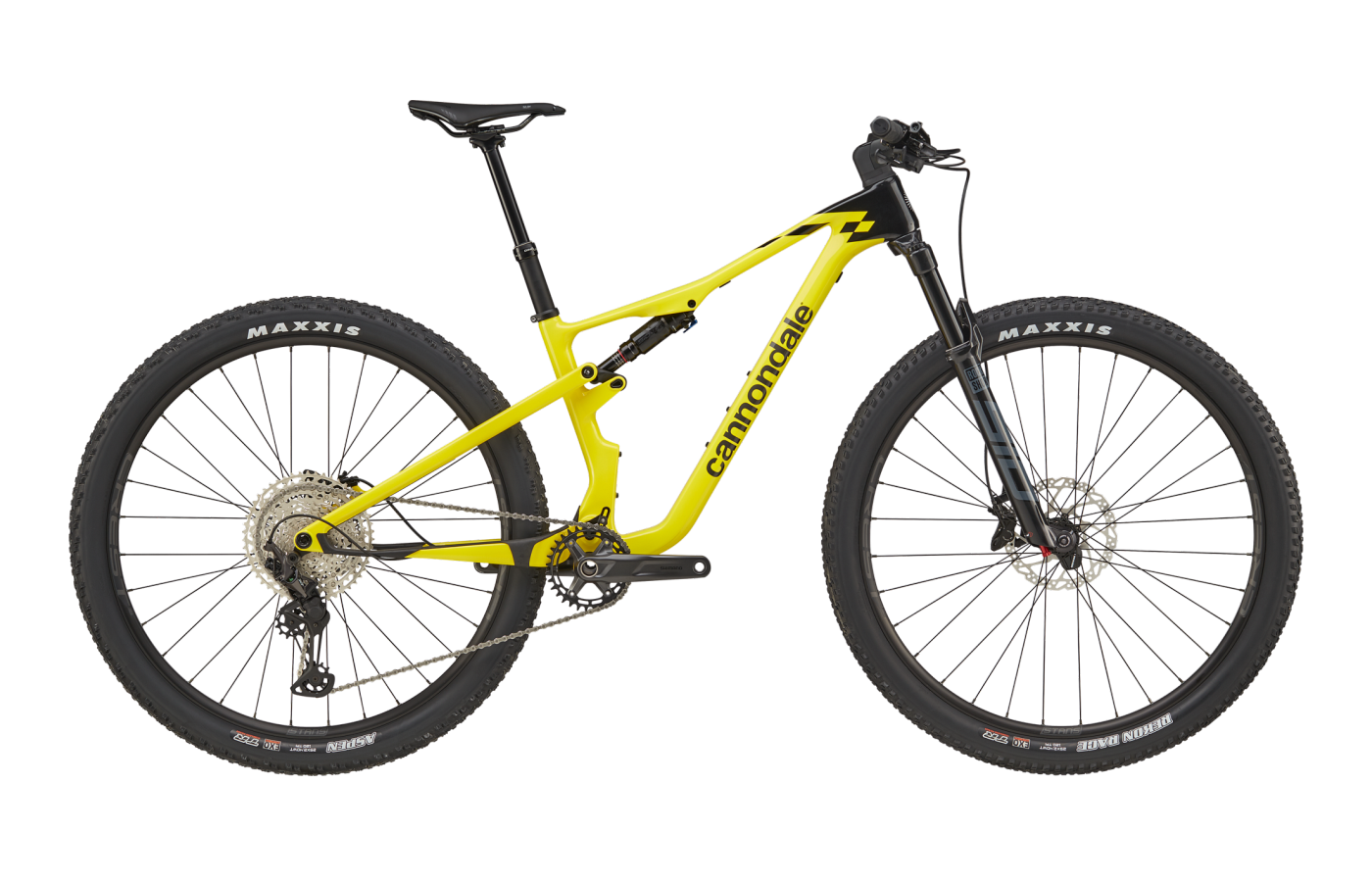
Cannondale's flex-stay 120 mm answer to the Epic 8 — same downcountry-leaning geometry and travel, but with the proportional-response suspension Cannondale has been refining for two generations. A direct, full-suspension alternative if you like the Epic's brief but want a different kinematic flavor.
Compare →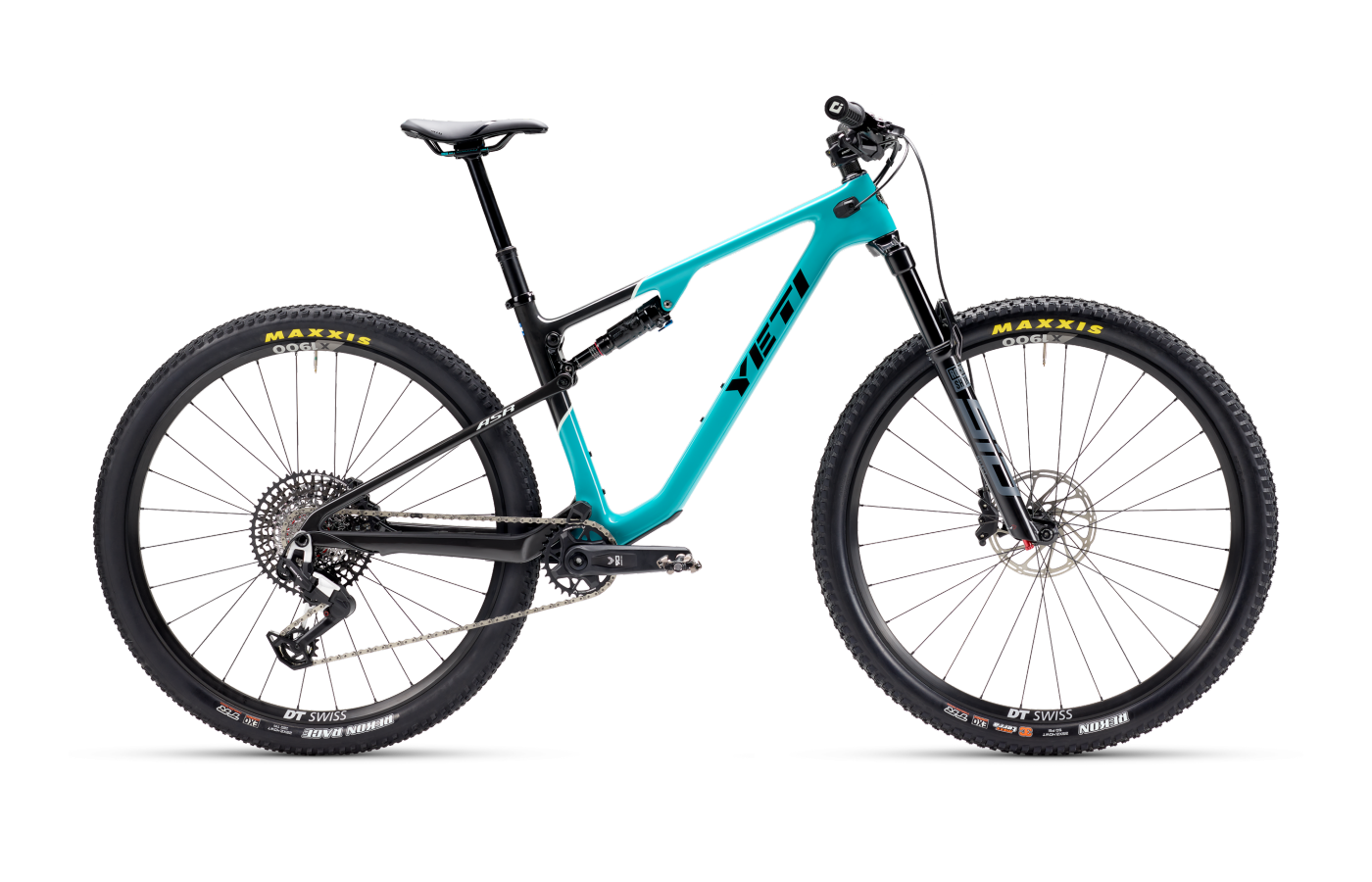
ASR
The Yeti ASR is the boutique full-suspension XC pick — Switch Infinity rear suspension, premium build kits, and a ride character reviewers describe as 'snappier' than the Epic. Costs more, comes in fewer sizes, but rides like a tuning fork.
Compare →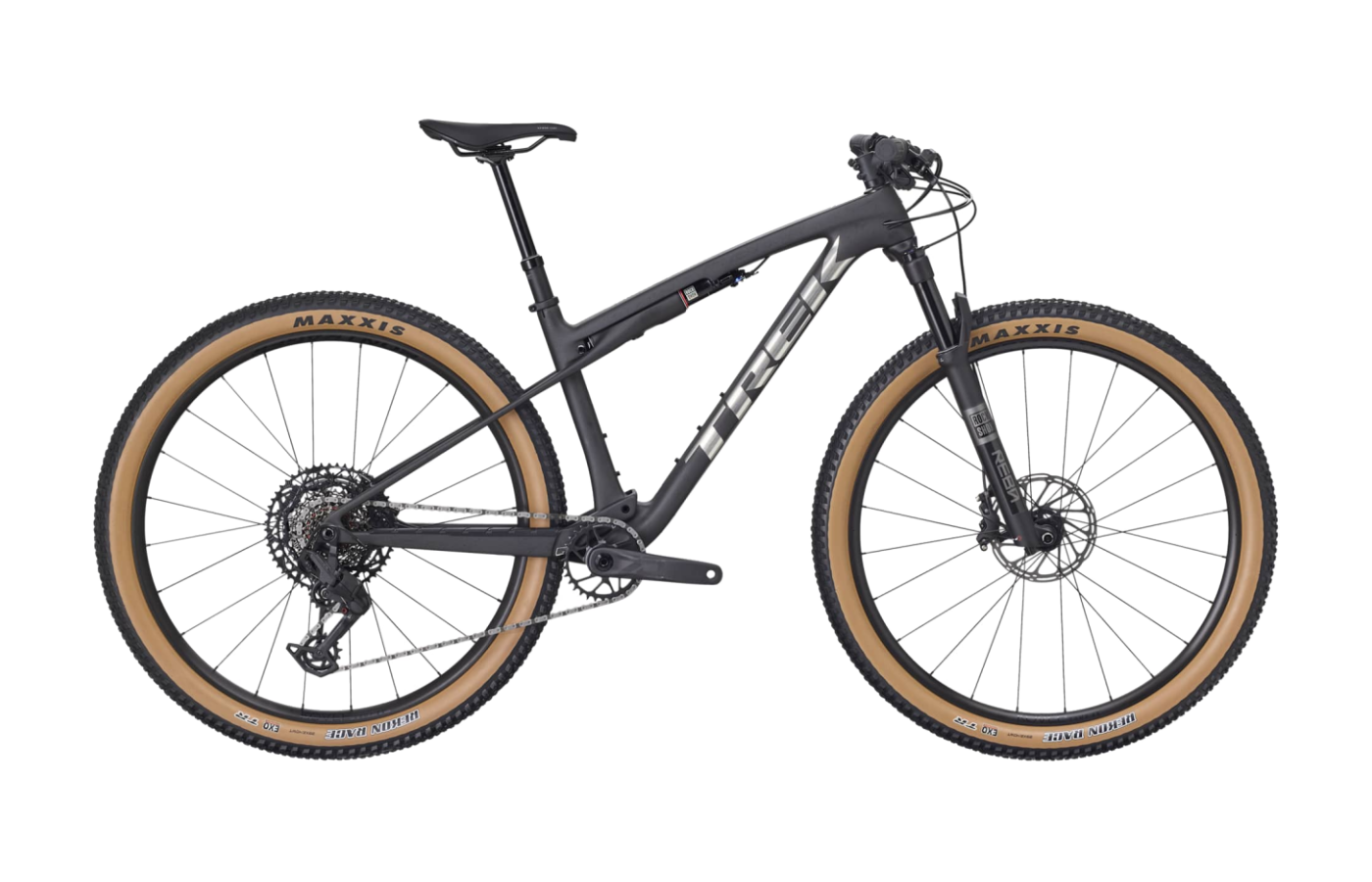
Supercaliber
Trek's Supercaliber splits the difference: a hardtail-stiff main triangle with 80 mm of micro-suspension via the IsoStrut. If you can't decide between Podium-pure efficiency and Epic-style compliance, this is the strangest and most interesting middle ground in XC.
Compare →