Sutra
vsUnit
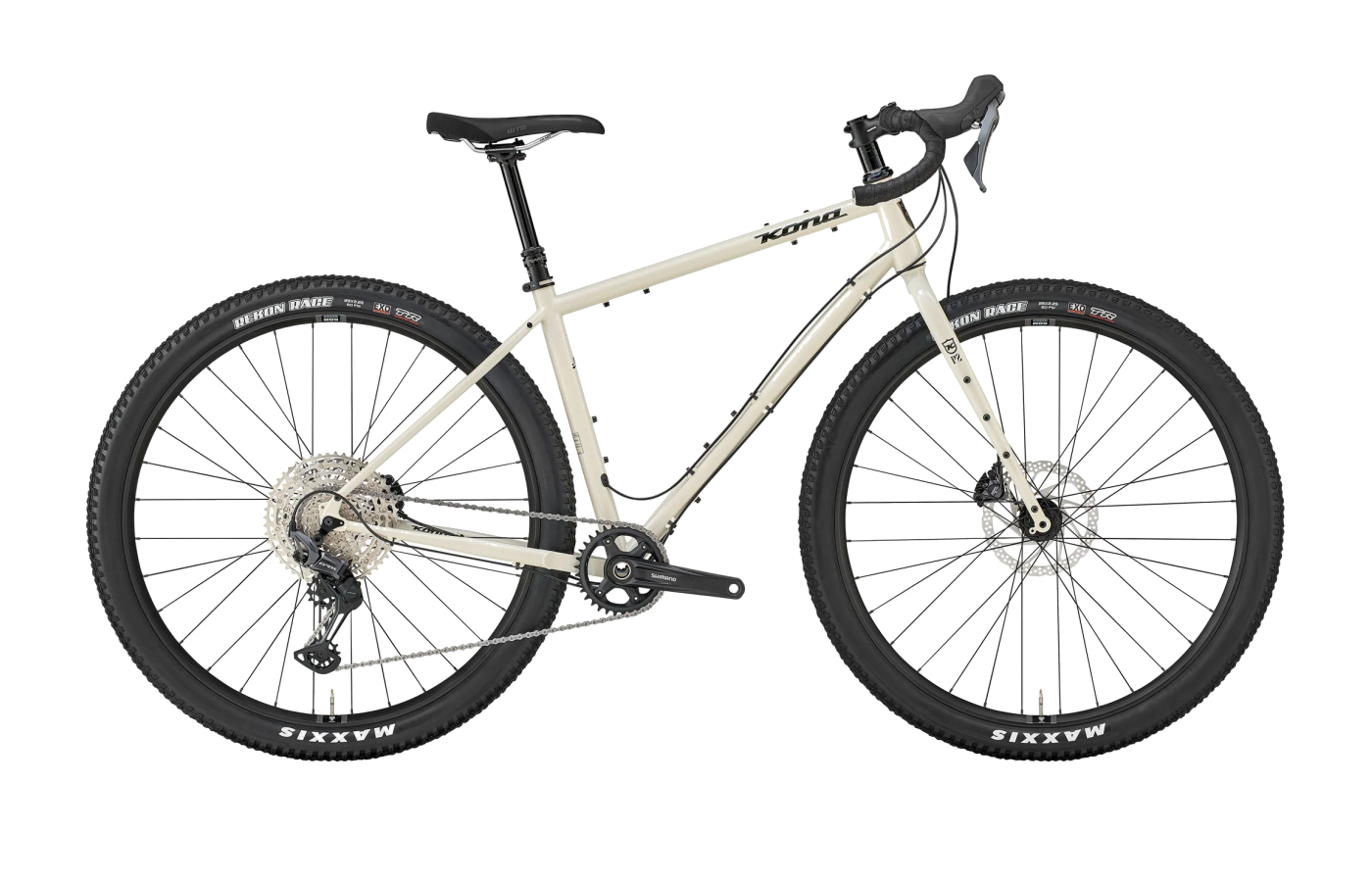
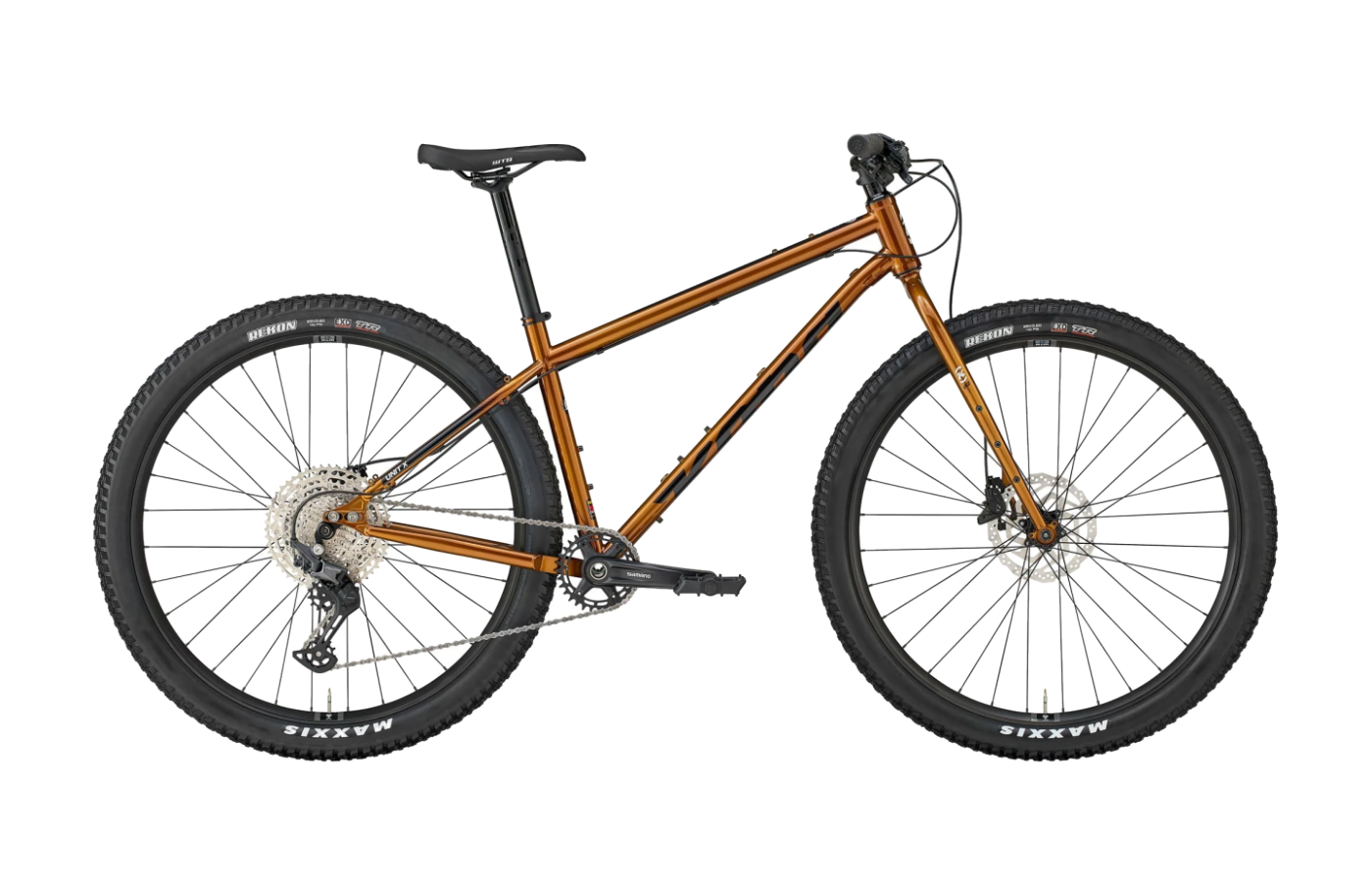
Two steel Konas, two definitions of adventure.
The Sutra is a drop-bar tourer built for loaded miles. The Unit is a rigid 29er hardtail built for singletrack. Same tubing, opposite jobs.
Sutra
- Built for loaded touring — 445 mm chainstays, slack-for-drop-bar 70.5° HTA, and a tall stack that rewards long days with panniers.
- Drop-bar fit and shifting — the Sutra LTD runs Shimano GRX 12-speed, so you get road-style hoods and the gear range to climb loaded.
- Big tire envelope for a tourer — up to 58 mm of clearance, and the LTD ships with 29x2.25" Maxxis Rekon Race for genuine gravel-road capability.
- Heavy and unspirited unloaded — multiple reviewers describe the empty bike as "a little dull."
- Not a singletrack tool — the geometry and drop bars give up control on anything genuinely technical.
Unit
- True trail-bike geometry — 68° head angle, 430 mm chainstays, 75° seat tube, 760 mm bars; it actually shreds.
- 29x2.6" tires as suspension — riders compare the cushion of the high-volume Maxxis Rekon tubeless setup to running a real fork.
- Cheapest way into a quality steel hardtail — $1,799 with a full Shimano Deore 12-speed and a 25-year frame warranty.
- Rigid fork and flat bars are the wrong tool for long pavement days.
- No 2x option, no drop-bar option, no fenders or low-rider rack out of the box — it's a trail bike, not a tourer.
Editor’s analysis
Same brand, same Cromoly, same 25-year frame warranty — and almost nothing else in common.
On paper, the Kona Sutra and Kona Unit look like cousins: both are butted Cromoly steel, both rigid, both wear a Brooks-flavored tourer aesthetic, and both come from a brand that has stubbornly kept steel in its lineup while everyone else chased carbon. Spend ten seconds on the geometry charts and the family resemblance ends.
The Kona Sutra is a drop-bar touring bike. 70.5-degree head angle, 445 mm chainstays, a tall 651 mm stack on the 58, and clearance for a 700x50c (or 650b x 2.6") tire. It rides best when you're three days into a tour with panniers on both ends — Bikepacking.com put it bluntly: it "sails along better with some additional weight." Empty and fresh, it feels a touch dull. Loaded, it disappears beneath you.
The Kona Unit is a rigid mountain bike. A 68-degree head angle, 430 mm chainstays, a steep 75-degree seat tube, 760 mm flat bars, and 29x2.6" Maxxis Rekon or WTB Ranger tires that act as the suspension. It's Honzo-inspired geometry shrunk down to a singlespeed-friendly hardtail. Reviewers call it a "playful supple steel shredder" and a "drop/point/shoot Ripper on Flow Trail." It is not a touring bike with knobbies; it is a trail bike that happens to take a frame bag.
So the question isn't "which is better." It's "do you ride drop bars on dirt roads, or flat bars on singletrack?" The Sutra answers the first question. The Unit answers the second. Trying to cross-shop them is like cross-shopping a station wagon and a pickup.
Where the builds differ.
Comparing our editor's-pick builds side-by-side. Winners highlighted row-by-row — lower price and weight, and the better-spec component, each mark a point.
Build variants & pricing
The Sutra spans $1,599–$2,899 across three builds; the Unit spans $1,299–$1,799 across two. They overlap only in the middle.
Prices are current US MSRP. The Sutra LTD and the Unit X aren't price-matched — the Sutra LTD costs about $1,100 more — but they're the apples-to-apples pick on drivetrain (both 12-speed Shimano) and on intent (both the geared, trail-capable build in their lineup). Cheaper Sutra Standard ($1,599, Microshift 2x) and singlespeed Unit ($1,299) exist if budget is the priority.
How they fit, how they steer.
Sutra at 50, Unit at M — the fit-picked sizes for a 5'8" rider on each. The Unit sits 27 mm taller in stack and 70 mm longer in reach, with a 2.5° slacker head angle and 15 mm shorter chainstays. There is no overlap; these are different bikes.
Which size should I buy?
Drop-bar sizing on the Sutra runs from 48 to 58; the Unit's MTB sizing runs S to XL. Pick by reach and stack on the bike you're actually buying — they don't translate.
→These are starting points. Flexibility, riding style, and preferred position all shift the answer — if you’re between sizes, a professional fit beats a chart.
What the magazines said.
Published reviews from trusted cycling outlets. Click through for the full write-up.
Which one should you buy?
If you ride drop bars on roads and gravel and want to load it up, get the Sutra. If you ride flat bars on singletrack and want a steel hardtail, get the Unit.
Sutra
If your version of adventure involves a Brooks saddle, four panniers, and a paper map taped to the top tube, the Sutra is the bike. It's stable under load, comfortable for full days, and equally happy on pavement and well-maintained gravel. Don't try to take it down singletrack — that's not its job.
Unit
If you want a steel 29er hardtail that can be a singlespeed, a geared trail bike, or a bikepacking rig depending on the season, the Unit is the platform. It corners, lifts, and shreds in a way the Sutra never will. The flip side: it's not a road tourer, and asking it to be one will frustrate you.
Questions buyers actually ask.
Short answers to the things we get emailed about most often.
01Can I tour on the Kona Unit?
Yes — plenty of riders do. The Reynolds 520 frame has braze-ons for cargo cages and racks, the 29x2.6" tires float over rough surfaces, and Cyclingabout pitched the singlespeed Unit as an "awesome starter kit for a Rohloff 14-speed internal gearbox build" for under $3,000.
But it's a flat-bar trail bike, not a drop-bar tourer. You'll get one hand position, no fenders or low-rider rack stock, and a fairly aggressive forward posture. For dirt-road bikepacking on rugged terrain it's excellent. For paved-road touring with four panniers, the Sutra is the right tool.
02Can I take the Kona Sutra on singletrack?
Light singletrack, sure — the Sutra LTD ships with 29x2.25" Maxxis Rekon Race tires and there's clearance up to about 58 mm. Several reviewers cite a 700x50c (or 650b x 2.6") fit ceiling.
But the geometry is touring, not trail. A 70.5° head angle, 445 mm chainstays, and drop bars give up control on anything technical. Bike Rumor described one rider losing the front wheel on a downhill gravel corner that a 2.6" knobby would have held. If singletrack is the goal, the Unit is built for it.
03Which is better for bikepacking?
Depends on the route.
For road and well-maintained gravel with multiple panniers, the Sutra is the better tool — the LTD even ships with mounting points and Kona's classic touring rack support, and the drop bars make headwinds bearable. Bikepacking.com noted the bike "sails along better with some additional weight."
For chunky dirt roads, doubletrack, and singletrack-flavored routes, the Unit wins. The 29x2.6" tires are the cushion you don't have to bolt on, the rigid Kona Plus Fork has 110 mm spacing for a future suspension upgrade, and the bike's "Honzo-inspired" geometry stays composed when the route gets rowdy.
04What's the maximum tire clearance?
Kona Sutra: 58 mm officially — enough for 700x50c or 650b x 2.6". The LTD builds ship with 29x2.25" Maxxis Rekon Race; the base Standard ships with 700x40c Schwalbe Marathon Mondial.
Kona Unit: 66 mm officially — enough for 29x2.6", which is what it ships with (Maxxis Rekon TR or WTB Ranger TCS). Reviewers note the rear is "tight" with a true 2.6", so muddy conditions can pack quickly.
05Singlespeed or geared?
Only the Unit offers a singlespeed option — the $1,299 base build comes set up with a 32T chainring and 18/20T cog. The frame ships with a derailleur hanger installed, so converting to a 1x10/11/12 later is straightforward.
The geared Unit X at $1,799 runs Shimano Deore 12-speed and is the easier starting point for most riders.
The Sutra is geared-only across all three builds — GRX 1x 12-speed on the LTD (36sh), SRAM Rival 1 on the LTD, and Microshift Sword 2x10 on the Standard.
06How does the rigid Unit handle without a suspension fork?
Better than you'd expect, mostly because of the tires. Reviewers consistently report the high-volume 29x2.6" Maxxis Rekon or WTB Ranger feels "very cushy… it almost feels like I'm running suspension" when run tubeless at low pressures.
The Kona Plus Fork is built around 110 mm boost spacing, which means you can swap to an 80–110 mm suspension fork (or a Lauf Boost TR carbon fork) later without replacing the frame. Cyclingabout has documented this upgrade path explicitly. So the rigid setup is the starting point, not the ceiling.
07What's the warranty story?
Both frames are covered by Kona's frame warranty. The Unit is explicitly called out by reviewers (and Kona's own marketing) as carrying a 25-year frame warranty — Bike-test highlighted it as one of the bike's standout features.
The Sutra is on the same Kona steel warranty terms. Both are Cromoly platforms designed to outlast a generation of components, which is part of the long-term value pitch.
08Which is cheaper to live with long-term?
The Unit, almost certainly. Lower entry price ($1,299 singlespeed, $1,799 geared), simpler drivetrain (especially in singlespeed trim where there's literally nothing to adjust), and external cable routing throughout.
The Sutra is also low-fuss — fully external routing, mechanical-actuated hydraulic brakes on the lower trims for easier roadside service — but the higher build costs and the cost of consumables (panniers, racks, replacement touring tires) add up quickly if you're touring seriously. Steel platforms in general age well; both will be on the road in 15 years if you want them to be.
Similar bikes
If your priorities don’t map cleanly onto either of these, one of these adjacent bikes probably fits better.

Fargo
Salsa's drop-bar adventure tourer with a slightly more aggressive off-road geometry than the Sutra and the same multi-mount everything-bolts-on philosophy. The pick if you want drop bars but rougher routes than the Sutra is happy on.
Compare →
Four Corners
The most direct cross-shop for the Sutra — a steel drop-bar tourer with comparable mounts and a comparable price floor. Less brand cachet than the Sutra, often a bit cheaper, very similar mission.
Compare →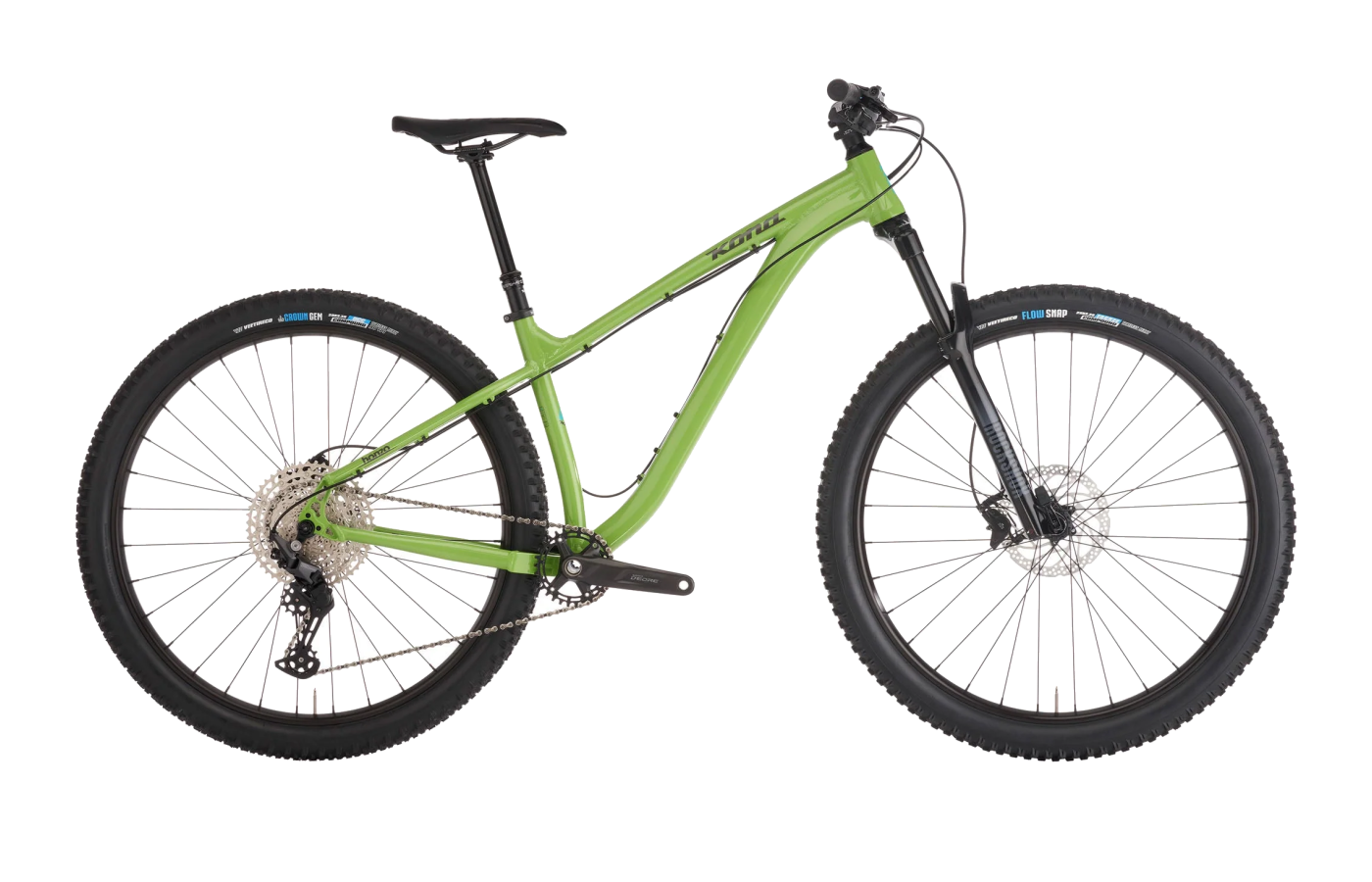
Honzo
Kona's other Honzo-inspired hardtail, but with a real suspension fork and even slacker angles. The pick if the Unit's rigid setup feels under-gunned for the trails you actually ride.
Compare →