Rove
vsCheckpoint
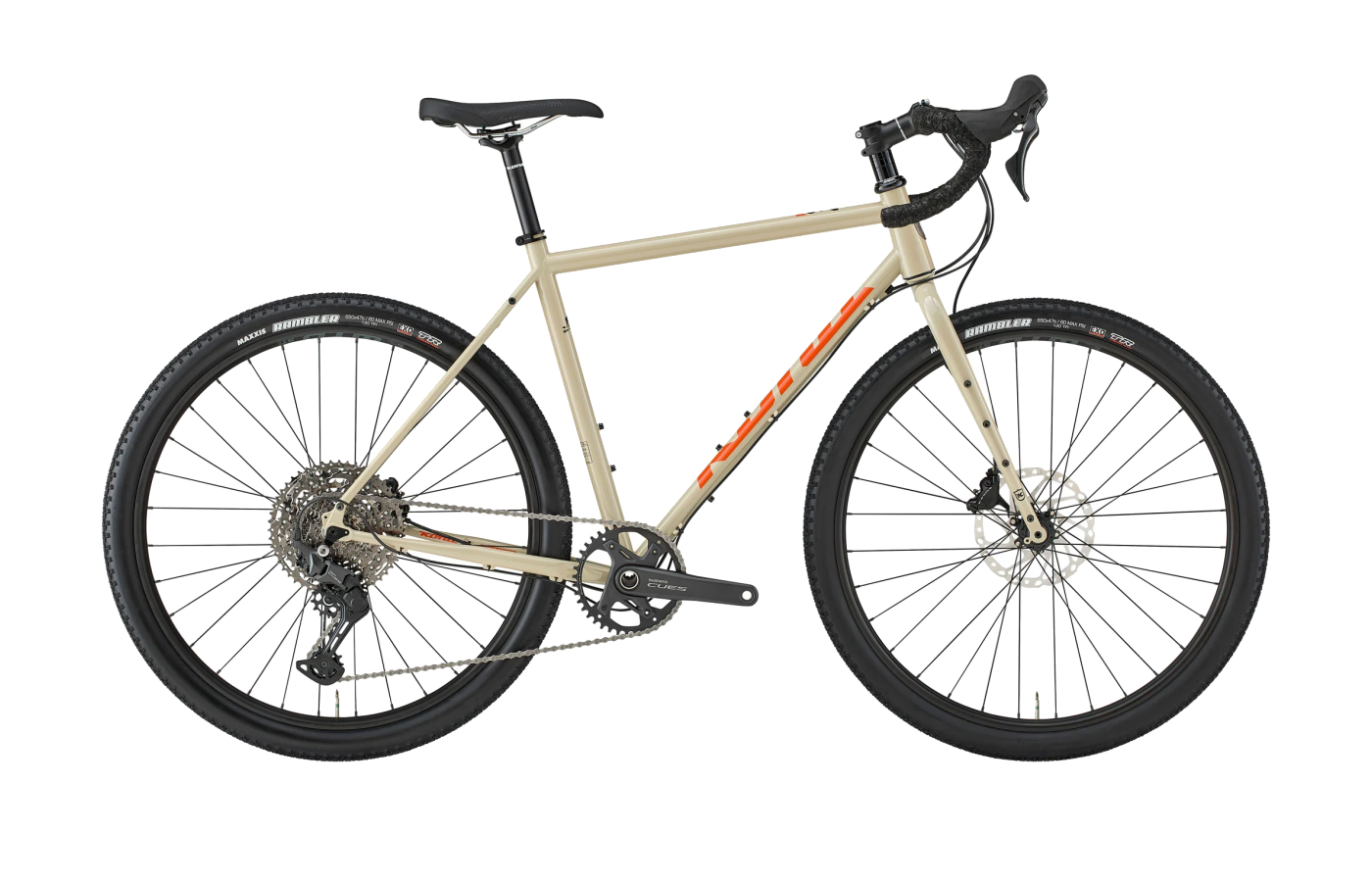
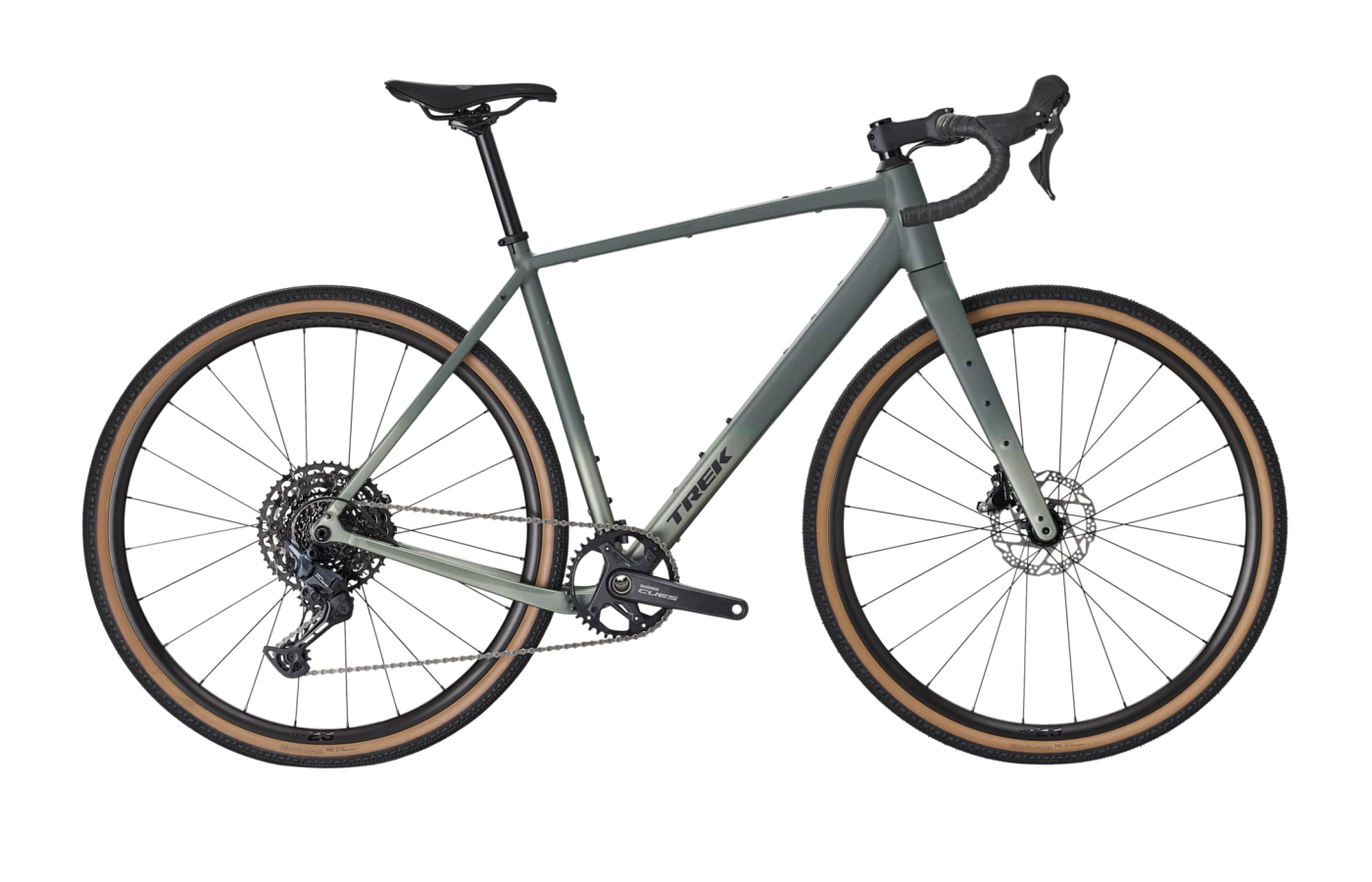
Steel touring soul vs. modern adventure platform.
The Kona Rove is a chromoly classic built for loaded miles. The Trek Checkpoint is a feature-stuffed gravel platform tuned for endurance speed.
Rove
- Steel ride quality — chromoly damps high-frequency chatter in a way no aluminum frame matches, and reviewers consistently praise the 'plush' feel even on washboard.
- Built to be loaded — mounts on the frame, fork blades, and downtube, plus 12 mm thru-axles and a wheelbase tuned for stability when bikepacking gear is hanging off it.
- Field-serviceable — external cable routing, threaded BB, mechanical brakes on most builds; nothing here requires a shop tool to fix on a tour.
- Heavy by modern gravel standards — the LTD is around 11.1 kg, well above the 9-10 kg Checkpoint SL builds.
- 42 mm tire clearance is generous but trails the Checkpoint's 50 mm — less headroom for plus-size gravel tires.
Checkpoint
- Modern adventure platform — 50 mm tire clearance, internal frame storage on SL models, T47 BB, and UDH future-proofing across the entire lineup.
- Lineup scales high — from a $1,599 alloy ALR 3 up to a $6,499 carbon Force AXS SL 7, you can buy the frame now and upgrade your way into the platform's ceiling.
- IsoSpeed on SL models — the rear-only decoupler is described by reviewers as a 'subtle' but real pseudo-suspension that takes the sting out of long stretches of chatter.
- Carbon SL builds use through-the-headset cable routing — fine for electronic shifting, but a major service-cost hit on mechanical builds.
- Stock Bontrager Girona tires are fast on hardpack but 'out of their depth' in mud — most riders will swap them.
Editor’s analysis
Two answers to the same question — what does a versatile gravel bike look like in 2025? — and they couldn't be more different.
Kona builds the Rove the way Konas have always been built: butted chromoly steel, external cable routing, threaded bottom bracket, mounts everywhere. The whole lineup is steel except the entry-level AL 700, and the design brief is unmistakable — comfortable, repairable, ready to be loaded with bags and pointed at the horizon. Reviewers from Bikepacking.com to GearJunkie keep landing on the same word: worry-free.
The Trek Checkpoint takes the opposite approach. Gen 3 is a fully-modernized platform — 500 Series OCLV carbon or 300 Series alloy, IsoSpeed decoupler on the SL models, internal downtube storage, T47 bottom bracket, UDH derailleur hanger, and 50 mm of tire clearance versus the Rove's 42 mm. Trek explicitly repositioned it as 'Gravel Endurance,' handing race duties to the new Checkmate.
The geometries reflect that split. At our compared sizes, the Rove sits at 570 mm stack / 383 mm reach with a 71-degree head angle and 435 mm chainstays — long, planted, designed to feel rock-solid when loaded. The Checkpoint comes in at 556 mm stack / 386 mm reach with a 71.4-degree head angle and shorter 430 mm chainstays — slightly more upright, slightly more cooperative at low speeds, and a touch more eager to change direction.
The price story is the kicker. Both lineups bottom out near $1,400-$1,600, but the Checkpoint scales all the way to a $6,499 carbon SL 7 AXS build, while the Rove tops out at $2,899. If you want a steel adventure bike that you'll keep for a decade and slowly upgrade, the Rove is one of the best in the category. If you want a modern carbon gravel platform with room to grow into Force AXS and carbon wheels, the Checkpoint is the only one of the two that goes there.
Where the builds differ.
Comparing our editor's-pick builds side-by-side. Winners highlighted row-by-row — lower price and weight, and the better-spec component, each mark a point.
Build variants & pricing
The Rove tops out at $2,899 and is steel-only (one alloy entry build). The Checkpoint runs from $1,599 alloy all the way to $6,499 carbon Force AXS.
Editor's picks are tier-matched on Shimano CUES 11-speed at the heart of each lineup — Rove DL ($1,799) and Checkpoint ALR 4 ($1,999). Note one asymmetry the table won't show: the Rove DL ships with mechanical disc brakes (a deliberate touring-friendly choice), while the ALR 4 runs hydraulics.
How they fit, how they steer.
Rove 52 vs Checkpoint S — both fit the same 5'8" rider. The Rove sits 14 mm taller in stack with a slightly shorter reach (383 vs 386 mm), and runs 5 mm longer chainstays. The Checkpoint's front end is a touch sharper; the Rove's is more planted.
Which size should I buy?
Sizes are picked from stack, reach, and effective top tube. Both ranges cover the typical 155-195 cm rider window, but the Rove's smallest size (48) drops lower than the Checkpoint XS.
→These are starting points. Flexibility, riding style, and preferred position all shift the answer — if you’re between sizes, a professional fit beats a chart.
What the magazines said.
Published reviews from trusted cycling outlets. Click through for the full write-up.
Which one should you buy?
If you want a forever steel adventure bike, get the Rove. If you want a modern carbon-or-alloy gravel platform with room to grow, get the Checkpoint.
Rove
If your weekends look like loaded overnighters, mixed-surface tours, or simply long, comfortable days on rough roads, the Rove is the bike. The chromoly frame, external routing, and mounts everywhere make it the easier bike to live with over a decade — and the easier bike to fix in the middle of nowhere.
Checkpoint
If you want one bike that handles fast group gravel, light singletrack, and the occasional bikepacking trip — and you want the option to scale up to carbon and electronic shifting later — the Checkpoint is the more versatile platform. Modern standards, IsoSpeed comfort on SL models, and 50 mm tire clearance keep the door open.
Questions buyers actually ask.
Short answers to the things we get emailed about most often.
01Which is more comfortable for long days?
It depends on the build. The Kona Rove's chromoly frame is naturally compliant — reviewers consistently describe it as 'plush' and credit the steel for damping the high-frequency chatter that beats riders up on long rides.
The Trek Checkpoint SL answers with the IsoSpeed decoupler at the rear — a 'subtle' but real flex point that softens the back end without bobbing. The aluminum Checkpoint ALR doesn't have IsoSpeed, so on alloy-vs-steel terms the Rove is the more comfortable frame. On carbon SL terms, it's a wash — different mechanisms, similar end result.
02What's the maximum tire clearance?
Kona Rove: 42 mm (700c). The lower-spec builds ship with 650b x 47c tires, which measure roughly the same outer diameter as a 700c x 32 mm but with much more cushion.
Trek Checkpoint Gen 3: 50 mm (700c) — one of the most generous in the category, and a key part of Trek's 'Gravel Endurance' repositioning. Stock tires are 700c x 42 mm, so there's real room to size up if you want more float over rough terrain.
03Which is better for bikepacking?
Both are well-suited, but they get there differently.
The Rove is the more traditional bikepacking platform — steel frame, external cable routing, threaded bottom bracket, mounts on the frame, fork blades, and downtube, plus mechanical brakes on most builds for trailside serviceability. Reviewers note the frame's inherent stiffness 'becomes an asset under load,' giving a planted feel even when fully laden.
The Checkpoint is the more modern bikepacking platform — Trek designed integrated frame-bag mounts and offers their own Adventure Bags line, internal downtube storage on SL models, and the same generous mounting points. The carbon SL is lighter; the alloy ALR is closer to the Rove in price and weight.
04How do the lineups compare on price?
The Checkpoint covers a much wider range. The Rove runs from $949 (AL 700, Claris) to $2,899 (LTD, GRX) — six builds, mostly steel, all alloy- or steel-fork until you hit the LTD's carbon fork.
The Checkpoint runs from $1,599 (ALR 3, CUES) to $6,499 (SL 7 AXS, Force AXS) — three carbon SL trims and three alloy ALR trims. If your budget is north of $3,000, the Rove simply isn't in the conversation. If your budget is $1,500-$2,000, both lineups have honest options.
05Is the Trek Checkpoint a race bike?
Not anymore. Trek explicitly handed gravel race duties to the new Checkmate for Gen 3 and repositioned the Checkpoint as 'Gravel Endurance.' The geometry got 11 mm taller in stack and 9 mm shorter in reach (size large) versus the Gen 2 SLR, the SLR trim was discontinued, and Trek added IsoSpeed and downtube storage — all moves toward comfort, not racing.
It's still 'sprightly' and 'lively' per reviewers, but if outright race speed is the goal, the Checkmate is now Trek's answer.
06Which has better long-term serviceability?
The Rove is the easier bike to maintain. External cable routing, threaded bottom bracket, mechanical brakes on most builds, and a 27.2 mm round seatpost mean any shop — or any rider with basic tools — can keep it running indefinitely.
The Checkpoint is more mixed. T47 BB and UDH are future-proof wins, but the SL models route shift cables through the headset. For electronic builds (SL 6/7 AXS) that's fine; for the mechanical CUES builds, one technical reviewer cited a $200 shop bill for a routine cable replacement vs roughly $25 on an externally-routed bike. Worth knowing before you buy a mechanical SL.
07Which is faster on hardpack and pavement?
The Checkpoint, by a meaningful margin. The carbon SL builds weigh roughly 9.3-9.5 kg versus the Rove LTD's 11.1 kg — that's 1.5-2 kg of frame and component weight. On rolling pavement and hardpack gravel, reviewers describe the Checkpoint as having 'road bike-like pickup and acceleration.'
The Rove holds speed well once it's there — 'point and shoot,' as Road.cc put it — but it's not the bike to win sprints on. Pick the Rove for comfort and longevity; pick the Checkpoint for speed.
08What warranty do they come with?
Both come with lifetime frame warranties to the original owner. Trek's lifetime warranty applies across all OCLV carbon and Alpha Aluminum frames. Kona offers a lifetime warranty on the chromoly steel frames and five years on aluminum. Both brands run extensive dealer networks in the US — Trek's is larger, but Kona's is reasonable in most markets.
Similar bikes
If your priorities don’t map cleanly onto either of these, one of these adjacent bikes probably fits better.
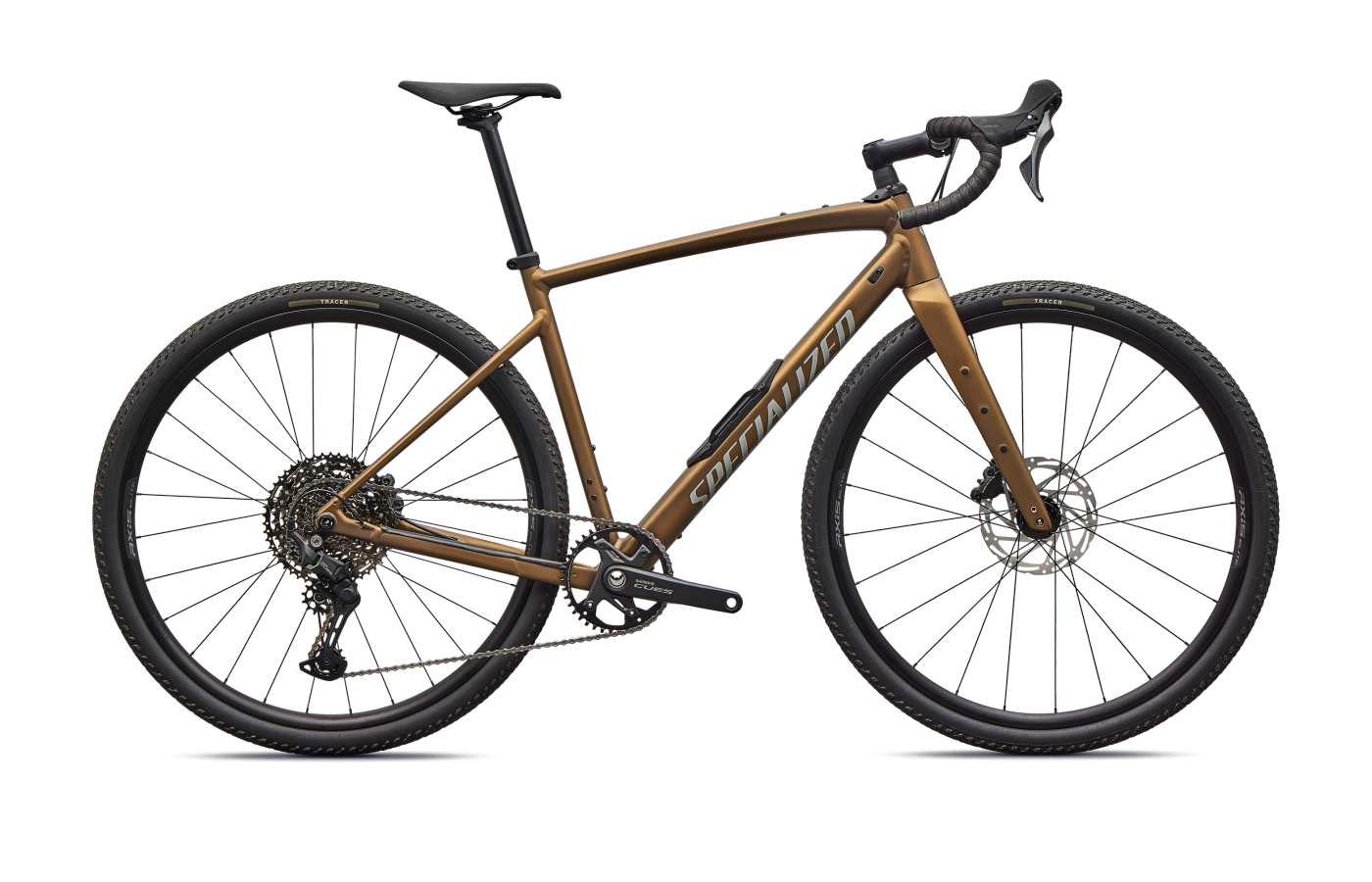
Diverge
Specialized's gravel all-rounder, with carbon options that match the Checkpoint and a Future Shock micro-suspension system on higher trims. The closest direct rival to the Checkpoint SL on technology and price.
Compare →Grizl
Canyon's adventure-focused gravel bike — generous tire clearance, mounts everywhere, direct-to-consumer pricing roughly 30% below the equivalent Trek. The catch is no local dealer.
Compare →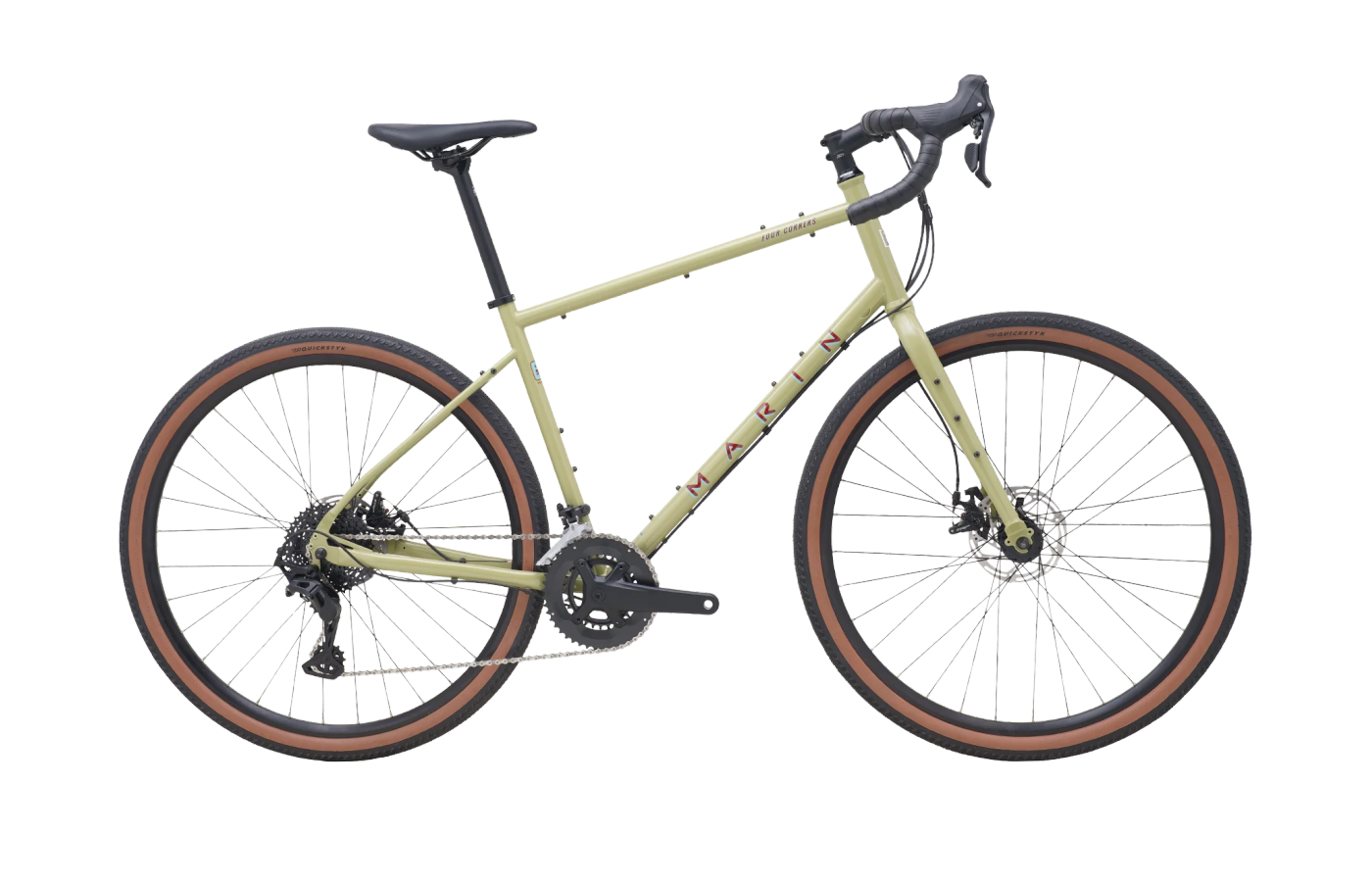
Four Corners
If the Rove's steel-and-mounts character is the appeal but the budget is tighter, the Marin Four Corners is the closest analog — chromoly frame and fork, touring geometry, and a price that undercuts the Rove DL.
Compare →