Process 134
vsStumpjumper
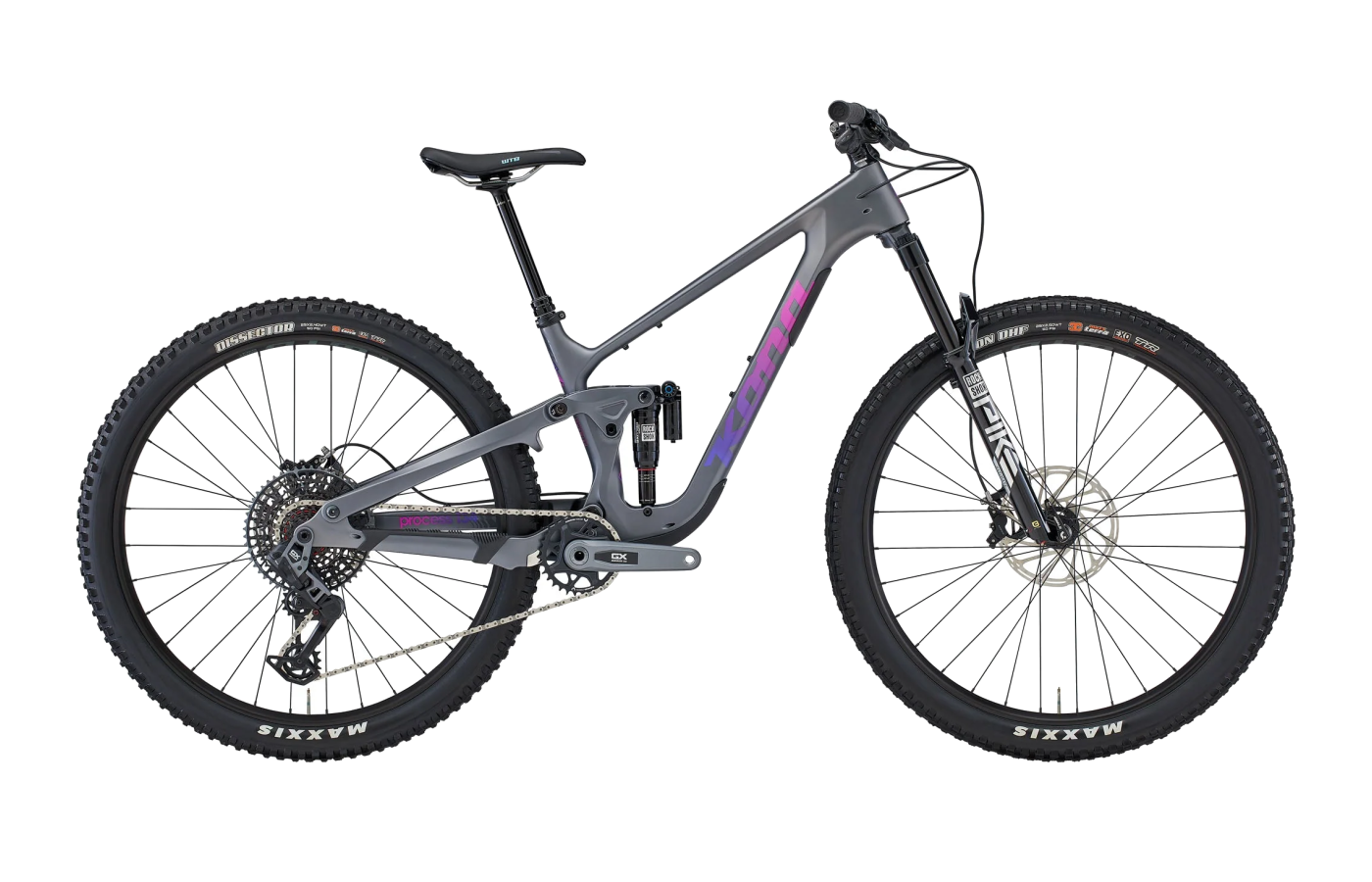
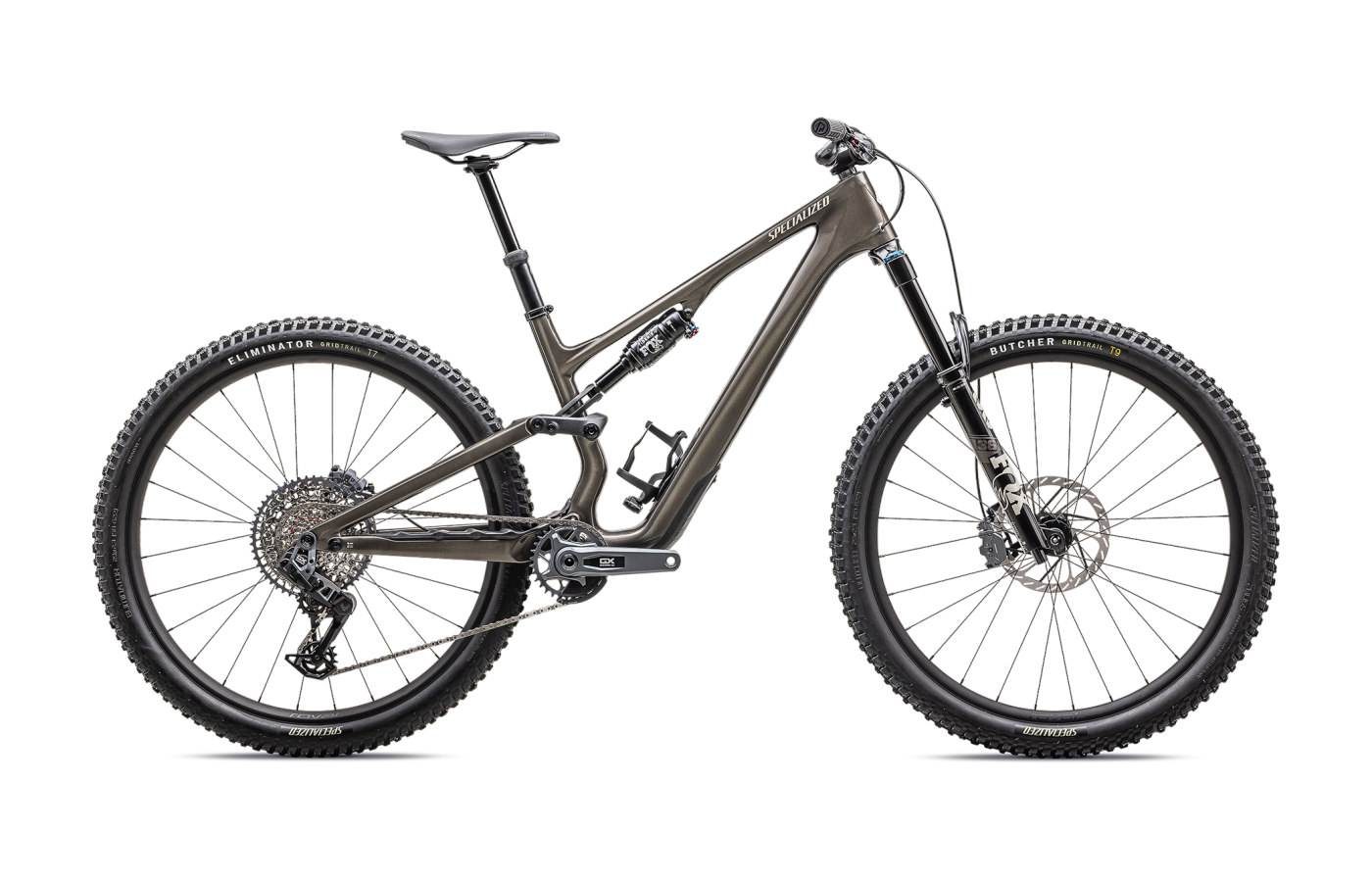
Two trail bikes, two budgets, two suspension philosophies.
The Kona Process 134 is a firm, popping flow-trail bruiser at half the price. The Stumpjumper 15 is a tunable, GENIE-shock-equipped do-everything platform with the spec ceiling to match.
Process 134
- Aggressive value — $1,999 alloy entry, $4,899 carbon flagship, both undercutting most carbon competitors.
- Pops and pumps — firm, supportive suspension and 435 mm chainstays make it a flow-trail and bike-park weapon.
- Lifetime alloy warranty — Kona backs the alloy frames for life (carbon is shorter; PinkBike cites 3 years on the CR/DL).
- Suspension stiffens noticeably under braking — takes adaptation in loose, steep terrain.
- Heavier than expected for a carbon trail bike — Pinkbike measured 14 kg / 30.8 lb in size S.
Stumpjumper
- GENIE shock traction — supple first 70%, ramped end-stroke; Specialized claims 57% more rear-wheel grip.
- Fully adjustable geometry — three headset-cup HTA positions (63° / 64.5° / 65.5°) plus a flip chip.
- Lifetime frame and bearing warranty — plus integrated SWAT downtube storage on every build.
- Carbon frames are wireless-electronic only — no mechanical drivetrains, ever.
- Premium pricing — cheapest carbon Stumpjumper costs more than the priciest Kona.
Editor’s analysis
This isn't an apples-to-apples fight — it's value-trail-shredder vs. tech-forward quiver-killer, and your local terrain is the tiebreaker.
On paper both bikes share the same job description: 130-ish mm of rear travel, a 140–150 mm fork, modern 29" geometry, four-bar-style suspension. But the Kona Process 134 starts at $1,999 and tops out at $4,899; the Specialized Stumpjumper 15 starts at $2,999 and runs to $11,999. The Process is what you buy when you want a real trail bike for less than a used dirt bike. The Stumpjumper is what you buy when you want every adjustment, every gram saved, and every shock-tune option Specialized's R&D group could fit into one platform.
The Kona's character comes from its linkage-driven single-pivot — the same one Kona uses on the longer-travel Process 153. Reviewers across PinkBike, Blister, and Bike-test agree: it rides firm off the top, ramps quickly, and rewards an aggressive, pumping style. It punches above its 134 mm of travel on flow and bike-park terrain, but the suspension noticeably stiffens under braking, which can catch you out when things get loose and steep. It's the bike for the rider who wants to slap berms and pop rollers — not the rider trying to plush-ride a Whistler black.
The Stumpjumper's whole pitch is the FOX/Specialized GENIE shock: a dual-chamber air spring that's coil-supple in the first 70% of travel, then ramps hard via a closed-off outer chamber. That gives it traction the Kona simply can't match on rooty climbs and chattery descents — Specialized claims 57% more rear-wheel grip, and reviewers consistently echo the feel. Pair that with adjustable headset cups (63°/64.5°/65.5° HTA), a flip chip, and SWAT downtube storage, and you have a frame you can tune from XC-ish to enduro-ish without buying a second bike.
The catch is price and proprietary tech. The Stumpjumper's cheapest carbon build is more expensive than the priciest Kona, and every carbon Stumpjumper is wireless-electronic-only — no mechanical shifting, ever. The Kona keeps cable ports on every frame and lets you build a competent rig for under two grand. Put plainly: if you want the most capable trail bike money can buy and can spend $6k+, the Stumpjumper is the deeper platform. If you want 90% of the fun for half the money, the Kona Process 134 is one of the best values in the segment.
Where the builds differ.
Comparing our editor's-pick builds side-by-side. Winners highlighted row-by-row — lower price and weight, and the better-spec component, each mark a point.
Build variants & pricing
Kona spans $1,999–$4,899 across two alloy and two carbon builds. Specialized spans $2,999–$11,999 across nine builds, with carbon Stumpjumpers starting at $4,999.
Editor's picks here are tier-matched on SRAM GX Eagle Transmission AXS and full-carbon frames — the Kona CR/DL ($4,899) versus the Stumpjumper 15 Expert ($5,999). The Kona's GX AXS pick is its top-of-line build; on the Specialized side, GX Transmission lands you mid-lineup.
How they fit, how they steer.
Kona M (455 mm reach, 615 mm stack, 65.5° HTA) and Stumpjumper S3 (450 mm reach, 627 mm stack, 64.5° HTA in mid headset position) — the Stumpjumper sits 12 mm taller and 1° slacker out of the box, with adjustable headset cups giving you ±1° on the head angle.
Which size should I buy?
Kona offers four sizes (S–XL); Specialized's S-sizing runs S1–S6, giving more granular fit options at the small and medium ends of the range.
→These are starting points. Flexibility, riding style, and preferred position all shift the answer — if you’re between sizes, a professional fit beats a chart.
What the magazines said.
Published reviews from trusted cycling outlets. Click through for the full write-up.
Which one should you buy?
If you want a hard-charging trail bike for the price of a Stumpjumper Comp Alloy, get the Kona. If you want the deepest tuning range and most refined suspension on the market, get the Stumpjumper.
Process 134
If your trails are mostly bermed, jumpy, and worth pumping — and you'd rather spend the saved $3k on a vacation, a coil shock, or a second bike — this is one of the strongest value plays in the trail category. Buy the alloy DL at $2,999 and you're still ahead.
Stumpjumper
If you ride everything from rooty climbs to bike-park lines and want one frame that can adapt to all of it, the GENIE shock plus adjustable geometry is genuinely category-leading. Buy the Pro or Expert build, skip the S-Works, and you're getting the same suspension as the flagship for thousands less.
Questions buyers actually ask.
Short answers to the things we get emailed about most often.
01Which has more suspension travel?
The Stumpjumper 15 — 145 mm rear / 150 mm fork (160 mm fork on Coil and S-Works LTD builds).
The Process 134 runs 134 mm rear / 140 mm fork. That's an 11 mm rear-travel and 10 mm fork-travel gap — meaningful when things get steep and rough, though the Kona's firm, ramped feel lets it punch above its number on flow trails.
02Which climbs better?
Edge to the Stumpjumper. The GENIE shock's supple first 70% gives it standout rear-wheel traction on technical, rooty climbs — multiple reviewers (Flow MTB, Loam Wolf, BikeRadar) call this the bike's climbing superpower. Anti-squat is in the 105–108% range at sag, so pedal bob stays minimal.
The Kona is described as "capable but not spritely." PinkBike measured the carbon CR/DL at 14 kg / 30.8 lb in size S — a bit portly for a carbon trail bike — and the seated pedaling position sits a touch farther off the back than the Stumpjumper's steeper effective seat angle (76.6–76.9° on the Kona vs. 76.5–77° on the Stumpjumper, but the Stumpy sits the rider more centered).
03Which descends better?
Both punch above their travel numbers, but they get there differently.
The Stumpjumper wins on the gnarliest, fastest, steepest stuff — slacker 64.5° head angle (with the option to go to 63° via the headset cup), longer wheelbase, and the GENIE shock's bottom-out resistance let you point and shoot. Reviewers describe it as "remarkably stable at speed."
The Kona Process 134 is in its element on flowy, jumpy, sculpted descents. Its 65.5° HTA is plenty slack for trail riding, and its firm, supportive suspension rewards an active rider who wants to pump and pop rather than plush-ride. PinkBike notes you "can come undone carrying that speed into looser, steeper terrain" — fair warning if your trails are really raw.
04What's different about the Stumpjumper's GENIE shock?
The GENIE is a dual-chamber air spring that Specialized co-developed with FOX. The first 70% of travel uses a large air volume for a coil-like, ultra-supple feel; past 70%, a built-in band closes off the outer chamber, sharply reducing volume and ramping the spring rate to prevent harsh bottom-outs.
You can add up to four optional GENIE bands to firm up the mid-stroke — turning the bike from "ultra-plush" to "snappy and supportive" without changing the shock. The shock uses standard FOX internals plus one extra seal, so most suspension shops can service it. Concerns about long-term proprietary parts availability are valid but not yet borne out.
05Are these builds tier-matched?
Yes — both editor's picks run SRAM GX Eagle Transmission AXS with carbon frames, so the spec comparison is genuinely apples-to-apples on drivetrain.
Where they diverge: the Kona CR/DL ($4,899) is the top-of-line Kona, while the Stumpjumper 15 Expert ($5,999) sits mid-lineup. Specialized goes four more steps up to the $11,999 S-Works LTD. The Kona's GX AXS build is its ceiling; the Stumpjumper's GX AXS build is its floor for that drivetrain tier.
06Can I run a mullet (29"/27.5") setup on either?
Yes on both, with caveats.
The Process 134 has a flip chip specifically called out by Kona as a geometry-correction tool for switching between full 29" and mixed-wheel setups, so it's a sanctioned, easy swap.
The Stumpjumper 15 ships sizes S1 and S2 mulleted from the factory; sizes S3–S6 ship as full 29". Going mullet on a larger frame requires Specialized's aftermarket mullet link (typically $100–300) to keep the geometry on-target.
07What about warranty and long-term support?
Specialized: lifetime frame warranty plus lifetime pivot-bearing replacement to the original owner. Strong, and the brand's dealer network is dense in North America.
Kona: lifetime warranty on the alloy frames — outstanding. The carbon frames are warrantied for a shorter period (PinkBike cites 3 years on the CR/DL it tested, though Bike-test reports 25 years; verify with Kona before buying since the brand has had recent ownership and dealer changes).
For maximum no-asterisk peace of mind, the alloy Kona or any Stumpjumper wins.
08Which is the better budget buy?
The Kona Process 134, with no real argument. Its $1,999 alloy Base build undercuts the cheapest Stumpjumper ($2,999 alloy with Shimano Deore) by a thousand bucks, and the $2,999 alloy DL with a RockShox Pike Select fork and SRAM NX/GX Eagle is genuinely competent.
If your budget tops out around $3k, the Stumpjumper's lineup forces you onto the heaviest alloy build (16.57 kg / 36.5 lb) with entry-level Deore. The Kona at the same price is lighter, better-specced, and arguably more fun on the trails most riders actually ride.
Similar bikes
If your priorities don’t map cleanly onto either of these, one of these adjacent bikes probably fits better.

Fuel EX
Trek's perennial mid-travel trail bike — similar 140 mm-class travel, Mino Link adjustable geometry, and a more conservative, dealer-friendly alternative to both. A safe pick if you want a network of local Trek shops behind you.
Compare →Jeffsy
YT's direct-to-consumer answer — playful trail geometry, aggressive spec-for-the-money, and prices that often beat the Kona's value play. The catch is no local dealer if anything goes sideways.
Compare →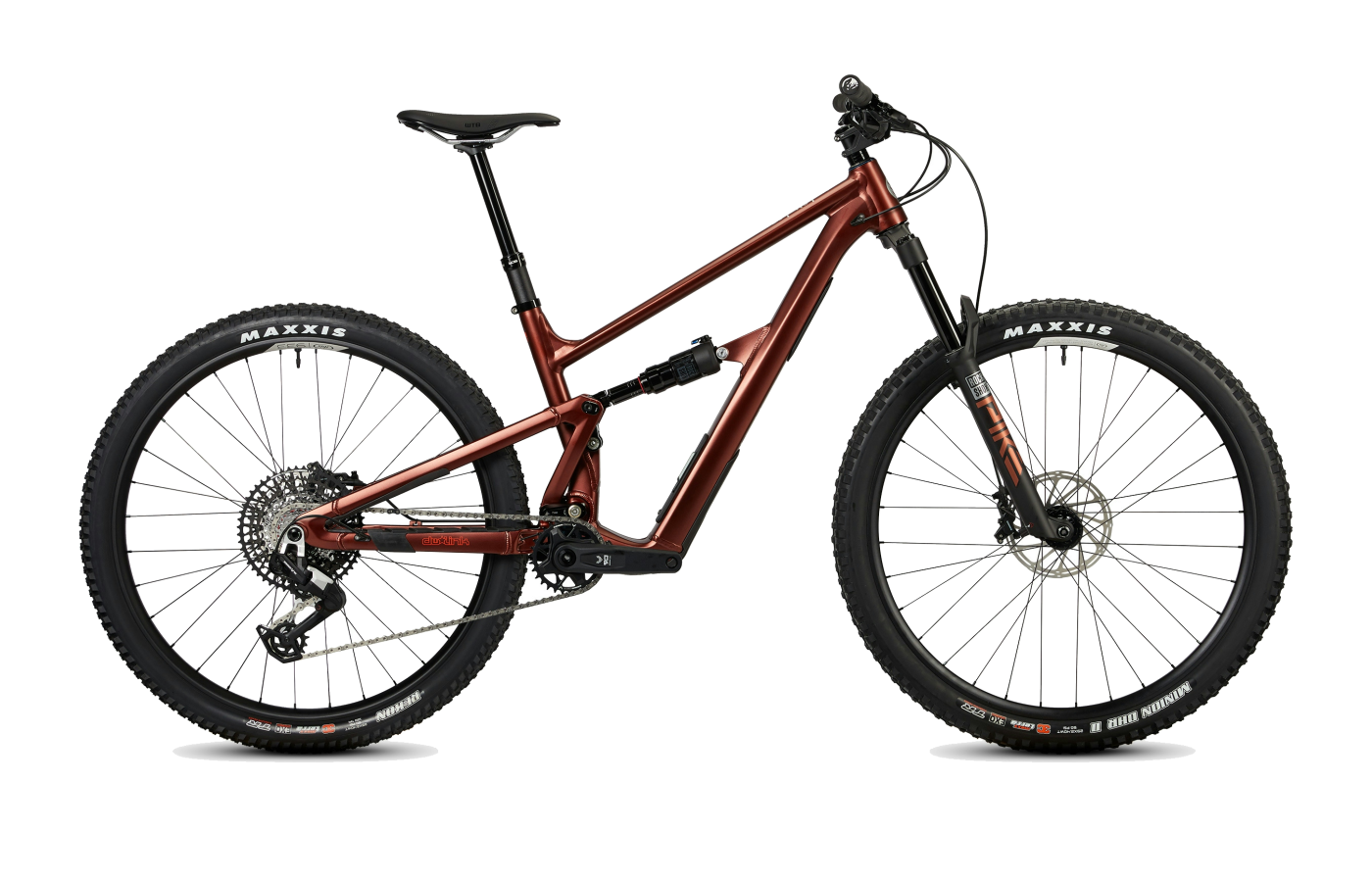
Ripley AF
Ibis's alloy Ripley — DW-Link suspension known for its efficient pedaling and small-bump traction, in a package that splits the difference between Kona's price and Specialized's polish.
Compare →