Hei Hei
vsChisel
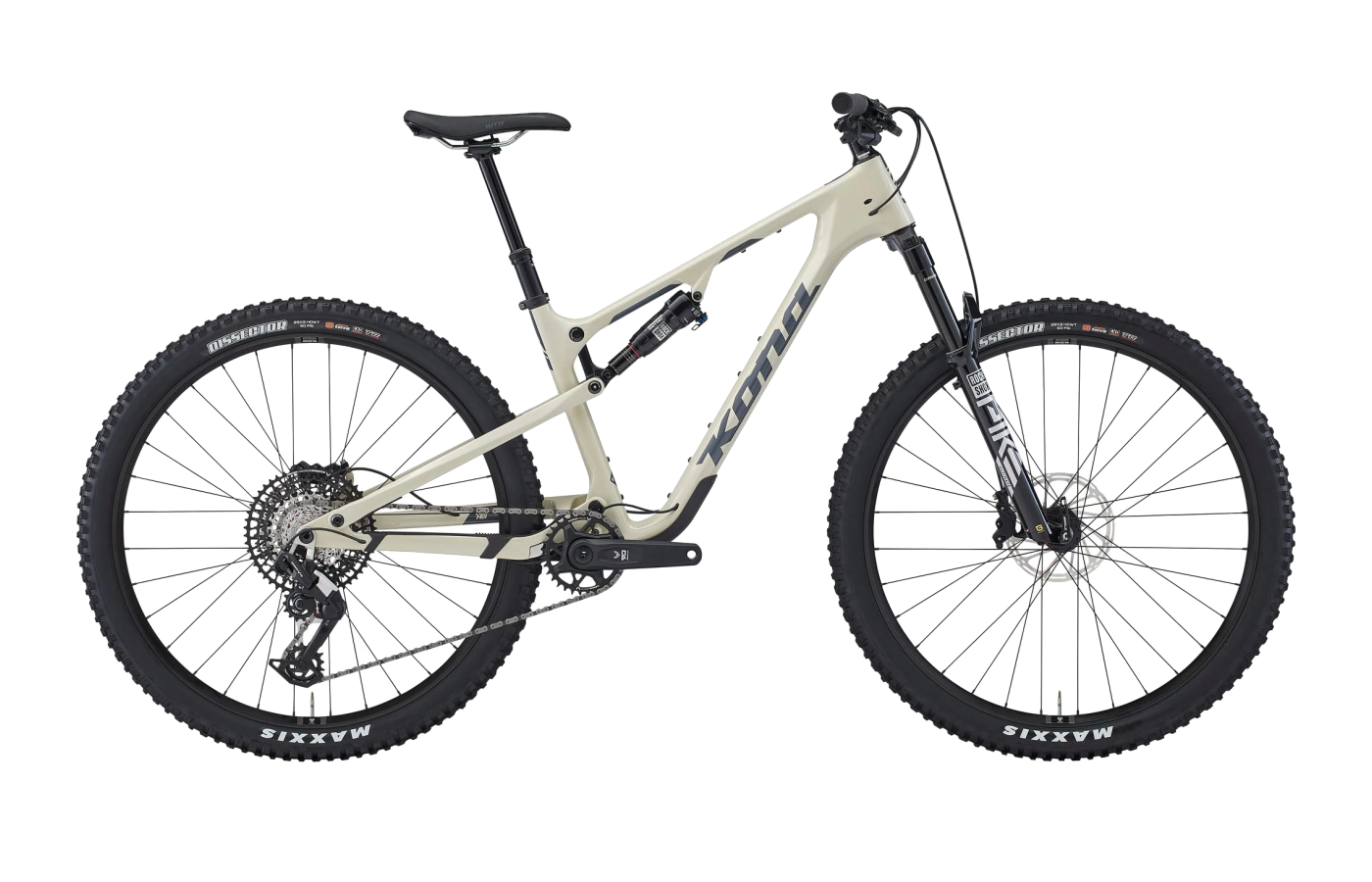
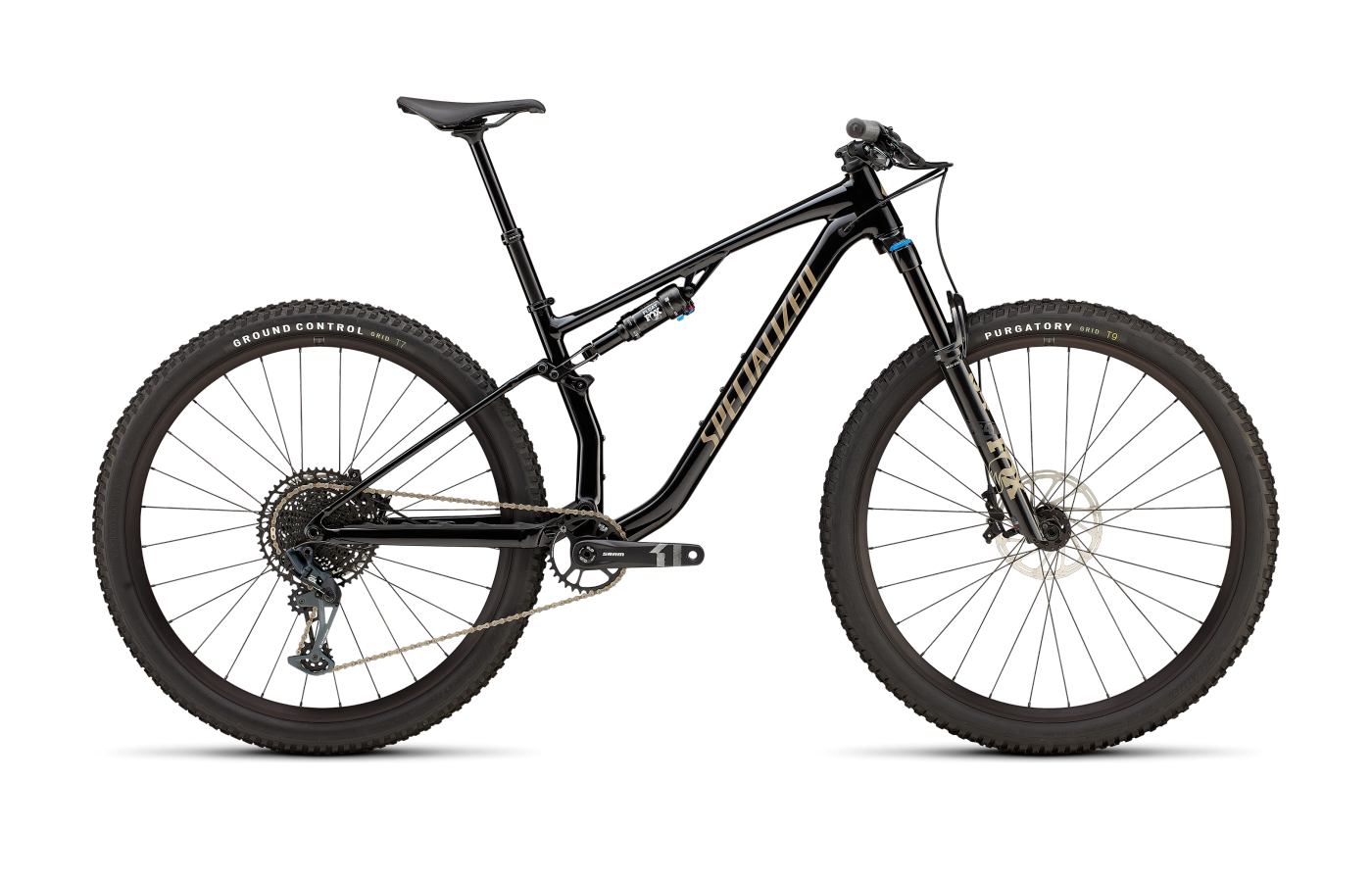
Carbon downcountry versus alloy XC.
The Hei Hei is a premium carbon trail-leaning rig with 120/130 mm travel. The Chisel is Smartweld alloy, race-tuned, and starts at half the money.
Hei Hei
- Premium suspension spec — RockShox Pike Ultimate 130 mm and Deluxe Ultimate shock as standard, not an upsell.
- Slacker, more stable at 66° HTA and 1194 mm wheelbase (size M), it descends with more composure than most XC bikes.
- Built for long days — nine water bottle bosses, pivot-driven single pivot tuned for compliance over weight.
- Only one complete carbon build at $6,299 — no carbon mid-tier to step down to.
- Heavier than true XC race bikes; pure racers will want a lighter platform.
Chisel
- Half the price — the Comp EVO at $3,599 delivers most of the Epic Evo's character in alloy.
- Smartweld alloy frame is stiff, light for aluminum (~2.72 kg bare), and described as "deceptively carbon" by reviewers.
- Broad range of builds — full-sus from $2,599 up to $3,599, plus $1,899 hardtails. Easiest entry point into a modern XC platform.
- 110 mm rear travel with a firm RX tune — harsh on sustained chatter, demands a narrow sag window.
- Stock wheels and cockpit are the usual budget-alloy weak spots; expect to upgrade.
Editor’s analysis
Two short-travel 29ers with the same rider in mind — but one is built to descend in comfort, and the other is built to go fast uphill.
The Kona Hei Hei and Specialized Chisel both chase the same category — roughly 120 mm of travel, 29-inch wheels, one bike to do most of your mountain biking — but they arrive from opposite ends of the price ladder. The Hei Hei's only complete bike is the carbon CR G10 at $6,299, a premium trail-leaning XC machine. The Chisel full-suspension tops out at the Comp EVO for $3,599, a full $2,700 cheaper, and the range extends down to a $1,899 hardtail. Two bikes, two buyers.
On the trail, the difference lands exactly where the spec sheet predicts. The Kona Hei Hei runs 120 mm rear / 130 mm front with a slacker 66 degree head angle, and reviewers (NSMB, Blister, The Radavist) repeatedly call out its composure on rough descents and traction on technical climbs — Kona deliberately swapped the previous flex-stay for a pivot-driven single pivot to add compliance, even at a small weight penalty. The Specialized Chisel runs 110 mm rear / 130 mm front (in EVO trim) with a steeper 67 degree head angle, a firmer flex-stay rear end, and reviewers (Nminus1bikes, Bikepacking, The Radavist) call it a "momentum machine" and a "hot hatch" — stiff, efficient, fast above all.
Weight tells the same story from another angle. The Hei Hei CR G10 weighs roughly 30.2 lbs per Blister's scale — not light for a carbon XC bike. The Chisel Comp EVO weighs about 29.8 lbs per Specialized's claim at size M. They end up within a pound of each other, but the Chisel gets there on an alloy frame at almost half the price, and the Hei Hei gets there with carbon plus heavier, burlier components (SRAM Eagle 90 Transmission, Pike Ultimate, Deluxe Ultimate) aimed at lasting through hard trail days.
So the question isn't really which bike is better. It's whether you're shopping for the carbon Pacific-Northwest all-day bike or the alloy NICA-racer-on-a-budget. The Hei Hei rewards comfort-over-time riders who want premium suspension and don't mind the price. The Chisel rewards riders who want to go fast, suffer a little, and spend the savings on upgrades.
Where the builds differ.
Comparing our editor's-pick builds side-by-side. Winners highlighted row-by-row — lower price and weight, and the better-spec component, each mark a point.
Build variants & pricing
The Hei Hei is carbon-only and sells at one price. The Chisel full-suspension range spans ~$1,000, with hardtails sitting below that.
Prices are US MSRP. Kona's CR G10 ($6,299) is the only carbon build — the alloy G10 at $3,999 is a real step down in suspension spec (Fox Rhythm). Specialized's top Chisel is the Comp EVO at $3,599; to get into a carbon Specialized short-travel platform you'd step up to the Epic Evo. The price gap here is real — it's the carbon vs alloy gap, and it's informative, not a mismatch to hide.
How they fit, how they steer.
Both at size M — the fit-picked size for a 5'8" rider on each bike. The Hei Hei sits 14 mm taller in stack with 4 mm more reach, a full degree slacker at the head tube (66° vs 67°), and a 17 mm longer wheelbase. Chainstays are near-identical (435 vs 437 mm). The Kona is the descending geometry; the Chisel is the race geometry.
Which size should I buy?
Size recommendations based on stack, reach, and effective top tube. Both offer S–XL; the Chisel also adds an XS, extending down to a 390 mm reach.
→These are starting points. Flexibility, riding style, and preferred position all shift the answer — if you’re between sizes, a professional fit beats a chart.
What the magazines said.
Published reviews from trusted cycling outlets. Click through for the full write-up.
Which one should you buy?
If you want premium suspension, long-day comfort, and you'll keep the bike a while, get the Hei Hei. If you want 90% of the performance for half the money — and the energy to upgrade over time — get the Chisel.
Hei Hei
If your rides are long, rough, and varied — backcountry missions, PNW-style chunk, full-day loops with bikepacking bags — the Hei Hei's carbon chassis, premium RockShox suspension, and slacker geometry will reward you. You pay for it up front, but it's the more capable bike on descents and long efforts.
Chisel
If you're a NICA racer, a weekend XC enthusiast, or a cash-strapped rider who wants a platform with room to grow, the Chisel is the clear pick. You get Smartweld alloy, real race geometry, and a huge chunk of the Epic Evo's character for $3k less. Upgrade the wheels and bars when you can; the frame is the part that matters.
Questions buyers actually ask.
Short answers to the things we get emailed about most often.
01Which climbs more efficiently?
The Specialized Chisel, on smooth climbs. Its firm RX-tuned rear end and 110 mm of travel put more of your pedal input into forward motion, and multiple reviewers (The Radavist, Nminus1bikes) noted they rarely engaged the lockout even on fire roads because the suspension is so supportive out of the box.
The Kona Hei Hei climbs differently. The linkage-driven single pivot is more active — it bobs a bit more on smooth terrain but holds traction exceptionally well on technical, rooty, rocky ascents. Kona gives you a two-position lockout for the smooth stuff. Different tools for different climbs.
02Which is more capable on descents?
The Kona Hei Hei, clearly. It has 10 mm more rear travel (120 vs 110), a 1° slacker head angle (66° vs 67°), and a 17 mm longer wheelbase at size M — all three move it toward stability at speed. Reviewers describe it as "composed while blasting through rough sections" and "more capable than previous experiences on bikes with this much travel" (NSMB).
The Chisel descends better than a traditional XC bike thanks to its "mezzo geometry," and the EVO's 130 mm Fox 34 adds real confidence up front. But reviewers (Nminus1bikes, The Radavist) are consistent: at genuine speed on chunky terrain, the 110 mm rear end runs out of travel before the Kona does.
03Why such a big price gap?
Frame material and range strategy. The Hei Hei is carbon only — Kona sells one complete carbon build, the CR G10, at $6,299, and an alloy G10 at $3,999 with a big step down in suspension. The Chisel is alloy only — no carbon version exists; the carbon equivalent in Specialized's lineup is the Epic Evo, which starts around $4,500.
So the comparison isn't apples-to-apples on price, and it's not supposed to be. These are the two bikes a lot of riders cross-shop despite the gap because they land in roughly the same travel and intent zone. The Chisel proves alloy can still compete; the Hei Hei proves carbon is still where the premium suspension lives.
04How do the drivetrains compare?
Both top builds run mechanical SRAM, which is unusual and welcome in 2025. The Hei Hei CR G10 ships with the new SRAM Eagle 90 Transmission — the cable-actuated T-Type system that slots below AXS Transmission. Reviewers (NSMB, Blister) note it shifts crisper than AXS under load and costs less to replace.
The Chisel Comp EVO runs older SRAM GX Eagle mechanical (12-speed, non-T-Type). Still reliable, still widely serviceable, but not the new T-Type standard. Both avoid batteries, both are easy to live with. The Kona has the newer groupset; the Chisel has the tried-and-true one.
05What about tire clearance and tires?
Hei Hei: 61 mm official clearance (roughly 2.4 inch). Ships with Maxxis Dissector 29x2.4WT front and rear — a burly trail-leaning choice.
Chisel Comp EVO: 59.7 mm official clearance (~2.35 inch). Ships with a Specialized Purgatory T9 front / Ground Control T7 rear combo on the EVO — meatier than the standard Chisel Comp's Fast Trak / Ground Control. Lower builds ship with faster-rolling, thinner-casing XC tires.
Neither is limited by clearance in practice; both are sized for the trail tires they come with.
06Is the Chisel really comparable to a carbon Epic?
Close, but honest about the gap. Reviewers (Nminus1bikes, Bicycling, MBR) describe the Chisel as a "convincing facsimile" of the carbon Epic 8 / Epic Evo — the Smartweld frame uses a single-piece seat tube and bottom bracket assembly that mimics the carbon frame's stiffness. The claimed frame weight is around 2.72 kg bare, roughly 500–750 g heavier than the carbon equivalent.
You give up some small-bump plushness and a couple hundred grams. You save $1,000+. For most riders short of elite racing, that's a fair trade.
07Which is better for bikepacking?
Both are legitimately good, with slightly different bents. The Kona Hei Hei has nine water bottle bosses in the front triangle (praised universally in reviews) and a compliant suspension that Bikepacking.com specifically called out as reducing fatigue on multi-day rides.
The Chisel has a standard threaded bottom bracket, external headset routing, and a generous front triangle — all bikepacking-friendly. It's lighter per dollar but the firmer suspension is less forgiving on long loaded days. If you're doing dirt touring where comfort matters more than pace, the Hei Hei wins. If you're doing shorter overnights on faster terrain, the Chisel is fine.
08What warranty comes with each?
Both frames carry a lifetime frame warranty to the original owner against manufacturing defects. Specialized has a long-established crash-replacement program (typically 30–50% off a new frame). Kona has historically offered crash replacement too, and with the founders' recent reacquisition of the brand, reviewers have noted a renewed emphasis on shop relationships and service support.
Similar bikes
If your priorities don’t map cleanly onto either of these, one of these adjacent bikes probably fits better.
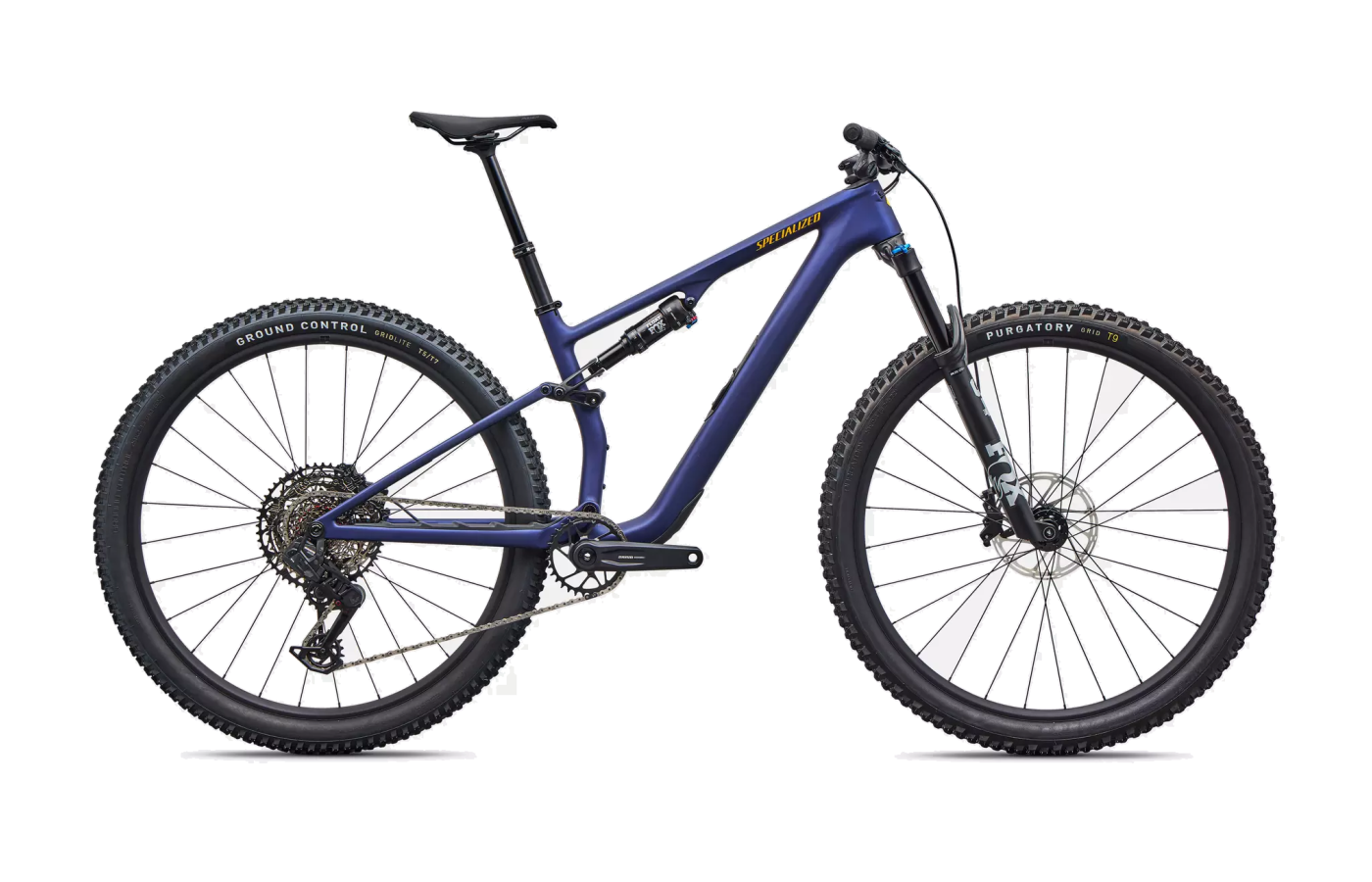
Epic Evo
Specialized's carbon answer to the question "what if the Chisel had a carbon frame?" Same 120 mm rear travel, same flex-stay architecture, lighter and more refined — and priced above the Chisel but below the Hei Hei. The natural middle ground.
Compare →Spearfish
The most direct Hei Hei cross-shop — 120 mm travel, adventure-tilted, designed for all-day efficiency and bikepacking-first. A little less aggressive on descents than the Hei Hei, but lighter on the wallet and built around the same long-day ethos.
Compare →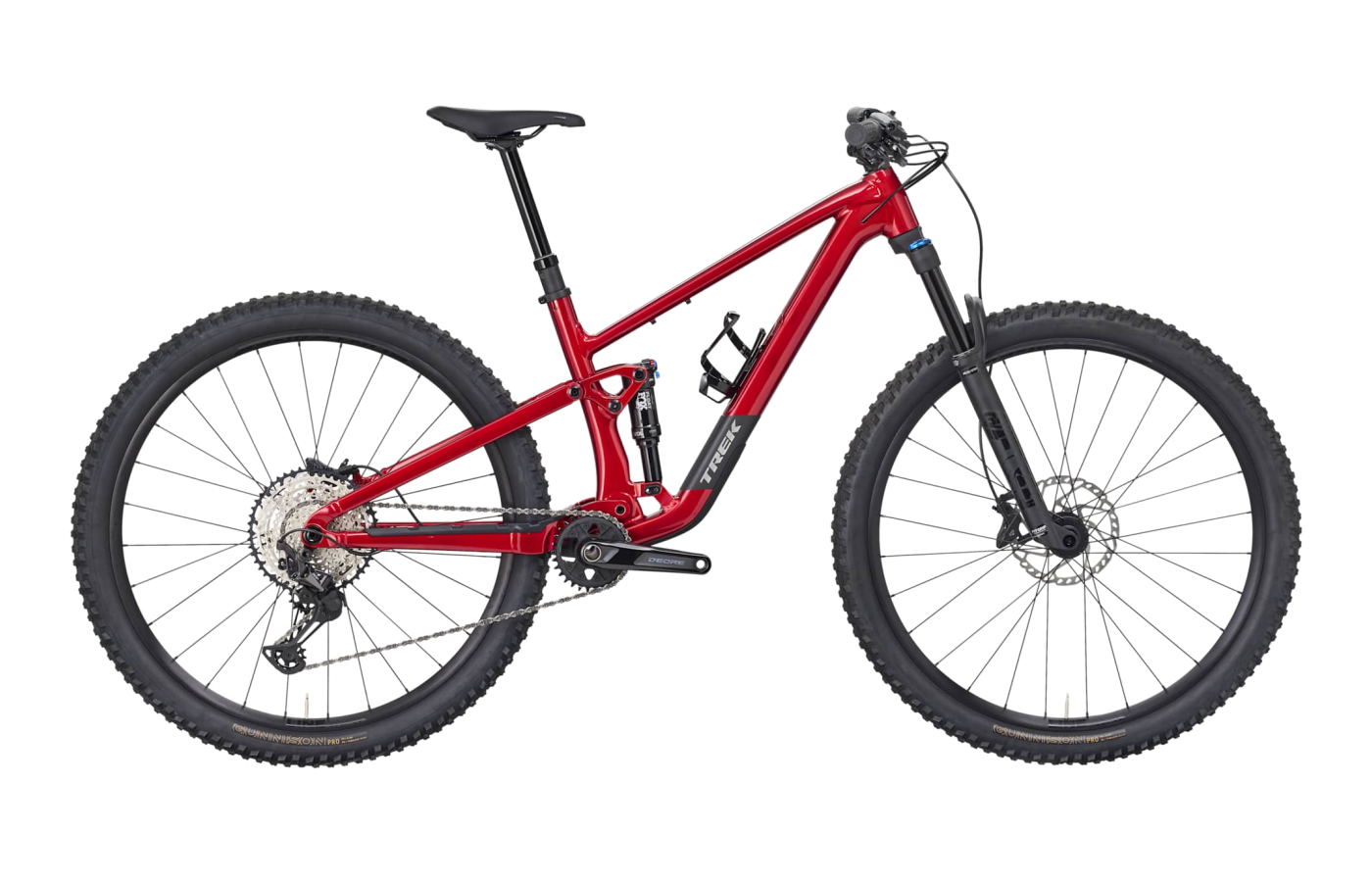
Top Fuel
Trek's downcountry play — 120 mm front and rear, carbon, with Trek's IsoStrut rear suspension that skips one of the pivots. A more integrated, race-feeling alternative to the Hei Hei at a similar price ceiling.
Compare →