Fire Mountain
vsRockhopper
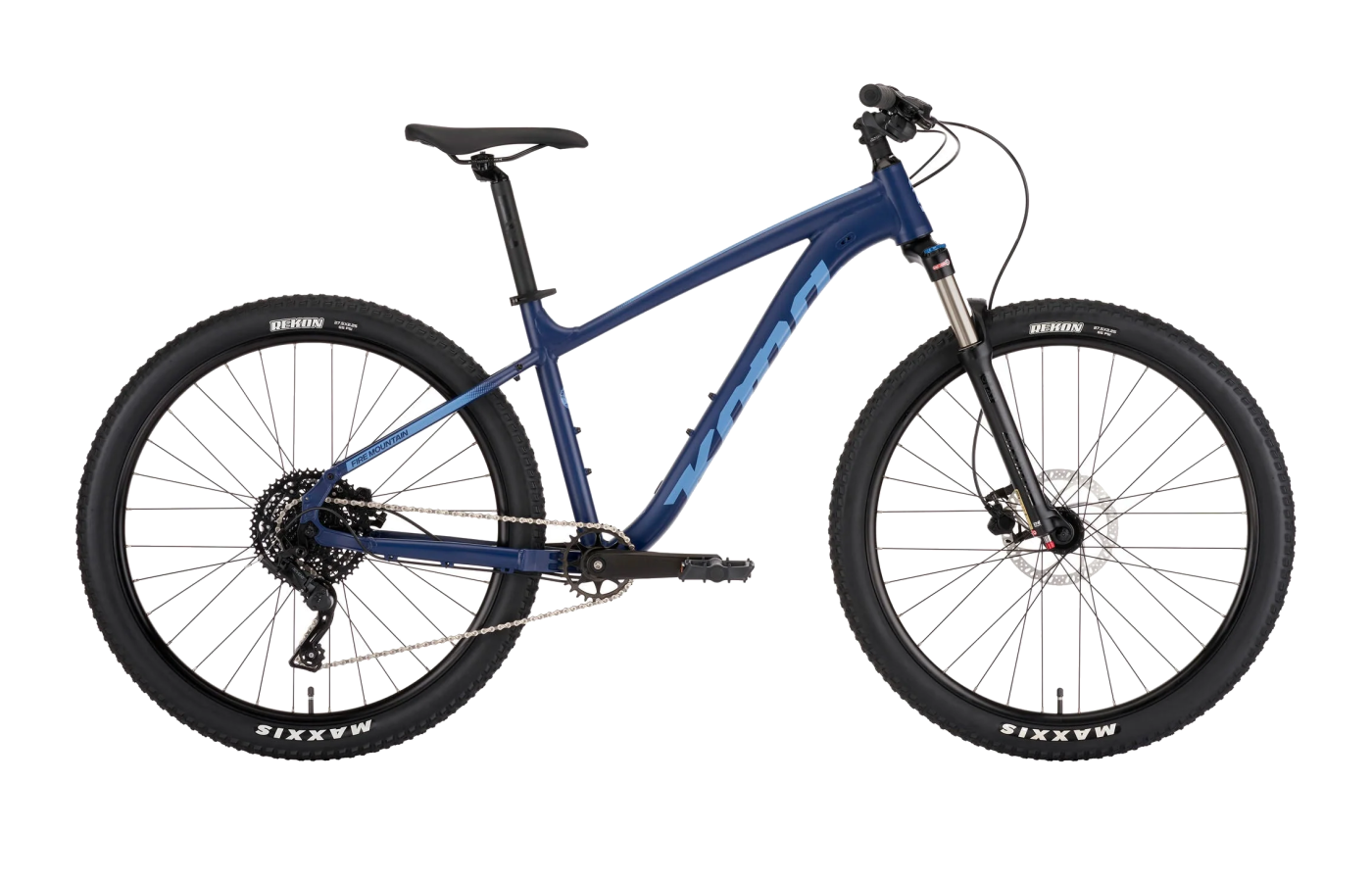
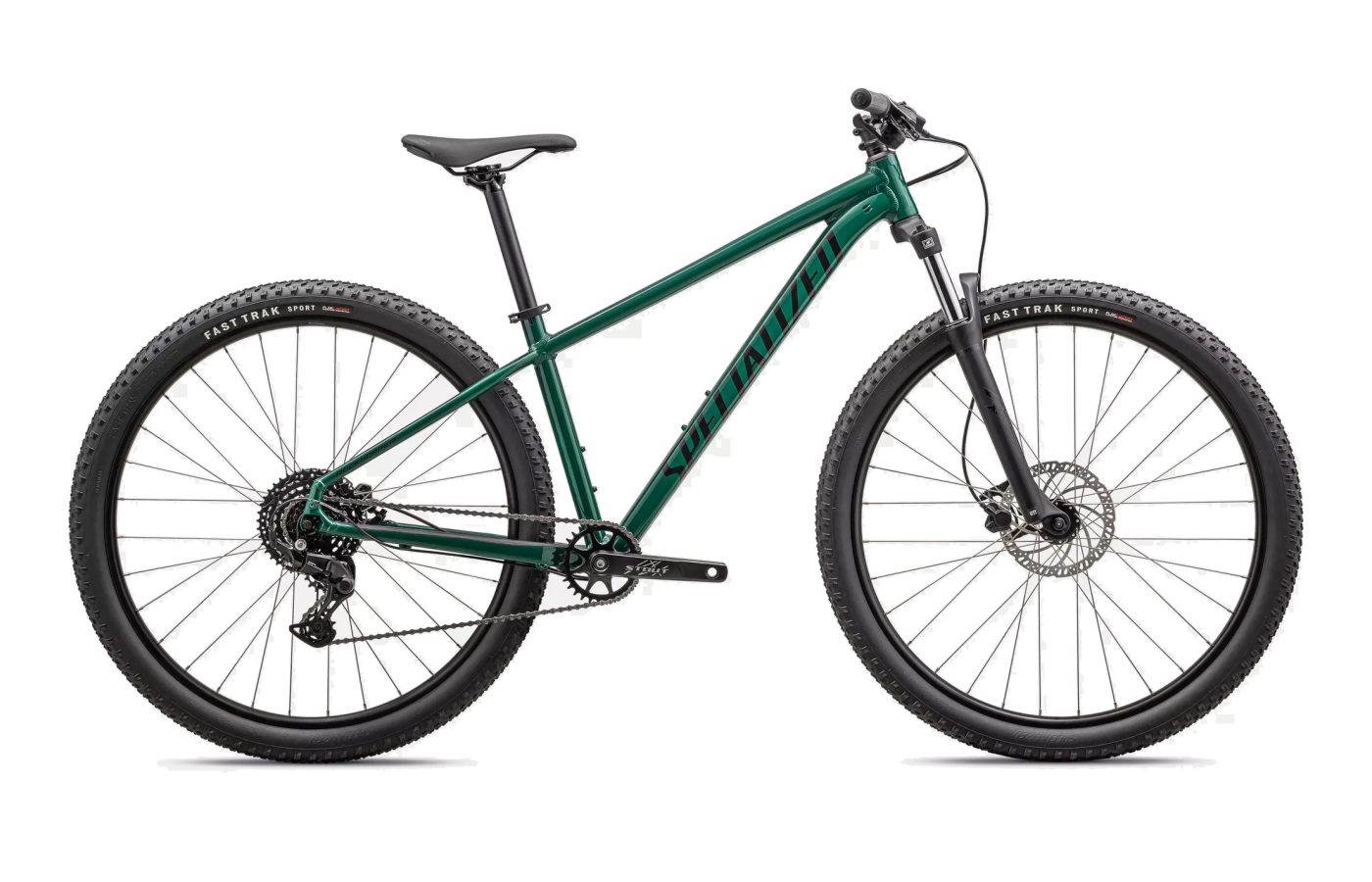
Two $749 hardtails, two different ideas of a first trail bike.
The Fire Mountain leans long and stable for confidence on real singletrack. The Rockhopper goes lighter and quicker for fast XC miles.
Fire Mountain
- Longer, more planted geometry — 1139 mm wheelbase and 440 mm reach in size M for stability on real singletrack.
- Wider gear range — 11–46T cassette gives a true bailout gear for steep, chunky climbs.
- Clutched rear derailleur — microSHIFT Advent's clutch keeps the chain quiet over rough sections, rare at this price.
- Only one build at one price — no step-up path within the model.
- Mixed wheel sizes by frame size (26 / 27.5") rather than the modern 29" standard.
Rockhopper
- Tubeless-ready 25 mm rims — rare at $749 and a real long-term ride-quality upgrade.
- Eight sizes from XS to XXL with 27.5" wheels on the small frames and 29" on M and up.
- Nine-build family — from $649 Rockhopper to $1,299 Expert if you want to step up later without leaving the model.
- Tighter 11–41T cassette has a smaller bailout gear than the Kona's 11–46T.
- XC-leaning geometry feels twitchy on faster, rougher descents.
Editor’s analysis
Same money, same coil fork, same hydraulic brakes — and very different bikes once you point them at a trail.
At $749 the Kona Fire Mountain and the entry-level Specialized Rockhopper Sport land on the same line. Both run a 100 mm SR Suntour coil fork, both have Tektro hydraulic disc brakes, both are built on a butted 6061-class aluminum frame with quick-release axles. From ten feet away the spec sheets look interchangeable. They aren't.
The Fire Mountain is the more trail-oriented of the two. A 68-degree head tube angle, a 1139 mm wheelbase in size M, and 435 mm chainstays give it a stretched, planted stance — closer in feel to a modern trail hardtail than a race bike. Its microSHIFT Advent 1x9 drivetrain (28T ring, 11–46T cassette) has a clutched rear derailleur, which keeps the chain quiet over chatter. The 27.5-inch wheels on the M and the wider knobbier WTB Trail Boss / Maxxis Rekon 2.25" tires reinforce the same character: roll over stuff, stay calm, don't punish a beginner who picks the wrong line.
The Specialized Rockhopper is the XC-flavored answer. Sized L it runs 29-inch wheels, a 68.5-degree head angle, a 425 mm reach, and a 73.5-degree seat tube angle — geometry shared in spirit with Specialized's race-focused Epic. Reviewers consistently call it "zippy" and "urgent." The Sport build's Shimano CUES 9-speed has a tighter 11–41T cassette than the Kona, which gives crisper jumps on smooth ground but less bailout gear on steep climbs. The Fast Trak 2.35" tires are fast-rolling on hardpack but have been criticized for losing grip in the loose. It's a bike that rewards good technique and punishes lazy weight shifts.
Two more things tilt the comparison. The Rockhopper has 25 mm internal-width, tubeless-ready rims and broad fit support — eight sizes from XS-27.5 up to XXL-29 — versus five on the Kona Fire Mountain. The Fire Mountain answers with a steeper 75-degree seat angle that puts you over the cranks for climbs, and a longer top tube at every comparable size. Neither has a dropper, neither has a thru-axle, and at $749 neither is a long-term upgrade platform. Pick the one whose geometry matches the trail you actually ride.
Where the builds differ.
Comparing our editor's-pick builds side-by-side. Winners highlighted row-by-row — lower price and weight, and the better-spec component, each mark a point.
Build variants & pricing
Both editor's picks land at $749. The Kona offers exactly one build; the Rockhopper spans $649 to $1,299 across nine variants.
Prices are current US MSRP. We picked the Rockhopper Sport for tier parity with the Kona — both are 9-speed, hydraulic-brake, coil-fork builds at the same price. Step up the Rockhopper line for an air fork (Elite/Expert) or 1x12 drivetrain (Expert).
How they fit, how they steer.
Fit-picked sizes for the same rider land at Kona M and Rockhopper L-29. The Fire Mountain runs a 68-degree head angle, 440 mm reach, and 1139 mm wheelbase; the Rockhopper is half a degree steeper up front, 15 mm shorter in reach, and sits 17 mm taller in stack on its larger 29" wheels.
Which size should I buy?
Size recommendations from stack, reach, and effective top tube. The Rockhopper's eight-size range covers more rider heights than the Kona's five.
→These are starting points. Flexibility, riding style, and preferred position all shift the answer — if you’re between sizes, a professional fit beats a chart.
What the magazines said.
Published reviews from trusted cycling outlets. Click through for the full write-up.
Which one should you buy?
If you want stability and a real bailout gear for trail riding, get the Fire Mountain. If you want a quicker, lighter-feeling bike for fast XC miles, get the Rockhopper.
Fire Mountain
If your rides are real singletrack — roots, chunk, the occasional steep climb you might walk — the Fire Mountain's longer wheelbase, slacker front end, and 11–46T gearing are the more forgiving package. It's the one bike here that prioritizes confidence over speed.
Rockhopper
If your riding leans toward groomed singletrack, gravel paths, fire roads, and fast green/blue trails, the Rockhopper's lighter feel, 29-inch wheels, and tubeless-ready rims pay off every ride. The trade is twitchier handling on anything steeper or rougher than its design brief.
Questions buyers actually ask.
Short answers to the things we get emailed about most often.
01Which is better for beginners?
Both target first-time trail riders, but they aim at different beginners. The Kona Fire Mountain's slacker 68-degree head angle, 1139 mm wheelbase, and 11–46T cassette make it the more forgiving choice if you're learning on real singletrack with steep climbs and rocky descents.
The Specialized Rockhopper Sport's lighter, quicker feel and 29-inch wheels suit a beginner whose riding is mostly groomed trails, gravel paths, or fire roads. The 11–41T cassette is fine for moderate climbs but doesn't have the bailout gear the Kona offers.
02What about wheel size?
Kona Fire Mountain: wheel size depends on frame size — Kona ships smaller frames with 26" wheels and larger frames with 27.5".
Specialized Rockhopper: XS to S come on 27.5" wheels; M, L, XL, and XXL get 29ers. For a mid-sized rider on the L, that means real 29-inch rollover, which helps speed and obstacle clearance on smoother trails.
03How do the drivetrains compare?
Both are 1x9 with hydraulic brakes — unusually clean for $749. The Kona runs microSHIFT Advent (11–46T cassette, 28T chainring) with a clutched rear derailleur that keeps chain slap quiet over rough ground. The Rockhopper Sport runs Shimano CUES (11–41T) with no clutch listed.
The Kona's wider 46-tooth low gear is a meaningful advantage on sustained steep climbs. The Rockhopper's tighter 41-tooth cassette has smaller jumps between gears, which feels crisper on flatter, smoother trails.
04Are either of these tubeless-ready?
Specialized Rockhopper: yes — the Sport build ships with tubeless-ready Stout alloy rims (25 mm internal width). You'll need to add sealant and tubeless valves, but the rim and tire are built for it. Tubeless lets you run lower pressures for grip and comfort, and reduces pinch flats on rocky ground.
Kona Fire Mountain: the Alex DP27K rims aren't advertised as tubeless-ready. Most riders will run them with tubes.
05What about the suspension?
Both bikes use 100 mm of coil-sprung travel from SR Suntour — the Kona with the XCR 32 (or X1 LO-R / RST Omega depending on availability), the Rockhopper Sport with the XCM 29.
Neither fork is a high-performance unit. They smooth out trail chatter and small hits but lack the air-spring tuneability and damping refinement of better forks. If suspension matters more to you than anything else, the Rockhopper Elite or Expert (both with the air-sprung RockShox Judy) is the upgrade path Kona doesn't offer in this model.
06How serviceable are they at a local shop?
Both, easily. The components are mainstream — Tektro hydraulic brakes, SR Suntour forks, Shimano or microSHIFT 9-speed — so any competent bike shop can service them with off-the-shelf parts. Specialized has a much wider US dealer network than Kona, which matters if you'd rather not ship the bike for warranty work or fitting.
07Can I add a dropper post later?
Both frames have internal cable routing that supports a dropper, and both ship with a 30.9 / 31.6 mm round seatpost. A dropper is one of the highest-value upgrades you can make to either bike for trail riding — budget around $150–$300 for a quality cable-actuated unit plus install.
08Which has more upgrade potential?
Honestly, neither is a long-term upgrade platform. Both use 100 mm front / 135 mm rear quick-release axles (not modern Boost thru-axles), which limits future fork and wheel choices.
Where they differ: the Specialized Rockhopper lives in a nine-build family, so if you want better suspension or a 1x12 drivetrain you can move up the same model line. The Kona Fire Mountain is a single $749 build — to step up within Kona you'd move to a Cinder Cone or higher.
Similar bikes
If your priorities don’t map cleanly onto either of these, one of these adjacent bikes probably fits better.
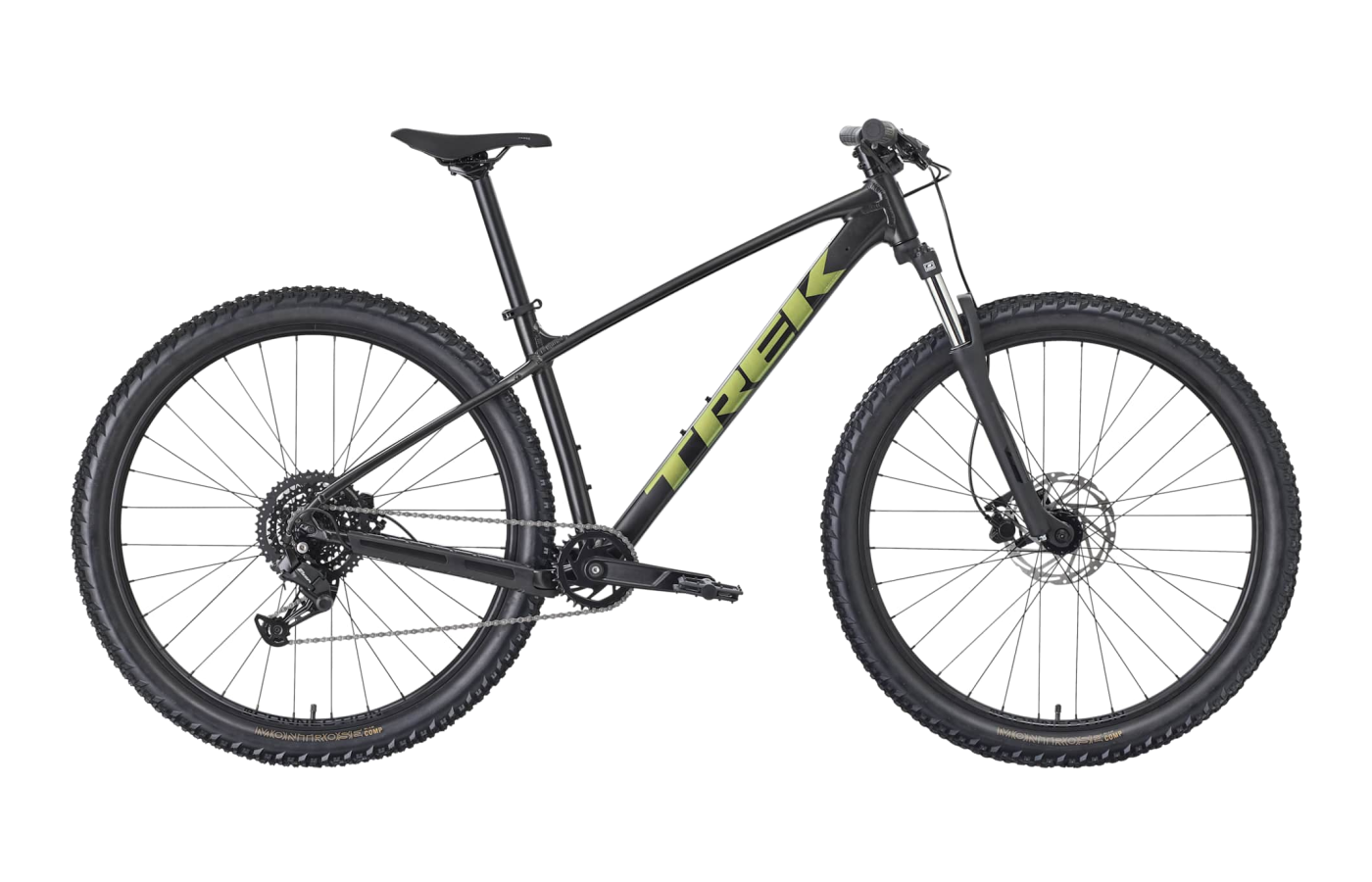
Marlin
The most direct cross-shop. Trek's entry hardtail competes head-on with both bikes here on price and spec, with the bonus of a huge US dealer footprint.
Compare →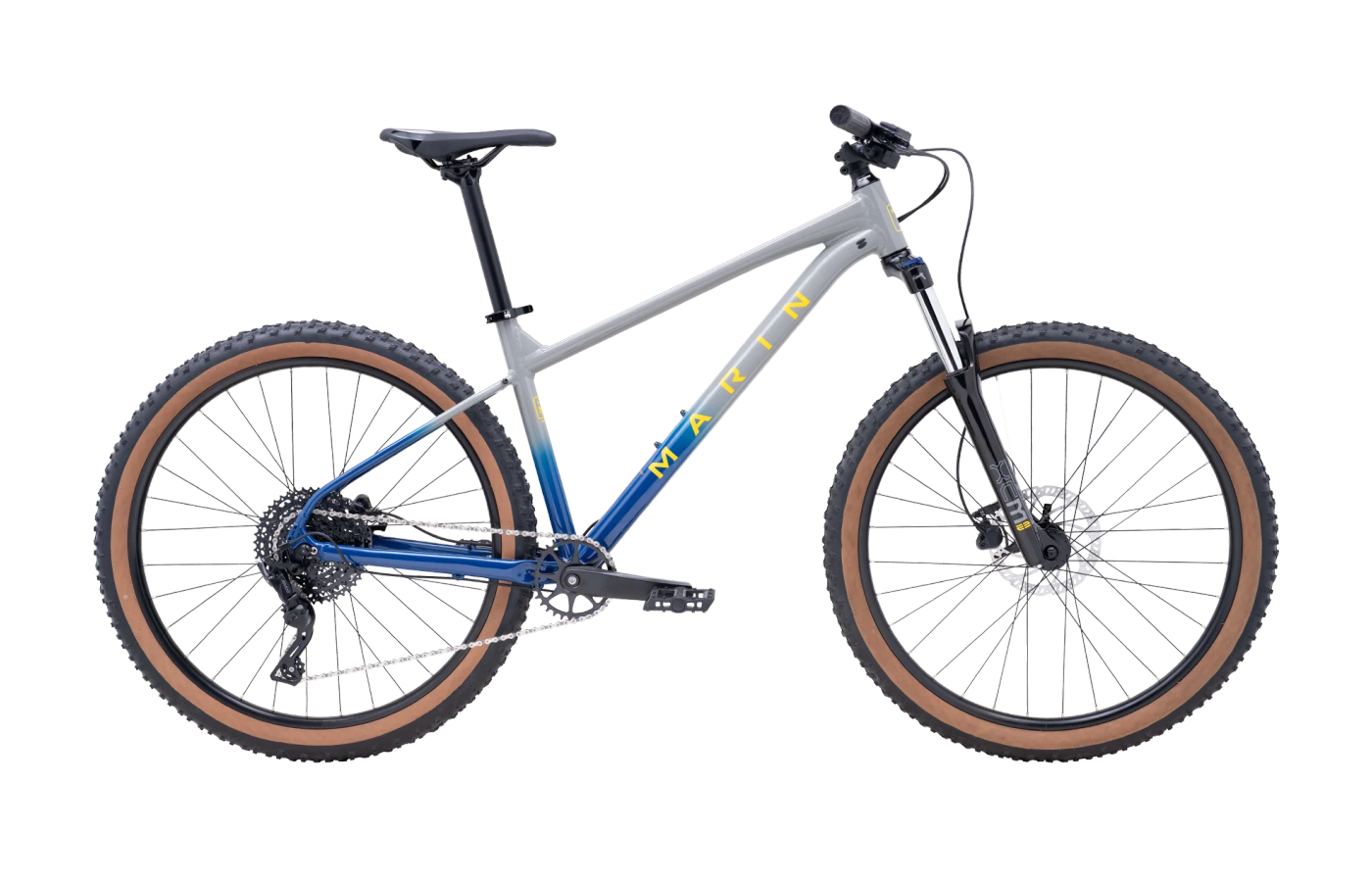
Bobcat Trail
Marin's hardtail leans more aggressively trail-oriented than the Rockhopper — slacker head angle and longer reach for riders who want a bike that grows into rougher terrain.
Compare →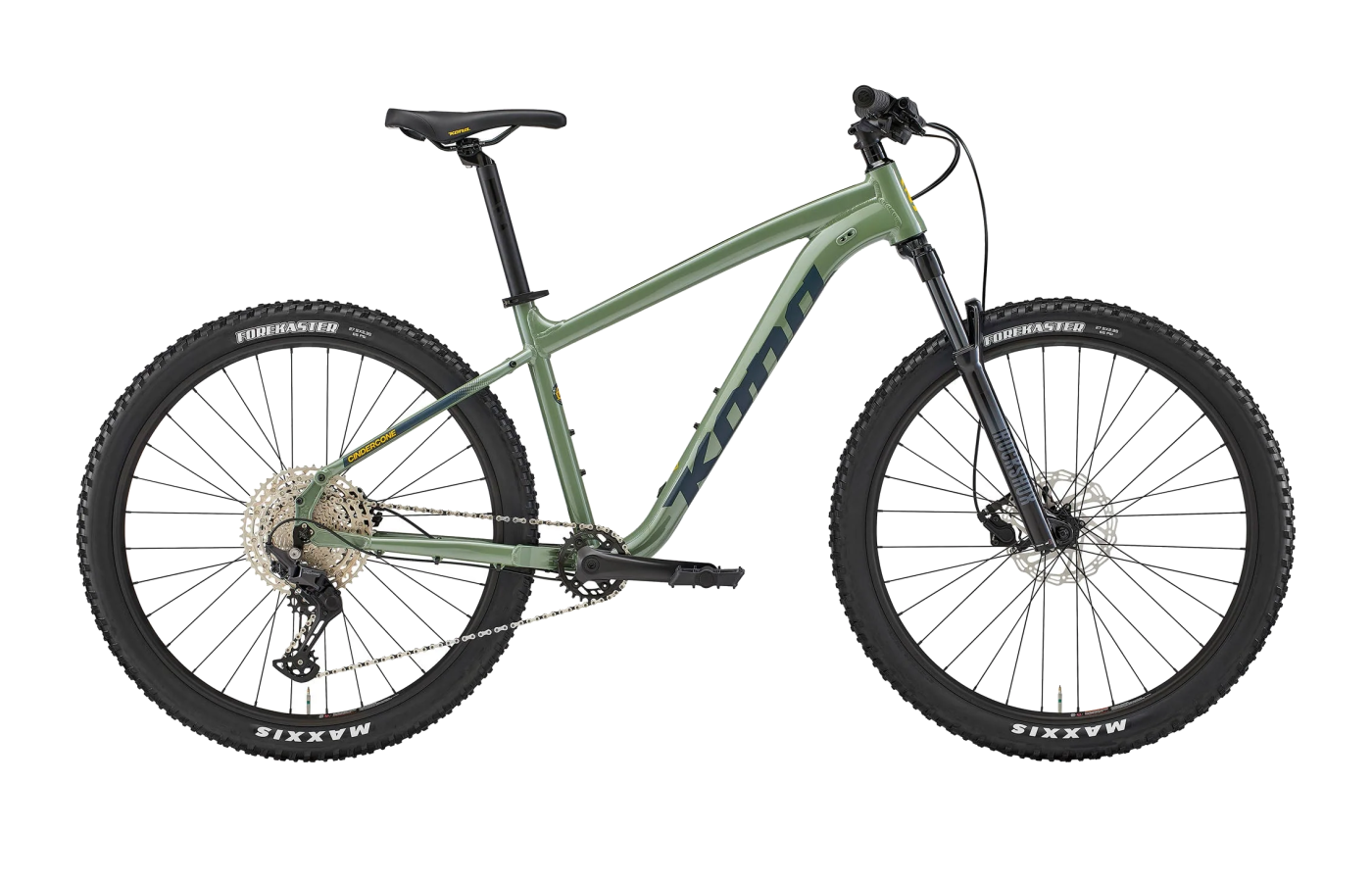
Cinder Cone
If you like the Fire Mountain's vibe but want a step up in components and a more capable trail spec, the Cinder Cone is Kona's next rung up the same ladder.
Compare →