Ripley
vsIzzo
Two short-travel trail bikes, two completely different briefs.
The Ripley V5 grew up into a Ripmo-adjacent trail bruiser. The Izzo stayed razor-thin and sharp — and costs roughly half as much.
Ripley
- Descends above its travel class — shared chassis with the longer-travel Ripmo and a 64.9° head angle make it composed on terrain that shuts the Izzo down.
- Convertible to a Ripmo — same front triangle and swingarm; swap the shock, fork, and linkage and you've got the long-travel sibling.
- Size-specific chainstays (436–442 mm) keep handling consistent across the range, and the STOW internal storage is one of the better-executed systems out there.
- Heavier than the Izzo (29–31 lb depending on build) — the V4's zippy character is gone.
- Premium pricing — the cheapest Ripley costs more than the most expensive Izzo.
Izzo
- Outrageous value — $2,499 entry, $4,499 flagship; a carbon frame and Fox Factory suspension at prices that buy you alloy elsewhere.
- Climbs like "a rat up a drainpipe" — ~100% anti-squat, 77° effective seat tube angle, ~13.9 kg flagship weight; reviewers consistently rank it as a benchmark climber in the segment.
- Sharp, lively handling — 432 mm chainstays, 334 mm BB, and an inverted shock that drops the center of gravity make it exceptionally easy to whip and corner.
- Reaches its limits earlier on steep, chunky descents — the 37% progression feels taut over high-frequency hits.
- Direct-to-consumer means no demo, no dealer support, and you assemble the bike yourself out of a box.
Editor’s analysis
On paper they're both 130 mm rear-travel 29ers. On dirt, they're not really competing for the same rider — the Ripley wants to swing punches, the Izzo wants to cover ground.
The Ibis Ripley V5 is the rare short-travel bike that doesn't want to be a downcountry weapon. Ibis took the V4's playful XC roots, slackened the head angle to 64.9 degrees, added 10 mm of front travel (now 140 mm fork over 130 mm rear), and grafted on the same front triangle and swingarm as the longer-travel Ripmo. The result is a trail bike that descends like it has more travel than it does — composed in chunder, planted at speed, and unbothered by terrain that should overmatch a 130 mm bike.
The YT Izzo is the opposite play. It's 130/130, a steeper 65.7-degree head angle, an inverted shock that drops the center of gravity to a floor-scraping 334 mm bottom bracket, and a kinematic with roughly 37% progression — taut off the top, ramp-y at the end. Reviewers nicknamed it the "Samurai sword" and the "29er slalom bike," and they meant it: the Izzo rewards riders who pump terrain for speed instead of plowing through it. On rolling singletrack and twisty woodland, it's a riot. On a steep, rough enduro chute, it runs out of bike sooner than the Ripley does.
Then there's price. The Ripley starts at $4,999 (Deore) and tops out at $9,999 (XTR Di2). The Izzo runs $2,499 to $4,499. YT's direct-to-consumer model means the Izzo's flagship costs less than the Ripley's cheapest build — and includes a carbon frame, Fox Factory suspension, and DT Swiss XMC 1501 carbon wheels at the top end. There's no scenario in which the Ripley is the value pick.
Put it this way: the Ripley is the bike you buy when you want one trail bike that can go almost anywhere a 150 mm bike can. The Izzo is the bike you buy when your trails roll more than they drop, you'd rather climb fast than descend stupid, and the price tag matters.
Where the builds differ.
Comparing our editor's-pick builds side-by-side. Winners highlighted row-by-row — lower price and weight, and the better-spec component, each mark a point.
Build variants & pricing
Tier-matched picks: both are XT Di2, Fox Factory suspension, carbon frame. The price gap is real — and the headline of this whole comparison.
Prices are current US MSRP. The lineups don't overlap: the Izzo's flagship Core 3 CF ($4,499) is cheaper than the Ripley's entry Deore ($4,999). YT is direct-to-consumer (no dealer, you assemble); Ibis sells through shops with full support.
How they fit, how they steer.
The Ripley MD is 15 mm longer in reach (460 vs 445 mm), 3 mm taller in stack, and 0.8° slacker in the head tube. Chainstays are 4 mm longer, seat tube 0.4° steeper. Different bikes, not different sizes of the same bike.
Which size should I buy?
Both bikes run S–XL plus an XXL on the Izzo and an XM "extra-medium" on the Ripley. The Ripley runs long for its labels — drop a size if you're between two.
→These are starting points. Flexibility, riding style, and preferred position all shift the answer — if you’re between sizes, a professional fit beats a chart.
What the magazines said.
Published reviews from trusted cycling outlets. Click through for the full write-up.
Which one should you buy?
If you want one short-travel bike that can wander into enduro terrain without flinching, get the Ripley. If you want a fast, light, lethal pedaler at half the price, get the Izzo.
Ripley
If your local riding mixes flow with steep, rough, technical descending — and you'd rather have one bike with margin than two bikes with specialization — the Ripley V5 is the answer. It's not cheap, but the Ripmo-shared chassis means it punches above its travel.
Izzo
If your trails roll more than they drop, you ride long, and you care more about climbing fast than smashing chunder, the Izzo is a sharper tool — and roughly half the money. Just budget for a meatier front tire.
Questions buyers actually ask.
Short answers to the things we get emailed about most often.
01Which one is faster downhill?
The Ripley V5, on anything steep or rough. The 64.9° head tube angle (vs the Izzo's 65.7°), longer wheelbase, and 140 mm fork all push it into terrain the Izzo wasn't designed for. Reviewers consistently note the Ripley descends like a longer-travel bike, while the Izzo "reaches its limits" on steep, chunky enduro-grade trails.
On flow trails and pumpy singletrack, the gap closes — the Izzo's lower BB and snappier handling can actually feel faster on the right terrain.
02Which one climbs better?
The Izzo, comfortably. It's lighter (the Core 4 CF claims 13.9 kg; reviewers consistently weigh the Ripley V5 at 29–31 lb / ~13.2–14.1 kg depending on build), seat tube angles are similarly steep (~77°), and the Izzo's suspension runs roughly 100% anti-squat — almost no pedal bob even with the shock open. PinkBike likened its climbing to "a rat up a drainpipe."
The Ripley climbs well for its category — DW-link is famously efficient — but it's the heavier bike with the slacker head angle, and you'll feel both on a long fire-road grind.
03How much travel does each bike have?
Ripley V5: 140 mm fork, 130 mm rear. The mismatched front-rear travel is intentional — Ibis wanted the descending stability of a 140 mm fork without giving up the rear-end efficiency.
Izzo MK1: 130 mm front, 130 mm rear. Balanced, but with a high-progression (~37%) kinematic that ramps up hard at the end of the stroke for bottom-out resistance.
04What's the price difference, really?
Ripley V5: $4,999 (Deore) to $9,999 (XTR Di2). Five builds.
Izzo MK1: $2,499 (Core 1 CF) to $4,499 (Core 3 CF). Four builds.
The Izzo's most expensive build is cheaper than the Ripley's cheapest build. Even on tier-matched XT Di2 picks (Ripley XT at $7,249 vs Izzo 29 Core 4 CF at $3,320), the YT is more than $3,900 less. That gap is the comparison.
05Can I really buy a YT online without trying it?
Yes — that's YT's whole model, and tens of thousands of riders have done it. The catch: no dealer means no demo, no in-shop fit consultation, and you assemble the bike yourself from a box (basic tools, ~30 minutes). YT does ship a torque wrench and a slim-headed shock pump in their "goody box" because the inverted shock's air valve has tight clearance and won't fit standard pumps.
If you're new to mountain bikes or unsure of your size, the Ripley's dealer network is a real value — you can throw a leg over before committing.
06Why does the Ripley share a frame with the Ripmo?
Cost and modularity. By sharing the front triangle and swingarm with their longer-travel Ripmo, Ibis gets manufacturing scale, and owners get an upgrade path: swap the fork, shock, and rocker link, and a Ripley becomes a Ripmo (160 mm fork / 147 mm rear). It's not cheap (call it ~$1,500–$2,000 in parts), but it means one frame can serve two distinct riding styles over a long ownership window.
07What tires do they ship with, and are they any good?
Ripley V5: Maxxis Minion DHR II front, Maxxis Rekon rear, both 29x2.4 EXO. A solid all-rounder spec — the DHR II offers real cornering bite, the Rekon rolls fast.
Izzo MK1: Most builds ship with Maxxis Minion DHR II front and rear. Earlier reviews of older trims criticized YT for shipping Forekasters, which were widely panned as "unpredictable"; current Core builds use DHR II. Even so, several reviewers recommended a more aggressive front tire (Minion DHF or Dissector) if you ride steep terrain.
08Which has better internal storage?
Both have it, both are well-executed.
The Ripley's STOW system is universally praised — quick-release latch, Cotopaxi-made bags from fabric remnants that prevent rattle, and good water sealing. Reviewers call it one of the better in-frame storage implementations on the market.
The Izzo uses a Crankbrothers S.O.S TS2 Tube Stash (a strap-mounted tube holder under the top tube) on Core 3 and Core 4 builds — functional but more conventional than the Ripley's molded compartment.
Similar bikes
If your priorities don’t map cleanly onto either of these, one of these adjacent bikes probably fits better.
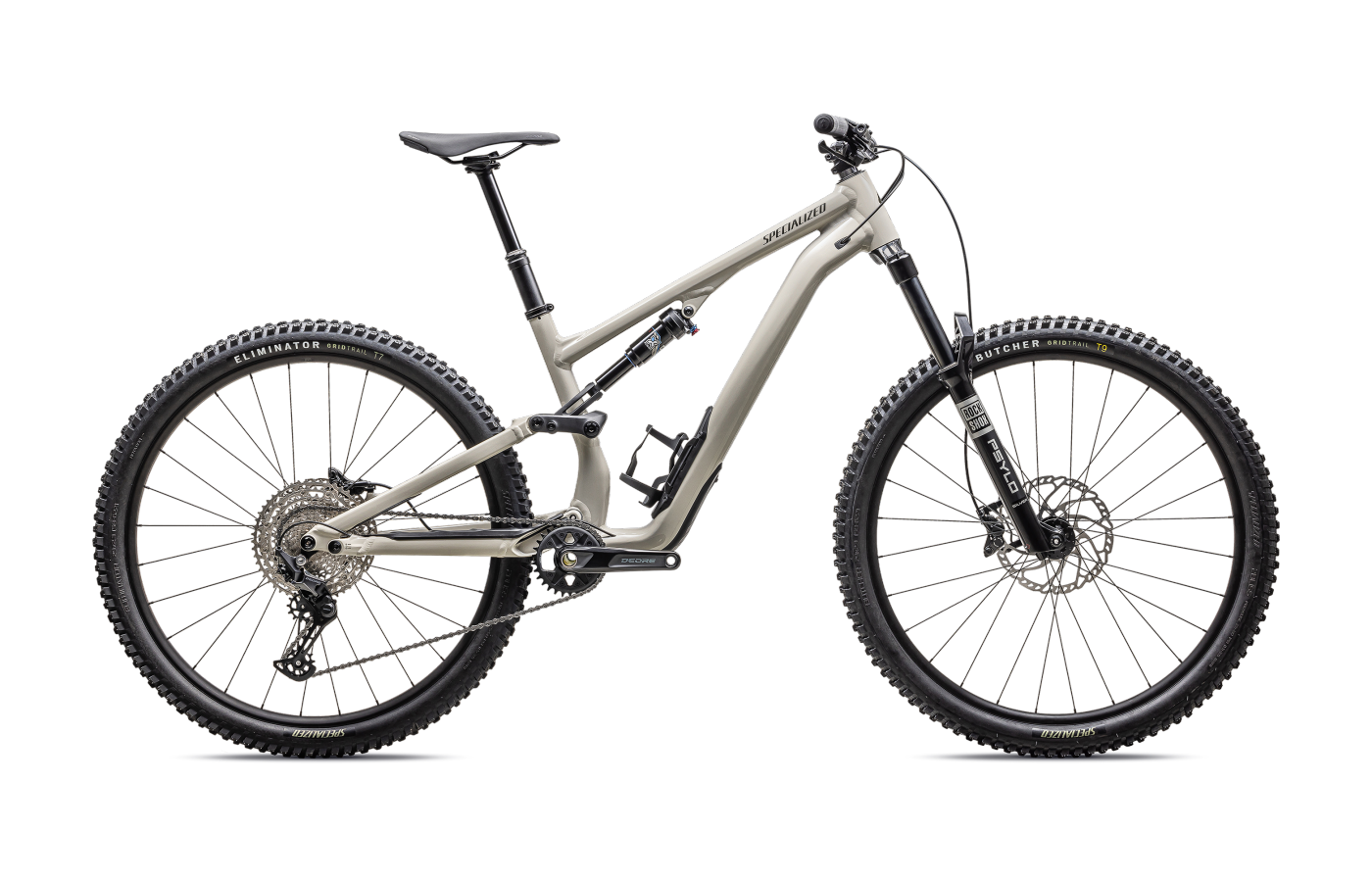
Stumpjumper
The trail-bike benchmark. Splits the difference between the Izzo's pedal-friendly snap and the Ripley's downhill composure, with a deeper dealer network than either. The default "safe" pick if you can't decide.
Compare →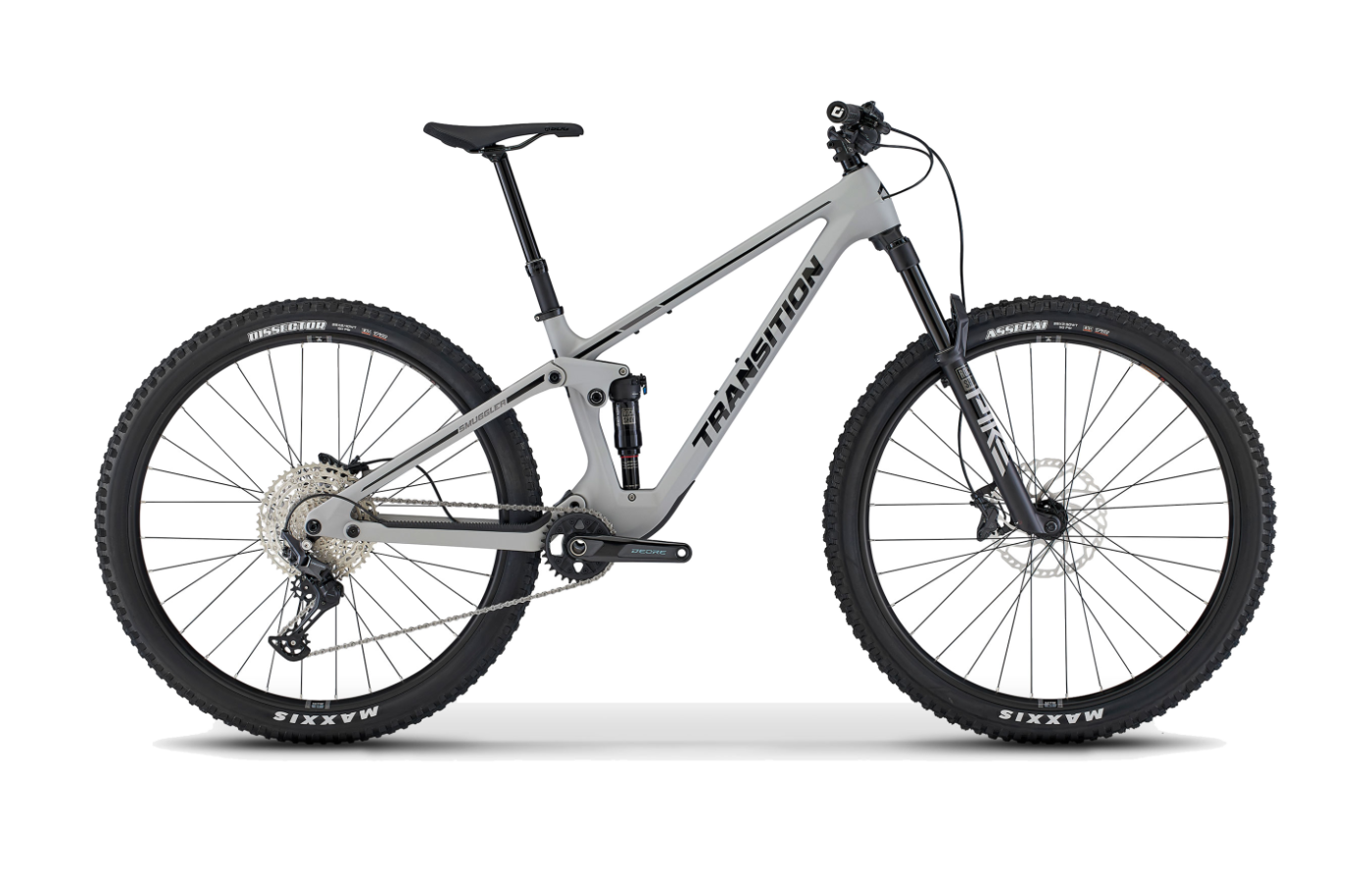
Smuggler
Closer to the Ripley's mission than the Izzo's — a mini-enduro feel with progressive suspension and slack geometry. Worth a look if you like the Ripley's brief but want a different brand's take on it.
Compare →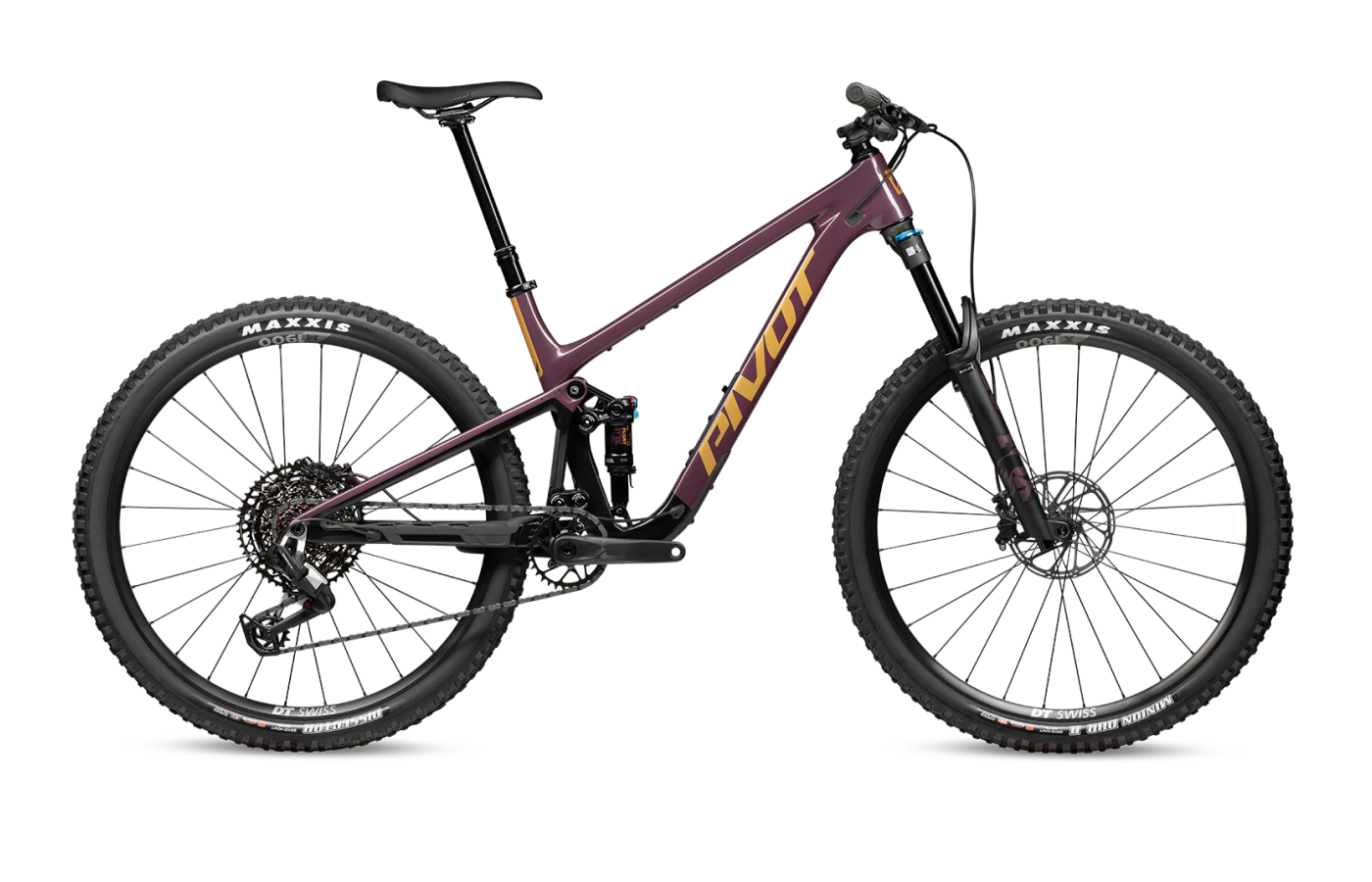
Trailcat SL
If you want the Izzo's efficiency and light weight but with the more sophisticated DW-link kinematic the Ripley uses, the Trailcat SL is the cross-over. Not cheap, though — closer to Ibis money than YT money.
Compare →