Ripley AF
vsStumpjumper
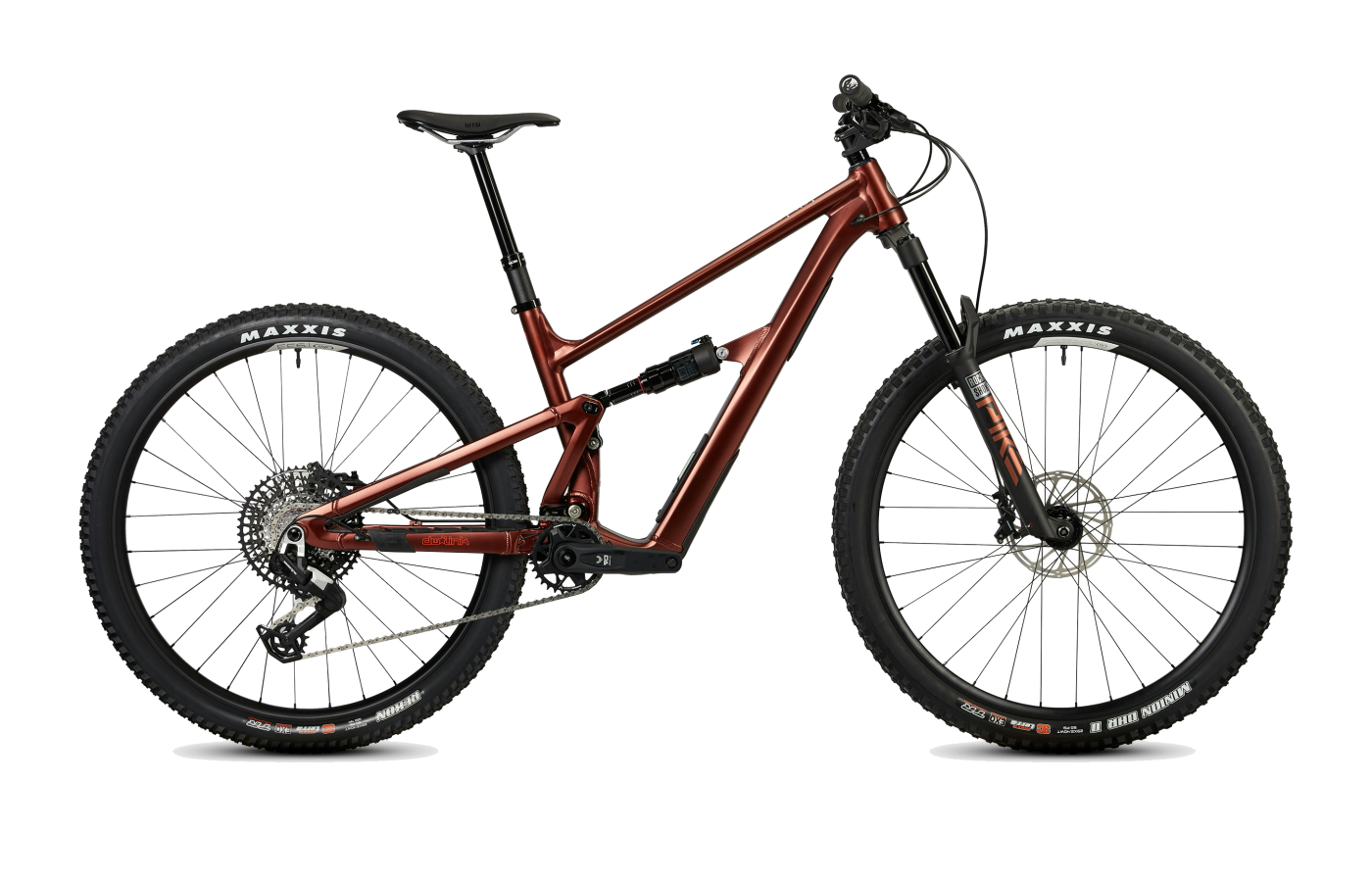
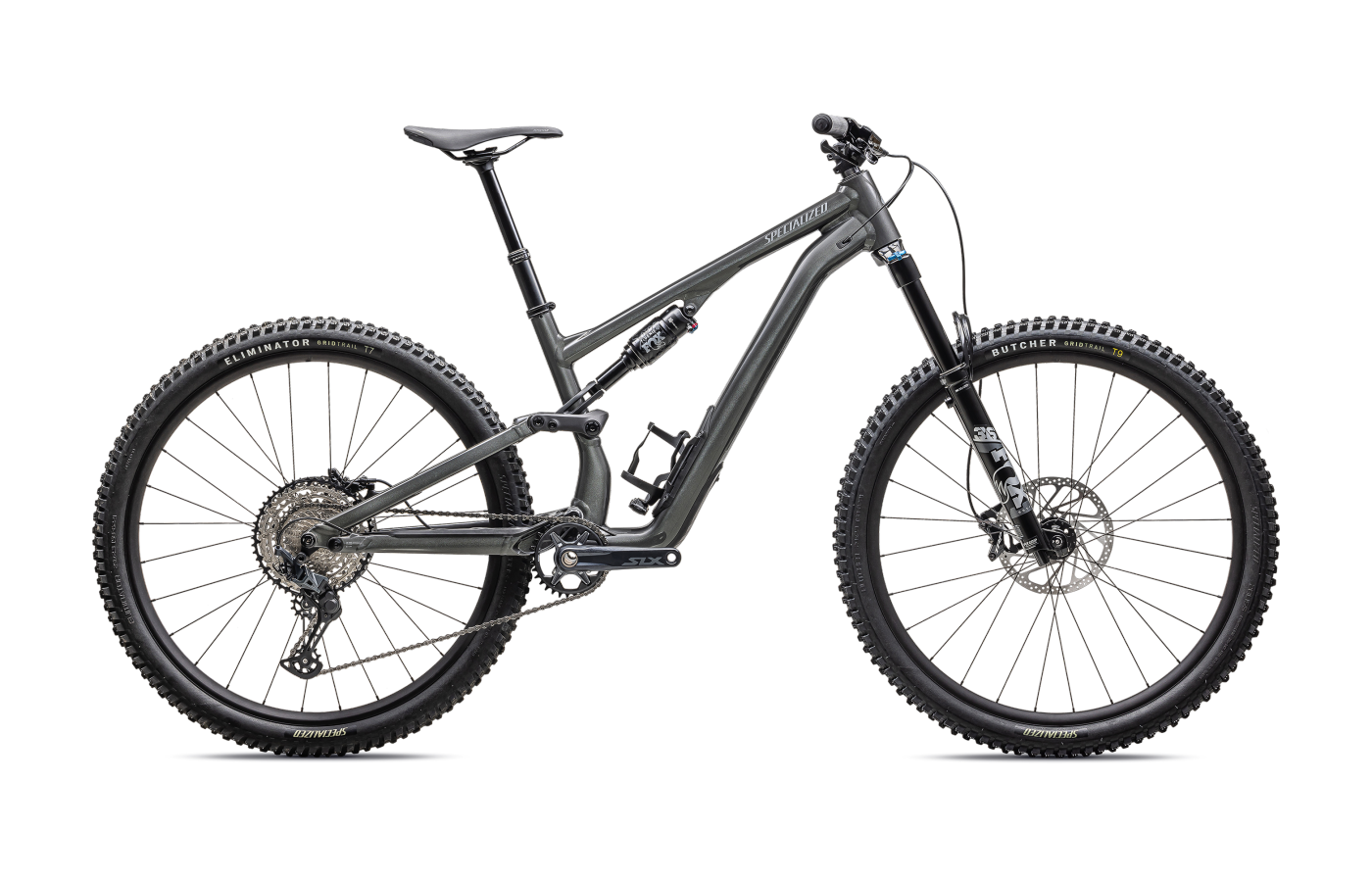
Two alloy trail bikes, two very different ideas of value.
The Ripley AF is a single-purpose alloy build that punches at carbon. The Stumpjumper is a 145 mm chassis with eight other builds stacked above it.
Ripley AF
- Alloy frame, carbon-bike feel — the reviewer of the carbon Ripley couldn't distinguish them blindfolded.
- Convertible to a 150 mm Ripmo by swapping the clevis and shock — two bikes from one frame.
- Climbs like the carbon Ripley — same DW-Link kinematics, only 0.05 kg heavier in tested trim.
- Only two builds — no premium spec path if you want carbon wheels or a Factory fork.
- Stock SRAM G2 brakes were flagged as underpowered with the organic pads.
Stumpjumper
- GENIE shock is genuinely novel — supple in the first 70% of stroke, sharply progressive at the end, hard to bottom out.
- Adjustable headset cups swing the head angle 63°/64.5°/65.5° — same chassis, three different bikes.
- Lifetime frame and pivot-bearing warranty to the original owner — long ownership horizon baked in.
- M5 alloy frame is heavy — Comp Alloy lands around 16.2 kg / 35.6 lb at S4.
- Stock alloy wheels and Butcher/Eliminator GRID TRAIL tires were the most-flagged upgrade target across reviews.
Editor’s analysis
Same price, same material, almost the same travel — and almost nothing else in common.
On paper the Ibis Ripley AF and the alloy Specialized Stumpjumper look like they're aimed at the same buyer. Both are aluminum trail bikes in the high-$3k bracket. Both run a 12-speed 1x drivetrain. Both put a 140-150 mm fork over roughly 130-145 mm of rear travel. But they come from opposite ends of how a brand thinks about a trail bike.
The Ripley AF is a focused product with two builds and one mission: deliver the carbon Ripley ride at an alloy price. The reviewer who pushed the SRAM Eagle 90 build hardest came back saying he 'honestly couldn't tell' the AF from his carbon Ripley if blindfolded — same DW-Link suspension, same flip-chip 29er/mullet swap, same SWAT-style internal storage, and a 130 mm rear / 140 mm front travel package that climbs as well as the carbon. There's no S-Works upgrade path here. This is the bike, top to bottom.
The Specialized Stumpjumper is the other strategy. Nine builds spanning $2,999 to $11,999, two frame materials, an adjustable headset cup that swings the head angle a full degree, and a proprietary GENIE rear shock that's plush in the first 70% and dramatically progressive in the last 30%. The alloy Comp at $3,999 is the value entry — same 145 mm chassis as the S-Works, same GENIE shock, Shimano SLX cable drivetrain instead of wireless SRAM. It's heavier (around 16.2 kg / 35.6 lb at S4) and the stock alloy wheels were repeatedly flagged as the build's weak point.
Put another way: the Ripley AF is what you buy when you've decided alloy is the right frame and you want it dialed. The alloy Stumpjumper is what you buy when you want into the Stumpjumper platform — its geometry, its shock tech, its lifetime frame warranty — and you're willing to upgrade wheels and brakes later to unlock it.
Where the builds differ.
Comparing our editor's-pick builds side-by-side. Winners highlighted row-by-row — lower price and weight, and the better-spec component, each mark a point.
Build variants & pricing
The Ripley AF tops out at $3,999. The Stumpjumper goes from $2,999 to $11,999 across nine builds, alloy and carbon.
Editor's picks are matched at the shared alloy tier — the Ripley AF '90' at $3,999 against the Stumpjumper 15 Comp Alloy at $3,999. If your budget stretches beyond $4k, the Stumpjumper's carbon range opens up an entirely different conversation; the Ripley AF doesn't have that ladder.
How they fit, how they steer.
Ripley AF MD vs. Stumpjumper S3 — the fit-picked sizes for a 5'8" rider on each bike. The Stumpjumper sits 8 mm taller in stack with 10 mm less reach, a half-degree slacker head angle (64.5° vs. 64.9°), and a 1 mm shorter chainstay.
Which size should I buy?
Both ranges cover the same span of stack and reach; pick by reach first, then verify standover and effective top tube against your inseam.
→These are starting points. Flexibility, riding style, and preferred position all shift the answer — if you’re between sizes, a professional fit beats a chart.
What the magazines said.
Published reviews from trusted cycling outlets. Click through for the full write-up.
Which one should you buy?
If you want a focused alloy trail bike that punches above its price, get the Ripley AF. If you want into a deep platform with adjustable geometry and a clear upgrade path, get the alloy Stumpjumper.
Ripley AF
If you've decided alloy is the right frame for your terrain and budget, and you want the most refined alloy trail bike in the segment — this is it. The Ripmo conversion and DW-Link suspension give you room to grow without buying a new bike.
Stumpjumper
If you want into the Stumpjumper ecosystem — the GENIE shock, the adjustable geometry, the lifetime frame warranty — and you're willing to budget for a wheel and tire upgrade down the road, the Comp Alloy is the cheapest door in. The chassis is the same one used on the $12k S-Works.
Questions buyers actually ask.
Short answers to the things we get emailed about most often.
01How much travel does each bike have?
Ibis Ripley AF: 140 mm fork (RockShox Pike) over 130 mm rear, with the option to convert the frame into a 150 mm Ripmo by swapping the clevis and shock.
Specialized Stumpjumper 15: 150 mm fork over 145 mm rear on the standard build (S1 gets a 140 mm fork; coil builds run a 160 mm fork on all sizes). The chassis is the same across alloy and carbon.
02Which is the better climber?
Both climb well, but for different reasons. The Ripley AF's DW-Link suspension is firm and efficient under power — the reviewer ran the rear shock at 195 PSI (higher than usual) and described the bike as feeling 'light and poppy' on ascents, climbing 'just as good as the carbon version.'
The Stumpjumper 15 uses its supple initial stroke to generate traction on technical climbs — multiple reviewers cited 'glued-like' rear-wheel grip on rooty ascents. The two-position lever on the GENIE shock firms it up for fire-road grinds. On smooth climbs, the alloy Stumpy's ~16 kg weight at this build level shows up; on technical climbs, the suspension's traction often wins back time.
03Which is heavier, and by how much?
The Stumpjumper 15 Comp Alloy weighs roughly 16.2 kg / 35.6 lb at size S4. The Ibis Ripley AF '90' was measured at 15.3 kg / 33.7 lb by the launch reviewer (versus 33.6 lb for his carbon Ripley — essentially the same).
That's about a 0.9 kg / 2 lb gap in favor of the Ripley AF, despite both being alloy. It's a real difference on long climbs, and one of the clearest data points for picking between these two.
04What about the brakes — are they enough?
The Ripley AF '90' ships with SRAM G2 4-piston brakes and organic pads. The launch reviewer described a 'lack of confidence' with the stock setup and recommended swapping to metallic pads or a different brake system entirely. Plan for that if you ride steep terrain.
The Stumpjumper 15 Comp Alloy ships with Shimano SLX 4-piston brakes — well-regarded for trail use, no upgrades needed out of the box. Higher carbon Stumpjumper builds use SRAM Maven brakes, which reviewers consistently called 'extremely powerful' (sometimes too powerful for a trail bike).
05Can either bike run a mullet (29/27.5) wheel setup?
Yes, both. The Ripley AF has a flip chip designed specifically for mullet conversion — swap the rear wheel and flip the chip, no other parts needed.
The Stumpjumper 15 runs full 29er stock on sizes S3-S6 and natively mullet on S1-S2. To mullet-convert an S3-S6 frame you need an aftermarket link (Specialized sells one); a few reviewers noted it adds modest cost but works cleanly.
06What tire clearance do they have?
The Ripley AF clears tires up to 29x2.6" per Ibis spec, with 2.4" Maxxis Minion DHR II / Rekon as the stock combo. Plenty of room for a wider, higher-volume rear if you want.
The Stumpjumper 15 ships with 2.3" Butcher and Eliminator tires; multiple reviewers flagged the stock GRID TRAIL casings as 'too flexible and under-protected' for aggressive trail riding and recommended upgrading to GRID Gravity or Maxxis DoubleDown casings.
07Is the GENIE shock proprietary? What about long-term service?
The GENIE shock is a Specialized-exclusive collaboration with Fox. Specialized says it uses mostly standard Fox internals plus one extra seal, so any Fox-trained suspension shop can service it. There's some skepticism in the reviewer community about long-term parts availability — Specialized's history with the Brain damper is the cited precedent — but no actual reliability complaints have surfaced from the GENIE in the field yet.
The Ripley AF runs a stock RockShox Deluxe Select rear shock, fully off-the-shelf, serviceable anywhere.
08What's the warranty situation?
Specialized offers a lifetime frame warranty to the original owner plus lifetime pivot bearing replacement — one of the strongest in the industry, and a real factor in long-term ownership cost.
Ibis offers a 7-year frame warranty to the original owner. Pivot bearings are not included for life. Both brands offer crash-replacement pricing on damaged frames.
Similar bikes
If your priorities don’t map cleanly onto either of these, one of these adjacent bikes probably fits better.

Ripmo AF
The Ripley AF's bigger sibling — same alloy frame language, but bumped to 160 mm front / 147 mm rear. Pick this if your trails skew steeper or rougher and you'd rather start with the travel than convert into it.
Compare →Jeffsy
Direct-to-consumer trail bike that consistently undercuts the Stumpjumper on spec-per-dollar. The catch is no local dealer for setup or warranty service — best if you're confident on fit and willing to wrench at home.
Compare →
Fuel EX
Trek's all-rounder benchmark — broader build range than the Ripley AF, less suspension drama than the Stumpjumper. The Fuel EX is the bike to look at if neither extreme here quite fits.
Compare →