Ostro VAM
vsMadone
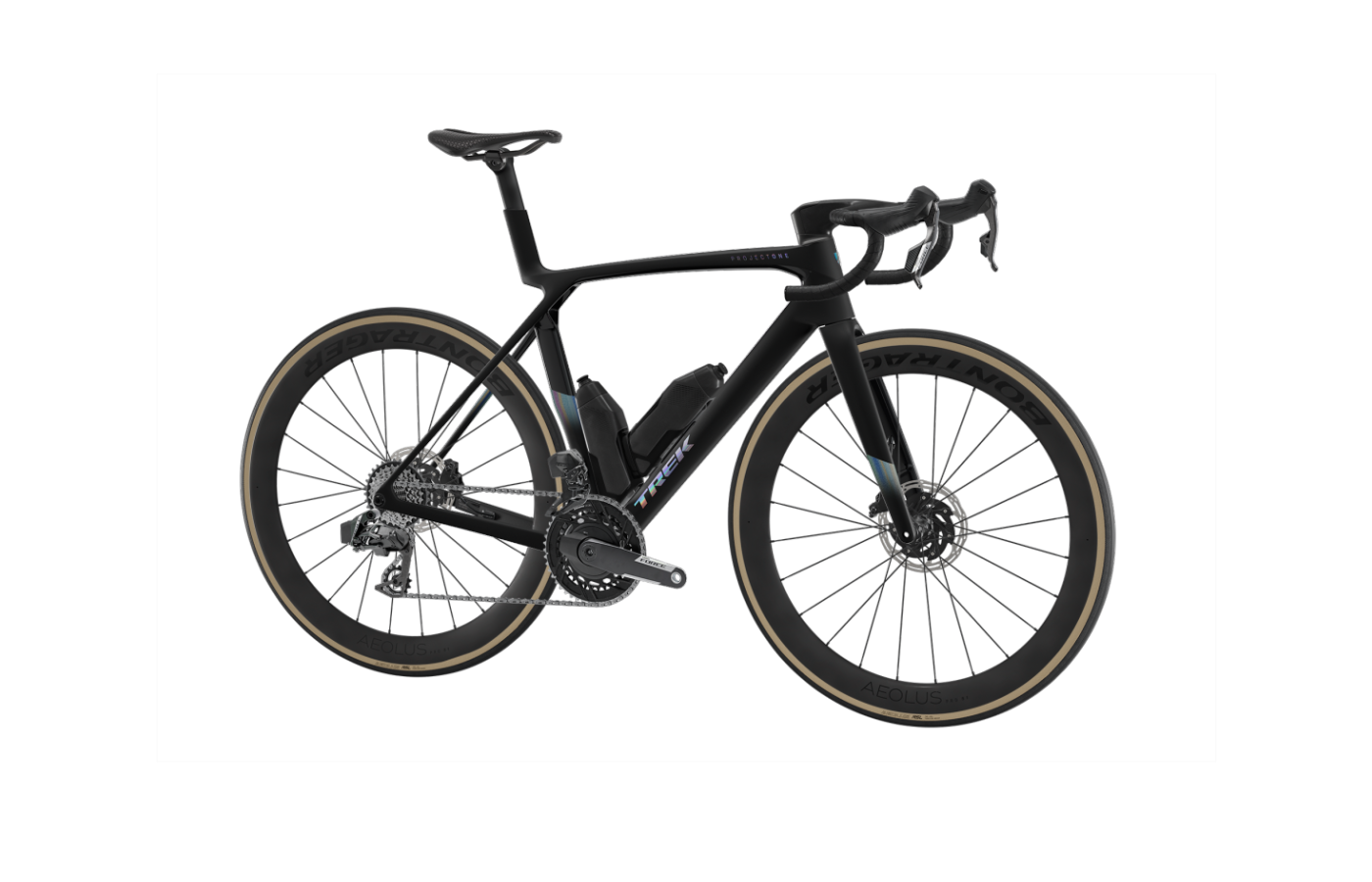
Two boutique aero bikes, two business models.
The Factor Ostro VAM is a bespoke superbike that starts where most flagships end. The Trek Madone is the same superbike philosophy spread across $10k of price range.
Ostro VAM
- CeramicSpeed bearings standard in the headset and T47 bottom bracket on every build — a noticeable smoothness upgrade most rivals charge extra for.
- Consistent handling across sizes — four fork offsets hold trail at 57–58.6 mm on all seven sizes, so a 49 cm rider gets the same steering feel as a 61 cm rider.
- Free fit customization — stem length, bar width, crank length, and saddle setback specced at order with no upcharge.
- Lineup starts at $10,399 — no entry-level builds for budget-conscious buyers.
- Stock Goodyear Eagle F1 tires are widely flagged as the first thing to swap.
Madone
- Widest price ladder in the segment — from a $3,499 SL 5 with Shimano 105 to a $13,499 SLR 9 AXS, all on the same Gen 8 platform shape.
- IsoFlow rear compliance — Trek's 80% vertical-compliance claim was largely validated by reviewers as a "satisfying bounce" on big hits.
- Sharper, lighter than the Gen 7 — SLR frame drops 332 g versus the previous Madone, with shortened wheelbase and fork rake for more aggressive turn-in.
- Aero RSL cockpit is rigid — multiple long-distance reviewers reported hand numbness past 80 miles.
- SL tier uses heavier 500 Series carbon — an SL 6 AXS weighs 8.11 kg vs 7.00 kg for the SLR 9 AXS.
Editor’s analysis
Both bikes set out to kill the lightweight-vs-aero distinction — they just took very different routes to get there.
On the headline numbers, the Factor Ostro VAM (V2) and Trek Madone Gen 8 read like twins: 32 mm tire clearance, sub-820 g claimed frame weights, integrated cockpits, T47 bottom brackets, electronic-only routing. Both were built to be the one race bike a serious rider needs — fast on flats, light enough to climb, refined enough for a five-hour day. Reviewers at Velo, Cycling News, and Cycling Weekly use almost the same vocabulary for both.
Where they diverge is in the ride character and the buying experience. The Ostro VAM is the more conservative handler — Factor uses four different fork offsets to hold trail at 57–58.6 mm across all seven sizes, and the 405 mm chainstays stay constant up through size 56. Reviewers describe it as "direct and purposeful without being twitchy" and "like driving a Porsche" — fast but composed. The Madone goes the other way: Trek shortened the wheelbase 10 mm and the fork rake 4 mm versus the previous Madone, and BikeRadar warned the resulting handling might be "too sharp" for some everyday riders.
Comfort sources differ too. The Trek Madone leans hard on the IsoFlow seat tube cutout — Trek claims an 80% increase in vertical compliance over Gen 7, and reviewers confirmed the rear-end feel as a "satisfying bounce." The catch: the front end with the Aero RSL cockpit is "stiff as a brick" (BikeRadar, Cyclist UK), and several testers reported hand numbness past 80 miles. The Factor Ostro VAM spreads compliance more evenly — slim 15 mm seatpost, dropped seatstays, and a frame Cycling Weekly called "firm but not harsh."
And then there's how you buy them. Factor sells the Ostro VAM through a small dealer network with an in-person ID Match fit session that lets you spec stem length, bar width, crank length, and saddle setback at no extra cost — every build ships with CeramicSpeed bearings in the headset and BB. Trek sells nine Madone Gen 8 builds from $3,499 to $13,499, two carbon grades (900 vs. 500 Series OCLV), and Project One paint customization on the SLR tier. One is a tailored superbike. The other is a platform with a price for almost every road buyer.
Where the builds differ.
Comparing our editor's-pick builds side-by-side. Winners highlighted row-by-row — lower price and weight, and the better-spec component, each mark a point.
Build variants & pricing
The Madone spans roughly $10,000 of price across nine builds. The Ostro VAM lives entirely in the upper half of that range, with four builds.
Prices are current US MSRP. The editor's-pick comparison pairs both bikes on SRAM Force AXS with a power meter, on each brand's top-tier carbon — the closest apples-to-apples build either lineup offers. Factor has no sub-$10k option; if that's a dealbreaker, the Madone SL 5 at $3,499 is the cheapest way into this conversation.
How they fit, how they steer.
Both at the fit-picked size for a 5'8" rider — Factor's 54 and Trek's M. Reach is identical at 384 mm; the Madone sits 4 mm taller at the head tube, runs 5 mm longer chainstays, and a half-degree steeper head tube angle. The Ostro VAM's 74° seat tube puts the rider further forward over the bottom bracket.
Which size should I buy?
Size recommendations from stack, reach, and effective top tube. Factor offers seven sizes (45–61); Trek offers six (XS–XL). Coverage is similar in the middle; Factor extends further at the small end.
→These are starting points. Flexibility, riding style, and preferred position all shift the answer — if you’re between sizes, a professional fit beats a chart.
What the magazines said.
Published reviews from trusted cycling outlets. Click through for the full write-up.
Which one should you buy?
If you want a bespoke superbike with consistent geometry across sizes and CeramicSpeed standard, get the Ostro VAM. If you want the Madone platform at whatever price tier matches your budget, get the Trek.
Ostro VAM
If you'd rather spec your bike at order than buy a stock build and shuffle parts on eBay, the Ostro VAM is the easier choice. The dealer network is small but the fit experience is real, and the standard CeramicSpeed bearings and Black Inc cockpit/wheelset package is hard to match without going aftermarket. The price floor is the catch.
Madone
If your local Trek shop matters, or if you want to step into the same Gen 8 frame shape at $3,499 instead of $10,000, the Madone wins on access. The SLR tier matches the Ostro VAM's performance ceiling; the SL tier opens the same aerodynamic philosophy to a much wider audience. Lifetime frame warranty doesn't hurt either.
Questions buyers actually ask.
Short answers to the things we get emailed about most often.
01Which is faster on flat roads?
Effectively a wash at the SLR/Force-and-up tier. Factor claims the Ostro VAM is "as aero in the real world as the Cervélo S5" and saves 7 watts at 48 kph over the previous Ostro. Trek claims the Madone Gen 8 SLR is marginally faster than the Gen 7 Madone (which itself was Trek's purest aero design) and Cycling News' wind-tunnel test ranked the Ostro VAM "one of the fastest" against top-tier rivals.
No independent head-to-head wind-tunnel data pits them directly. Treat them as aerodynamically equivalent; the wheel and tire choice you make will swamp any frame-only difference.
02Which climbs better?
Closer than the marketing suggests. Factor claims an 820 g painted frame weight in size 54; Trek claims a 765–796 g SLR frame depending on size. Complete-bike weights track similarly: a Dura-Ace Ostro VAM hits ~6.7 kg (Velo) and a Madone SLR 9 AXS lands at 7.00 kg (Trek's published spec).
The Madone SLR 9 AXS 1x is the lightest production build at 6.40 kg, but you give up the front derailleur and a useful gear range to get there. For most riders, the difference on a typical 30-minute climb is in the seconds, not minutes.
03What's the maximum tire clearance?
Both officially clear 32 mm. Several Madone reviewers reported successfully fitting 35 mm or 38 mm "all-road" rubber, but Trek doesn't warranty it. The Ostro VAM's V2 frame increased clearance from the original Ostro to make 32 mm an official spec.
Neither is an endurance bike — for anything rougher than chip-seal, look at a Domane or a Roubaix.
04How serviceable are the integrated cockpits?
Both use one-piece carbon bar/stem units with internal hose routing. The Black Inc Aero Barstem on the Ostro VAM is offered in multiple stem lengths and bar widths at order, but changing them later means buying a new unit. The Trek Aero RSL cockpit is sized per frame size out of the factory and shares the same swap-out cost reality.
The Madone's RCS Headset System is designed for simpler service than typical fully-internal designs — the headset spacers are split so you can adjust stack without disconnecting hoses. The Ostro VAM uses CeramicSpeed SLT headset bearings rated for long service intervals, but full headset service still requires a partial cockpit disassembly.
05Do both come with power meters as standard?
On the editor's-pick builds, yes — the Ostro VAM SRAM Force build ships with a Force AXS E1 power meter crankset, and the Madone SLR 7 AXS ships with a SRAM Force AXS power meter.
The Shimano builds differ: Trek's Shimano-equipped Madones (Dura-Ace and Ultegra Di2) do not include a power meter, and neither does the Ostro VAM Dura-Ace. Factor justifies the omission as a price-flexibility decision; Trek includes power meters on every SRAM AXS build but not the Shimano builds.
06Does the Madone's 'one frame, two carbon grades' actually matter?
Yes — the SLR uses Trek's 900 Series OCLV carbon (also called the lightest OCLV layup), and the SL uses 500 Series OCLV, which is roughly 250–320 g heavier per frame. An SLR 9 AXS comes in at 7.00 kg (size ML); an SL 6 AXS at 8.11 kg (size ML). Same tube shapes, same IsoFlow cutout, same aerodynamics — but the SL is heavier and reviewers noted it feels "less chattery" and more "daily driver" than the race-tuned SLR.
The Ostro VAM has no equivalent split — every Factor build uses the same TeXtreme/Toray/Nippon Graphite Pitch-Based Fiber layup.
07How sensitive is the Madone's IsoFlow comfort to fit?
Quite sensitive. IsoFlow works by letting the seat-mast extension flex like a leaf spring under the saddle. Riders who size up and end up with very little exposed seatpost get noticeably less compliance than riders with a longer post showing.
This showed up in reviews: one tester who ran a slammed seatpost and sized up found the bike "harsh and non-compliant," while testers who sized correctly described it as "extra smooth" and like an "endurance bike" with 28c tires. If you're between sizes, sizing down on the Madone is the comfort-friendlier call.
08What about warranty and dealer support?
Trek offers a lifetime frame warranty to the original owner, with one of the largest dealer networks in the US — most cities have a Trek shop in walking distance of something. Cyclefit described Trek's warranty handling as "best in the business."
Factor sells through a much smaller boutique dealer network. The trade-off is a more personalized buying experience (the ID Match fit session is included in some markets) but a less convenient service footprint if you travel or move.
Similar bikes
If your priorities don’t map cleanly onto either of these, one of these adjacent bikes probably fits better.
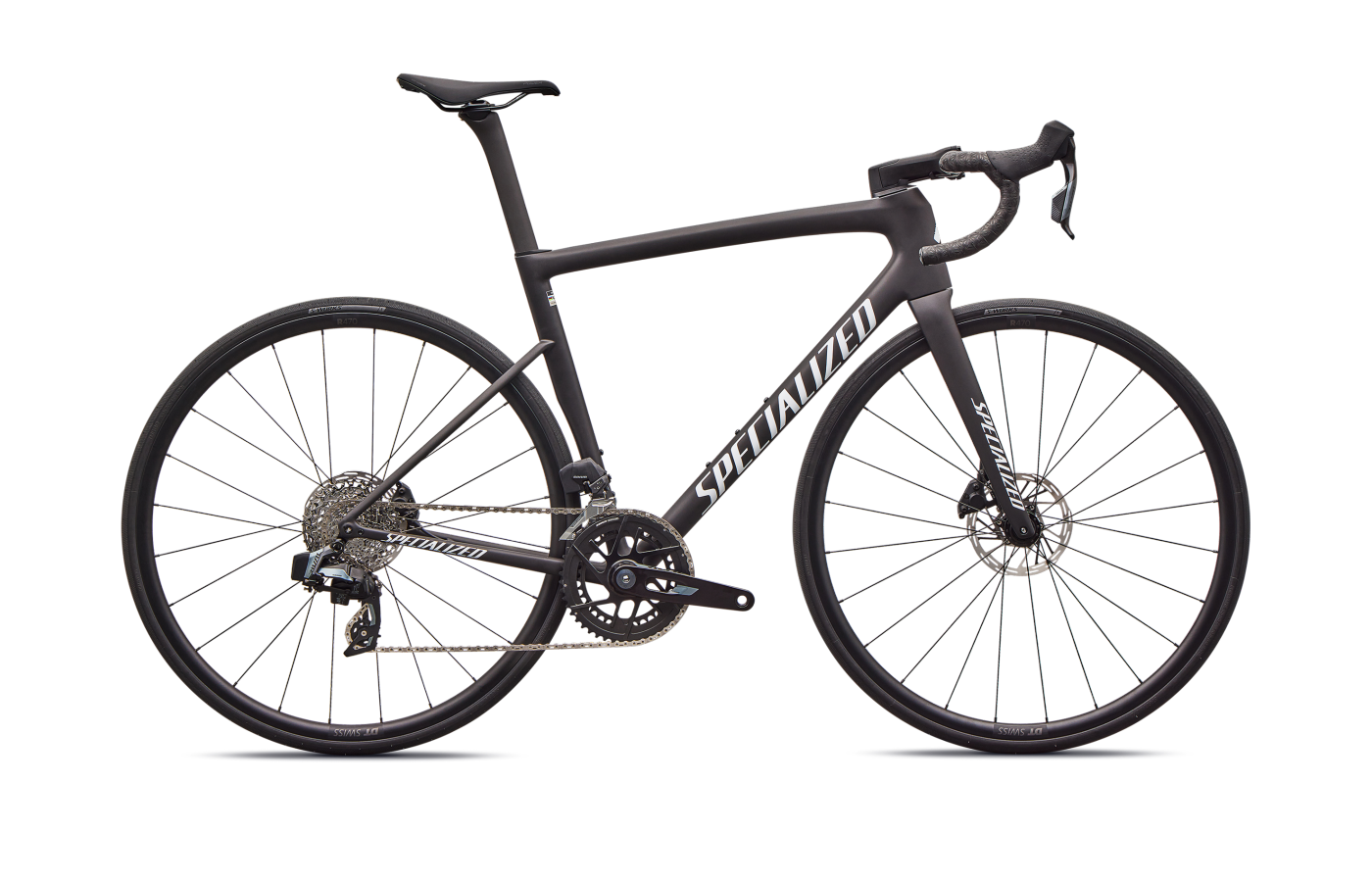
Tarmac
The mainstream version of this same one-bike-does-everything pitch. Lighter and cheaper at the bottom of the range, with the largest dealer network of any premium brand and a similarly aggressive race geometry.
Compare →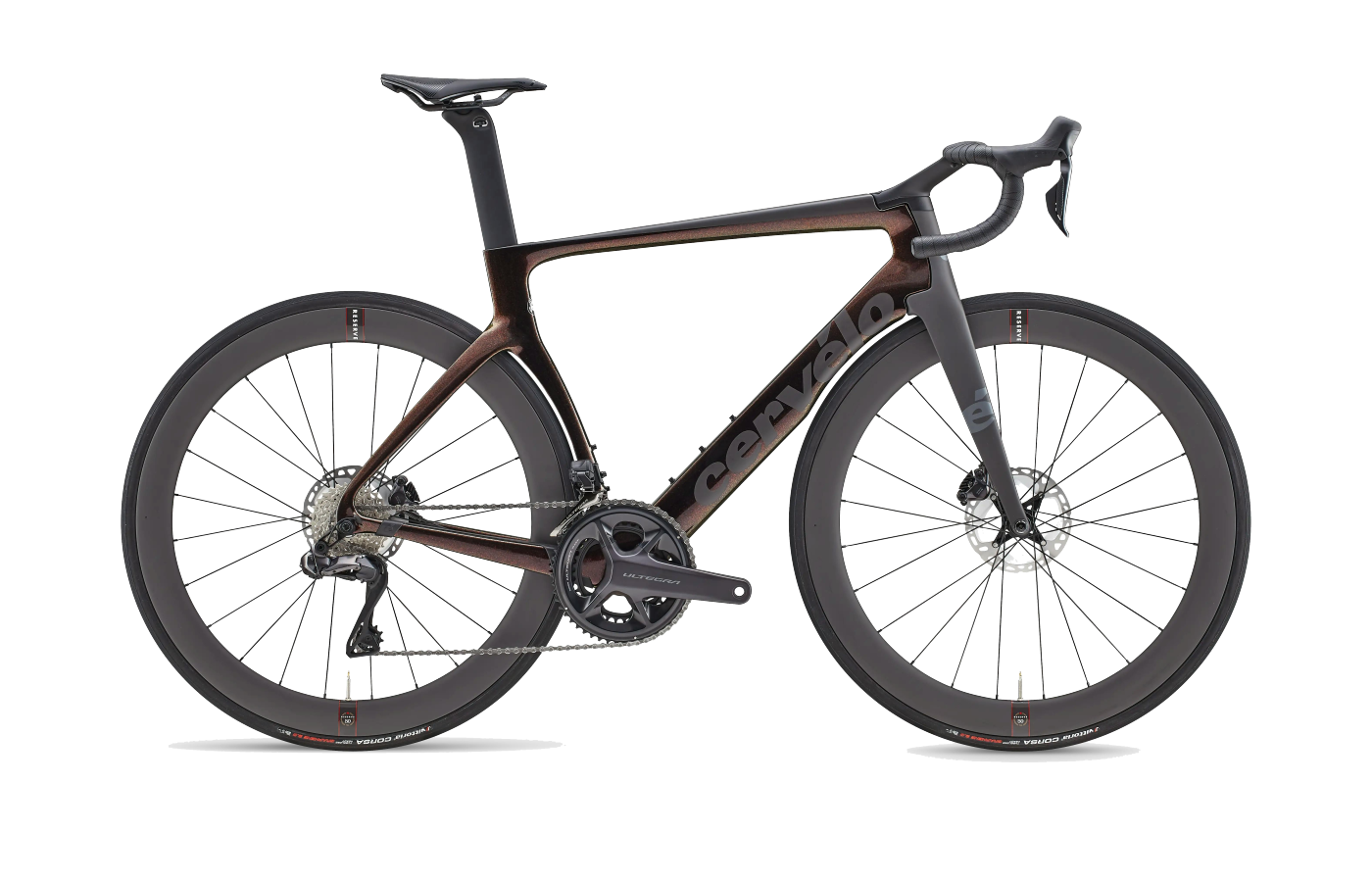
S5
If you don't actually need the climbing-bike side of the equation — the S5 is a pure aero specialist with a more single-minded tube shape and the friendliest integrated cockpit on the market. Heavier than either of these, but faster above 35 km/h.
Compare →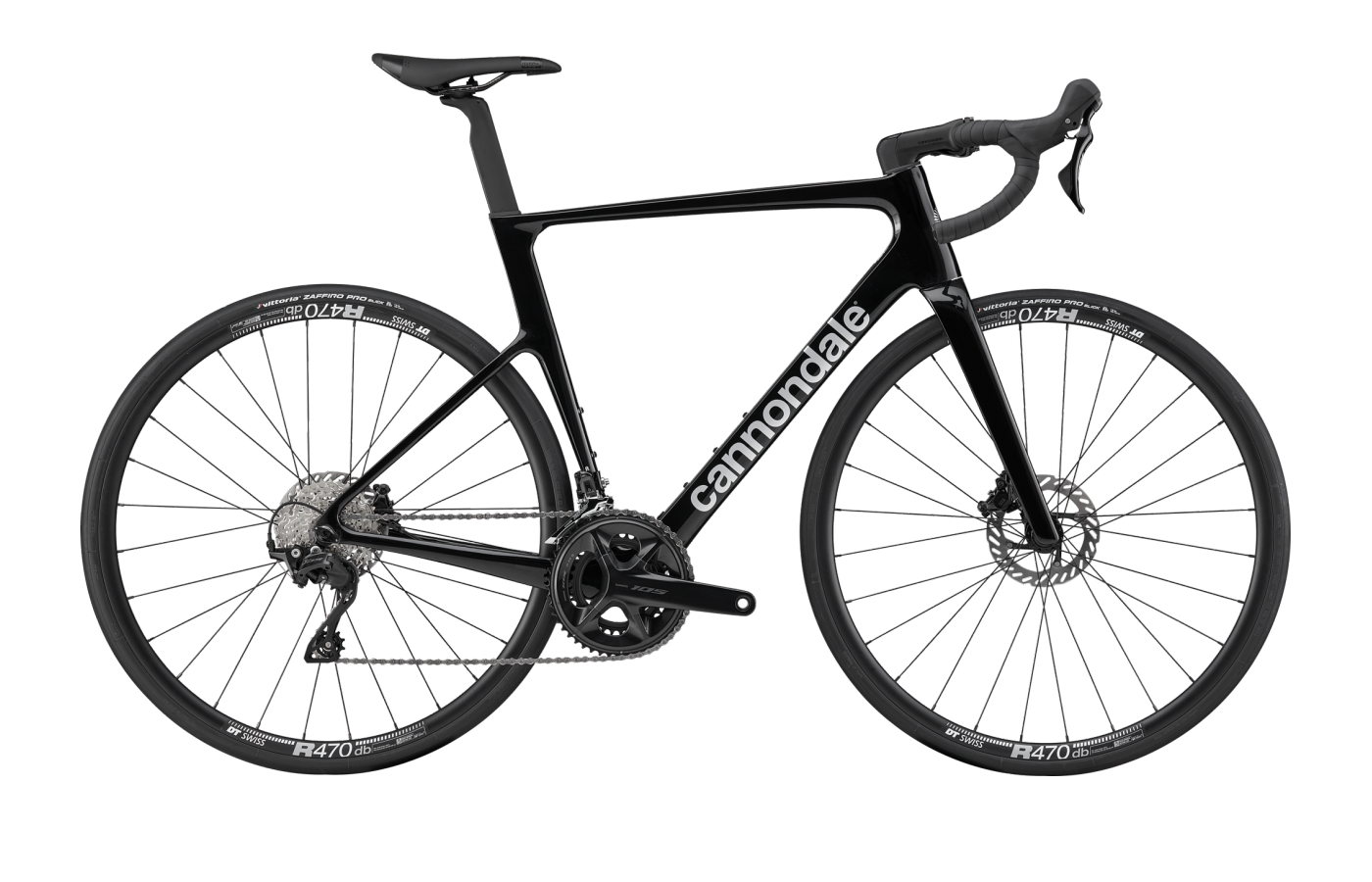
SuperSix EVO
Cannondale's take on the same aero-light all-rounder pitch, often at a sharper price than Trek and a more conventional cockpit than Factor. Refined ride with a strong race pedigree.
Compare →