Aluto
vsCrux
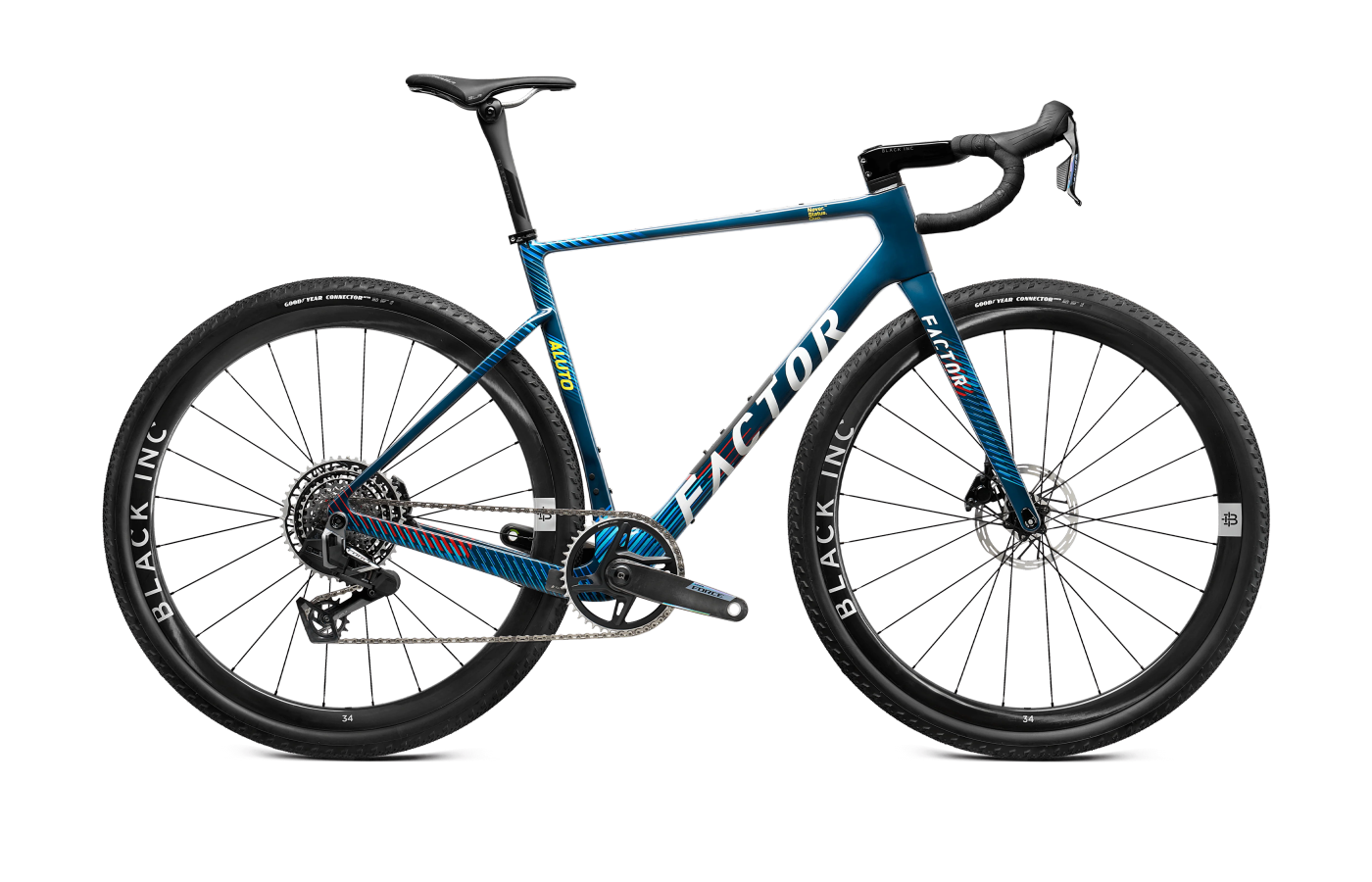
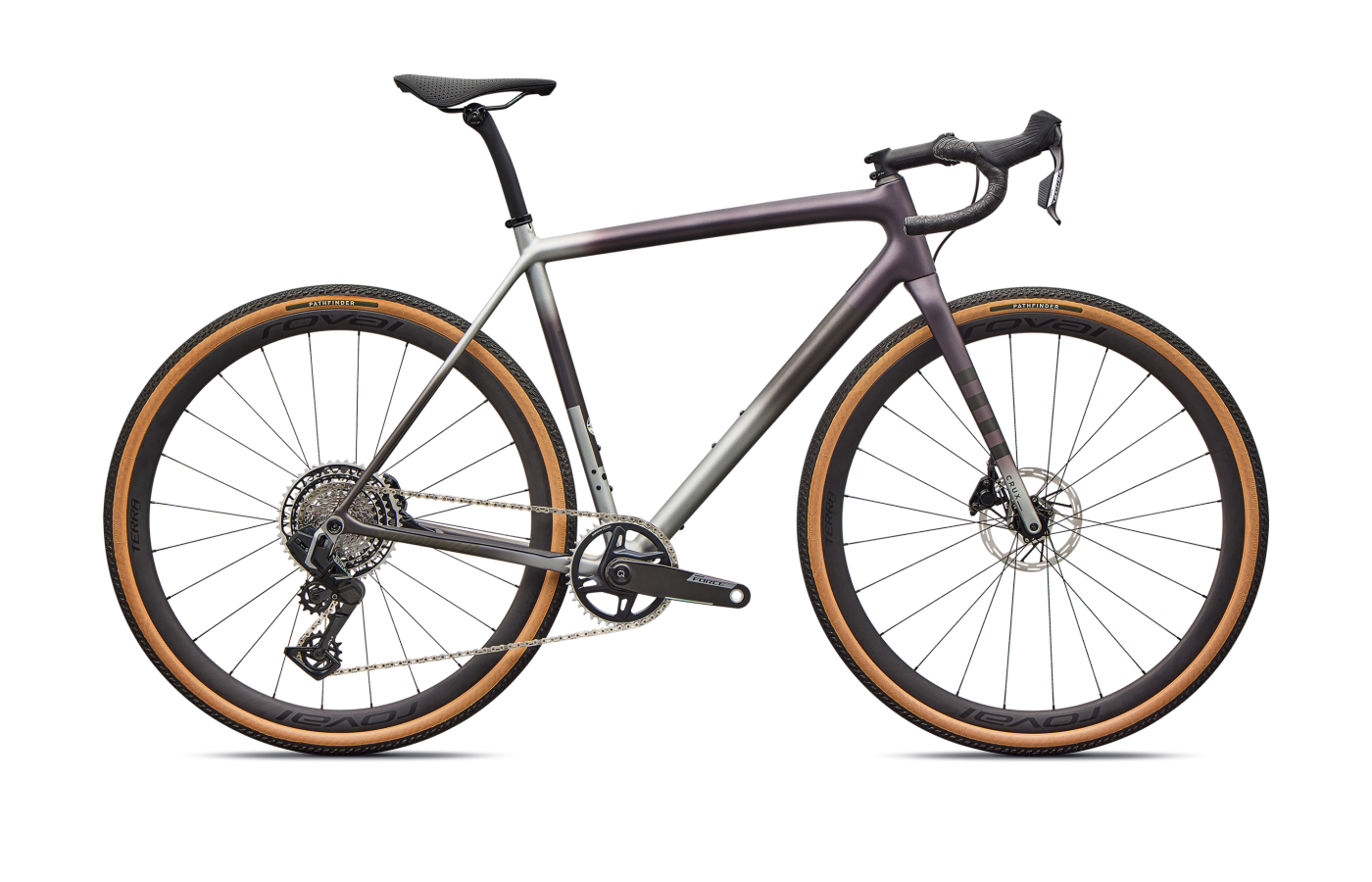
Two race-DNA gravel bikes, two different obsessions.
The Factor Aluto chases road-bike-sharp handling. The Specialized Crux chases the lowest weight in the segment.
Aluto
- Sharpest front end in the bracket — 420 mm chainstays, ~61 mm trail, and a 72° head angle deliver the most road-bike-like turn-in of any modern gravel race bike.
- Power meter standard on every build — both Force XPLR and Red XPLR ship with a SRAM AXS power meter at no upcharge.
- Sensible serviceable standards — T47a threaded BB, SRAM UDH, 27.2 mm round seatpost (dropper- and suspension-post compatible).
- Only two builds, both SRAM 1x — no Shimano, no mechanical, no sub-$7k entry point.
- Stock 44T chainring is over-geared for steep or technical climbing; many testers swap to 40T.
Crux
- Lightest gravel frame in the segment — 725 g claimed for the S-Works FACT 12r, ~825 g for the FACT 10r used on Pro/Expert/Comp builds.
- Builds for every budget — ten configurations from a $2,799 alloy DSW Comp up to an $11,999 S-Works, with both SRAM and Shimano GRX options.
- Refreshingly non-proprietary — BSA threaded BB, two-piece cockpit, 27.2 mm round seatpost, partial external cable routing make maintenance and fit changes easy.
- Only electronic 2x is supported — there's no front-derailleur cable routing for a mechanical 2x build.
- Front end can feel busy on rough gravel; the thin fork transmits more high-frequency buzz than the rear.
Editor’s analysis
Both refuse the modern monster-truck gravel trend — but where the Aluto sharpens its steering, the Crux just keeps shaving grams.
On paper these two cluster tighter than almost any cross-shop in gravel: same 47 mm rear tire clearance, same 27.2 mm round seatpost, same threaded BB, same SRAM UDH, same race-leaning posture. Both come from brands that started in road and have been pulled — reluctantly, at speed — into the gravel category. Neither is the bike you reach for if you want to bolt three frame bags on and disappear for a week.
The Factor Aluto leans into front-end feel. A 72° head angle paired with 420 mm chainstays (the same length the much sharper Ostro Gravel uses) and trail in the low-60s gives it the snappiest turn-in in this bracket — Velo called it 'precision that most gravel bikes lack' and Cyclingnews flatly described the handling as 'road bike-like.' Factor's pitch is a bike that feels alive on champagne gravel and mixed-surface days where speed and line precision matter more than absorbing the worst of the trail.
The Specialized Crux picks a different fight. It's the lightest production gravel frame in the segment — 725 g for the S-Works FACT 12r, ~825 g for the FACT 10r used on the Pro/Expert/Comp. Reviewers consistently call it an 'absolute rocket' on smoother gravel and note it 'climbs like a mountain goat.' Geometry is slightly more relaxed than the Aluto in the middle sizes — longer wheelbase, longer chainstays at 425 mm, marginally more trail — and that translates to a touch more straight-line composure at speed, at the cost of the Aluto's instant turn-in.
The other split is the lineup. The Specialized Crux ladders from a $2,799 alloy DSW Comp through six carbon builds up to a $11,999 S-Works — Shimano GRX or SRAM, mechanical or wireless. The Factor Aluto only sells two builds, both SRAM 1x with an integrated power meter, both north of $7k. If price matters at all, the Crux is the only option that even reaches down to the budget bracket; if you want a power meter standard, the Aluto is the only one that ships with one.
Where the builds differ.
Comparing our editor's-pick builds side-by-side. Winners highlighted row-by-row — lower price and weight, and the better-spec component, each mark a point.
Build variants & pricing
The Crux spans nearly $9k of range across ten builds; the Aluto offers two, both above $7k.
Prices are current US MSRP. Factor sells the Aluto only in SRAM 1x trims with an integrated power meter standard — there is no Shimano option and no entry-level build. Specialized offers a wider drivetrain palette but charges a clear premium for the lighter S-Works FACT 12r frame.
How they fit, how they steer.
Compared at the fit-picked sizes for a 5'8" rider on each bike: Aluto 52, Crux 54. Stack and reach land within 1 mm of each other (547/385 vs 560/388), but the Aluto runs a 71.9° head angle with 420 mm chainstays against the Crux's 71.5° and 425 mm — close on paper, with the Aluto a touch quicker.
Which size should I buy?
Size recommendations based on stack, reach, and effective top tube. The Crux runs a longer reach in the mid sizes; the Aluto's range starts and tops out at the same labels but with consistently shorter top tubes.
→These are starting points. Flexibility, riding style, and preferred position all shift the answer — if you’re between sizes, a professional fit beats a chart.
What the magazines said.
Published reviews from trusted cycling outlets. Click through for the full write-up.
Which one should you buy?
If you want the sharpest-handling gravel race bike with a power meter in the box, get the Factor Aluto. If you want the lightest frame in the segment — or a build that fits any budget — get the Specialized Crux.
Aluto
If your gravel is fast and flowing, your fitness is dialed, and you want a bike that turns in like a road race bike with knobs on, the Factor Aluto is the sharper instrument. The integrated power meter and Black Inc cockpit customization seal it for the racer who already knows their fit.
Crux
If you want one bike that climbs like an Aethos, doubles as a cyclocross rig, drops to alloy at $2,799, and gives you a real choice between SRAM and Shimano, the Specialized Crux is still the segment benchmark. It's the more flexible platform — and the only one here that scales below the premium ceiling.
Questions buyers actually ask.
Short answers to the things we get emailed about most often.
01Which is sharper-handling?
The Factor Aluto, clearly. At its fit-picked size 52 it runs a 71.9° head angle with 420 mm chainstays, a 1002.5 mm wheelbase, and ~62 mm of trail. The Specialized Crux at size 54 sits at 71.5° with 425 mm chainstays, a 1023 mm wheelbase, and 67 mm of trail.
In practice that's the difference reviewers describe as 'road-bike-like turn-in' on the Aluto versus the Crux's slightly more composed, cyclocross-derived feel. Neither is sluggish — but if you ride twisty mixed-surface routes and care about steering response, the Aluto wins.
02Which climbs better?
The Specialized Crux, on weight alone. The S-Works frame is a claimed 725 g and the FACT 10r used on the Pro/Expert/Comp is around 825 g — both significantly lighter than the Aluto's frame. Reviewers repeatedly describe the Crux as climbing 'like a mountain goat' and an 'absolute rocket' on smoother gravel ascents.
The Aluto isn't heavy (a complete Force XPLR build is around 8.9 kg per Velo), but it isn't trying to win the weight war. Its standard 44T chainring also runs taller gearing than the Crux's 40T, which several testers flagged as 'over-geared' on steep or technical climbs.
03What's the maximum tire clearance?
Both frames officially clear 47 mm at the rear. Factor advises 45 mm as the performance optimum for the Aluto and notes you can run 52 mm up front; pushing past 47 mm at the rear risks paint rub at the chainstays.
The Crux is rated 700×47c or 650b×2.1" front and rear and ships with 38 or 40 mm Pathfinder tires depending on the build. Neither is a Diverge or a Roubaix — for monster-truck terrain, look elsewhere.
04Can I run a 2x drivetrain?
Aluto: the frame is 2x compatible, but Factor only sells 1x XPLR builds (Force or Red, both with a 44T chainring and a power meter). If you want 2x you'd be building from a frameset.
Crux: electronic 2x only. The frame can't route a mechanical front derailleur — so SRAM AXS or Shimano Di2 are your 2x options. All current factory builds are 1x.
05How serviceable are the cockpits?
The Aluto ships with the Black Inc HB05 integrated bar/stem on both builds. Reviewers praise the ergonomics and the ~20 stem-length and bar-width combinations available at point of sale, but once it's on the bike, swapping width or stem length means buying a new unit.
The Crux uses a conventional two-piece cockpit on every build — alloy or carbon stem with a separate handlebar. Adjusting fit, swapping bars, and bleeding hoses are all standard 30-minute jobs. It's one of the most service-friendly setups in the premium gravel class.
06Why does the Aluto cost so much more at the entry point?
Because Factor doesn't sell an entry point. The cheapest complete Aluto is $7,199 (Force XPLR with power meter); the Crux starts at $2,799 for the alloy DSW Comp and at $3,999 for the cheapest carbon build (Comp, GRX 1x). If you want the Crux frame in carbon with a power meter, you're at $7,999 (Pro) or $11,999 (S-Works) — close to or above the Aluto.
So the gap at the bottom is real, but at the tier where they actually overlap, prices are within ~$800.
07Which has the better stock wheelset?
Mixed verdict. The Aluto ships with Black Inc Thirty Four carbon wheels on both builds — Velo described them as 'serviceable' but heavy at a claimed 1,650 g, suggesting they undermine the bike's otherwise lively character.
The Crux spec varies by build: the S-Works gets the lightweight Roval Terra CLX II (claimed ~1,296 g), the Pro and Expert step down to the Roval Terra CL or C, and the Comp and DSW Comp drop to DT Swiss G540 alloys. Tier-for-tier in the matched price bracket, the Roval Terra CL on the Pro is competitive with — likely lighter than — the Black Inc.
08Can I bikepack on either?
Reluctantly. Both bikes signal a clear race-first identity, with minimal mounts — three bottle cages plus a top-tube mount on the Aluto, and a notably sparse mount package on the Crux (no rack, no fender, beyond a third bottle).
The Aluto's downtube storage compartment is, per multiple reviewers, too small to be useful — Cyclingnews called it 'basically useless' and noted it rattled in testing. For real bikepacking duty, look at the Specialized Diverge or a Salsa Cutthroat instead.
Similar bikes
If your priorities don’t map cleanly onto either of these, one of these adjacent bikes probably fits better.
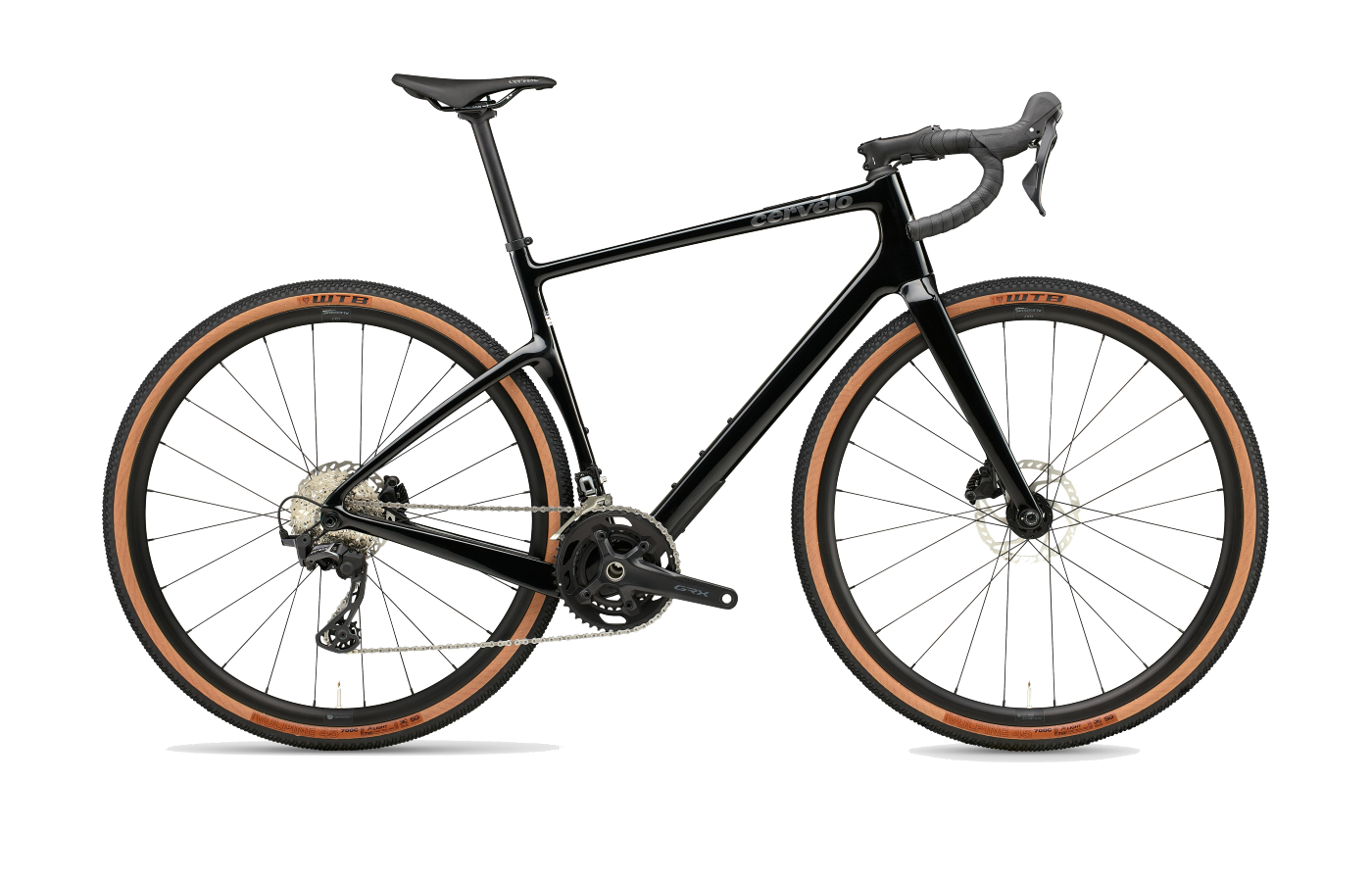
Aspero
The pure aero-gravel play. Steeper, lower, and built around speed on wide-open courses — Cervélo's pitch is the gravel bike for riders who'd rather not give up the watts the Aluto and Crux still concede to round tubes.
Compare →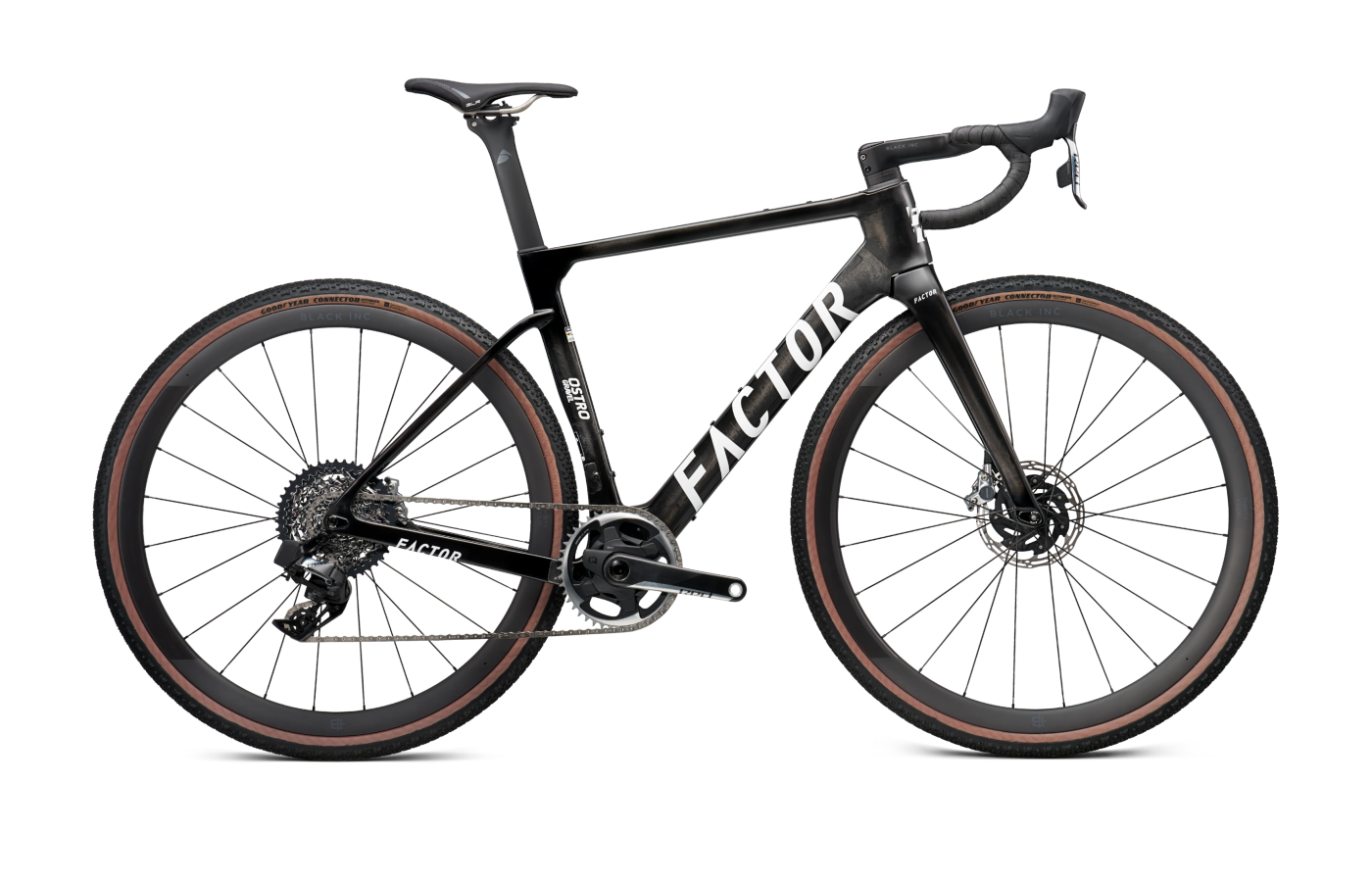
Ostro Gravel
Factor's own race weapon — the aero-tubed sibling to the Aluto. Sharper, stiffer, less generalist. If the Aluto is the chef's knife, the Ostro Gravel is the fillet knife: narrower job, even more incisive at it.
Compare →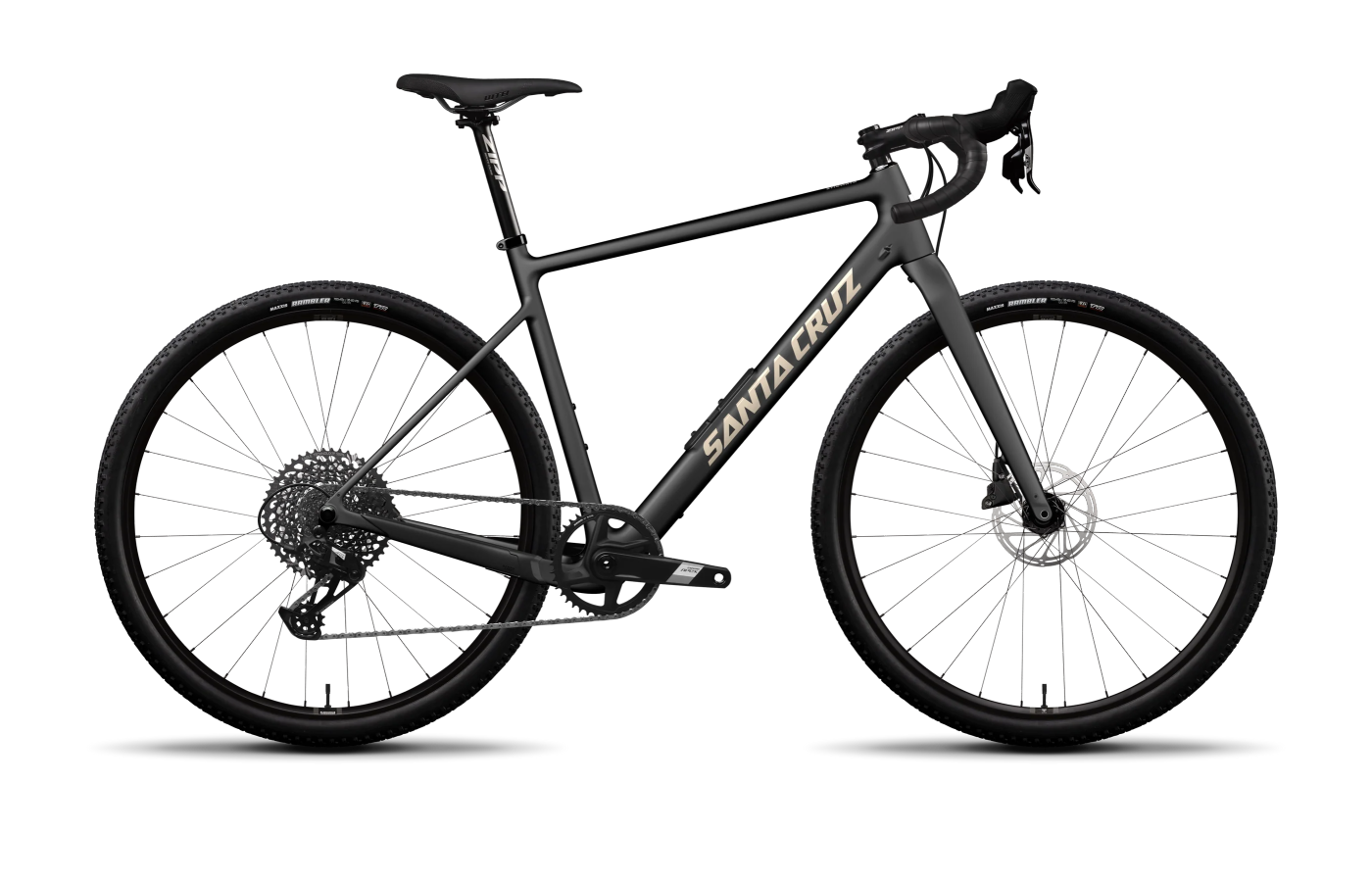
Stigmata
Santa Cruz's middle-ground option. More relaxed than the Crux, more capable than the Aluto when the trail gets chunky — a gravel bike that takes a lighter touch from the rider without losing the race-day edge.
Compare →