Wreckoning
vsSpire
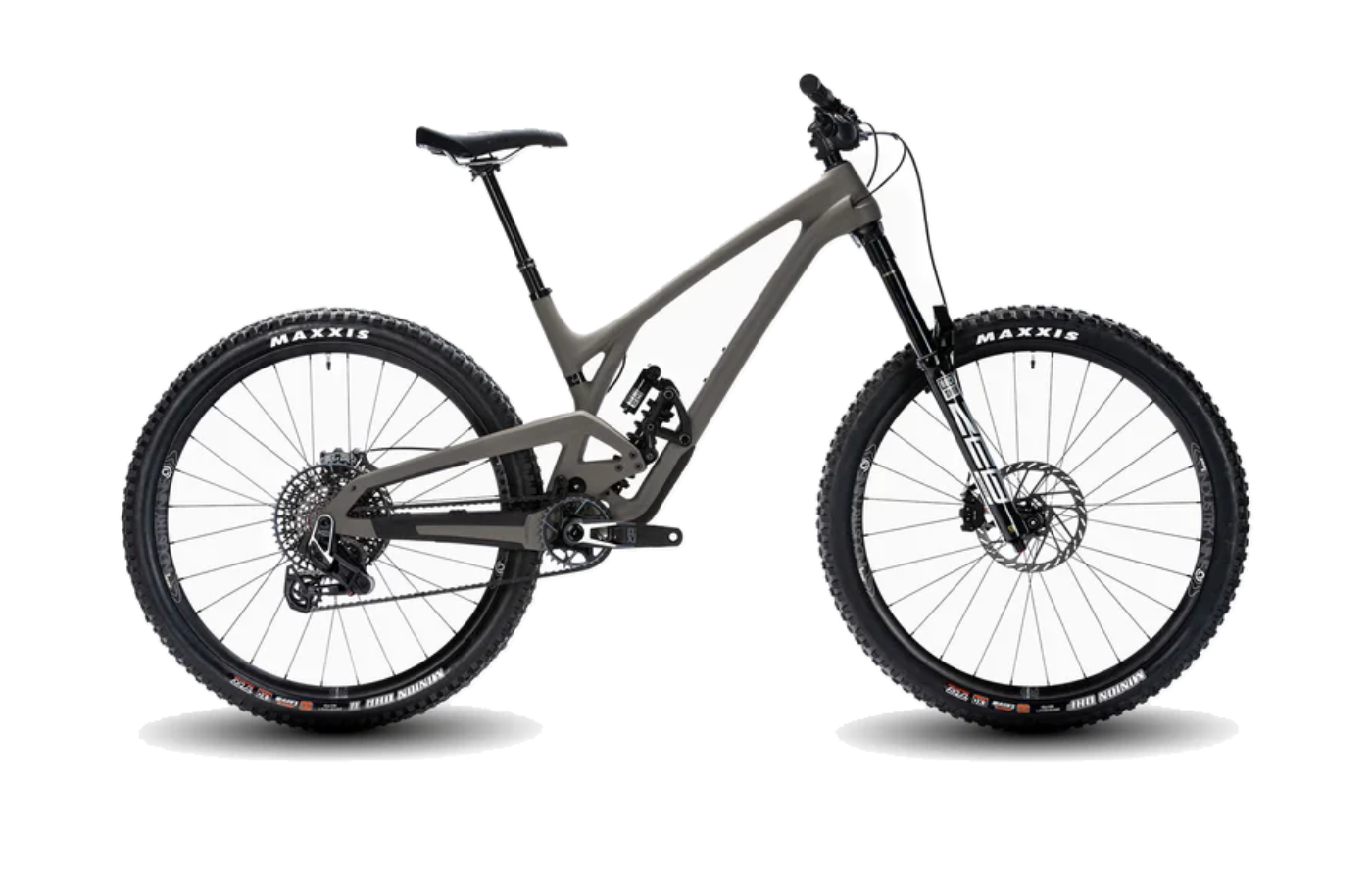
Two 170-class enduro 29ers, two opposite philosophies.
The Wreckoning is the playful coil-sprung jib bike that climbs better than it has any right to. The Spire is the long, slack, mini-DH rig built to make terrifying lines feel routine.
Wreckoning
- Playful, jibby handling — 430 mm chainstays and a 65.2-degree HTA make this the long-travel bike that still wants to slash berms and pop off lips.
- Coil shock standard across the range — even the $4,699 GX build gets the Super Deluxe Coil Ultimate, not an air downgrade.
- Premium suspension on every build — RockShox ZEB Ultimate forks ship from the entry build up. Evil prioritizes damping over drivetrain trim.
- Super Boost 157 mm rear spacing limits aftermarket wheel options.
- Reviewers consistently flag the stock rear tire and brake rotor as undersized for how hard the frame can be pushed.
Spire
- Bike-park stability — a 63-degree HTA and ~1,257 mm wheelbase at MD make rough, fast, steep terrain feel routine.
- Steepest seat angle in the comparison (78.8 degrees at MD) plants the rider over the BB for a surprisingly efficient seated climb.
- Strong stock braking — 220 mm front rotor as standard on most builds, plus SRAM Maven-class power on the carbon build.
- Carbon frame is offered in only one complete build ($7,699 Eagle 90); everything below it is alloy with a real weight penalty.
- Long wheelbase and slack front feel sluggish on tight, low-speed singletrack — this bike wants speed before it gives back.
Editor’s analysis
Same travel bracket, same wheel size, same SRAM Eagle 90 drivetrain — and almost nothing else in common.
On the spec sheet these two look like siblings: 170 mm front, ~166–170 mm rear, 29-inch wheels, carbon front triangles, lifetime warranties. Spend a single ride on each and the family resemblance vanishes. The Evil Wreckoning is the shorter, steeper, livelier bike — the one reviewers reach for words like 'slicey,' 'jibby,' and 'bike-shaped surfboard' to describe. The Transition Spire is the longer, slacker bike that testers compare to a World Cup downhill rig with pedals bolted on.
The geometry tells the story. At their fit-picked sizes, the Wreckoning runs a 65.2-degree head tube and 430 mm chainstays; the Spire is 63.0 degrees with 446 mm stays — that's 2.2 degrees slacker and 16 mm longer out back. Wheelbase follows: ~1,197 mm on the Wreckoning S vs ~1,257 mm on the Spire MD. The Wreckoning is the bike you flick. The Spire is the bike you point.
Suspension philosophy diverges in the same direction. Evil's DELTA linkage with the stock RockShox Super Deluxe Coil Ultimate is 'dual-progressive' — supple off the top, supportive in the middle, ramps hard at the end. Reviewers describe a 'bottomless feeling' that still pumps and pops. Transition's GiddyUp four-bar paired with the Vivid air shock is firmer in the mid-stroke and more eager to leave the ground, but several testers noted the Spire transmits more square-edge chatter through the frame than the coil-sprung Wreckoning.
Climbing flips the script slightly. The Spire's 78.8-degree effective seat angle (size MD) and 165 mm cranks make it a quietly efficient seated winch — testers call it a 'mountain goat' on grades that should embarrass a 170 mm bike. The Wreckoning's 77-degree seat angle is a touch slacker, but its lighter overall weight and shorter chainstays make tight switchbacks easier to wrestle around. Either bike will get to the top; only one wants to be there.
Where the builds differ.
Comparing our editor's-pick builds side-by-side. Winners highlighted row-by-row — lower price and weight, and the better-spec component, each mark a point.
Build variants & pricing
Both lineups land near the same money at the editor's-pick tier, but they get there from opposite directions — Evil starts cheap and scales up; Transition starts cheap in alloy and only offers one carbon complete.
Prices are current US MSRP. The Wreckoning ships only as a carbon frame across all four builds; the Spire is carbon for the $7,699 build and alloy below that. If you want a carbon enduro 29er for under $7k, the Wreckoning is the only choice here.
How they fit, how they steer.
Comparing the Wreckoning S against the Spire MD — the fit-picked sizes for the same rider on each bike. The Spire sits 2 mm lower in stack with 15 mm more reach, runs a 2.2-degree slacker head tube angle, and carries 16 mm longer chainstays — every number points to a longer, slacker, more stable platform than the Wreckoning's shorter and steeper geometry.
Which size should I buy?
Use the picker to see how each frame size aligns with stack, reach, and effective top tube — Transition's MD overlaps Evil's M on reach but stretches the wheelbase considerably.
→These are starting points. Flexibility, riding style, and preferred position all shift the answer — if you’re between sizes, a professional fit beats a chart.
What the magazines said.
Published reviews from trusted cycling outlets. Click through for the full write-up.
Which one should you buy?
If you want a long-travel bike that still feels playful and pumps for speed, get the Wreckoning. If you want the steepest, fastest, gnarliest descents to feel almost calm, get the Spire.
Wreckoning
If you ride a mix of jump lines, flow trails, and chunky descents — and you'd rather pop off a lip than plow through it — the Wreckoning's short stays and progressive coil suspension are the right pairing. It climbs well enough to be a true one-bike, especially in the 'Low' geometry setting.
Spire
If your weekends are shuttle laps, lift-served park days, or fall-line backcountry descents that scare your friends, the Spire's wheelbase and 63-degree front end will turn down the volume on the chaos. The carbon Eagle 90 build is the spec sweet spot — flagship suspension and braking on the lighter chassis.
Questions buyers actually ask.
Short answers to the things we get emailed about most often.
01Which is the more capable descender?
The Transition Spire, in raw high-speed terms. Its 63-degree head tube angle, ~1,257 mm wheelbase at MD, and 446 mm chainstays make rough, fast, fall-line terrain feel calmer than the Wreckoning's shorter and steeper setup. Reviewers repeatedly compare the Spire's stability to a downhill bike.
The Evil Wreckoning is no slouch — it's been called a 'mini-DH bike' itself — but its 65.2-degree HTA and 430 mm stays prioritize agility and pop over flat-out plowing.
02Which climbs better?
The Spire has the steeper effective seat tube angle at the fit-picked size — 78.8 degrees on MD versus 77 degrees on the Wreckoning S — and reviewers describe it as a 'mountain goat' on heinous seated climbs. The 165 mm cranks help with pedal clearance through chunk.
The Wreckoning is the lighter bike (carbon frame, ~32-33 lb in mid-tier builds vs ~35 lb for the Spire's carbon Eagle 90 at MD), and its shorter wheelbase makes tight switchbacks easier. Net: if you do a lot of long fire-road climbs in the saddle, the Spire's seat angle wins. If your climbs are technical and twisty, the Wreckoning's compactness wins.
03Coil or air shock — what comes stock?
Wreckoning: RockShox Super Deluxe Coil Ultimate on every build, including the $4,699 GX. That's unusual at this price and a big part of the bike's character — supple initial traction with progressive ramp-up.
Spire: RockShox Vivid Ultimate (air) on the carbon Eagle 90 build; Super Deluxe Ultimate (air) on the Alloy Eagle 90; Super Deluxe Base on the Alloy Eagle 70. The frame is coil-compatible if you want to swap, but no Spire ships with a coil from the factory.
04What about rear axle standards and aftermarket wheels?
The Wreckoning uses Super Boost 157 mm rear spacing — stiffer rear wheel, but a smaller selection of replacement and upgrade wheels than 148 mm Boost. Reviewers (BikeRadar, MBR, NIC ADV) consistently flag this as the bike's main upgrade-path compromise.
The Spire runs standard 148 mm Boost, so any modern enduro wheelset bolts up. If you're a frequent wheel swapper or part hoarder, the Spire is the friendlier platform.
05Which has more adjustable geometry?
Both have a flip-chip, but they do different things.
Wreckoning offers Low and X-Low settings — the X-Low drops the BB by 9 mm and slackens the head angle by ~0.6 degrees for the most aggressive descending posture, while Low is the better all-around climber.
Spire offers Low (62.5 degrees HTA) and High (63 degrees HTA), with the High setting raising the BB ~7 mm. Reviewers from Pinkbike often preferred the High setting for technical cornering and pedal clearance, reserving Low for outright bike-park stability. The Spire is also rated for a 27.5" rear wheel in the High setting if you want a mullet.
06How is the build value at the editor's-pick tier?
Both editor's picks run the SRAM Eagle 90 T-Type drivetrain — that's the apples-to-apples comparison.
The Wreckoning Eagle 90 at $6,199 comes with the ZEB Ultimate fork, Super Deluxe Coil Ultimate shock, and Industry Nine Hydra2 DH-S wheels.
The Spire Carbon Eagle 90 at $7,699 is $1,500 more but adds the carbon frame (the Spire's only carbon build), Vivid Ultimate air shock, and DT Swiss EX 1700 wheels. If you want carbon plus the parts-heavy spec, the Spire is the only option in its lineup. If you want carbon for less, the Wreckoning has it.
07Are there durability concerns I should know about?
Wreckoning: long-term reviewers reported needing to replace some of the small linkage bearings over a season of hard riding, and Industry Nine spokes can pop under aggressive rear-weighted riding. Evil's lifetime bearing warranty offsets a lot of this.
Spire: reviewers (Pinkbike, NSMB) reported main-pivot play after a year of heavy use, and the alloy linkage bolts have been called soft and easy to strip — torque carefully. Frame paint is on the thinner side; a frame protection kit is a worthwhile add. Transition's lifetime frame warranty covers structural issues.
08Which is better for bike-park days?
The Spire, fairly clearly. The longer wheelbase, slacker HTA, dual-crown-fork compatibility, and 220 mm front rotor on most builds are all signals that Transition designed it to be ridden hard in lift-served terrain. Several reviewers described it as the closest you can get to a DH bike that still pedals.
The Wreckoning is plenty park-capable — riders happily hit the same trails on it — but its shorter, snappier geometry rewards a more active rider input. It's a park bike that also wants to ride your home trails on Tuesday; the Spire is a park bike that tolerates the climb.
Similar bikes
If your priorities don’t map cleanly onto either of these, one of these adjacent bikes probably fits better.
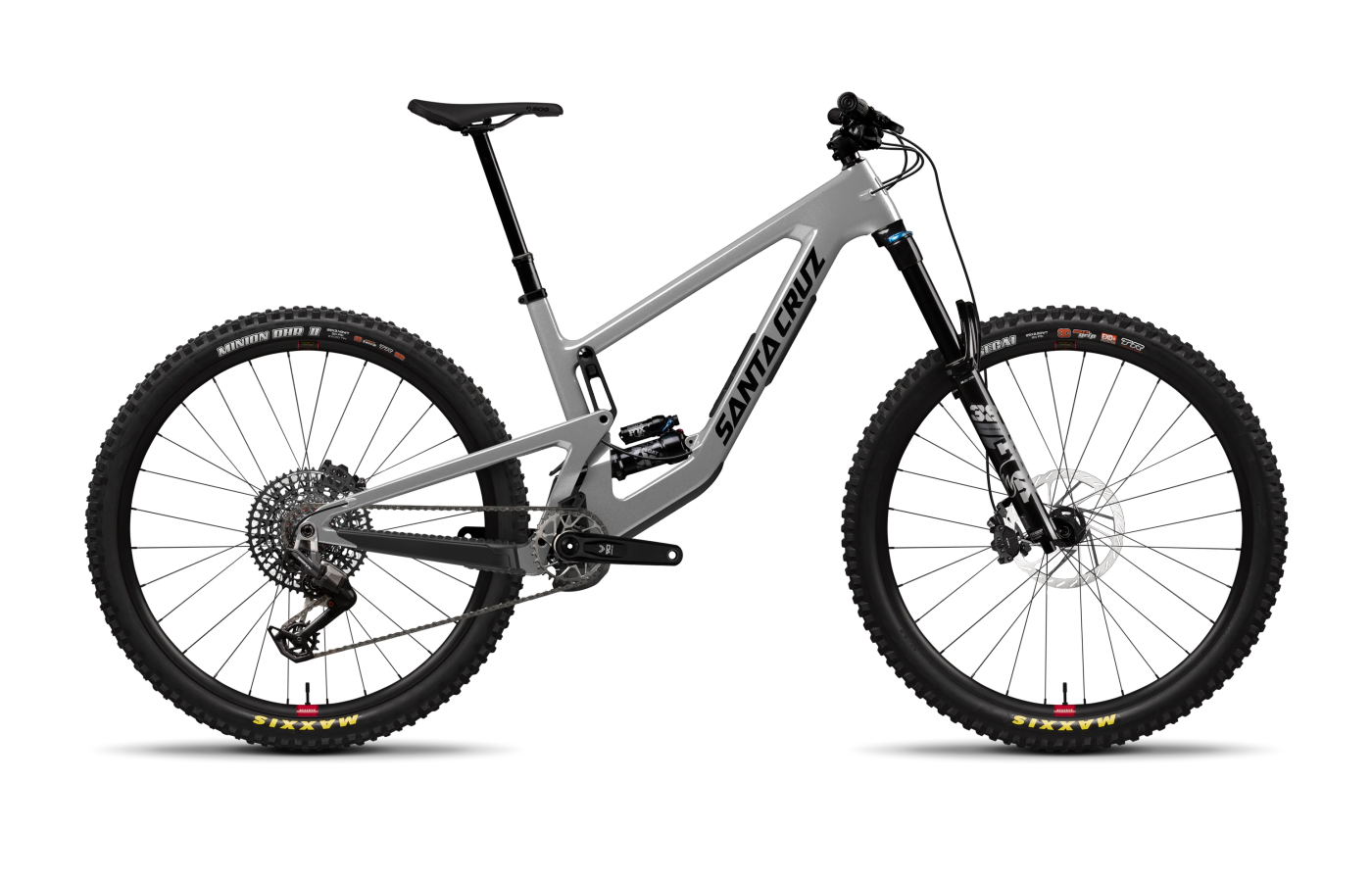
Megatower
Santa Cruz's 170/165 mm 29er sits dead between the Wreckoning and Spire on character — long-ish, planted, but with VPP suspension that pumps better than a pure plow bike. The premium-brand price is the catch.
Compare →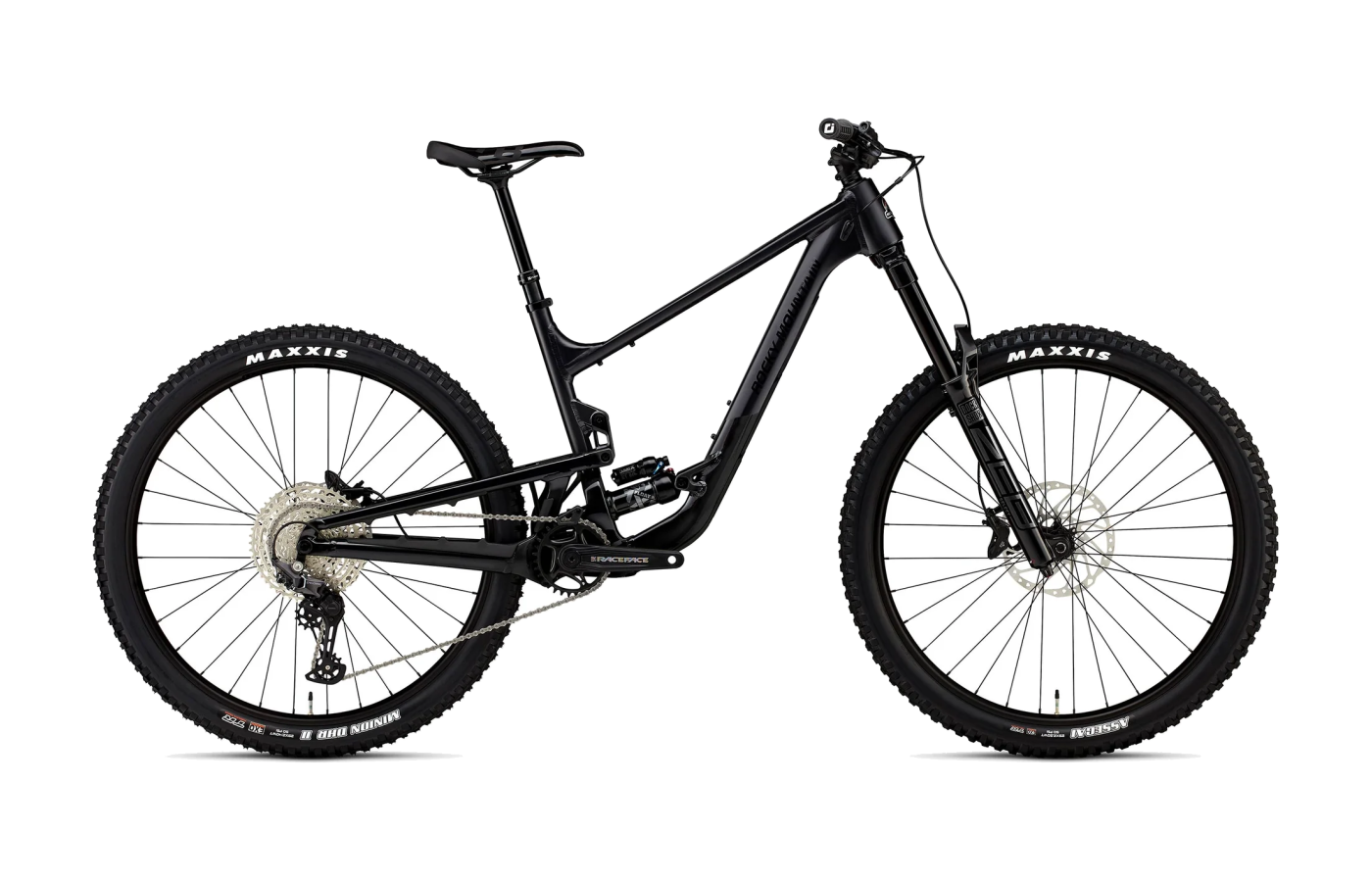
Altitude
Rocky's race-bred 170 mm enduro bike — Ride-9 geometry chip lets you dial it from playful to plow. The closest competitor to the Spire on raw downhill chops, with a more refined climbing position than either bike here.
Compare →Capra
YT's direct-to-consumer 170 mm freeride 29er — coil-compatible, progressive geometry, and meaningfully cheaper than either bike here. The trade is no demos, no local dealer, and you'd better know your fit.
Compare →