Wreckoning
vsLS
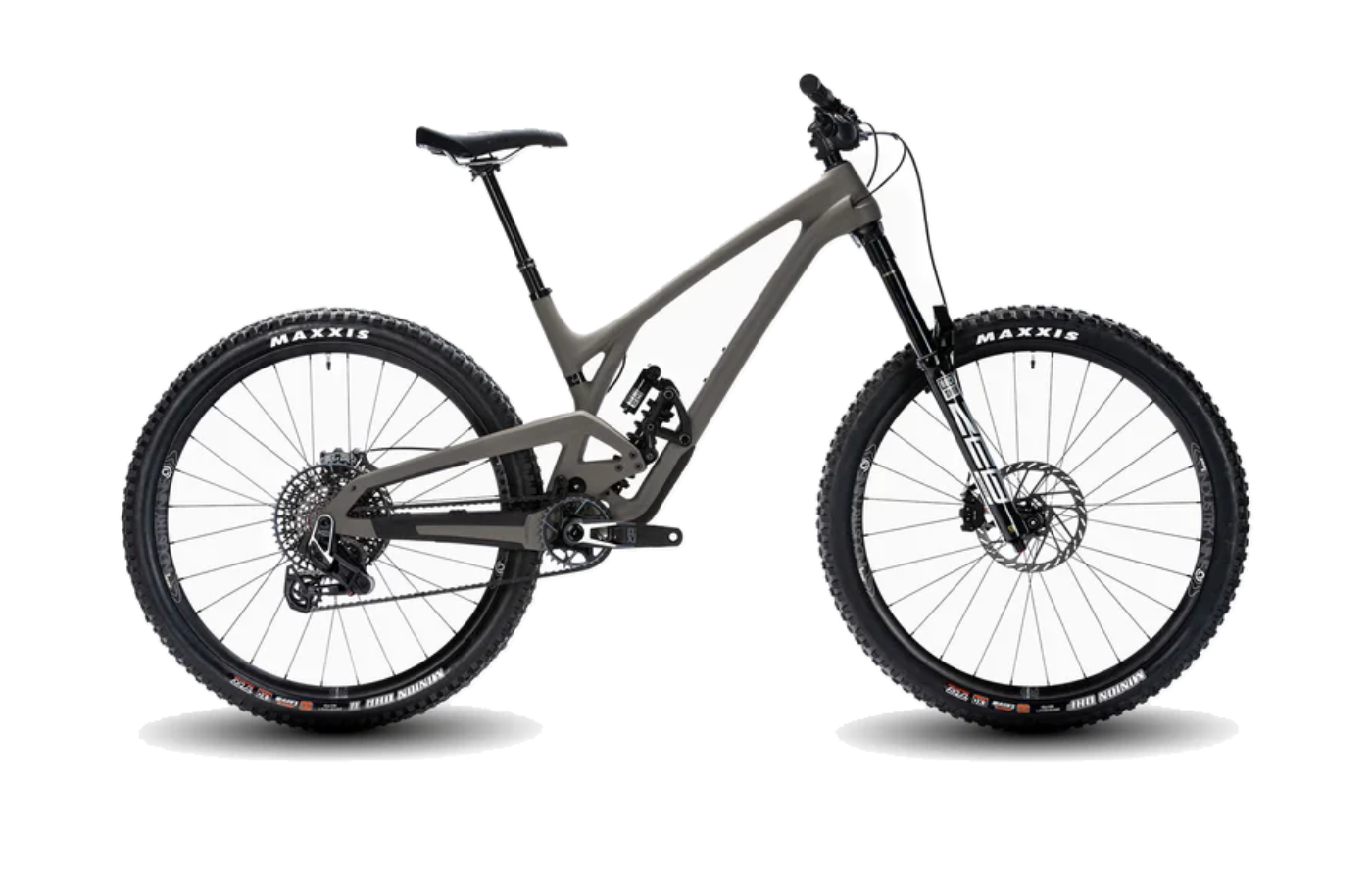
Two carbon bikes, two different planets.
The Wreckoning is a 166 mm coil-sprung enduro rig built to descend. The Factor LS is a sub-8 kg gravel race bike built to chase PRs.
Wreckoning
- Top-tier suspension on every build — even the $4,699 GX gets the RockShox ZEB Ultimate fork and Super Deluxe Coil shock.
- Playful for a 166 mm 29er — short 430 mm chainstays and the DELTA platform make it "chuckable" and "slicey."
- Lifetime bearing warranty — Evil covers the linkage bearings, the most-stressed wear part on the frame.
- Super Boost 157 mm rear spacing limits aftermarket wheel options.
- Coil-shock heft means you're working harder on long fire-road climbs.
LS
- Featherweight for a gravel bike — 7.95 kg as tested, 950 g claimed frame, climbs like a road bike.
- Razor-sharp handling — 71.9-degree head angle and 60 mm trail make it carve corners like an O2.
- Doubles as a road bike — reviewers love it with 32 mm slicks; one platform, two disciplines.
- Press-fit bottom bracket is prone to creaks; reviewers prefer threaded for a bike that gets dirty.
- Minimal frame protection — "the sound of a stray rock to the down tube will leave you feeling ill," per Velo.
Editor’s analysis
This isn't a head-to-head — it's a what kind of riding do you actually do question, with two of the most uncompromising answers carbon can buy.
The Evil Wreckoning and the Factor LS share almost nothing beyond the carbon fibre they're laid up from. The Wreckoning is a 166 mm-travel, coil-sprung, 65.2-degree-head-angle enduro 29er that tops out at $8,499 and is built to be shuttled, raced down, and slapped through berms. The Factor LS is a 7.95 kg gravel race bike with road-bike geometry — 71.9-degree head angle on the size 52, 60 mm trail — that tops out at $7,499 and is built to be ridden fast across mixed surfaces.
What the Wreckoning does, no road-going bike can touch. Its Dave Weagle DELTA suspension paired with a RockShox Super Deluxe Coil and a 170 mm ZEB Ultimate fork has been described as a "magic carpet ride" that's still nimble enough to feel like a "bike-shaped surfboard" — the short 430 mm chainstays make it pop off berms and change direction in ways no other long-travel 29er really matches. Climbs are honest with a 77-degree effective seat angle, but the bike's purpose is descending.
What the Factor LS does, the Wreckoning physically cannot. The LS is a road-bike-handling gravel racer — Cycling News called it a "razor-sharp instrument" — with a 950 g claimed frame, room for 40-43 mm tires, and a stiffness that translates every watt to the rear hub. The trade-off: reviewers describe its ride as "unapologetically jarring" on choppy surfaces. It's a bike for fast gravel and double duty as a road bike with 32 mm slicks.
If you're cross-shopping these two, the question isn't which is better — it's which sport you're buying a bike for. Bike-park laps and enduro stages, or gravel races and 100-mile mixed-surface days. There's no overlap. Pick the one that matches the rides you actually do.
Where the builds differ.
Comparing our editor's-pick builds side-by-side. Winners highlighted row-by-row — lower price and weight, and the better-spec component, each mark a point.
Build variants & pricing
The Wreckoning spans $4,699 to $8,499 across four builds; the Factor LS sits in a tighter $6,599 to $7,499 band across three.
Editor's picks shown above. Prices are current US MSRP. Note: Evil's mid-tier Eagle 90 build uses SRAM's newer mechanical T-Type drivetrain — a different tier philosophy than Factor's electronic Ultegra Di2, but the closest mid-tier analog these two platforms share.
How they fit, how they steer.
Sized for the same rider but the bikes share almost no geometric DNA — the Wreckoning S sits 74 mm taller in stack (621 vs 547 mm), 67 mm longer in reach (445 vs 378 mm), and 6.7 degrees slacker at the head tube. Trail is more than double (126 vs 60 mm). Different sports, different shapes.
Which size should I buy?
Size labels differ by convention — alpha sizing for the Wreckoning, numeric for the LS. Both ranges shown are what the platforms offer.
→These are starting points. Flexibility, riding style, and preferred position all shift the answer — if you’re between sizes, a professional fit beats a chart.
What the magazines said.
Published reviews from trusted cycling outlets. Click through for the full write-up.
Which one should you buy?
If you ride mountains, get the Wreckoning. If you ride gravel and tarmac, get the Factor LS. There is no scenario where one of these substitutes for the other.
Wreckoning
If your weekends involve shuttle laps, bike-park days, enduro stages, or chasing your friends down rocky descents in the Pacific Northwest, the Wreckoning is built for exactly that. It's a coil-sprung 166 mm bike that still feels playful — rare combination, and it earns the price.
LS
If you're the kind of rider who keeps one drop-bar bike for fast gravel events, mixed-surface centuries, and the occasional road group ride on slicks, the LS is built around your priorities. It's stiff, it's light, and it handles like the road bike it's descended from.
Questions buyers actually ask.
Short answers to the things we get emailed about most often.
01Wait — why are these two bikes even being compared?
Honest answer: they aren't direct rivals. They land on this page because shoppers sometimes cross-shop wildly different carbon platforms when figuring out what kind of riding they actually want to commit to.
If you're standing between a 166 mm enduro bike and a 7.95 kg gravel race bike, the decision isn't about specs — it's about what trails you'll be on most weekends. This page exists to make that distinction concrete.
02Can the Wreckoning do gravel rides?
Technically you can pedal it anywhere, but it's the wrong tool for gravel. With 166 mm of rear travel, a 170 mm fork, a 65.2-degree head angle, and a coil shock, the Wreckoning is engineered for steep, rough, gravity-fed terrain. On flat dirt roads or rolling gravel events, you'd be hauling around suspension and weight you'll never use, and the slack front end won't reward fast pedaling.
For gravel, look at the Factor LS or one of the alternates below.
03Can the Factor LS handle real singletrack?
Some of it, with the right tires. Velo and Cycling News both note the LS has been ridden on light singletrack and even XCO-style courses, and tire clearance reaches 40 mm. But the bike's road-race geometry — short wheelbase, steep head angle, noticeable toe overlap — means it gets "skittish as soon as the terrain descends steeply and/or on a poor surface," per Velo.
It's a fast gravel bike that flirts with light trail. It is not a mountain bike.
04What's the climbing comparison?
Apples and oranges, but worth saying out loud. The Factor LS weighs roughly half what a fully built Wreckoning does and uses 100% of every pedal stroke. On any sustained climb on pavement or smooth gravel, it will be dramatically faster.
The Wreckoning is surprisingly good for its class — its 77-degree effective seat angle and DELTA anti-squat keep it pedaling honestly — but it's a 166 mm coil-sprung enduro bike. "Faster" is not the goal.
05How does pricing compare across the lineups?
Wreckoning: $4,699 (GX) to $8,499 (XX). Four builds.
Factor LS: $6,599 (Ultegra Di2 or Force XPLR) to $7,499 (Force AXS w/ power meter). Three builds.
The Wreckoning starts cheaper and tops out higher. The LS sits in a narrower premium band — there's no entry-level Factor LS to speak of.
06Which platform offers better resale or long-term ownership?
Both have lifetime frame coverage in their respective ways. Evil offers a lifetime warranty on linkage bearings — important on a 166 mm coil bike where the linkage takes constant load. Factor offers a five-year frame warranty plus a generous crash-replacement policy, which matters more than usual because the LS's minimal frame protection makes rock strikes a real concern.
Neither resale market is huge — both are boutique brands with smaller production runs than mass-market competitors.
07Are there bikes that try to do both?
Not really, no. Long-travel enduro bikes and gravel race bikes are engineered around fundamentally opposing constraints — suspension travel, head angle, weight, tire clearance, geometry. Some "down-country" or short-travel trail bikes (around 110-130 mm) bridge XC and trail, and some gravel bikes flirt with light singletrack, but nothing meaningfully combines a 166 mm enduro mission with sub-8 kg road-race-pedigree handling.
If you genuinely need both kinds of riding, the answer is two bikes.
Similar bikes
If your priorities don’t map cleanly onto either of these, one of these adjacent bikes probably fits better.
Spire
If the Wreckoning's short chainstays sound a touch unsettled at top speed, the Transition Spire leans the other way — built around high-speed stability and plowing through chunder. Same long-travel 29er enduro mission, calmer at the limit.
Compare →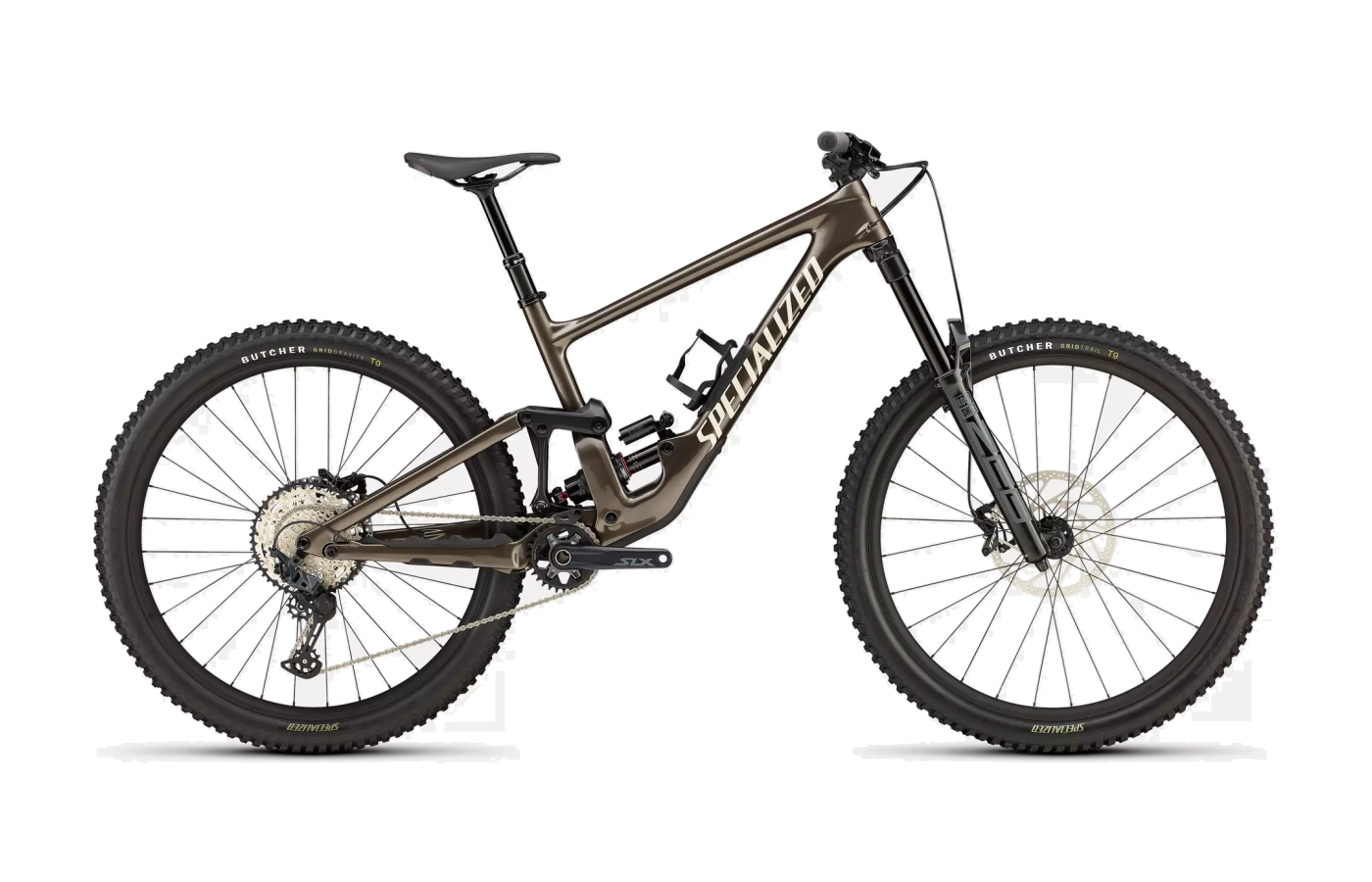
Enduro
The Specialized Enduro is the established race-pedigree benchmark in the long-travel 29er category. If you want the same mission as the Wreckoning but with a more conventional, plow-oriented character and a wider dealer network, this is the comparison to make.
Compare →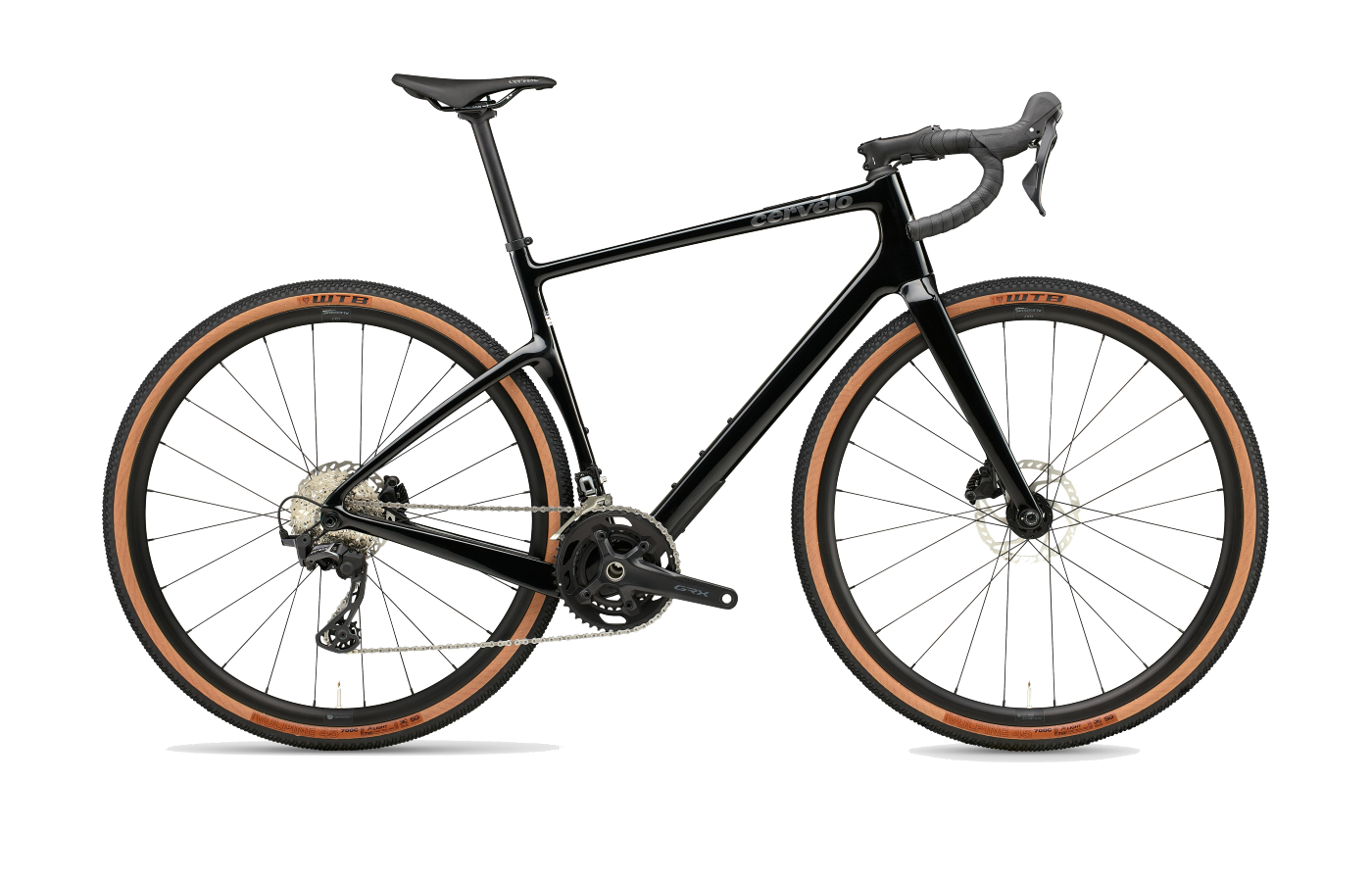
Aspero
The Cervélo Aspero is the most direct rival to the Factor LS — same race-oriented gravel philosophy, same road-bike-like quick handling, with Cervélo's more established gravel-race pedigree behind it.
Compare →