Offering
vsRipmo
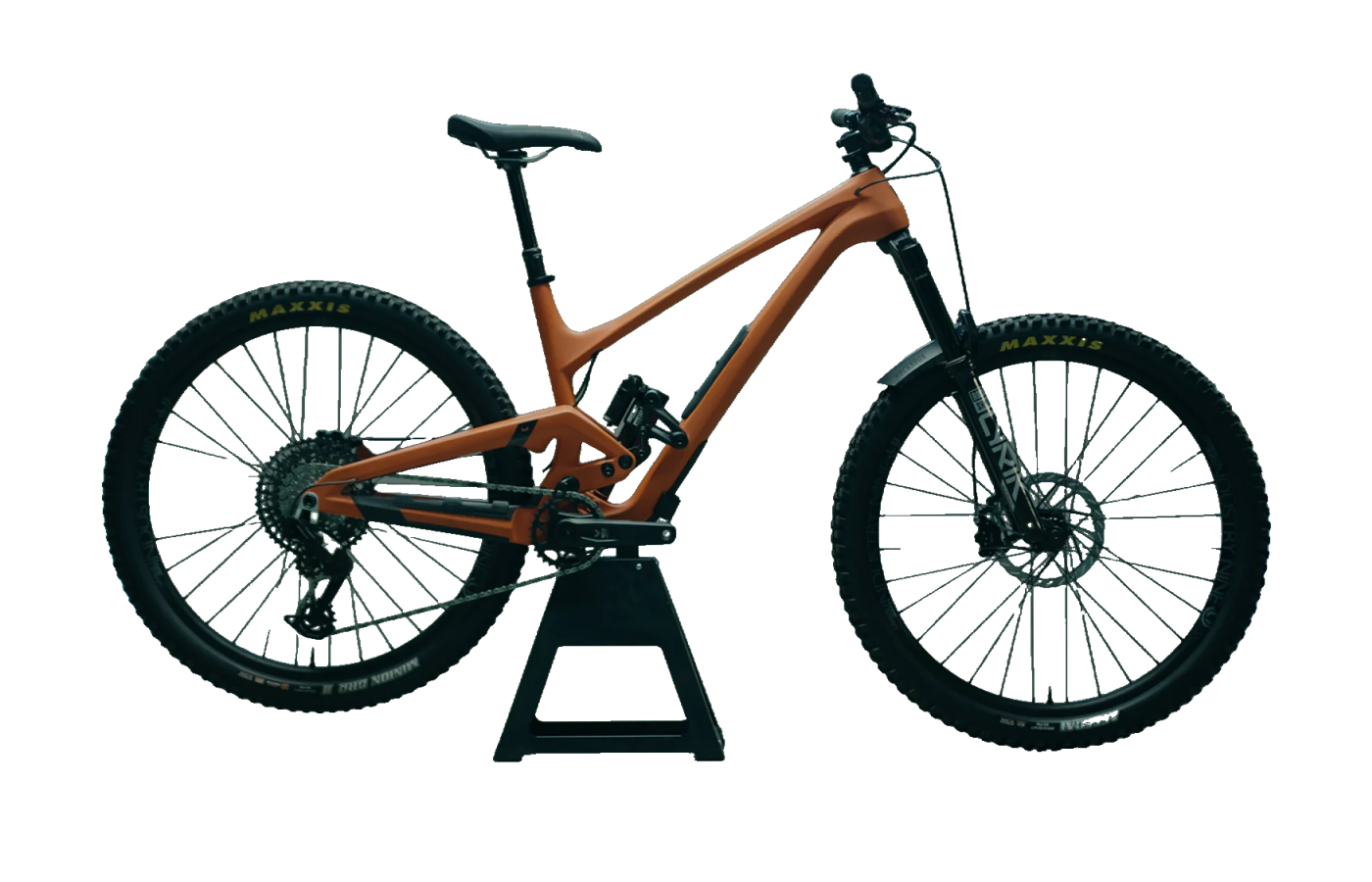
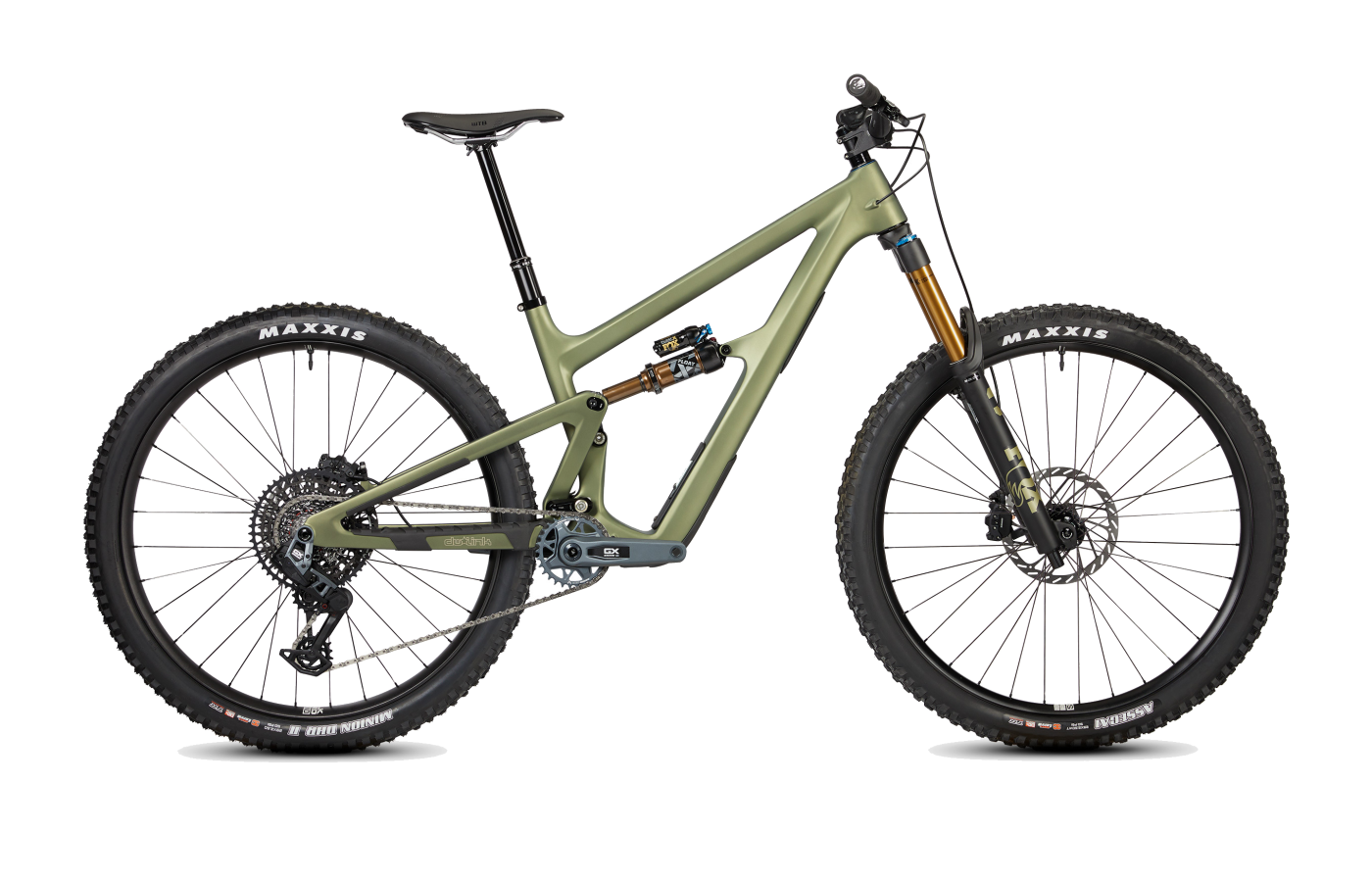
Same travel, opposite personalities.
The Offering is a poppy jib machine that demands you ride offensively. The Ripmo is a do-everything trail bike that rewards staying calm.
Offering
- Poppy, jump-eager suspension — the Delta-link's trampoline point makes airtime almost effortless.
- 79° seat tube angle puts you upright and centered on technical climbs, with serious traction.
- Stiff, responsive rear end rewards pumping corners and compressions into speed.
- Less composed than peers when you ride defensively or get tired in rough terrain.
- Suspension stays noticeably active under pedaling, even with the compression lever closed.
Ripmo
- Best-in-class climber — DW-Link delivers a firm, traction-rich platform that doesn't need the lockout.
- Size-specific everything — chainstays, seat tube angle, and BB height all scale with frame size.
- Cotopaxi-bagged downtube storage is one of the cleanest stash boxes on any trail bike.
- Stock 180 mm rear rotor is undersized for long, steep descents — most reviewers recommend a 200 mm upgrade.
- Active rear end can feel busy or 'fluttery' in chaotic high-speed terrain — a few testers wanted more composure.
Editor’s analysis
Both run 150 mm of rear travel and a 160 mm fork. That's where the agreement ends — one wants to jump, the other wants to flow.
On the spec sheet, the Evil Offering and Ibis Ripmo look like fraternal twins. Both pair 151 mm (Evil) or 150 mm (Ibis) of rear travel to a 160 mm fork. Both run 29-inch wheels. Both sit within a degree of each other on head tube angle — 64.7° for the Evil in High, 64.5° for the Ibis. The category-defining numbers all land in the same bracket. The way each bike uses them does not.
The Evil Offering is, by every reviewer's account, a jib machine. Freehub's tester called out a distinct 'trampoline point' in the Delta-link curve that makes the bike eager to leave the ground from even small features. The 79° seat tube angle is among the steepest in the trail category — a dream for seated technical climbing, with a payoff: the suspension stays noticeably active under pedaling because Evil deliberately chose traction over a hardtail-firm platform. On descents it rewards an aggressive, committed rider. Get defensive in a chunky rock garden and it 'feels less composed, stable, and forgiving than most other bikes in this class.'
The Ibis Ripmo plays a much more neutral hand. The DW-Link gives it that hovering-over-the-trail feeling on chunky climbs — multiple reviewers used the word 'hoverbike' — paired with one of the most efficient pedaling platforms in the 150 mm class. Geometry is size-specific in nearly every dimension: chainstays grow with frame size, the seat tube steepens, and the bottom bracket actually rises on bigger frames to keep pedal clearance for taller riders. It's a bike engineered to disappear under you, whether you're three hours into a fire-road climb or threading a tight rock garden.
Put another way: the Offering is the bike you buy when you already know how you want to ride and want a frame that amplifies it. The Ripmo is the bike you buy when you want one trail bike that handles everything — climbs, all-day epics, the occasional bike-park lap — without insisting on a specific personality.
Where the builds differ.
Comparing our editor's-pick builds side-by-side. Winners highlighted row-by-row — lower price and weight, and the better-spec component, each mark a point.
Build variants & pricing
Both ladders top out near $9,300–$10,000. The Ripmo extends much further down — Evil's lineup starts at $6,700 and stops at three builds.
Prices are current US MSRP. The Ripmo's $5,199 Deore build has no equivalent on the Offering — if a sub-$6k carbon trail bike is the goal, Ibis is the only path here.
How they fit, how they steer.
Both at the fit-picked size for a 5'8" rider. Reach is within 3 mm (Evil 459 / Ibis 456) and chainstays match at 435 mm. The Evil sits 3 mm taller in the stack and stretches the wheelbase 11 mm longer.
Which size should I buy?
Pick by reach, stack, and effective top tube. The Ripmo's five-size range (with a unique Extra Medium) covers more of the 5'4"–6'4" spread than the Offering's four sizes.
→These are starting points. Flexibility, riding style, and preferred position all shift the answer — if you’re between sizes, a professional fit beats a chart.
What the magazines said.
Published reviews from trusted cycling outlets. Click through for the full write-up.
Which one should you buy?
If you treat the trail like a pump track, get the Offering. If you want one bike for everything from epic climbs to bike-park days, get the Ripmo.
Offering
If you're the rider who hunts for side hits, sessions jump lines, and prefers pop over plow, the Offering is built around your riding style. Just know it asks you to stay committed — passive riders don't get the best version of this bike.
Ripmo
If you want one trail bike that climbs efficiently, descends confidently, and disappears under you on long days, the Ripmo is the safer call. Its size-specific geometry and DW-Link efficiency make it harder to outgrow than most bikes in this travel bracket.
Questions buyers actually ask.
Short answers to the things we get emailed about most often.
01Which one climbs better?
The Ibis Ripmo, fairly clearly. Reviewers across multiple outlets describe the DW-Link platform as one of the most efficient in the 150 mm trail class — firm under power without sacrificing traction, and rewarding even without flipping the lockout.
The Offering climbs comfortably thanks to its 79° seat tube angle, but its suspension stays visibly active when you pedal seated. Evil deliberately tuned for traction over a hardtail-stiff platform, so you give up some efficiency for grip on technical climbs.
02Which one descends better?
It depends on the descent and the rider. The Offering is the more rewarding bike on flow trails, jump lines, and anywhere you can pump and pop your way down — its stiff rear end and lively suspension turn trail features into airtime.
The Ripmo is the more confidence-inspiring bike when the trail gets fast and chunky. Reviewers consistently call out its mid-stroke support and overall composure. The Offering, by its tester's own admission, is 'most definitely not a plow bike' — push it into rough terrain defensively and it gets harsh.
03How do the geometries compare at the size most 5'8" riders pick?
Very closely. The Evil Medium runs 459 mm reach, 625 mm stack, and 435 mm chainstays. The Ibis MD runs 456 mm reach, 622 mm stack, and 435 mm chainstays. Wheelbase is 1230 mm vs 1219 mm.
The practical difference is 11 mm of wheelbase and 1° of head angle (64.7° Evil vs 64.5° Ibis) — both translate to subtle handling differences, not categorically different bikes. The bigger gap is the seat tube angle: 79° on the Evil versus 76.5° on the Ibis MD.
04What about tire clearance?
Evil Offering V4: 61 mm of measured clearance — comfortable on a 2.5" front, 2.4" rear stock setup with room to spare.
Ibis Ripmo V3: 63.5 mm of measured clearance — slightly more generous, and Ibis specs the bike with a 27.5 x 2.5" rear on size S–M to keep the rear end snappy.
05Which is friendlier to live with day-to-day?
Both score well, but for slightly different reasons. The Ripmo has the integrated Cotopaxi-bagged downtube storage that nearly every reviewer called the best in class, plus a threaded BB and Ibis's lifetime warranty on the lower-link IGUS bushings.
The Offering V4 also adds downtube storage in this generation, switches back to standard 148 mm Boost spacing (so wheels swap freely with most modern bikes), and uses a threaded BB. The hatch is slightly fiddlier to open than the Ibis's, but the rest of the frame details are first-rate.
06Can I run a coil shock on either?
Yes on both — the suspension curves of both platforms are progressive enough to work with a coil. The Ripmo's mini-clevis was specifically redesigned to better tolerate the side loads coil shocks generate. Evil offers a 170 mm Zeb / Vivid Air package as a no-upcharge alternative to the stock 160 mm Lyrik / Super Deluxe Ultimate, which gets you closer to enduro territory if that's what you want.
07Are there any spec quirks I should plan to upgrade?
On the Ripmo, multiple reviewers flag the stock 180 mm rear rotor as undersized for long, steep descents — a 200 mm upgrade is the standard recommendation, especially for heavier or more aggressive riders. Tires are EXO+ casing, which most riders find adequate but rowdier riders may want to swap for Doubledown.
On the Offering, the stock Maxxis EXO+ front / EXO rear casing is a similar story — fine for general trail riding, worth bumping to heavier casings if you're consistently in rocky terrain.
08Which holds up better long-term?
Both are well-built carbon frames with thoughtful protection. The Ripmo has the edge on documented long-term reliability — Ibis offers a lifetime warranty on the lower-link IGUS bushings, and the bike has been through three generations of refinement.
The Offering V4 is too new for a definitive long-term verdict, but the move to standard Boost 148 mm spacing, the threaded BB, the new chain-slap protection, and the small linkage fender all signal a frame designed for years of ownership.
Similar bikes
If your priorities don’t map cleanly onto either of these, one of these adjacent bikes probably fits better.
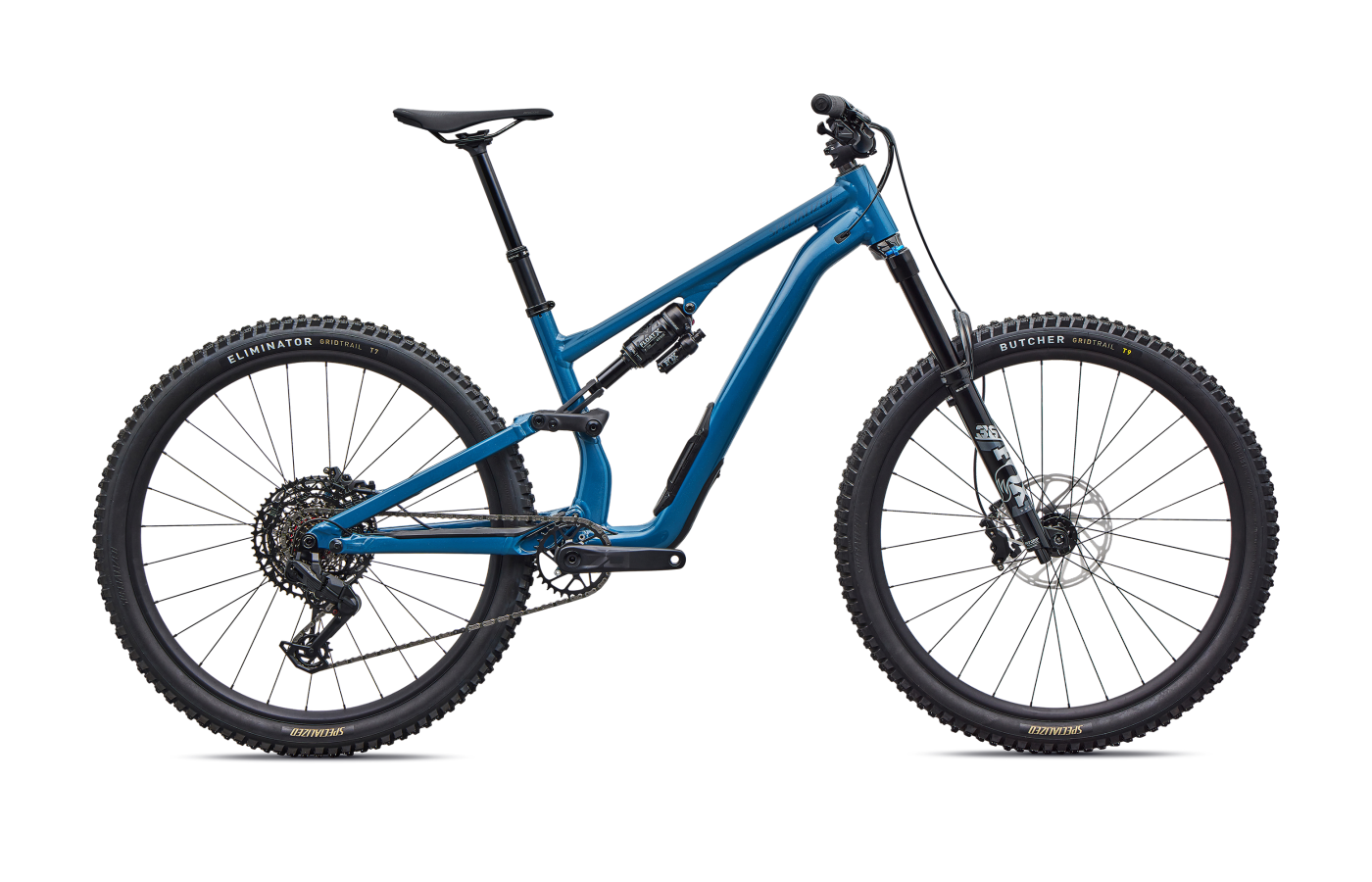
Stumpjumper Evo
Specialized's Stumpjumper Evo plays a similar 150 mm hand but adds adjustable head tube angle and BB height — six geometry positions in total. The most tunable bike in the class.
Compare →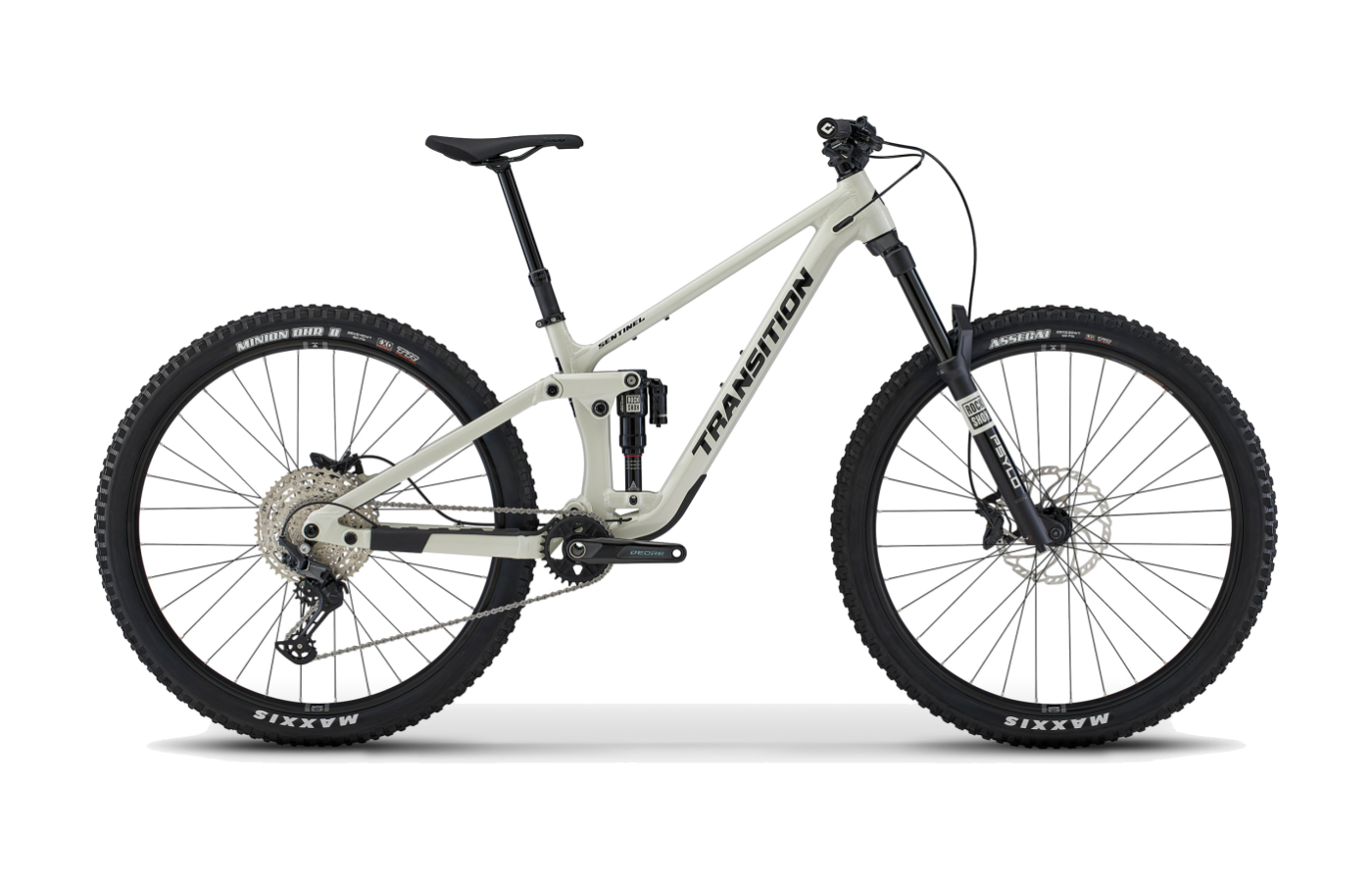
Sentinel
If both the Offering and the Ripmo strike you as too poppy, the Transition Sentinel leans planted and plow-oriented at similar travel — the bike that just smooths chunder out.
Compare →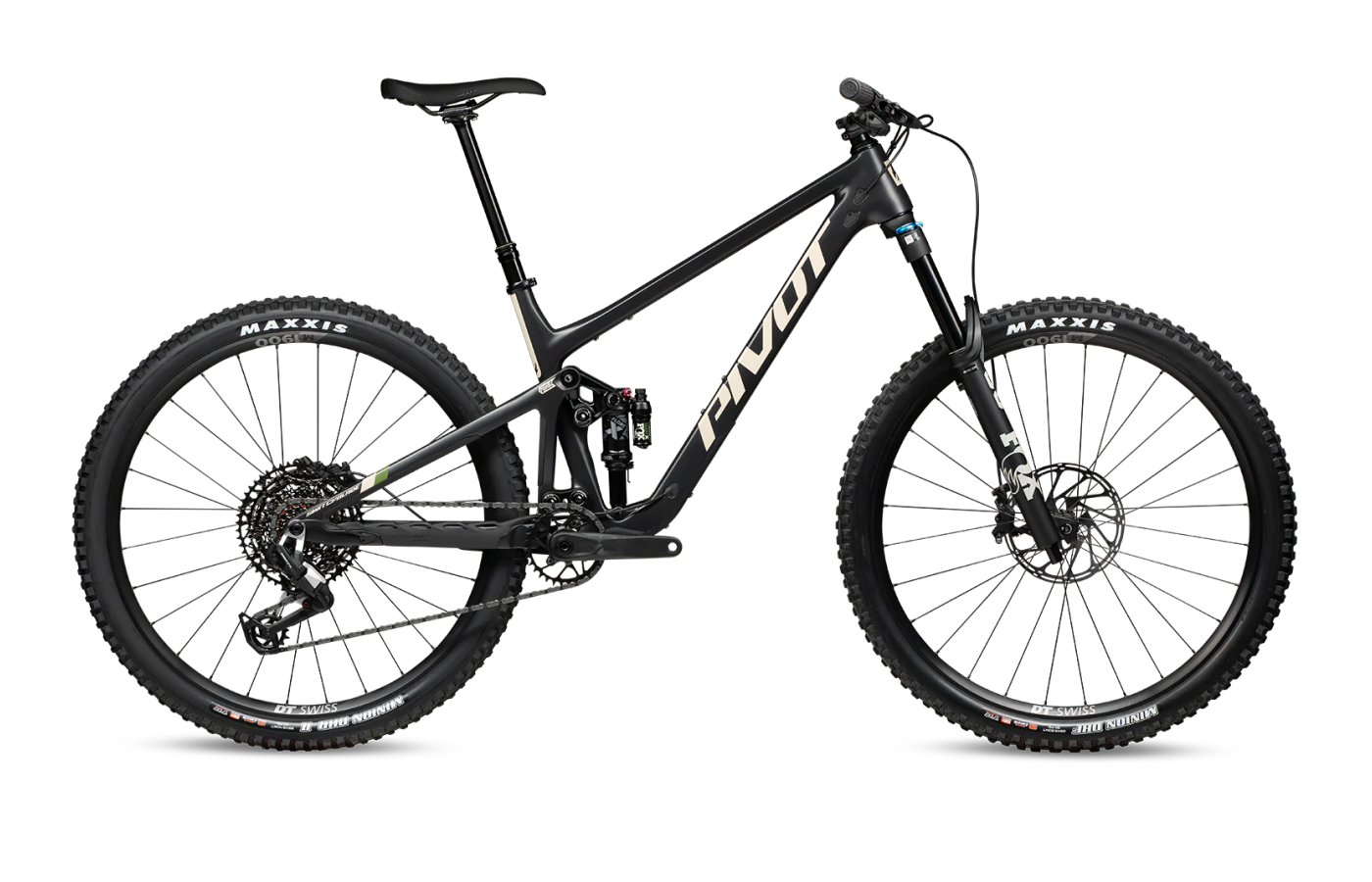
Switchblade
Pivot's Switchblade is the other premium DW-Link trail bike in the conversation — torsionally stiffer than the Ripmo with a slightly more aggressive descending bias.
Compare →