V4Rs
vsV5Rs
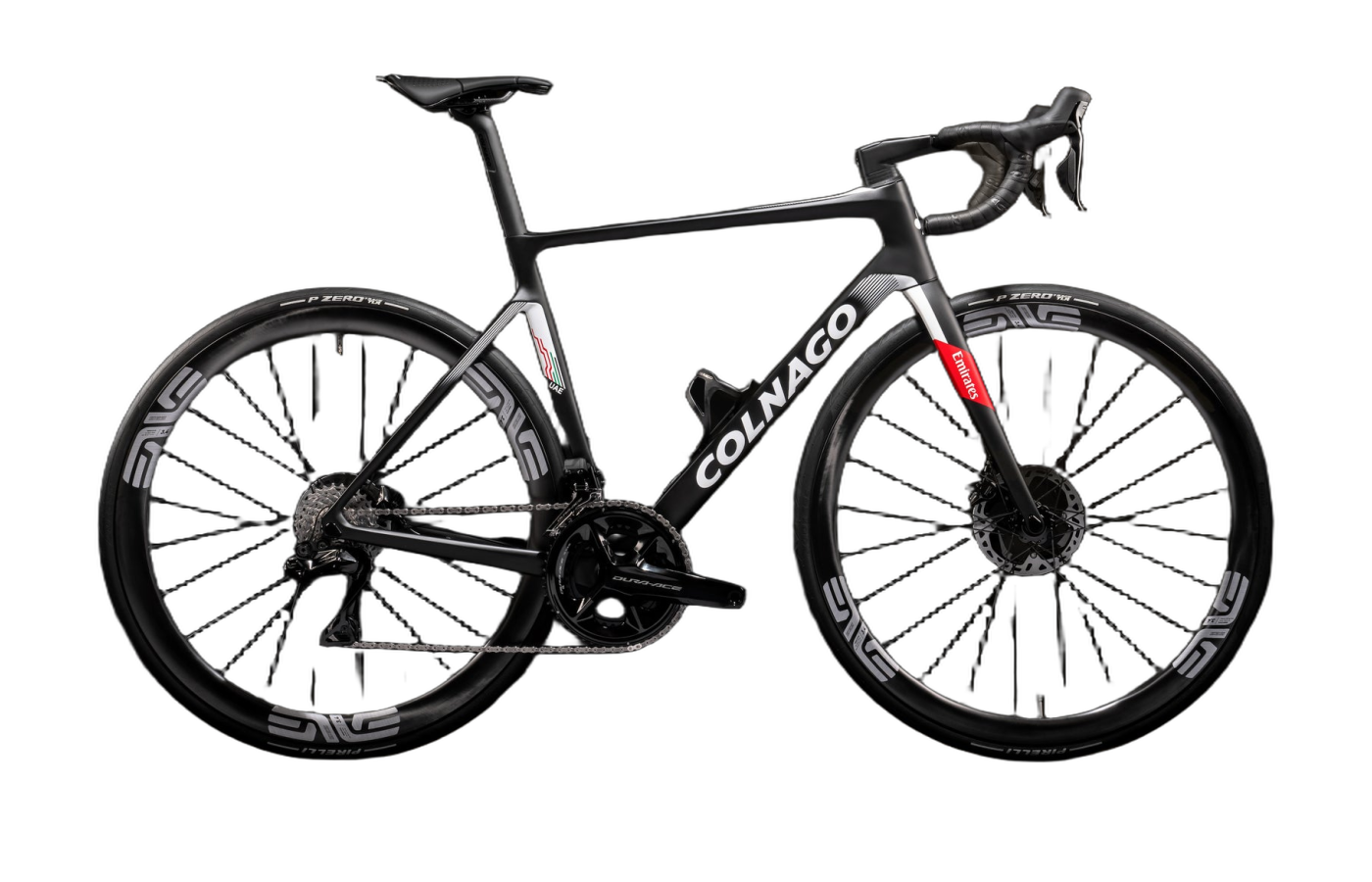
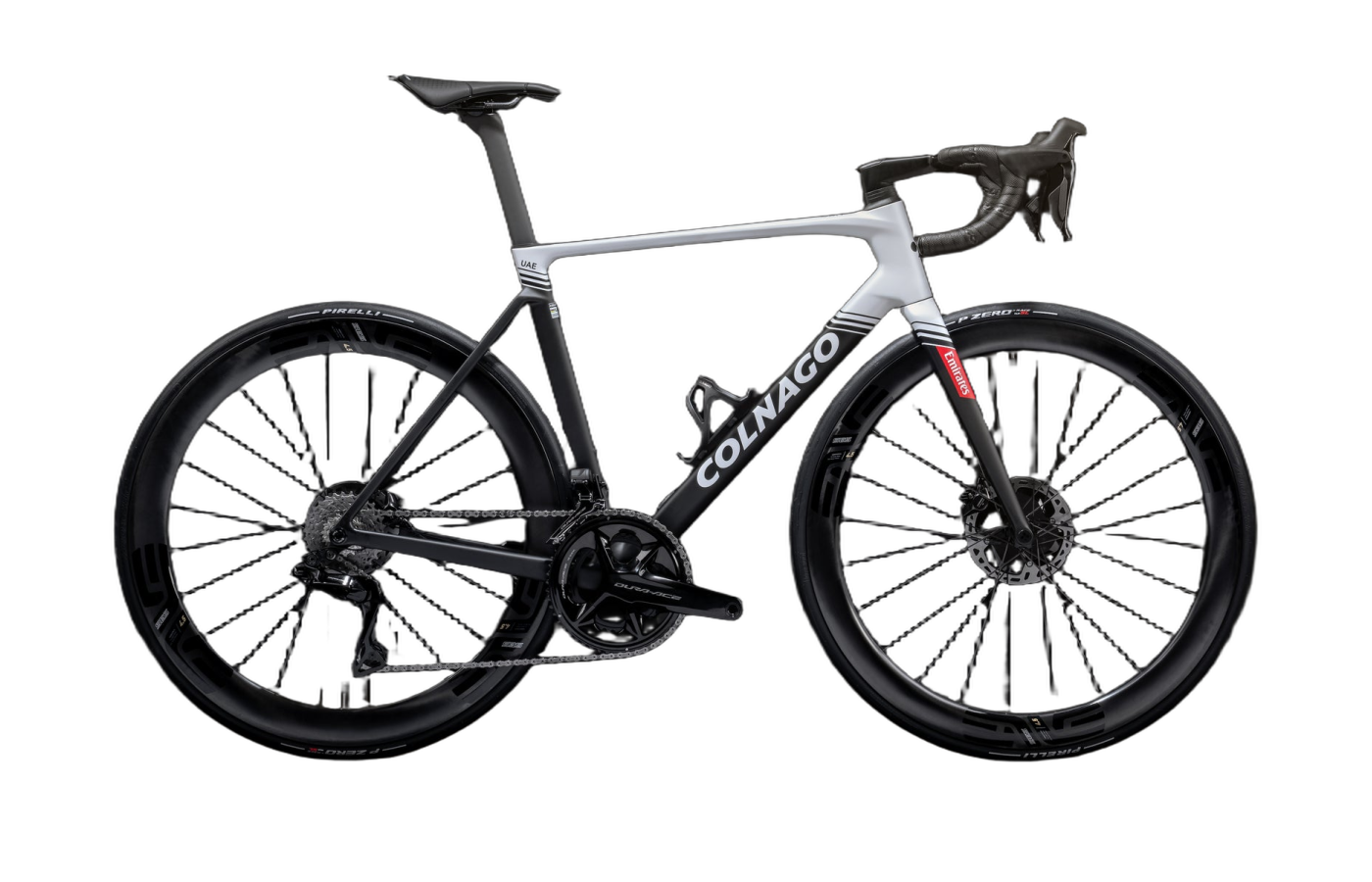
One generation, one diet, one new battery headache.
The V5Rs is the V4Rs with 146 g shaved from the frame kit, a 13% slimmer frontal area, and a few service compromises traded in for the win.
V4Rs
- Lower entry point — Force AXS build starts at $7,000, $4,000 below the cheapest V5Rs.
- Friendlier to service — Di2 battery lives in the seatpost, no bottom-bracket pull required.
- Tour-winning pedigree — the bike Pogacar rode to multiple grand tour victories in 2023–24.
- ~113 g heavier frame kit and a less aggressive aerodynamic profile than the V5Rs.
- Narrower 30 mm tire clearance limits cushioning options on rough pavement.
V5Rs
- 146 g lighter frame kit — 685 g unpainted in size 485, the lightest Colnago ever made.
- 9-watt drag reduction at 50 kph via slimmer head tube, refined fork blades, and narrower seatpost profile.
- Wider 32 mm tire clearance (reviewers report 34 mm physically fits) for tunable comfort on rough roads.
- Di2 battery in the downtube — requires bottom-bracket removal to service.
- No build under $11,000 and the integrated multi-tool from the V4Rs is gone.
Editor’s analysis
This isn't a rivalry — it's a generational handoff, and the receipts are in the grams.
The Colnago V4Rs landed in 2023 as the bike Tadej Pogacar rode to the Tour. Two years later the V5Rs arrived to do the same job, only thinner. Same 408 mm chainstays, same CC.01 integrated cockpit, same monocoque construction philosophy, same WorldTour brief — but Colnago took 146 g out of the frame kit (685 g vs ~798 g unpainted in size 485), narrowed the frontal area by 13%, and claims a 9-watt drag reduction at 50 kph. The V4Rs is not obsolete; the V5Rs is what the V4Rs becomes when the brief shifts from 'win' to 'win at lower weight.'
The geometry deltas tell the same story in millimeters. At size 485 the head tube angle steepens from 71.5° on the V4Rs to 72.3° on the V5Rs. Reach grows 1 mm, stack stays identical at 539 mm, and the seat tube angle steepens from 74.5° to 74.8° — pushing the rider further over the bottom bracket. Reviewers describe the V4Rs as a 'stable carver' that needs pro speeds to come alive, and the V5Rs as 'edgier,' 'alive at tempo,' and quicker to change direction. Same chassis personality, dialed half a click sharper.
The mechanical changes are where the V5Rs gives back what it gains. Colnago abandoned the V4Rs's T47 threaded bottom bracket for a traditional BSA shell — easier to service, but the seatpost got too narrow to house the Di2 battery, so the battery now lives in the downtube and the bottom bracket has to come out to access it. Tire clearance grew from 30 mm to 32 mm officially (reviewers fit 34 mm). The V4Rs's beloved hidden multi-tool in the steerer is gone. The integrated CC.01 cockpit carries over on both. Net: the V5Rs is faster and lighter, but a little less friendly to home wrenches.
The price math is unambiguous. The V4Rs starts at $7,000 (SRAM Force) and tops out at $12,500. The V5Rs starts at $11,000 and tops out at $14,000 — every tier of the lineup got more expensive, and there's no entry-level build at all. If the V4Rs is still in stock and you don't need the last 113 g or the latest aero numbers, it's the same DNA at a meaningfully lower entry point.
Where the builds differ.
Comparing our editor's-pick builds side-by-side. Winners highlighted row-by-row — lower price and weight, and the better-spec component, each mark a point.
Build variants & pricing
Both lineups span Force AXS up to Campagnolo Super Record WRL. The V5Rs lineup runs $4,000–$1,500 dearer at every matching tier.
Prices are current US MSRP. The V4Rs entry-level Force AXS at $7,000 has no equivalent in the V5Rs lineup, which starts at $11,000 — a real platform gap, not an oversight in the comparison.
How they fit, how they steer.
Both bikes use Colnago's traditional metric sizing. The fit algorithm picks the 485 on the V4Rs and the 510 on the V5Rs — the V5Rs added a higher-stack 510 (557 mm vs the 485's 539 mm) that fits a 173 cm rider better. Within shared sizes, the V5Rs runs a steeper 72.3° head tube and a slightly more forward-biased rider position.
Which size should I buy?
Both lineups span 420 to 570. The V5Rs adds a 510 size with appreciably more stack — useful if the V4Rs's 485-to-510 stack jump felt awkward.
→These are starting points. Flexibility, riding style, and preferred position all shift the answer — if you’re between sizes, a professional fit beats a chart.
What the magazines said.
Published reviews from trusted cycling outlets. Click through for the full write-up.
Which one should you buy?
If you want the cheapest way into the V-series race platform, get the V4Rs. If you want the lightest, slipperiest version of it, get the V5Rs.
V4Rs
If the V4Rs is still on the floor and the $4,000 saving over a V5Rs matters, this is the deal of the lineup. The chassis still wins WorldTour races; the diet hasn't happened, but it doesn't need to for the rider who isn't measuring grams.
V5Rs
If you want the exact platform Pogacar lines up on today — with the lighter frame, the trimmer aero numbers, and the wider tire window — this is it. You'll pay for it, and you'll pull a bottom bracket to change a battery, but it's the sharper tool.
Questions buyers actually ask.
Short answers to the things we get emailed about most often.
01How much weight did the V5Rs actually save over the V4Rs?
Colnago shaved 146 g from the frame kit — the unpainted size-485 frame drops from roughly 798 g to 685 g, with the fork at 342 g. Real-world complete-bike weights from reviewers come in around 6.68–6.9 kg for the V5Rs, putting it among the lightest all-around framesets on the market and roughly on par with a Specialized Tarmac SL8.
For a 70 kg rider, that ~100 g of bike weight is worth maybe 1–2 seconds on a 30-minute climb. It's real, but the bigger story is the aero — Colnago claims a 9-watt drag reduction at 50 kph from the slimmer head tube and narrower seatpost.
02Is the V5Rs handling actually different, or is it the same chassis?
Same DNA, sharpened. The chainstays stay 408 mm, the integrated CC.01 cockpit carries over, and the wheelbase shifts only a few millimeters. But Colnago steepened the head tube angle (e.g. from 71.5° to 72.3° on the 485) and the seat tube angle (74.5° to 74.8°), pushing the rider further forward over the bottom bracket.
Reviewers describe the V4Rs as a 'surefooted carver' that wants pro speeds to come alive, and the V5Rs as 'alive at tempo,' edgier, and quicker to change direction. It's the same race brief, dialed half a click sharper.
03Why does the V5Rs have a worse battery situation?
Colnago narrowed the seatpost profile to chase aero gains, and the new shape is too thin to house a Di2 battery. So on the V5Rs, the battery moved to the downtube, and accessing it requires removing the crank and bottom bracket.
On the V4Rs, the battery lives in the seatpost — a quick pop and you're at it. Reviewers call this the V5Rs's most user-hostile change: battery failures are rare, but when they happen, the V5Rs is a shop visit and the V4Rs is a 10-minute job at home.
04What's the maximum tire clearance on each?
V4Rs: 30 mm officially. Reviewers note ~32 mm fits on smoother tubed wheels.
V5Rs: 32 mm officially, with multiple reviewers (Velo, Bicycling) confirming 34 mm physically clears. Pogacar himself typically races 28 or 30 mm tires.
Neither is a gravel platform, but the V5Rs's extra clearance gives meaningful comfort latitude on cracked tarmac — useful given how stiff the chassis runs.
05What changed at the bottom bracket?
Colnago switched from T47 to BSA threaded on the V5Rs. T47 (V4Rs) offered an oversized interface and was praised for stiffness and creak-resistance. BSA (V5Rs) is the older, narrower standard — but it's lighter, more universally serviceable, and gave Colnago weight savings to chase.
The trade-off is the battery placement above. On balance: the V5Rs's BSA shell is easier to source bearings for, but the package as a whole is harder to service routinely.
06Is the V4Rs still worth buying with the V5Rs out?
Yes, if you can find one. The V4Rs is the same chassis philosophy as the V5Rs minus a hundred-odd grams and a few aero refinements. It still won the Tour de France, still climbs and descends superbly, and starts $4,000 cheaper at the entry tier.
It also keeps a few practical wins the V5Rs lost: the seatpost-housed Di2 battery, the T47 bottom bracket, and the hidden steerer-tube multi-tool. If you're price-sensitive and don't need the latest spec sheet, the V4Rs is the smarter buy — assuming dealers still have inventory.
07Are these bikes mechanical-shifting compatible?
No. Both frames are wireless/electronic-only — internal routing and cable-stop placement assume Di2 or AXS. If you want Shimano 105 mechanical or Campagnolo cable-shift, neither V-series is the right platform.
Lineups on both bikes start at SRAM Force AXS (V4Rs) or Force AXS (V5Rs) and step up to Ultegra Di2, Red AXS, Dura-Ace Di2, and Super Record WRL.
08How serviceable is the integrated CC.01 cockpit?
Same one-piece carbon unit on both bikes, so the answer is identical: changing bar width or stem length means buying a new $700+ cockpit and re-routing the hydraulic lines through the headset. Bleeds require partial disassembly (~90 minutes at a shop).
It's one of the cleaner integrated cockpits visually, but it's at the unfriendly end of the serviceability spectrum. Both bikes inherit this; it's not a V4Rs-vs-V5Rs delta.
Similar bikes
If your priorities don’t map cleanly onto either of these, one of these adjacent bikes probably fits better.
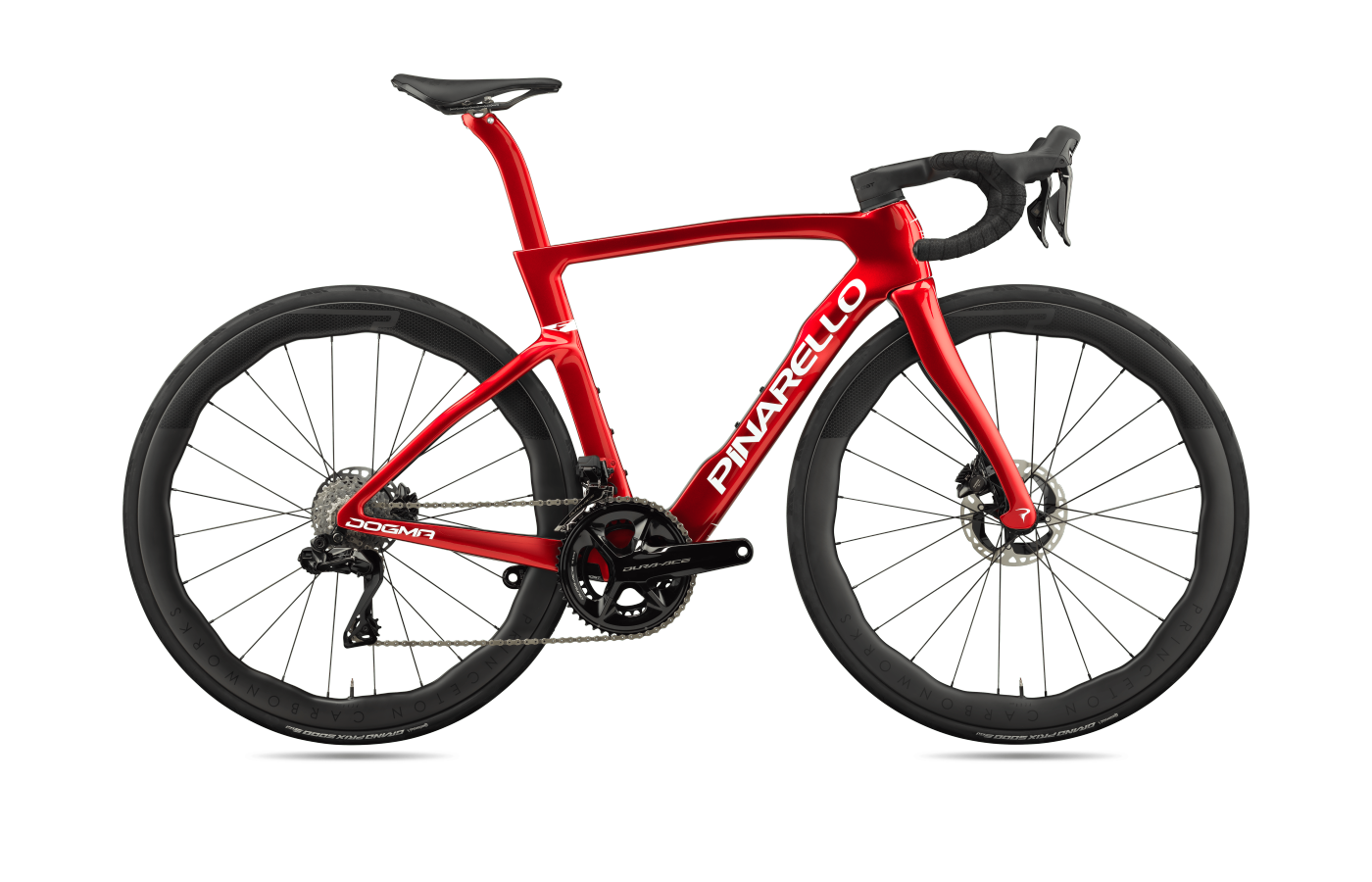
Dogma F
The chief Italian rival, also designed pro-first and also priced like one. The Pinarello Dogma F adds a 'My Way' custom paint program if exclusivity is part of what you're paying for.
Compare →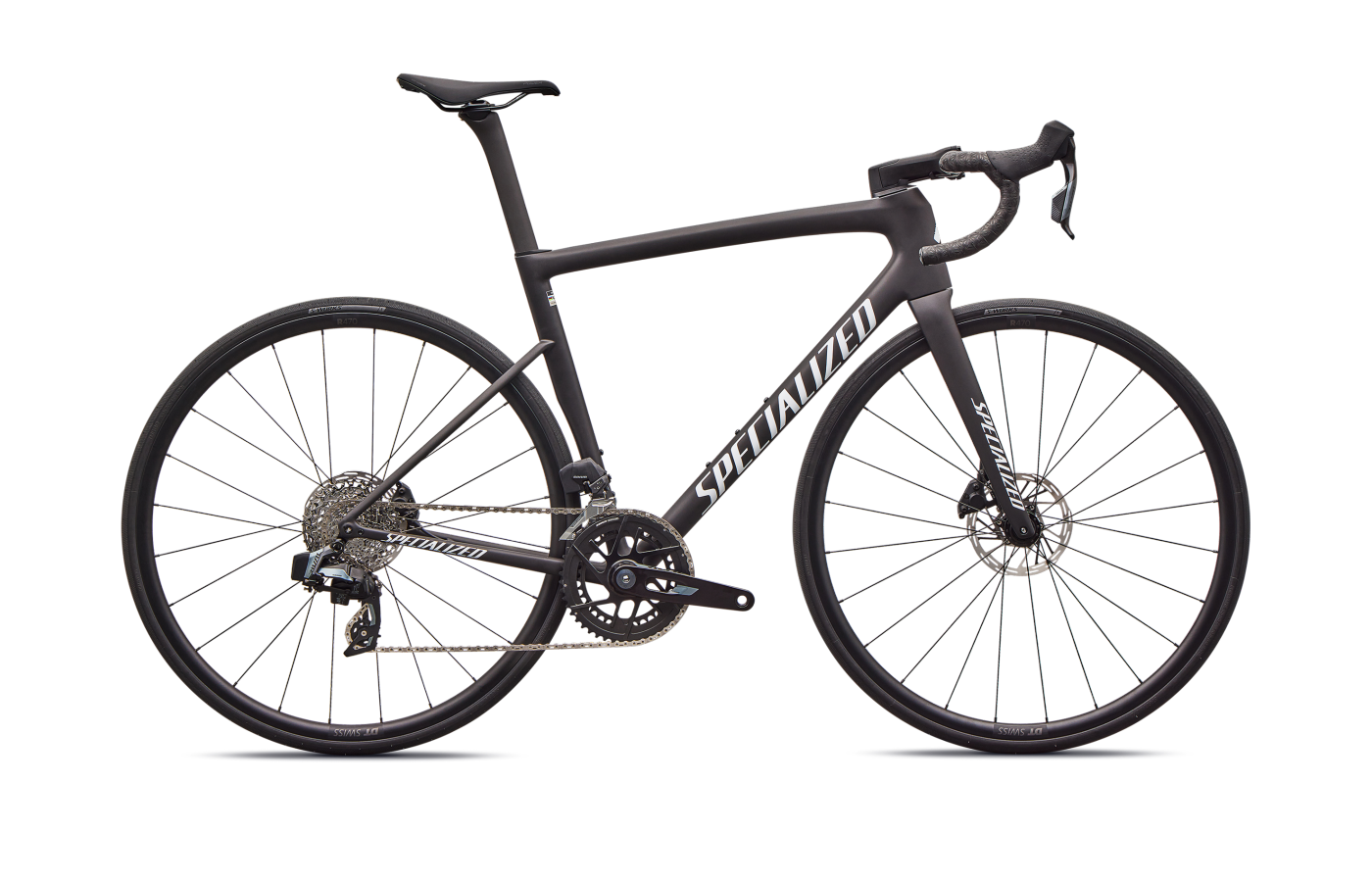
Tarmac
The bike Colnago was chasing with the V5Rs diet. The Specialized Tarmac SL8 is lighter, has tighter aero integration, and starts thousands cheaper — but it doesn't carry the Italian race-brand mystique.
Compare →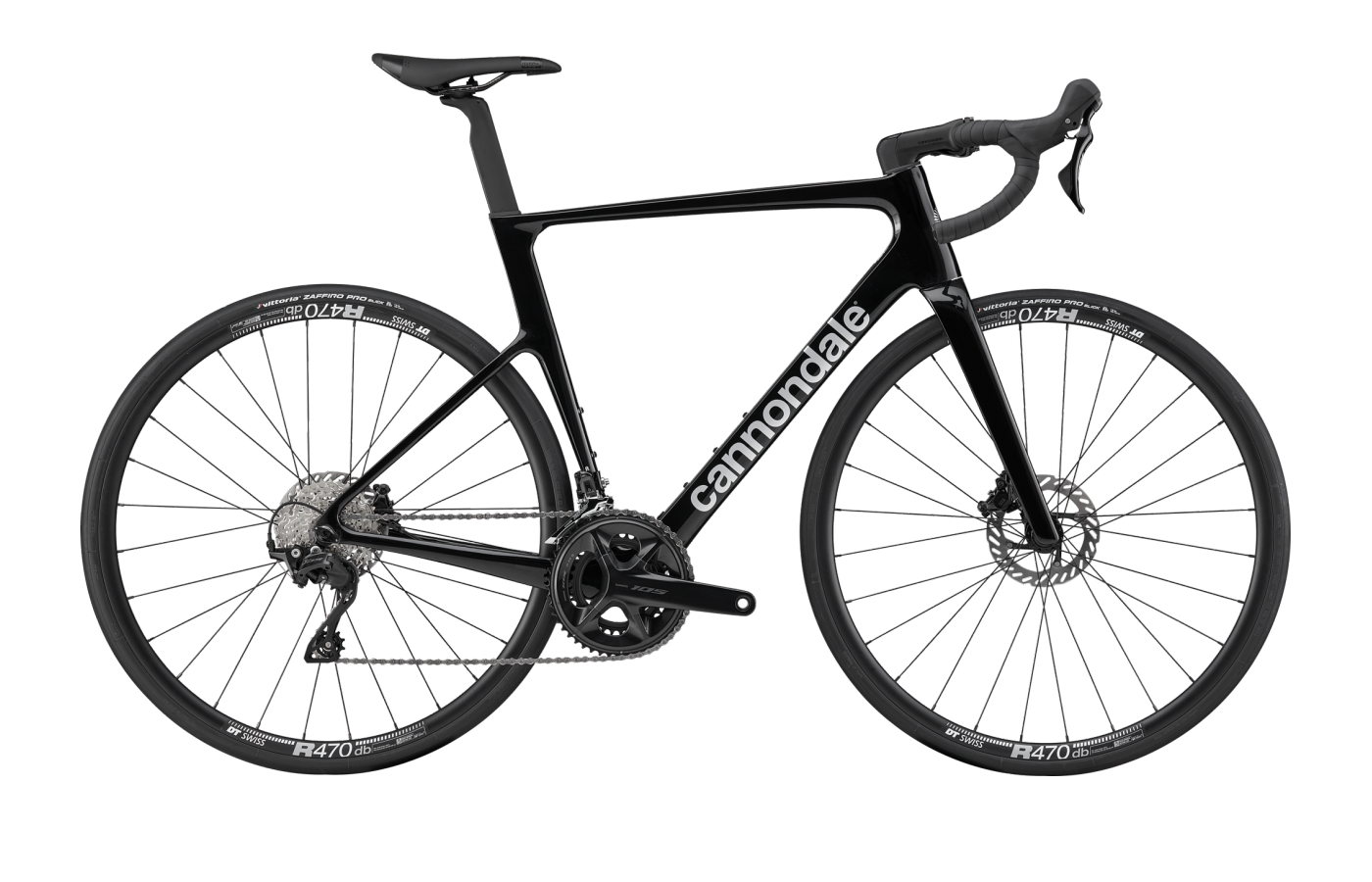
SuperSix EVO
A more agile alternative with a sharper, twitchier front end at low speeds. The Cannondale SuperSix EVO is the move if you want all-rounder performance without committing to Colnago's deliberately stable handling.
Compare →