S5
vsMadone
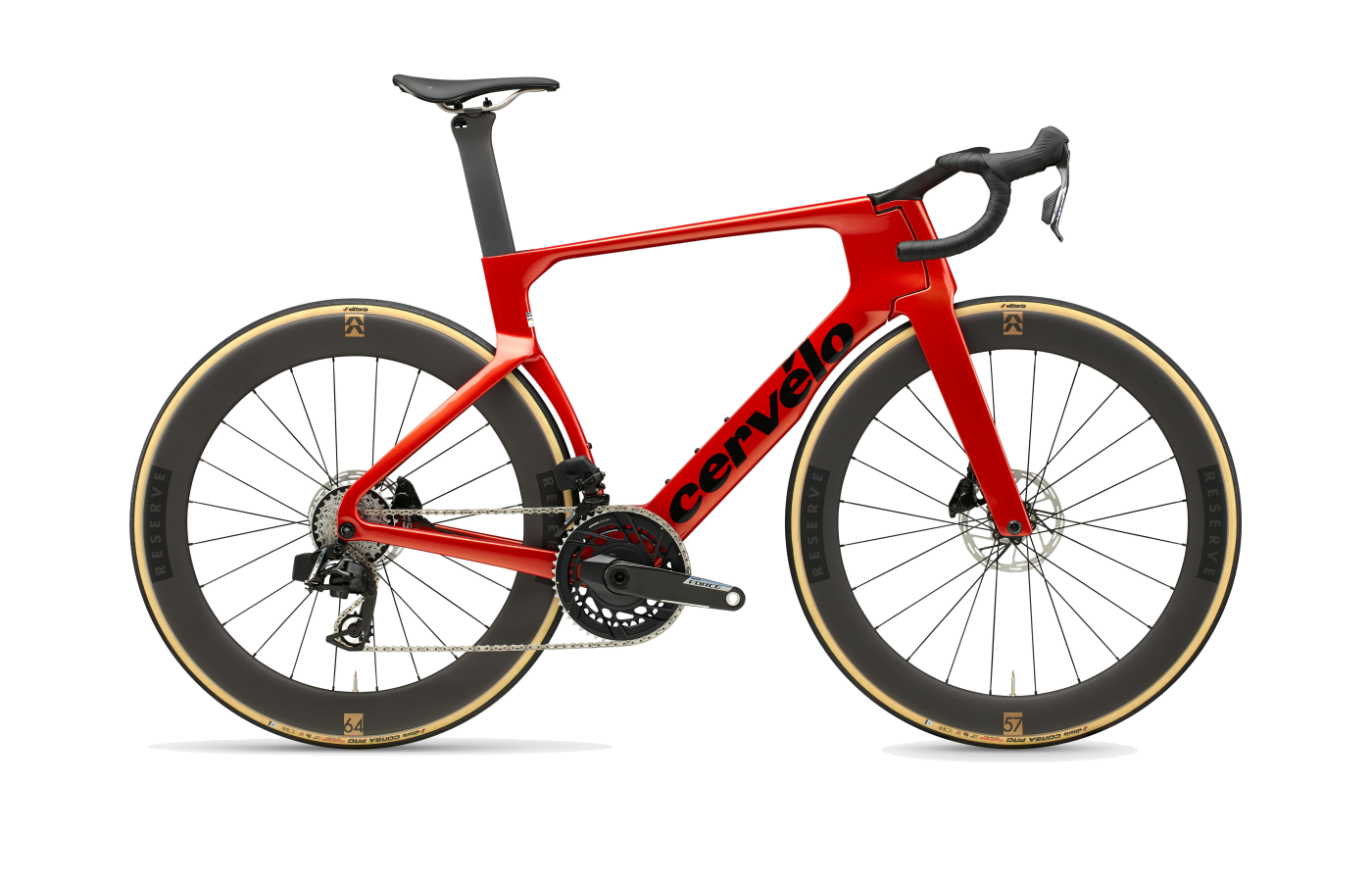
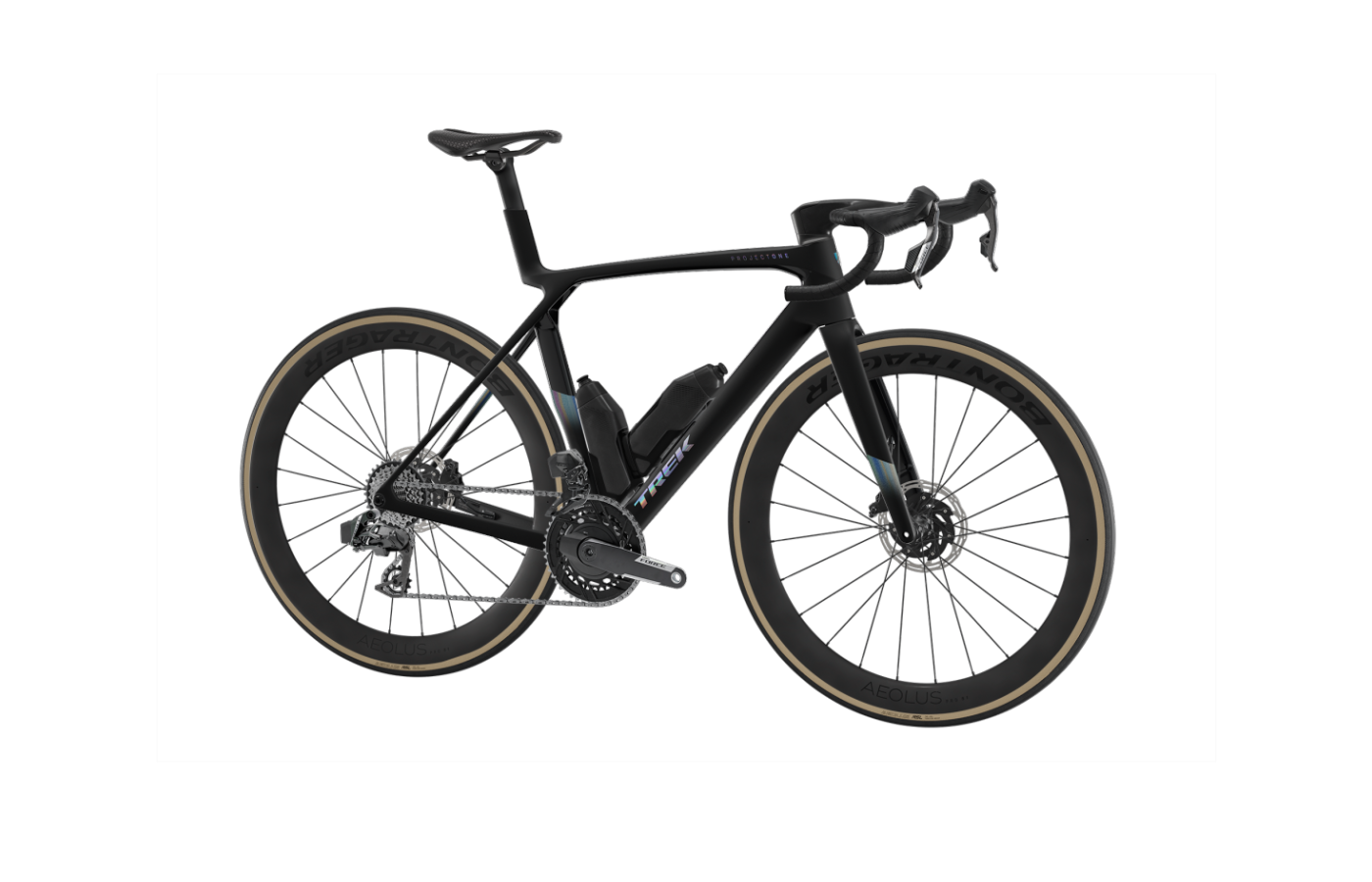
One specialist, one shapeshifter.
The Cervélo S5 is a single-purpose aero rocket. The Trek Madone Gen 8 swallowed the Émonda whole and is trying to be every race bike at once.
S5
- Wind-tunnel-measured fastest — Cyclingnews's tunnel test put the new S5 ahead of every production bike they've measured at 40 km/h.
- Wider tire clearance (34 mm vs the Madone's 32 mm), with stock 29 mm Vittoria Corsa Pro tires on a 23 mm internal Reserve rim.
- Same wheels and cockpit on every build — even the $10k Force AXS gets the Reserve 57/64 and HB19 one-piece bar.
- No build under $10k — the cheapest Madone undercuts it by nearly $7k.
- BBright press-fit bottom bracket houses the Di2 battery, making service notably fussier than the Madone's threaded T47.
Madone
- True one-bike quiver — SLR frame matches the old Émonda's weight while staying within a watt of the Gen 7 aero number.
- 80% more vertical compliance via the IsoFlow seat-tube cutout — reviewers describe long days as 'less beaten up' than any prior Madone.
- T47 threaded BB and UDH hanger — two of the friendliest service standards in the superbike segment.
- Aggressive geometry creates real toe overlap on smaller and medium frames — multiple reviewers reported scuffed shoes.
- The 'Full System Foil' aero bottles are integral to Trek's claimed watt savings and have been widely panned for tiny openings, leaks, and rattles.
Editor’s analysis
Both want to win the bunch sprint — but only one of them also wants to win the mountain stage.
On the tarmac, the Cervélo S5 and Trek Madone occupy almost identical real estate: WorldTour-proven aero platforms, deep carbon wheels stock, integrated one-piece cockpits, electronic-only routing, no cable stops in sight. Reach is identical at the fit-picked sizes (384 mm). Both run wide stock rubber on aero rims. The on-paper overlap is high.
Then you read what Trek did. The Madone Gen 8 is the result of Trek killing off the Émonda and folding it into the Madone — same frame weight as the old climbing bike (claimed 765 g for the SLR frame), 80% more vertical compliance via the IsoFlow seat-tube cutout, and the kind of 'feels normal until you check Strava' character reviewers describe as 'ruthless invisibility.' It's a one-quiver answer for the rider who wants both the climb and the breakaway in one bike.
The S5 makes no such concession. The 2025 update went the other way — deeper head tube, deeper fork legs, the new HB19 one-piece cockpit, and a co-developed Reserve 57/64 wheelset that Cyclingnews's wind-tunnel test crowned the fastest production bike they've ever measured. Cervélo's own number is 6.3 W faster than the outgoing S5 at 124 g lighter. It's not pretending to be a climber, and reviewers consistently describe it as 'dead' below 30 km/h and a 'rocket ship' above 40.
Put another way: the Madone is the bike for the rider who wants to do everything on one chassis. The Cervélo S5 is the bike for the rider who already knows what kind of riding they want to win at — and it's the flat ones.
Where the builds differ.
Comparing our editor's-pick builds side-by-side. Winners highlighted row-by-row — lower price and weight, and the better-spec component, each mark a point.
Build variants & pricing
Trek's range starts at $3,499 and tops out at $13,499. Cervélo's range starts where Trek's mid-tier ends and tops at $14,500.
Prices are current US MSRP. The Madone SL line uses Trek's heavier 500 Series carbon and a two-piece cockpit; the SLR line moves to 900 Series OCLV and the integrated Aero RSL bar. There is no entry-level S5 — Cervélo only sells the platform with Reserve carbon wheels and the HB19 cockpit, regardless of drivetrain.
How they fit, how they steer.
S5 size 54 vs Madone size M — same reach (384 mm) for the fit-picked size on each. The Madone sits 4 mm taller in stack, runs 2.4 mm more trail, and stretches the chainstays 5 mm — a more relaxed front end than its reputation suggests.
Which size should I buy?
Size recommendations based on stack, reach, and effective top tube. The Madone's 'T-shirt' XS–XL grid covers six sizes; the S5 spans six numeric sizes (48–61) with finer granularity at the small end.
→These are starting points. Flexibility, riding style, and preferred position all shift the answer — if you’re between sizes, a professional fit beats a chart.
What the magazines said.
Published reviews from trusted cycling outlets. Click through for the full write-up.
Which one should you buy?
If you want one bike for everything from mountain stages to sprints, get the Madone. If your riding lives above 35 km/h on rolling roads, get the S5.
S5
If most of your riding is flat or rolling and you race or chase Strava segments above 35 km/h, the S5 is the sharper tool. The wind-tunnel numbers are real, the front end is direct, and the integrated system pulls you along on the kind of days where aero matters most.
Madone
If you want one bike that climbs like an Émonda, sprints like a Madone, and has enough seat-tube flex to survive a century — this is the bike Trek built for that job. The SLR tier delivers the full magic; the SL tier opens the platform to riders on a more grounded budget.
Questions buyers actually ask.
Short answers to the things we get emailed about most often.
01Which is faster on flat roads?
The Cervélo S5, by Cyclingnews's wind-tunnel measurement — they called it the 'fastest bike we've ever tested,' saving 27.57 W vs their baseline at 40 km/h. The Madone is no slouch — Trek claims it's a fraction of a watt faster than the Gen 7 aero Madone — but the S5's deeper head tube, fork legs, and Reserve 57/64 wheelset are a more single-minded aero package.
At social-ride speeds below 30 km/h, the gap will be invisible. Above 40, it's measurable.
02Which climbs better?
The Madone, by a clear margin in equivalent trim. The SLR 9 hits roughly 7.0 kg in size ML on Trek's published number; the S5 in equivalent Dura-Ace trim sits around 7.4 kg in size 56 (Granfondo's measured weight). That's ~400 g, which is roughly half a percent of system weight for a 70 kg rider — small but felt on long climbs.
The Madone also sheds the 'aero bike' feel reviewers used to flag — Cycling Weekly described it as 'purring up' 10% grades where the Gen 7 needed bullying. The S5 isn't a bad climber, but it's not chasing that title.
03What's the maximum tire clearance?
Cervélo S5: 34 mm officially, with stock 29 mm Vittoria Corsa Pro tires on a 23 mm internal Reserve rim — those measure closer to 31 mm on-bike.
Trek Madone Gen 8: 32 mm officially, though some reviewers report fitting 35 mm or even 38 mm tires depending on size. Treat anything above the 32 mm rating as off-warranty experimentation.
Neither is a gravel bike. For chip-seal-and-worse, look at the Madone's sibling Domane or a dedicated all-road frame.
04How serviceable are the integrated cockpits and bottom brackets?
Trek wins on serviceability by a wide margin. The Madone uses a T47 threaded bottom bracket and a UDH derailleur hanger — both are industry-friendly standards your local shop already stocks. The Aero RSL cockpit is a one-piece, but it doesn't house anything fragile.
The Cervélo S5 uses a proprietary BBright press-fit BB that also houses the Di2 battery — multiple reviewers flagged it as fiddly to access. The HB19 cockpit is also one-piece. Net: plan on a shop visit for any major service on the S5.
05Are both compatible with mechanical shifting?
No. Both frames are wireless/electronic-only — neither has the cable stops or internal routing for mechanical derailleurs. The cheapest Madone build (SL 5, $3,499) ships with Shimano 105 mechanical, but that's running through purpose-built routing on the SL frame, not classic external cable stops. If you want Campagnolo cable-shift or vintage mechanical, you're outside this conversation.
06Which is better for long days in the saddle?
The Madone, fairly clearly. Trek's IsoFlow seat-tube cutout claims an 80% increase in vertical compliance over the Gen 7, and reviewers who took the bike on 100-mile rides reported feeling 'less beaten up' than expected. Stock 28 mm tires at 60 PSI made even one long-term tester compare it to an endurance bike.
The S5 is firmer. Reviewers were positively surprised by its compliance for an aero bike (Velo did 113 miles on one), but multiple noted that 'comfort is not a priority of this bike' and rougher roads can demand standing breaks.
07What about handling — which is sharper?
Both are direct, but in different ways. The S5 has tighter trail (55.6 mm vs the Madone's 58 mm at the compared sizes) and shorter chainstays (405 mm vs 410 mm), which gives it a more eager turn-in once you're at speed — reviewers called it 'precise' and 'planted' but also demanding.
The Madone's geometry is more aggressive at low speed thanks to a shortened fork rake — BikeRadar even called it 'too sharp' for some riders, and toe-overlap reports on smaller sizes are real. At high speed, both track beautifully; the Madone holds a line through mid-corner bumps where older aero bikes would skip.
08What warranty and crash-replacement do they offer?
Both come with a lifetime frame warranty to the original owner. Trek's program is widely considered best-in-class — there are documented reports of cracked Gen 6 frames being replaced under warranty with brand-new Gen 8 SLR frames. Cervélo's coverage is competitive but with less of a public track record.
Both offer crash-replacement programs (typically 40–60% off a new frame) for damaged bikes. Cervélo also offers a 60-day handlebar swap program for one-piece cockpit fit corrections — a thoughtful touch given the HB19 isn't user-adjustable.
Similar bikes
If your priorities don’t map cleanly onto either of these, one of these adjacent bikes probably fits better.
Tarmac
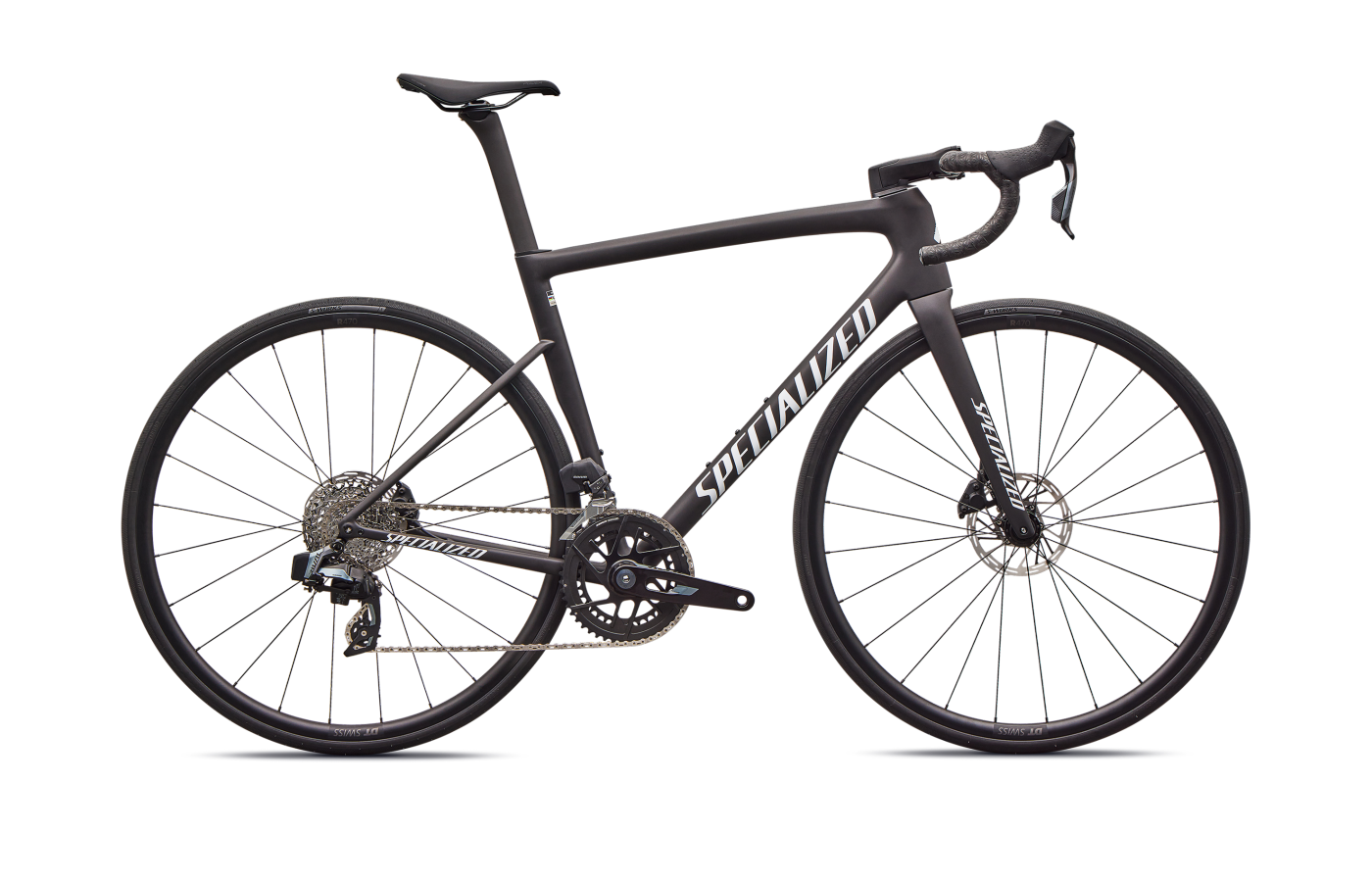
The Specialized Tarmac SL8 is the bike that pioneered the aero-and-light merger the new Madone is now chasing — lighter than both, with wider build-tier coverage from $4k to $14k. The most balanced all-rounder in the segment.
Compare →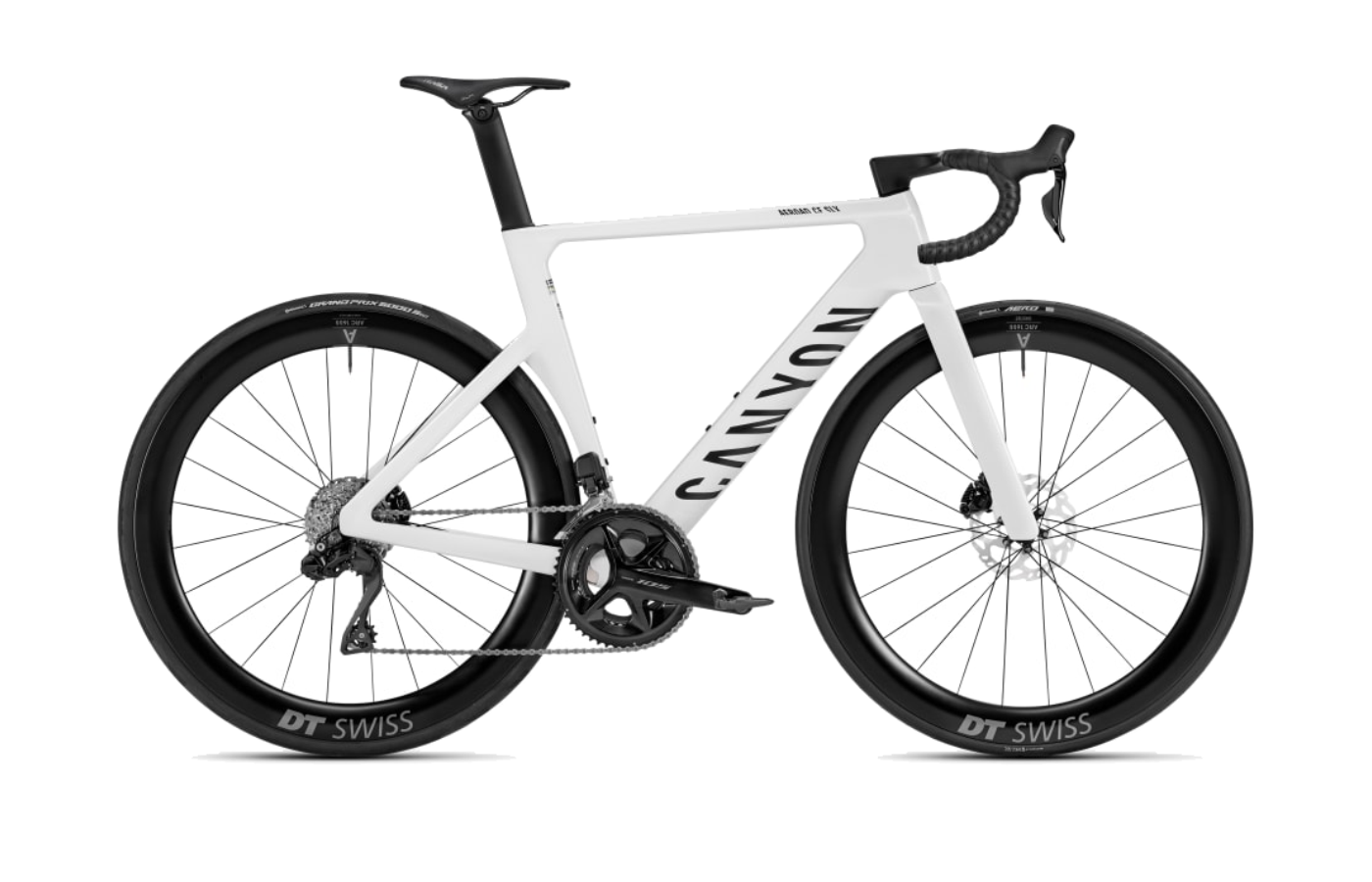
Aeroad
The Canyon Aeroad is the S5's closest aero rival — same single-minded high-speed focus and similarly stiff ride character, at roughly 30% less money. The catch is direct-to-consumer: no local dealer, no demos, and you're on your own for fit.
Compare →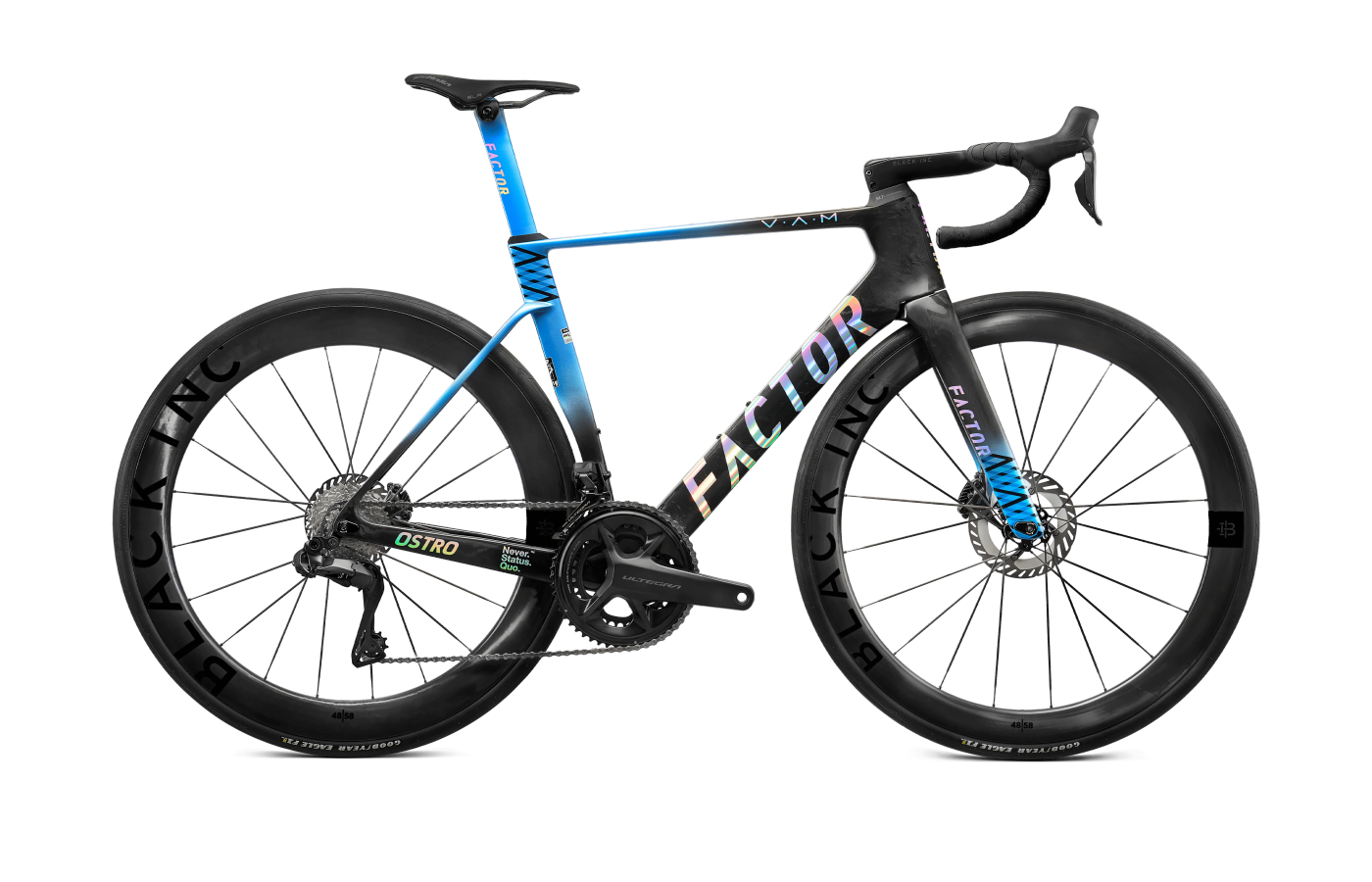
Ostro VAM
The Factor Ostro VAM goes after the same one-bike-for-everything brief as the Madone, with a more visceral ride feel — boutique-brand exclusivity, aggressive aero shaping, and a frame weight that competes with the SLR's.
Compare →