R5
vsAethos
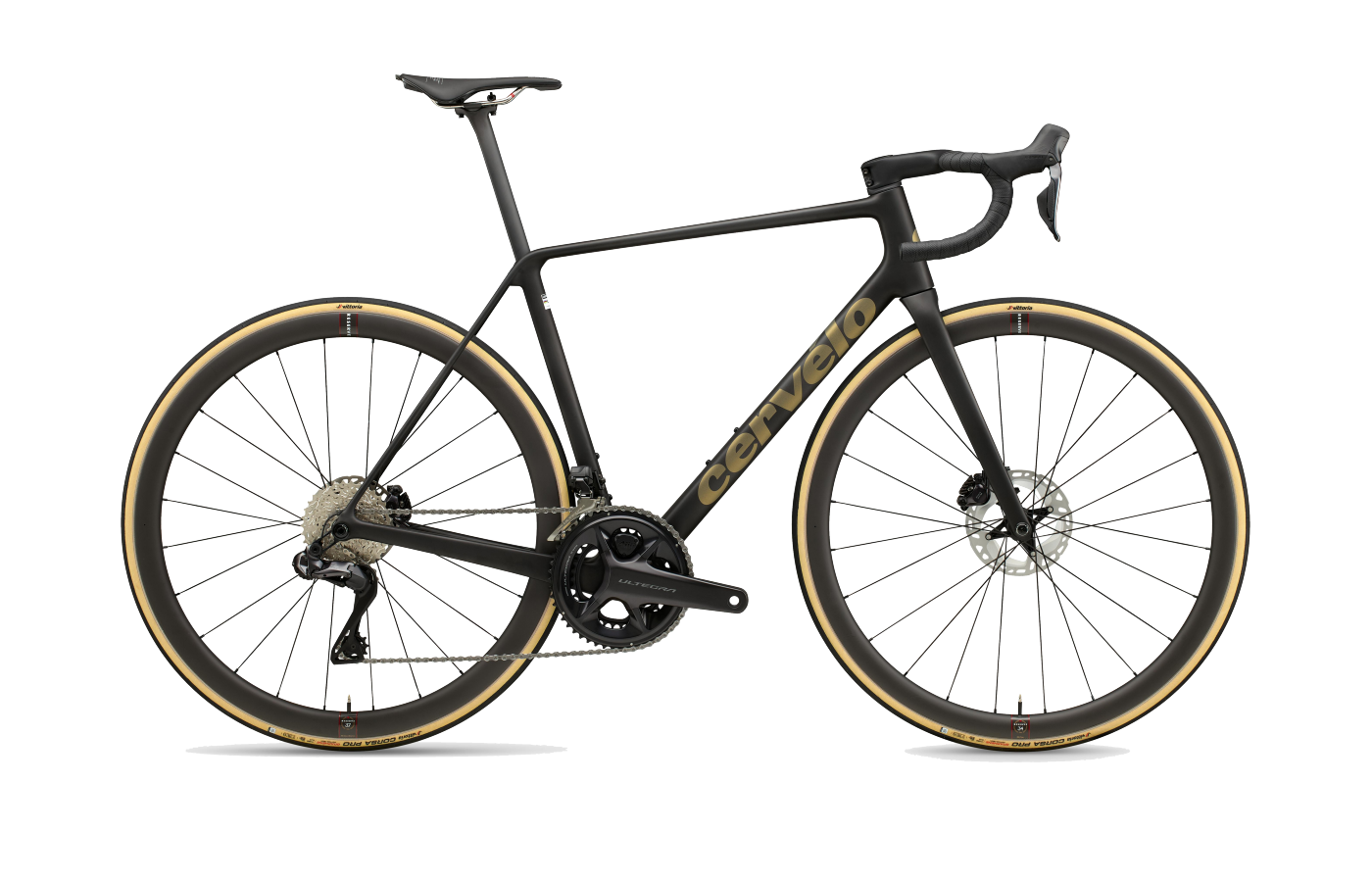
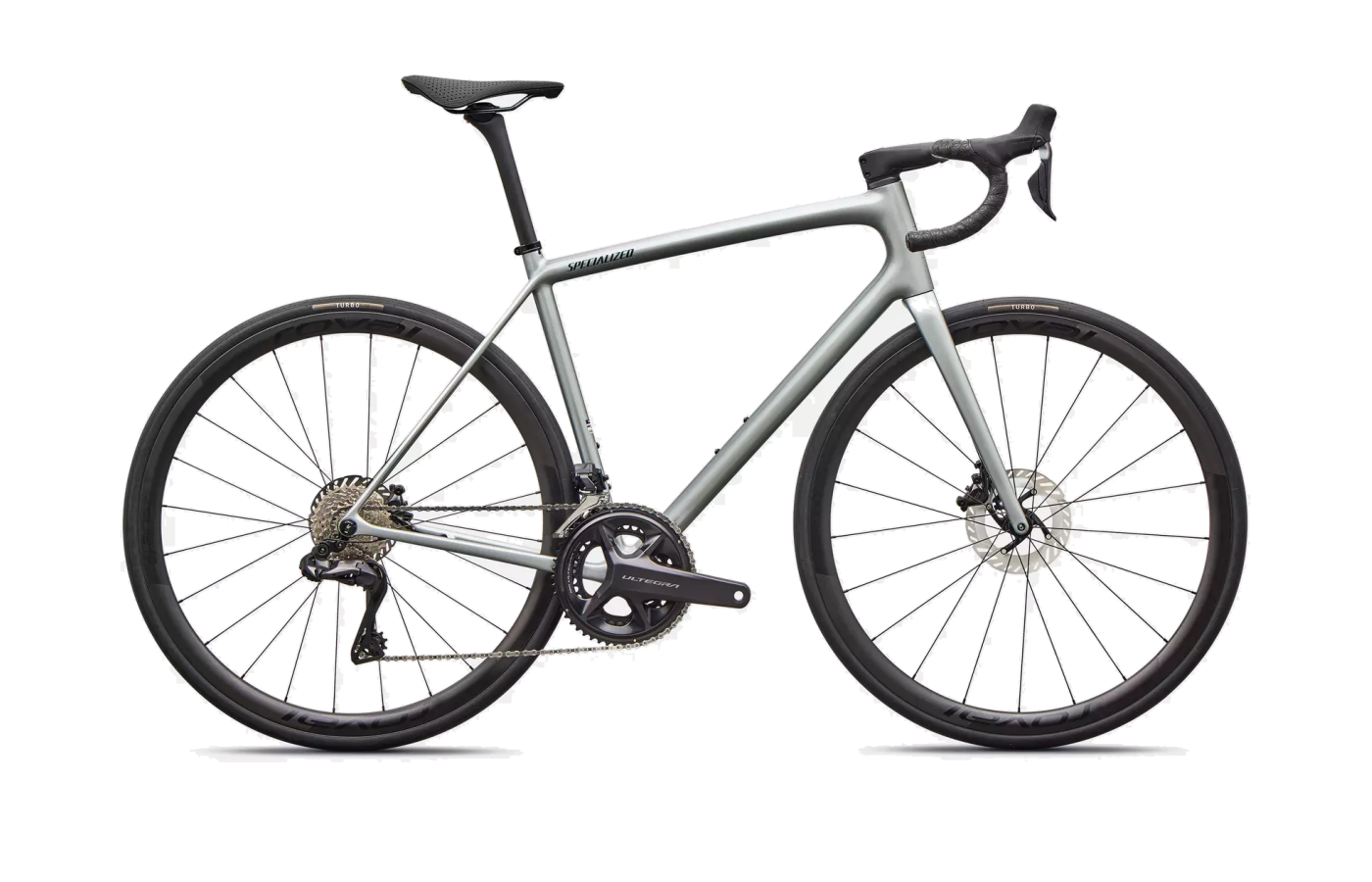
Two sub-6 kg climbers, two completely different jobs.
The Cervelo R5 is a WorldTour col-crusher with a stretched, race-position fit. The Specialized Aethos is a featherweight you'd happily ride all day.
R5
- Pro-level race fit — shares the S5's long-and-low geometry so racers can swap platforms without changing position.
- Power meter on every build — 4iiii for Shimano, Quarq for SRAM, all five complete builds. Real out-of-the-box value above $10k.
- Sharper, more direct steering — 73-degree HTA and 57.3 mm trail reward aggressive efforts on switchbacks.
- No build under $10,100 — Cervelo simply doesn't sell a budget R5.
- Stock 26 mm tires feel narrow and skittish on rough roads; most reviewers immediately upgrade to 28-30 mm.
Aethos
- All-day comfort — 14 mm more stack than the R5 at size 54, slacker steering, and a 28.3% damping bump at the new Alpinist Cockpit II.
- Price floor under $7k — starts at $6,599 with Ultegra Di2 on the FACT 10r frame. The R5 has no equivalent.
- 35 mm tire clearance — 1 mm more than the R5, and Specialized has confirmed the frame is fine for light all-road use.
- Less aggressive front end than the R5 — riders chasing a slammed race position may want spacers or a different platform.
- Stock 28 mm tires under-use the 35 mm clearance; wider rubber is the recommended first upgrade.
Editor’s analysis
Both clear the UCI weight floor without breaking a sweat — the question is whether you want a bike that races, or a bike you race.
On the scale, these two are nearly identical. Cervelo's R5 hits 5.97 kg in a Red AXS build at size 56; the Specialized Aethos S-Works lands at 5.98 kg in the same SRAM trim. Both frames are sub-700 g (R5 around 657 g, Aethos around 595 g — Specialized's claim of the lightest production disc frame is harder to argue with than ever). On a stiff climb, you will not feel the difference between them.
What you will feel is the geometry. Cervelo deliberately mirrored the R5's fit to the S5 aero bike — long, low, race-position — so a pro can swap platforms without re-doing their fit. At size 54 that means a 544.6 mm stack and 383.3 mm reach, with a tight 57.3 mm trail and a 73-degree head tube angle. The Specialized Aethos goes the other way: 559 mm stack, 384 mm reach, 72.5-degree head tube, and 55 mm trail. Same reach, 14 mm more stack, slacker steering. One bike asks you to fold up; the other invites you to look around.
The handling characters track the geometry. Reviewers describe the R5 as 'eerily light' and quick to lift the front wheel under power, with a sharper but twitchier feel — particularly on the stock 26 mm Vittoria Corsa Pros. The Aethos 2 was specifically reworked to take the edge off the original's nervousness: 7 mm longer wheelbase, lower BB, slacker head angle. Cycling News called it 'incredibly nimble' but predictable; Granfondo went with 'magic carpet.' Both climb beautifully. The Aethos is the one you'd want at hour five.
On price and platform breadth, the Specialized Aethos is the more democratic bike. The Aethos starts at $6,599 with an Ultegra Di2 build on the FACT 10r frame; the R5's cheapest option is $10,100 — also Ultegra Di2 — and that only buys you the same flagship frame the $14,400 Red build runs. Cervelo doesn't sell a budget R5. If you want this kind of climbing bike for under $10k, the Specialized is the only one of the two that exists.
Where the builds differ.
Comparing our editor's-pick builds side-by-side. Winners highlighted row-by-row — lower price and weight, and the better-spec component, each mark a point.
Build variants & pricing
Both span their lineups in roughly $4k of range, but they don't overlap on the bottom — the R5 starts at $10,100, the Aethos at $6,599.
Prices are current US MSRP. The R5 Ultegra Di2 and Aethos 2 Pro Ultegra Di2 are tier-matched here for an apples-to-apples comparison; the R5 carries a $1,600 premium for the same drivetrain on a flagship-grade frame, while the Aethos at this tier uses the lighter-but-second-tier FACT 10r layup.
How they fit, how they steer.
Both at size 54. The Aethos sits 14.4 mm taller with essentially identical reach (384 vs 383.3 mm), 0.5 degrees slacker at the head tube, and 2.3 mm less trail. Same-length chainstays at 410 mm.
Which size should I buy?
Size recommendations based on stack, reach, and effective top tube. Both bikes overlap closely through the middle of the range; the Aethos extends one size smaller and the R5 reaches slightly further at the top end.
→These are starting points. Flexibility, riding style, and preferred position all shift the answer — if you’re between sizes, a professional fit beats a chart.
What the magazines said.
Published reviews from trusted cycling outlets. Click through for the full write-up.
Which one should you buy?
If you race or want to feel like you do, get the Cervelo R5. If you want the same featherweight climbing experience without the racer's posture, get the Specialized Aethos.
R5
If your weekends revolve around hill-climb events, fast group rides up real cols, and you want a bike that mirrors the position your aero bike already has — this is the tool. The trade is a $10k floor and a fit that asks something of you on long days.
Aethos
If you love the sensation of a sub-6 kg climber but spend more time on five-hour Sundays than start lines, the Aethos delivers nearly identical climbing prowess with composure to spare. Cheaper to get into, easier to live with, and just as light at the top end.
Questions buyers actually ask.
Short answers to the things we get emailed about most often.
01Which one is actually lighter?
Effectively a tie at the top. The Cervelo R5 with SRAM Red AXS comes in at 5.97 kg in size 56 (per Granfondo); the Specialized Aethos S-Works with the same Red AXS build measures 5.98 kg at size 56. The Aethos frame is lighter (595 g painted vs around 657 g for the R5), but the R5's Reserve wheels and Cervélo HB18 cockpit close the gap on full-bike weight.
At the second tier, the gap widens slightly: the Aethos 2 Pro Ultegra Di2 is 6.73 kg vs the R5's mid-tier builds in the high-6s. Both are well under the UCI 6.8 kg pro weight limit.
02Which climbs better?
Both are in the 'best in class' conversation, and within an honest test ride you probably could not pick between them on a single climb. Reviewers describe the Cervelo R5 as a 'mountain goat' and a 'col crusher' (Granfondo, Bicycling). The Specialized Aethos gets called out for 'explosive acceleration' and 'dancing effortlessly up nasty switchbacks' (Granfondo).
The meaningful difference is fit, not weight. The R5's lower-and-longer position lets you put more weight over the front wheel under hard out-of-saddle efforts. The Aethos's taller stack is friendlier on extended climbs where you'd otherwise be fighting your hip angle for an hour.
03What's the maximum tire clearance?
Cervelo R5: 34 mm officially. Reviewers consistently say the frame is designed around 29 mm tires and recommend 28-30 mm over the stock 26 mm Vittoria Corsa Pros for grip and comfort.
Specialized Aethos: 35 mm officially. Specialized has explicitly stated the frame has 'no solidity problems' for light all-road use with wider tires, and most reviewers recommend going up to 30-32 mm out of the box. Neither bike is a gravel bike, but the Aethos has a slight edge in versatility.
04Is the R5 worth $1,600 more than the Aethos at the same Ultegra Di2 tier?
It depends on what you value. The Cervelo R5 Ultegra Di2 at $10,100 uses the same flagship-grade frame as the $14,400 Red build, includes a dual-sided 4iiii power meter (the Specialized Aethos 2 Pro Ultegra Di2 ships with a single-sided 4iiii Precision 3+), and gives you Cervélo's HB18 integrated carbon cockpit.
The Aethos 2 Pro Ultegra Di2 at $8,499 drops to the FACT 10r layup (still around 6.73 kg complete — barely heavier than the R5 at this tier), single-sided power, and the Roval Alpinist cockpit. If second-tier carbon and single-sided power don't bother you, the Aethos saves real money. If you want the no-compromise frame and dual-sided power as standard, the R5 earns its premium.
05How serviceable are the integrated cockpits?
The Cervélo HB18 is a one-piece carbon bar/stem with full internal routing — adjusting bar width or stem length means buying a new unit. Cervélo offers a 30-day cockpit exchange, which softens the risk if you order the wrong size.
The Roval Alpinist Cockpit II on the Aethos is also one-piece but ships in 13 sizes, dramatically reducing the odds you need to swap. Specialized also kept a standard 1 1/8" steerer on the Aethos, so you can fit a conventional bar/stem combo if you ever need to. Edge to the Aethos on long-term flexibility.
06Do both come with a power meter?
Cervelo R5: yes, on every build — dual-sided 4iiii Precision Pro for Shimano builds and Quarq for SRAM builds. This is one of the strongest value adds in the segment.
Specialized Aethos: depends on the build. The S-Works builds ship with dual-sided power (4iiii for Dura-Ace, integrated for Red AXS). The Pro Ultegra Di2 build gets single-sided 4iiii Precision 3+; the Pro Force AXS builds get integrated SRAM power. The Expert builds at $6,599-$6,999 ship without a power meter — budget for that separately if you need one.
07Are these bikes good descenders?
Both are competent, with different characters. The Cervelo R5 is direct and sharp — riders who want a scalpel for switchbacks will love it, but reviewers note a 'floaty' or 'skittish' feel on fast windy descents, particularly on the stock 26 mm tires.
The Specialized Aethos 2 was specifically reworked to address descending nerves. The first-gen Aethos shared the original Tarmac's twitchy descending; Aethos 2 added 7 mm of wheelbase, dropped the BB 3 mm, and slackened the head tube around half a degree. Cycling Weekly described it as 'never unruly and never flapped once.' If descending confidence matters, the Aethos is the safer pick.
08Can you race the Aethos seriously?
Yes, but understand what you're giving up. The Specialized Aethos has no aero shaping — round tubes, shallow Roval Alpinist wheels (33 mm depth), no integrated seatpost. On flat or rolling terrain, Granfondo notes 'it loses momentum just as fast' as it builds it. For pure climbing races and hilly cyclosportives, it's outstanding. For crits, flat road races, or anywhere the pace lives above 35 km/h, you'd want a deeper wheelset at minimum — and most racers would reach for a true aero bike like the Tarmac SL8 or Cervélo S5 instead.
The Cervelo R5, by contrast, is what Visma-Lease a Bike's GC riders race in the mountains.
Similar bikes
If your priorities don’t map cleanly onto either of these, one of these adjacent bikes probably fits better.
Tarmac
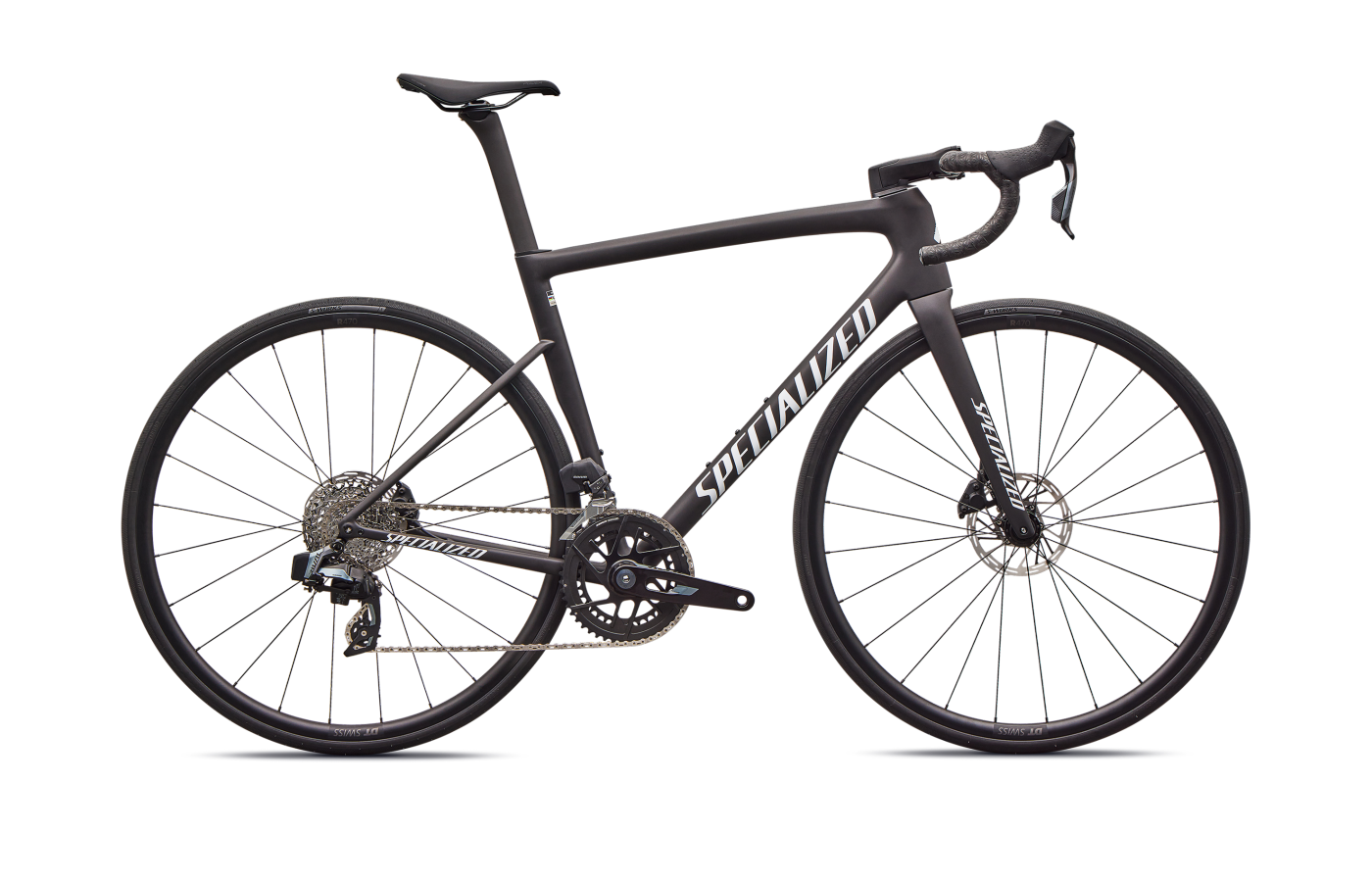
Specialized Tarmac — the WorldTour-grade aero-and-light all-rounder. If you want one bike that climbs almost as well as the Aethos but actually holds speed on the flats, this is the answer.
Compare →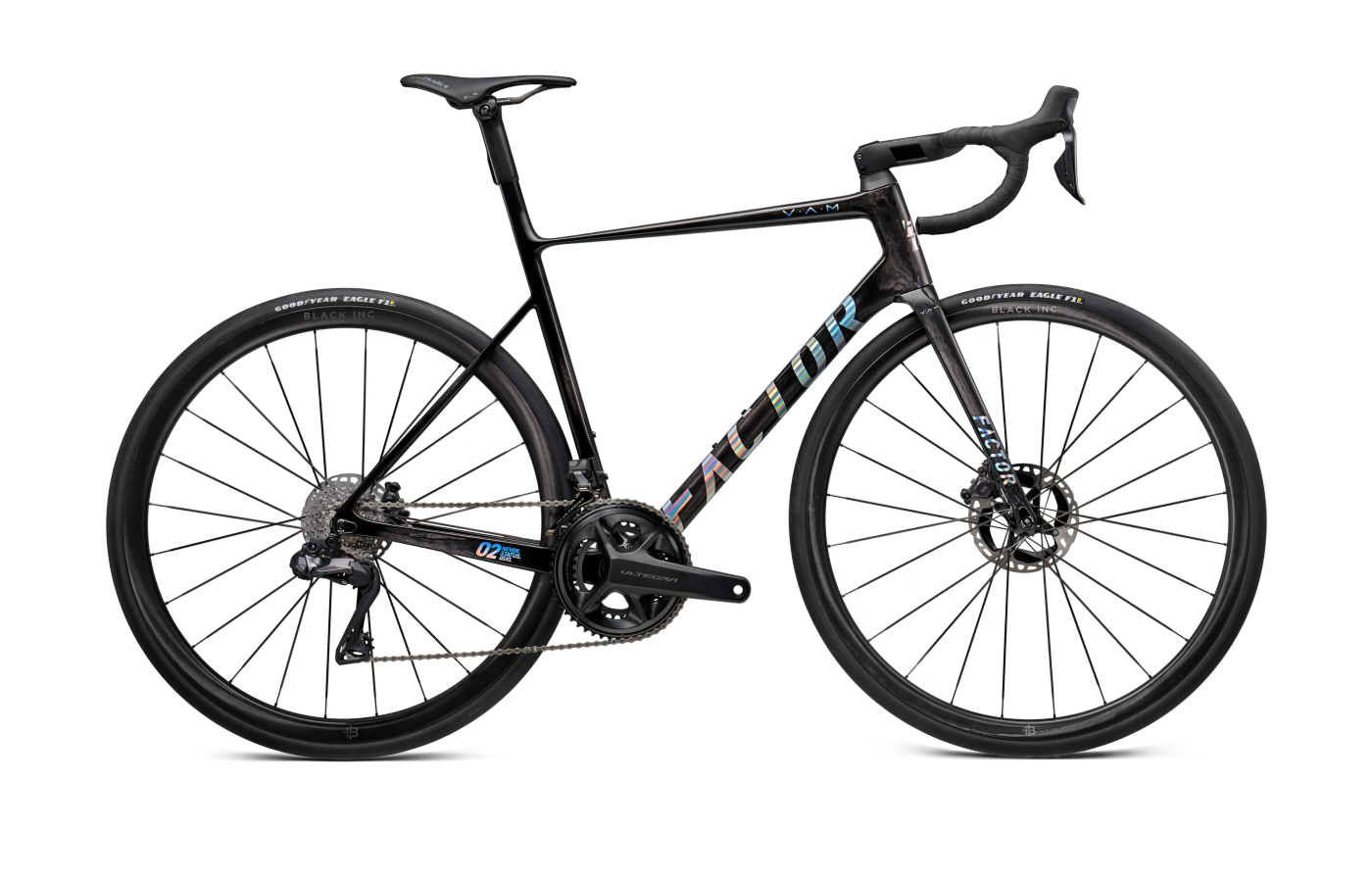
O2 VAM
Factor O2 VAM — another sub-6 kg climbing specialist with an integrated seat mast and a more boutique feel. The closest competitor to the R5 on raw weight, with a different ride character.
Compare →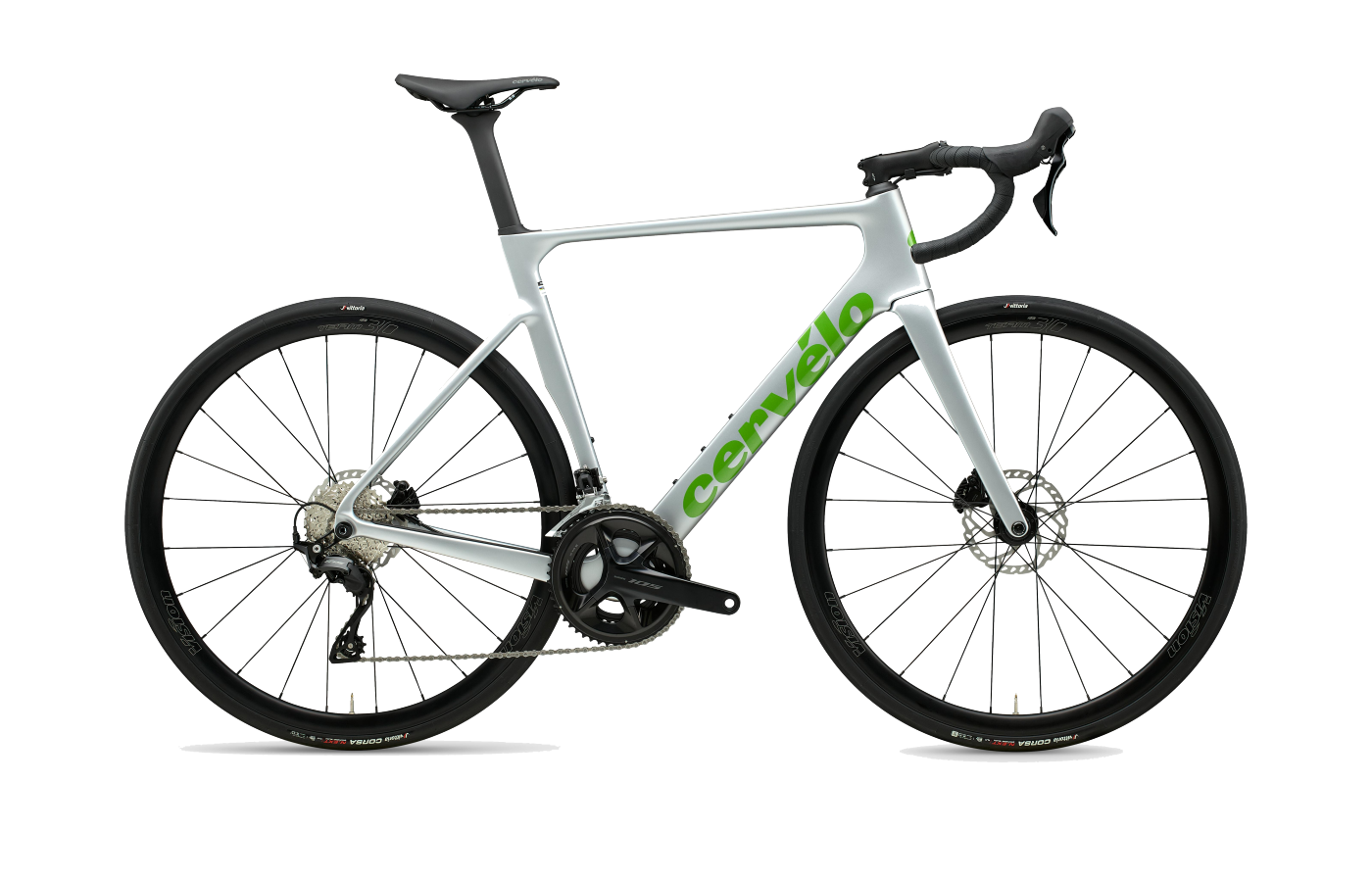
Soloist
Cervélo Soloist — the practical middle ground in Cervélo's road range. Less extreme than the R5 on weight, less specialized than the S5 on aero, much friendlier on price.
Compare →