Caledonia-5
vsR5
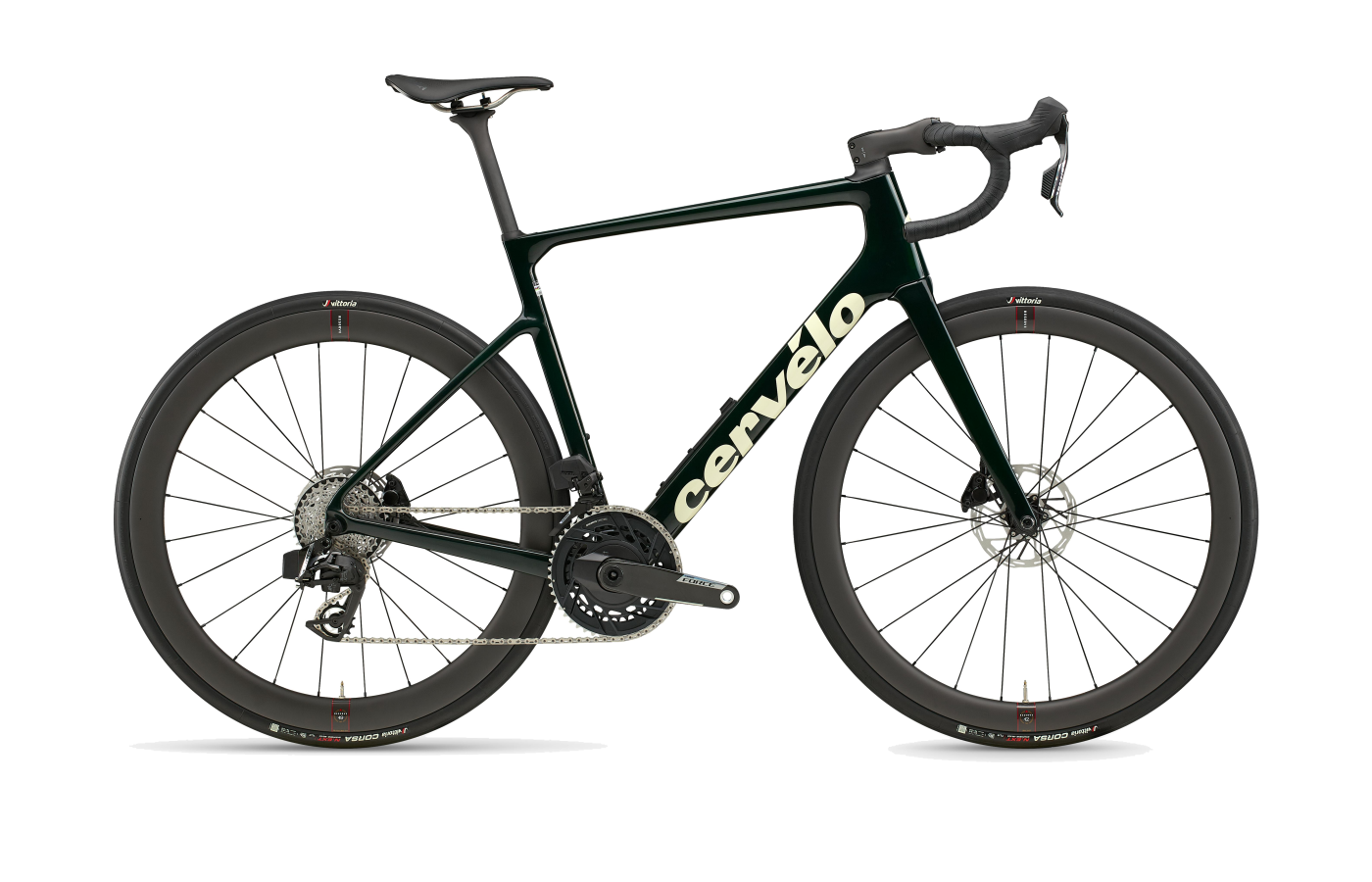
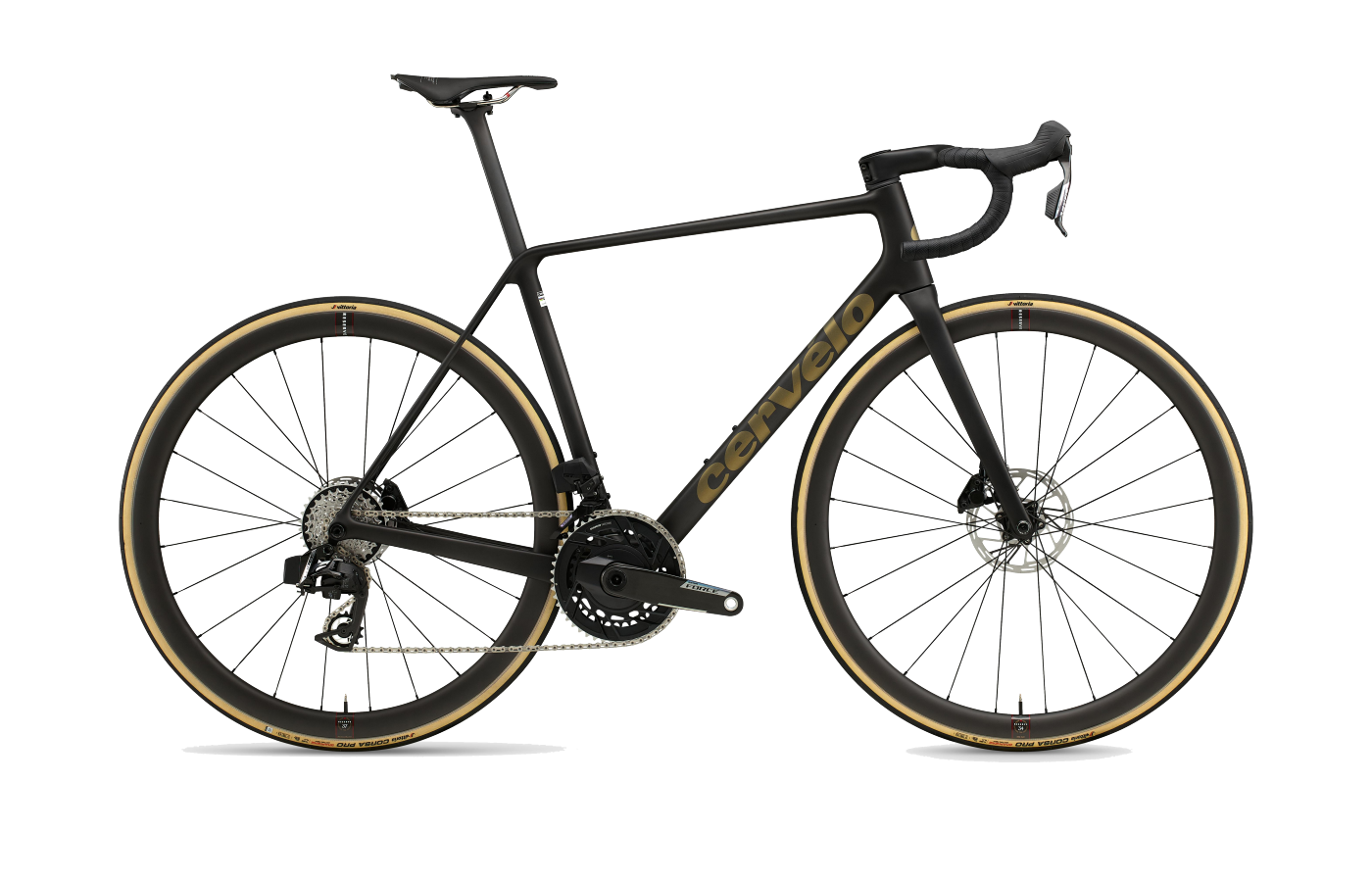
One badge, two completely different bikes.
The Caledonia-5 is Cervélo's all-day, all-road endurance machine. The R5 is a sub-6 kg climbing missile built for the high mountains.
Caledonia-5
- 36 mm tire clearance — widest in the segment, with room for fenders at 34 mm.
- Integrated downtube storage for tools, tube, and CO₂ — saddlebag-free riding.
- Calmer, more stable handling from a longer wheelbase, slacker HTA, and 5 mm longer chainstays.
- Heavier than the R5 — gives up frame mass on long sustained climbs.
- Two-piece ST31/HB13 cockpit isn't as clean as the R5's HB18 one-piece bar.
R5
- Featherweight frame — 657 g painted (size 56) and complete builds dipping under 6 kg in top trim.
- 13% stiffer bottom bracket vs prior gen — instant power transfer when you stand up to climb.
- Power meters across every build — 4iiii on Shimano, Quarq on SRAM, no aftermarket upgrade needed.
- No build under $10,100 — there's no budget on-ramp to this platform.
- Stock 26 mm tires are spec-sheet narrow; most riders should immediately swap to 28 or 30 mm.
Editor’s analysis
Same brand, same '5' badge, opposite design briefs — one wants to outlast the road, the other wants to escape it.
Both bikes wear Cervélo's '5' designation, which marks the top carbon layup and the integrated cockpit treatment. From there the philosophies split. The Cervelo Caledonia-5 is built for what Cervélo calls the 'big, stupid ride' — six-hour days on broken pavement, fender-mount-friendly, downtube storage hatch, 36 mm tire clearance. The Cervelo R5 chases a different number entirely: 5.97 kg complete in its top trim, low enough that amateur builds slide under the UCI's 6.8 kg limit without trying.
Geometry tells the same story. At a size 54, the Caledonia-5 sits 10.4 mm taller in stack and 5 mm shorter in reach than the R5 — a more upright, less aggressive cockpit. The R5 runs a 73° head tube angle versus 72° on the Caledonia, with 5 mm shorter chainstays (410 mm vs 415 mm) and a wheelbase that's roughly 18 mm tighter at the equivalent size. The Caledonia-5 is calm and planted; the R5 is sharp and reactive.
Stock tires give the game away. The Caledonia-5 ships with 30 mm Vittoria Corsa N.EXT or Corsa Pro Control treads — fat, fast-rolling, road-or-rough-pavement rubber. The R5 ships with 26 mm Vittoria Corsa Pro Speed in pursuit of every last gram, even though reviewers across BikeRadar, Granfondo, and Bicycling all note the geometry is designed around 29 mm rubber and clears 34 mm. The R5's tire spec is built for the spec sheet; the Caledonia-5's is built for the road.
Pricing reflects the positioning. Caledonia-5 starts at $7,400 (Rival AXS) and tops out at $12,750 (Red AXS). The R5 starts $2,700 higher at $10,100 (Ultegra Di2) and reaches $14,400 (Red AXS). There is no entry-level R5 — Cervélo treats it as a flagship-only halo. The Caledonia-5 has the same '5' frame quality but offers a real on-ramp to the platform.
Where the builds differ.
Comparing our editor's-pick builds side-by-side. Winners highlighted row-by-row — lower price and weight, and the better-spec component, each mark a point.
Build variants & pricing
Caledonia-5 spans $7,400–$12,750 across five builds; R5 starts $2,700 higher at $10,100 and tops out at $14,400.
Prices are current US MSRP. The R5 has no Rival AXS or 105 build — Cervélo positions it as a flagship-only platform. Caledonia-5 is the only way into a '5'-tier Cervélo road frame under $8k.
How they fit, how they steer.
Both compared at size 54 — the fit-picked size for a 5'8" rider on each bike. The Caledonia-5 sits 10.4 mm taller in stack and 5 mm longer in reach, with an 18 mm longer wheelbase and slacker 72° head tube. The R5 is the lower, sharper, more aggressive front end.
Which size should I buy?
Size recommendations driven by stack, reach, and effective top tube. Both ranges run 48–61 cm in the same six labels, but the R5 sits noticeably lower at every size.
→These are starting points. Flexibility, riding style, and preferred position all shift the answer — if you’re between sizes, a professional fit beats a chart.
What the magazines said.
Published reviews from trusted cycling outlets. Click through for the full write-up.
Which one should you buy?
If you want one bike for everything from gravel detours to fast group rides, get the Caledonia-5. If you live on switchbacks and chase KOMs, get the R5.
Caledonia-5
If your rides are long, varied, and start before sunrise, the Caledonia-5 is the smarter pick. The 36 mm tire clearance, downtube storage, and stable handling were tuned for exactly the kind of mixed-surface, six-hour-plus days that destroy purpose-built race bikes. It's the do-everything Cervélo.
R5
If most of your rides point upward and you measure the day in vertical meters, the R5 is the sharper tool. Sub-6 kg complete weight, a stiffer bottom bracket, and aggressive geometry make it instantaneous on steep gradients. The aero penalty on flats is real but small.
Questions buyers actually ask.
Short answers to the things we get emailed about most often.
01Which is lighter?
The R5, by a wide margin. Granfondo measured a top-trim R5 at 5.97 kg (size 56), with a frame weight of 657 g painted. Cervélo doesn't publish a comparable Caledonia-5 frame weight, but Velo measured the previous Caledonia-5 frame at 995 g (size 56) — roughly 340 g heavier in the frame alone, before component differences add to the gap.
For a 70 kg rider, that's enough mass that you'll feel it on sustained climbs, especially repeated efforts.
02Which has more tire clearance?
The Caledonia-5, with 36 mm of official clearance and room for fenders at 34 mm. The R5 clears 34 mm, even though it ships stock with 26 mm Vittoria Corsa Pro Speed tires.
Neither is a gravel bike, but the Caledonia-5 will comfortably absorb hardpack, chip-seal, and the kind of broken pavement that ruins a long ride. The R5 stays firmly on the tarmac.
03Is the R5 worth $2,700 more at the entry price?
Depends on what you ride. The R5 buys you a meaningfully lighter, stiffer, more aggressive race bike with a power meter included on every build. If your riding is climbing-focused and you want the lightest legitimate race bike Cervélo makes, yes.
If your riding is mixed — group rides, weekend centuries, occasional gravel — the Caledonia-5 gives up almost nothing on tarmac and adds versatility the R5 can't match. For most non-racing buyers, the Caledonia-5 is the better value.
04How do the cockpits compare?
The R5 uses the new Cervélo HB18 one-piece bar/stem — fully integrated, lighter, contributes a claimed 2-watt aero saving. Cervélo offers a free 30-day cockpit exchange to dial in fit, which mitigates the usual integrated-cockpit risk.
The Caledonia-5 sticks with a two-piece ST31 stem and HB13 carbon bar. Less aero, slightly heavier, but trivial to swap stem length or bar width without buying a new $400+ unit. For riders still refining their fit, the Caledonia's setup is friendlier.
05Which has more comfortable geometry?
The Caledonia-5, by design. At size 54 it sits 10.4 mm taller in stack and 5 mm longer in reach than the R5, with a slacker 72° head tube (vs 73°), longer 415 mm chainstays (vs 410 mm), and a wheelbase about 18 mm longer at the equivalent size.
That translates to a more upright cockpit, calmer steering at speed, and better stability on rough surfaces. The R5's lower, longer, racier position rewards a flexible rider but punishes one who's stuck on the trainer all winter.
06Do both come with power meters?
The R5 ships with dual-sided power meters on every complete build — 4iiii Precision Pro on Shimano models, Quarq on SRAM. That's a real value-add given a quality power meter typically runs $700–$1,200 aftermarket.
The Caledonia-5 only includes power meters on its SRAM builds (Force AXS, Red AXS, Rival AXS) — Quarq spider-based, factory installed. The Shimano Caledonia-5 builds (Ultegra Di2, Dura-Ace Di2) ship without a power meter.
07Can I run wider tires on the R5?
Yes — and most reviewers actively recommend it. The R5's 34 mm clearance comfortably swallows 28 mm or 30 mm tires, and reviewers from BikeRadar, Bicycling, and Granfondo all note the geometry is designed around roughly 29 mm rubber. The stock 26 mm Corsa Pro Speed tires are chosen to hit a marketing weight, not to optimize daily ride quality.
A simple swap to 28 mm Vittoria Corsa Pro Control or similar transforms the R5 into a much more confident bike on real-world roads, at a tiny weight penalty.
08Which is faster on flat roads?
Neither is an aero bike — for that, look at Cervélo's S5. Between these two, it's roughly a wash on flat roads at typical amateur speeds. The R5 picked up a modest 2-watt aero saving from the new HB18 cockpit, but its tube shaping is still climbing-first.
The Caledonia-5 borrows aero cues from the S5 (long down tube, dropped seat stays) but the wider 30 mm tires and taller stack add drag. If raw flat-road speed is your priority, neither bike is the right answer — both are tools for different jobs.
Similar bikes
If your priorities don’t map cleanly onto either of these, one of these adjacent bikes probably fits better.
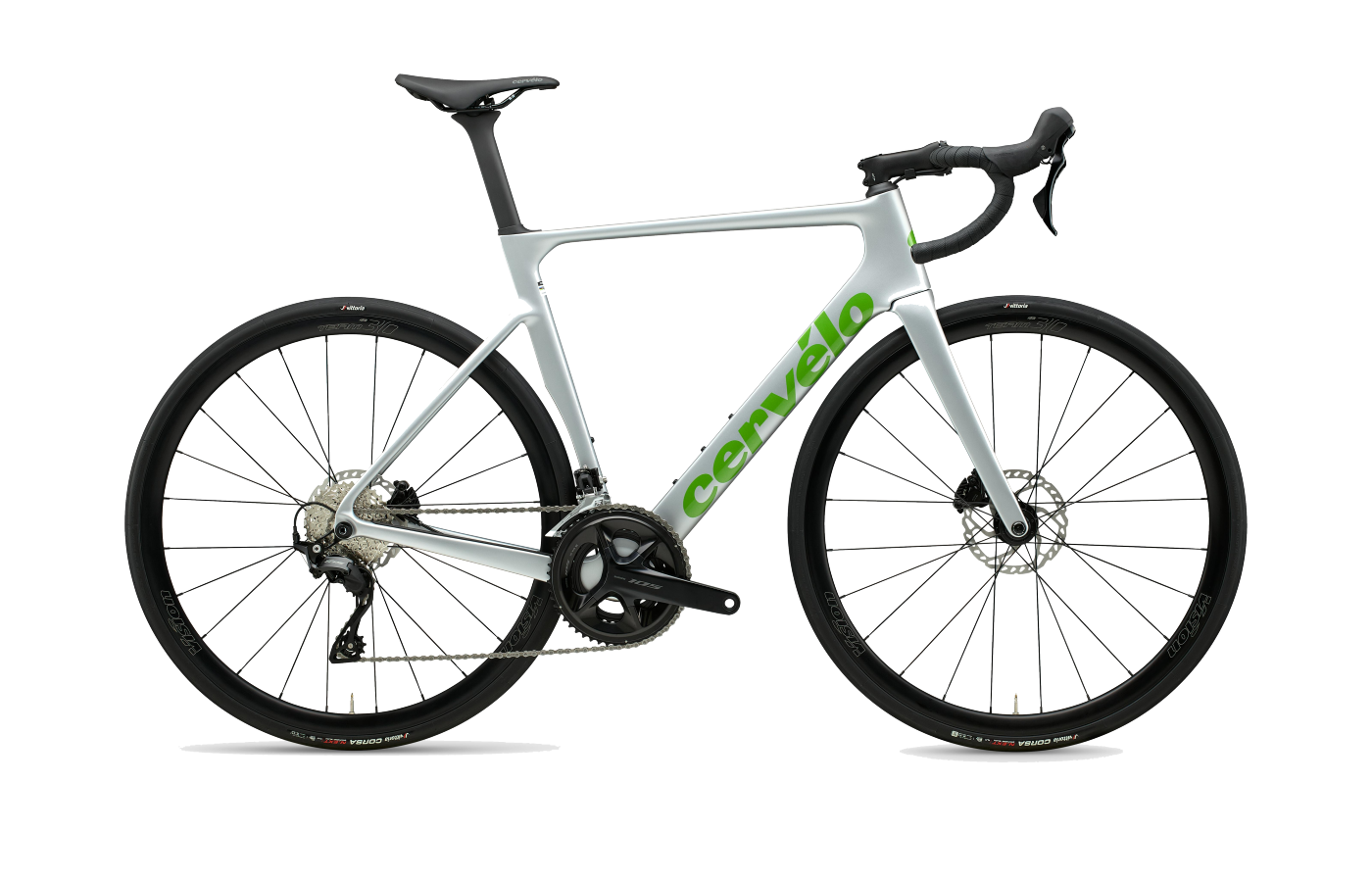
Soloist
Cervélo's middle-ground play — the racing edge of the R5 with a more accessible cockpit and a less specialized geometry. The logical pick if you want one Cervélo that splits the difference.
Compare →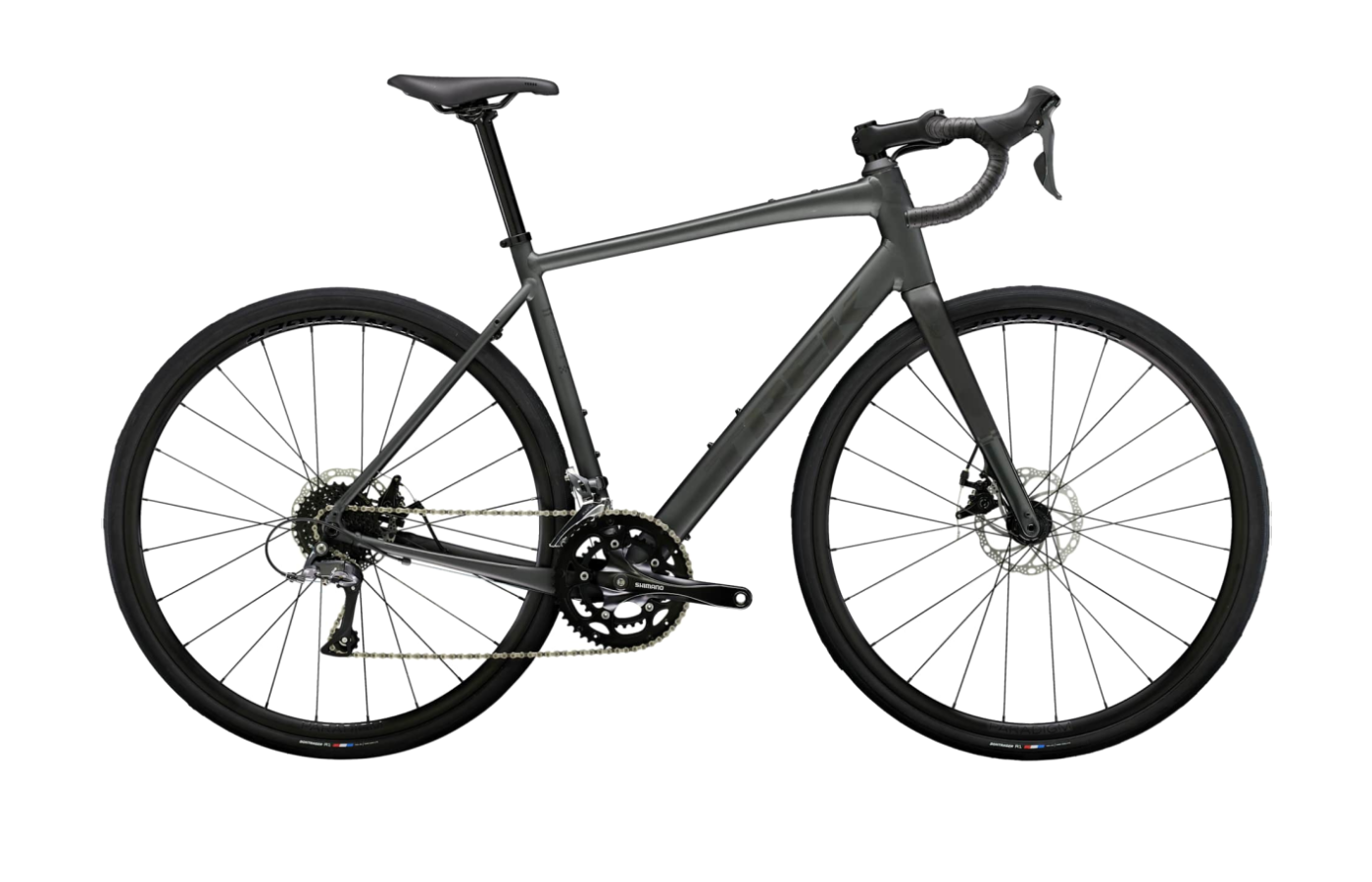
Domane
If the Caledonia-5 still rides too stiff, the Domane's IsoSpeed decoupler delivers genuine compliance plus broader tire clearance. The endurance bike for riders who prioritize comfort over outright speed.
Compare →
Aethos
If you love the R5's lightweight focus but hate integrated cockpits, the Aethos is the only other production bike that competes in the sub-6 kg category — round tubes, traditional bar/stem, zero aero pretense.
Compare →