Aspero-5
vsCrux
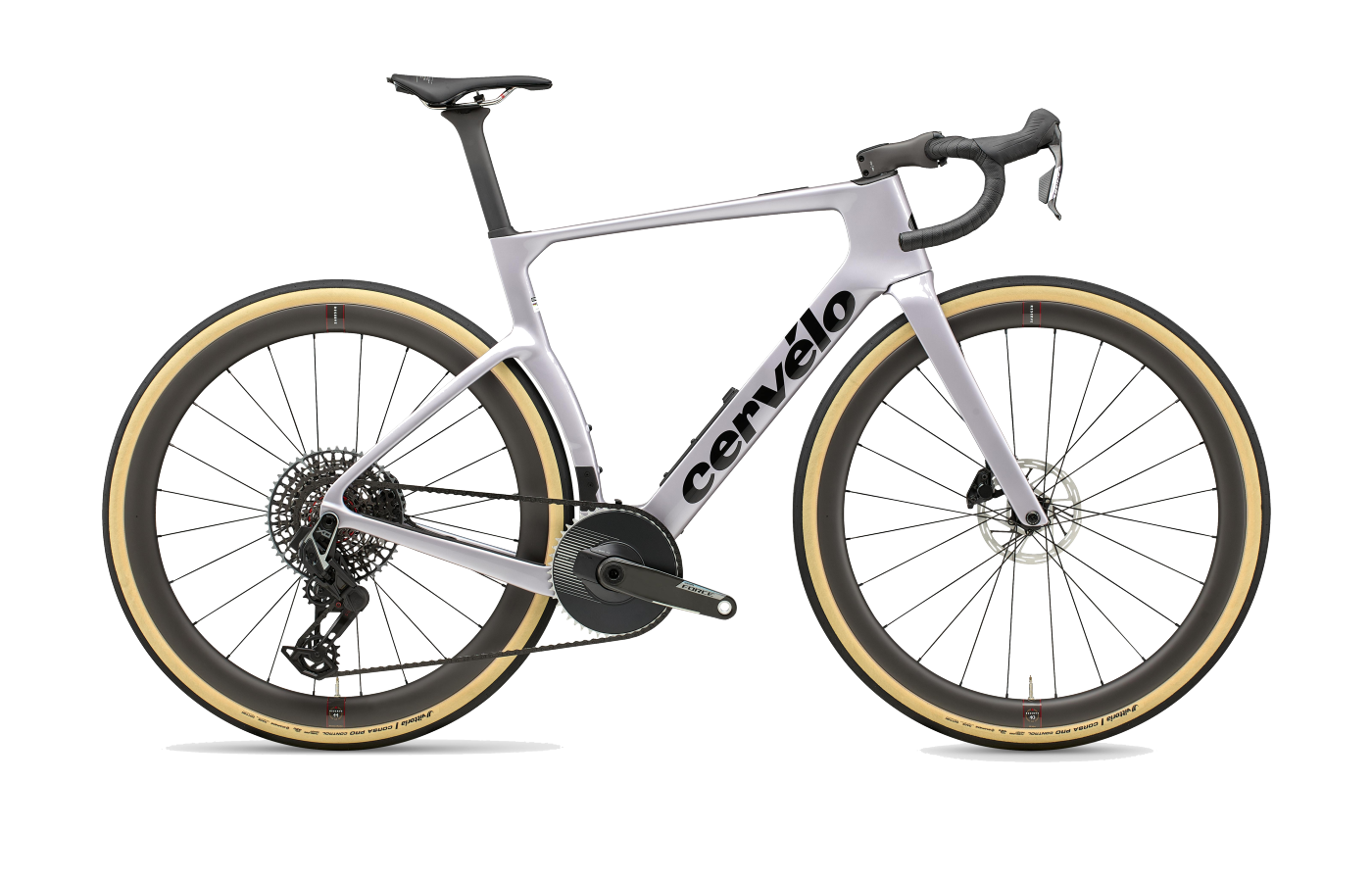
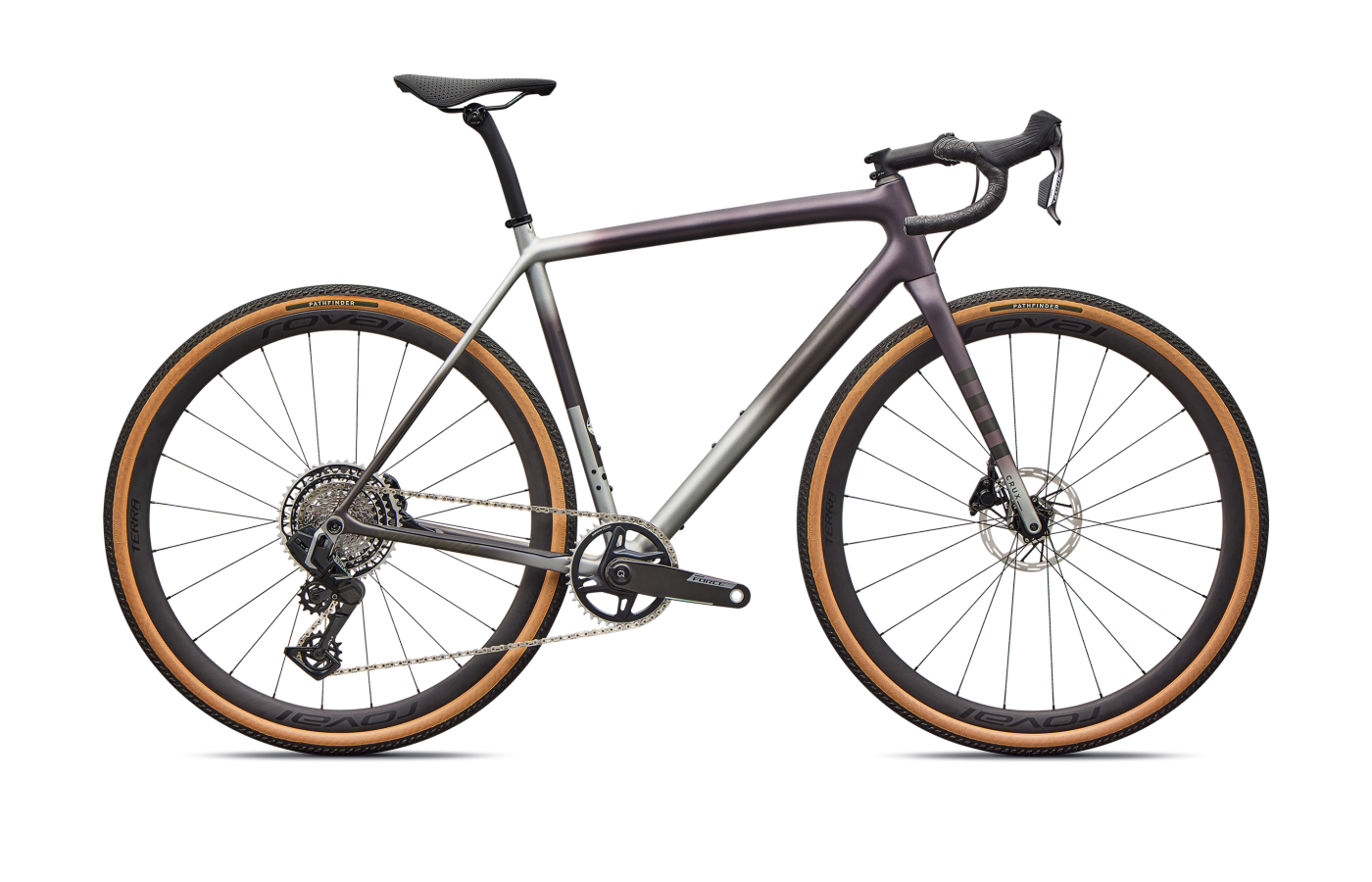
Two race-gravel bikes, two opposite hypotheses.
The Aspero-5 is a road aero bike given knobbies. The Crux is a 725 g carbon climber that happens to clear 47 mm tires.
Aspero-5
- Aero where it counts — Cervelo claims 34 W faster than the next-fastest gravel bike at race speeds.
- Planted at speed with an 80 mm BB drop and 422.5 mm chainstays — the Aspero-5 sails on flat hardpack.
- Smart cockpit choice — two-piece HB16 bar + ST31 stem keeps fit adjustment possible without re-running hoses.
- Only 45 mm tire clearance — a real ceiling if your gravel turns muddy or chunky.
- Carbon-only lineup starts at $8,850; no Rival or GRX 600 entry point exists.
Crux
- Astonishingly light — 725 g claimed S-Works frame, complete builds in the 7.0–8.1 kg range.
- 47 mm tire clearance (or 650b x 2.1") — more cushion and grip headroom than the Aspero-5.
- Refreshingly serviceable — threaded BB, round 27.2 mm seatpost, two-piece bar/stem, no proprietary cockpit.
- No aero pretense — at sustained 35+ km/h efforts the Aspero-5 will measurably pull away.
- Race posture and stiff front end punish rough singletrack if you don't size up tires.
Editor’s analysis
These bikes share a category and almost nothing else — one is built to slip the wind, the other to vanish on the scale.
Cervelo and Specialized arrived at the same race-gravel niche from opposite directions. The Cervelo Aspero-5 borrows tube shapes and seat-tube curve straight from the S5 aero road bike, claims 34 watts of drag savings over the next-fastest gravel rival, and ships with 42 mm Vittoria slicks. The Specialized Crux took its DNA from the featherweight Aethos road platform — round tubes, 725 g S-Works frame, exposed cabling, and a complete S-Works build under 7 kg.
On the geometry sheet at size 54 the bikes look related: the Crux runs a 560 mm stack and 388 mm reach with a 71.5-degree head tube; the Cervelo Aspero-5 is at 550 mm stack, 386 mm reach, 71.6 degrees. But chainstays are identical-ish (Aspero 422.5 mm vs Crux 425 mm), tire clearance splits 45 mm vs 47 mm, and the Aspero-5 is the noticeably lower bottom bracket — Cervelo runs an 80 mm BB drop versus the Crux's 72 mm. The Aspero feels planted at 35–40 km/h on hardpack; the Crux feels poppy in tight singletrack where you want to pick the bike up over a root.
Pricing tells the same divergence story. The Aspero-5 starts at $8,850 and tops out at $12,650 across three builds — three SKUs, all carbon, no entry point. The Crux spans $2,799 to $11,999 across ten builds, including an alloy DSW Comp and four FACT 10r carbon options. Specialized clearly wants to sell you the platform at multiple price points; Cervelo wants you in the top end or not at all.
Use cases sort cleanly. The Specialized Crux is the right tool for rooty New England or Pacific Northwest gravel, technical climbing days, and anyone who wants one carbon frame that can also pin on a cyclocross number. The Cervelo Aspero-5 is the right tool for Unbound-style hardpack, road-adjacent group rides at 35 km/h, and racers who would happily run a 32 mm slick and call it a road bike on Tuesday.
Where the builds differ.
Comparing our editor's-pick builds side-by-side. Winners highlighted row-by-row — lower price and weight, and the better-spec component, each mark a point.
Build variants & pricing
The Cervelo Aspero-5 ships in three carbon-only SKUs from $8,850. The Specialized Crux spans ten builds from a $2,799 alloy DSW Comp up to an $11,999 S-Works.
Prices are current US MSRP. The Aspero-5 has no sub-$8k option — if you want a Crux-equivalent entry point, only Specialized offers it.
How they fit, how they steer.
Both at size 54 — the fit-picked size for a 5'8" rider on each bike. The Cervélo Aspero-5 sits 10 mm lower in stack with 2 mm less reach and 2.5 mm shorter chainstays — sharper and more aero. The Crux's slightly taller stack and 8 mm lower bottom bracket drop translate to a more planted feel in technical terrain.
Which size should I buy?
Size recommendations are based on stack, reach, and effective top tube. Both lineups overlap closely in the middle sizes; the Crux extends slightly further at the small end with a 49.
→These are starting points. Flexibility, riding style, and preferred position all shift the answer — if you’re between sizes, a professional fit beats a chart.
What the magazines said.
Published reviews from trusted cycling outlets. Click through for the full write-up.
Which one should you buy?
If you race hardpack at 35+ km/h and would happily run slicks on the road too, get the Cervélo Aspero-5. If you ride rooty, twisty, or steep terrain — or want one frame for gravel and cyclocross — get the Specialized Crux.
Aspero-5
Built for high-speed, hard-packed gravel — Unbound-style hardpack, European UCI gravel events, or any course where drafting and aero matter. With a wheel and tire swap, it doubles as a credible aero road bike.
Crux
Built for technical, twisty, climb-heavy gravel — and the only one of the two that's still a real cyclocross race bike. Wider tire clearance and a less aggressive bottom bracket drop make it more forgiving on rooty or muddy days.
Questions buyers actually ask.
Short answers to the things we get emailed about most often.
01Which is faster on smooth, hard-packed gravel?
The Cervélo Aspero-5, by Cervelo's own claim of being 34 watts faster than the next-fastest gravel bike. Reviewers consistently echo this in feel: BikeRadar describes it as able to "sail at higher speeds than pretty much any other gravel bike," and Granfondo calls it "remarkably stable at high speeds." The aero frame plus stock 42 mm Vittoria Corsa Pro Control slicks make it exceptionally efficient on tarmac and hard-packed dirt.
The Crux is no slouch on smooth gravel either — multiple reviewers call it "the most road-capable gravel bike" they've ridden — but it gives back watts to the wind above ~35 km/h.
02Which climbs better?
The Specialized Crux. Its 725 g S-Works frame produces complete builds in the 7.0–7.3 kg range — "lighter than many road bikes," per Cycling News. Reviewers describe it climbing "like a mountain goat" with "sublime ease."
The Aspero-5 is competitive — review weights land around 7.85–8.75 kg depending on build — but it's heavier, stiffer, and built around aero rather than gram-counting. On a sustained climb, the Crux feels noticeably livelier under acceleration.
03What's the maximum tire clearance?
Cervélo Aspero-5: 45 mm (700c). Cervelo specifically chose this ceiling to preserve the aero profile, and reviewers warn that the tight chainstay clearance can act "like sandpaper" against the frame in muddy conditions.
Specialized Crux: 47 mm (700c) or 2.1" (650b). The wider window plus larger 650b option gives meaningfully more headroom for technical or wet conditions.
Neither is a bikepacking bike — for genuine adventure gravel, look at a Diverge or Topstone.
04Is the Aspero-5 really worth the price jump over the Crux?
Depends on what you race. The Aspero-5 starts at $8,850 versus the Crux's $2,799 entry. If you're chasing watts at 35+ km/h on hardpack, the Aspero-5's aero gains are real and measurable. If you ride rooty singletrack, climb-heavy days, or anything with mud, the Crux's lighter weight and wider clearance will serve you better — for a fraction of the money.
The Crux's value-tier builds (Comp at $3,999, Expert at $5,799) are also where reviewers note the most criticism — Off.road.cc found Rival 1 mechanical "feels a little out of place on a bike that is built on a top-of-the-range carbon frame."
05Are the cockpits user-serviceable?
Both bikes keep their cockpits as two-piece bar-and-stem, which is unusual at this price point and a significant practical win. The Aspero-5's HB16 carbon bar and ST31 stem hide hoses through the headset but separate at the stem clamp, so you can swap stem length or change bar width without re-bleeding hydraulics.
The Crux goes a step further and uses a fully external or partially external cable routing (depending on build), with a standard tapered steerer, conventional clamp, and round 27.2 mm seatpost. It's one of the most home-mechanic-friendly frames in the segment.
06Can I race cyclocross on either of these?
Yes on the Crux — that's literally what its name and DNA are for. Specialized markets the Crux as a CX race platform that happens to also be a great gravel bike, and 47 mm clearance plus the 1x drivetrain options make it an easy CX setup.
The Aspero-5 is technically possible but conceptually wrong — it's a gravel race bike built around aero efficiency, not the muddy, shouldered, run-up nature of CX. The 45 mm clearance and aero downtube would clog faster in mud, and you'd be racing against bikes optimized for the discipline.
07What about gear range — 1x or 2x?
Both bikes are predominantly 1x in their stock spec sheets. The Cervélo Aspero-5 ships a striking "mullet" setup across all builds — a 48T aero road chainring paired with an MTB-derived 10-52T cassette (SRAM XX SL Eagle on the flagship), giving huge top-end speed and a bailout climbing gear. Cycling Magazine notes this is optimized for pack riding and sprints.
The Crux uses more conventional 1x12 XPLR gearing — typically a 40T chainring with a 10-44 or 10-46 cassette. Smoother gear jumps, less top-end. Both frames support 2x electronic; neither supports 2x mechanical.
08Does either include a power meter?
Aspero-5: the SRAM Red AXS 1 and Force AXS 1 builds both include a SRAM spider-based power meter as stock. The Shimano GRX Di2 build does not.
Crux: the S-Works ships with a SRAM Red AXS power meter, the FACT 10r Pro ($7,999) includes a Quarq power meter on the new Force AXS E1 crank. Lower builds (Expert and below) do not include power but are compatible with all standard aftermarket options.
Similar bikes
If your priorities don’t map cleanly onto either of these, one of these adjacent bikes probably fits better.
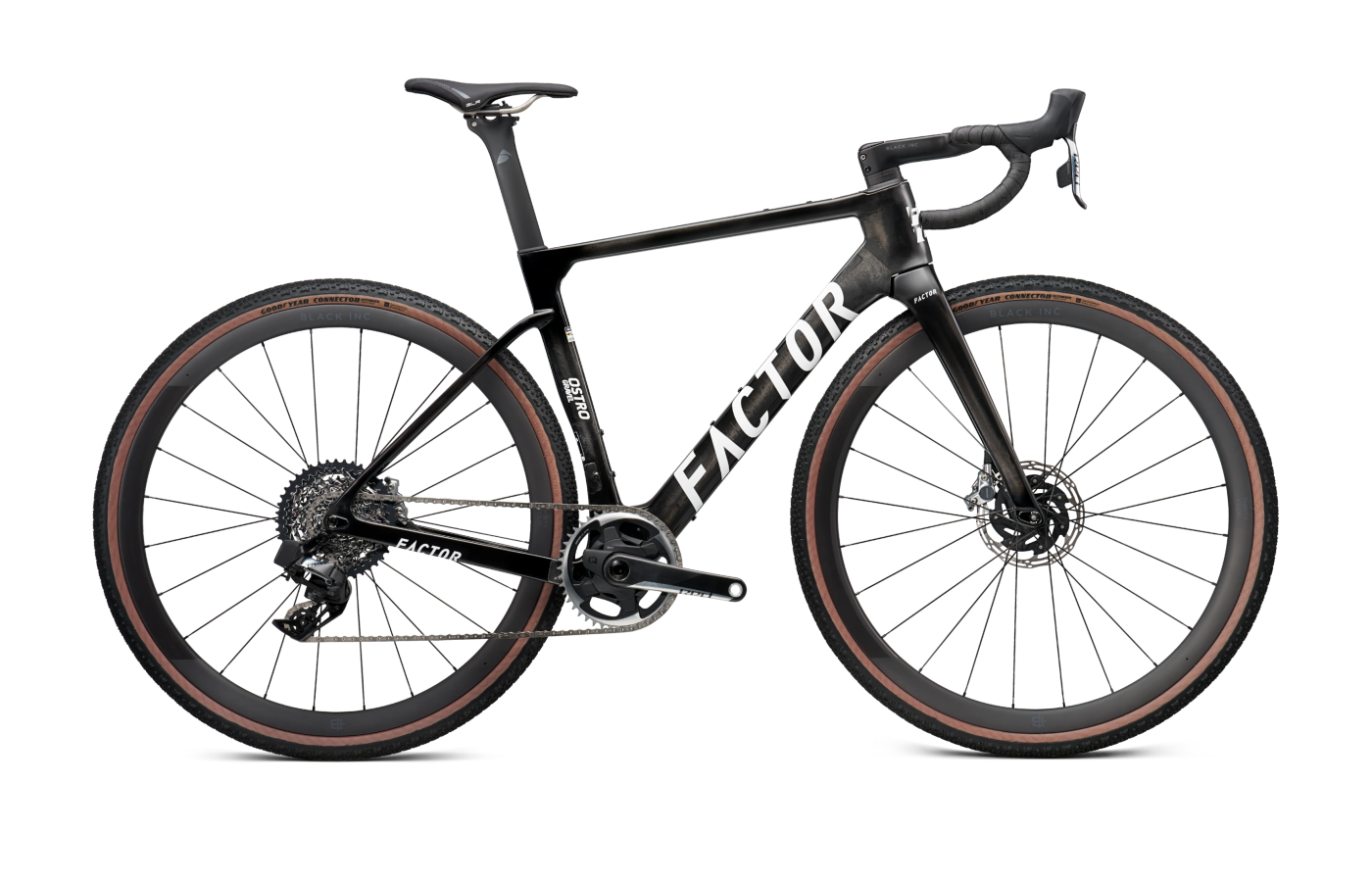
Ostro Gravel
The Factor Ostro Gravel is the most direct rival to the Aspero-5 — a fully integrated, aero-first race platform aimed at the same Unbound-style hardpack racer. If the Cervélo's two-piece cockpit feels like a half-measure, this is the more committed aero bet.
Compare →
Grail
The Canyon Grail offers the Crux's lightweight, CX-capable feel at a direct-to-consumer price point — Cycling Weekly noted the Grail CF SLX 9 hits a similar weight with Force-tier electronics for roughly $2,000 less than the Crux Pro. The catch is no local dealer support.
Compare →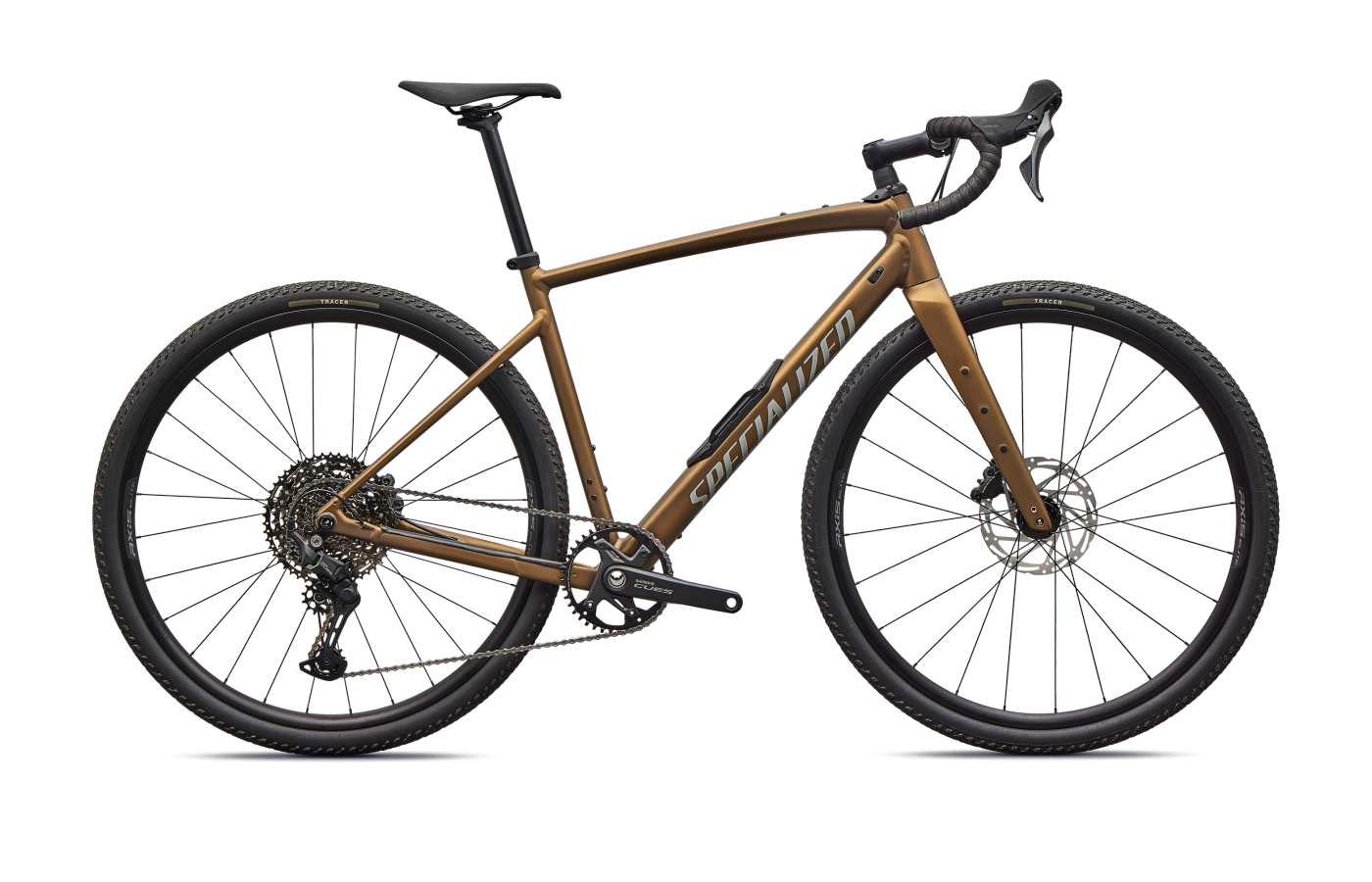
Diverge
If the Crux feels too minimalist or harsh on your local terrain, the Specialized Diverge is the calmer alternative — Future Shock 3.0 head-tube damper, internal SWAT storage, and a more relaxed geometry that trades some race sharpness for all-day comfort.
Compare →