Spectral
vsHugene
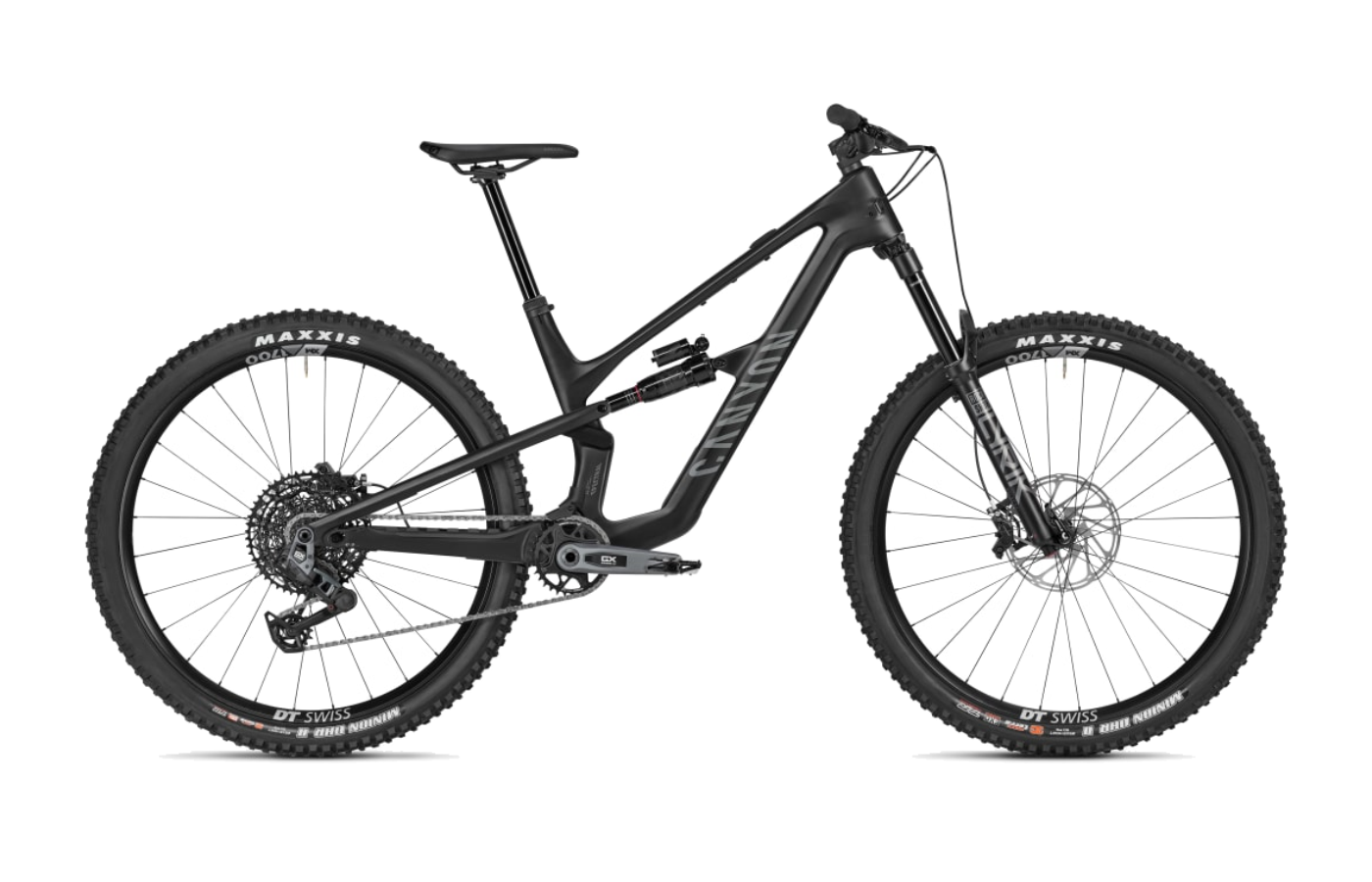
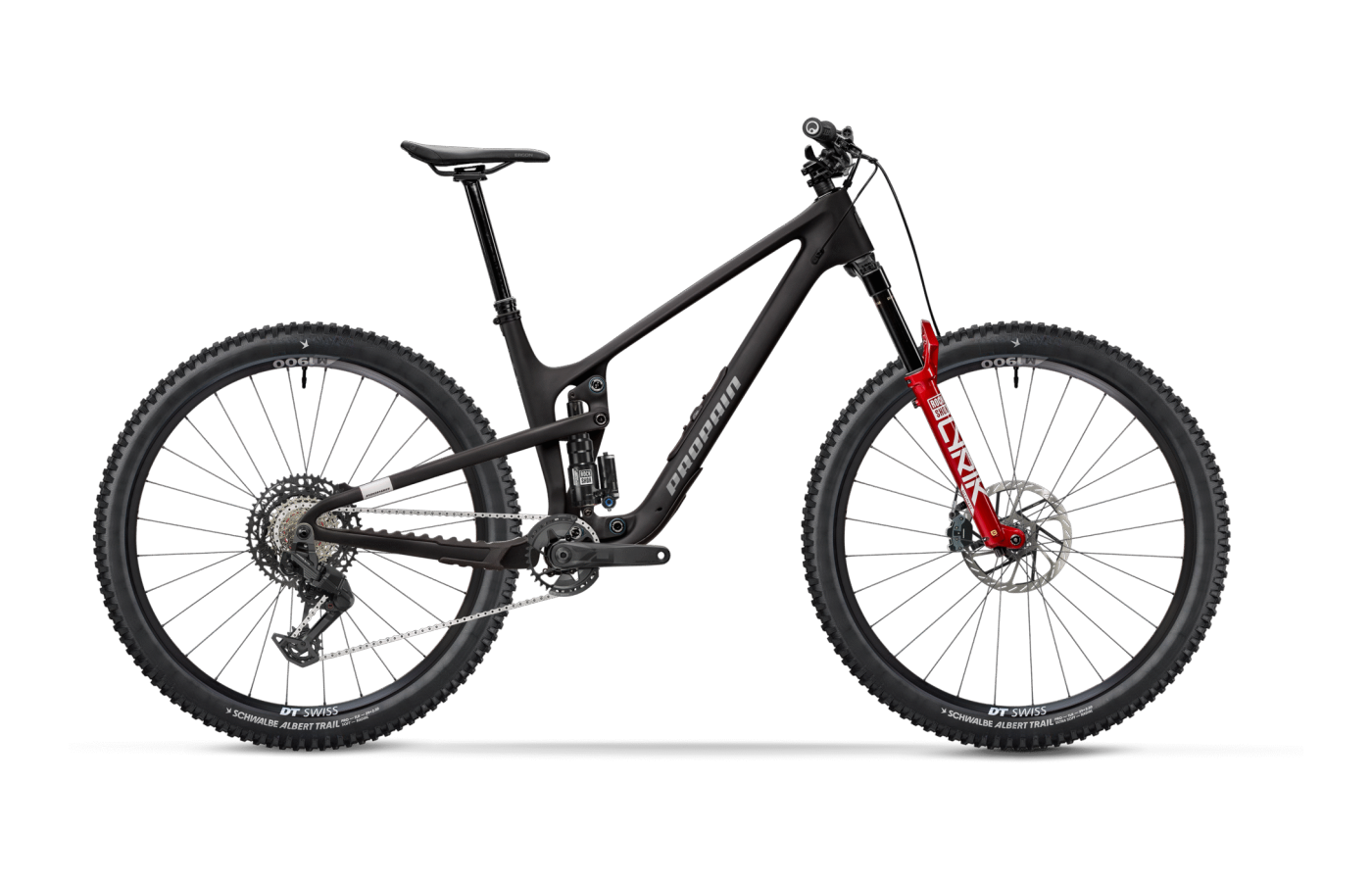
Two trail bikes that ditched travel to find their soul.
The Canyon Spectral runs 150/140 mm and chases all-rounder versatility. The Propain Hugene runs 140/130 mm and chases pedaling efficiency.
Spectral
- Forgiving rear end — the linearly progressive kinematic and slimmed seatstays soak up chatter that the Hugene transmits.
- 29er or mullet on one frame — the flip chip swaps wheel sizes without breaking the geometry.
- Wider build range — starts at $3,099 for an alloy build, vs $3,999 for Propain's cheapest carbon.
- K.I.S. steering stabilizer divides reviewers — some find it useful, others remove it.
- Stock G5 grips are nearly universally panned and the first thing most owners swap.
Hugene
- More efficient under power — high anti-squat PRO10 platform pedals with little bob, no climb switch needed.
- Steeper seat tube (77.5 degrees vs 76.5) puts you more directly over the bottom bracket on long climbs.
- Configurable build — Propain's online configurator lets you swap suspension, drivetrain, brakes, and wheels piece by piece.
- Stock Marzocchi shock is too rampy for some riders and benefits from a RockShox upgrade.
- Lower stack and shorter travel get exposed on sustained, rough enduro-style descents.
Editor’s analysis
Both brands cut travel for 2024–25 — but they did it for opposite reasons.
On the surface these look like the same bike: full carbon, 29er, sub-65-degree head tube, long dropper, internal storage, direct-to-consumer. Both even arrived inside the last 18 months after their makers cut suspension travel from the previous generation. But ride them back to back and the philosophies pull apart fast.
The Canyon Spectral is the geometry-divergent quiver killer. 150 mm fork, 140 mm rear, 64-degree head angle, a 1,251 mm wheelbase on a Medium, and short 437 mm chainstays that flip to 429 mm in mullet mode. Canyon also bolts on K.I.S. — a self-centering steering stabilizer that's standard on every CF model, polarizing in reviews, and removable with a blanking plate if you hate it. The bike is engineered to feel composed at speed and playful when you push it, with a soft, traction-rich rear suspension that reviewers compare to a magic carpet.
The Propain Hugene sits a notch sharper on every spec line: 140 mm fork, 130 mm rear, 64.8-degree head angle, a steeper 77.5-degree seat tube, and 445 mm chainstays held constant across every size. No flip chip. No K.I.S. No size-specific rear ends. Propain's PRO10 suspension runs anti-squat above 100 percent through nearly all of the travel and ramps hard at the end of the stroke — efficient under power, but firmer over chatter. Reviewers consistently call it snappy, businesslike on climbs, and a touch juddery on rough seated ascents.
Put another way: the Spectral is the bike that hides its weight and travel behind a forgiving rear end and adjustable geometry. The Hugene is the bike that asks for a more active rider in exchange for more efficient power transfer. Both punch above their travel numbers on descents — the Spectral by absorbing more, the Hugene by being lighter on its wheels.
Where the builds differ.
Comparing our editor's-pick builds side-by-side. Winners highlighted row-by-row — lower price and weight, and the better-spec component, each mark a point.
Build variants & pricing
Both lineups overlap from roughly $4k to $5.3k. Canyon scales further in both directions — alloy at $3,099 below, X0 AXS at $5,799 above.
Propain only sells the Hugene with a carbon frame and offers two pre-configured 'Signature Spec' builds in the US, plus an online configurator for everything else. Canyon's US lineup tops out at the CF 9 with X0 AXS Transmission; the European LTD and CLLCTV builds aren't sold here. Drivetrain note: the Hugene's stock SRAM Eagle 70 Transmission is wireless-shifter Transmission at the entry tier — capable but a step below the GX AXS Transmission on the Canyon CF 8.
How they fit, how they steer.
Compared at the fit-picked sizes: Canyon S, Propain M. The Spectral runs a slacker 64.0-degree head angle vs 64.8 on the Hugene, sits 9 mm taller in stack, and uses 8 mm shorter chainstays — the Spectral is geometrically the more descent-biased of the two; the Hugene is more upright and more efficient on the climb.
Which size should I buy?
Canyon's reach jumps grow in 25 mm steps from XS through XL; Propain skips XS but uses the same 25 mm step. If you're between sizes on the Canyon, size down — the Spectral runs long for its label.
→These are starting points. Flexibility, riding style, and preferred position all shift the answer — if you’re between sizes, a professional fit beats a chart.
What the magazines said.
Published reviews from trusted cycling outlets. Click through for the full write-up.
Which one should you buy?
If you want a forgiving all-rounder that swallows chunder and lets you swap to mullet, get the Spectral. If you want a sharper, more efficient climber and the freedom to spec it yourself, get the Hugene.
Spectral
If your week mixes flowy jump lines, technical descents, and the occasional alpine epic — and you want one trail bike to do all of it — the Spectral hides its weight and length behind a forgiving rear end. The mullet option and K.I.S. are bonuses if you want them, removable if you don't.
Hugene
If you ride big climbing days, value pedaling efficiency over rear-end plushness, and want to hand-pick every component on the build sheet — the Hugene's PRO10 platform and configurator are exactly the tool. It rewards an active rider and pays you back in energy saved on the way up.
Questions buyers actually ask.
Short answers to the things we get emailed about most often.
01Which climbs better?
The Propain Hugene, in most situations. PRO10's high anti-squat (well above 100 percent through most of the travel) means it pedals firmly without a climb switch, and the steeper 77.5-degree effective seat tube angle puts you more directly over the bottom bracket. Reviewers consistently describe it as snappy and businesslike on the way up.
The Spectral climbs well too — its 76.5-degree seat angle and reduced anti-squat give it traction-rich technical climbing — but it pedals with more movement than the Hugene and is happier on rough, low-traction ascents than smooth fire roads.
02Which descends better?
It depends on the terrain. On sustained, rough, square-edge chunder, the Spectral has the edge — more travel (150/140 mm vs 140/130 mm), a slacker 64-degree head angle, a 1,251 mm wheelbase on a Medium, and a noticeably more compliant rear end that reviewers compare to a magic carpet.
On flowy, jumpy, momentum-driven trails the Hugene is right there — its progressive PRO10 kinematic ramps hard enough that it 'punches above its weight' (NSMB) and the snappier anti-squat helps it generate speed out of corners. On true enduro-style descents the Hugene's lower stack and 10 mm less travel get exposed.
03What's the difference in geometry?
Compared at the fit-picked sizes (Canyon S, Propain M):
- Head tube angle: Canyon 64.0 degrees, Propain 64.8 degrees — Spectral is 0.8 degrees slacker.
- Seat tube angle: Canyon 76.5 degrees, Propain 77.5 degrees — Hugene is steeper for climbing.
- Chainstays: Canyon 437 mm, Propain 445 mm — Spectral's shorter rear end is more flickable.
- Wheelbase: Canyon 1,221 mm (S), Propain 1,226 mm (M).
- Reach: Canyon 450 mm (S), Propain 458 mm (M).
Canyon also offers a flip chip for 29er or mullet and an 8 mm BB-height adjust; Propain holds geometry fixed.
04Is the K.I.S. steering stabilizer worth it?
Reviews are split. Off.road.cc and Bike Perfect report cases where K.I.S. saved a front wheel from washing out and helped on steep, rutted climbs. Pinkbike, Singletrackworld, and Jeff Kendall-Weed found it added a hint of lethargy on tight, jump-heavy trails or rattled inside the top tube.
The useful detail: Canyon makes K.I.S. fully removable with a blanking plate, the spring tension is adjustable, and they softened it for this generation. Treat it as a feature you can opt in or out of, not a permanent commitment.
05How customizable are the builds?
Very different philosophies here. Propain's online configurator lets you spec almost every component before the bike ships — suspension brand and tier, drivetrain, brakes, wheels, even cosmetic decals. NSMB swapped the stock Marzocchi shock for a RockShox Super Deluxe Ultimate at a $125 upcharge and called it 'worth every penny.'
Canyon sells fixed builds. The CF 8 (editor's pick) ships with SRAM GX AXS Transmission, RockShox Lyrik Select+/Super Deluxe Select+, and DT Swiss XM1700 wheels, and that's what you get. Step up to the CF 9 ($5,799) for X0 AXS Transmission and Fox Factory suspension, or down to the CF 7 ($3,199) for SLX and Fox Performance.
06How are the stock components?
Generally solid on both, with one notable issue per side.
Spectral CF 8: GX AXS Transmission, Lyrik Select+ fork, Super Deluxe Select+ shock, DT Swiss XM1700 alloy wheels, Maxxis Minion DHR II tires (EXO+ rear, EXO front). The proprietary G5 grips are nearly universally panned — Pinkbike, Flow, Singletrack, BikeRadar all flagged them as hard, slippery, or painful. Plan to replace them.
Hugene Signature Spec 2: SRAM Eagle 70 Transmission (cable-actuated), Lyrik Ultimate fork, Super Deluxe Ultimate shock, DT Swiss M 1900 wheels. The Eagle 70 cable shifting is functional but NSMB called it 'dependably underwhelming' compared to higher-tier Transmissions; the configurator can upgrade it.
07Which fits a 5'8" rider better?
Both fit well. The fit algorithm picks the Canyon Spectral in size S (450 mm reach, 599 mm effective top tube) and the Propain Hugene in size M (458 mm reach, 597 mm effective top tube) for a 173 cm rider — note that Canyon's labels run long, so a Spectral S is roughly equivalent in cockpit length to a Propain M.
If you usually ride a Medium and try to order a Spectral M without checking, you'll get a 475 mm reach — closer to most brands' Large. Size down on the Canyon.
08How do they compare on price?
Canyon Spectral: $3,099 (alloy '6') to $5,799 (CF 9 X0 AXS Transmission). The CF 8 editor's pick is $5,099.
Propain Hugene: $3,999 (Signature Spec 1) to $5,299 (Signature Spec 2) for pre-configured US builds, with the configurator extending higher.
Canyon scales further in both directions and is the only path to either an alloy build or a sub-$4k carbon. Within the overlap zone ($4k–$5.3k), the two trade blows on spec — Canyon offers wireless GX AXS Transmission at $5,099, Propain offers higher-tier Lyrik Ultimate suspension at $5,299.
Similar bikes
If your priorities don’t map cleanly onto either of these, one of these adjacent bikes probably fits better.
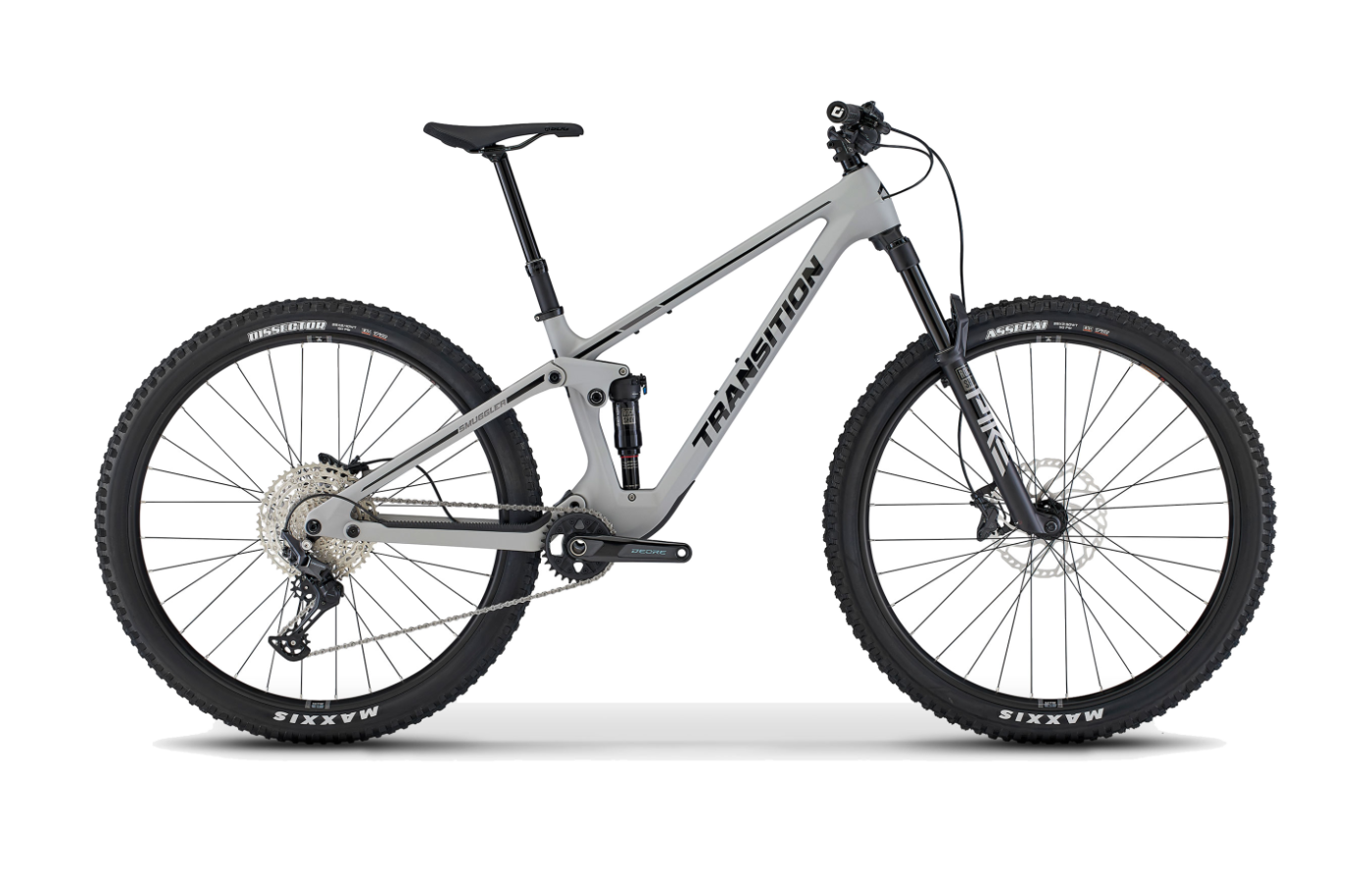
Smuggler
The Transition Smuggler shares nearly identical travel and geometry numbers with the Hugene but pairs them with a more supple, traction-first rear end. A good pick if you like the Hugene's category but find PRO10's pedal feedback too talkative.
Compare →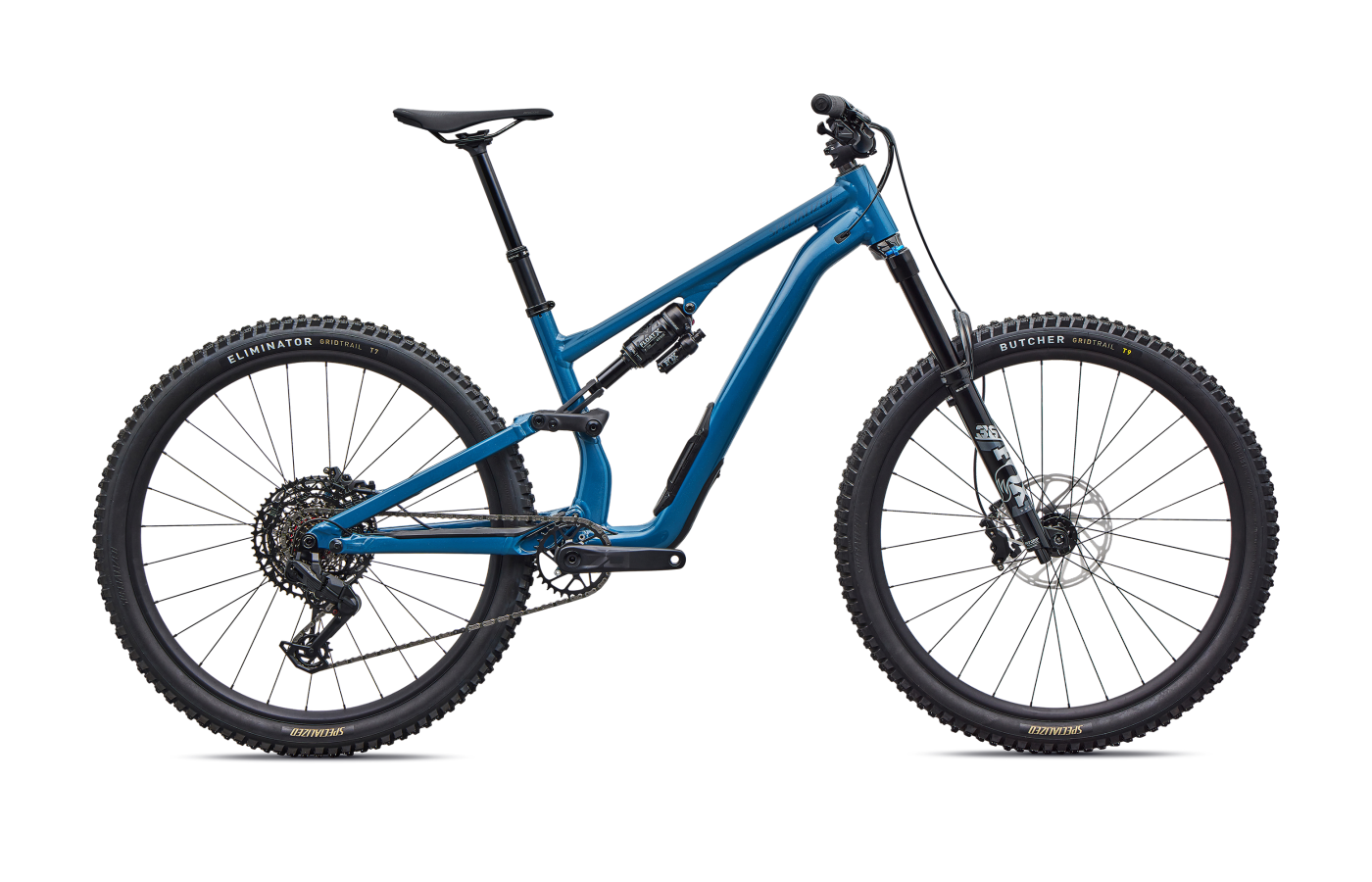
Stumpjumper Evo
The Specialized Stumpjumper Evo is the most adjustable trail bike in the segment — six geometry positions via flip chips and headset cups — and the cavernous SWAT downtube storage is in another league. The choice if you love to tinker.
Compare →Jeffsy
The YT Jeffsy is the Spectral's closest direct-to-consumer rival on price and spec, with a slightly more conservative reach and a more traditional, less polarizing frame feel — no K.I.S., no flip chip, just a well-sorted trail bike.
Compare →