Neuron
vsStumpjumper
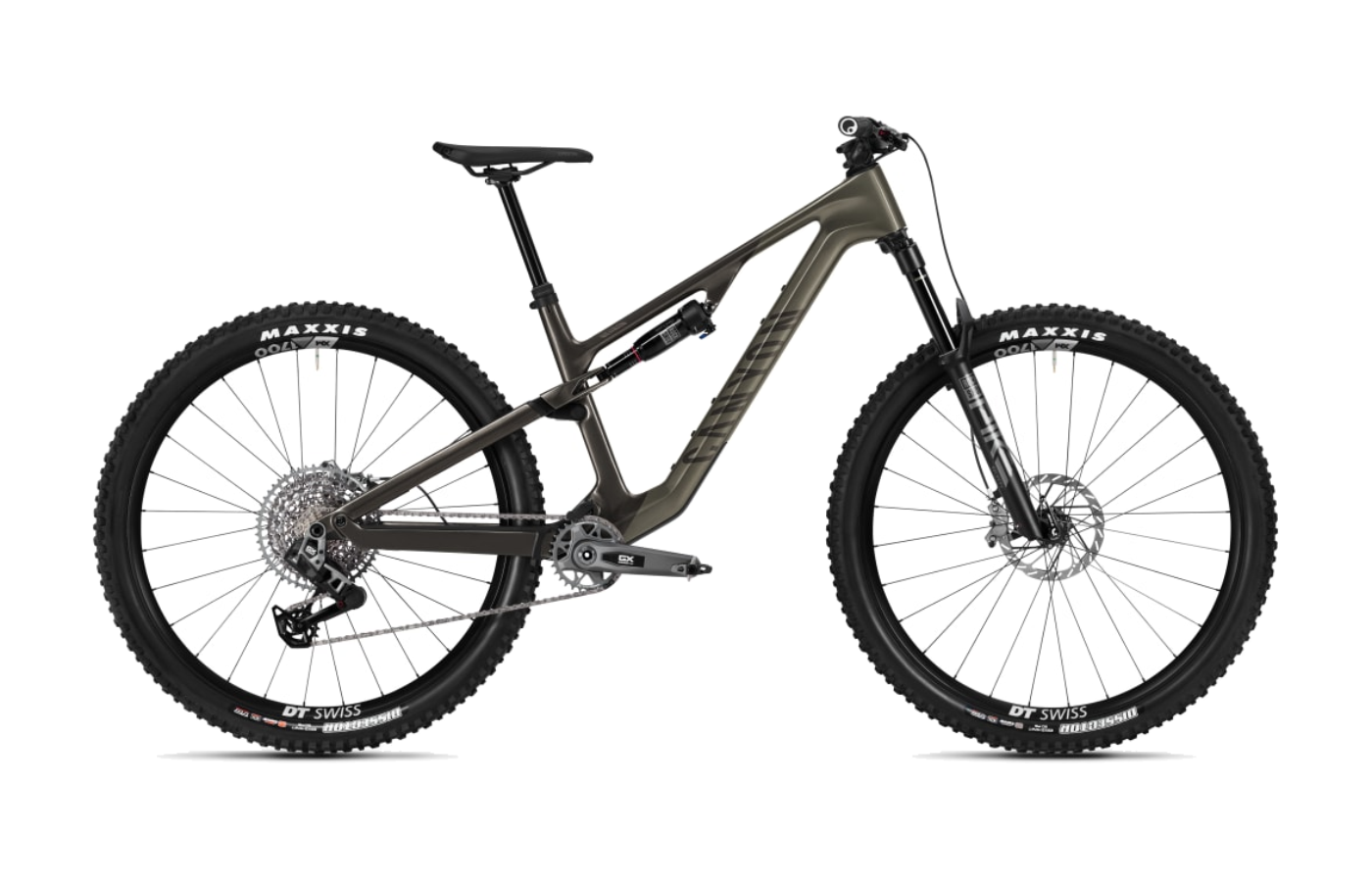
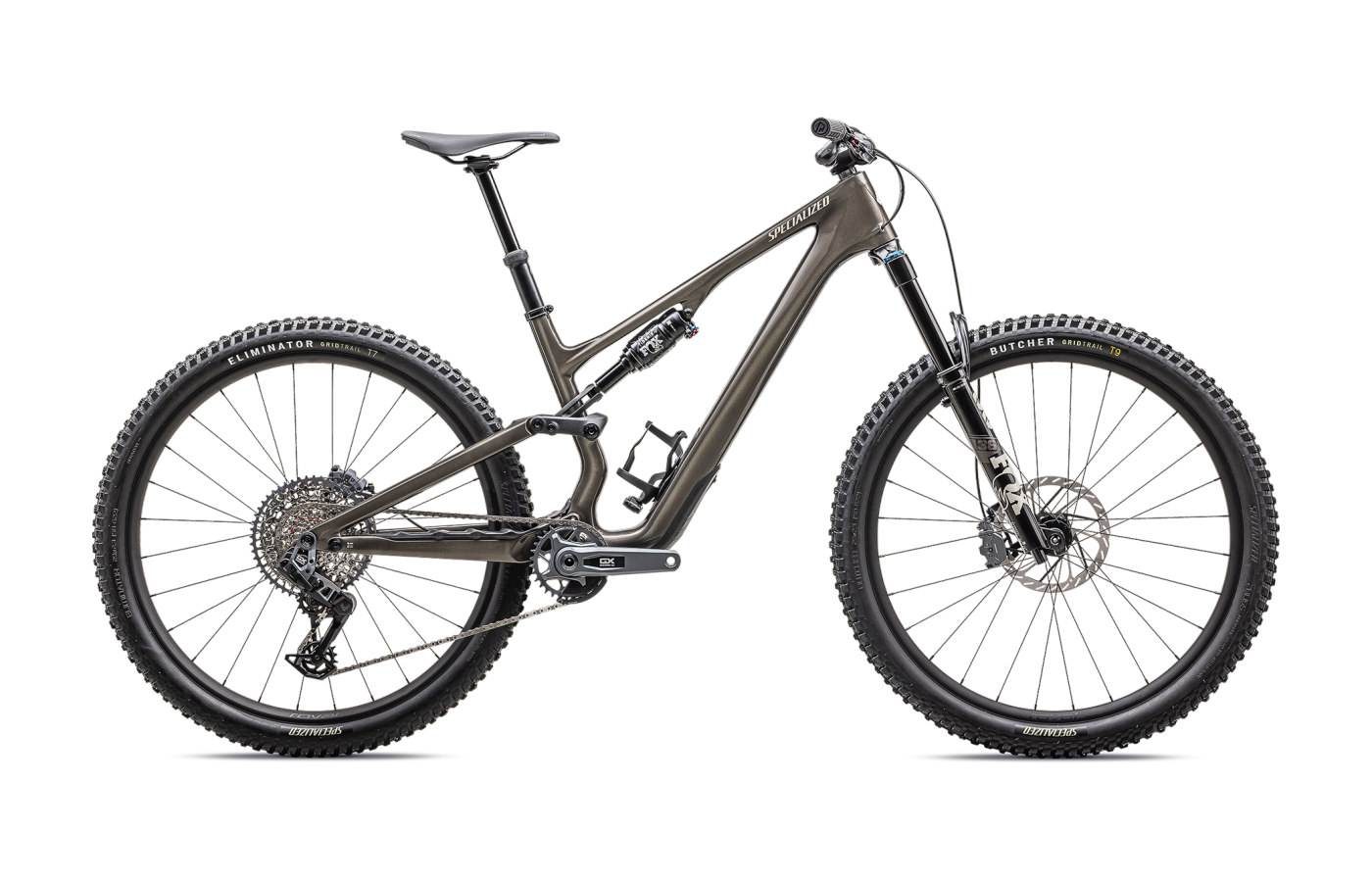
Two trail bikes, two different missions.
The Canyon Neuron is the lightweight all-day tourer. The Specialized Stumpjumper 15 is the do-everything enduro-light platform — and it costs accordingly.
Neuron
- Direct-to-consumer pricing — the carbon CF 8 GX AXS Transmission build comes in at $4,399, where Specialized's equivalent GX AXS build is $5,999.
- Light and pedal-efficient — 12.86 kg on the carbon CF 9 SL, a real all-day backcountry feel that XC-graduating riders will recognize.
- Modernized trail geometry — 66-degree HTA, 76-degree STA, 455 mm reach in size M; calmer at speed than the previous generation without going overboard.
- Carbon builds transmit more trail chatter than the Stumpjumper, especially with stock firm-compound Schwalbe tires.
- No dealer network — sizing, service, and demos all happen through the post.
Stumpjumper
- GENIE shock — hyper-supple in the first 70% for traction, then hard ramp-up at the end-stroke; survives bike-park hits a 145 mm bike normally wouldn't.
- Adjustable geometry — headset cups swap between 63°/64.5°/65.5° HTA, plus a flip chip; one frame covers trail and enduro use cases.
- SWAT downtube storage and lifetime frame + pivot bearing warranty — practical features that pay back over years of ownership.
- Carbon frames are wireless-only — no mechanical drivetrain routing, locking buyers into SRAM Transmission.
- Heavier and pricier than the Neuron at every comparable build tier; alloy versions push 16+ kg.
Editor’s analysis
Same category on paper, opposite philosophies in practice — one chases distance, the other chases descent.
The Canyon Neuron and Specialized Stumpjumper both live in the trail-bike box, but the moment you look past the label they pull in different directions. The Neuron runs 130 mm rear / 140 mm front, a 66-degree head angle, and tops out at $4,399. The Stumpjumper 15 runs 145 mm rear / 150 mm front (160 mm on coil builds), a 64.5-degree head angle in the mid setting, and stretches from $2,999 alloy to $11,999 S-Works. The Specialized covers more ground on every axis except weight and price.
The Canyon Neuron is built around being light, efficient, and direct. Reviewers at Flow Mountain Bike call it 'peppy and enthusiastic,' a 'step-up option for those coming from an XC bike' — a 12.86 kg carbon trail bike that pedals like an XC race bike but adds enough travel to survive real descents. The trade-off is honesty: stiff DT Swiss carbon rims and the Fox FIT4 damper transmit chatter on rocky terrain, and the firm-compound Schwalbe stock tires (Nobby Nic / Wicked Will) struggle for grip in the wet.
The Specialized Stumpjumper 15 picks the opposite fight. The proprietary GENIE rear shock — a dual-chamber air spring developed with Fox — feels coil-like through the first 70% of travel, then ramps hard at the end-stroke to handle drops and bike-park hits without bottoming. Pair that with a 64.5-degree head angle, an adjustable headset that lets you slacken to 63 or steepen to 65.5, and SWAT downtube storage, and you have a bike that genuinely covers the old Stumpy and EVO ranges in one frame. It's heavier, it's more expensive, and it drinks more energy on long pedals.
The cleanest read: the Canyon Neuron is the bike if your day is the climb and the distance, with descents as the reward. The Specialized Stumpjumper is the bike if your day is the descent, with the climb as the price you pay. They overlap on flow trail; they diverge everywhere else.
Where the builds differ.
Comparing our editor's-pick builds side-by-side. Winners highlighted row-by-row — lower price and weight, and the better-spec component, each mark a point.
Build variants & pricing
Canyon's range is tight — four builds, all under $4,500. Specialized spans nine builds from $2,999 alloy to $11,999 S-Works.
Prices are current US MSRP. Both editor's picks run SRAM GX Eagle AXS Transmission for an apples-to-apples drivetrain match — the Neuron CF 8 ($4,399, carbon) versus the Stumpjumper 15 Expert ($5,999, FACT 11m carbon). The $1,600 gap is real and tracks the platform difference, not a spec mismatch.
How they fit, how they steer.
Neuron M and Stumpjumper S3 are the fit-picked sizes for a 5'8" rider on each bike. Reach is within 5 mm (455 mm Neuron vs 450 mm Stumpy), stack within 1 mm (626 vs 627), but the Stumpjumper runs a 1.5° slacker head angle (66° vs 64.5°) and a 1° steeper seat tube — squarely more descent-biased.
Which size should I buy?
Specialized uses S-Sizing (S1–S6) where you pick by reach and feel rather than seat tube length; Canyon uses traditional XS–XL. Both ranges overlap in the middle.
→These are starting points. Flexibility, riding style, and preferred position all shift the answer — if you’re between sizes, a professional fit beats a chart.
What the magazines said.
Published reviews from trusted cycling outlets. Click through for the full write-up.
Which one should you buy?
If you ride long, climb a lot, and descend within reason, get the Neuron. If you descend hard, ride bike park, or want one frame for trail and enduro use, get the Stumpjumper.
Neuron
If your typical ride is a 25-mile loop with serious climbing and descents that don't require a 160 mm fork, the Neuron is the lighter, cheaper, more efficient tool. It rewards riders who pedal hard and don't need plow-through composure.
Stumpjumper
If you want one bike that handles everything from flow trail to bike park, the Stumpjumper 15's GENIE shock and adjustable geometry collapse the old trail/enduro split into a single platform. Worth the weight and price if you'll actually use the descending capability.
Questions buyers actually ask.
Short answers to the things we get emailed about most often.
01Which bike climbs better?
The Canyon Neuron, by a meaningful margin. Reviewers measured the carbon CF 9 SL at 12.86 kg; the carbon Stumpjumper 15 Pro comes in at roughly 14 kg, and the alloy Stumpjumper hits 16.17–16.90 kg depending on build. Combine that with 130 mm of rear travel and a firmer pedaling platform and the Neuron is straightforwardly more efficient on long climbs.
The Stumpjumper is no slouch — the steep 76.5–77° seat tube angle keeps you centered and the GENIE shock generates exceptional traction on technical climbs — but you're carrying 1–4 kg more bike up the hill.
02Which bike descends better?
The Specialized Stumpjumper 15, by a wide margin. The 64.5° head angle (slackable to 63° via the headset cup), 150 mm fork, and GENIE shock add up to a bike reviewers consistently describe as 'remarkably stable at speed' on demanding terrain. It plows through chunder a 130 mm Neuron simply isn't built for.
The Neuron's 66° HTA and 140 mm fork make it competent on most trail descents — Pinkbike calls it 'pure, unadulterated cycling fun' on flowing singletrack — but it can 'get bullied by the trail' when the speeds and rocks get serious.
03How much travel does each bike have?
Canyon Neuron: 130 mm rear / 140 mm front across the entire range.
Specialized Stumpjumper 15: 145 mm rear on every build. Forks are 150 mm on most builds, 140 mm on size S1, and 160 mm on the coil-equipped 15 and 15 Alloy builds.
The 15 mm rear / 10–20 mm front difference doesn't sound like much on paper, but combined with the slacker head angle and the GENIE shock's progressive ramp it puts the bikes in different categories on rough terrain.
04What's the deal with the GENIE shock?
It's a dual-chamber air spring Fox built specifically for the Stumpjumper 15. The first 70% of travel runs on the larger air volume — supple, coil-like, glued to the trail. After that, a 'GENIE band' closes off the outer chamber and the spring rate ramps hard, preventing harsh bottom-outs on drops and big hits.
You can tune the ramp by adding up to four bands inside the outer sleeve, which transforms the bike's character from ultra-plush to firm and sporty. The downside: it's proprietary, and reviewers have flagged long-term parts-availability concerns. Specialized says it uses standard Fox internals with one extra seal, so most suspension shops can service it.
05Can I run a longer fork on the Neuron?
Yes — Canyon strength-tests the Neuron frame for up to a 150 mm fork, and it has clearance for a piggyback shock. Bumping to 150 mm slackens the head angle slightly and adds descending capability without changing the frame.
That said, if you're already thinking about a longer fork, the Stumpjumper 15 (or one of the Spectral-class bikes in Canyon's own lineup) is probably the better starting point — you're working against the Neuron's core character.
06Why is the Canyon so much cheaper?
Direct-to-consumer. Canyon ships from a warehouse in Koblenz (or its US distribution center) straight to your door, skipping the dealer margin that Specialized builds into its pricing. Reviewers across the board flag the value — Bike Perfect asks if the Neuron 6 is 'the best value play-for-price mountain bike available,' and Flow Mountain Bike notes that matching the Neuron's spec on a Specialized comes 'at a serious premium.'
The trade is no test rides, no local mechanic relationship, and shipping fees on top of the sticker price.
07Which has better stock tires?
Stumpjumper, for most riders. Specialized specs Butcher front / Eliminator rear in the GRID TRAIL casing with the GRIPTON T9 (front) / T7 (rear) compound — sticky, well-balanced, suited to the bike's descending bias.
Canyon's stock Schwalbe Nobby Nic / Wicked Will combo in the firm Addix SpeedGrip compound is fast-rolling and durable but, per multiple reviewers, 'struggles to hold on rocky slabs and lacks traction in the wet.' Most aggressive riders swap them within a season.
08Is the Stumpjumper 15 carbon really wireless-only?
Yes — the FACT 11m carbon frames have no internal routing for mechanical derailleur cables. If you want a Stumpjumper 15 with mechanical Shimano shifting, you have to buy the M5 alloy frame, which retains conventional cable routing.
For most buyers in 2025 this isn't a problem — SRAM Transmission shifts beautifully and the wireless install is genuinely simpler. But if you're committed to Shimano XT mechanical or a future cable-shift drivetrain, the carbon Stumpjumper is closed to you. The Neuron has no such restriction.
Similar bikes
If your priorities don’t map cleanly onto either of these, one of these adjacent bikes probably fits better.
Smuggler
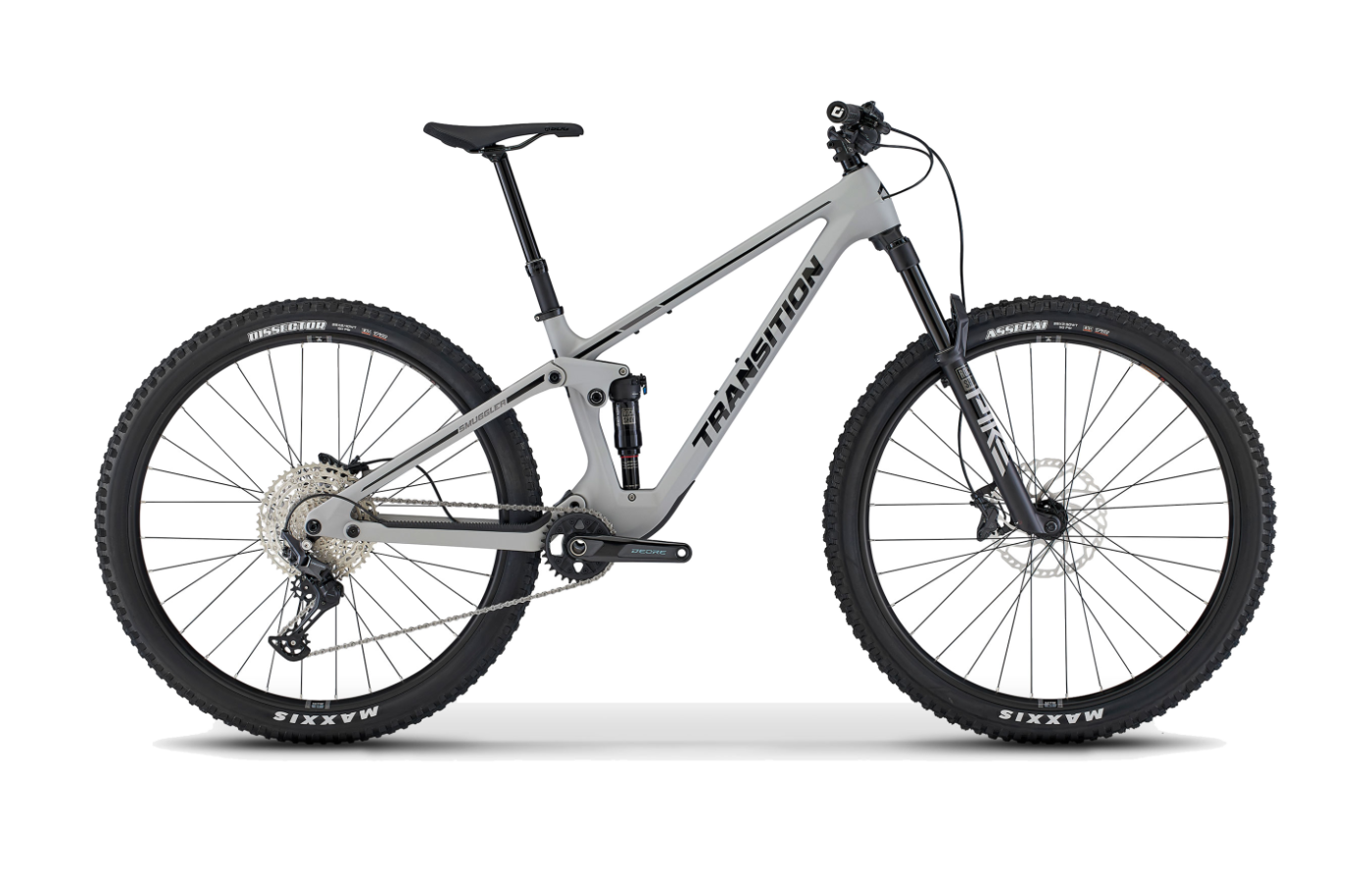
Same 130/140 travel bracket as the Neuron but with a more descent-biased geometry — slacker head angle, longer reach, and a sharper appetite for rough trail. The natural pick if the Neuron sounds right but feels too XC.
Compare →
Fuel EX
Trek's direct answer to the Stumpjumper 15 — adjustable geometry, in-frame storage, and a similar 140/150 mm travel bracket. Uses a conventional air shock, which sidesteps the GENIE's proprietary-parts question.
Compare →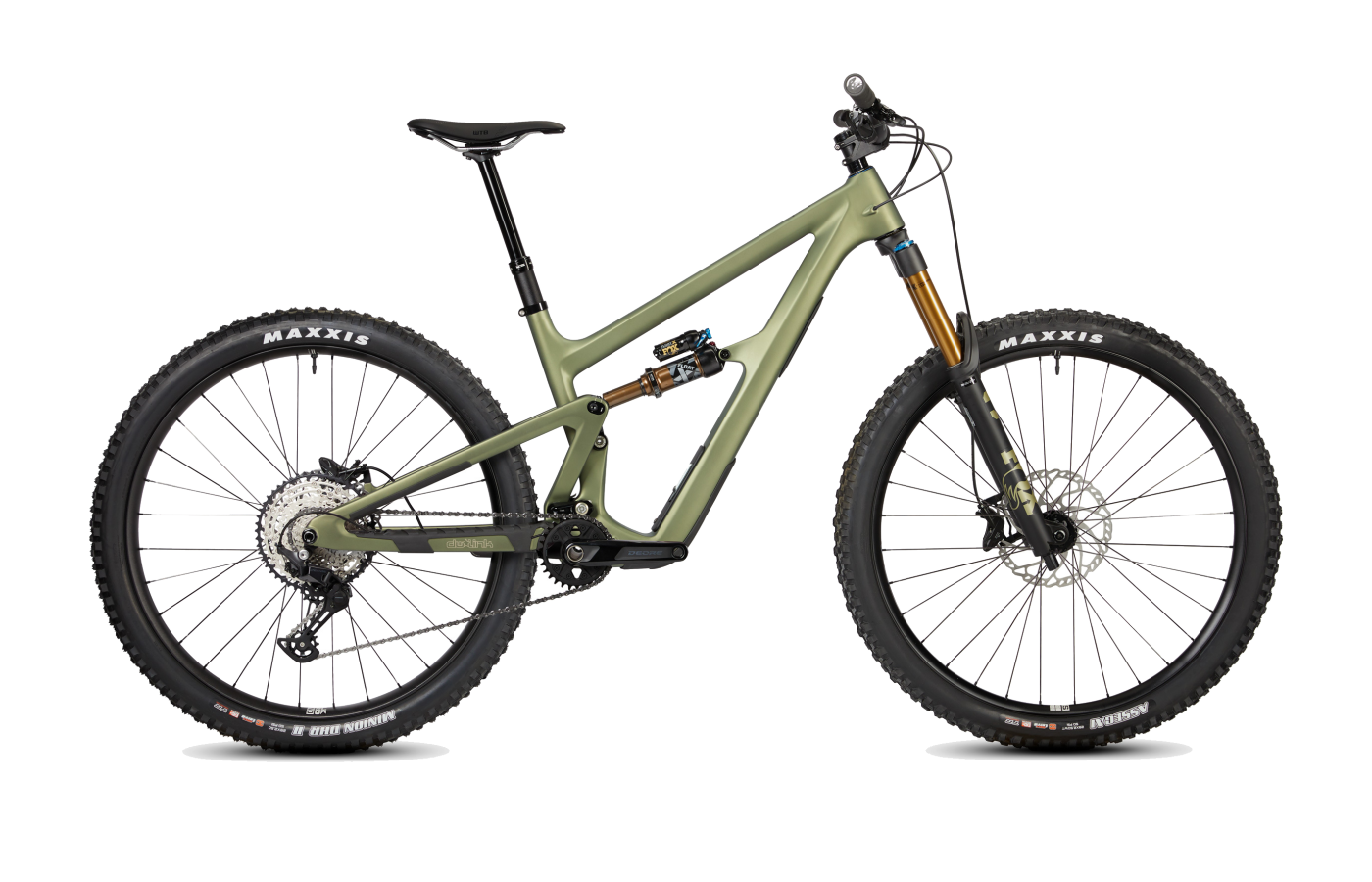
Ripmo
If the GENIE shock is a dealbreaker, the Ripmo gets you to a similar 145–150 mm travel envelope with a standard DPX2-class shock and a long-running reputation for pedaling efficiency. Less adjustable than the Stumpy, more predictable.
Compare →