Lux World Cup
vsEpic
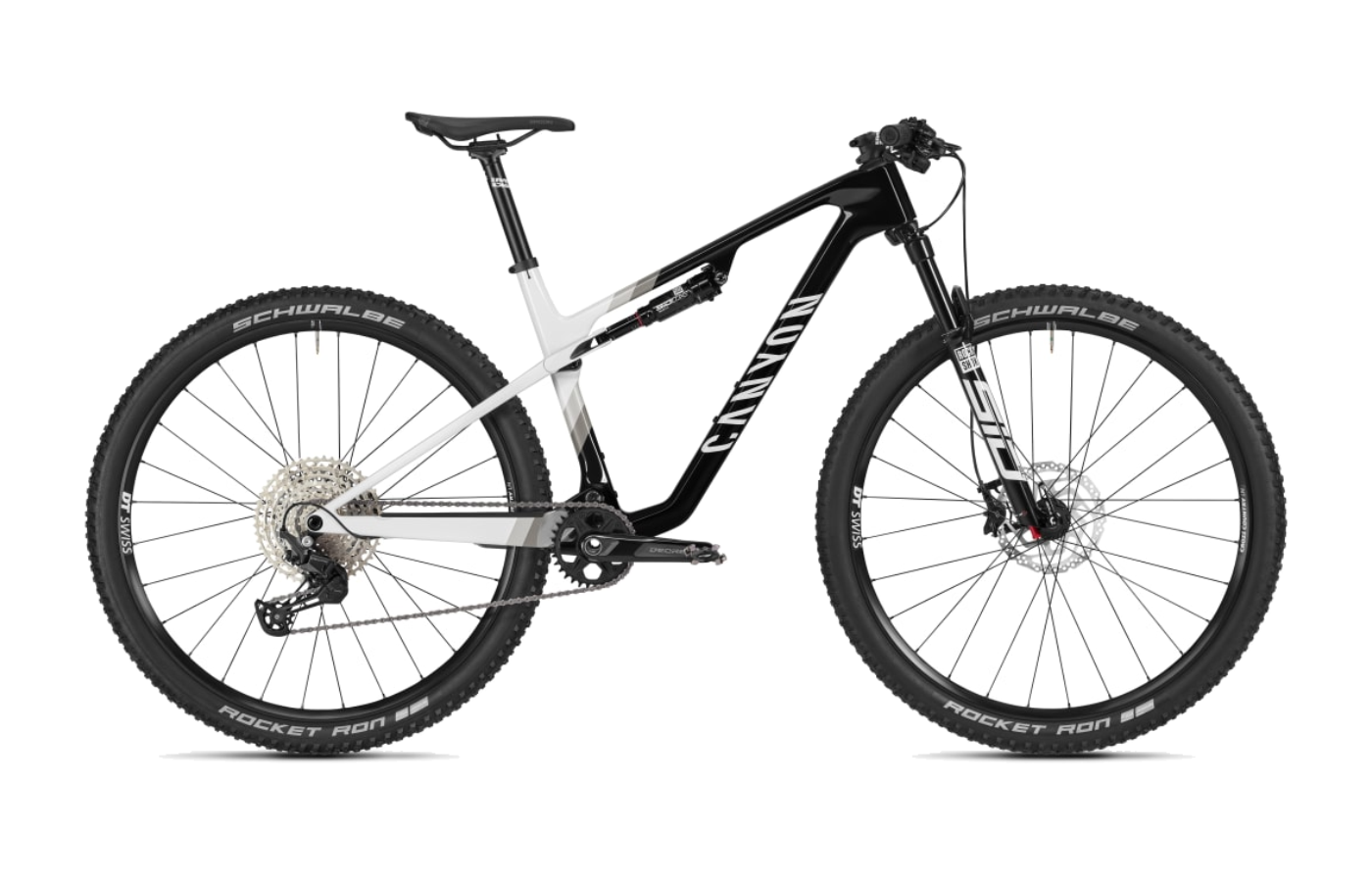
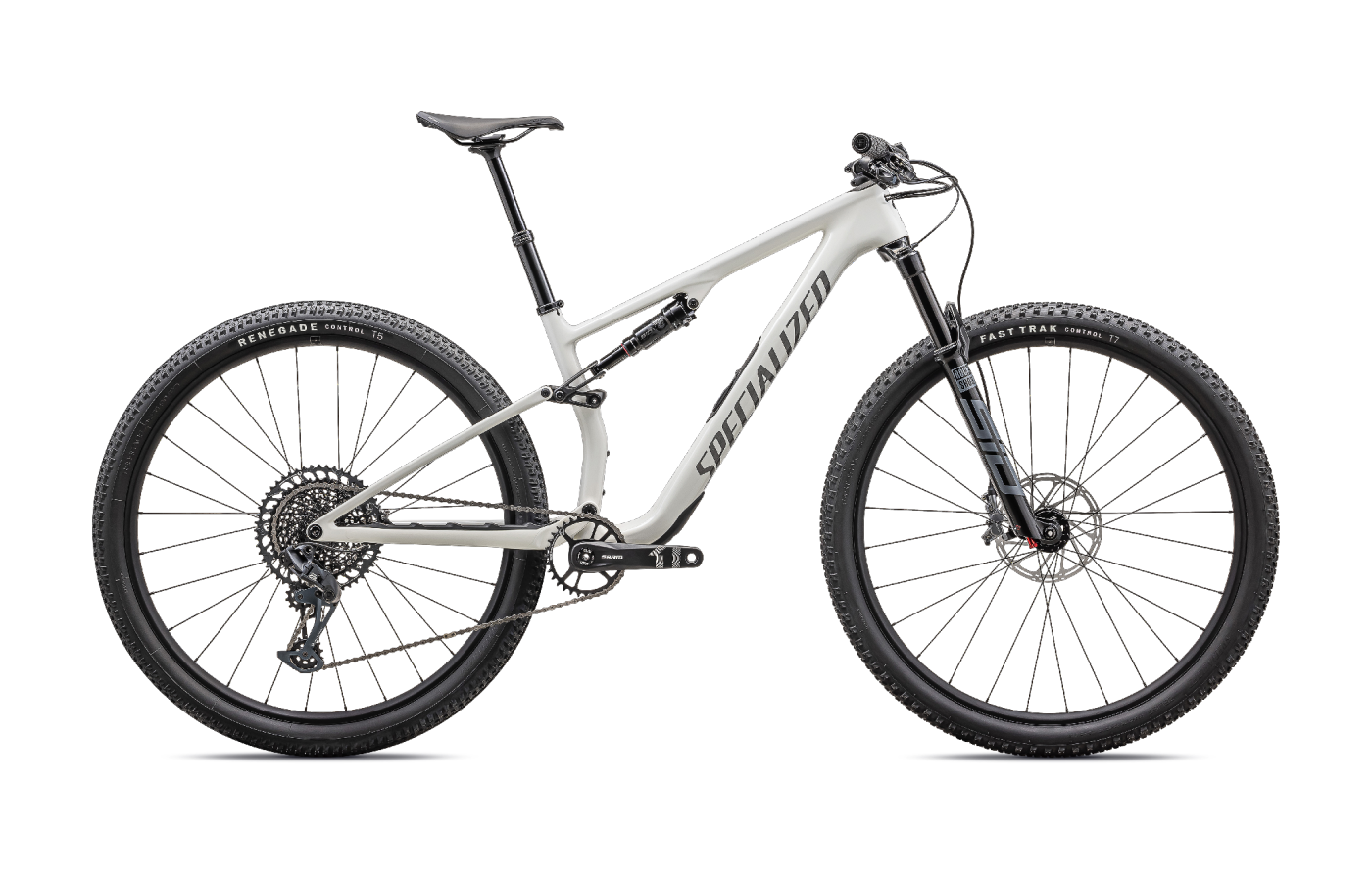
100 mm purist vs. 120 mm shape-shifter.
The Lux World Cup is a one-build, weight-weenie XC racer. The Epic 8 is a deeper, slacker, more expensive platform that wants to win XC and shred trail.
Lux World Cup
- One unbeatable price at $3,399 — the cheapest carbon full-suspension XC bike on this comparison by a wide margin.
- Ruthless pedaling efficiency — reviewers say the rear shock lockout is largely unnecessary thanks to high anti-squat and a stiff carbon flex-stay rear.
- Aggressive race position with a 582 mm stack at size M and a low front end that puts you in an aero, power-delivery tuck.
- Fixed carbon seatpost — no dropper, and the headset cable routing makes retrofit a known headache.
- Only 100 mm of travel and a 68.5° head angle leaves it skittish on the steep, technical descents now common on World Cup courses.
Epic
- Trail-bike descending composure from a 65.9° head angle, 120 mm of travel, and a low 328 mm BB — reviewers consistently say it descends like a 140 mm trail bike.
- Magic Middle suspension tune — a digressive shock mode that pedals firm but blows off instantly for impacts, replacing the divisive old Brain system.
- Eight builds across an $11k range with size-specific carbon layups, integrated SWAT downtube storage, and a dropper post on every build.
- Floor price is $1,100 higher than the Canyon and the lineup runs to $14,999.
- Heavier and slacker than the Lux — climbers chasing pure watts-per-kilo on smooth fire roads will feel the difference.
Editor’s analysis
Two bikes pointed at the same start line — but only one of them still believes the start line is the whole point.
On paper both are cross-country full-suspension carbon bikes. Spend a minute with the spec sheets and the philosophies split immediately. The Canyon Lux World Cup is a single-spec, one-price proposition: 100 mm of travel front and rear, a fixed carbon seatpost, a 68.5-degree head angle, and a Deore-tier 12-speed drivetrain for $3,399. Canyon makes one build of this bike and that's the whole conversation.
The Specialized Epic 8 is the opposite — 8 builds, a $4,499 to $14,999 range, 120 mm of travel at both ends, a 65.9-degree head angle, and electronic Flight Attendant suspension at the top of the lineup. Reviewers describe it as a 'featherweight trail bike' that pedals like a race bike, with a bottom bracket roughly 10 mm lower than the Lux and a wheelbase 37 mm longer at size M. The chainstays are 5 mm longer and the seat tube angle 0.5 degrees steeper.
What this means in the dirt: the Canyon rewards smooth, fast, power-output-driven riding and demands a skilled pilot when the trail turns chunky. Reviewers consistently call it 'skittish on steep downhill tech' and flag the rigid seatpost as a real performance handicap on modern XC courses. The Epic 8 trades a couple of hundred grams and some climbing snap for a bike that lets you stay off the brakes on descents that the Lux would have you white-knuckling.
Put another way: the Lux World Cup is the bike you buy if you race XC and your courses reward sustained power on smooth, climby terrain. The Epic 8 is the bike you buy if you want one bike that can race on Saturday and ride rowdy trail loops on Sunday — and you have at least $1,600 more to spend to get into the lineup.
Where the builds differ.
Comparing our editor's-pick builds side-by-side. Winners highlighted row-by-row — lower price and weight, and the better-spec component, each mark a point.
Build variants & pricing
Canyon offers exactly one build of the Lux World Cup. The Epic 8 spans eight builds and roughly $11k of range.
Prices are current US MSRP. The lineups don't overlap on tier or price — Canyon's only Lux WC build is mechanical Deore at $3,399, while the cheapest Epic 8 starts at $4,499 and the lineup runs to $14,999 for the S-Works build with electronic Flight Attendant suspension. We've matched the cheapest mechanical-drivetrain Epic 8 (Comp at $4,999, SRAM GX) against the Canyon for the closest possible apples-to-apples comparison.
How they fit, how they steer.
Both at size M — the fit-picked size for a 5'8" rider on each bike. Reach is identical at 450 mm, but the Epic 8 stacks 16 mm taller (598 vs 582), runs a head angle 2.6° slacker (65.9° vs 68.5°), and stretches the wheelbase 37 mm longer (1,179 vs 1,142 mm). The Lux is the more aggressive, lower, shorter bike.
Which size should I buy?
Size recommendations based on stack, reach, and effective top tube. The Lux runs a slightly wider XS-to-XL range; both bikes fit a 5'8" rider best at size M.
→These are starting points. Flexibility, riding style, and preferred position all shift the answer — if you’re between sizes, a professional fit beats a chart.
What the magazines said.
Published reviews from trusted cycling outlets. Click through for the full write-up.
Which one should you buy?
If you want the cheapest carbon XC race bike on the market and your courses reward pure pedaling efficiency, get the Canyon Lux World Cup. If you want one bike that can race XC and shred trail, get the Specialized Epic 8.
Lux World Cup
If you want a flat-out race bike that costs less than half of a comparable Specialized — and your local courses are smooth, climby, and reward sustained power — the Lux World Cup is hard to beat. Plan to add a dropper post yourself.
Epic
If your XC courses now include real technical descents — or you want one bike that can race on Saturday and ride trail on Sunday — the Epic 8's 120 mm travel and slack geometry let you stay off the brakes where the Lux can't. The deep build range means you can spend $4.5k or $15k.
Questions buyers actually ask.
Short answers to the things we get emailed about most often.
01Which is faster on a smooth XC course?
The Canyon Lux World Cup, on the climbs. With 100 mm of travel and a stiff carbon flex-stay rear, reviewers describe instant power transfer and 'scorched cat' acceleration — efficient enough that you can skip the rear shock lockout on most singletrack.
The Epic 8 isn't far behind: its 'Magic Middle' shock tune gives it a firm pedaling platform, and Specialized claims 20% less pedal bob than the previous Epic EVO. But it carries 120 mm of travel and roughly a kilogram more weight than the Lux at equivalent build tiers, and that math favors the Canyon when the trail goes up and stays smooth.
02Which is better on technical descents?
The Specialized Epic 8, by a wide margin. The 65.9° head angle, 120 mm of travel, low 328 mm bottom bracket, and 1,179 mm wheelbase (size M) give it the descending composure reviewers usually reserve for trail bikes — multiple sources call it a 'featherweight trail bike.'
The Canyon Lux World Cup is on the other end of the scale. With a 68.5° head angle, only 100 mm of travel, and no dropper post on the stock build, reviewers consistently flag it as 'skittish on steep downhill tech.' If your local XC courses have real descents, the Epic is the safer pick.
03What's the price difference?
Significant. The Canyon Lux World Cup comes in exactly one build at $3,399. The Specialized Epic 8 lineup starts at $4,499 for the entry Comp and runs to $14,999 for the S-Works with Flight Attendant suspension.
There's no Epic build that matches the Canyon's price. The closest mechanical-drivetrain Epic — the Comp at $4,999 — costs about 47% more than the Lux.
04Does the Lux World Cup come with a dropper post?
No. Canyon ships the Lux World Cup with a fixed carbon seatpost on every build, prioritizing weight over function. Multiple reviewers call this a significant performance handicap on modern XC courses and recommend retrofitting a dropper.
The catch: the frame uses headset-routed internal cables and has no dedicated dropper-cable port, so retrofitting takes 'patience and cable-routing wizardry.' Plan on shop time and an aftermarket cost — or buy the Epic, which ships every build with a dropper as standard.
05How do the suspension platforms compare?
The Lux World Cup uses Canyon's flex-stay design with 100 mm front and rear. RockShox SID SL fork and SIDLuxe Select+ shock with a remote lockout. The kinematics are tuned for high anti-squat — efficient on the pedals, less compliant over small bumps.
The Epic 8 uses a single-pivot flex-stay layout with 120 mm front and rear. RockShox SID Select fork and SIDLuxe Select+ shock with the custom 'Magic Middle' digressive tune that stays firm under pedaling but opens for impacts. Higher-tier Epic builds add electronic Flight Attendant for automatic mode switching; that's not on offer at all on the Canyon.
06What about frame storage and integrated tools?
The Epic 8 has Specialized's SWAT downtube storage on every build — a sealed cubby in the downtube big enough for a tube, CO2, and a few tools. It's one of the most useful integration features in the XC category.
The Lux World Cup has none of that. It's also a one-piece carbon cockpit on the front end, which limits accessory mounting. If you ride without a hydration pack and like clean integration, the Epic wins this column outright.
07How serviceable are they at home?
The Epic 8 is the friendlier of the two. Threaded BB, UDH-compatible rear dropout, and a more conventional cable layout make most home maintenance straightforward.
The Canyon Lux World Cup runs cables through the headset — clean to look at, but a known pain when retrofitting a dropper post or doing internal hose work. Reviewers describe it as a 'mechanic's nightmare' for cable changes. The Pressfit BB also has a reputation for creaking, though Canyon offsets that on higher-spec CFR models with CeramicSpeed bearings (not present on the CF 7 build).
08Which one should I buy used?
Both depreciate in the first year and slow after that. The Epic 8 has wider lineup depth on the used market — eight builds and a 2024-onward production run mean more inventory at every price point, including S-Works frames at substantial discounts after a season.
The Lux World Cup is harder to find used because Canyon makes only one build of it and sells direct. When you do find one, prices tend to hold relatively well for the same reason — limited supply, single SKU.
Similar bikes
If your priorities don’t map cleanly onto either of these, one of these adjacent bikes probably fits better.
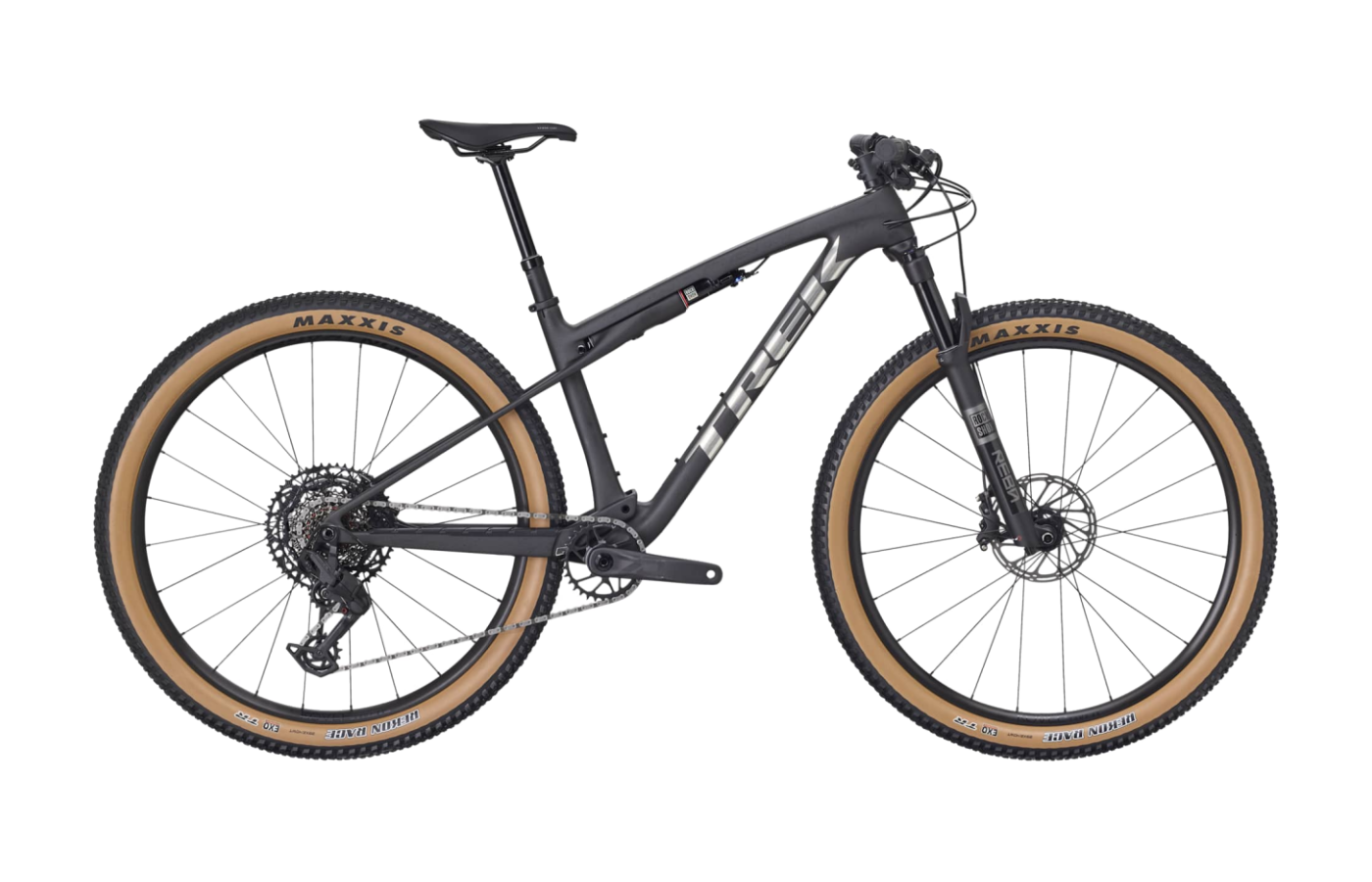
Supercaliber
Trek's IsoStrut-equipped Supercaliber goes even further than the Lux on the efficiency-first axis — only 60 mm of unique strut-based rear travel, but a feel that's closer to a hardtail with a safety net. If the Canyon is too soft, the Trek is the next stop.
Compare →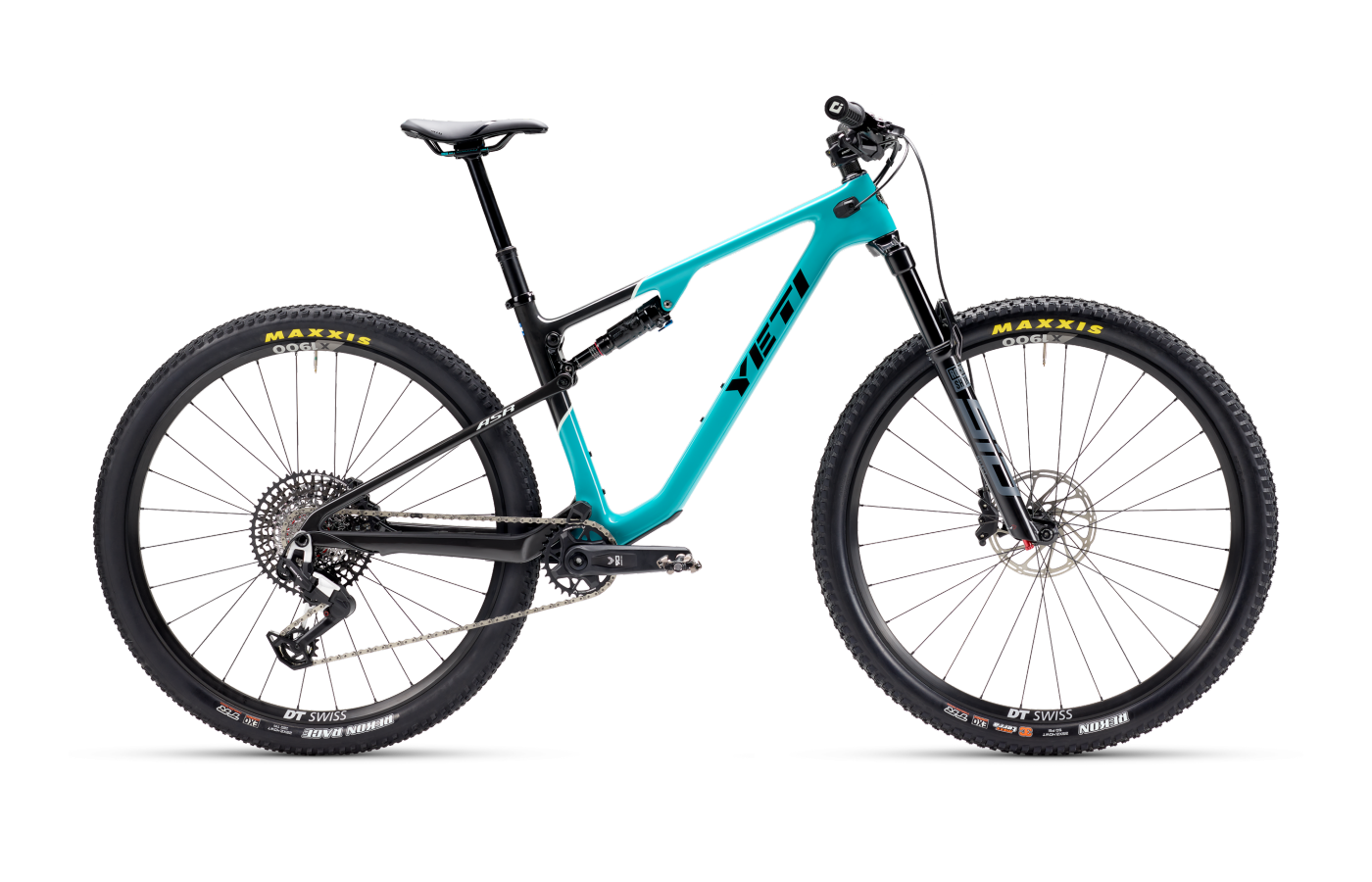
ASR
Yeti's ASR is the boutique answer to the Epic 8 — 115 mm of rear travel, a snappier and more 'race day' feel than the Specialized, and the Yeti finish quality you pay for. Smaller production runs, larger price tag.
Compare →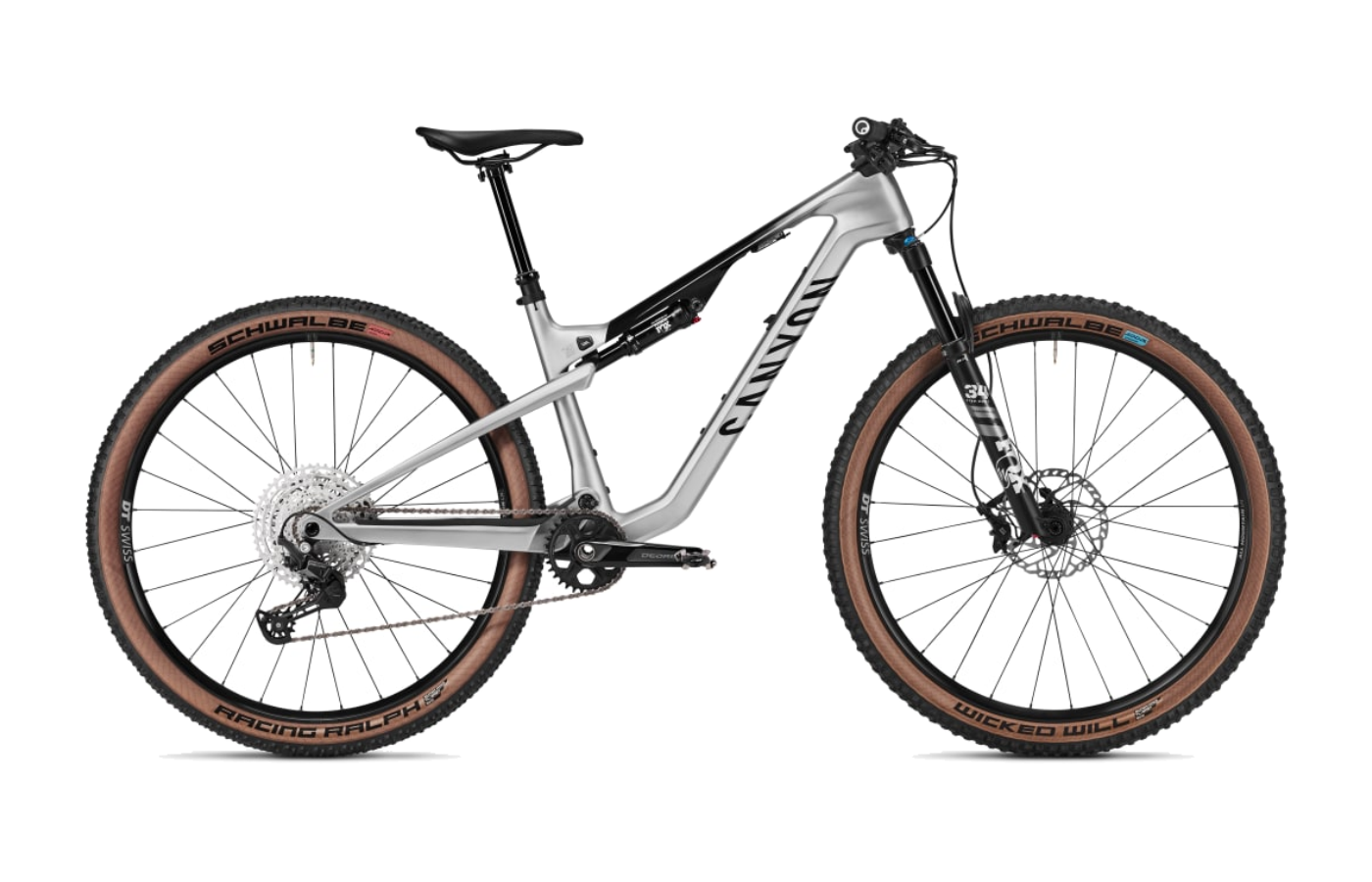
Lux Trail
Same Canyon value story as the Lux World Cup but with 120 mm of travel and a dropper post as standard. Pick the Lux Trail if you want the Canyon price but the modern-XC capability of the Epic.
Compare →