Aeroad
vsFilante SLR
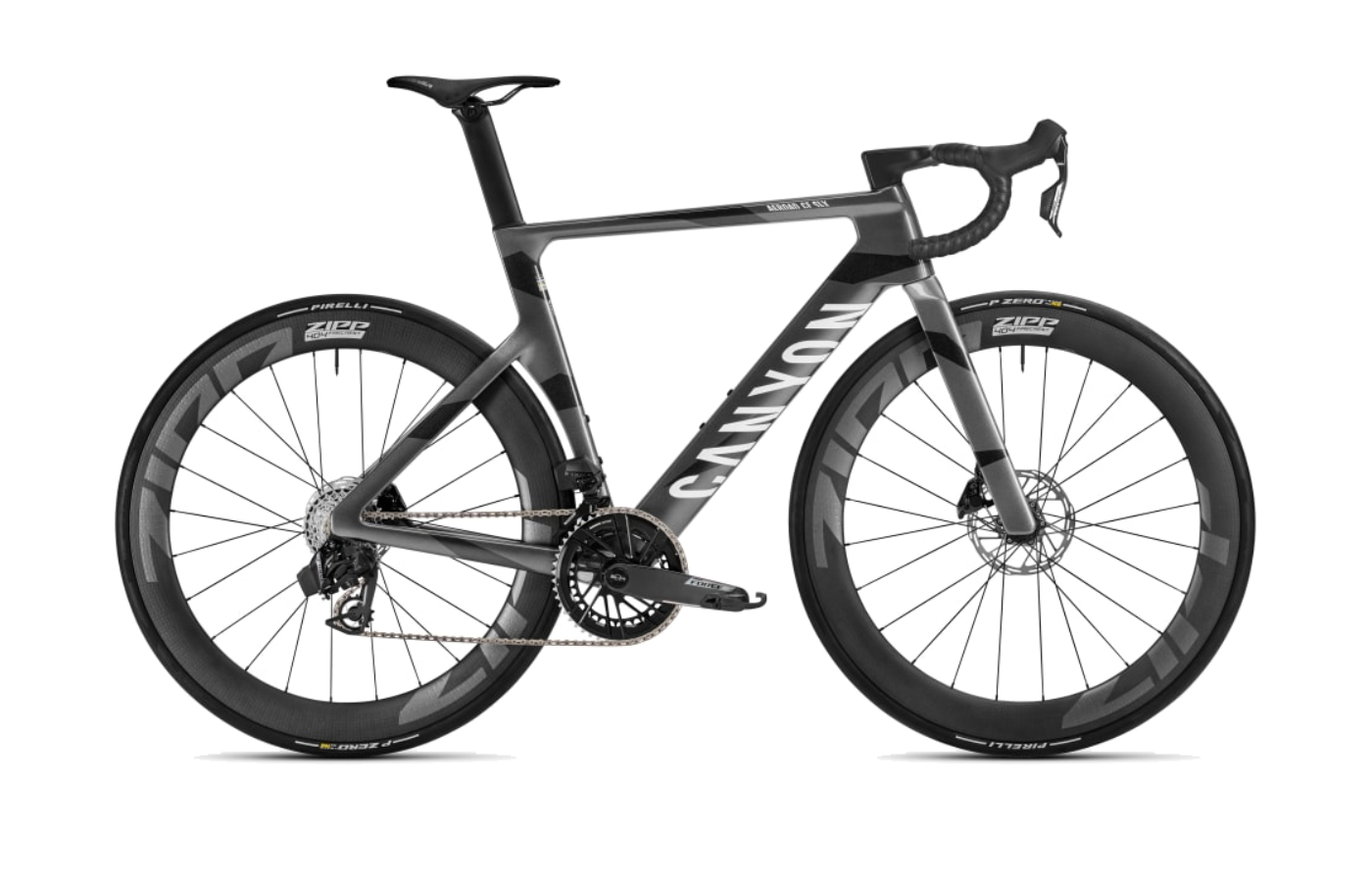
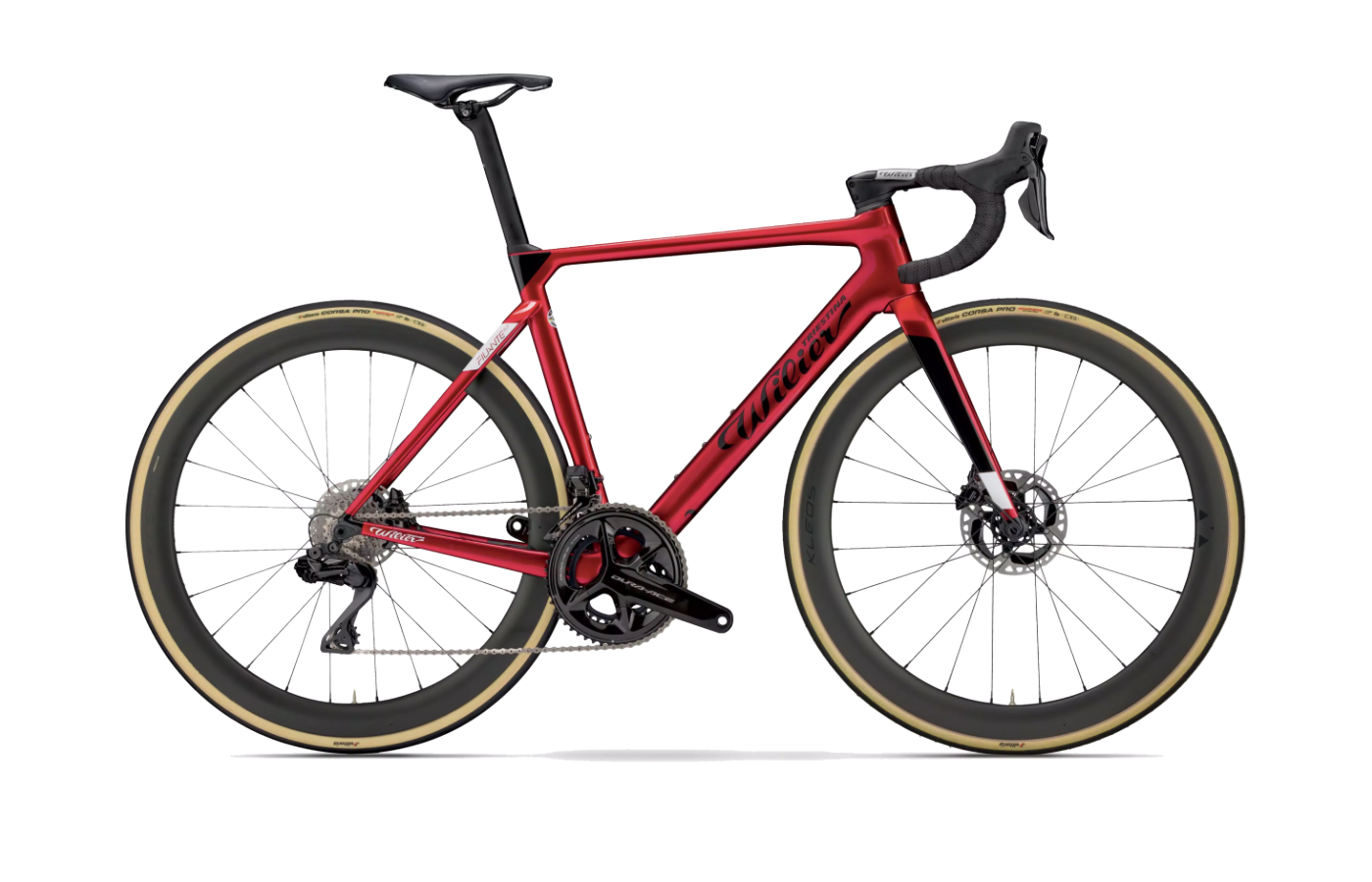
Two aero bikes, two temperaments.
The Aeroad is a German race tool built on spreadsheet gains and value. The Filante SLR is an Italian aero bike that chose composure over twitch.
Aeroad
- Price-for-spec leader — entry at $5,099 and a CFR flagship under $11,000 undercuts every Italian rival by thousands.
- Mechanic-friendly — unified T25 bolt standard, T25 bit hidden in the thru-axle, and a modular cockpit adjustable without a bleed.
- WorldTour-proven speed — Philipsen won 3 Tour stages on it and reviewers consistently call it "unstoppable" above 18 mph.
- Stock 25 mm front tire draws repeated criticism as "noticeably narrow" and harsh.
- Firm, race-first rear end that reviewers split on: compliant to some, "stiff pretty much everywhere" to others.
Filante SLR
- Composed, planted handling — a longer wheelbase (near 1000 mm in L) and slacker HTA produce a "deeply reassuring" high-speed feel.
- LCP-infused carbon damps road buzz — the liquid-crystal-polymer layup delivers a surprisingly civilized ride for an aero frame.
- Broader drivetrain ecosystem — Campagnolo Super Record 13 is available alongside Dura-Ace and Red AXS; Canyon only offers Shimano and SRAM.
- Price floor ($10,500) sits above the Canyon's ceiling — no sub-flagship value tier exists.
- Proprietary Aerokit bottles are fiddly to dock, rattle at times, and won't stand upright on a table.
Editor’s analysis
One is sharp and loud. The other is composed and quiet. Both are fast — they just want to go fast in different ways.
On paper, the Canyon Aeroad and Wilier Filante SLR sit in the same WorldTour aero-road bracket. Both race at the top of the sport (Alpecin-Deceuninck and Movistar on the Aeroad, Groupama-FDJ on the Filante SLR). Both use 50 mm-deep stock wheels and claim generous tire clearance. But their philosophies — and their prices — diverge almost immediately.
The Aeroad is Canyon's calculated value play. It starts at $5,099 with a full 105 Di2 build, tops out at $10,999 for the Dura-Ace CFR, and ships with a power meter on most tiers. The cockpit adjusts 50 mm wide and 20 mm tall without a bleed, every regularly-used bolt is the same T25 Torx, and the thru-axle hides a T25 bit so you can tune fit mid-ride. It's German engineering pointed squarely at the cost-per-watt buyer.
The Filante SLR plays a different game. Prices start at $10,500 — above the Aeroad's ceiling — and climb to $15,500 for the Red AXS flagship. The spend buys a claimed 860 g frame with HUS MOD carbon and liquid-crystal-polymer fibers tuned to damp road buzz, plus a proprietary Aerokit bottle system that Wilier's own tunnel numbers credit with 3-4 watts. Ride character matches the pitch: reviewers call it "grown-up," "planted," "settles into its stride." Steering is active but never darty.
Put another way: the Canyon Aeroad is the bike you buy when you want WorldTour aero performance at a mid-tier price and you're happy to mail-order your frame. The Wilier Filante SLR is the bike you buy when you want Italian craftsmanship, a composed ride, and you're willing to pay a 60-70% premium to get it.
Where the builds differ.
Comparing our editor's-pick builds side-by-side. Winners highlighted row-by-row — lower price and weight, and the better-spec component, each mark a point.
Build variants & pricing
The Aeroad spans $5,099 – $10,999 across eight builds. The Filante SLR runs $10,500 – $15,500 across six — its floor sits above the Aeroad's ceiling.
Prices are current US MSRP. Wilier doesn't offer a sub-$10k build on the Filante SLR — if that matters to your budget, the Aeroad is the only one of the two in the conversation. Both editor's picks here run SRAM Force AXS so the spec comparison is tier-matched; the Wilier also lists Shimano Ultegra Di2 and Campagnolo Super Record options at similar prices.
How they fit, how they steer.
Fit-picked sizes — Canyon S vs. Wilier M — come out nearly identical in stack (539 vs. 538 mm) and reach (390 vs. 388 mm). The Filante runs a 0.3° slacker head tube, 8 mm longer wheelbase, and 2 mm shorter chainstays — the composed one.
Which size should I buy?
Size recommendations based on stack, reach, and effective top tube. The Aeroad offers a wider range (2XS-2XL, seven sizes) than the Filante SLR (XS-XXL, six).
→These are starting points. Flexibility, riding style, and preferred position all shift the answer — if you’re between sizes, a professional fit beats a chart.
What the magazines said.
Published reviews from trusted cycling outlets. Click through for the full write-up.
Which one should you buy?
If you want the most aero-race bike per dollar, get the Aeroad. If you want a composed, Italian-built aero bike and the budget to afford it, get the Filante SLR.
Aeroad
If you want WorldTour-grade aero performance without paying WorldTour prices, and you're comfortable buying direct, the Aeroad is unbeatable on cost-per-watt. Reviewers consistently praise it as feeling tangibly fast, mechanically simple to live with, and priced thousands below Italian and big-three rivals.
Filante SLR
If you ride long, fast group efforts where stability matters more than firework acceleration, the Filante SLR's longer wheelbase and LCP-damped carbon make it the calmer, more predictable machine. It's a bike for the rider who wants an aero frame that doesn't punish the hands on hour three.
Questions buyers actually ask.
Short answers to the things we get emailed about most often.
01Which is faster on flat roads?
Neither brand has published a head-to-head wind-tunnel comparison, but independent testing by Cycling News placed the Filante SLR ID2 third among top-tier aero bikes in absolute drag — saving 24.5 watts versus an alloy baseline at race speed, with a notably flat drag curve across yaw angles. Wilier's own numbers claim a 4.5% drag reduction over the previous Filante with a rider on board (about 28.8 W at 50 km/h).
Canyon hasn't published comparable independent numbers for the Gen 4 Aeroad, but reviewers consistently describe it as "unstoppable" above 18 mph and "absolutely wicked in sprints." On the road, treat them as close enough that rider position and tire choice matter more than the frame.
02Which climbs better?
The Aeroad is the lighter bike in equivalent trim — top-tier CFR builds land around 7.0-7.2 kg, versus roughly 7.3 kg for the Filante SLR in size L with Red AXS. That's a small but real difference, especially on sustained climbs.
Handling-wise, the Aeroad's steeper 73.25° head tube angle (size M) feels more eager to accelerate out of the saddle. The Filante SLR's 72.5° HTA and longer wheelbase favor stability over snap. For pure climbing, both brands point you elsewhere in their lineup — the Canyon Ultimate or Wilier Verticale SLR — but the Aeroad has the edge between these two.
03What's the maximum tire clearance?
Canyon Aeroad: 32 mm officially, on both frame and fork. Stock tires on most builds are a 26 mm front / 28 mm rear combo for aero, which several reviewers flagged as harsh and recommended swapping.
Wilier Filante SLR: 30 mm officially per the spec sheet, with some reviewer mentions of 34 mm as a future-proofing figure. Stock is a 28 mm Vittoria Corsa Pro front and rear on every build — a rounder, less edgy tire choice than Canyon's stock setup.
Neither is a gravel bike, but both will clear a 30 mm tire for rougher pavement.
04How adjustable are the integrated cockpits?
Canyon's CP0048 Pace Bar is the more modular of the two. It adjusts 50 mm in width and 20 mm in height without cutting the steerer or bleeding hoses, and you can swap the interchangeable drops (including narrower "aero drops" Canyon claims save 14 W at 45 km/h). Stem length, however, is not customizable at point of purchase — that requires buying a new T-Bar section aftermarket (~$230).
Wilier's F Bar is a custom-made one-piece cockpit in six size configurations. Reviewers praised the 3 cm flare (ergonomic for hoods vs. drops) but noted limited fit customization — road.cc specifically flagged that an XL frame is restricted to a 110 mm stem and 39/42 cm bars.
05Are they electronic-shifting only?
Both frames are designed around electronic groupsets with fully internal routing. The Aeroad is offered in Shimano Di2 and SRAM AXS builds; the Filante SLR adds Campagnolo Super Record 13 WRL as a third option. If you want mechanical shifting or cable-actuated derailleurs, neither is the right frame.
06How do the drivetrain options differ?
Canyon keeps it simple — Shimano (105 Di2 / Ultegra Di2 / Dura-Ace Di2) and SRAM (Rival AXS / Force AXS / Red AXS). Most builds include a power meter as standard, which is uncommon at the Ultegra and Force tiers.
Wilier adds Campagnolo Super Record 13 WRL alongside Shimano Dura-Ace Di2, SRAM Red AXS, and Force/Ultegra mid-tiers. The Filante SLR is one of the few modern aero bikes where Campagnolo is a factory option — a real draw if you want a fully-Italian drivetrain to match the frame.
07What about durability and maintenance?
The Aeroad Gen 4 was explicitly designed to fix its Gen 3 reputation — the previous generation had a handlebar recall, a stop-ride notice, and seatpost issues. Canyon added hermetically sealed headset bearings, a titanium crown race, a two-bolt seat clamp, and the unified T25 Torx bolt standard across the bike.
The Filante SLR leans on sister-company Miche for CNC-machined Italian thru-axles, bottom brackets, and center-lock rings, plus CeramicSpeed bearings in the Kleos RD 50 wheels. It ships with a UDH hanger (universal, easy to source globally). Both should hold up well; neither has a widespread reliability issue in the current generation.
08Which is better for a non-racer?
Neither is an endurance bike — both have aggressive, race-oriented geometry. That said, the Filante SLR is the more forgiving ride for a non-racer who wants an aero bike, thanks to its LCP-damped carbon and longer wheelbase. Reviewers note it "doesn't beat you up for daring to take it on long rides."
The Aeroad rewards harder riding — it "begs to be ridden fast," per multiple reviewers, and can feel firm at casual tempos. If most of your riding is below 30 km/h and comfort matters, look at Canyon's Endurace or Wilier's Granturismo instead.
Similar bikes
If your priorities don’t map cleanly onto either of these, one of these adjacent bikes probably fits better.
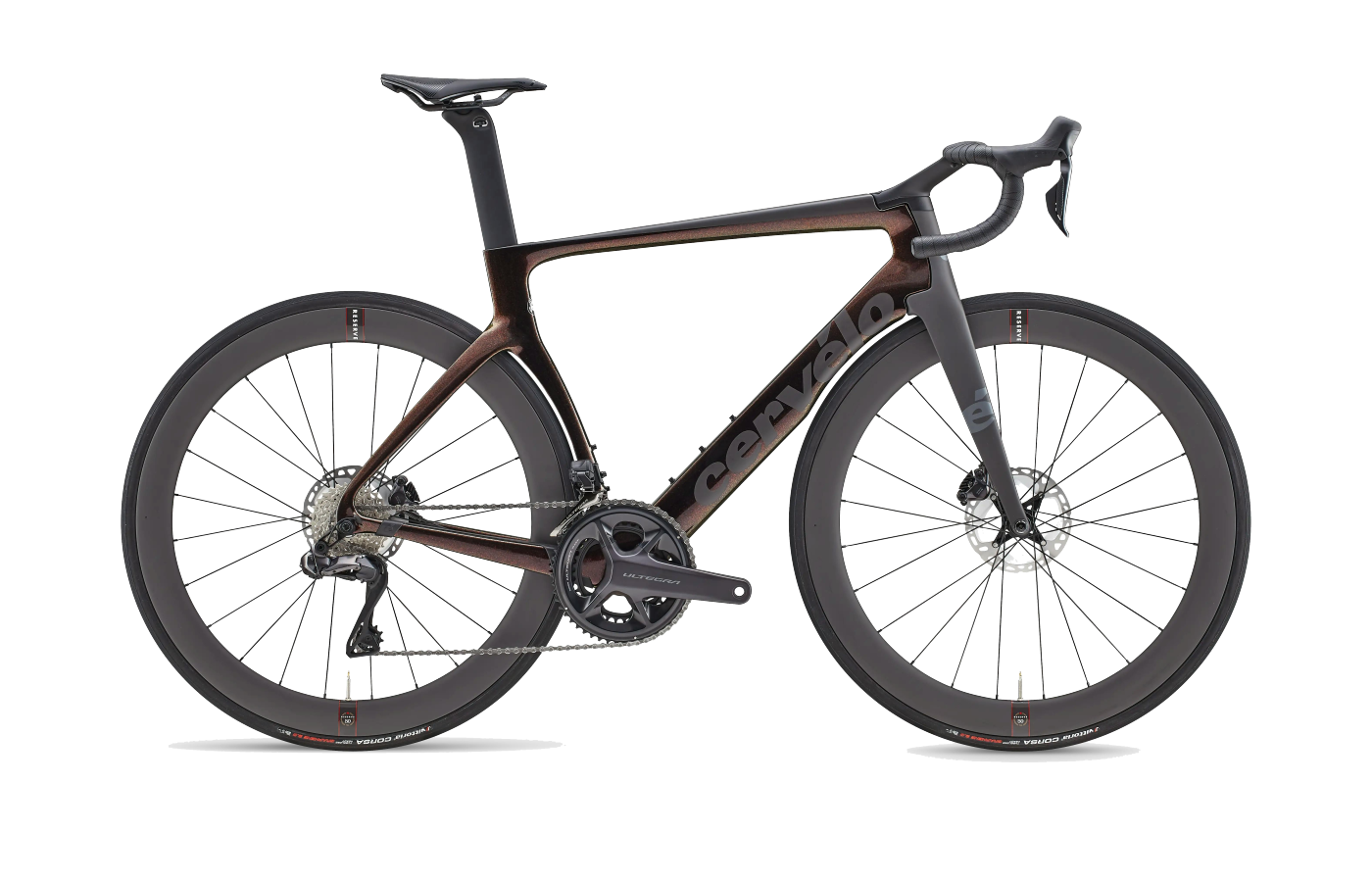
S5
The Cervélo S5 is the most radical aero rival to both — a split-cockpit design that sails through crosswinds like nothing else and anchors the category's reputation for pure speed.
Compare →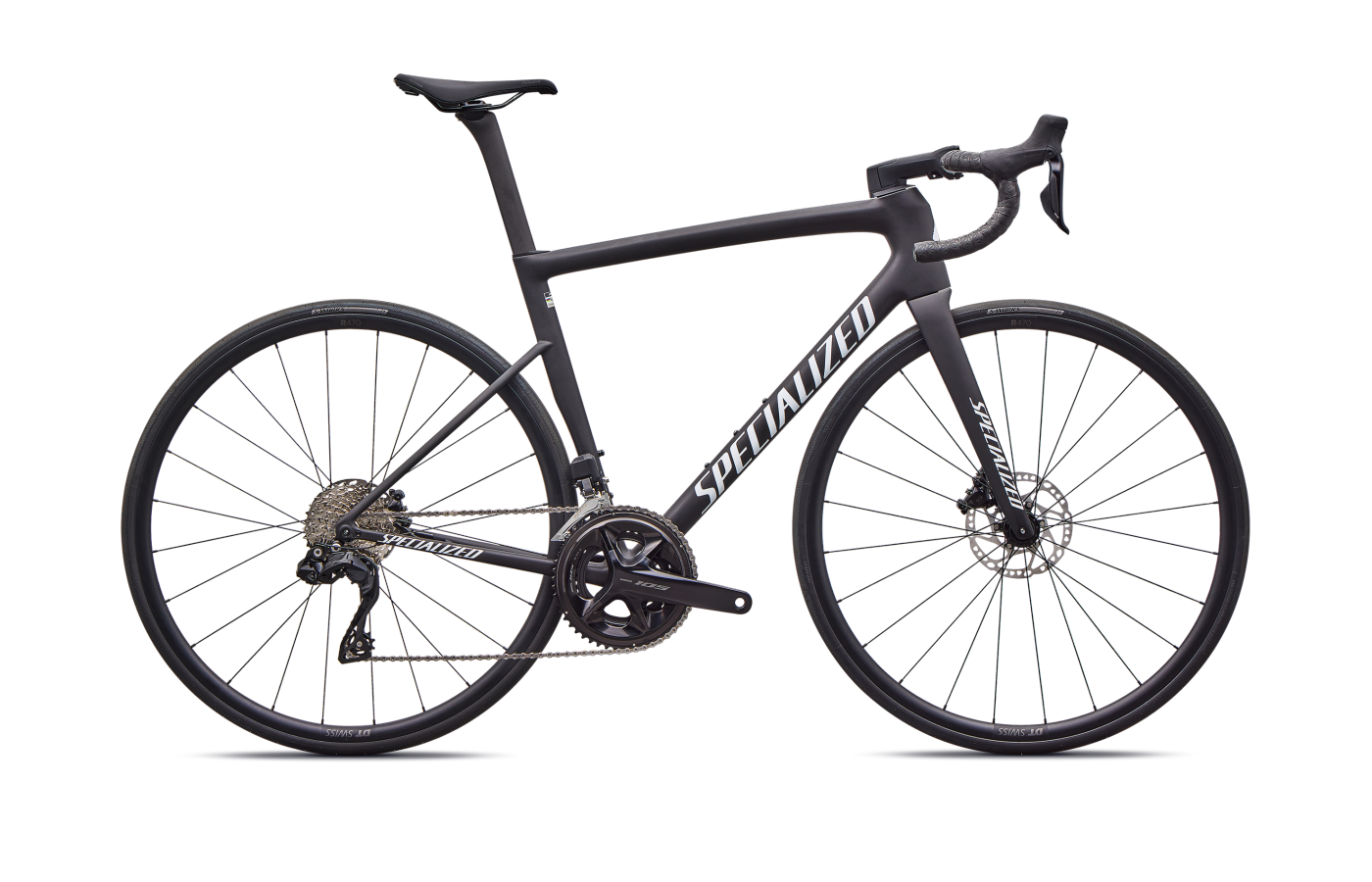
Tarmac
The Tarmac SL8 is Specialized's aero-lightweight hybrid — lighter and more compliant than a pure aero bike, with a much wider build range starting at 105 Di2.
Compare →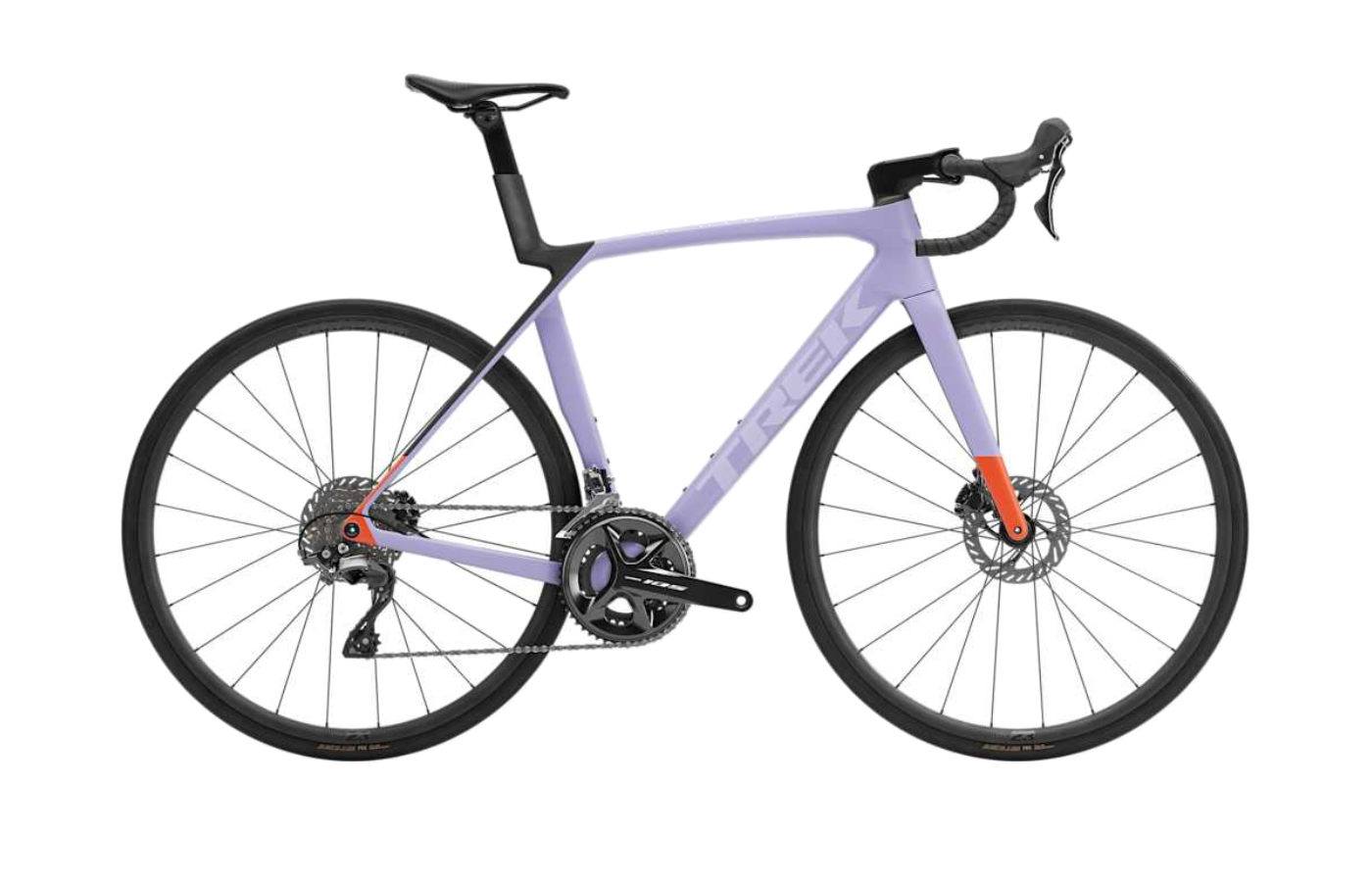
Madone
The Madone Gen 8 matches the Wilier's integrated aero-bottle approach but adds the IsoFlow seatpost decoupler — better vibration damping on long days, at a similar premium price.
Compare →