Habit
vsNeuron
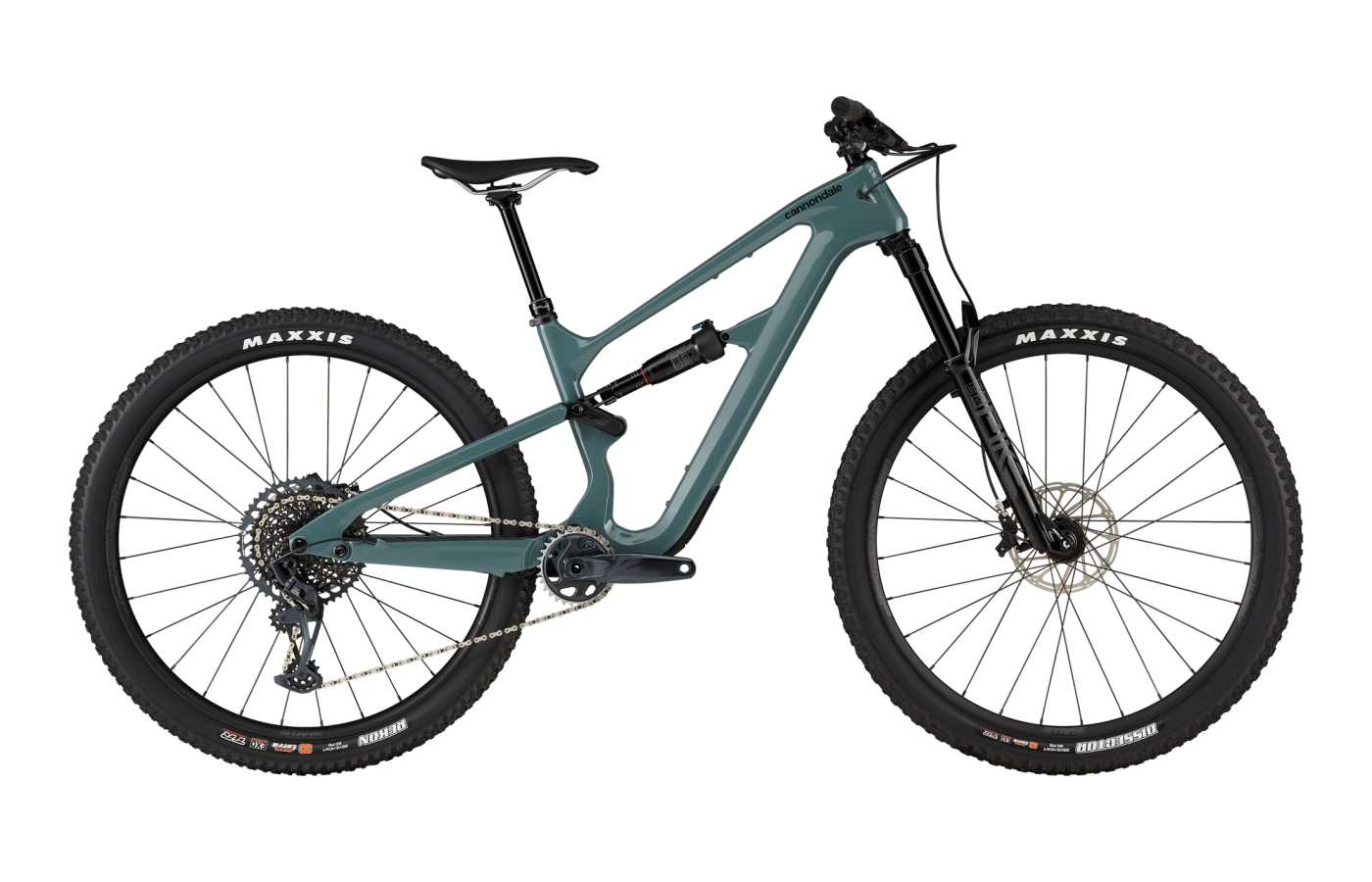
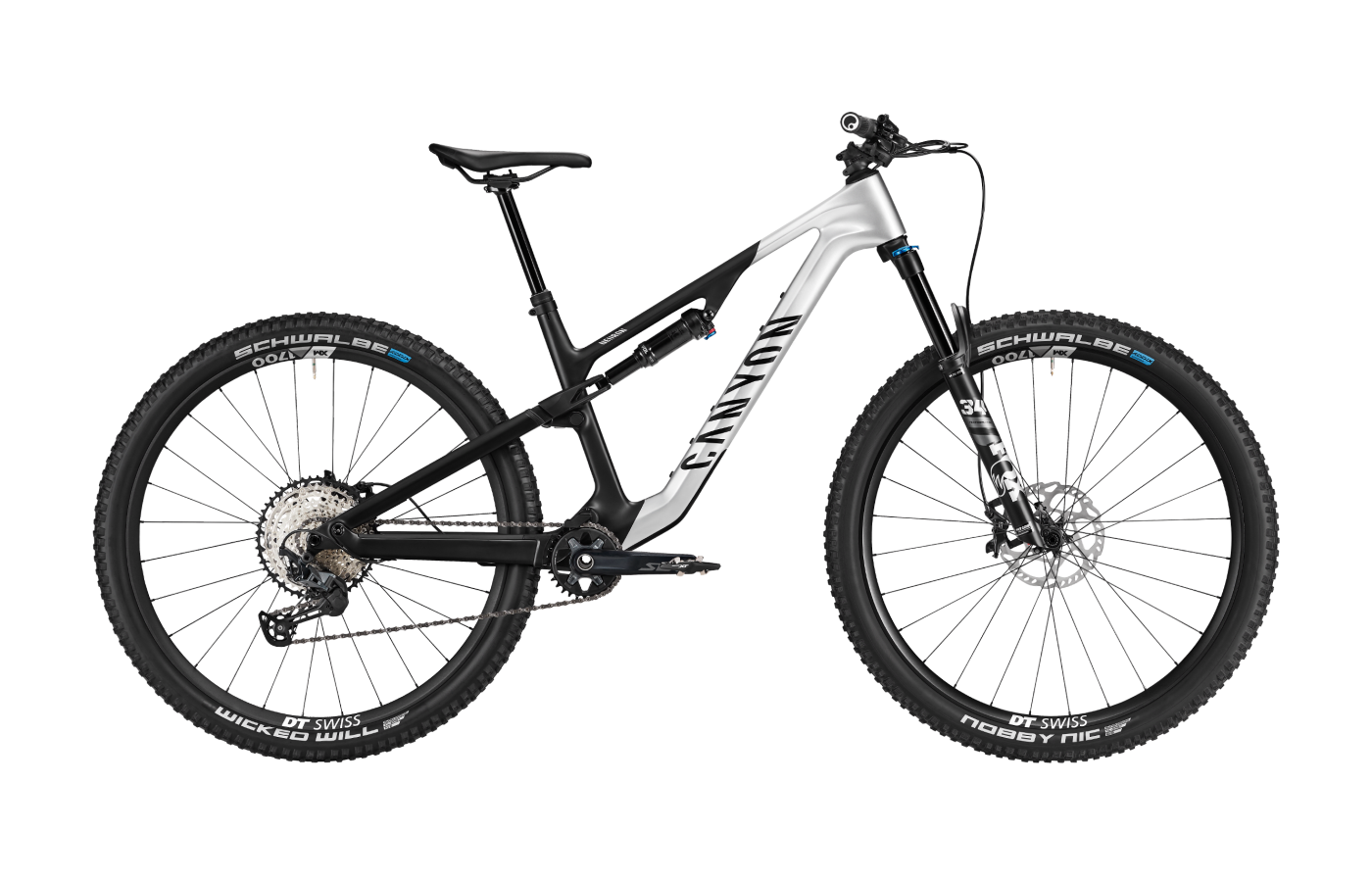
Two 130 mm trail bikes, two trail philosophies.
The Habit is the playful, jib-friendly trail bike with a wider build range. The Neuron is the efficient, mile-eating all-rounder with a direct-to-consumer price advantage.
Habit
- Wider build range — the lineup runs from a $1,599 alloy entry-point all the way to a $6,799 SRAM XO AXS flagship.
- Size-tuned chainstays — 434-445 mm by size keeps weight balance consistent for tall and short riders alike.
- Playful, descent-biased character — a relaxed 65.5-degree head angle and active rear end reward riders who like to pop, jib, and lift off lips.
- Mid-tier carbon builds spec mechanical drivetrains where Canyon offers electronic at similar money.
- Slacker seat tube on bigger sizes (73 deg on XL) is less efficient on long, steep climbs than the Neuron's uniformly steep 76 deg.
Neuron
- Direct-to-consumer value — Fox Performance suspension and DT Swiss XM 1700 wheels at the $3,199 CF 8 SLX price point.
- Steep seat tube on every size (76 degrees) — keeps the front wheel weighted on punchy climbs and switchbacks.
- Light, peppy ride — reviewers call it 'hyper-fast' and an ideal step-up bike for riders coming from XC.
- Stops at $4,399 — no flagship build to chase if you want top-tier suspension and an electronic drivetrain.
- Stiffer carbon chassis and firm-compound stock Schwalbe tires get chattery on rocky, high-frequency terrain.
Editor’s analysis
Same travel, same wheel size, same era — but ride them back-to-back and the intent is different from the first turn.
On paper the Cannondale Habit and Canyon Neuron line up almost too neatly: both 130 mm rear / 140 mm front, both 29ers (27.5 on XS), both with modern Horst-link rear ends, both shipping in 2023 with thoroughly contemporary geometry. Both are pitched as do-everything trail bikes for riders who don't want to commit to either the XC or enduro tribe.
The Habit leans poppy and unhurried. A 65.5-degree head tube angle, 127 mm of trail, and Cannondale's Proportional Response design — chainstays that grow size by size (435 mm on MD, 445 mm on XL) to keep weight balance consistent across riders. Reviewers describe it as a relaxed, 'jib-heavy' bike that wants to be lifted off every root and lipped off every berm. Build-wise, it scales further down the price ladder than the Neuron — there's a $1,599 alloy entry point with a microSHIFT 10-speed drivetrain and 26" wheels on XS.
The Cannondale Neuron sits half a degree steeper at 66 degrees and runs noticeably steeper seat tubes (76 degrees on every size, vs. 71-73 on the Habit's larger frames). Reviewers consistently call it 'peppy and enthusiastic,' a bike that 'doesn't need to be ridden at eye-watering speeds just to come alive.' It's the more efficient pedaler and the more upright climber — the trade is a stiffer, chattier feel on rocky descents, especially on the carbon builds.
The build-spec gap is where Canyon's direct-to-consumer model shows. At roughly the same money ($3,399 vs $3,199), the Habit Carbon 1 ships with mechanical SRAM GX and Stan's NoTubes Arch alloy wheels, while the Neuron CF 8 SLX gets Fox Performance suspension, DT Swiss XM 1700 wheels, and a 30 mm internal-width rim — gear that typically lives a tier higher at brick-and-mortar brands. If you can live without a local dealer, the Neuron stretches a dollar further.
Where the builds differ.
Comparing our editor's-pick builds side-by-side. Winners highlighted row-by-row — lower price and weight, and the better-spec component, each mark a point.
Build variants & pricing
The Habit's lineup spans $5,200; the Neuron's spans $2,700 and tops out lower.
Prices are current US MSRP. The Habit scales both lower (a $1,599 alloy entry build) and higher (a $6,799 SRAM XO AXS flagship) than the Neuron, which lives entirely between $1,699 and $4,399.
How they fit, how they steer.
Compared at MD (Cannondale) and M (Canyon) — the fit-picked sizes for a 5'8" rider on each bike. Reach is identical at 455 mm. The Neuron sits 6 mm lower in stack, runs a half-degree steeper head angle, and uses a 5 mm steeper seat tube. Chainstays differ slightly — 435 mm on the Habit MD, 440 mm on the Neuron M.
Which size should I buy?
Size recommendations are based on stack, reach, and effective top tube. The two ranges line up closely; size for size, the Neuron is a touch shorter in top tube and noticeably steeper in seat tube.
→These are starting points. Flexibility, riding style, and preferred position all shift the answer — if you’re between sizes, a professional fit beats a chart.
What the magazines said.
Published reviews from trusted cycling outlets. Click through for the full write-up.
Which one should you buy?
If you want a playful trail bike with builds at every price point, get the Habit. If you want the most parts-per-dollar and an efficient all-day ride, get the Neuron.
Habit
Best when your local trails reward popping off rollers and lipping berms more than they reward raw efficiency. The Habit's relaxed front end and active rear end make it feel friendly when speeds rise and forgiving when you overcook a corner. The build range also matters — it's the only side here that scales below $2,000.
Neuron
Best when most of your rides involve long climbs, fire roads between trails, or back-to-back hours in the saddle. The Neuron's steeper seat tube and lighter, peppier feel pay off on every climb. Pair that with Canyon's direct-to-consumer pricing and the spec-per-dollar is hard to match — provided you're comfortable buying a bike sight-unseen.
Questions buyers actually ask.
Short answers to the things we get emailed about most often.
01Which is better for steep, technical descents?
The Habit, marginally. Its 65.5-degree head tube angle is half a degree slacker than the Neuron's 66 degrees, and reviewers consistently describe its rear end as more 'active' and tracking the ground better on rough terrain.
The Neuron is no slouch on descents — reviewers call it 'much more confident in steep, bumpy terrain' than the previous generation — but its stiffer carbon chassis and firm-compound stock Schwalbe tires get chattery on truly rough, high-frequency rock. Several reviewers explicitly recommended swapping tires before sending the Neuron into burlier terrain.
02Which climbs more efficiently?
The Neuron. Canyon runs a uniformly steep 76-degree seat tube angle across every size, keeping the rider's weight forward and the front wheel planted on punchy climbs.
The Habit's seat tube angle varies by size from 70.5 degrees on small to 73 degrees on XL — never quite as steep as the Neuron. Reviewers describe the Neuron as 'peppy and enthusiastic,' an ideal step-up bike for riders coming from XC. The Habit feels a touch more laid-back when the trail tilts up.
03How much travel do they each have?
Both: 130 mm rear / 140 mm front. Identical on paper. Both run 29" wheels on SM and up, with XS sizes dropping to 27.5" on each platform.
If you want more travel from the same Cannondale frame, the Habit LT uses the identical chassis with 140 mm rear / 150 mm fork — same bike, more cushion.
04What do you get for your money on each?
At roughly the same $3.2-3.4k price point: Habit Carbon 1 ($3,399) ships mechanical SRAM GX Eagle, RockShox Pike Select+ fork, and Stan's NoTubes Arch MK4 alloy wheels. Neuron CF 8 SLX ($3,199) gets Shimano SLX, Fox 34 Float Performance GRIP fork, FOX Float DPS shock, and DT Swiss XM 1700 wheels with a 30 mm internal width.
Reviewers repeatedly call out Canyon's spec-per-dollar — 'an exceptional package for the money' (Flow Mountain Bike) — as a standout. The trade is no local dealer and a shipping fee.
05Which has the wider price range?
The Habit, by a wide margin. Cannondale's lineup runs from a $1,599 alloy build with a microSHIFT 10-speed drivetrain all the way to a $6,799 SRAM XO Eagle AXS T-Type flagship — a $5,200 spread across 6 builds.
The Neuron lives in a tighter window: $1,699 (alloy SX Eagle) to $4,399 (CF 8 GX AXS Transmission), 4 builds total. There's no Neuron flagship to chase — if you want top-of-the-line, the Habit is the only option here.
06Are they both available with a wireless drivetrain?
Yes, but at very different prices. The Habit LTD ($6,799) is the only wireless build in the Habit lineup, with SRAM XO Eagle AXS T-Type. The Neuron CF 8 SRAM GX Eagle AXS Transmission ($4,399) is the only wireless build in the Neuron lineup.
If wireless shifting is a hard requirement, the Neuron's GX AXS option is roughly $2,400 cheaper than the Habit's XO AXS.
07How does the Habit's Proportional Response design actually affect the ride?
Cannondale's Proportional Response changes chainstay length and suspension kinematics by frame size — not just front-triangle dimensions. Chainstays grow from 434 mm on XS up to 445 mm on XL, with 435 mm on MD specifically.
The practical effect: bigger riders aren't perched over a too-short rear end (a common complaint on bikes that share one rear triangle across all sizes), and smaller riders get a tighter wheelbase that turns more easily. The Neuron, by contrast, uses 430 mm chainstays on XS/S and 440 mm on M/L/XL — two lengths across five sizes.
08Which carries fewer caveats — buying experience and warranty?
The Habit sells through Cannondale's traditional dealer network. You can demo before buying, get setup help in-store, and lean on a local mechanic for warranty work.
The Neuron ships direct from Canyon. There's no demo, no in-person fit, and any warranty work is mail-in. The trade is the spec-per-dollar Canyon delivers — reviewers consistently note the Neuron 'puts other brands to shame in the value stakes' (BikeRadar). Decide based on how much hands-on support you want.
Similar bikes
If your priorities don’t map cleanly onto either of these, one of these adjacent bikes probably fits better.
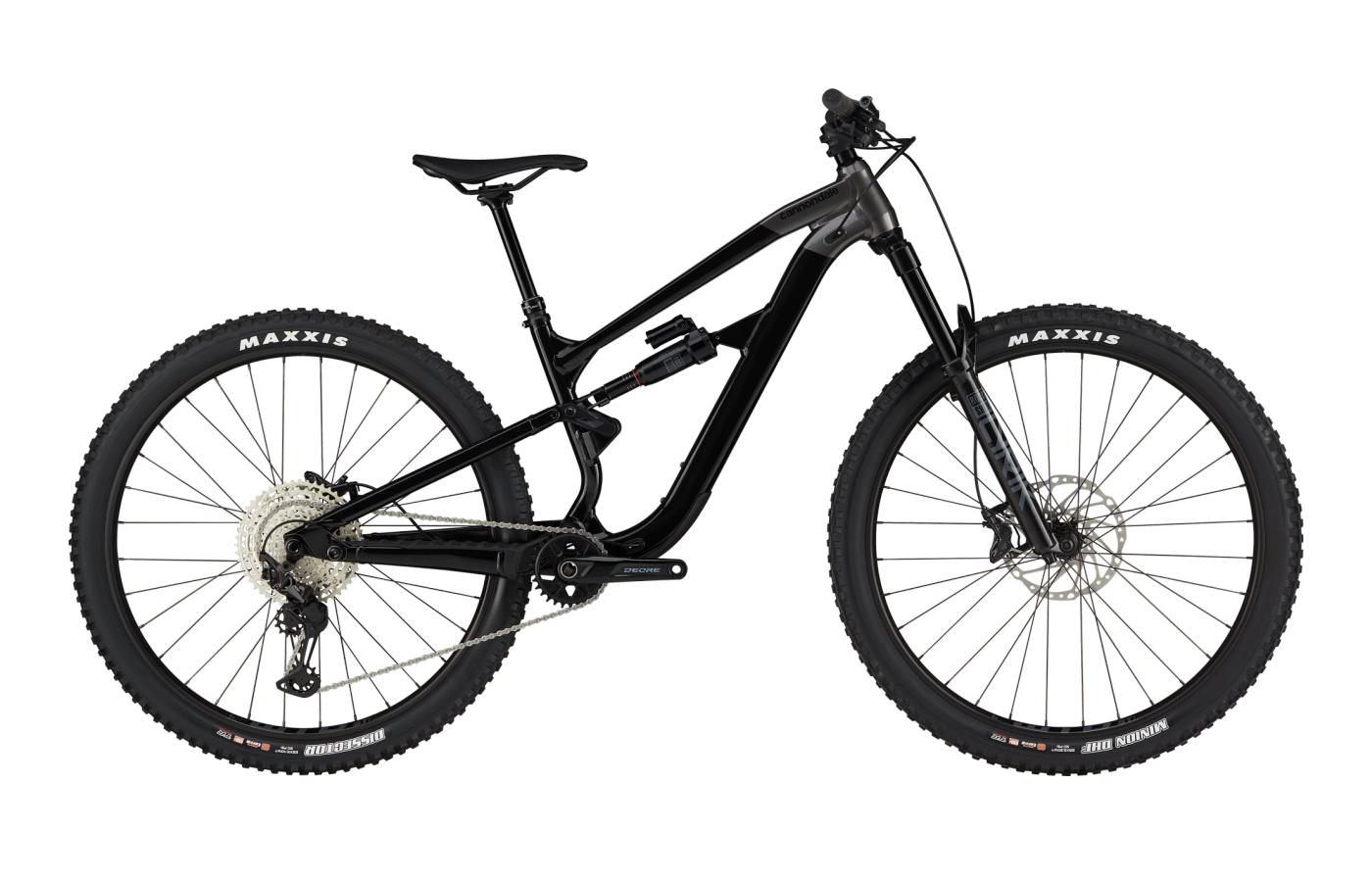
Habit LT
Same Habit frame, 10 mm more travel front and rear (140/150) and a beefier fork. The right call if you've been eyeing the Habit but your local trails punch a little harder than 130 mm wants to handle.
Compare →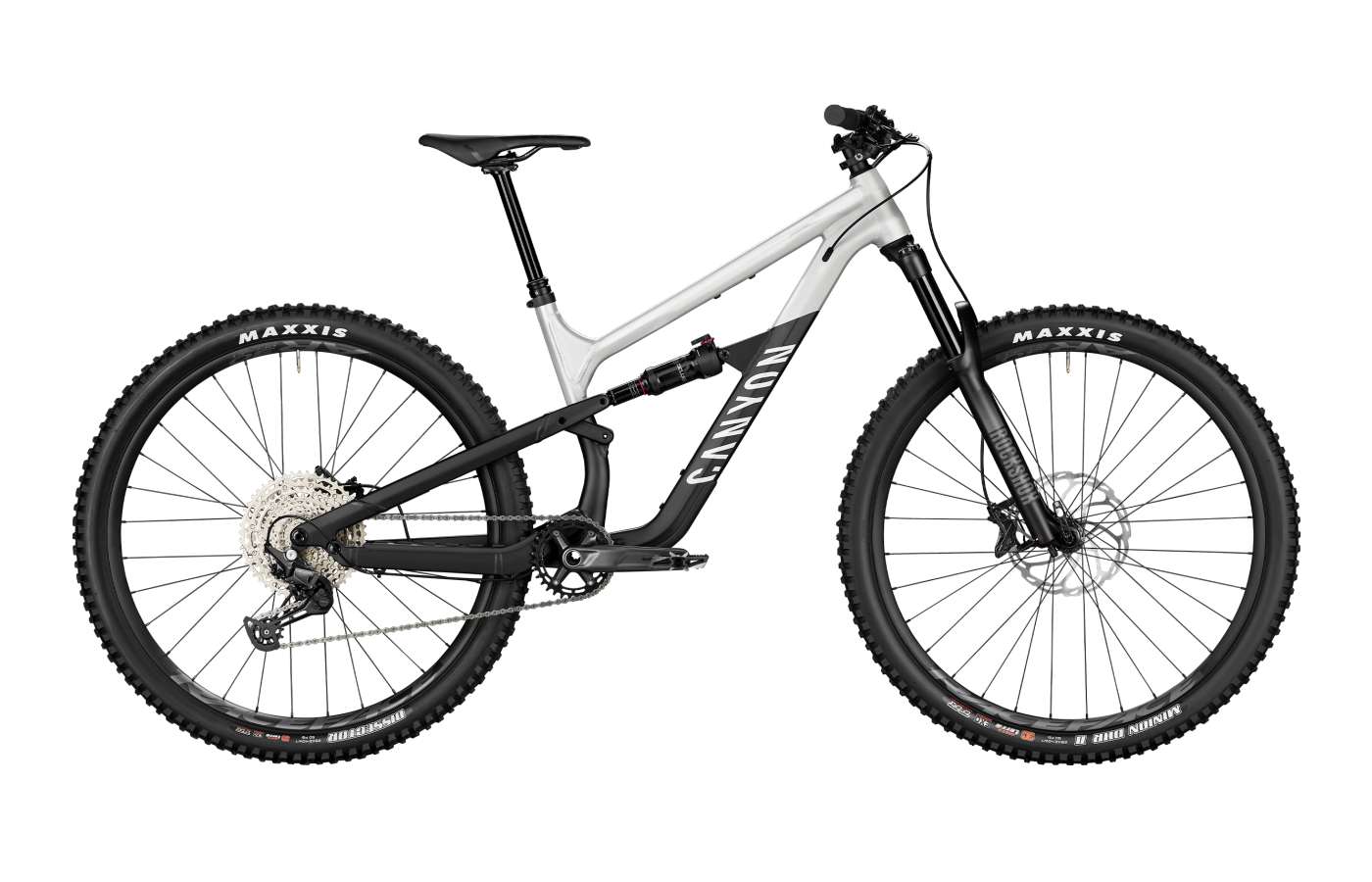
Spectral 125
Canyon's other answer to 'short-travel trail bike' — but with aggressive enduro geometry that loves to be thrashed. Pick this over the Neuron if you'd rather sacrifice some efficiency for a much more descent-biased ride.
Compare →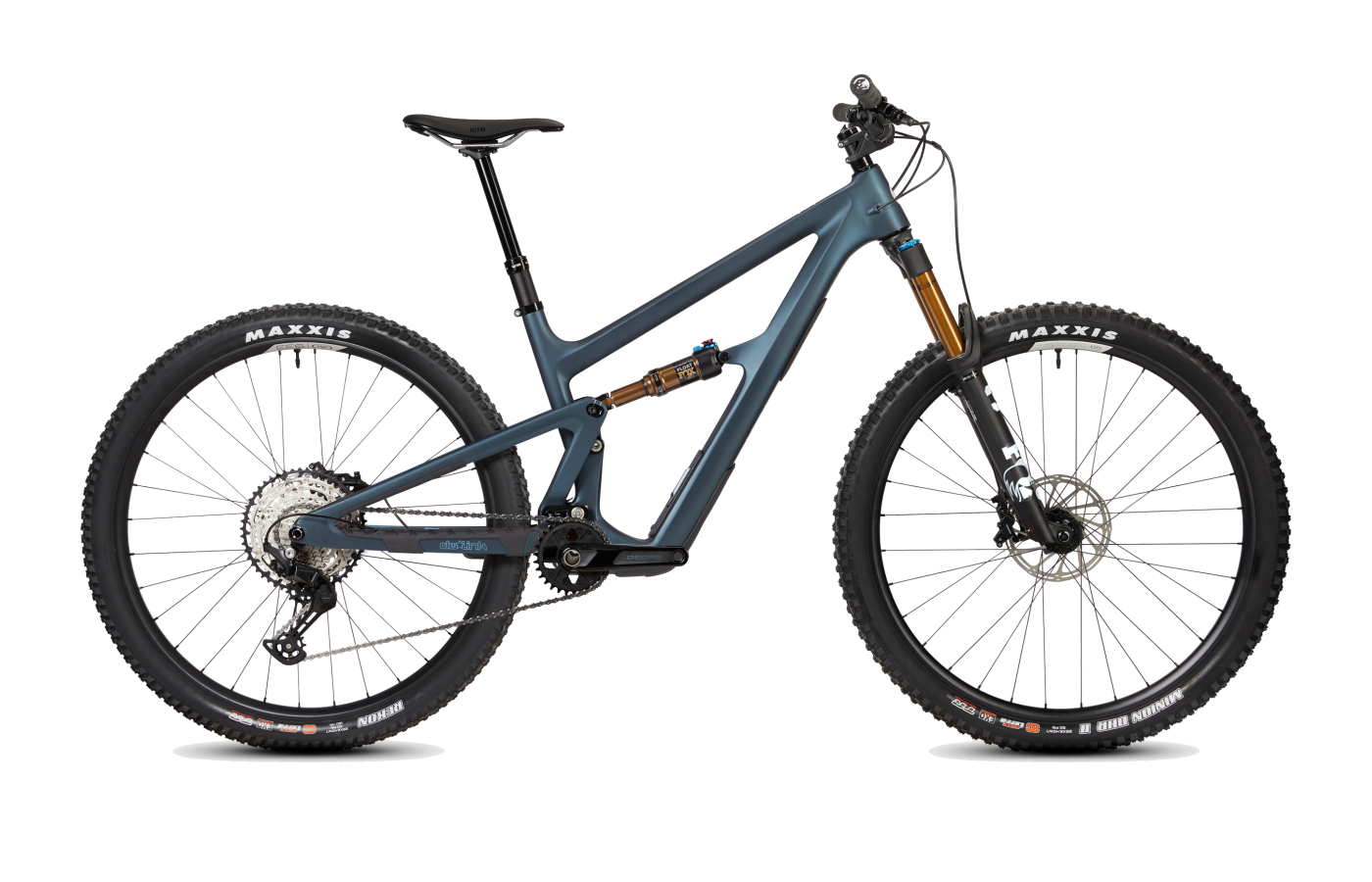
Ripley
The 130 mm trail-bike benchmark, with a DW-Link suspension that climbs better than either the Habit or the Neuron. Costs more, but holds its value and rides like it.
Compare →