Teammachine
vsSoloist
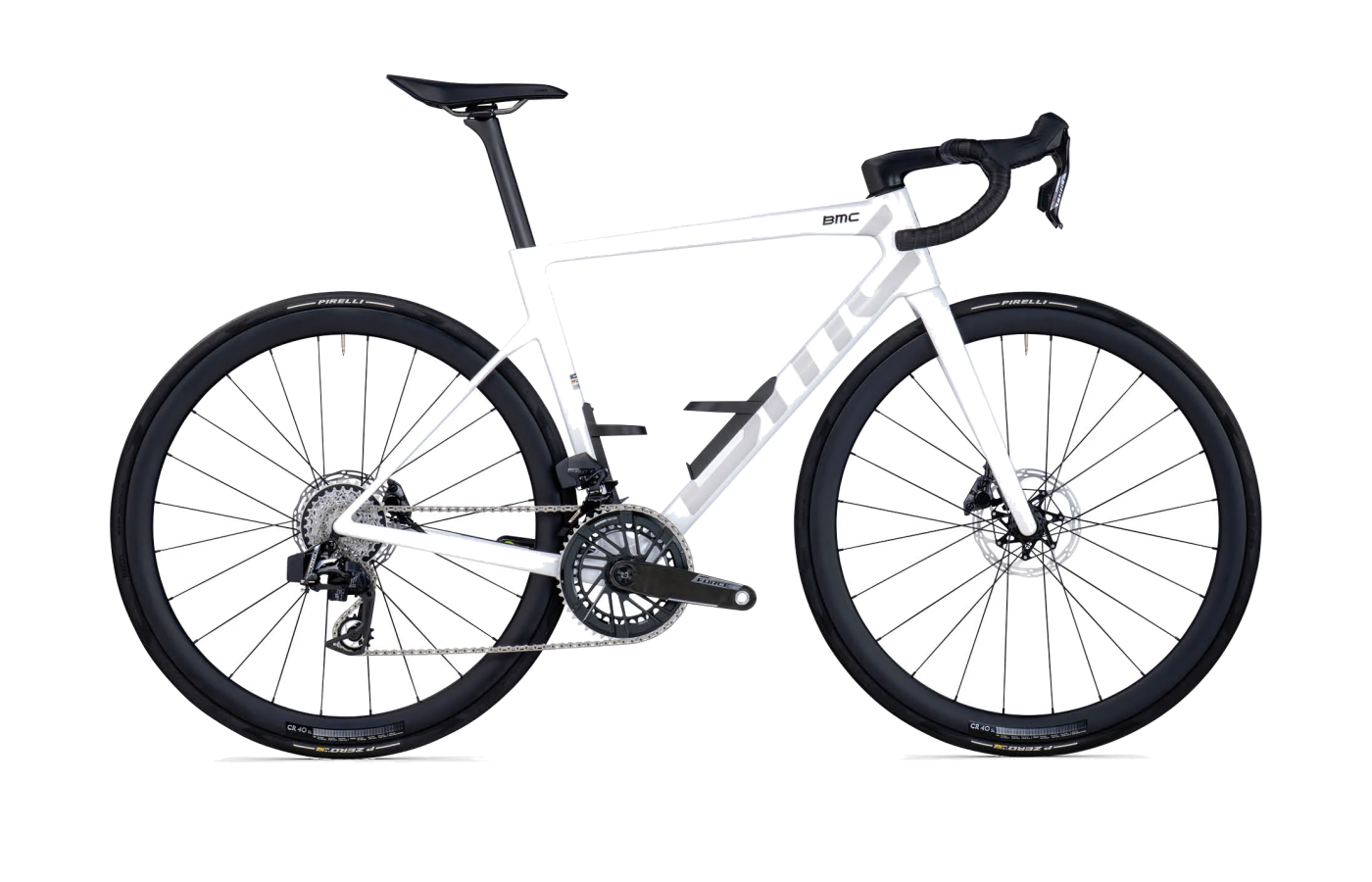
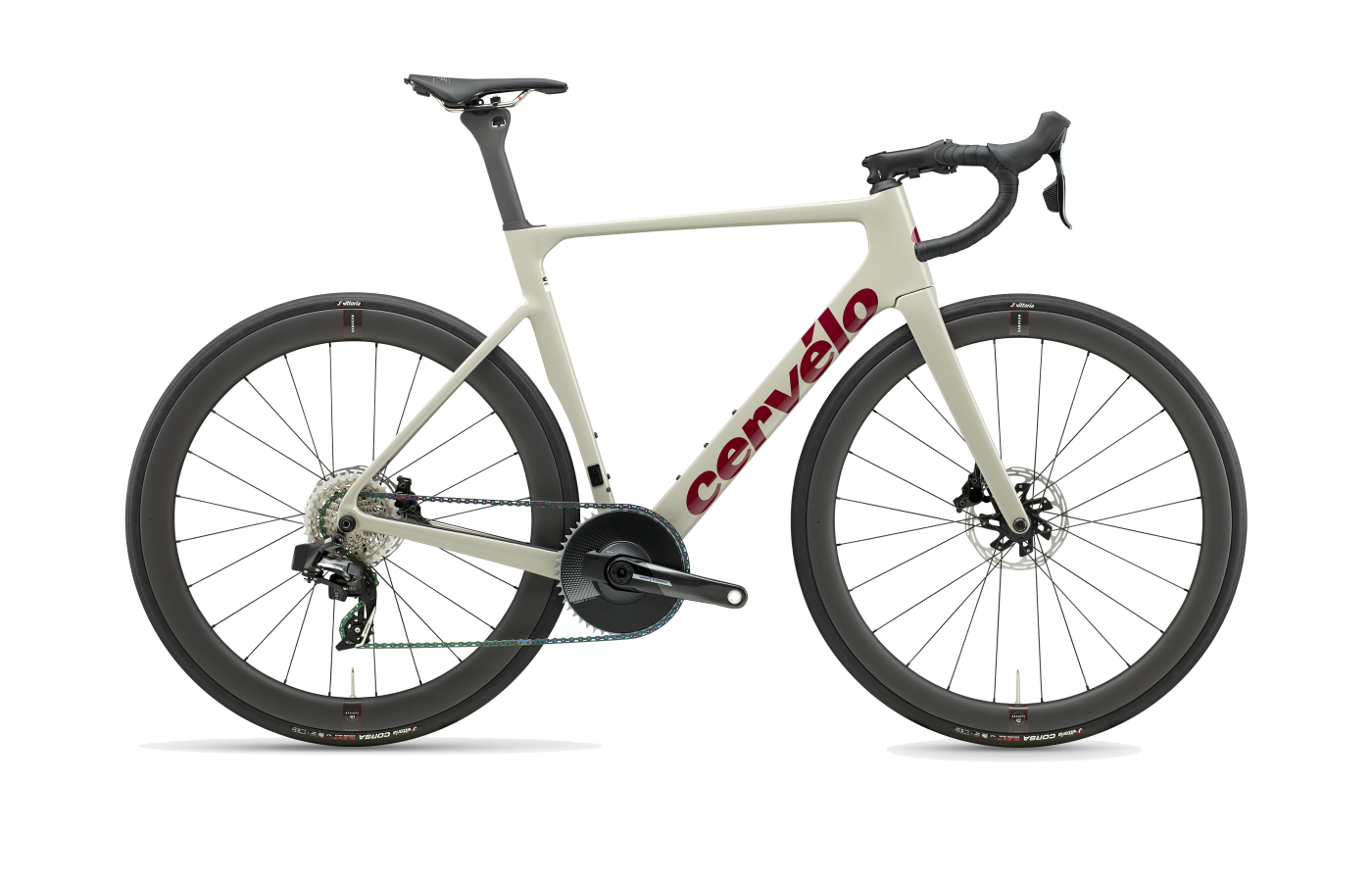
Two race bikes, two different middles.
BMC's Teammachine SLR 01 chases lightness; Cervelo's Soloist chases serviceability. Both want to be your only race bike.
Teammachine
- Sub-UCI-limit weight — 6.6 kg measured at size 54 (Velo) on the Force AXS build, with 222 g shed from Gen 4.
- Stable, planted descending — a long 63 mm trail across all sizes is the SLR 01's signature, repeatedly praised as "pinpoint-accurate" on fast switchbacks.
- Power meter standard on every build — SRAM Quarq on Force/Red builds, 4iiii on Shimano builds.
- Price floor at $8,999 — there's no entry-level SLR 01.
- Optimized around 26 mm tires; multiple reviewers flagged this as out of step with current race trends.
Soloist
- Same frame at every price point — even the $3,900 mechanical 105 build gets the WorldTour-grade Soloist frameset and lifetime warranty.
- Mechanic-friendly construction — threaded T47 bottom bracket, semi-integrated routing, stem swaps without a brake bleed.
- More tire clearance (34 mm vs the BMC's 32 mm) on a more compliance-tuned frame, which reviews call "smooth-rolling" on poor tarmac.
- Heavier than the BMC — Road.cc weighed an Ultegra build at 8.47 kg, well above the BMC's 6.6 kg.
- Multiple reviewers reported BBRight T47 and headset creak after limited use; not universal but recurring.
Editor’s analysis
On paper they're priced like rivals. On the road, they're solving different problems — one is the WorldTour climber on a diet, the other is the privateer's go-fast that you can actually wrench on.
The BMC Teammachine SLR 01 (Gen 5) is a focused climbing bike that just dropped 222 g of frame, fork, and seatpost weight to defend its place in the lineup against BMC's own aero-focused Teammachine R. At 6.6 kg in size 54 (Velo's measured weight on the Force AXS build), it's a true sub-UCI-limit machine — but it costs accordingly: the cheapest SLR 01 build is $8,999 and the lineup tops out at $13,649.
The Cervelo Soloist sits in the gap between Cervelo's S5 and R5 — about 250 g heavier than the R5 and roughly 250 g lighter than the S5, with aerodynamics splitting the difference too. Cervelo's pitch isn't extremes; it's a WorldTour-quality frame (the same one across every build) wrapped in a price ladder that starts at $3,900 with mechanical 105 and tops out at $7,600 with Force AXS. Notably, even the entry build gets the same frameset — no scaled-down carbon.
Geometry tells the story. At size 54, the BMC Teammachine sits 10 mm taller and 3 mm longer than the Cervelo Soloist, with a 0.7-degree slacker head tube and 5.7 mm more trail (63 mm vs 57.3 mm). That extra trail is the source of the BMC's much-praised high-speed descending stability — multiple reviews call it "pinpoint-accurate" and "planted." The Cervelo, with shorter trail and a steeper 73-degree head tube, steers more eagerly into corners at the cost of some composure at speed.
The other practical gap is serviceability. The BMC runs a one-piece ICS Carbon cockpit with hoses through the headset and a press-fit PF86 bottom bracket — beautiful, expensive, and a workshop visit if you want to swap stem length. The Cervelo Soloist uses a two-piece cockpit with semi-integrated routing under the stem and a threaded T47 BBRight bottom bracket. Stem swaps don't require a brake bleed. For a self-funded racer who mounts their own bike, that gap matters more than the spec sheet suggests.
Where the builds differ.
Comparing our editor's-pick builds side-by-side. Winners highlighted row-by-row — lower price and weight, and the better-spec component, each mark a point.
Build variants & pricing
Tier-matched on Force AXS — but the BMC SLR 01 starts $1,400 above the equivalent Cervelo, and the platform tops out $6,000 higher.
Prices are current US MSRP. The BMC Teammachine generation also includes the aero-focused R 01 builds at the same price points; if straight-line speed matters more than climbing weight, those are the BMC builds to look at. Cervelo offers the Soloist as low as $3,900 with mechanical Shimano 105 — there's no equivalent entry tier from BMC.
How they fit, how they steer.
Both at size 54 — the fit-picked frame on each side. The BMC sits 10 mm taller, 3 mm longer, with a 0.7-degree slacker head tube and 5.7 mm more trail. That's the "stable descender" geometry in numbers.
Which size should I buy?
Size recommendations come from stack, reach, and effective top tube. Both ranges overlap closely from 54 up; the Cervelo extends slightly further at the small end (48 cm vs the BMC's 47 cm).
→These are starting points. Flexibility, riding style, and preferred position all shift the answer — if you’re between sizes, a professional fit beats a chart.
What the magazines said.
Published reviews from trusted cycling outlets. Click through for the full write-up.
Which one should you buy?
If you want the lightest possible WorldTour climber and don't mind paying for it, get the BMC. If you want one race bike that's easy to live with and easy to afford, get the Cervelo.
Teammachine
If your weekends are spent chasing summits and you care about every gram on the way up, the SLR 01's 6.6 kg frame and long-trail descending stability are the package. The price floor at $8,999 means you're committing to a serious bike — but you're getting the bike a WorldTour team races at altitude.
Soloist
If you wrench on your own bike, race local crits and grand fondos, and want one frame that scales from $3,900 to $7,600 without compromise, the Soloist is built for you. It's not the lightest or the most aero — but the threaded BB, semi-integrated cockpit, and lifetime-warranty frameset make it the easier bike to live with for years.
Questions buyers actually ask.
Short answers to the things we get emailed about most often.
01Which is lighter?
The BMC Teammachine SLR 01, by a meaningful margin. Velo measured the Force AXS build at 6.6 kg in size 54 — at the UCI weight limit. Road.cc weighed an Ultegra Soloist at 8.47 kg. That's roughly 1.8 kg between equivalent builds.
On a 30-minute climb, that gap is worth somewhere on the order of 30–40 seconds for a 70 kg rider. Not race-deciding on a flat stage, but real on alpine ascents.
02Which descends better?
The BMC, and reviewers are unusually unified on this. The SLR 01's signature is its 63 mm trail — held constant across every size — which Velo and Escape Collective both credit for its "planted" and "pinpoint-accurate" feel on fast descents.
The Cervelo Soloist runs a tighter 57.3 mm trail with a steeper 73-degree head tube. It's quicker to turn in low-speed corners but less composed at very high speed. Reviewers describe it as engaging on twisty descents but not as confidence-inspiring at 80 km/h-plus.
03What's the maximum tire clearance?
BMC Teammachine SLR 01 (Gen 5): 32 mm officially, up from 30 mm on Gen 4. BMC notes the handling is optimized around 26 mm tires, which several reviewers (Velo, Escape Collective) flagged as a curious choice given current trends.
Cervelo Soloist: 34 mm officially. Stock 28–29 mm Vittoria Corsas measure wider on the Reserve rims' 23 mm internal width — typically 30–31 mm on-bike.
Neither is a gravel bike. For chip-seal or worse, the Soloist's extra clearance and softer front end pay off.
04How serviceable are the two cockpits?
The BMC uses a one-piece ICS Carbon cockpit with full internal routing through the headset. Changing stem length or bar width means a new cockpit unit, and a hose bleed is part of the job — a workshop visit, not a driveway swap.
The Cervelo Soloist uses a two-piece bar and stem with semi-integrated routing under the stem. You can swap stems or bars without re-bleeding the brakes. Multiple reviews cite this as one of the Soloist's best practical features — particularly for self-supported riders dialing fit over time.
05Do both come with power meters?
BMC ships every Teammachine SLR 01 build with a power meter as standard — SRAM Quarq spider-based units on Force/Red AXS builds, 4iiii Precision Gen3+ on Shimano builds. The 4iiii units include Apple Find My integration on newer revisions.
Cervelo includes a SRAM-based power meter on the Force AXS Soloist builds. Lower-tier Shimano builds (Ultegra Di2, 105 Race, 105) ship without one — you'd add a 4iiii, Stages, or pedal-based meter aftermarket.
06Which has the wider price range?
The Cervelo Soloist is far more accessible at the bottom — the mechanical 105 build is $3,900, and a 105 Di2 build sits at $5,350. The same frame underpins every build, so you're not getting downgraded carbon at the entry tier.
The BMC Teammachine generation spans $4,799 to $13,649, but there are two distinct frame families: the lighter SLR 01 starts at $8,999, while the more affordable builds use the SLR (non-01) and R 01 frames. If your budget is under $6k, the only BMC Teammachine option is the SLR (non-01) build at $4,799 — not the headline frame.
07Are these wireless-only frames?
The BMC SLR 01 lineup is all electronic (SRAM AXS or Shimano Di2). The R 01 builds are also all electronic.
The Cervelo Soloist explicitly supports mechanical drivetrains — the entry-level $3,900 build uses Shimano 105 R7120 mechanical. Cervelo highlights this as a deliberate choice for serviceability and accessibility.
08Which is the better all-around race bike?
Honest answer: it depends what "all-around" means to you.
The BMC SLR 01 is the better bike for someone whose riding skews mountainous and who values weight and high-speed stability. It's also the bike with the more premium, integrated build kit at every price point.
The Cervelo Soloist is the better bike for someone whose riding mixes crits, group rides, and longer days on imperfect roads — and who'd rather spend $5–7k now and upgrade wheels later than commit $9k+ to a single build. Both will race well; they're optimized for different rider lives.
Similar bikes
If your priorities don’t map cleanly onto either of these, one of these adjacent bikes probably fits better.
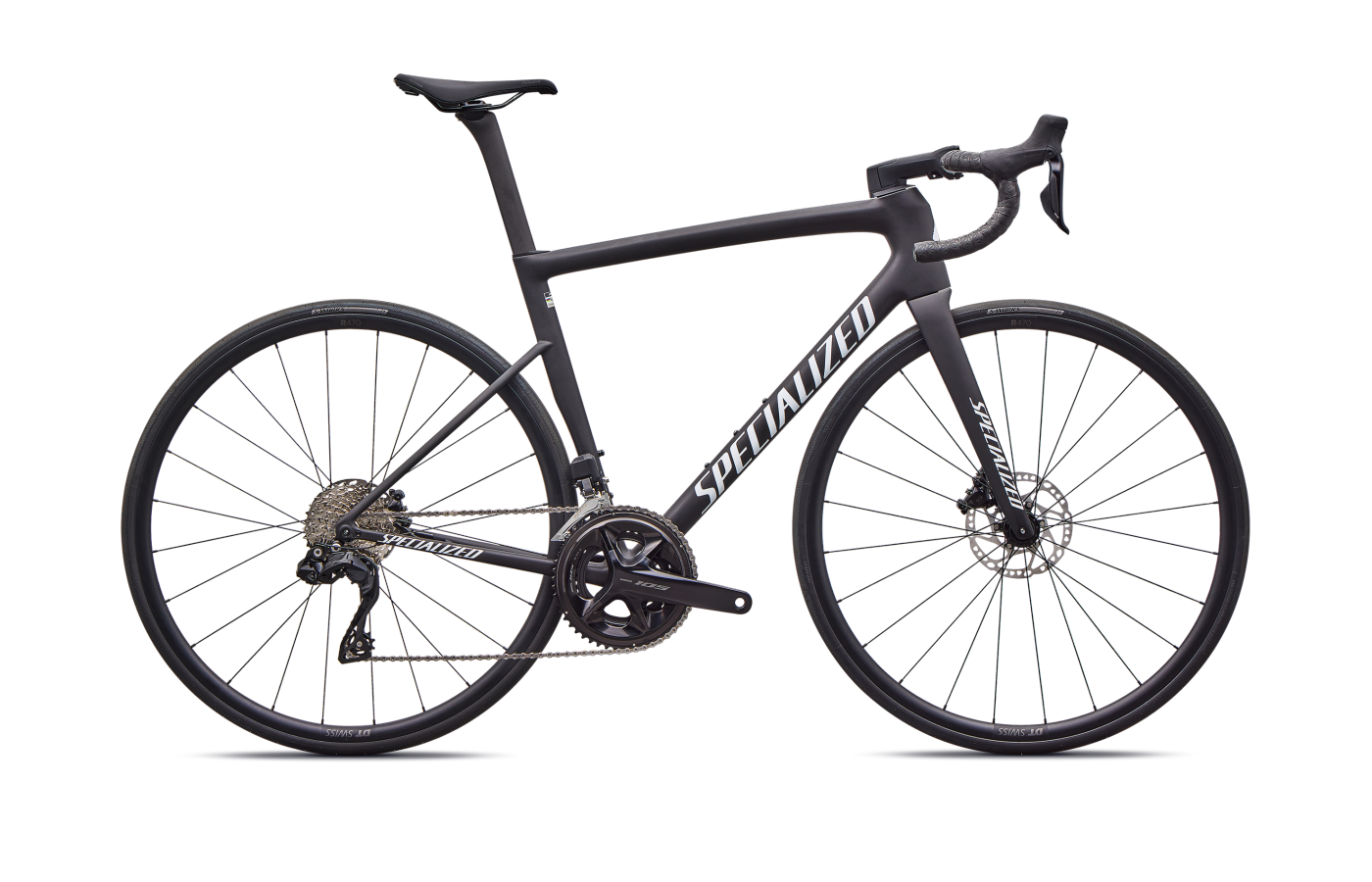
Tarmac
Specialized's do-everything race bike — the closest direct rival to the BMC's all-rounder positioning, with a more aggressive front end and a much wider price ladder than the SLR 01.
Compare →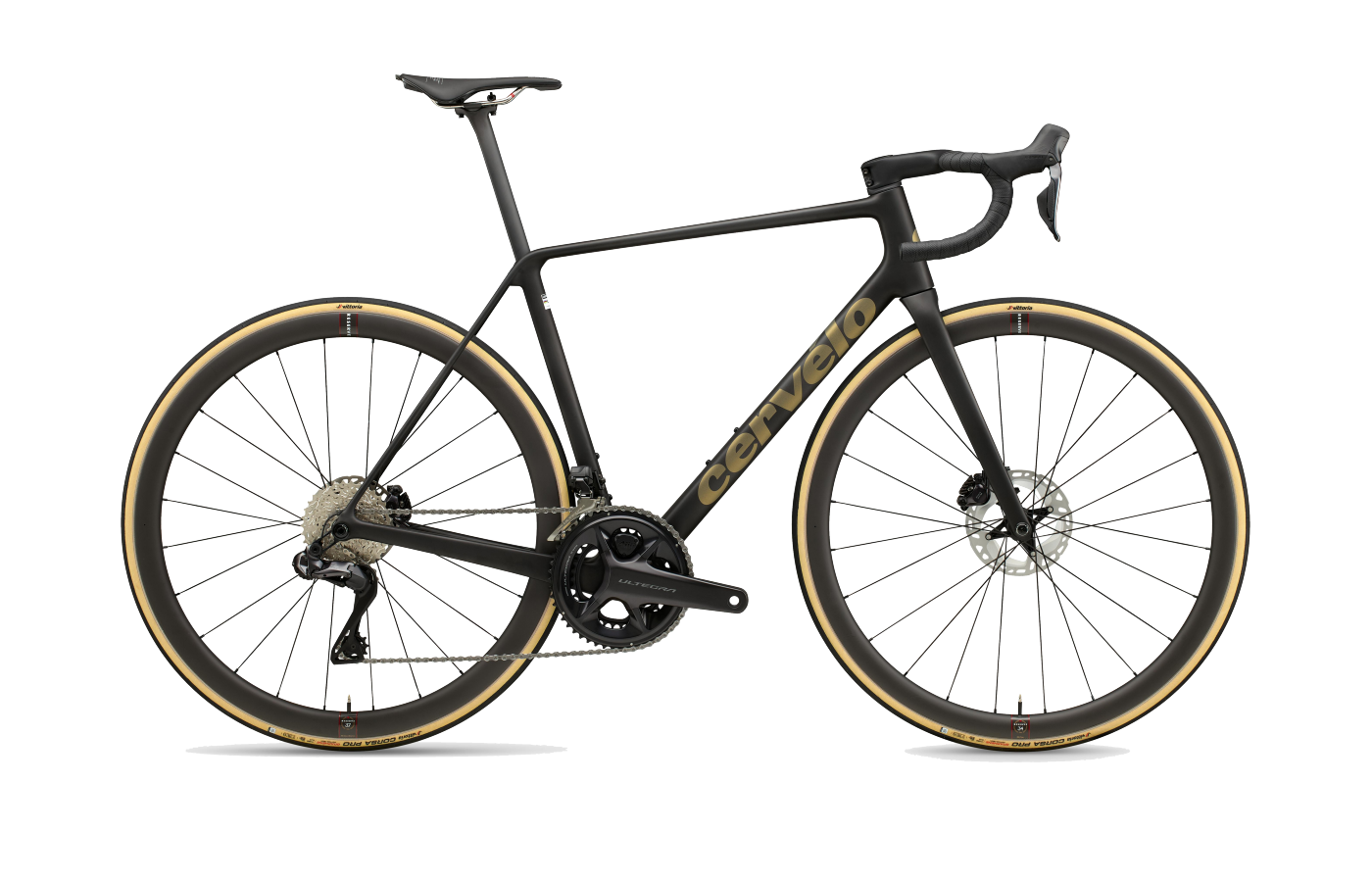
R5
If you love the Soloist's R5-derived handling but want the climbing weight to match, the Cervelo R5 is the same geometry in a significantly lighter package — at a meaningfully higher price.
Compare →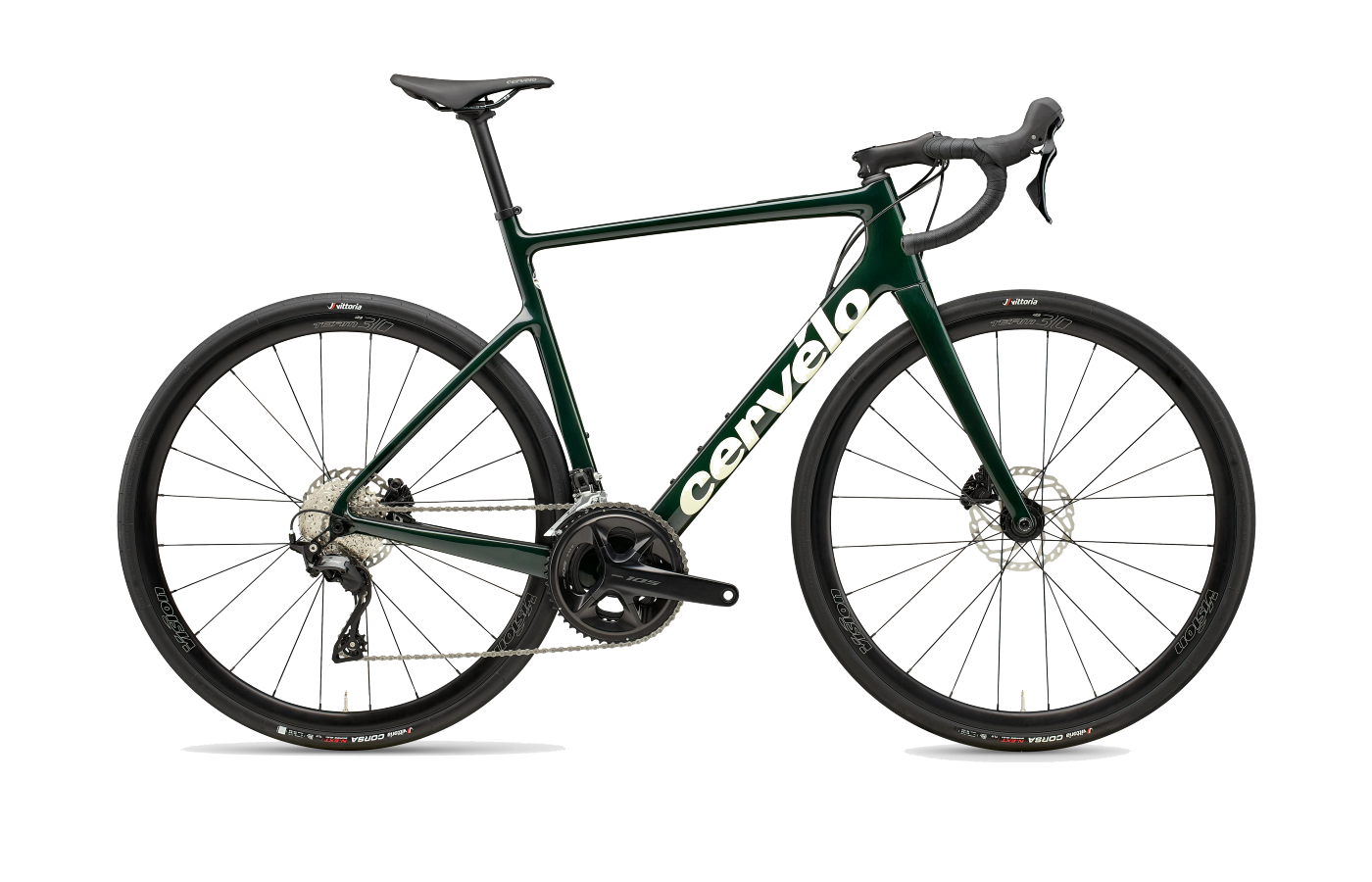
Caledonia
Cervelo's endurance-leaning sibling. Same brand DNA, more compliance, more tire clearance — the right call if your local roads punish you and you don't need a pure race bike.
Compare →