Teammachine
vsAeroad
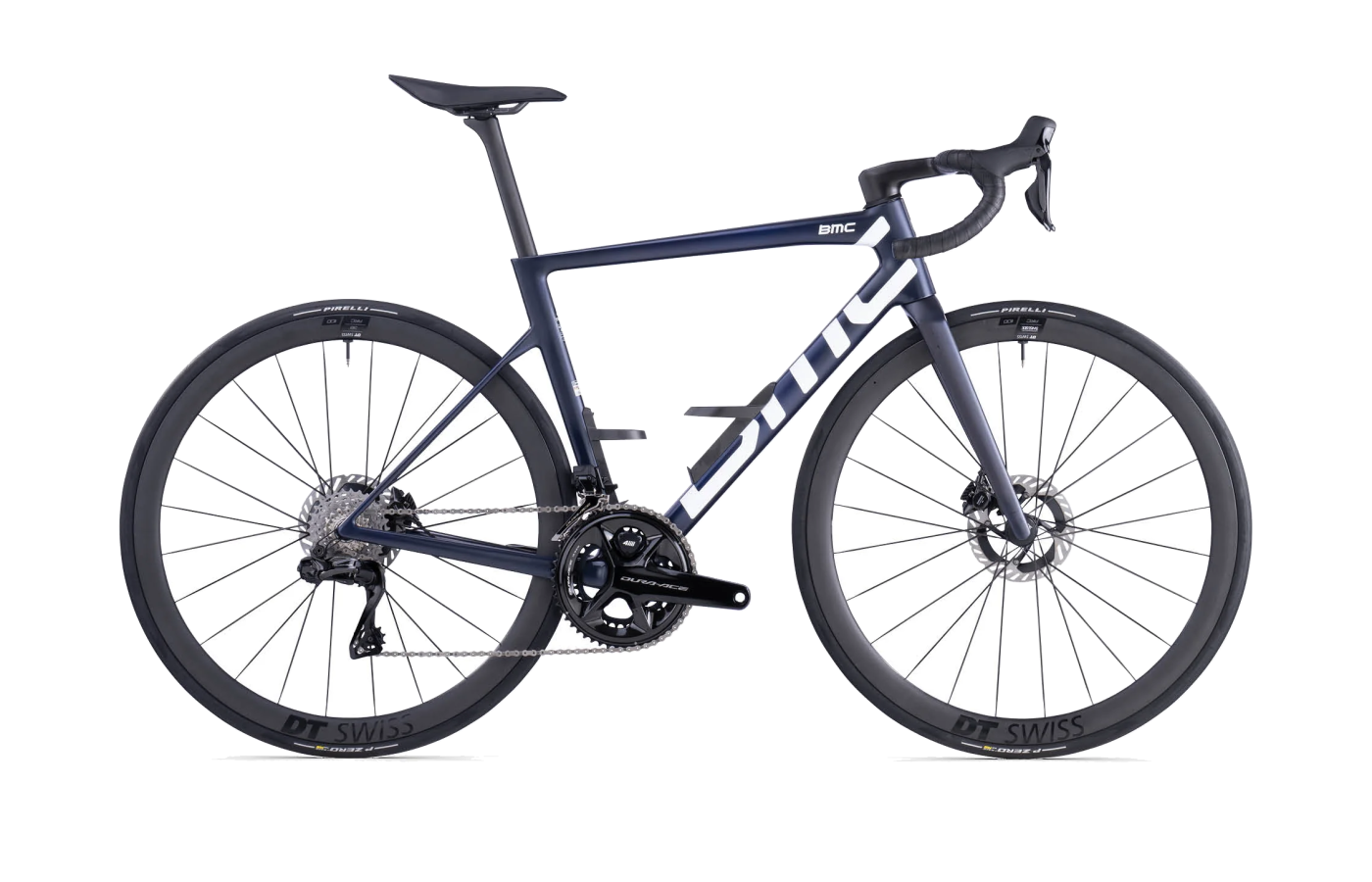
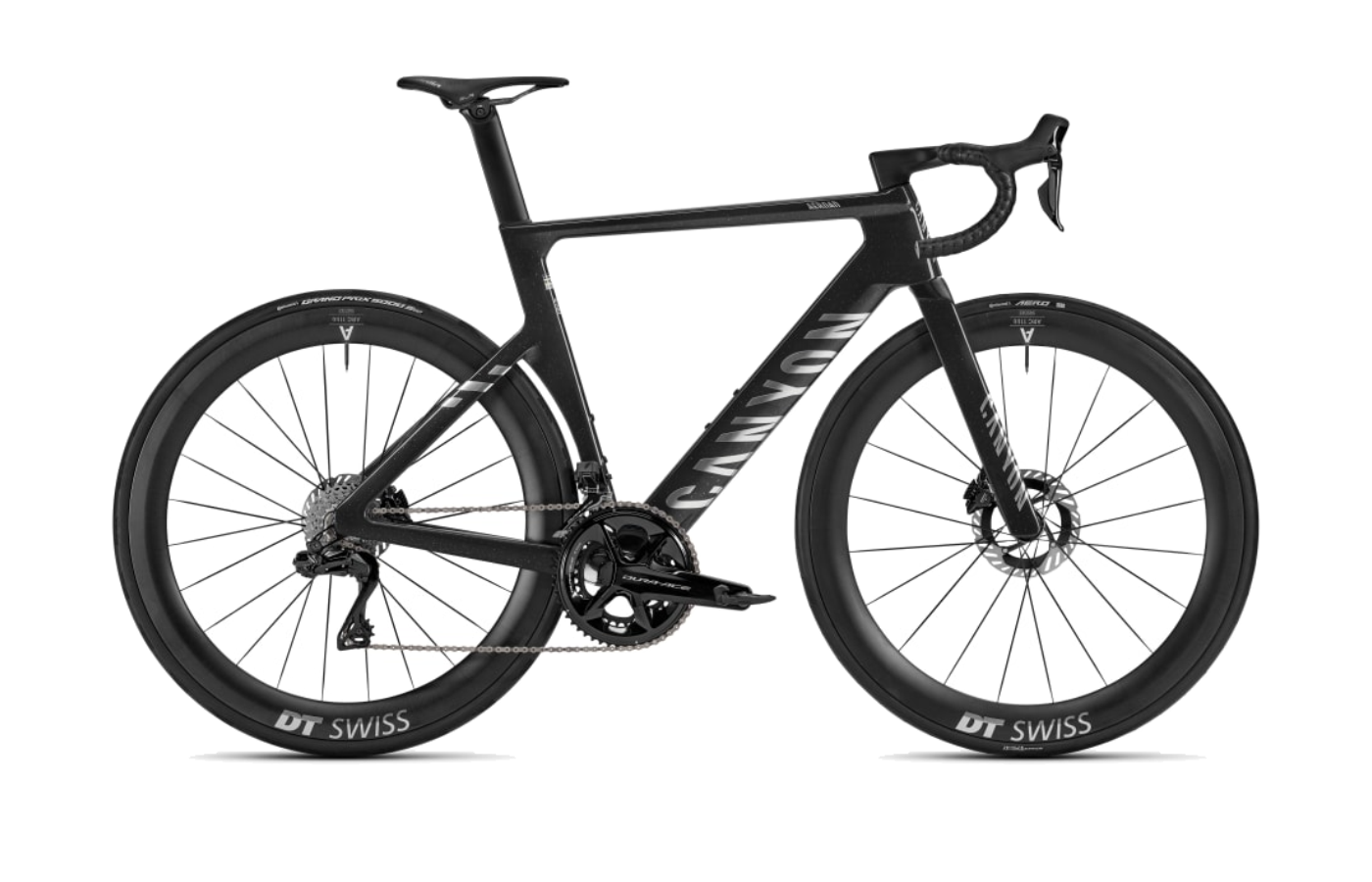
Climbing scalpel meets aero hammer.
BMC trimmed 222 grams off the SLR 01 to chase mountain stages. Canyon hardened the Aeroad's rear end so Mathieu van der Poel could wring more watts out of the cobbles.
Teammachine
- Featherweight chassis — 6.6 kg claimed frame for the SLR 01, a 16% weight cut over Gen 4. You feel it on every steep ramp.
- Stable at descent speed — BMC's signature 63 mm trail is held constant across all sizes, planting the front end through high-speed corners.
- Compliance for a race bike — BMC measures 14 mm of saddle deflection on a simulated pothole; reviewers call it 'easy to live with' on rough roads.
- Optimized for a narrow 26 mm tire — out of step with the modern 28-30 mm trend.
- Floor price near $5k for the SLR Two; no sub-$5k entry point on the platform.
Aeroad
- Fastest-feeling on flats — Canyon claims up to 14 watts saved at 45 km/h with the optional aero drops; reviewers call it 'unstoppable' once over 30 km/h.
- Adjustable Pace Bar cockpit — 50 mm of width and 20 mm of height adjustment, with swappable aero drops, all without disconnecting brake hoses.
- Direct-to-consumer pricing — top-tier Dura-Ace Di2 build at $10,499 undercuts comparable flagship aero bikes by $2k–$3k.
- Heavier than the Teammachine SLR 01 — full builds run 7.0–7.2 kg vs the BMC's 6.6 kg.
- No demos and no local dealer — fit and warranty service rest on Canyon's mail-order pipeline.
Editor’s analysis
Two WorldTour race bikes, two opposite answers to the same question — what slows you down most, gravity or air?
On paper the BMC Teammachine SLR 01 and the Canyon Aeroad sit one row apart in any race-bike spreadsheet — one tagged 'climbing,' one tagged 'aero.' Spend an hour with the geometry charts and meta-reviews, though, and the gap is bigger than the labels suggest. BMC built the SLR 01 around a 6.6 kg frameset, a 63 mm trail figure held constant across every size, and a tire spec optimized for a narrow 26 mm Pirelli. Canyon built the Aeroad around a stiffer rear triangle, a Pace Bar cockpit that adjusts 50 mm in width, and the explicit goal of being the 'fastest bike in the peloton.'
The BMC Teammachine is the climber's tool. Reviewers consistently describe it as 'springy,' 'pinpoint-accurate on descents,' and 'a dream' on long ascents — the 16% chassis weight cut shows up as immediate snap when the road tilts up. The 63 mm trail is unusually long for a race bike (most sit 55–60 mm), which trades a sliver of low-speed twitchiness for a planted feel at 80 km/h. If your weekend looks like a 2,000 m climbing day, this bike was designed for you.
The Canyon Aeroad is the flatlander's tool. It claims roughly 14 watts of savings at 45 km/h with the optional aero drops, runs 50 mm DT Swiss wheels stock, and ships with a power meter on every CFR build. Reviewers call it 'unstoppable' on the flats and 'no slouch off the line,' but several note it 'feels less at home and requires more input' on long alpine passes — about 200 g heavier than a Tarmac SL8, more when you compare to the SLR 01. The trade is honest: the Canyon is sharper above 35 km/h and softer below it.
Put another way: the BMC Teammachine is the bike for the rider who measures rides in vertical meters. The Canyon Aeroad is the bike for the rider who measures rides in average speed. Almost no one is wrong about which camp they belong to — pick the bike that fits the rides you actually do.
Where the builds differ.
Comparing our editor's-pick builds side-by-side. Winners highlighted row-by-row — lower price and weight, and the better-spec component, each mark a point.
Build variants & pricing
BMC's lineup spans $4.8k–$13.6k across two platforms (SLR for climbing, R for aero). Canyon's runs $5.1k–$11.0k across CFR and CF SLX carbon grades.
Editor's picks are the Dura-Ace Di2 builds on both sides — flagship-frame parity. Canyon doesn't offer a CFR build below Dura-Ace/Red, so a tier-matched 'one down' lands on the secondary CF SLX carbon, which complicates the apples-to-apples spec read; we picked the top frames on both sides instead. Prices are current US MSRP.
How they fit, how they steer.
Best-fit sizes for a 5'8" rider on each bike — BMC 54 and Canyon S. Reach is within 4 mm; the Canyon sits 11 mm lower in stack, runs 0.5 degrees steeper at the head tube, and shares the same 410 mm chainstays. The BMC's longer 63 mm trail is the defining handling difference.
Which size should I buy?
Recommended sizes use stack, reach, and effective top tube. Both ranges overlap closely through the middle of the size run; the BMC has six sizes (47–61), the Canyon seven (2XS–2XL).
→These are starting points. Flexibility, riding style, and preferred position all shift the answer — if you’re between sizes, a professional fit beats a chart.
What the magazines said.
Published reviews from trusted cycling outlets. Click through for the full write-up.
Which one should you buy?
If your weekends are vertical, get the BMC. If they're flat or rolling, get the Canyon.
Teammachine
If a 2,000 m vertical day is a normal Saturday and you want a bike that disappears beneath you on the steeps, the SLR 01 is the bike to beat. The 6.6 kg chassis, long-trail descending stability, and BMC's compliance work make it a credible all-rounder despite the climbing focus.
Aeroad
If most of your riding is criteriums, fast group rides, or rolling terrain where you live above 30 km/h, the Aeroad will drag you forward in a way the BMC can't match. The Pace Bar adjustability and direct-to-consumer pricing make it the practical choice for a serious racer on a budget.
Questions buyers actually ask.
Short answers to the things we get emailed about most often.
01Which is faster on flat roads?
The Canyon Aeroad, by a meaningful margin. Canyon claims it's the 'fastest bike in the peloton' and quotes up to 14 watts saved at 45 km/h with the optional aero drops. Reviewers consistently describe it as 'unstoppable' on the flats once you cross 30 km/h.
The BMC Teammachine SLR 01 was tuned for climbing first, with aero as a secondary goal — BMC's own claim is that it's only about 4% slower than their dedicated aero bike, the Teammachine R 01, but that still leaves a measurable gap to a purpose-built aero machine like the Aeroad.
02Which climbs better?
The BMC Teammachine SLR 01, clearly. The SLR 01 frameset comes in at a claimed 6.6 kg in size 54 (without pedals); top Aeroad CFR builds typically land at 7.0–7.2 kg. That's roughly 400–600 g, or about 1% of a 70 kg rider's system weight — worth somewhere in the neighborhood of 10–15 seconds on a 30-minute climb.
Reviewers also praise the SLR 01's 'punchy, firm character' and 'springy' feel under acceleration, particularly out of the saddle on steep ramps. The Aeroad climbs respectably for an aero bike, but 'feels less at home and requires more input' on long alpine passes.
03What's the maximum tire clearance?
BMC Teammachine SLR 01: 30 mm officially in our spec database, though BMC's Gen 5 launch materials and several reviewers cite an updated 32 mm clearance. Either way, BMC explicitly states the handling is 'optimized for 26 mm tires,' which feels increasingly out of step with the industry shift toward 28–30 mm.
Canyon Aeroad: 32 mm officially across the entire frame range. Mathieu van der Poel specifically requested wider clearance for the cobbled classics, and Canyon delivered.
Neither is a gravel bike, but the Aeroad gives you more room to chase comfort with wider rubber.
04Do both come with power meters?
Largely yes. The Canyon Aeroad CFR builds all ship with a Shimano Dura-Ace or SRAM Red dual-sided power meter as standard. CF SLX builds typically include a Force AXS or Ultegra single-sided meter.
The BMC Teammachine SLR 01 follows the same pattern — Shimano builds get a 4iiii Precision Gen3+ dual-side meter, SRAM builds get the SRAM Red or Force AXS spider-based unit. Functionally, both platforms make a power meter table-stakes at this price.
05How adjustable are the cockpits?
The Canyon Pace Bar (CP0048) is the standout. It offers 50 mm of width adjustment and 20 mm of height adjustment in 12 positions, plus the option to swap to narrower flared aero drops — all without disconnecting brake hoses. Reviewers call it the most user-friendly integrated cockpit on the market.
The BMC ICS Carbon Evo is a one-piece full-carbon unit. Adjusting bar width or stem length means buying a new cockpit. The 12.5° flare on the Aero variant feels great in the drops, but the modularity gap is real if you might want to fine-tune fit later.
06Are both compatible with mechanical shifting?
No. Both frames are wireless or wired-electronic only — neither has cable stops or internal routing for mechanical derailleurs. If you want Shimano 105 mechanical or Campagnolo cable-shift, neither of these is the bike for you.
07How does buying direct from Canyon compare to a bike shop?
Canyon's direct-to-consumer model is the source of the Aeroad's pricing advantage — top-tier CFR Di2 at $10,499 undercuts comparable flagship aero bikes by $2k–$3k. The trade is no local dealer, no demos, and no hands-on fit before purchase. You'll handle final assembly yourself or pay a shop separately.
BMC sells through traditional dealers, which means higher MSRP but a fitter, a test ride, and warranty service local to you. For a first race bike or anyone uncertain about size, the dealer model is worth real money.
08Which holds its resale value better?
Direct-to-consumer brands like Canyon historically depreciate slightly faster than dealer-distributed brands because the new-bike price is already aggressive — the used premium has less room to live in. BMC, with smaller production runs and a more exclusive reputation, tends to hold value comparably to other premium dealer brands like Specialized and Cervélo.
In either case, both depreciate fastest in the first year. Buying a one-season-old flagship second-hand is one of the cheapest paths into either platform.
Similar bikes
If your priorities don’t map cleanly onto either of these, one of these adjacent bikes probably fits better.
Tarmac
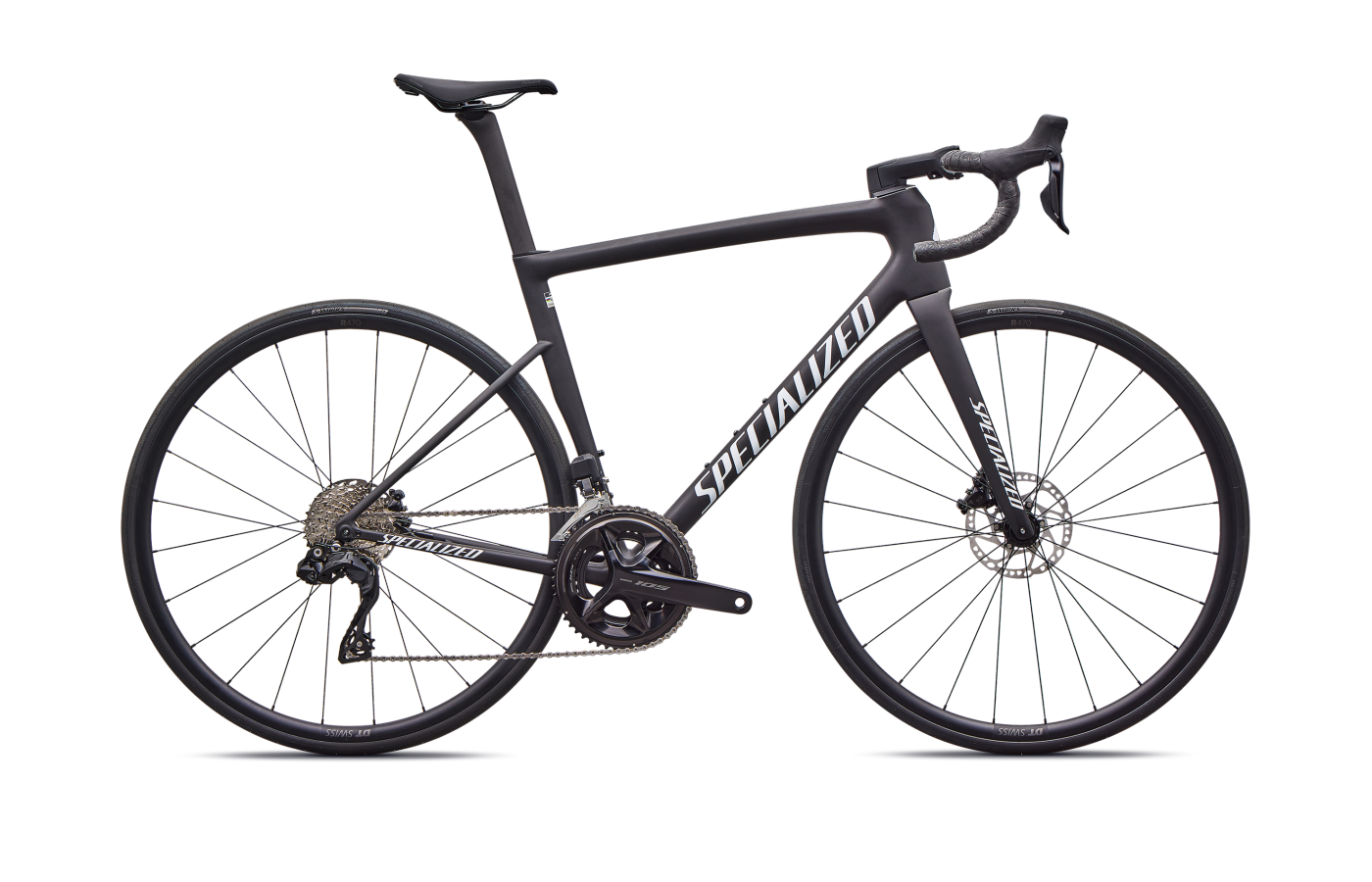
The Tarmac SL8 is the do-everything answer to this debate — lighter than the Aeroad, more aero than the SLR 01, and the closest thing to 'one bike for everything' in the WorldTour aero-race bracket.
Compare →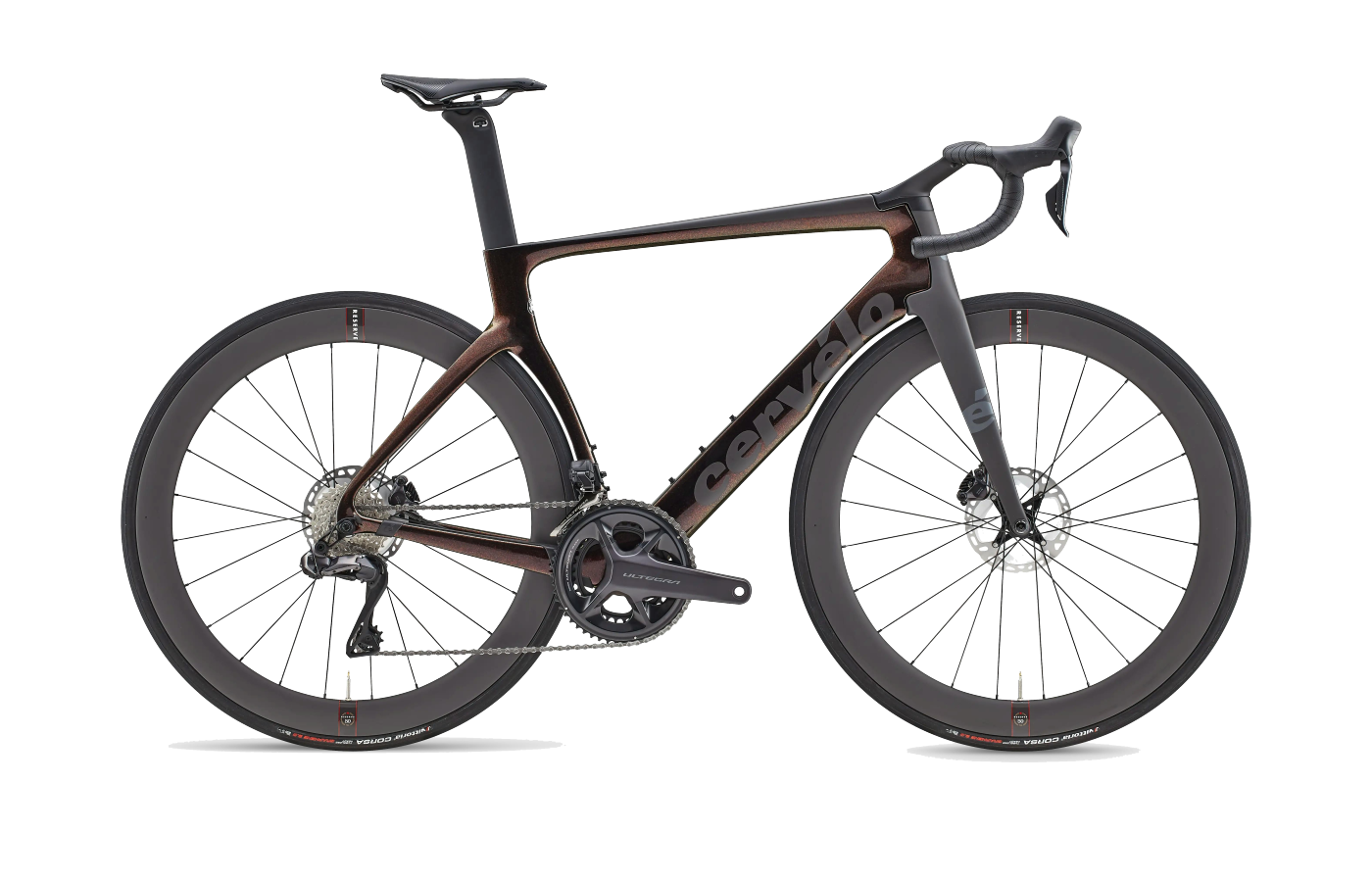
S5
If your only goal is to maximize aero, the Cervélo S5 is the Canyon's most direct rival — a radical V-stem and unapologetic flat-road geometry that makes the Aeroad look conservative.
Compare →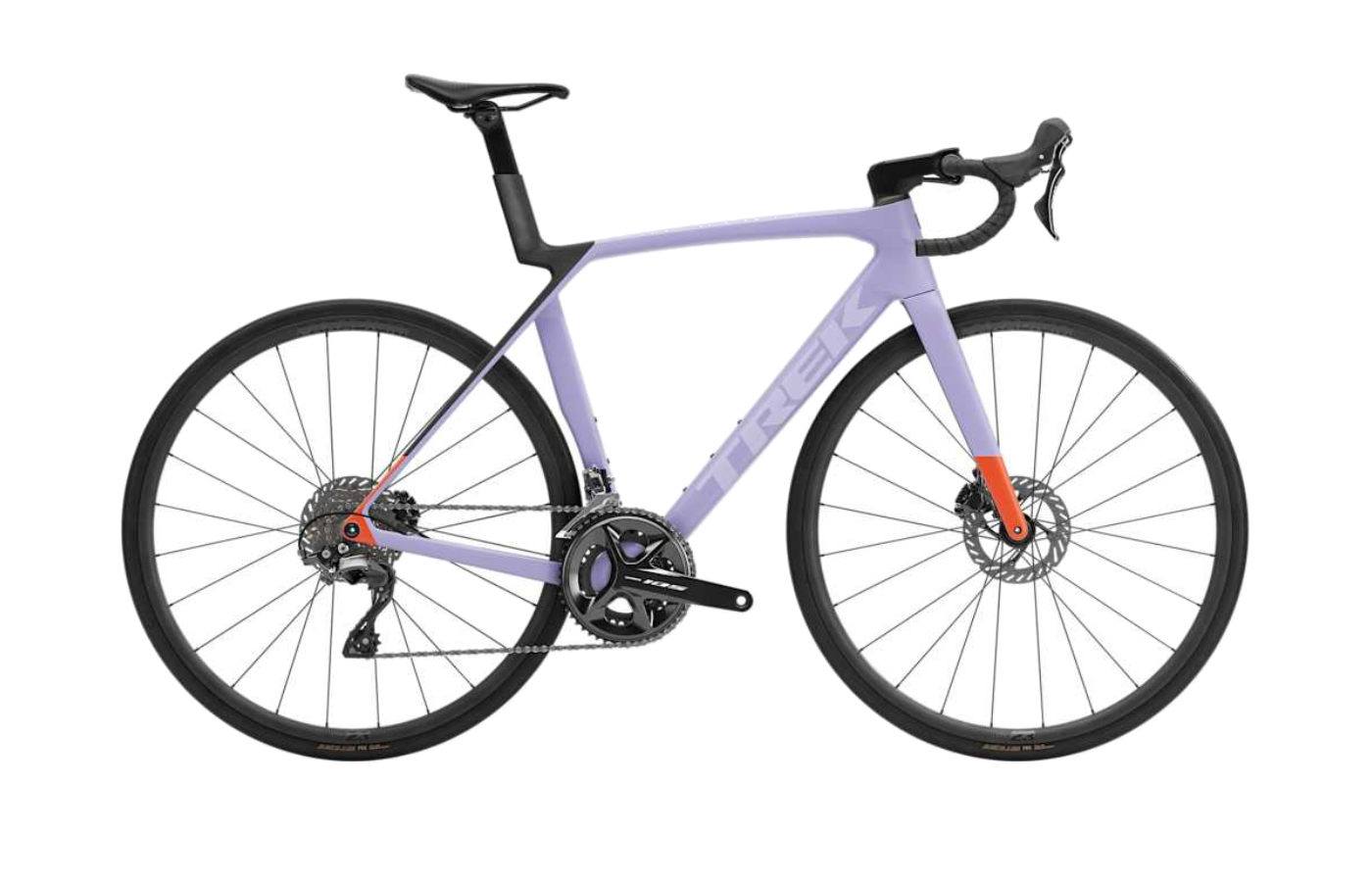
Madone
Trek's Gen 8 Madone merges the old Emonda and Madone platforms — a strong alternative for riders who want close to BMC weight with Aeroad-rivaling drag numbers, plus the IsoFlow decoupler for compliance.
Compare →