Kaius
vsCrux
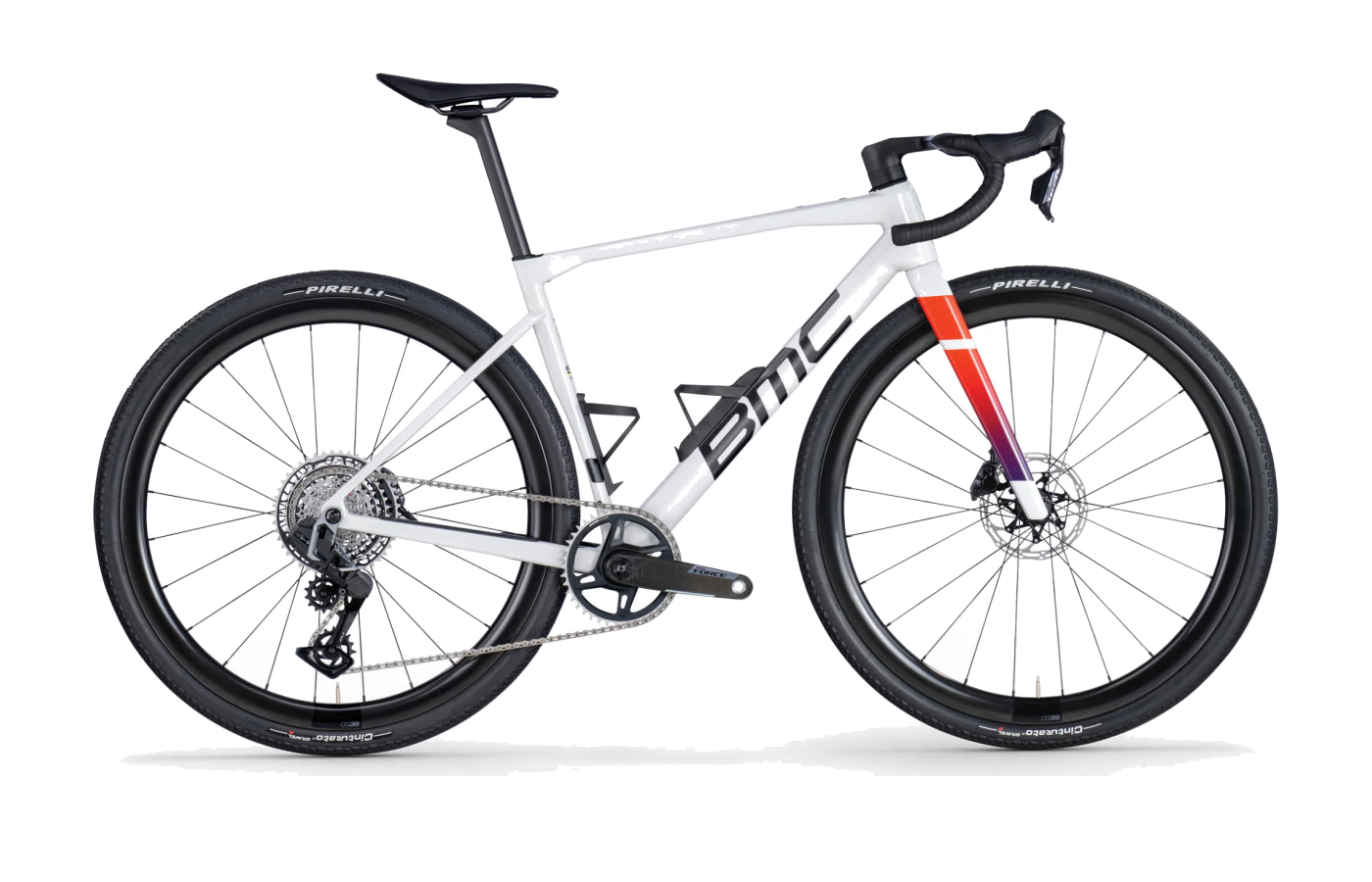
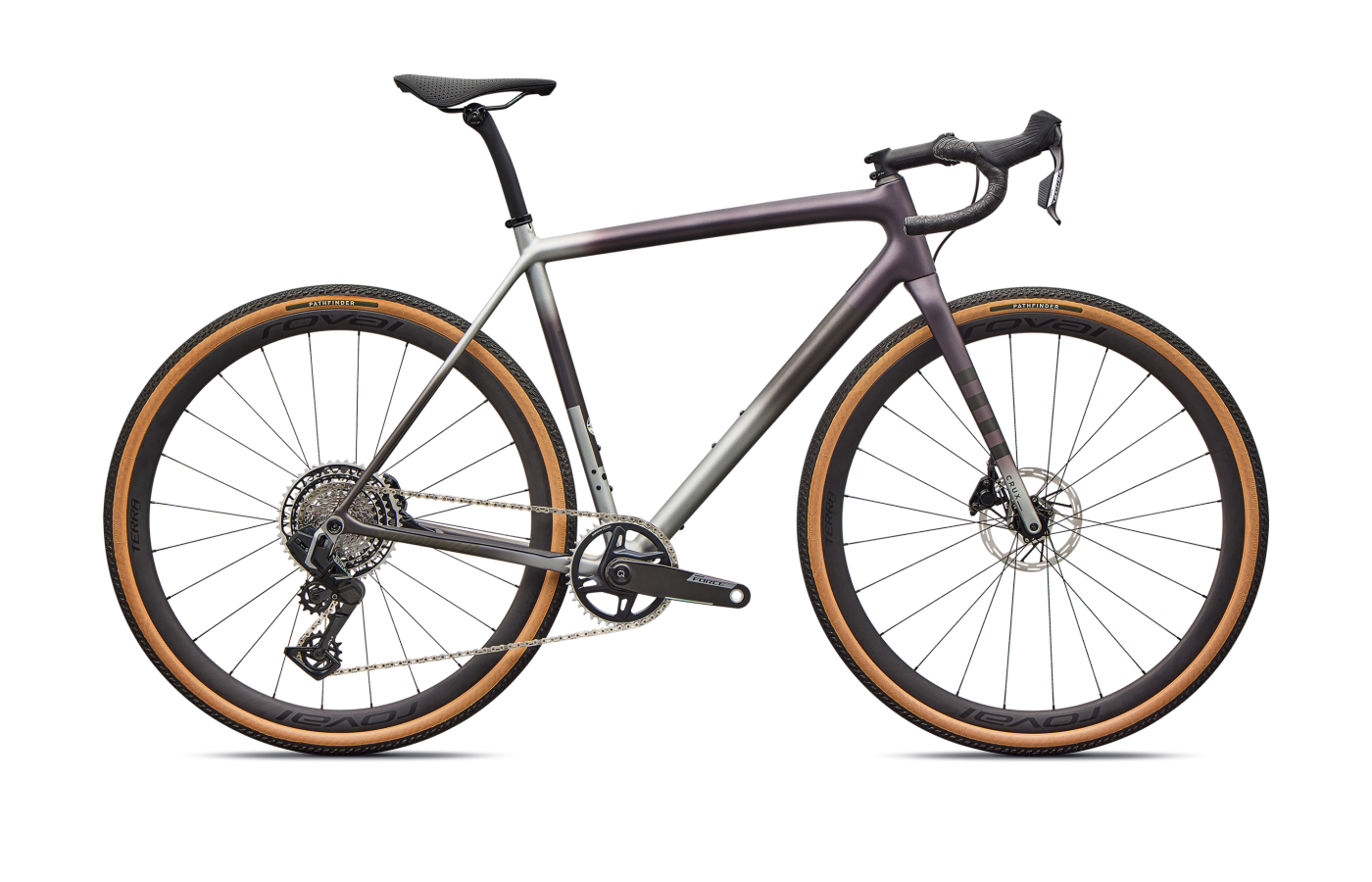
Two gravel racers, two opposite playbooks.
The BMC Kaius is an aero-integrated wind-cheater built for flat-out fire roads. The Specialized Crux is a sub-7 kg featherweight built to dance up the climbs.
Kaius
- Fastest on flat, windy gravel — integrated cockpit, narrow 36 cm bars, and Aerocore bottle cages are a coordinated aero system, not a marketing layer.
- Planted at speed — 80 mm BB drop and long front-center make it stable in loose corners and on long, fast descents.
- All builds share the same frame — even the $5,199 Rival AXS gets the same Kaius 01 Premium Carbon chassis as the $9,199 Red AXS flagship.
- Narrow 36 cm bars and one-piece cockpit on premium builds are polarizing — slow technical sections demand more rider effort.
- Race-bred stiffness becomes a 'bone rattler' when surfaces turn rocky or rooty — reviewers explicitly flag it as unsuitable for ultra-distance comfort.
Crux
- Featherweight climber — S-Works at 6.94 kg and a 725 g frame make it 'the lightest gravel bike in the world' per multiple reviewers.
- Mechanic-friendly standards — threaded BSA bottom bracket, round 27.2 mm seatpost, two-piece cockpit. Travel and home service are dramatically easier.
- Wider tire clearance (47 mm or 650b x 2.1) lets the same frame race CX, race gravel, or run plus-size for rough days.
- Minimalist frame skips fender, rack, and bikepacking mounts — not a touring bike.
- Lower spec tiers (Comp and below) draw repeated criticism that components don't match the frame's price.
Editor’s analysis
Same race category, opposite design briefs — aero integration on one side, radical lightness on the other.
On paper, the BMC Kaius and Specialized Crux are both gravel race bikes with carbon frames, electronic 1x drivetrains, and 40 mm Pirelli or Pathfinder rubber. Spend a minute with the spec sheets and the philosophies split open. The Kaius leans on its Teammachine SLR road-race DNA — semi-aero tube shapes, a one-piece ICS Carbon Aero cockpit with 36 cm bars at the hoods, recessed Aerocore bottle cages, and stealth thru-axles. The Crux ignores aero entirely, borrowing from the Aethos road bike's round tubes, a 27.2 mm round seatpost, an external seat clamp, and a threaded BSA bottom bracket.
Weight is where the gap is widest. The S-Works Crux frame claims 725 g; the complete bike weighs around 6.94 kg. BMC's flagship Kaius 01 One comes in at 7.5 kg. That's roughly 560 g — a meaningful chunk on every climb and every standing acceleration. The Crux earns its 'climbs like a road bike' reputation honestly. The Kaius gives it back on the flats: aero tube shaping, narrow bars, and an integrated cockpit that BMC built specifically to leapfrog rivals once the obvious aero tricks are spent.
Tire clearance favors the Crux too — 47 mm vs 44 mm on the Kaius — and that 3 mm matters more than it sounds. It's the difference between 'gravel race tire' and 'plus-size mixed-terrain tire,' which lets the Crux double as a cyclocross bike or take a 650b x 2.1 setup for rougher rides. The Kaius is firmly committed to its lane: 40 mm Pirelli Cinturatos, fast hardpack, race day.
Geometry tells the same story. The Kaius runs an 80 mm bottom bracket drop — low, planted, and pro-stretched into a 'sit in the bike' position. The Crux sits 8 mm higher with a slightly steeper head tube and 5 mm longer chainstays — more cyclocross-flickable, less aero-locked. Put plainly: the Kaius is what you buy when your gravel rides are flat and windy. The Crux is what you buy when your gravel rides go up, and you also want one bike that can race CX in the fall and chase the road group on Wednesday.
Where the builds differ.
Comparing our editor's-pick builds side-by-side. Winners highlighted row-by-row — lower price and weight, and the better-spec component, each mark a point.
Build variants & pricing
Both lineups share their flagship frame across every build — the Crux extends much further down the price ladder.
Prices are current US MSRP. The Kaius starts at $5,199 (Rival AXS); the Crux starts at $2,799 for the alloy DSW Comp and $3,999 for the carbon Comp. If your budget is sub-$5k and you want a Crux-class frame, the BMC isn't an option.
How they fit, how they steer.
Fit-picked sizes for a 5'8" rider on each bike. Reach is nearly identical (390 vs 388 mm), but the Kaius sits 50 mm lower at the stack — a much more aggressive crouch — and runs 5 mm shorter chainstays for a quicker rear end.
Which size should I buy?
Size recommendations based on stack, reach, and effective top tube. The Kaius runs a numeric (47/51/54...) scheme; the Crux uses 49/52/54/56.
→These are starting points. Flexibility, riding style, and preferred position all shift the answer — if you’re between sizes, a professional fit beats a chart.
What the magazines said.
Published reviews from trusted cycling outlets. Click through for the full write-up.
Which one should you buy?
If you race flat and windy gravel and want one specialized tool, get the Kaius. If you climb a lot, want a bike that doubles as a road or CX rig, and value easy service, get the Crux.
Kaius
If your races and training rides are flat, fast, and exposed — Unbound-style fire roads, prairie crosswinds, long pulls in the drops — the Kaius's integrated aero system pays off in a way no other gravel bike's does. You give up some technical confidence and a lot of mechanical convenience to get there.
Crux
If your gravel rides go up — or you want one bike for gravel, road, and cyclocross — the Crux is hard to argue with. It's lighter, climbs better, services easier, and clears bigger rubber. The trade is no aero edge on the flats and no real bikepacking utility.
Questions buyers actually ask.
Short answers to the things we get emailed about most often.
01Which is faster on flat gravel?
The BMC Kaius, in conditions that let its aero design work. The whole package — semi-aero tube shapes derived from the Teammachine SLR, the ICS Carbon Aero one-piece cockpit, 36 cm bars at the hoods, recessed Aerocore bottle cages — is a coordinated aero system. Reviewers describe it as 'unstoppable' once up to speed and 'intoxicatingly fast' on smooth gravel and tarmac sections.
The Specialized Crux ignores aero entirely in favor of low weight, so on long flat efforts above ~30 km/h, the Kaius will pull away. Below that — or anywhere with surges and corners — the Crux's lower weight and snappier acceleration evens it back up.
02Which climbs better?
The Crux, decisively. The S-Works frame claims 725 g and the complete bike weighs around 6.94 kg — reviewers at Cycling News, Velo, and Bicycling all call it 'the lightest gravel bike in the world.' The Kaius 01 One comes in at 7.5 kg complete. That ~560 g delta is meaningful on long climbs and especially on repeated punchy efforts where weight compounds.
The Crux's geometry helps too: a slightly steeper head tube, lighter front end, and easier-to-pop front wheel make technical climbs noticeably more manageable.
03What's the maximum tire clearance?
BMC Kaius: 44 mm officially. Reviewers note that real-world clearance is tighter than the spec suggests, but most riders fit a true 40 mm Pirelli Cinturato (the stock tire) without issue.
Specialized Crux: 47 mm with 700c wheels, or 2.1" with 650b. That extra 3 mm — and the 650b option — is what lets the same frame work as a CX race bike, a gravel race bike, or a plus-tire mixed-terrain bike. The Kaius is committed to one job.
04How serviceable is each one?
The Crux is one of the easier high-end gravel bikes to live with. Threaded BSA bottom bracket, round 27.2 mm seatpost with an external clamp, conventional two-piece cockpit, partially external cable routing. Travel cases pack easily; bar or stem swaps take minutes; a bottom bracket service won't ruin your weekend.
The Kaius 01 One and 01 Two use the ICS Carbon Aero one-piece cockpit with fully internal hydraulic and electronic routing. Velo flagged this as 'highly inconvenient' — swapping bar width or stem length is a major job that often requires new brake hoses. The lower-tier Kaius 01 Three and 01 Four use a more conventional two-piece cockpit, which is the practical pick if serviceability matters to you.
05Can you race cyclocross on either?
The Crux is literally a cyclocross bike — it's been Specialized's CX race platform for over a decade and the 2022 reimagining kept that DNA. Mud clearance is excellent and the 425 mm chainstays plus aggressive geometry suit a CX course directly.
The Kaius is not a cyclocross bike. The integrated cockpit, narrow bars, and lack of true CX-style fit options make it the wrong tool. BMC offers the URS for that kind of riding.
06What about bikepacking or long touring?
Neither is a great choice. The Crux has only a third bottle mount beyond the standard two — no fender mounts, no rack mounts, no top-tube bag bosses. The Kaius is even more minimalist; recessed Aerocore bottle cages and a fully integrated cockpit don't play well with strap-on luggage.
If bikepacking matters, look at the Specialized Diverge (Future Shock, internal storage) or BMC's URS line.
07How do the build options compare?
The Crux has a much wider price ladder: from $2,799 for the alloy DSW Comp through the carbon Comp ($3,999), Expert (Rival or GRX Di2, $5,799–$6,299), Pro (Force AXS, $7,999), and S-Works (Red AXS with power meter, $11,999). All carbon models share the same FACT 10r frame except the S-Works (FACT 12r).
The Kaius runs four builds, all on the same Kaius 01 Premium Carbon frame: 01 Four (Rival AXS, $5,199), 01 Three (GRX Di2, $5,799), 01 Two (Force AXS, $6,799), and 01 One (Red AXS with power meter, $9,199). The lineup is shorter and starts higher — but every Kaius gets the flagship frame.
08Can either run a 2x drivetrain?
The Crux ships only as 1x and the cable routing prevents adding a mechanical front derailleur. Electronic 2x is technically compatible but Specialized doesn't sell it that way.
The Kaius is officially 1x and 2x compatible. Most stock builds are 1x XPLR, but the GRX Di2-equipped 01 Three ships as 2x (48-31T).
Similar bikes
If your priorities don’t map cleanly onto either of these, one of these adjacent bikes probably fits better.
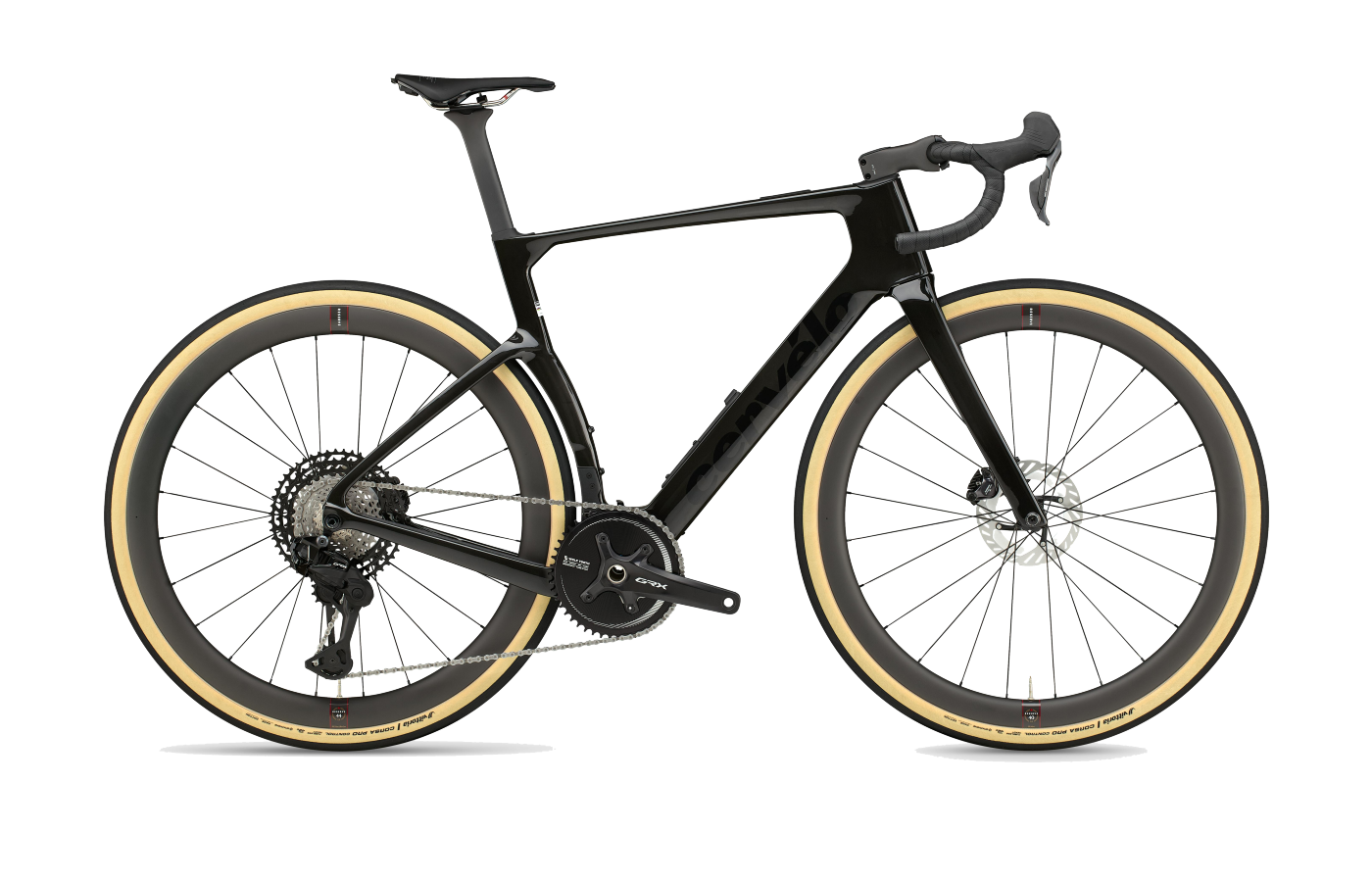
Aspero-5
Cervelo's dedicated gravel racer that splits the difference — more aero-aware than the Crux, less integrated than the Kaius, and tuned for hauling speed rather than gear. The pragmatic middle ground.
Compare →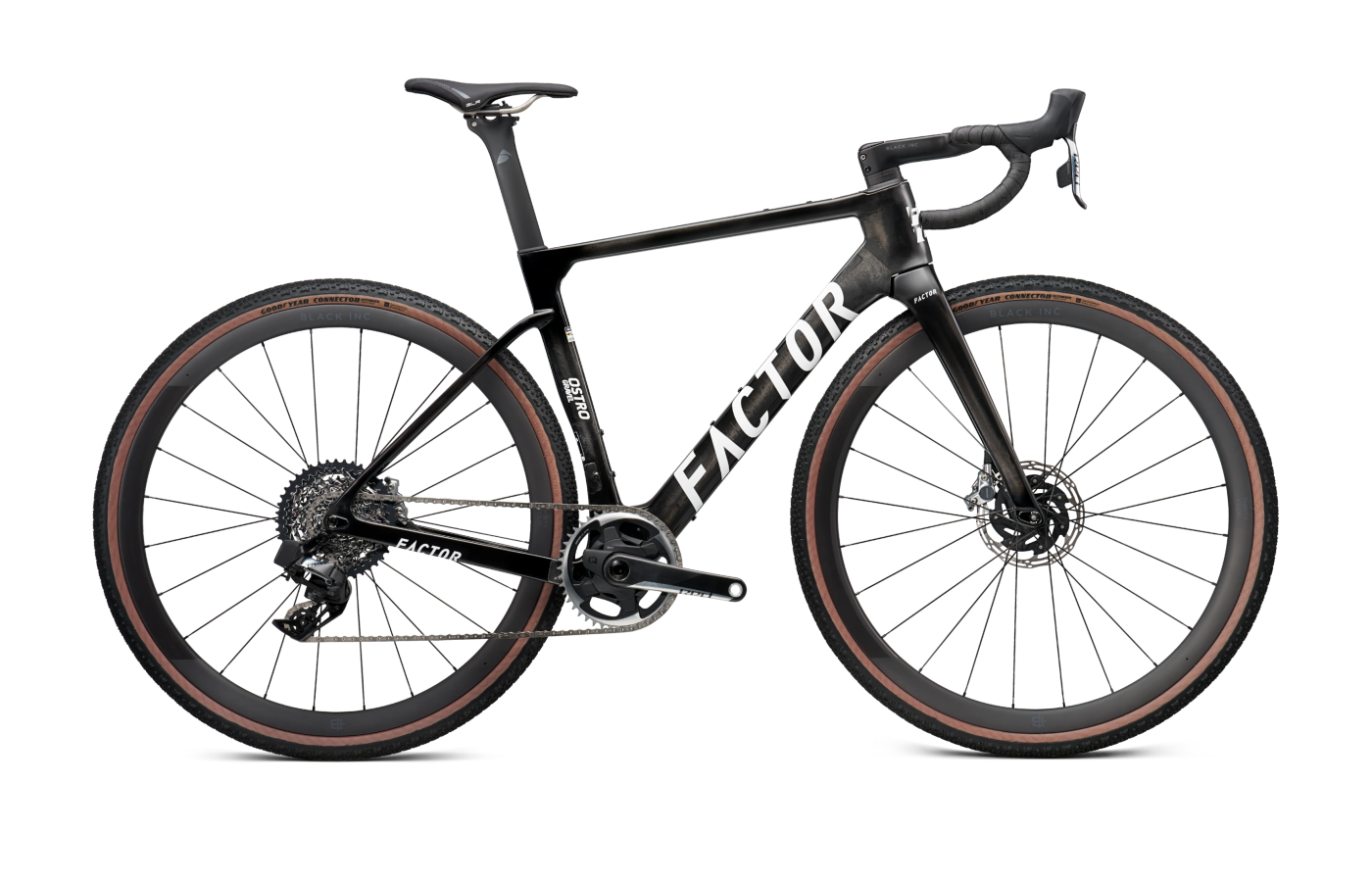
Ostro Gravel
Factor's Ostro Gravel rivals the Kaius for the title of most aggressive aero-integrated gravel bike on the market — deep-section tubes, similar racing-first focus, and the same trade-offs in technical riding.
Compare →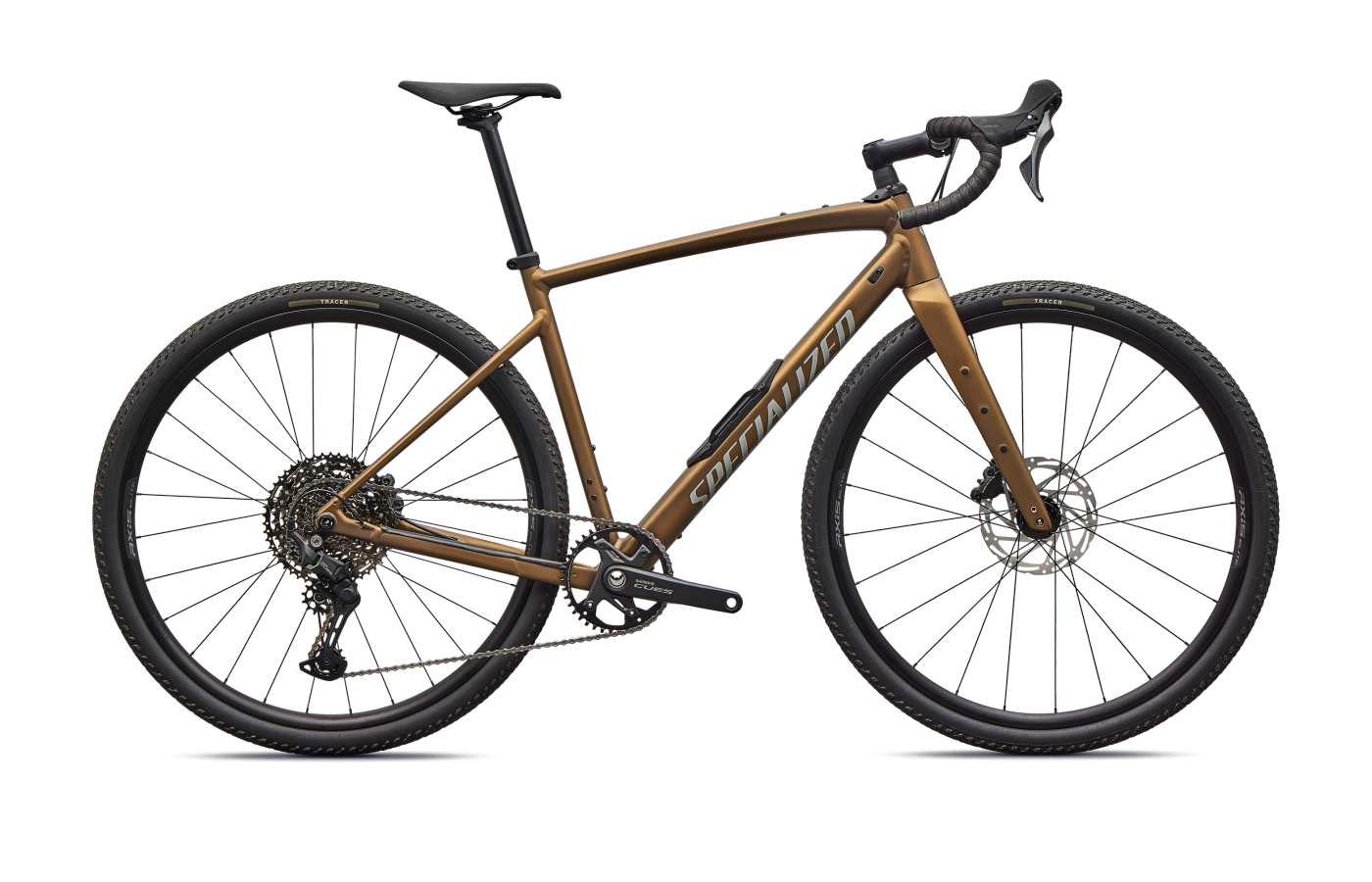
Diverge
The logical alternative if you like the Specialized fit but find the Crux too stiff or too feature-light. Future Shock front suspension and internal downtube storage make the Diverge the long-day tool the Crux refuses to be.
Compare →