Impulso
vsOltre
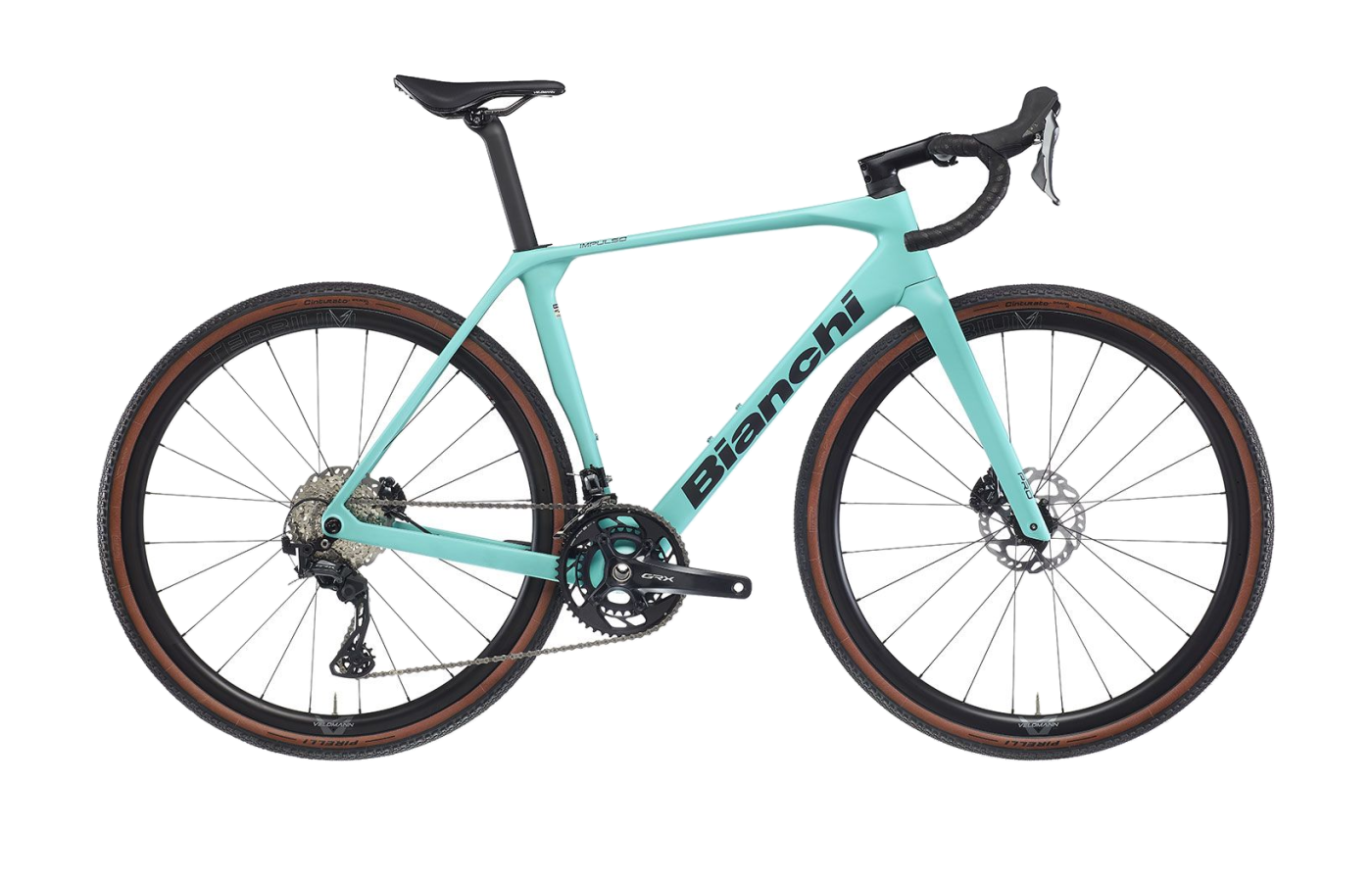
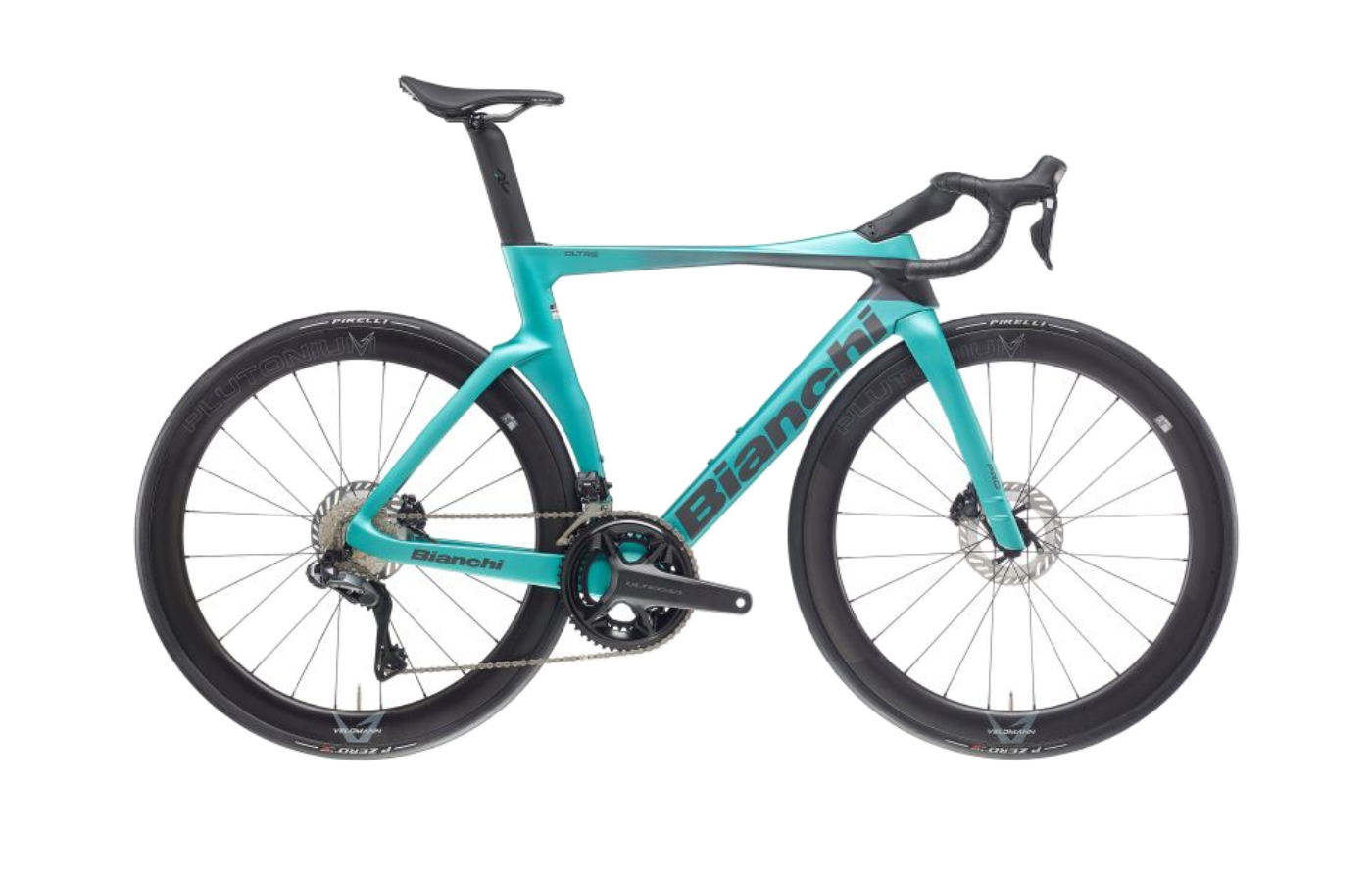
Same brand, two different races.
The Impulso is Bianchi's race-gravel bike for fast rolling dirt. The Oltre is its aero-road hyperbike for the front of the pack.
Impulso
- Stiff race-gravel frame with modern 42 mm clearance, full internal routing, and UDH — even on the $3,200 Comp.
- Approachable price floor — a carbon race-gravel platform starts at $3,200, well under most direct competitors.
- Pro-validated geometry — 71.5° HTA, 74° STA, designed around Nicolas Roche's feedback for fast pack riding.
- Not an adventure bike — no extra mounts, 42 mm clearance is modern but conservative for rough singletrack.
- Reviewers note the alloy-wheeled Comp build feels sluggish climbing; lighter wheels are an obvious upgrade.
Oltre
- Hyperbike aero design — Bianchi claims 17 W saved at 50 km/h vs. the Oltre XR4, with F1-inspired air deflectors.
- Countervail damping woven into the layup — meaningfully takes the edge off road buzz on long efforts.
- Top-shelf power transfer — the hefty bottom bracket and thick chainstays let you 'surge forward with little flex.'
- Five-figure entry into the upper builds — the Comp Ultegra at $6,100 is the only sub-$8k option.
- Aggressive geometry (520 mm stack on a 55) demands a professional fit and short, flexible riders are out of luck.
Editor’s analysis
This isn't really a head-to-head — it's one brand, two surfaces, and the question is which surface you actually race on.
Both bikes share Bianchi's modern playbook: stiff carbon, aero shaping, integrated cockpits, press-fit bottom brackets, electronic-friendly internals. Reviewers describe both as race-only tools that punish lazy riding and reward power. Where they part ways is the surface beneath the tires — and the price tag.
The Bianchi Impulso is the gravel race bike Bianchi finally got right. The redesign bumped tire clearance to 42 mm, added UDH, and routed everything internally — even on the $3,200 Comp. Reviewers call the frame 'super stiff' and 'really fast,' optimized for Midwest-style pack riding on rolling dirt at 20+ mph average. It explicitly isn't an adventure bike — no extra mounts, no 50 mm clearance, no compliance niceties beyond what the carbon and 40 mm tires give you.
The Bianchi Oltre is something else entirely: a five-figure aero-road weapon with Bianchi's Countervail damping woven into the layup and Formula One-style air deflectors on the head tube. It shares its frame shape with the WorldTour-raced Oltre RC, claims a 17-watt save at 50 km/h over the prior Oltre XR4, and reviewers consistently describe it as 'an absolute rocket' on flat or rolling tarmac. The 32 mm tire ceiling and aggressive 520 mm stack on a size 55 make its intent obvious — race the road, hold momentum, lead the breakaway.
Put another way: the Impulso is the bike you buy when your weekend is the BWR or a Midwest gravel grinder. The Oltre is the bike you buy when your weekend is a crit, a Saturday hammerfest, or a fondo where you intend to be in the front group. They don't really replace each other — most riders who own one would benefit from owning the other.
Where the builds differ.
Comparing our editor's-pick builds side-by-side. Winners highlighted row-by-row — lower price and weight, and the better-spec component, each mark a point.
Build variants & pricing
The Impulso starts at $3,200 and tops out around $7,500. The Oltre's cheapest build is $6,100 — and it climbs from there to over $25k.
Prices are current US MSRP. The Impulso uses Shimano GRX (gravel-specific) across the range; the Oltre is Ultegra Di2 / Force AXS / Dura-Ace Di2 across road builds. The Oltre Pro adds Countervail damping that the flagship RC notably doesn't include — a rare case where the second-tier frame has a feature the flagship lacks.
How they fit, how they steer.
Impulso M (554 mm stack / 391 mm reach) vs. Oltre 570 (536 mm stack / 402 mm reach) — the Oltre sits 18 mm lower and 11 mm longer, exactly the difference between a gravel race fit and a road race fit. HTA is 71.5° vs. 73° — the Oltre is markedly steeper.
Which size should I buy?
Size recommendations based on stack, reach, and effective top tube. Bianchi's road and gravel sizing labels don't overlap — the M Impulso is closest to a 530–550 Oltre by reach.
→These are starting points. Flexibility, riding style, and preferred position all shift the answer — if you’re between sizes, a professional fit beats a chart.
What the magazines said.
Published reviews from trusted cycling outlets. Click through for the full write-up.
Which one should you buy?
If you race gravel on rolling dirt, get the Impulso. If you race road or want to lead the Saturday group ride, get the Oltre.
Impulso
If you're chasing 100-mile gravel races on rolling Midwest dirt, or pulling in the front group at the BWR, the Impulso is built for you. Stiff, aero-shaped, race-geometry — and the Comp build is one of the cheapest carbon race-gravel bikes on the market.
Oltre
If you race crits, ride breakaways, or want a hyperbike that announces itself in every group ride, the Oltre delivers. Countervail keeps long efforts tolerable; the aggressive front end and 17 W aero claim do the rest. Just be ready for the price and the fit.
Questions buyers actually ask.
Short answers to the things we get emailed about most often.
01Are these bikes really comparable?
Not in the traditional sense. The Bianchi Impulso is a dedicated race-gravel bike (max 42 mm tires, GRX drivetrain, $3.2k–$7.5k); the Bianchi Oltre is a flagship aero-road bike (max 32 mm, road groupsets, $6.1k–$25.6k+). They share Bianchi's race-first DNA — stiff frames, aero tubes, integrated cockpits, internal routing — but they're aimed at different surfaces and different price brackets.
If you're cross-shopping these two, you're really asking which kind of racing do I want to do? — not which is the better bike?
02How do the prices compare?
Impulso: $3,200 (Comp GRX 610) up to $7,500 (RC GRX 825 Di2).
Oltre: $6,100 (Comp Ultegra Di2) up to $25,647 (RC Founder Edition).
The Oltre's cheapest build is nearly double the Impulso's, and there's no entry-level Oltre — Bianchi positions it as a premium aero platform from the bottom up. If your budget is under $5k, the Impulso is the only choice between the two.
03Which one climbs better?
Neither is a dedicated climber — for that, Bianchi makes the Specialissima.
That said, the Oltre climbs reasonably well for a power-focused rider. Reviewers note it can feel sluggish on long, steep gradients (it's around 8 kg in real-world weighed builds, not the claimed 7.3 kg), but the stiff rear end rewards out-of-saddle efforts.
The Impulso Comp weighs about 9.55 kg (21 lb 4 oz) in stock trim — reviewers explicitly call it 'sluggish going uphill' and identify the alloy Fulcrum wheels as the obvious upgrade target.
04Can I take the Oltre on gravel?
Not really. The Oltre's tire clearance maxes out at 32 mm, which is fine for chip-seal or smooth dirt roads but inadequate for anything resembling actual gravel. The aggressive front-end geometry and integrated road cockpit also aren't built for the constant micro-corrections gravel riding requires.
If you want one bike that does both, look at the Impulso — or step into Bianchi's road-bike-on-dirt the Arcadex, or shop a different brand's all-road category entirely.
05What's Countervail and is it worth it?
Countervail is Bianchi's proprietary viscoelastic material woven into the carbon layup. Bianchi claims it cancels up to 80% of road vibrations — reviewers confirm it 'soaks up a lot of bumps' and 'makes longer rides much more comfortable.'
It's present on the Oltre Pro and Comp builds but, oddly, not on the flagship Oltre RC — the RC sheds the ~50 g of CV material in pursuit of pure stiffness. So if you want the most comfortable Oltre over long days, the Pro is arguably the better buy than the RC.
The Impulso doesn't use Countervail at all — it relies on the carbon layup and 40 mm tires for compliance.
06What about the Oltre's air deflectors? Are they UCI-legal?
No. The distinctive air-intake deflectors on the head tube are illegal for UCI-sanctioned racing — the WorldTour Oltres have them removed. For non-UCI events (most amateur racing, gran fondos, weekend group rides), you can leave them on.
Reviewers describe them as polarizing — 'wild,' 'menacing,' 'draws all the eyeballs.' The Oltre Comp ships without them, since it also lacks the integrated aero cockpit.
07Are both press-fit bottom brackets?
Yes — both the Impulso and Oltre use PressFit 86.5 x Ø41 bottom brackets across the entire range.
Reviewers acknowledge press-fit can creak on poorly-installed examples but report no issues with either bike specifically. Service requires shop tools — both are 'not awesome' for at-home maintenance compared to a threaded BB.
08Which one is more upgrade-friendly down the road?
The Impulso Comp is explicitly framed by reviewers as a 'good foundation' for upgrades — swap the Fulcrum alloy wheels for carbon and you transform the bike's character. The frame's stiffness and modern features (UDH, internal routing, 42 mm clearance) are well above its price tier.
The Oltre Comp is more locked-in. Its alloy Velomann cockpit can be swapped, but moving to the integrated Reparto Corse aero bar/stem is expensive and limited in sizing. The wheels are also harder to outclass — the stock Plutonium 50 mm carbons are already mid-tier. The Oltre rewards buying the build you actually want up-front.
Similar bikes
If your priorities don’t map cleanly onto either of these, one of these adjacent bikes probably fits better.
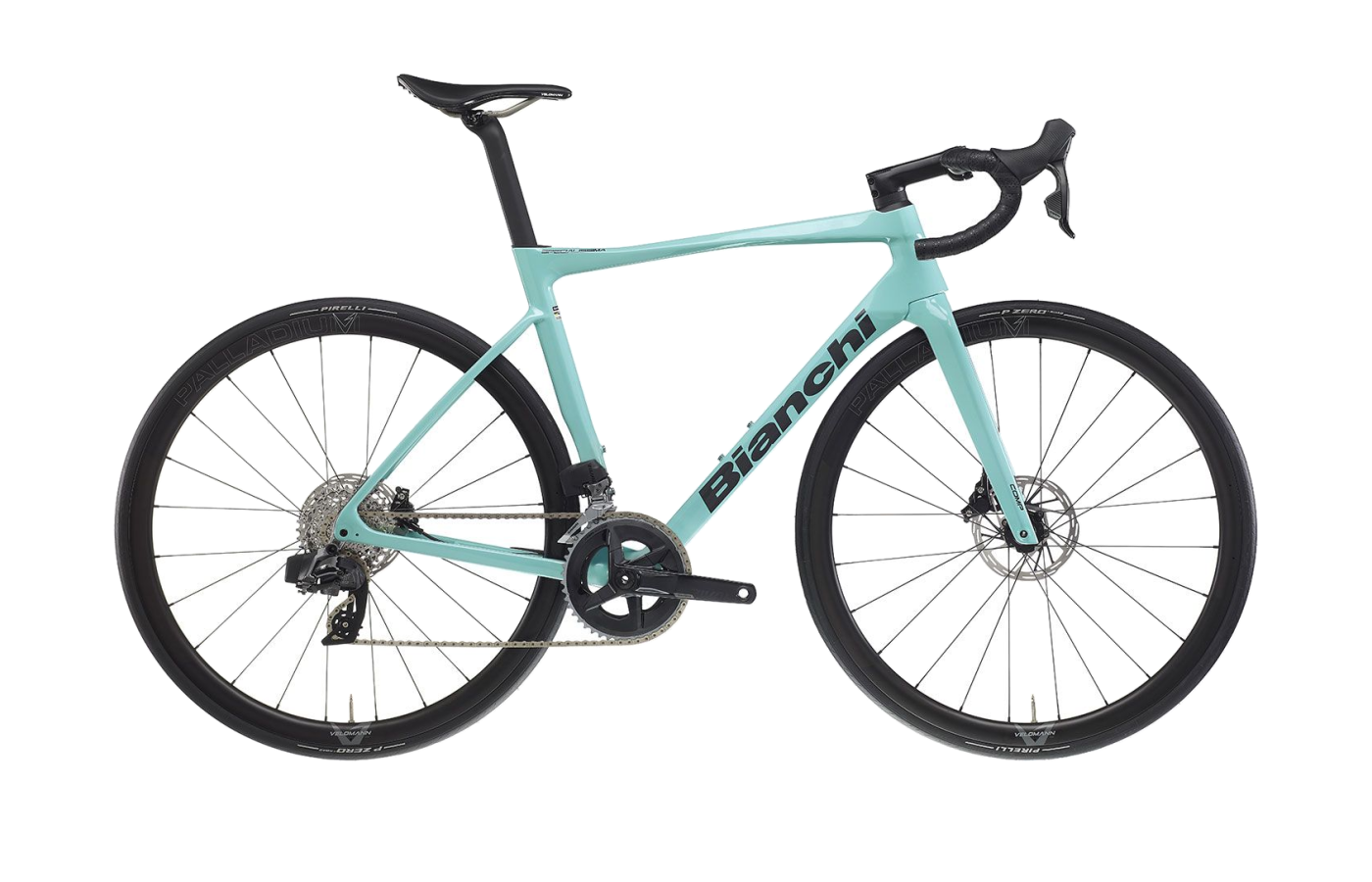
Specialissima
Bianchi's dedicated climbing bike. Lighter and more traditional in shape than the Oltre — if you find the Oltre too heavy for your local mountains, this is the in-house alternative.
Compare →
Grail
Canyon's race-gravel platform with its own integrated cockpit experiment. Direct philosophical rival to the Impulso, often at a lower price thanks to Canyon's direct-to-consumer model.
Compare →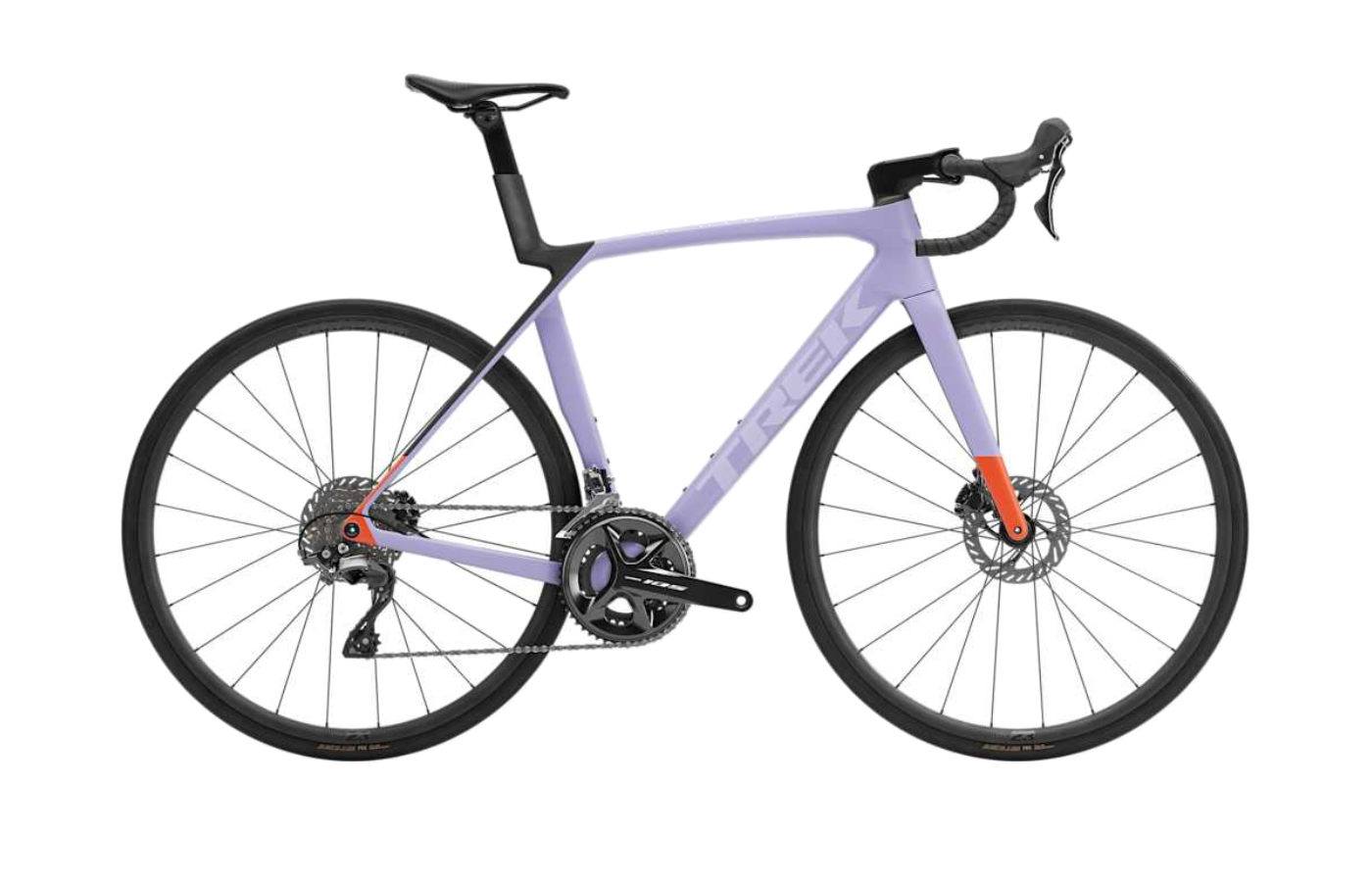
Madone
Trek's aero-road flagship with the IsoFlow decoupler instead of Countervail — a more conventional take on aero compliance, without the polarizing air deflectors.
Compare →